Recommendation for Partner Compensation
What this document covers
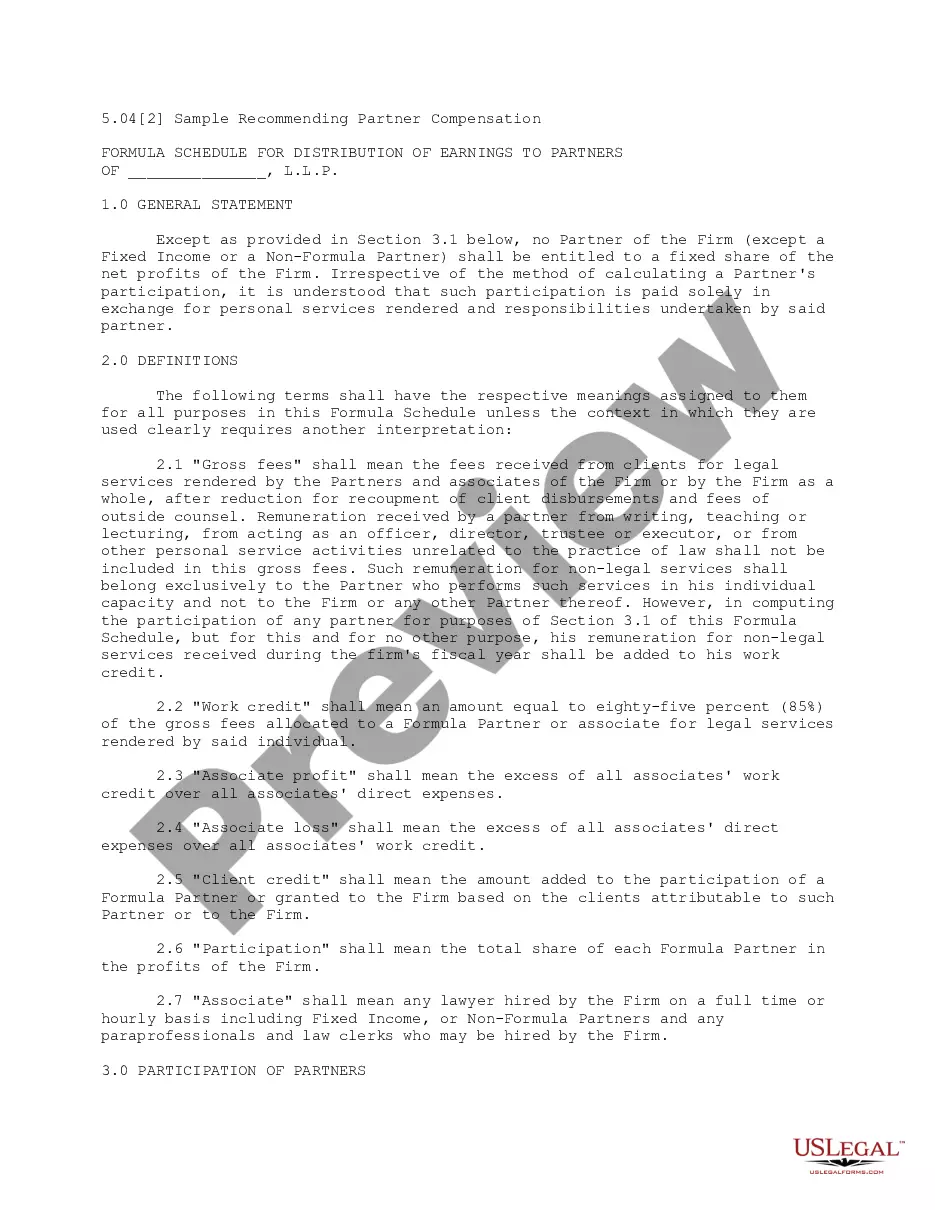
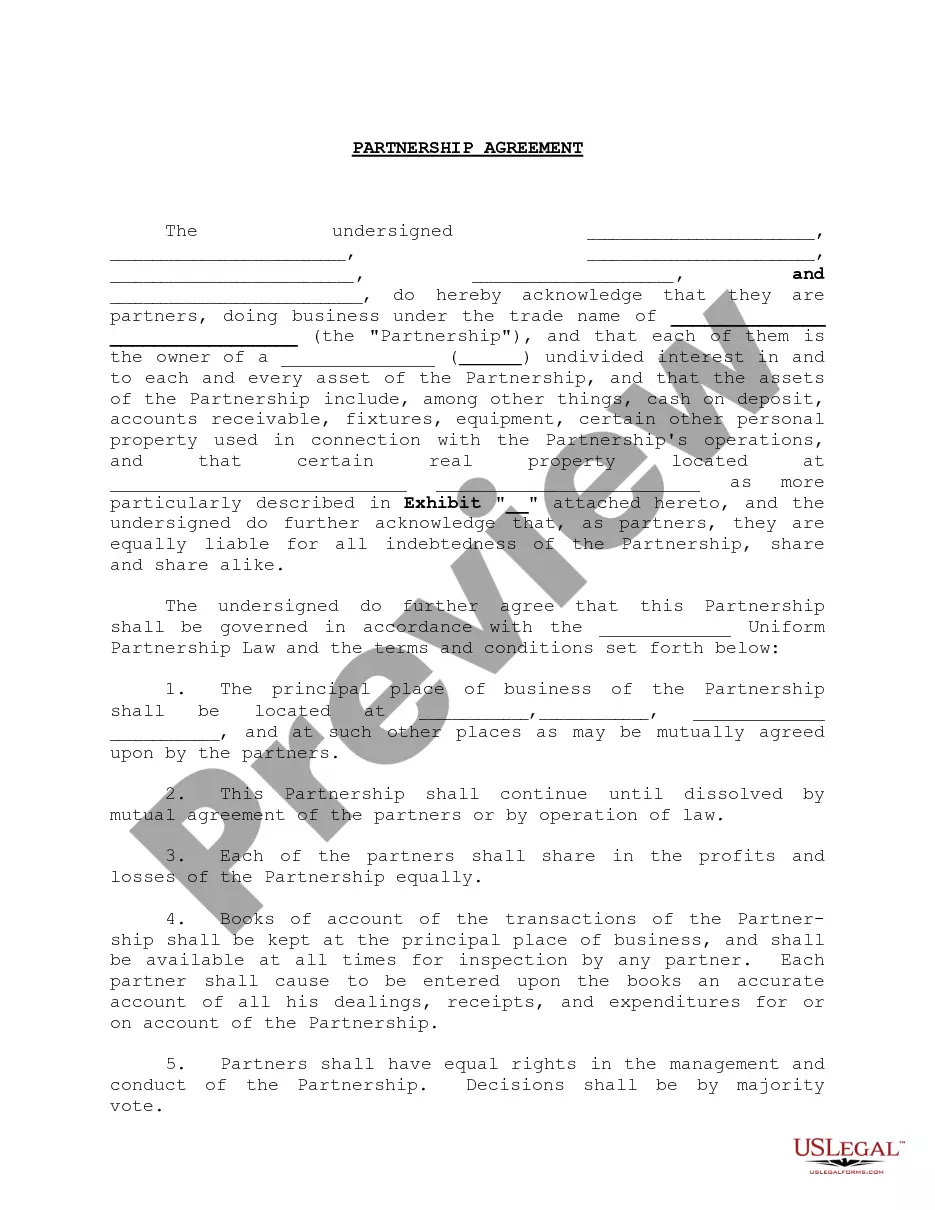
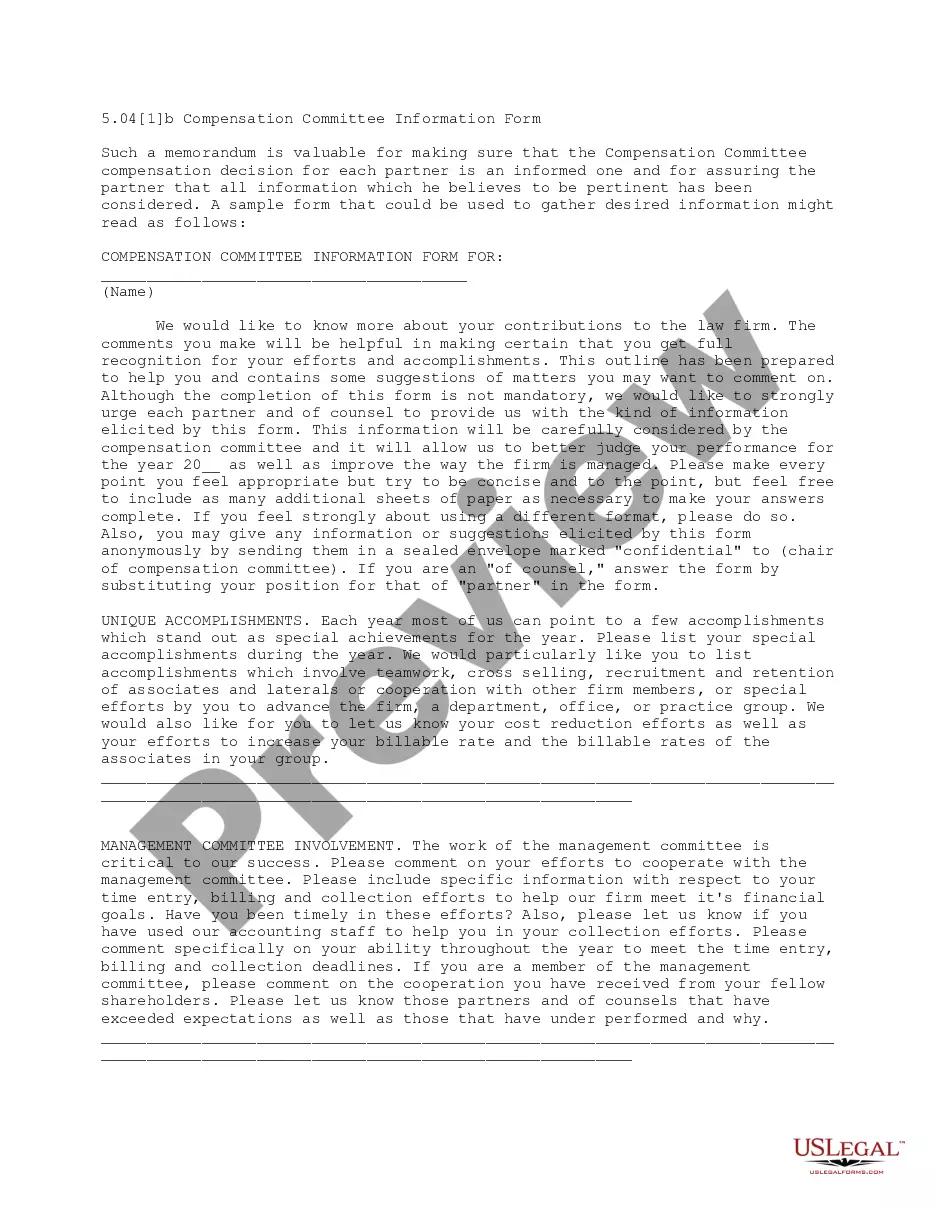
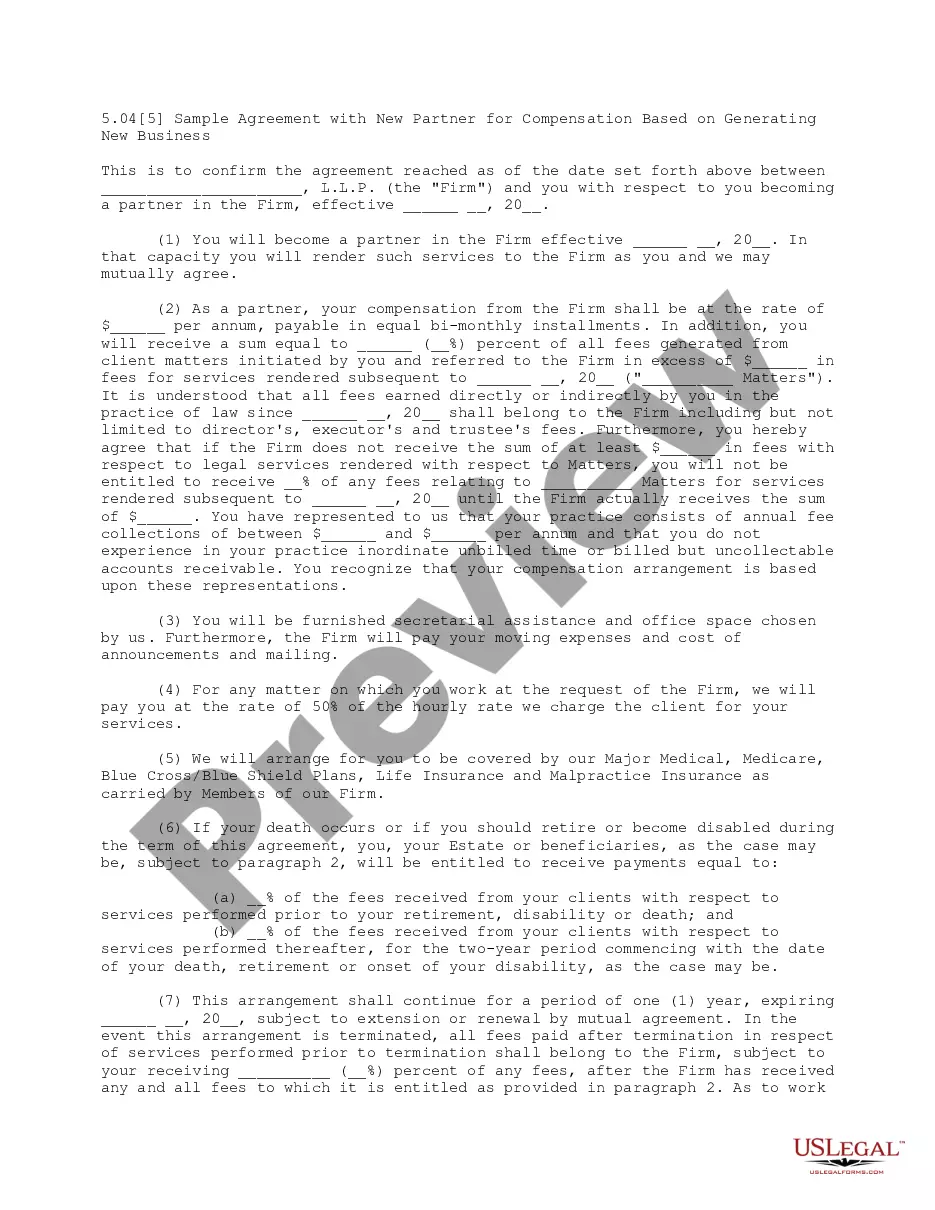
The Recommendation for Partner Compensation is a legal form designed to outline the distribution of earnings among partners in a partnership, specifically a limited liability partnership (L.L.P.). This document details the criteria for calculating earnings, including minimum participation amounts and other important aspects of partner compensation. It differs from similar forms by providing a comprehensive formula for determining each partner's share based on work credits and client contributions, ensuring all partners are treated fairly and transparently in profit distribution.
Key components of this form
- General statement outlining the compensation structure for partners.
- Definitions of key terms such as gross fees, work credit, and participation.
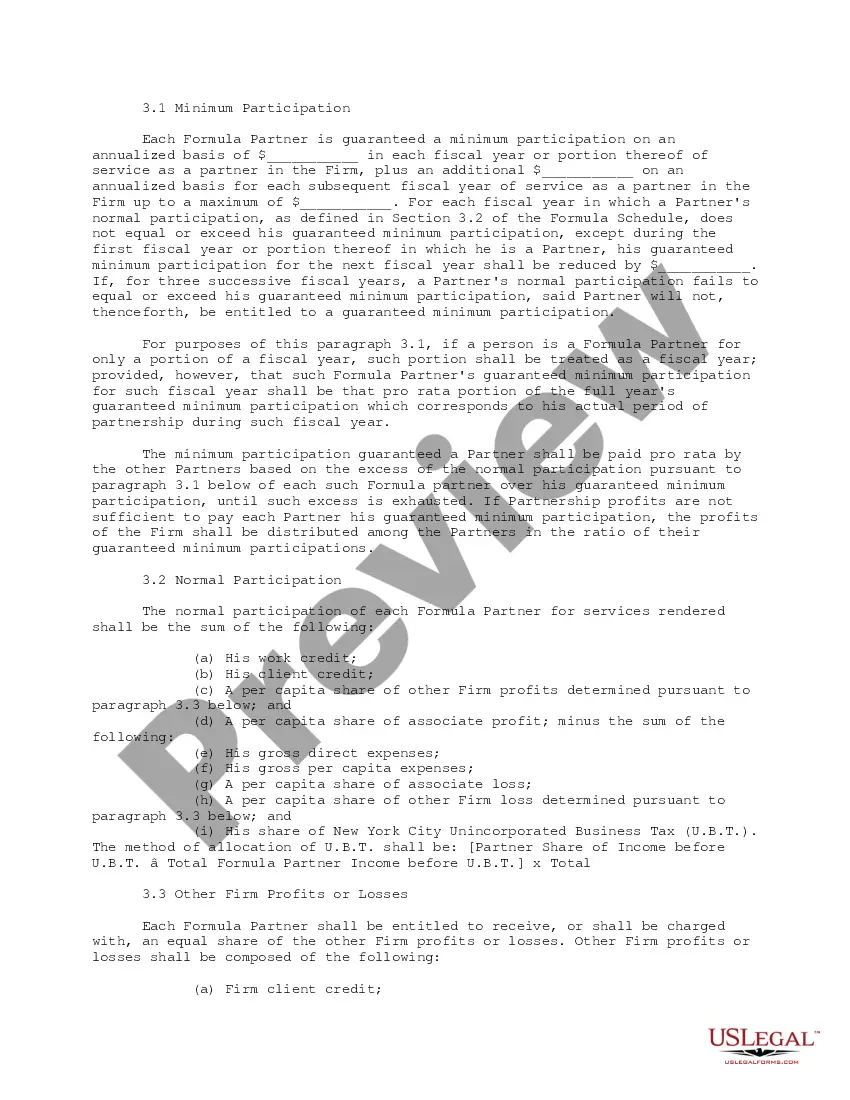
- Details on minimum participation and how it affects annual earnings.
- Explanation of how normal participation is calculated based on various credits and deductions.
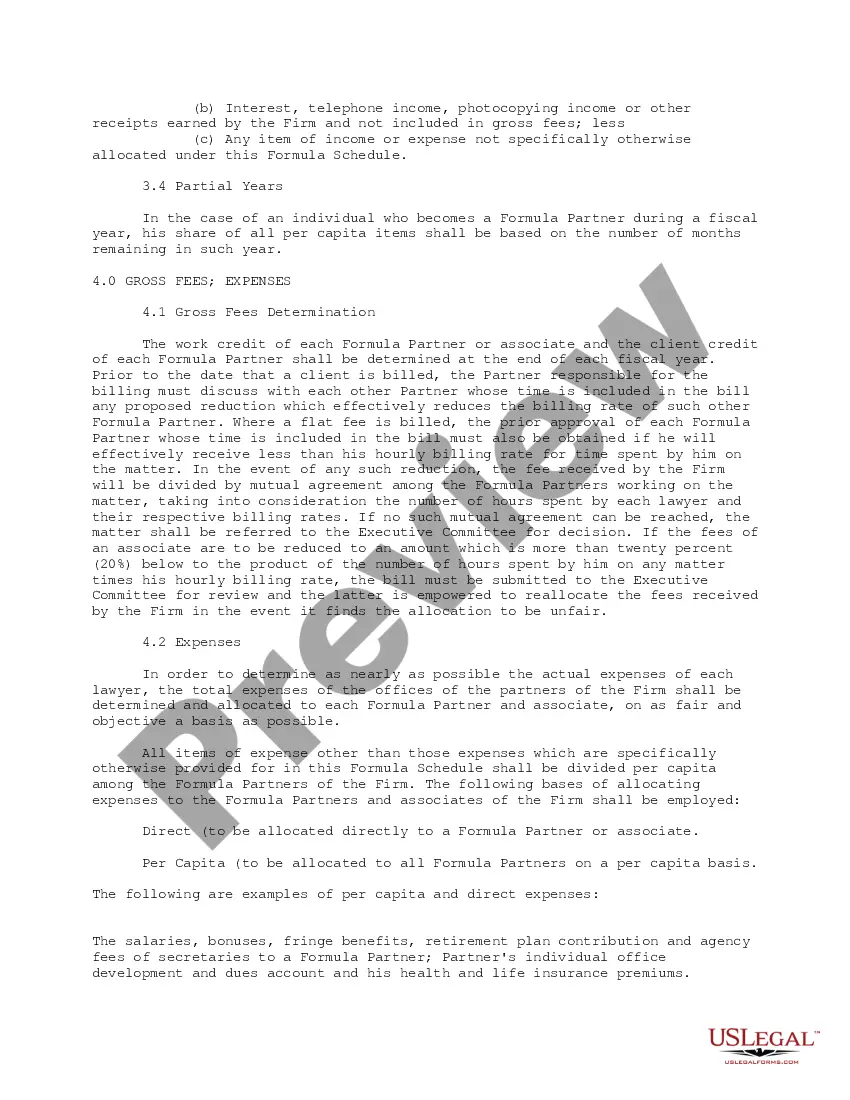
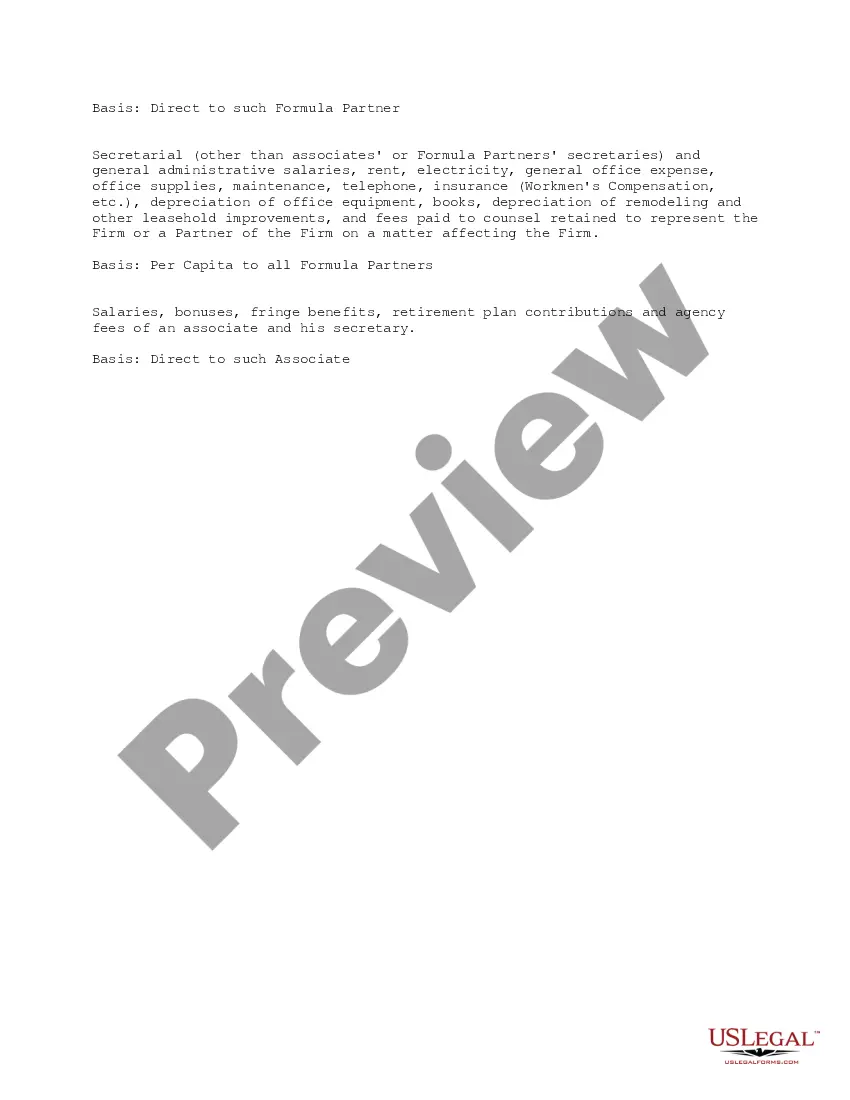
- Rules regarding gross fees determination and expense allocation among partners.
When to use this document
This form should be utilized by partnerships, especially L.L.P.s, when establishing clear guidelines for earning distribution among partners. It is essential when forming new partnerships or revising existing compensation agreements to ensure all partners understand and agree to how profits will be allocated based on their contributions and responsibilities within the firm.
Who can use this document
- Partners in a limited liability partnership (L.L.P.) seeking clarity in compensation arrangements.
- New partners entering a firm who require an understanding of expected earnings distribution.
- Existing partners looking to revise or solidify their compensation structure.
- Legal professionals involved in the formation or restructuring of partnership agreements.
Steps to complete this form
- Identify the partnership name and fill in the blank at the beginning of the form.
- Define key terms applicable to your partnership situation, as outlined in the form.
- Calculate and enter the minimum participation amount for each partner based on individual agreements.
- Specify the method of calculating normal participation, including work credits and client contributions.
- Review the gross fees determination section to establish billing practices among partners.
Does this document require notarization?
Notarization is generally not required for this form. However, certain states or situations might demand it. You can complete notarization online through US Legal Forms, powered by Notarize, using a verified video call available anytime.
Get your form ready online
Our built-in tools help you complete, sign, share, and store your documents in one place.
Make edits, fill in missing information, and update formatting in US Legal Forms—just like you would in MS Word.
Download a copy, print it, send it by email, or mail it via USPS—whatever works best for your next step.
Sign and collect signatures with our SignNow integration. Send to multiple recipients, set reminders, and more. Go Premium to unlock E-Sign.
If this form requires notarization, complete it online through a secure video call—no need to meet a notary in person or wait for an appointment.
We protect your documents and personal data by following strict security and privacy standards.

Make edits, fill in missing information, and update formatting in US Legal Forms—just like you would in MS Word.

Download a copy, print it, send it by email, or mail it via USPS—whatever works best for your next step.

Sign and collect signatures with our SignNow integration. Send to multiple recipients, set reminders, and more. Go Premium to unlock E-Sign.

If this form requires notarization, complete it online through a secure video call—no need to meet a notary in person or wait for an appointment.

We protect your documents and personal data by following strict security and privacy standards.
Common mistakes to avoid
- Failing to clearly define key terms, leading to misunderstandings among partners.
- Inaccurately calculating minimum participation or normal participation amounts.
- Neglecting to review the expenses section, resulting in improper allocations.
- Not updating the form to reflect changes in partner roles or firm structures.
Benefits of completing this form online
- Easy access to downloadable templates drafted by licensed attorneys, ensuring legal compliance.
- Efficient editing capabilities that allow partners to customize details effectively.
- Immediate availability enables quick adaptation to changing partnership dynamics.
Legal use & context
This form serves as an essential document that promotes clear communication regarding profit distribution within a partnership. It helps ensure compliance with legal standards for partnerships while clarifying the rights and obligations of each partner.
What to keep in mind
- The Recommendation for Partner Compensation is crucial for ensuring fair profit distribution in a partnership.
- Understanding the definitions and calculations within the form helps prevent conflicts among partners.
- The form can be customized to meet the specific needs of the partnership to ensure clarity and agreement.
Looking for another form?
Form popularity
FAQ
On first 3 lakhs of book profit or in case of loss 20b9 1, 50,000 or 90% of book profits (whichever is higher). On the balance book profit 60% of book profit.
Partners are given the total amount available for distribution in the coming year and are asked to allocate that amount among the firm's partners. In short, it gives each partner a say in the compensation of all the other partners. Firms that resist formulas may lean toward this approach.
Corporate structure. This model pays partners a guaranteed salary and a bonus based on performance. Any profits remaining at the end of each year are paid out based on the partner's ownership percentage in the firm.
The profits are distributed to the partners after they pay all of the costs of doing business. Some partners may receive a salary for their labor in addition to their share of the allocation of the partnership profits.
When it comes to compensation, firms have several options, including providing a stipend for managing partner activities, a percentage of the firm's profits or an annual salary. As a rule of thumb, Remsen suggests that managing partners should be compensated among the top 20% of the equity partners at the firm.
Abstract- Several different partnership compensation systems have been used by CPA firms.The most common compensation systems are the democratic systems. One of these is the equal distribution system, in which all partners receive equal compensation regardless of their levels of effort or contribution to the firm.
Partners do not receive a salary from the partnership. Rather, the partners are compensated by withdrawing funds from partnership earnings.As such, any profits or losses produced by the partnership pass through to the partners. This is known as that partner's distributive share.