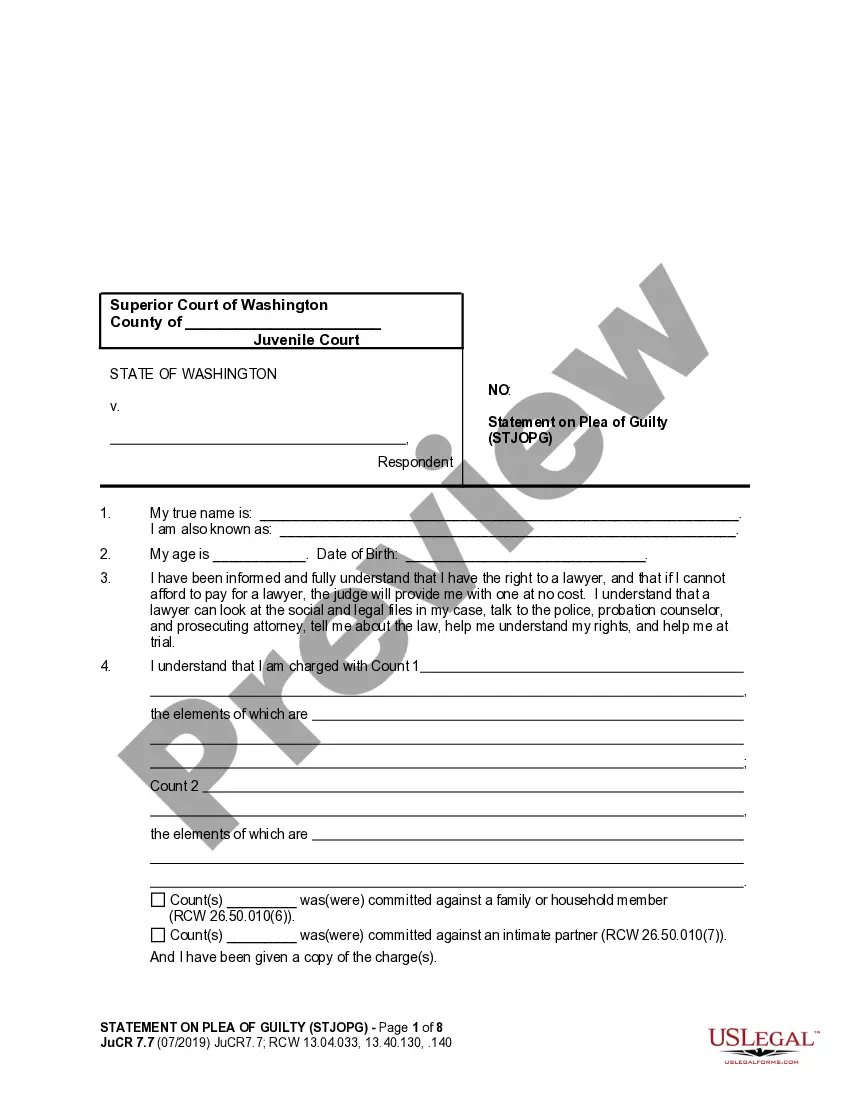
Certificate of Trust for Successor Trustee
Overview of this form
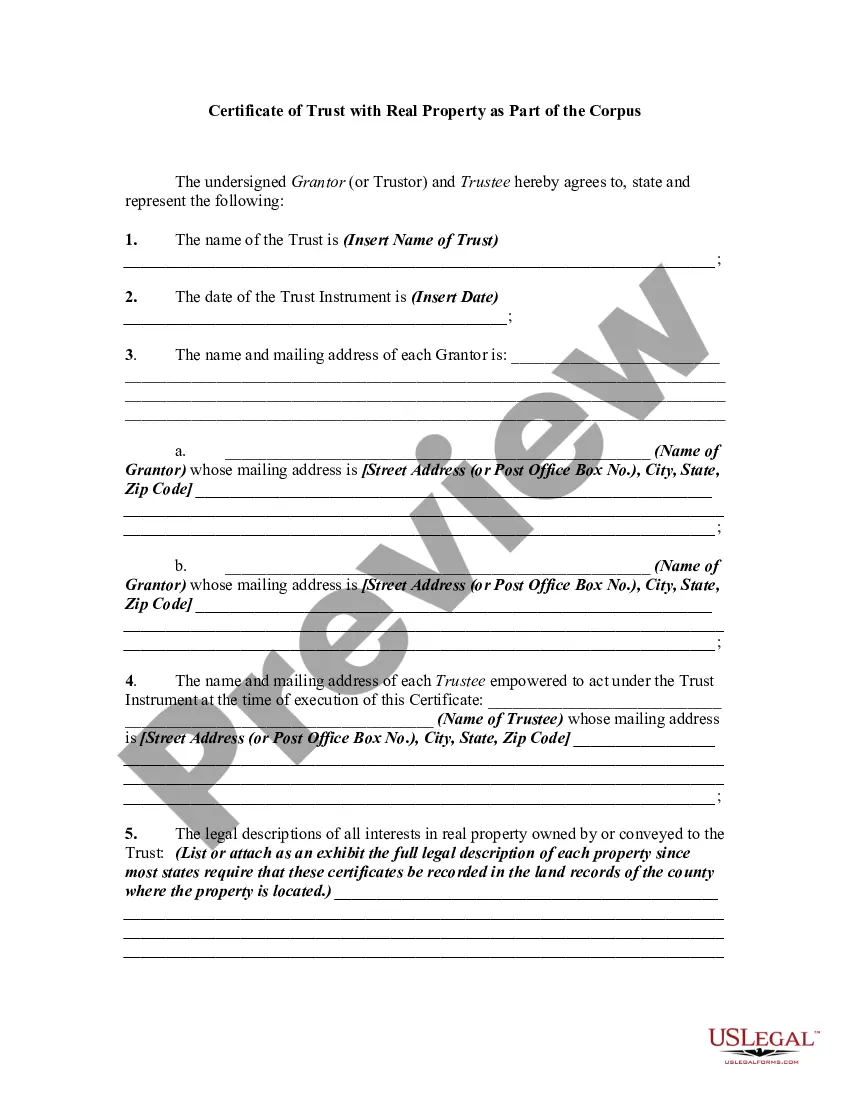
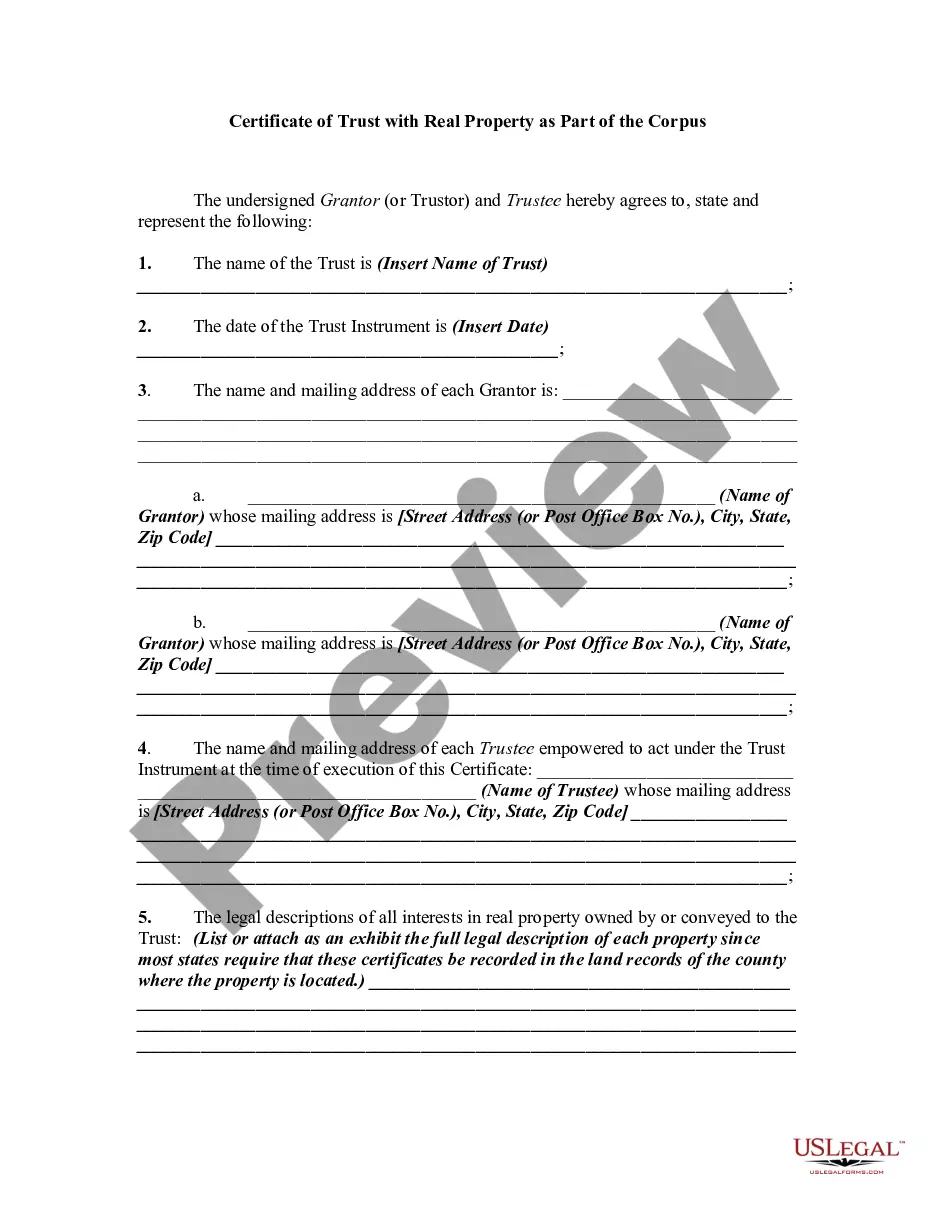
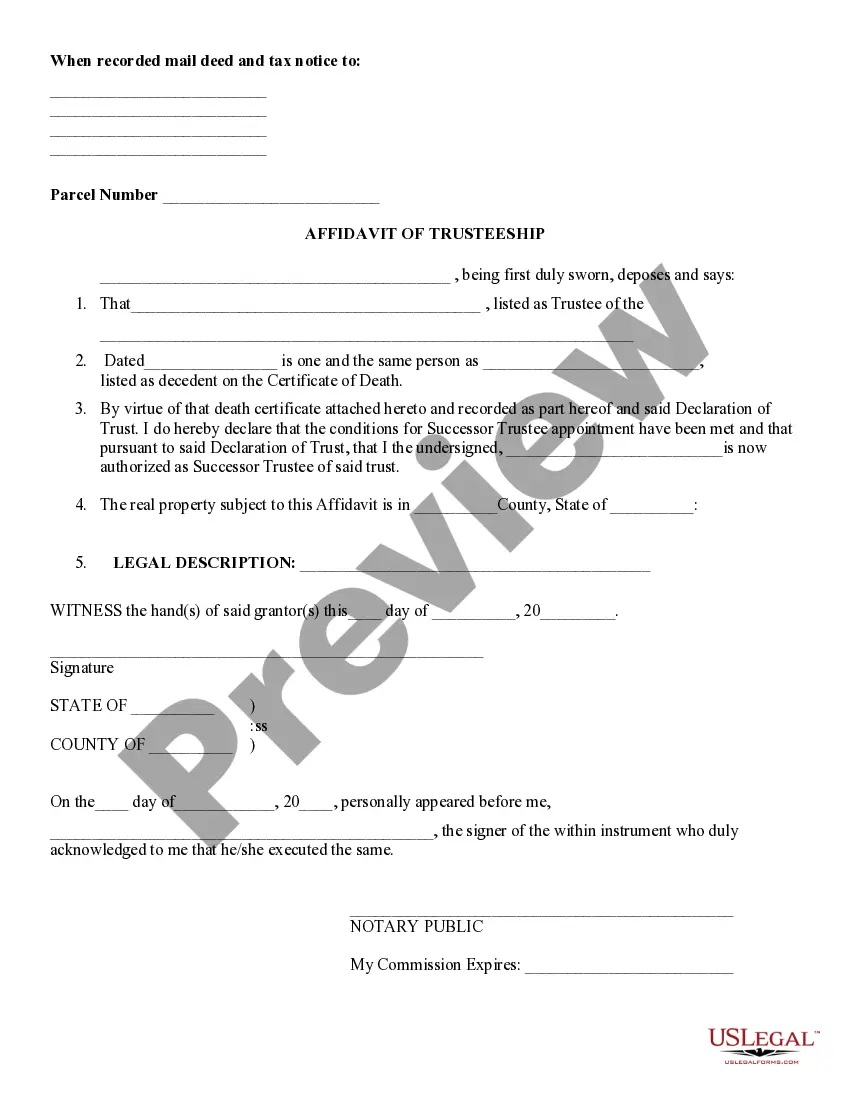
A Certificate of Trust for Successor Trustee is a legal document that serves as a concise summary of a trust. This certificate verifies the trust's existence, outlines the authority of the trustee, and identifies successor trustees. Unlike a full trust document, this form simplifies the verification process for financial institutions and other entities, allowing them to interact with the trust without needing the complete trust agreement.
Key components of this form
- Trust name: Specifies the official name of the trust.
- Date of trust instrument: Indicates when the trust was originally established.
- Grantor details: Lists the names and addresses of each grantor involved in the trust.
- Trustee details: Identifies the current trustees authorized to act under the trust.
- Legal property descriptions: Provides detailed legal descriptions of any real property included in the trust.
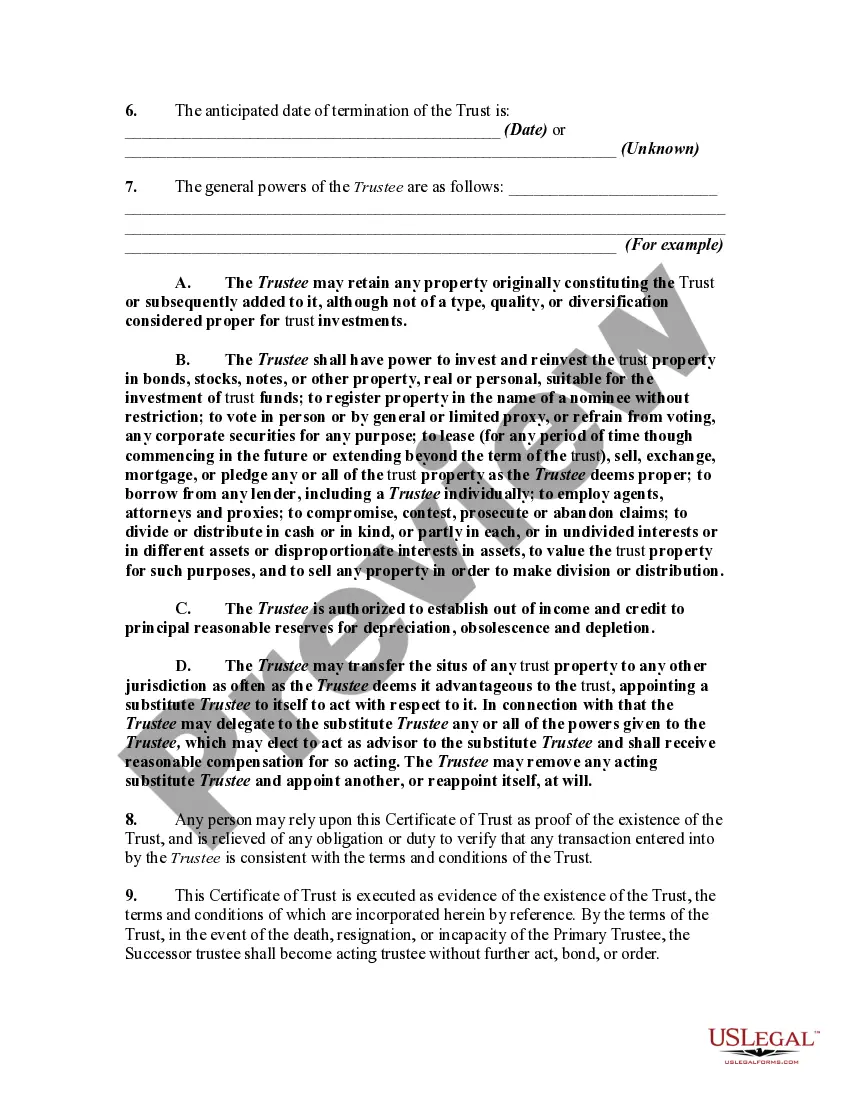
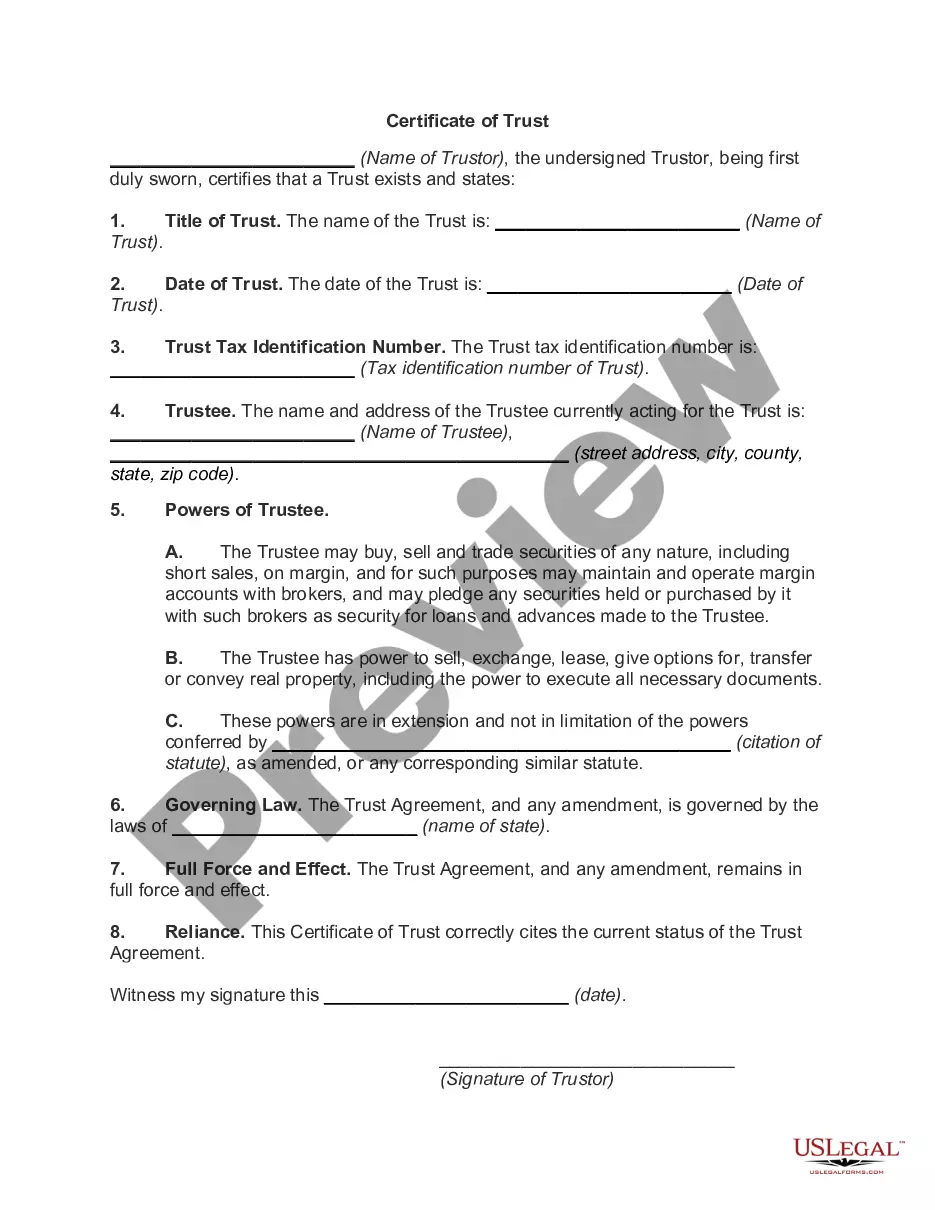
- Termination date: Mentions the anticipated termination date of the trust.
- Trustee powers: Outlines the general powers granted to the trustee to manage trust assets.
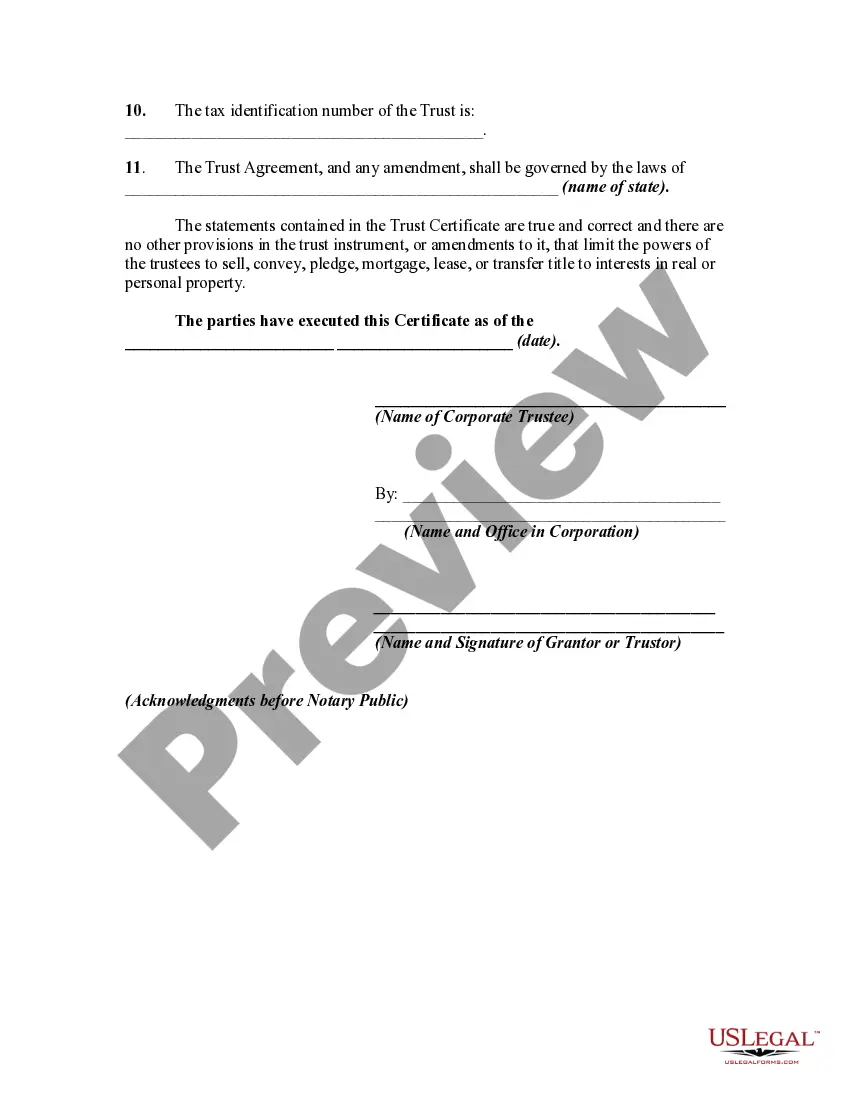
- Tax identification number: Contains the trust's tax ID for taxation issues.
- Governing law: States which jurisdiction's laws govern the trust agreement.
- Date of execution: Confirms when the certificate is signed and executed.
When this form is needed
This form is needed when a trustee or successor trustee must prove their authority to manage the trust's assets, especially when transferring property, dealing with financial institutions, or executing transactions on behalf of the trust. It is particularly useful during the transition of control after the primary trustee's death, resignation, or incapacitation.
Who can use this document
- Grantors: Those who have established the trust and need a certification of its existence.
- Trustees: Individuals or entities appointed to manage the trust, who must demonstrate their authority.
- Successor trustees: Individuals set to take over the trustee role if the original trustee is unable to continue.
- Financial institutions: Banks or organizations that require proof of the trust for transactions or account management.
- Legal representatives: Attorneys or professionals assisting in managing or executing trust-related matters.
How to prepare this document
- Identify the parties involved: Fill in the names and addresses of the grantors and trustees.
- Specify the trust name and date: Enter the name of the trust and the date the trust was created.
- Detail property descriptions: Provide legal descriptions of any real property associated with the trust.
- Outline trustee powers: Clearly state the powers granted to the trustee in managing the trust.
- Enter dates and signatures: Include the date of execution and obtain necessary signatures from the grantor and trustee.
- Notarize if required: Ensure the document is notarized to comply with legal requirements when applicable.
Does this form need to be notarized?
This form does not typically require notarization unless specified by local law. However, having it notarized can provide an added layer of validation and authenticity, especially when dealing with financial institutions.
Get your form ready online
Our built-in tools help you complete, sign, share, and store your documents in one place.
Make edits, fill in missing information, and update formatting in US Legal Forms—just like you would in MS Word.
Download a copy, print it, send it by email, or mail it via USPS—whatever works best for your next step.
Sign and collect signatures with our SignNow integration. Send to multiple recipients, set reminders, and more. Go Premium to unlock E-Sign.
If this form requires notarization, complete it online through a secure video call—no need to meet a notary in person or wait for an appointment.
We protect your documents and personal data by following strict security and privacy standards.

Make edits, fill in missing information, and update formatting in US Legal Forms—just like you would in MS Word.

Download a copy, print it, send it by email, or mail it via USPS—whatever works best for your next step.

Sign and collect signatures with our SignNow integration. Send to multiple recipients, set reminders, and more. Go Premium to unlock E-Sign.

If this form requires notarization, complete it online through a secure video call—no need to meet a notary in person or wait for an appointment.

We protect your documents and personal data by following strict security and privacy standards.
Typical mistakes to avoid
- Failing to include all grantor and trustee names can lead to issues in trust management.
- Neglecting to provide legal property descriptions may result in complications when transacting property.
- Not updating the certificate when changes occur in trusteeship can cause legal difficulties.
- Leaving out the tax identification number may lead to tax-related problems for the trust.
Advantages of online completion
- Convenience: Download the form anytime and complete it at your own pace.
- Editability: Easily fill in the required fields, ensuring accuracy and clarity.
- Reliability: Access a form drafted by licensed attorneys to ensure compliance with legal standards.
What to keep in mind
- A Certificate of Trust for Successor Trustee verifies the trust's existence and trustee authority.
- It is essential for managing trust assets and facilitating transactions involving the trust.
- Complete all required fields accurately to avoid legal complications.
- Check state-specific requirements to ensure compliance with local laws.
Looking for another form?

Form popularity
FAQ
A certification of trust is a document that is used to certify that a trust was established. It provides important information, like the name of the trust, the trustees, and the date it was formed. It is also referred to as an abstract or memorandum of trust.
When signing anything on behalf of the trust, always sign as John Smith, Trustee. By signing as Trustee, you will not be personally liable for that action as long as that action is within the scope of your authority under the trust.
Create the certificate of trust Sign the living trust in front of a notary public to notarize it. In case your spouse or partner made the trust together, you both need to sign the certification. If one has died, the surviving part can make a certification.
Look for an attorney to draw up the paperwork. In addition, you can go online and use a legal website, to search for a copy of a recorded living trust, or forms on a CD to make the living trust. Sign the living trust in front of a notary public to notarize it.
Typically, the named successor trustee to a trust does not take over until the existing trustee stops serving, whether due to his or her resignation, removal, or death.First, the trustee can use the trust funds to fight the court case. Second, the court will first seek to advance the trust grantor's intent.
2 attorney answers Just the grantors. They are usually also the trustees. If they are not the trustees still no need to sign. However, that is why you want successor trustees listed in case trustee does not or cannot serve.
How to sign as a Trustee. When signing anything on behalf of the trust, always sign as John Smith, Trustee. By signing as Trustee, you will not be personally liable for that action as long as that action is within the scope of your authority under the trust.
You can do this by simply signing your name and putting your title of executor of the estate afterward. One example of an acceptable signature would be Signed by Jane Doe, Executor of the Estate of John Doe, Deceased. Of course, many institutions may not simply take your word that you are the executor of the estate.
A certificate of trust is used by an acting trustee or trustees of a trust to prove to financial institutions or other third parties that he/she/they has/have the authority to act on behalf of the trust.The certificate also specifies how the trust will vest title to real property.