Washington Closing Statement

About this form
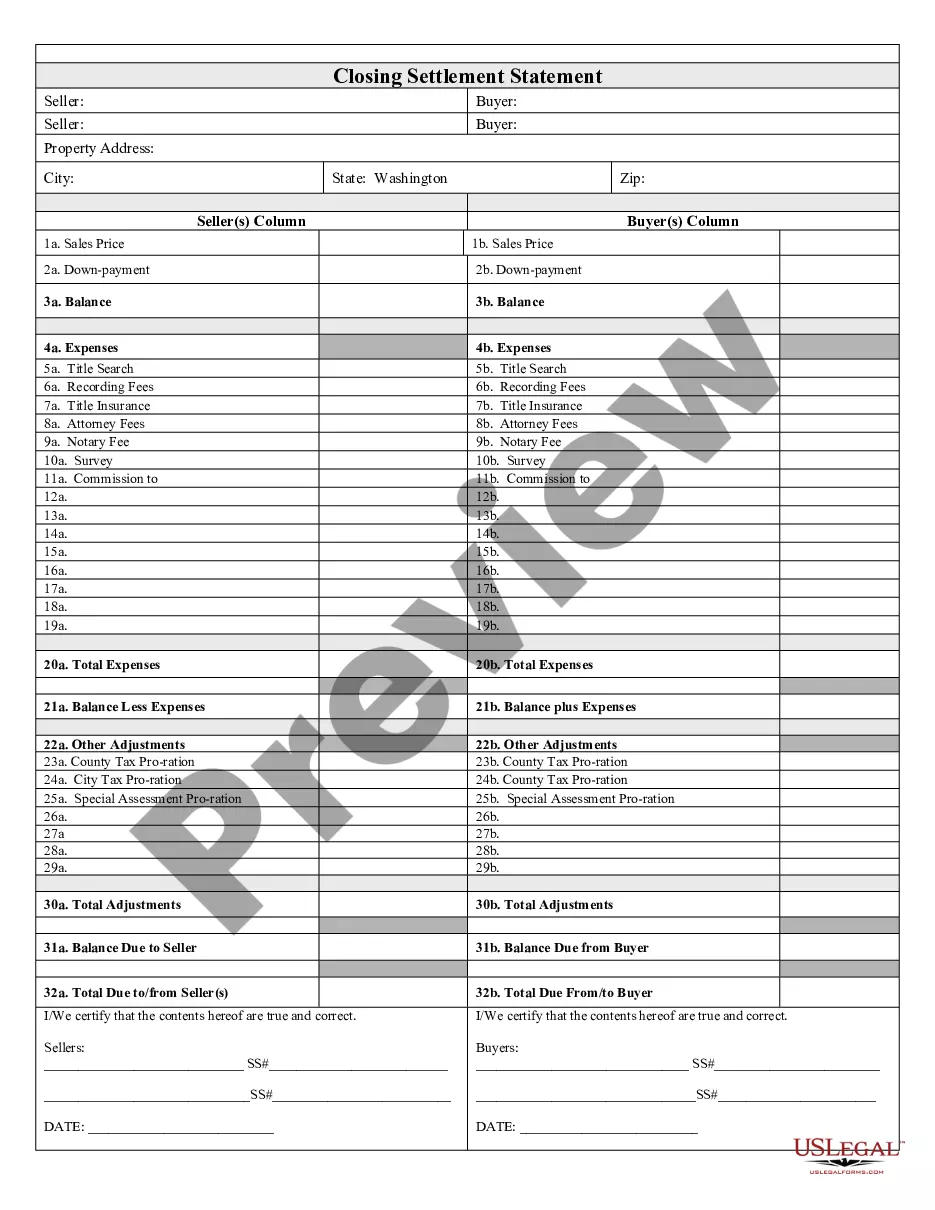
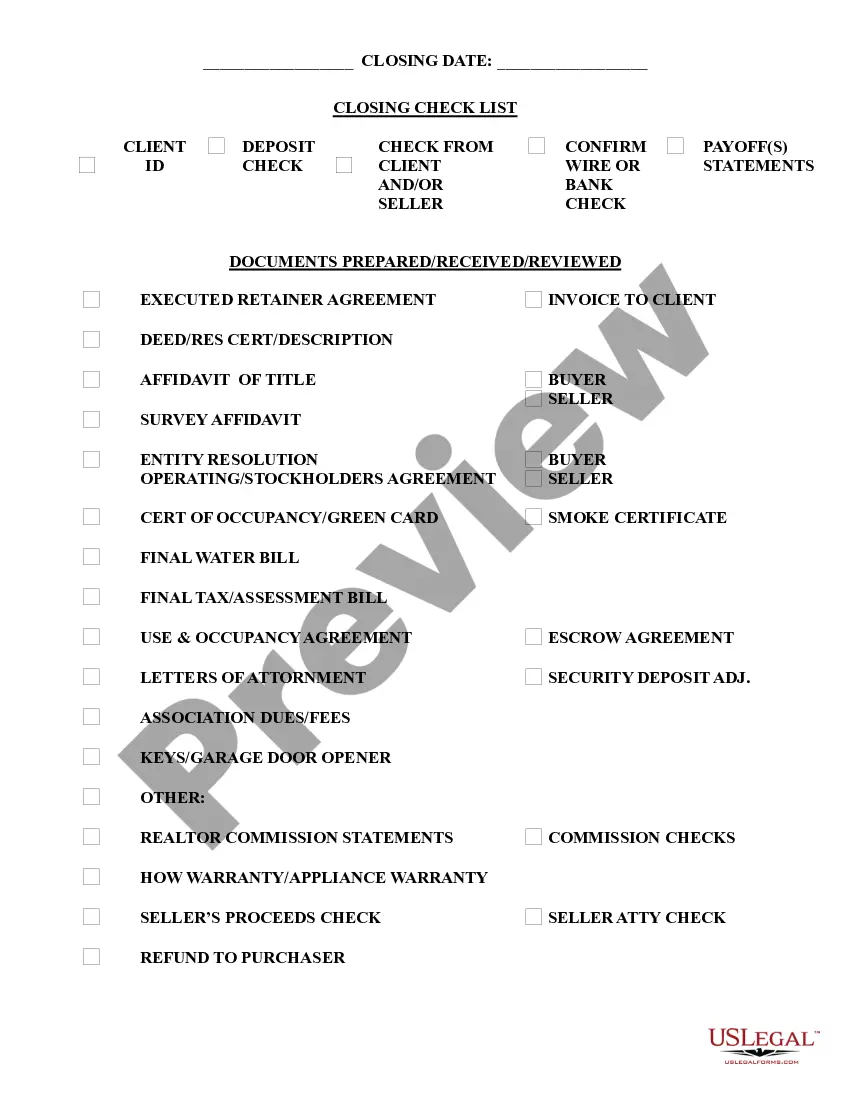
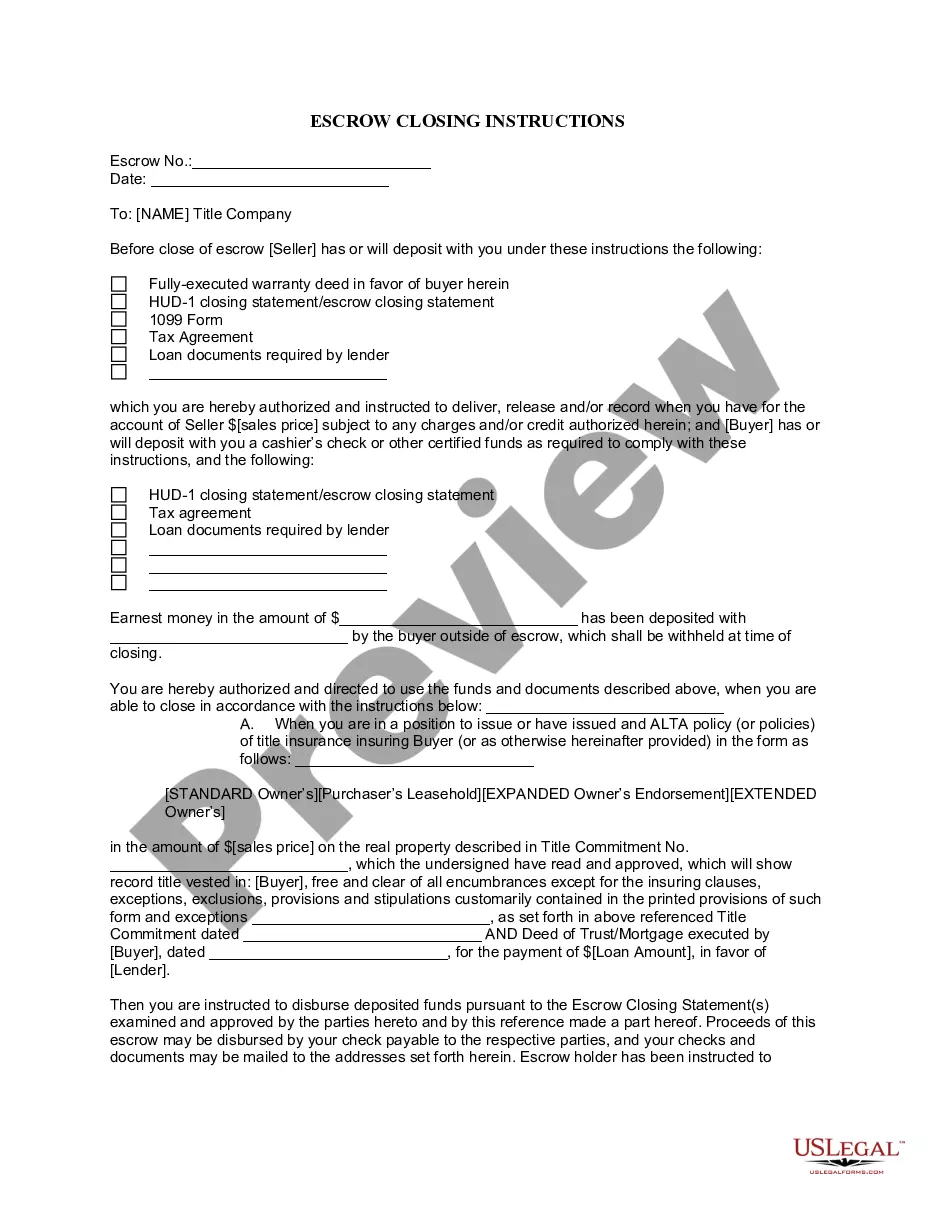
The Closing Statement is a critical document used in real estate transactions where either a cash sale occurs or owner financing is arranged. This form provides a detailed summary of the financial aspects of the transaction, verifying the amounts due from both the buyer and the seller. Unlike other sales agreements that may focus on terms and conditions, the Closing Statement specifically outlines all financial expenses related to the sale and ensures both parties agree on the final balance. It is essential for clarity and legal compliance in real estate dealings.
Main sections of this form
- Balance calculation: Displays the final amounts due after all costs are deducted or added.
- Detailed expenses: Lists all transaction costs, including title searches, recording fees, and attorney fees.
- Adjustments: Accounts for any pro-rations or adjustments made for taxes or assessments.
- Certification of accuracy: Sections for both the seller and buyer to confirm the accuracy of the statement.

Common use cases
This form should be used during the final stages of a real estate transaction. It is applicable when a buyer plans to pay cash or when the seller is providing financing. The Closing Statement should be presented at the closing meeting, establishing all financial exchanges that must occur before transferring the property's title. It ensures transparency and agreement on all transaction costs, preventing disputes after the deal is closed.
Who can use this document
- Homebuyers engaged in a cash transaction.
- Sellers offering owner financing to a buyer.
- Real estate agents facilitating the sale.
- Attorneys involved in the real estate transaction process.
- Mortgage lenders requiring documentation of closing costs.
Instructions for completing this form
- Identify the parties involved: Clearly state the names and roles of the seller and buyer.
- Specify the property: Provide the address and description of the property being sold.
- List all expenses: Fill in each line item for expenses, ensuring accuracy in financial reporting.
- Calculate any adjustments: Include any necessary tax pro-rations or additional adjustments to the final balance.
- Have both parties sign: Ensure that both the seller and buyer certify the document for validity.
Does this form need to be notarized?
Notarization is required for this form to take effect. Our online notarization service, powered by Notarize, lets you verify and sign documents remotely through an encrypted video session, available 24/7.
Get your form ready online
Our built-in tools help you complete, sign, share, and store your documents in one place.
Make edits, fill in missing information, and update formatting in US Legal Forms—just like you would in MS Word.
Download a copy, print it, send it by email, or mail it via USPS—whatever works best for your next step.
Sign and collect signatures with our SignNow integration. Send to multiple recipients, set reminders, and more. Go Premium to unlock E-Sign.
If this form requires notarization, complete it online through a secure video call—no need to meet a notary in person or wait for an appointment.
We protect your documents and personal data by following strict security and privacy standards.

Make edits, fill in missing information, and update formatting in US Legal Forms—just like you would in MS Word.

Download a copy, print it, send it by email, or mail it via USPS—whatever works best for your next step.

Sign and collect signatures with our SignNow integration. Send to multiple recipients, set reminders, and more. Go Premium to unlock E-Sign.

If this form requires notarization, complete it online through a secure video call—no need to meet a notary in person or wait for an appointment.

We protect your documents and personal data by following strict security and privacy standards.
Mistakes to watch out for
- Failing to include all necessary expenses, leading to discrepancies.
- Not calculating taxes or assessments correctly, which can affect the balance due.
- Missing signatures from either party, rendering the document incomplete.
- Providing inaccurate property details, which can complicate the transaction.
Why use this form online
- Convenience: Easily download and fill out the form at any time and from anywhere.
- Editability: Modify the document as needed to fit specific transaction details.
- Reliability: Ensured that the form is drafted by licensed attorneys, providing legal reliability.
Looking for another form?
Form popularity
FAQ
Closing costs are all of the fees and expenses associated with the closing or settlement of a real estate transaction, and they can vary dramatically. The buyer typically pays the closing costs, while other costs are usually the responsibility of the seller.
A HUD-1 or HUD-1A Settlement Statement is prepared by a creditor or, more typically, by the settlement agent who conducts the closing on the creditor's behalf.
A closing statement is a document that records the details of a financial transaction. A home buyer who finances the purchase will receive a closing statement from the bank, while the home seller will receive one from the real estate agent who handled the sale.
The settlement statement is prepared by an impartial third party to the transaction, usually an officer with the title or escrow company that performs the closing. In California, both the buyer and the seller sign the HUD-1 settlement statement at closing.
The attorney is responsible for preparing all necessary closing documents, scheduling the closing, explaining all necessary closing documents and having them properly executed and recorded. You will receive copies of most closing documents, including an itemized record of all money paid by you on your behalf.
As of October 3, 2015, the Closing Disclosure form replaced the HUD-1 form for most real estate transactions. However, if you applied for a mortgage on or before October 3, 2015, you received a HUD-1.
Use the not so simple method to close the estate, Send Notice of Filing of Declaration of Completion, Wait until the expiration of the 30-day notice period, and. THEN MAKE DISTRIBUTION AFTER your Declaration of Completion has become final and the time for filing any Objection has expired.
Completing Part B of HUD-1Fill in the property location and the name and address for the borrower, seller and lender. The settlement agent, date and location also are needed. Fill in the appropriate lines in sections J and K, which are summaries of the borrower's and seller's transactions, respectively.
A closing agent prepares the closing statement, which is settlement sheet. It's a comprehensive list of every expense that the buyer and seller must pay to complete the real estate transaction. Fees listed on this sheet include commissions, mortgage insurance, and property tax deposits.