Check List: Real Estate - Closing Day
Understanding this form
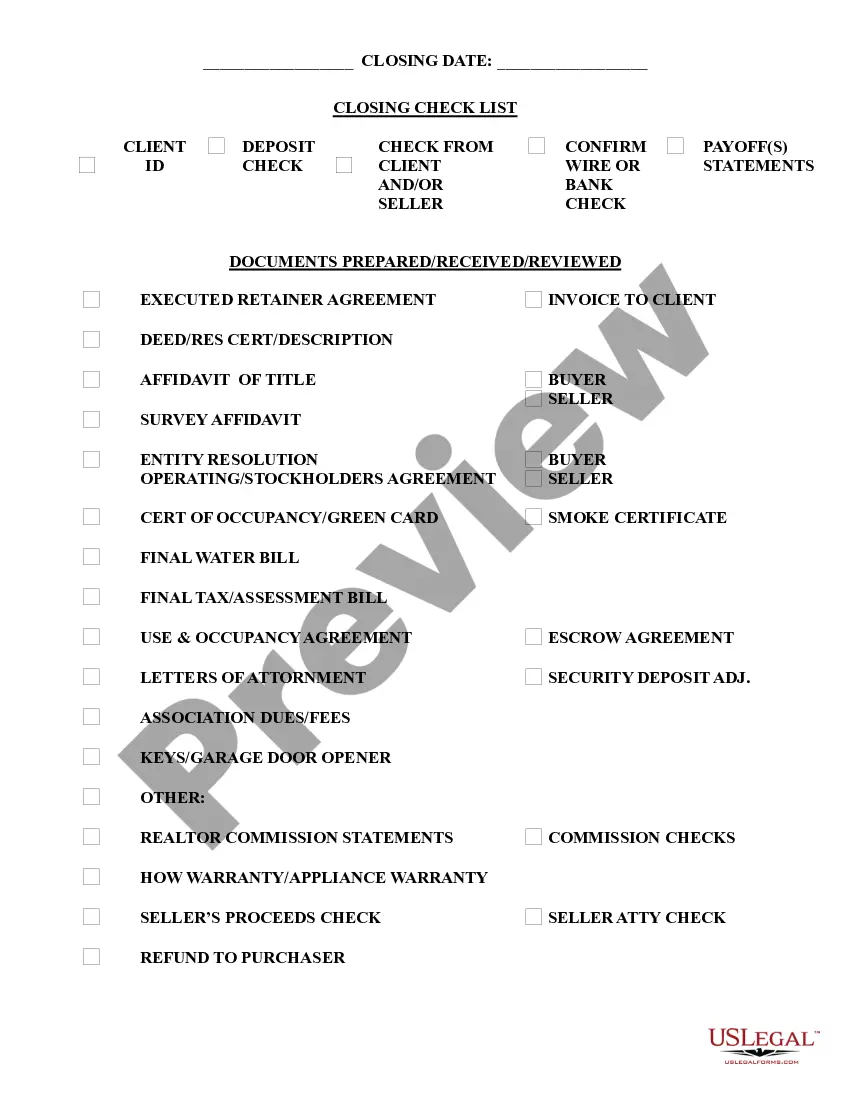
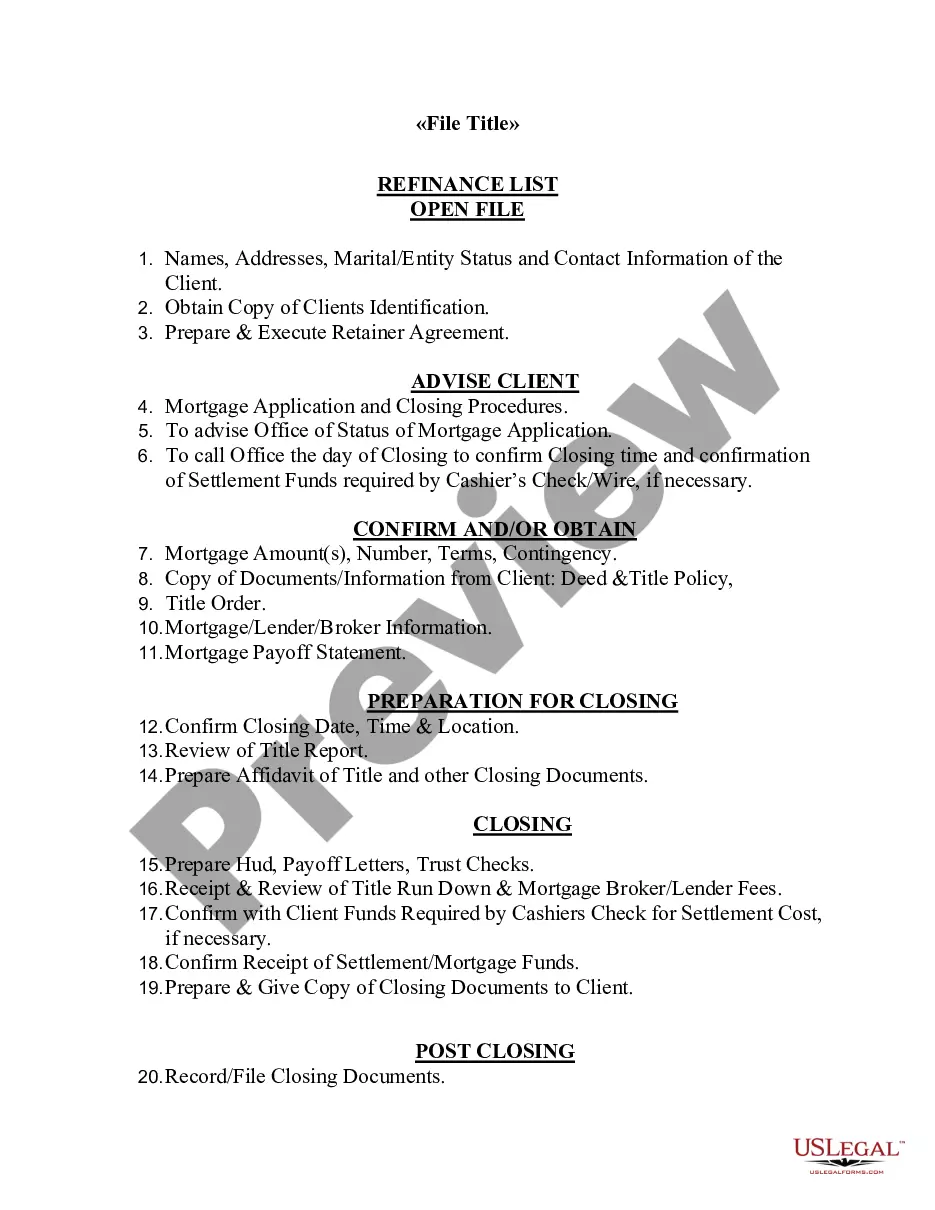
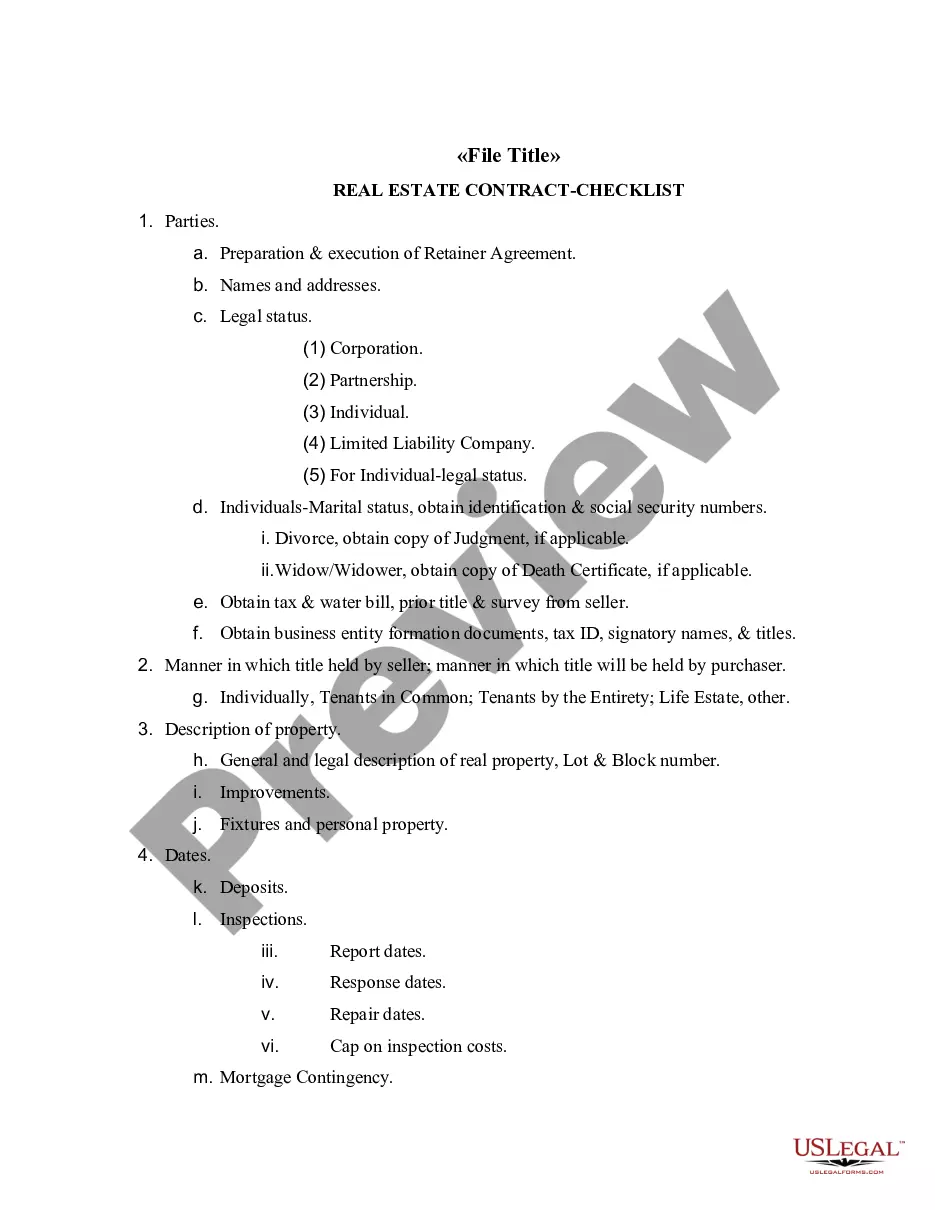
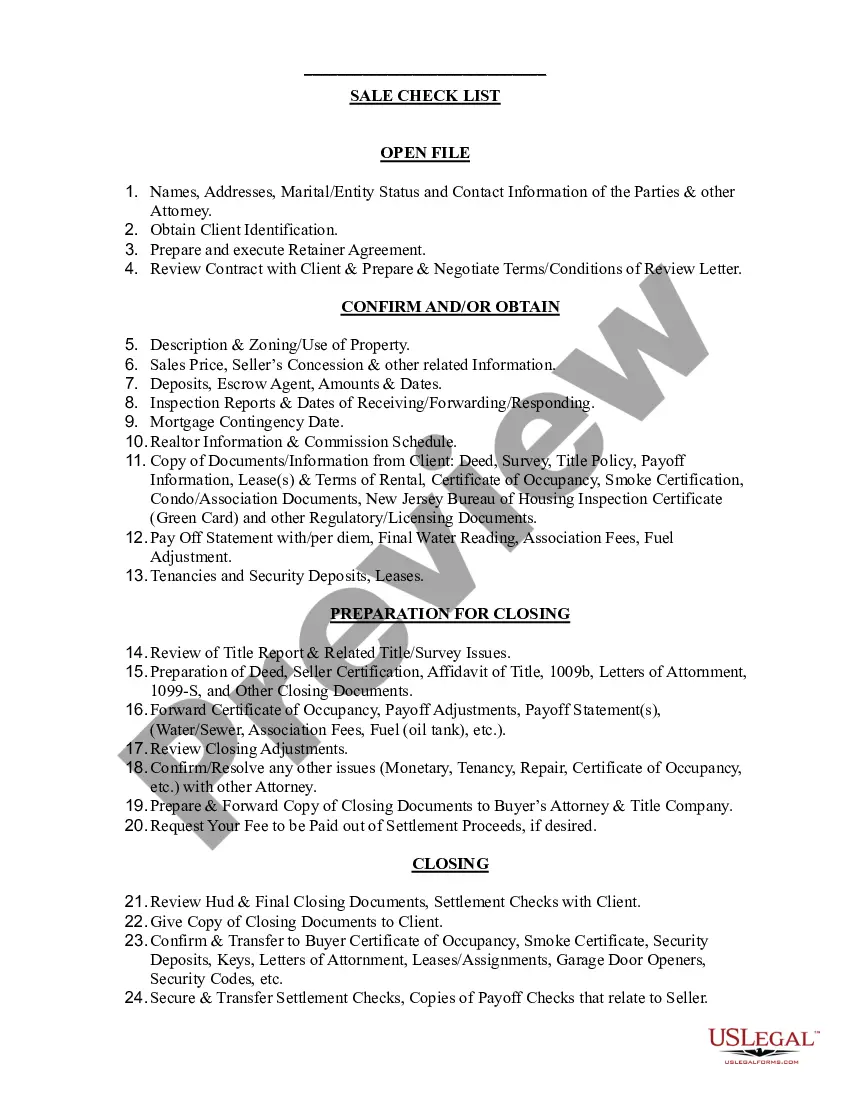
The Check List: Real Estate - Closing Day is a crucial tool for homebuyers preparing for the final steps of their property purchase. Specifically designed to guide purchasers on what documents and items to bring to the closing table, this checklist ensures that the ownership transfer process is smooth and without surprises. Unlike general closing documents, this checklist focuses on organization and preparation, making it easier for buyers to meet all obligations on closing day.
Form components explained
- Client ID: Identifies the buyer in the transaction.
- Deposit Check: Confirms any initial deposit made by the buyer.
- Payoff Statements: Outlines outstanding amounts needed to close.
- Deed and Affidavits: Essential documents that transfer ownership and affirm title.
- Survey Affidavit: Verifies property boundaries and zoning compliance.
- Final Utility Bills: Ensures all services have been settled prior to transfer.
When to use this document
This checklist should be used on closing day to guarantee that all necessary documents and payments are organized and ready for the transaction. It is particularly beneficial for first-time homebuyers who may feel overwhelmed by the closing process, ensuring they have everything needed to complete their property purchase efficiently.
Who can use this document
- Homebuyers preparing for the closing of a real estate transaction.
- Real estate agents assisting clients in the home buying process.
- Attorneys representing buyers in real estate transactions.
Steps to complete this form
- Identify the parties involved: Ensure the buyer and seller details are accurate.
- Gather all necessary documents: Use the checklist to confirm which items need to be present.
- Prepare financial instruments: Arrange checks or wires for necessary payments.
- Review all closing documents: Make sure to go through each document carefully before signing.
- Confirm possession details: Ensure keys and access documents are available for the buyer.
Notarization requirements for this form
This form does not typically require notarization unless specified by local law. Ensure to check any state-specific regulations regarding additional notarization requirements.
Get your form ready online
Our built-in tools help you complete, sign, share, and store your documents in one place.
Make edits, fill in missing information, and update formatting in US Legal Forms—just like you would in MS Word.
Download a copy, print it, send it by email, or mail it via USPS—whatever works best for your next step.
Sign and collect signatures with our SignNow integration. Send to multiple recipients, set reminders, and more. Go Premium to unlock E-Sign.
If this form requires notarization, complete it online through a secure video call—no need to meet a notary in person or wait for an appointment.
We protect your documents and personal data by following strict security and privacy standards.

Make edits, fill in missing information, and update formatting in US Legal Forms—just like you would in MS Word.

Download a copy, print it, send it by email, or mail it via USPS—whatever works best for your next step.

Sign and collect signatures with our SignNow integration. Send to multiple recipients, set reminders, and more. Go Premium to unlock E-Sign.

If this form requires notarization, complete it online through a secure video call—no need to meet a notary in person or wait for an appointment.

We protect your documents and personal data by following strict security and privacy standards.
Common mistakes
- Forgetting to bring the deposit check or necessary funds.
- Not reviewing all documents ahead of time, leading to surprises at closing.
- Neglecting to confirm all utility bills, resulting in unexpected charges.
Why complete this form online
- Immediate access: Download the checklist anytime from anywhere.
- Editability: Customize the form to fit specific transaction needs.
- Reliability: Obtain a legally vetted checklist drafted by licensed attorneys.
Looking for another form?
Form popularity
FAQ
What paperwork must the closing agent complete in preparation for closing? The answer is Closing Disclosure. The closing agent must prepare the deed and the Closing Disclosure.
Typically, you'll need to secure a cashier's or certified check. It should only take a few minutes to have your bank draw one up for you, provided the funds are already in your account, but you'll want to do this a few days in advance of your closing date in case you run into any issues.
The most important originals are the purchase agreement, deed, and deed of trust or mortgage. In the event originals are destroyed, you might be able to get certified copies of these documents from the lender or closing company, but you don't want to rely on others' recordkeeping systems unless you have to.
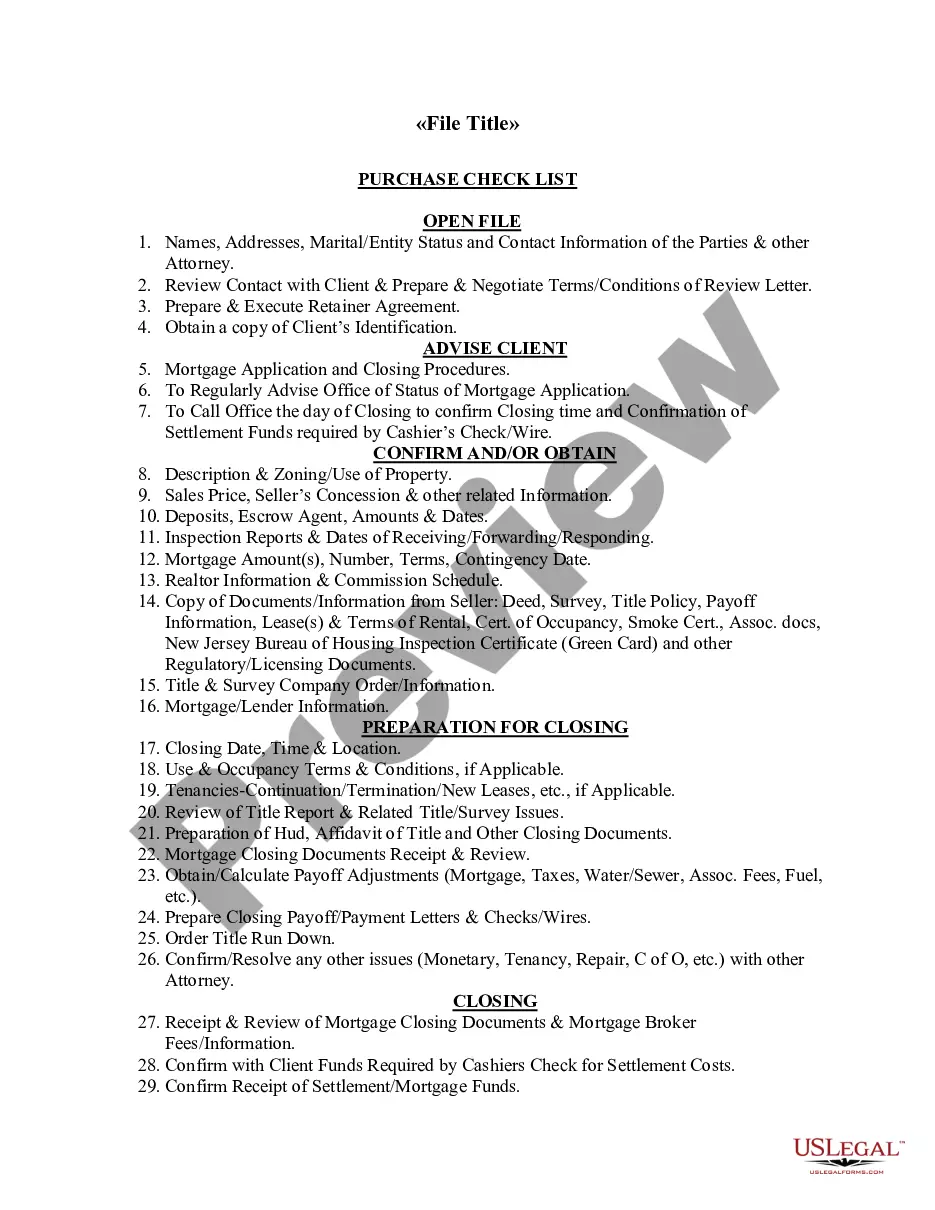
A list of things to be done and items to be delivered before a transaction can be closed. Responsibility for each item is typically allocated among the parties on the checklist. The status of each item is updated periodically and circulated to the parties in preparation for closing.
Buyers should take the time to thoroughly review these documents to understand the details of the loan terms, conditions, payments and funds required to close. By closely reviewing the Closing Disclosure, buyers will understand what they're signing.
The Deed: public record of the ownership of the property It often includes a description of the property and signed by both parties. Deeds are the most important documents in your closing package because they contain the statement that the seller transfers all rights and stakes in the property to the buyer.
A Closing Disclosure is a five-page form that provides final details about the mortgage loan you have selected. It includes the loan terms, your projected monthly payments, and how much you will pay in fees and other costs to get your mortgage (closing costs).
Two Weeks Before Closing: Contact your insurance company to purchase a homeowner's insurance policy for your new home. Your lender will need an insurance binder from your insurance company 10 days before closing. Check in with your lender to determine if they need any additional information from you.