Minnesota Monthly Living Expenses Information Sheet
Understanding this form
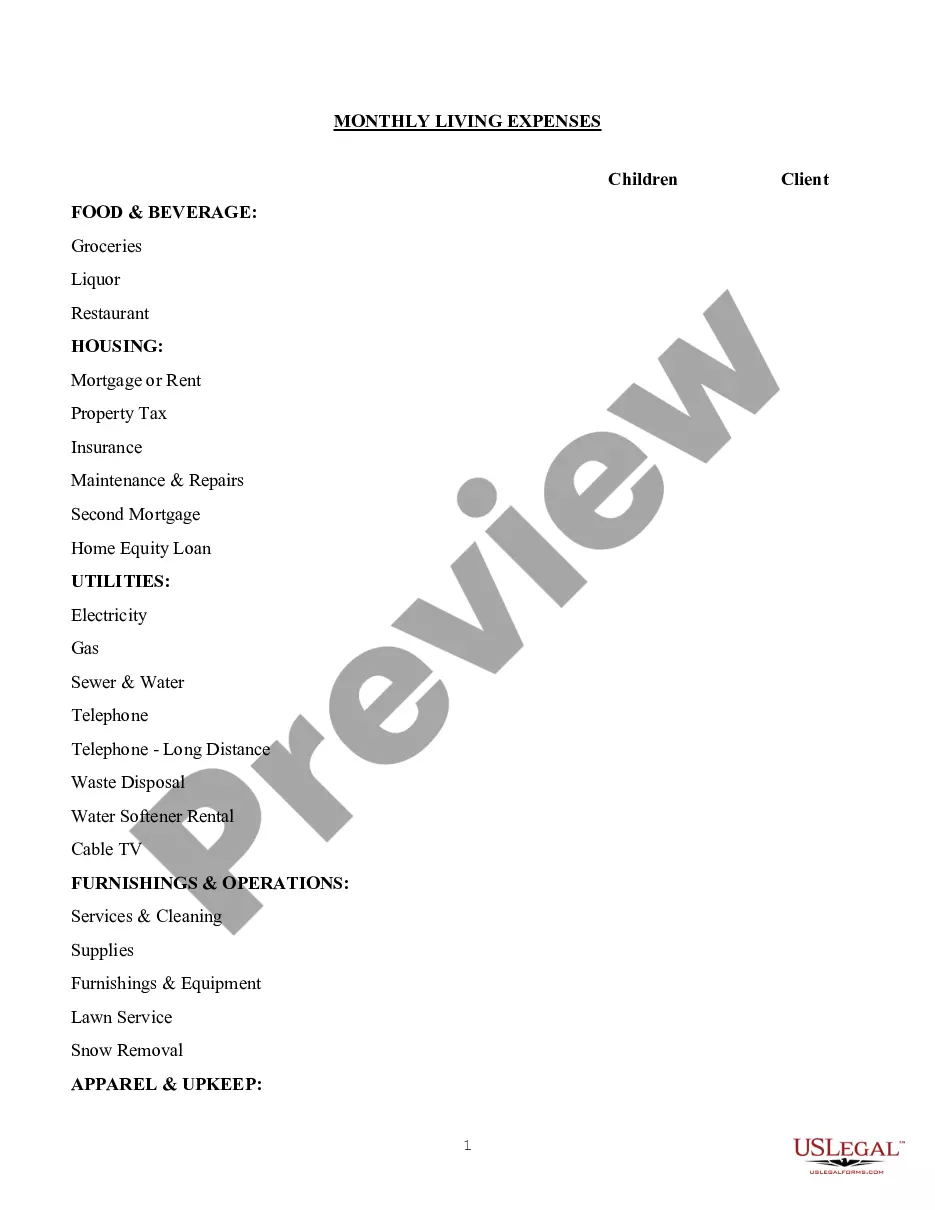
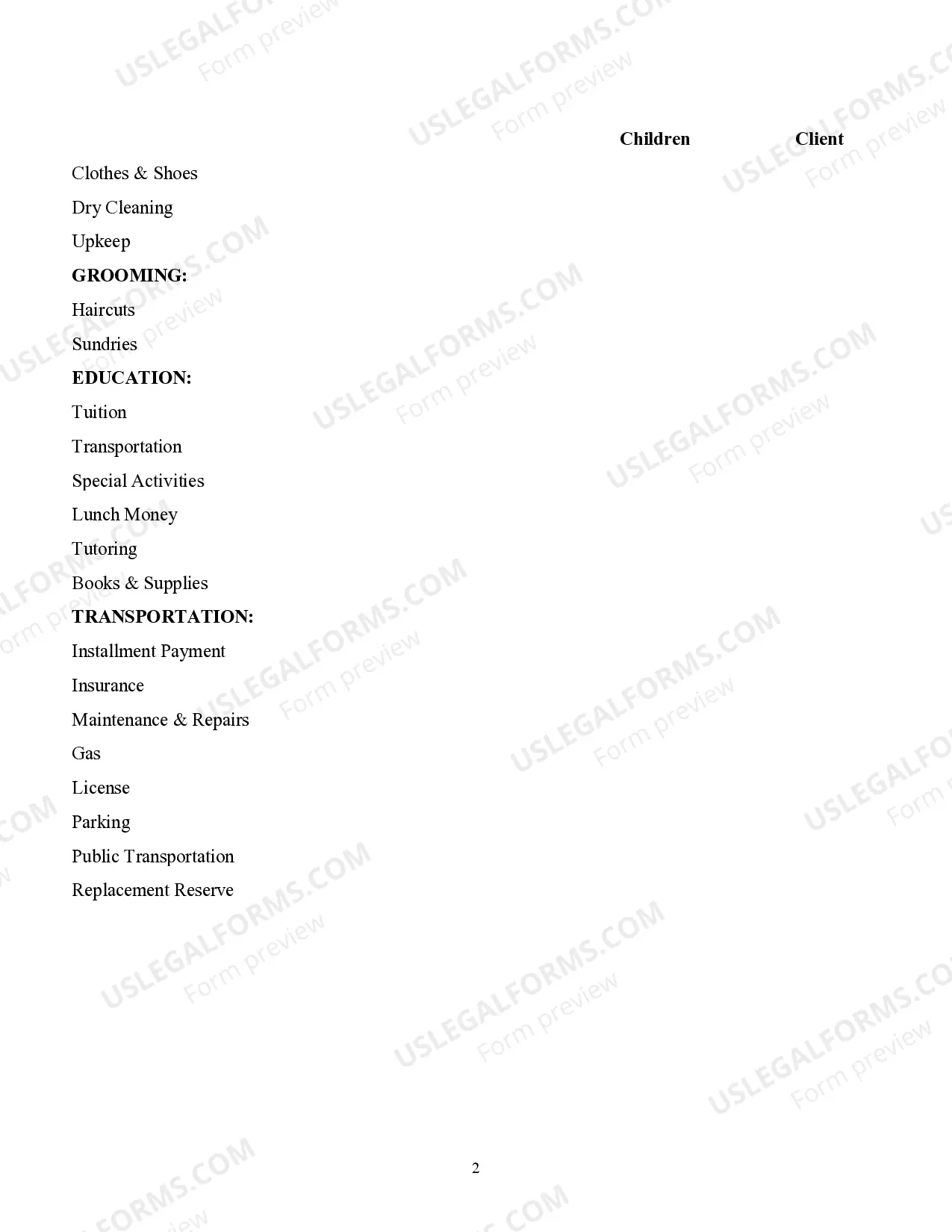
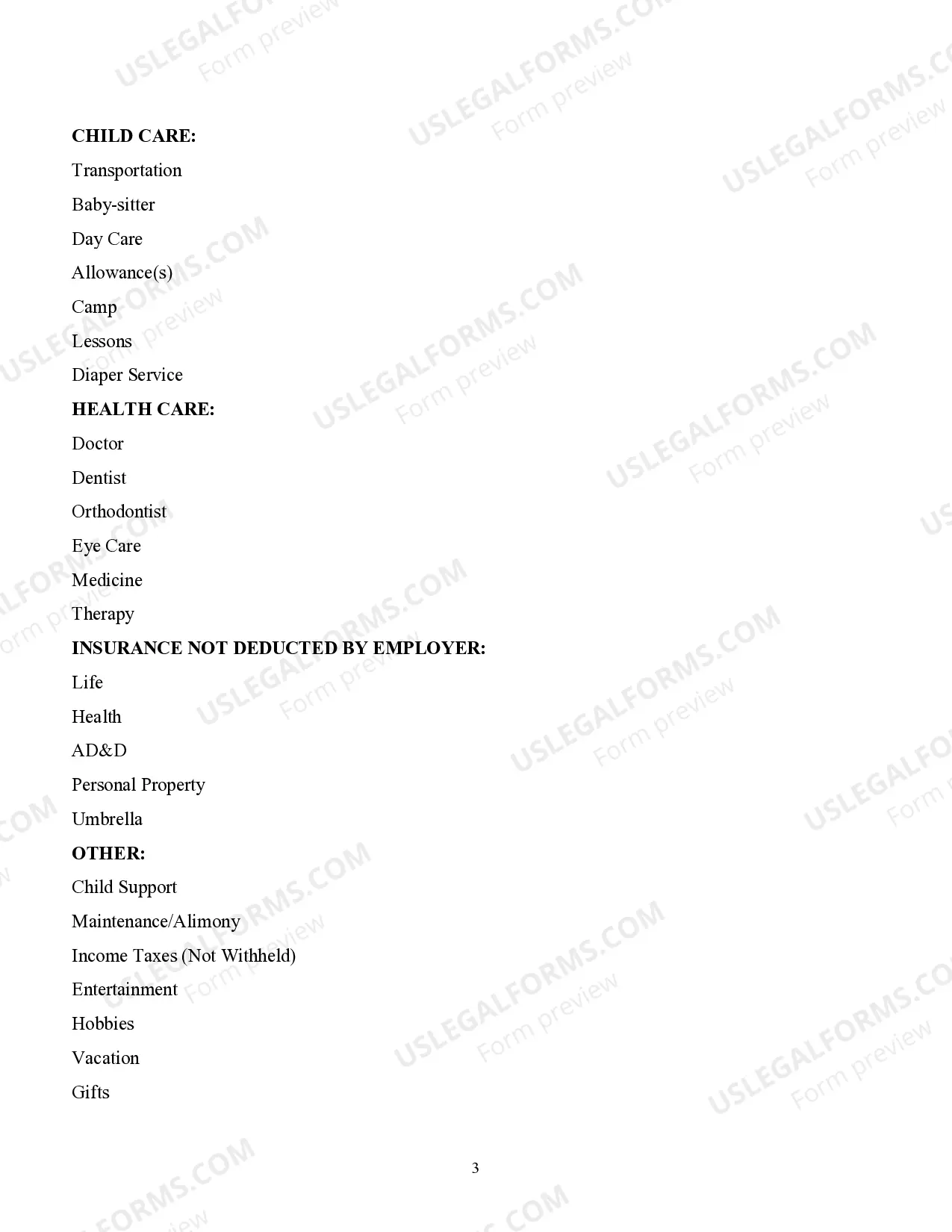
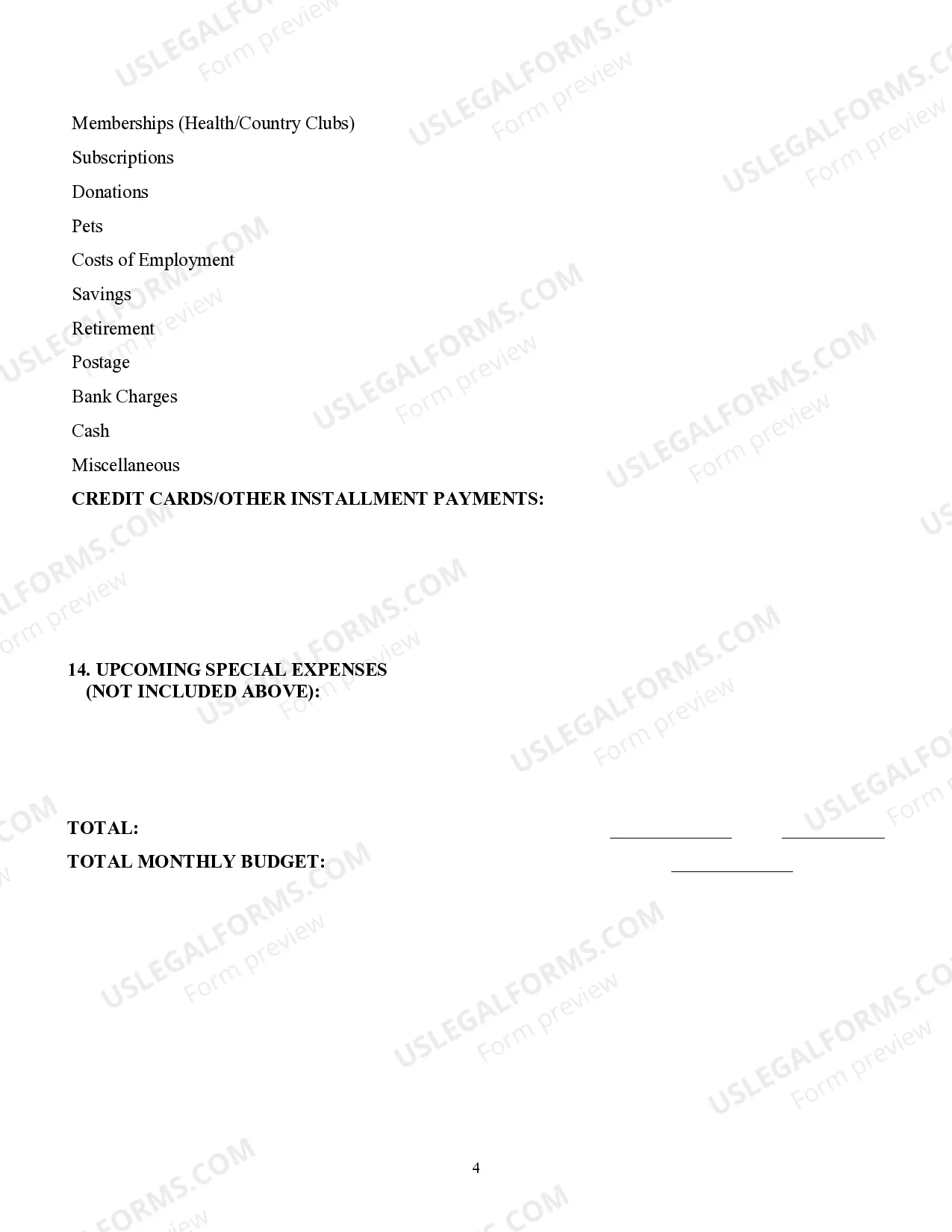
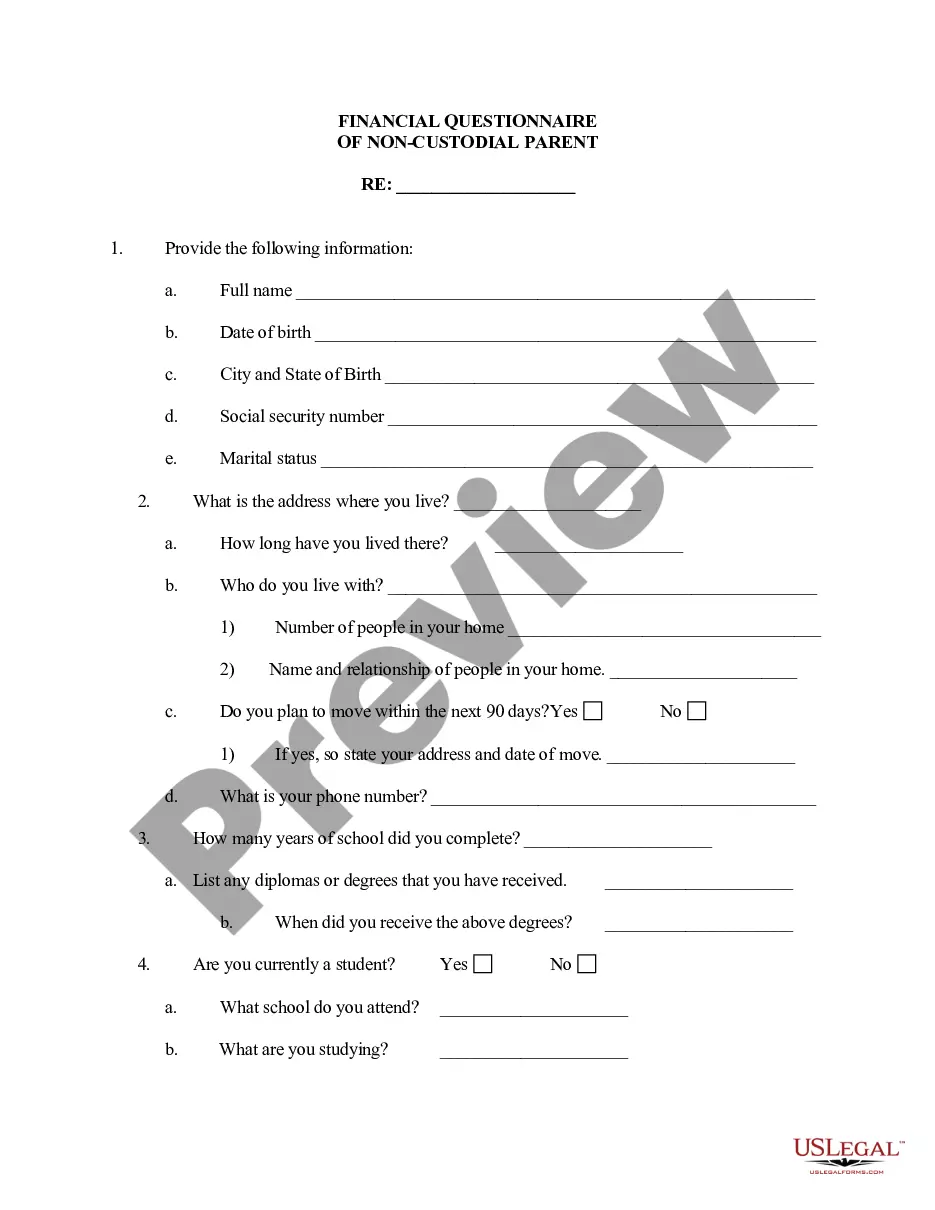
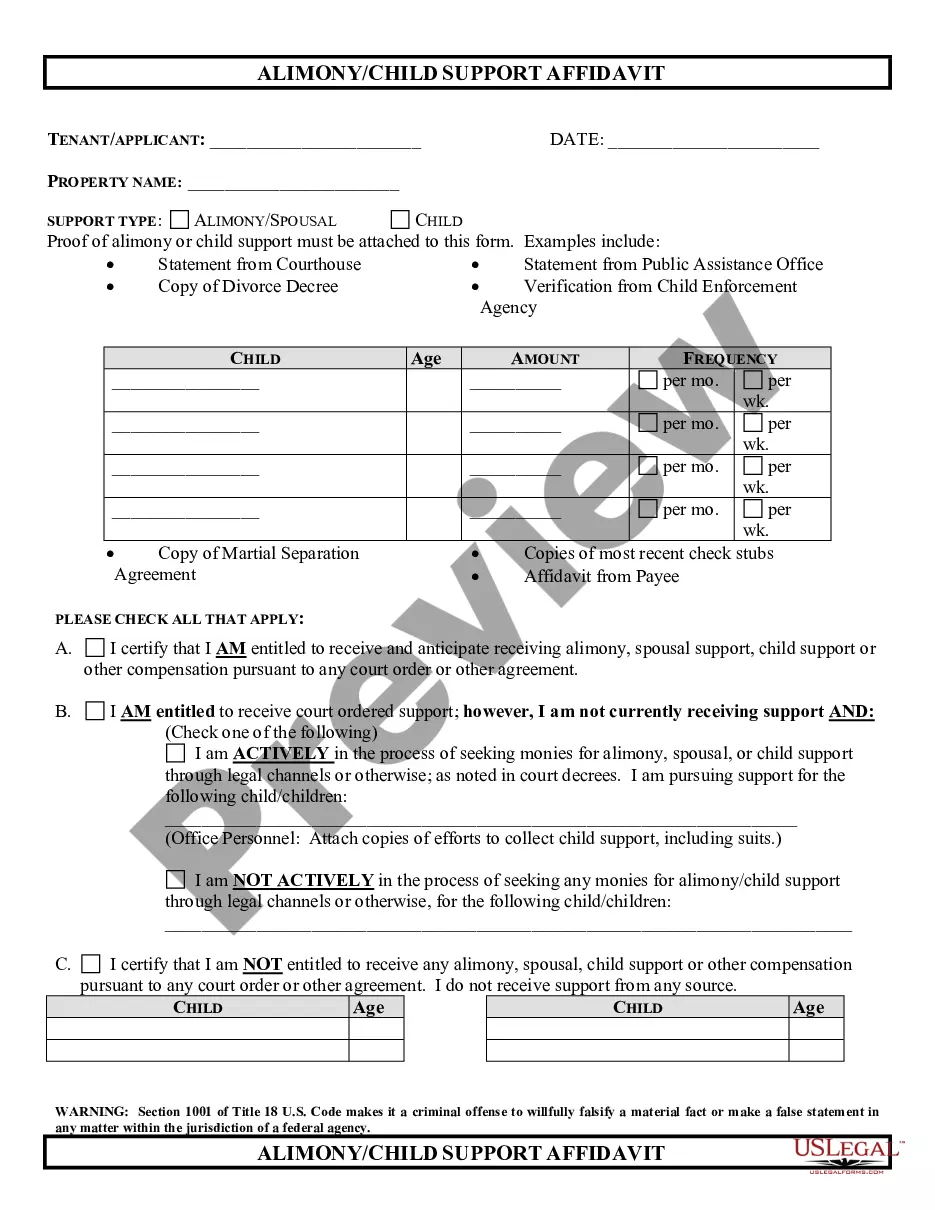
The Monthly Living Expenses Information Sheet is a document that helps individuals itemize and summarize their monthly living expenses. This form is particularly focused on capturing the essential details of living costs associated with the client and their children, distinguishing it from other financial forms that may not require such detailed breakdowns. It serves as an essential tool for individuals involved in legal proceedings where financial transparency is crucial, such as divorce or child custody cases.
Main sections of this form
- Groceries: Input your average monthly grocery expenses.
- Liquor: Document any monthly spending on alcoholic beverages.
- Rent/Mortgage: Specify the amount spent on housing each month.
- Property Tax: Indicate monthly property tax payments if applicable.
- Child-related Expenses: Include costs directly related to the care and upbringing of your children.
When this form is needed
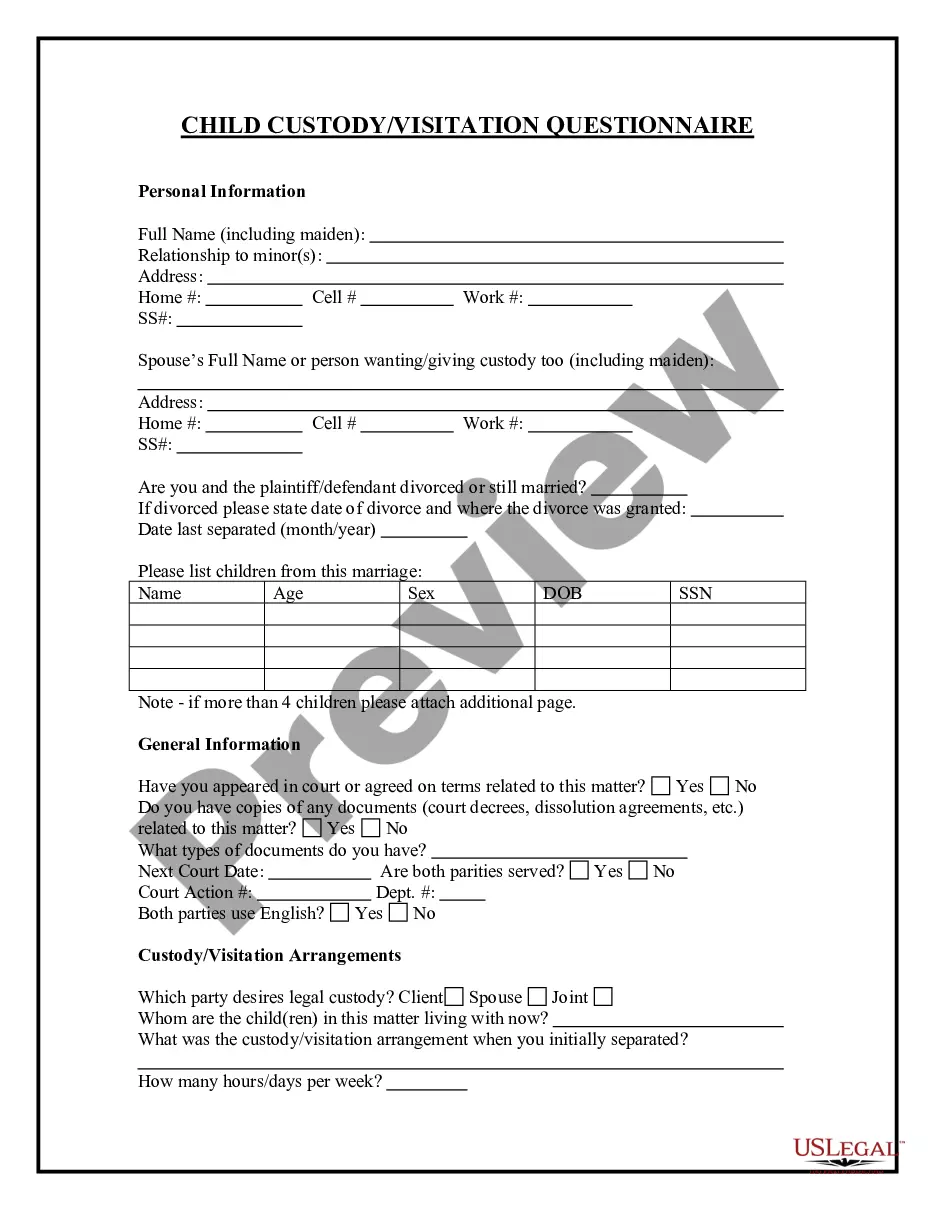
This form should be used in situations where financial information is necessary for legal matters, especially in family law cases. It is commonly required when filing for divorce, modifying child support, or during custody evaluations to provide a clear view of financial responsibilities and living conditions.
Who needs this form
- Parents involved in custody disputes.
- Individuals filing for divorce or separation.
- Those seeking to modify child support payments based on financial circumstances.
- Clients preparing for court hearings related to family law matters.
Steps to complete this form
- Gather your financial records, including receipts and statements for living expenses.
- Fill in the section on groceries with your estimated monthly costs.
- Document your rent or mortgage payment in the corresponding field.
- Include any additional expenses, such as property taxes and child-related costs.
- Review the completed form for accuracy before submission.
Does this document require notarization?
This form does not typically require notarization unless specified by local law. Always verify if there are unique requirements in your jurisdiction that necessitate notarization for legal validity.
Get your form ready online
Our built-in tools help you complete, sign, share, and store your documents in one place.
Make edits, fill in missing information, and update formatting in US Legal Forms—just like you would in MS Word.
Download a copy, print it, send it by email, or mail it via USPS—whatever works best for your next step.
Sign and collect signatures with our SignNow integration. Send to multiple recipients, set reminders, and more. Go Premium to unlock E-Sign.
If this form requires notarization, complete it online through a secure video call—no need to meet a notary in person or wait for an appointment.
We protect your documents and personal data by following strict security and privacy standards.

Make edits, fill in missing information, and update formatting in US Legal Forms—just like you would in MS Word.

Download a copy, print it, send it by email, or mail it via USPS—whatever works best for your next step.

Sign and collect signatures with our SignNow integration. Send to multiple recipients, set reminders, and more. Go Premium to unlock E-Sign.

If this form requires notarization, complete it online through a secure video call—no need to meet a notary in person or wait for an appointment.

We protect your documents and personal data by following strict security and privacy standards.
Avoid these common issues
- Failing to include all relevant expenses, resulting in an incomplete financial picture.
- Underestimating monthly costs, which can lead to disputes in legal proceedings.
- Neglecting to specify child-related expenses, which may be crucial for child support calculations.
Benefits of using this form online
- Convenient access to fill out the form at any time, from anywhere.
- Editable templates allow you to save progress and make changes as needed.
- Reliable and accurate forms created by licensed attorneys ensure compliance with legal standards.
Summary of main points
- The Monthly Living Expenses Information Sheet is essential for documenting financial obligations.
- This form is particularly useful in family law situations, such as divorce or child support cases.
- Ensure all relevant expenses are included and accurately estimated for legal reliability.
Looking for another form?



Form popularity
FAQ
The average monthly living expense in Minnesota can vary widely depending on your location and lifestyle. On average, individuals may spend between $2,500 and $3,500 per month, which includes rent or mortgage, utilities, groceries, transportation, and personal expenses. Understanding these costs helps you budget effectively and plan your finances. For a comprehensive overview of these expenses, you can consult our Minnesota Monthly Living Expenses Information Sheet.
To live comfortably in Minnesota, you typically need a salary that covers your essential needs, such as housing, food, healthcare, and transportation. Many financial experts suggest an annual income of around $70,000 to $80,000 for a single individual to enjoy a good quality of life. However, this can vary based on your personal lifestyle choices and location within the state. For a detailed breakdown of expenses, you can refer to our Minnesota Monthly Living Expenses Information Sheet.
While ZipRecruiter is seeing salaries as high as $128,269 and as low as $19,335, the majority of salaries within the Average jobs category currently range between $46,686 (25th percentile) to $69,793 (75th percentile) with top earners (90th percentile) making $84,883 annually in Minnesota.
Hibbing. New Ulm. Montevideo. Kasson. Crookston. Fairmont. North Branch. Litchfield.
Minneapolis Living Wage data 2020 living wage: $34,060 or $16.38 per hour at 2,080 hours worked per year. 110% of poverty for a family of four (4) with health coverage provided by employer. 2020 living wage: $28,820 or $13.86 per hour at 2,080 hours worked per year.
The average Minnesotan said it would take a million dollars a year, but what does rich actually mean? It's a word that's difficult to define. If you define rich as being in the top 5% of income earners, here in Minnesota your household income needs to be over $218,000 a year.
The average Minnesotan said it would take a million dollars a year, but what does rich actually mean? It's a word that's difficult to define. If you define rich as being in the top 5% of income earners, here in Minnesota your household income needs to be over $218,000 a year.
The folks at the personal finance site GoBankingRates.com looked at where a $100K income would be considered "good" in America's 50 largest cities. "Rent and state taxes are above average in Minneapolis, but the third-highest healthcare costs on the list are enough to push the city to the lower half of the rankings.
For example, the average renter in Minneapolis to earn about $84,372 per year to comfortably own a home and $90,279 to rent. The median income is the area is below $28,000, about half of what is needed to meet the "50/30/20" rule.