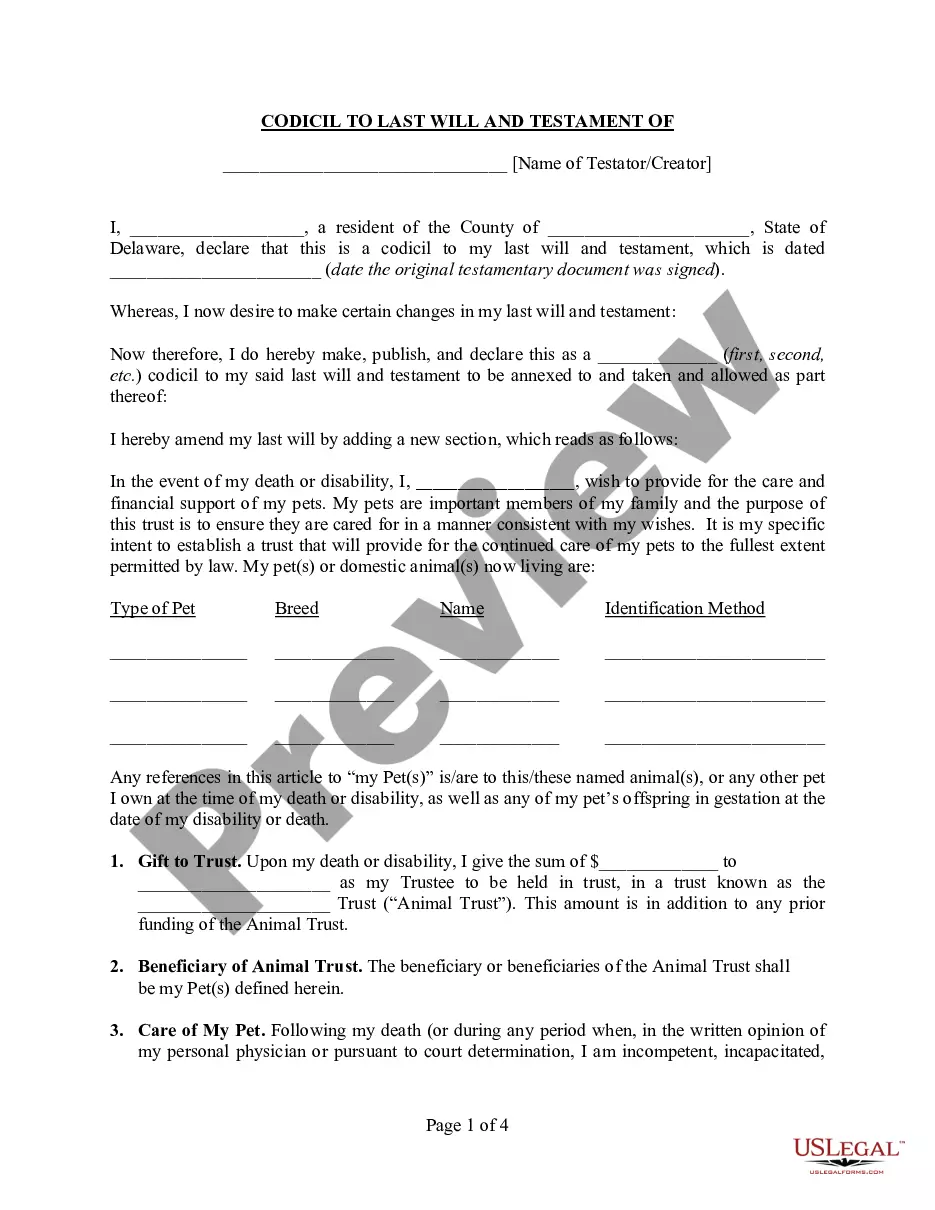
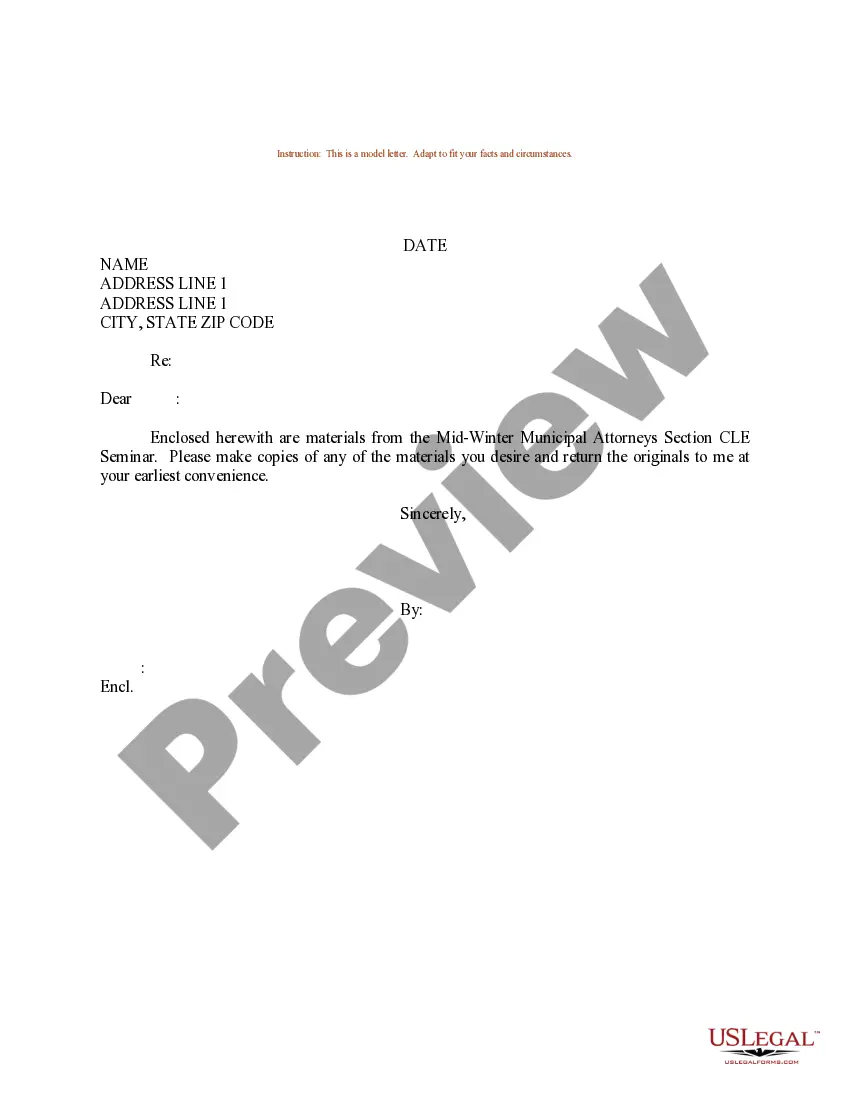
Sample Letter for Attorney CLE Seminar
Understanding this form
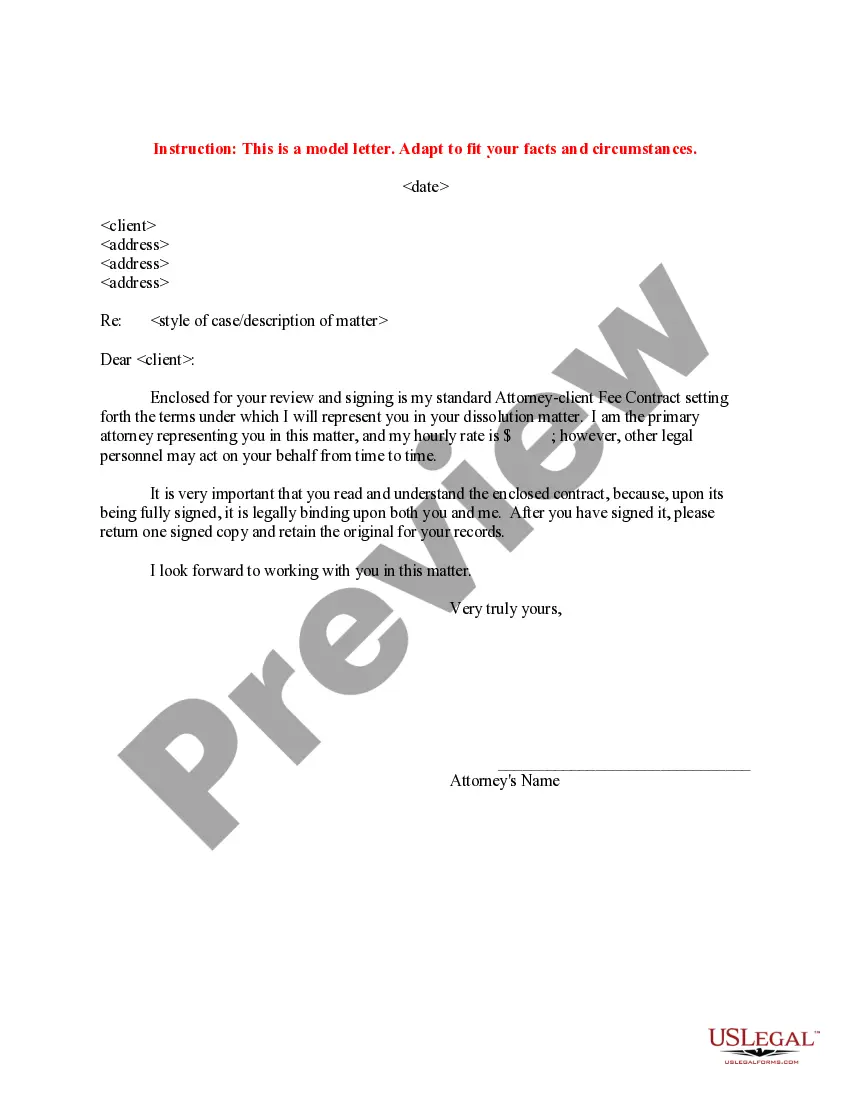
This Sample Letter for Attorney CLE Seminar is a template designed to create a professional communication for Continuing Legal Education seminars. It provides a structured format to ensure clarity and legality, distinguishing it from other general letter templates. This form allows attorneys to efficiently communicate seminar details to recipients, whether they are colleagues, clients, or stakeholders.
What’s included in this form
- Date: The date on which the letter is written.
- Recipient's name: The full name of the person receiving the letter.
- Recipient's address: Specific address details of the recipient, including city, state, and ZIP code.

Common use cases
This form should be used when an attorney needs to formally notify a recipient about a Continuing Legal Education seminar. It is applicable in situations where clear and professional communication is essential, such as sending invitations, reminders, or details related to the agenda of the seminar.
Who needs this form
Individuals who may find this form useful include:
- Attorneys organizing CLE seminars.
- Legal professionals sending invitations to colleagues or clients.
- Administrative personnel in law firms.
How to complete this form
- Fill in the date at the top of the letter.
- Enter the recipient's name clearly below the date.
- Provide the full address of the recipient.
- Customize the body of the letter as needed for your specific seminar details.
- Sign the letter if sending a hard copy and ensure proper delivery.
Notarization requirements for this form
Notarization is not commonly needed for this form. However, certain documents or local rules may make it necessary. Our notarization service, powered by Notarize, allows you to finalize it securely online anytime, day or night.
Get your form ready online
Our built-in tools help you complete, sign, share, and store your documents in one place.
Make edits, fill in missing information, and update formatting in US Legal Forms—just like you would in MS Word.
Download a copy, print it, send it by email, or mail it via USPS—whatever works best for your next step.
Sign and collect signatures with our SignNow integration. Send to multiple recipients, set reminders, and more. Go Premium to unlock E-Sign.
If this form requires notarization, complete it online through a secure video call—no need to meet a notary in person or wait for an appointment.
We protect your documents and personal data by following strict security and privacy standards.

Make edits, fill in missing information, and update formatting in US Legal Forms—just like you would in MS Word.

Download a copy, print it, send it by email, or mail it via USPS—whatever works best for your next step.

Sign and collect signatures with our SignNow integration. Send to multiple recipients, set reminders, and more. Go Premium to unlock E-Sign.

If this form requires notarization, complete it online through a secure video call—no need to meet a notary in person or wait for an appointment.

We protect your documents and personal data by following strict security and privacy standards.
Common mistakes
- Not including the date, which is essential for context.
- Forgetting to double-check the recipient's name and address for accuracy.
- Using a casual tone inappropriate for professional communication.
Benefits of using this form online
- Easy to customize with your seminar's specifics.
- Accessible from anywhere, allowing for quick edits and downloads.
- Designed by legal professionals, ensuring compliance with standard practices.
Main things to remember
- The Sample Letter for Attorney CLE Seminar effectively communicates event details.
- Use this form to ensure clarity and professionalism in legal communications.
- Remember to personalize the letter to match the specific seminar details.
Looking for another form?
Form popularity
FAQ
Step 1 Choose Your Topic: Step 2 Find and Gather Your Information. Step 3 Make an Outline. Step 4 Gather your notes and arrange them. Step 5 Writing your paper.
Pick a good topic. Know your audience. Begin with a title slide and show a brief outline or list of topics to be covered. Introduce your topic well. Methodology. Data presentation is the heart of a successful talk. Always give a synthesis or conclusion. Answer questions thoroughly and thoughtfully.
1. Community seminar. These seminars involve adults with some common purpose which may be figurative or literal. Such seminars are organized for people who are facing difficulty in their work. Community seminars are held to improve collaboration among two parties with different views.
3.4 Chapters The chapters may be broadly divided into 4/5 parts 1) Introduction with Open Research Issues 2) Overviews of Selected issues with Literature Reviews 3) Proposed Work (for project work) 4) Tools/Platform/Experimental Setup/Hardware Requirements with Results & Discussions 5) Summary/Conclusions 6)
A seminar paper is a short piece of writing, usually 1-2 pages in length, concerning an aspect of a given text. A seminar paper interprets specific examples and evidence. A seminar paper needs to have an extremely focused thesis; you must be able to thoroughly discuss your point.
Assume your audience is infinitely ignorant but infinitely intelligent. Give a good introduction. Never underestimate a person's pleasure in hearing a good presentation of what he or she already knows. Keep your audience oriented. A talk should entertain.
Introduction. The introduction section should contain the following elements: The body of the report. In the introduction section the problem is defined and the methods for solving it is outlined. Summary and Conclusions. Executive summary. References.
Title Section This includes the name of the author(s) and the date of report preparation. Summary There needs to be a summary of the major points, conclusions, and recommendations. Introduction The first page of the report needs to have an introduction. Body This is the main section of the report.
It refers to a structured group discussion what usually follows a formal lecture or lectures often in the form of an essay or a paper presentation on a theme.