Utah Codicil to Will Form for Amending Your Will - Will Changes or Amendments
Understanding this form
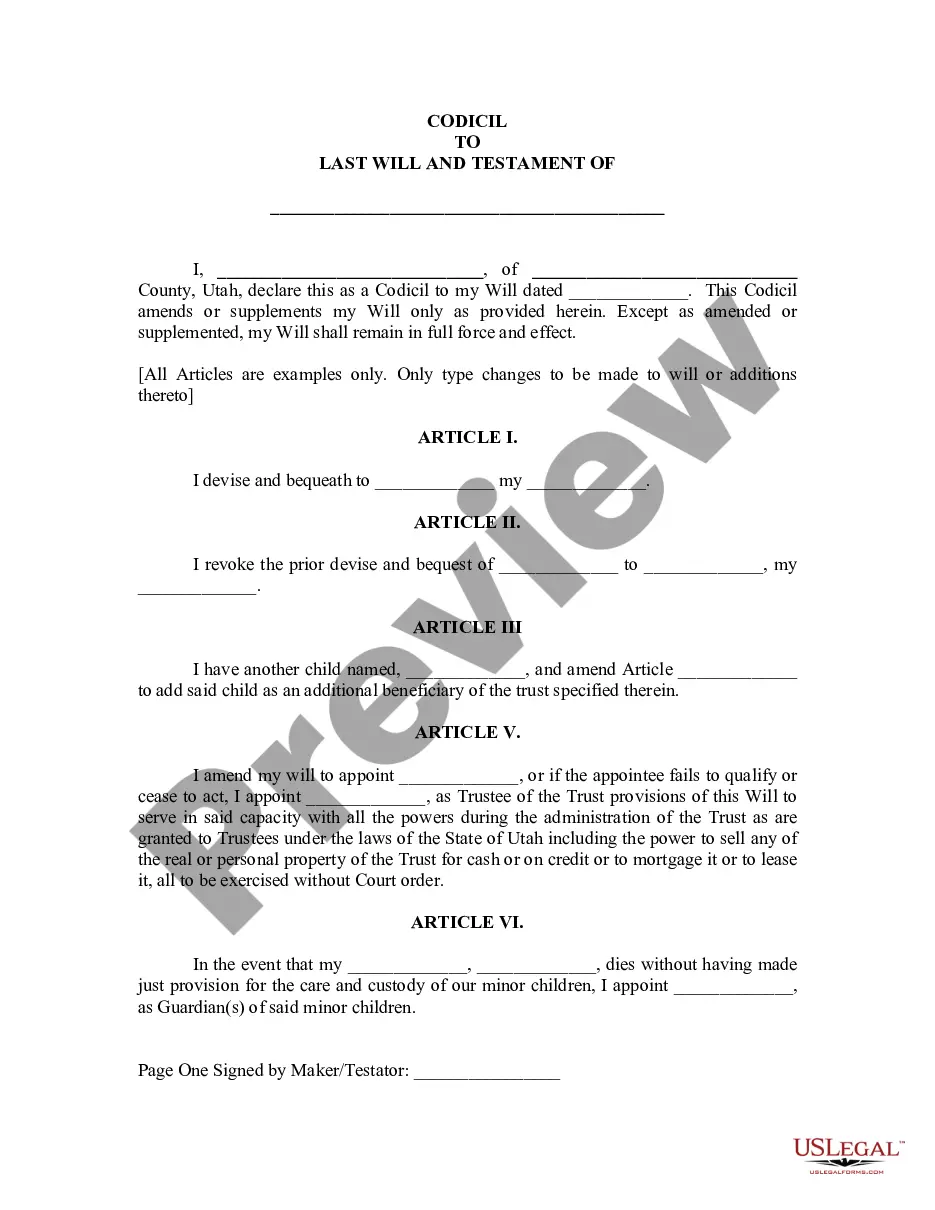
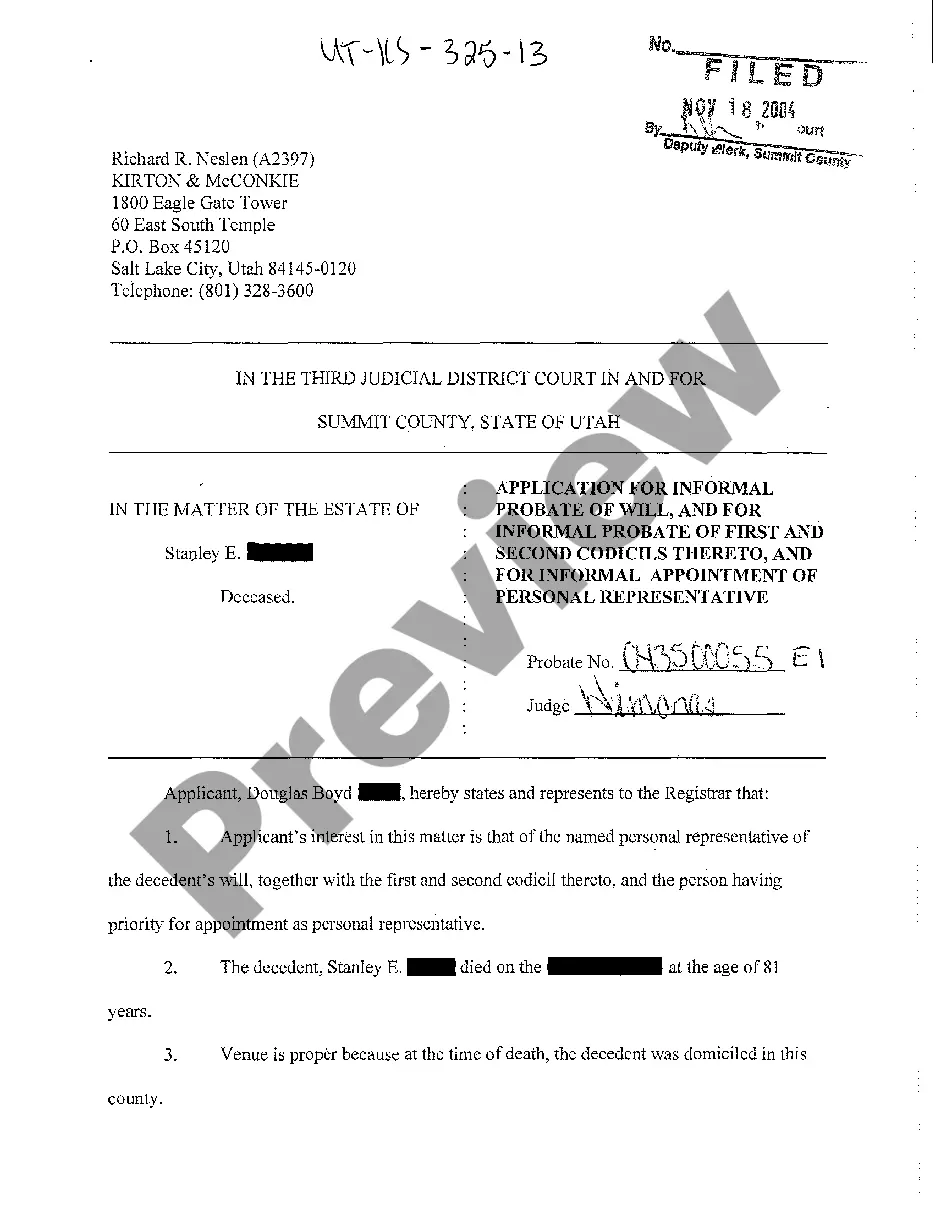
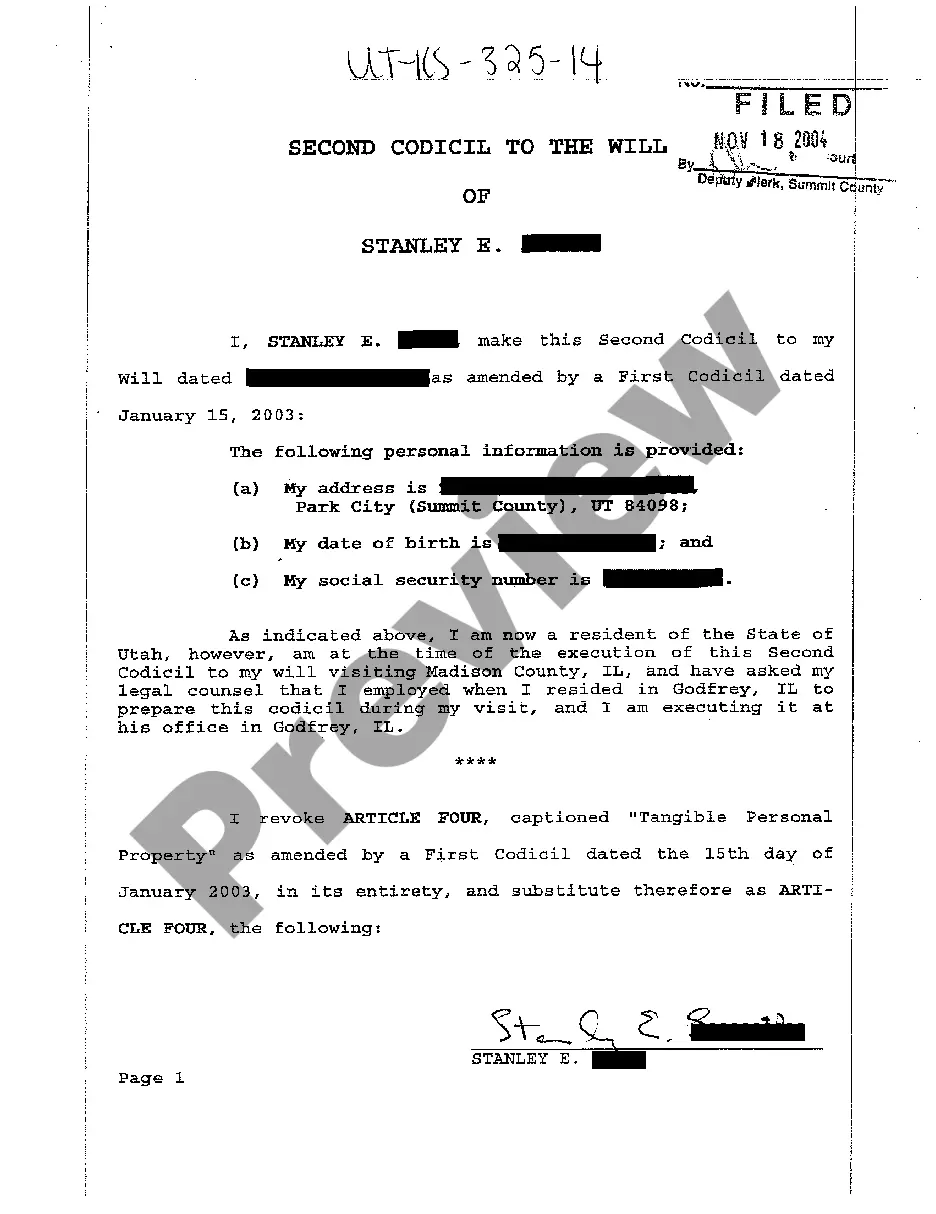
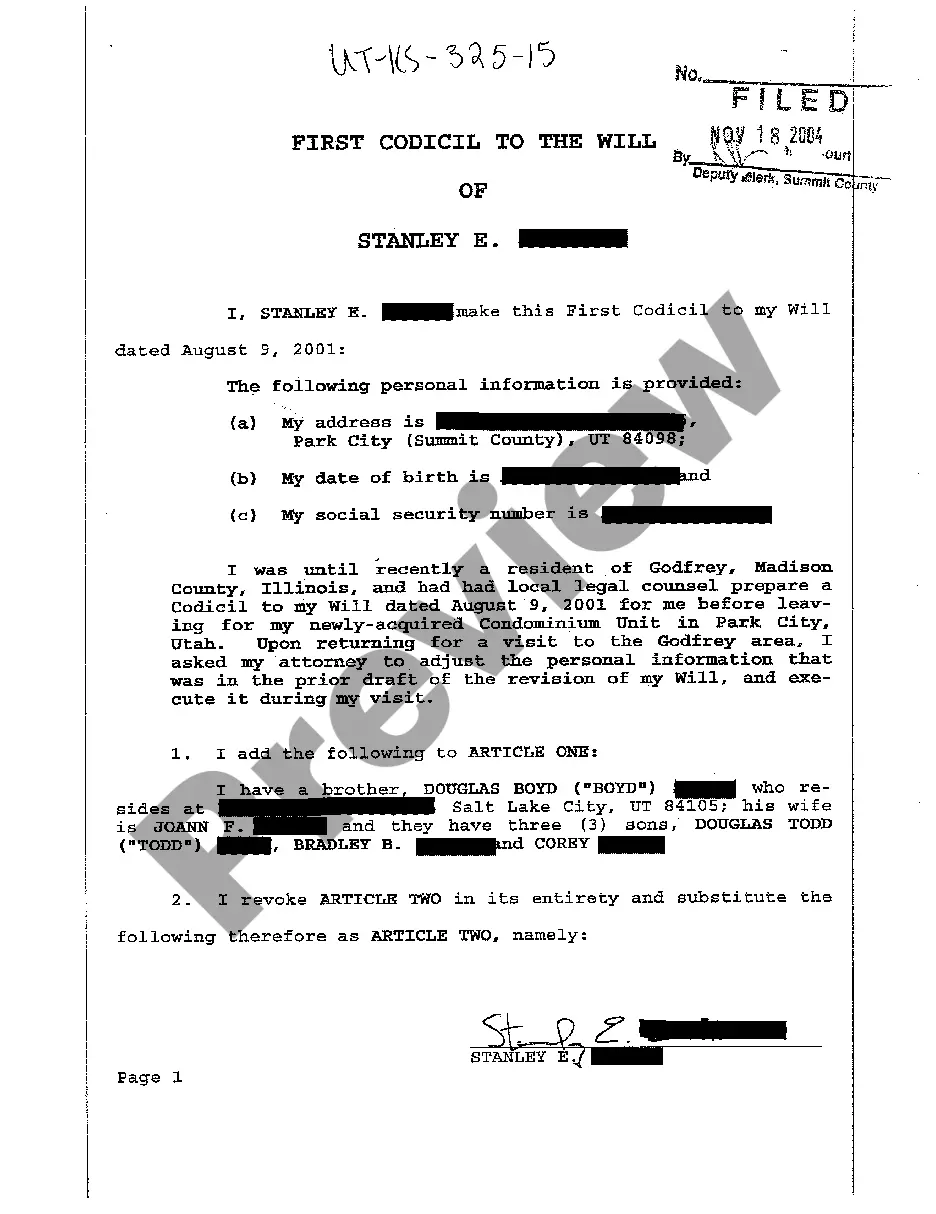
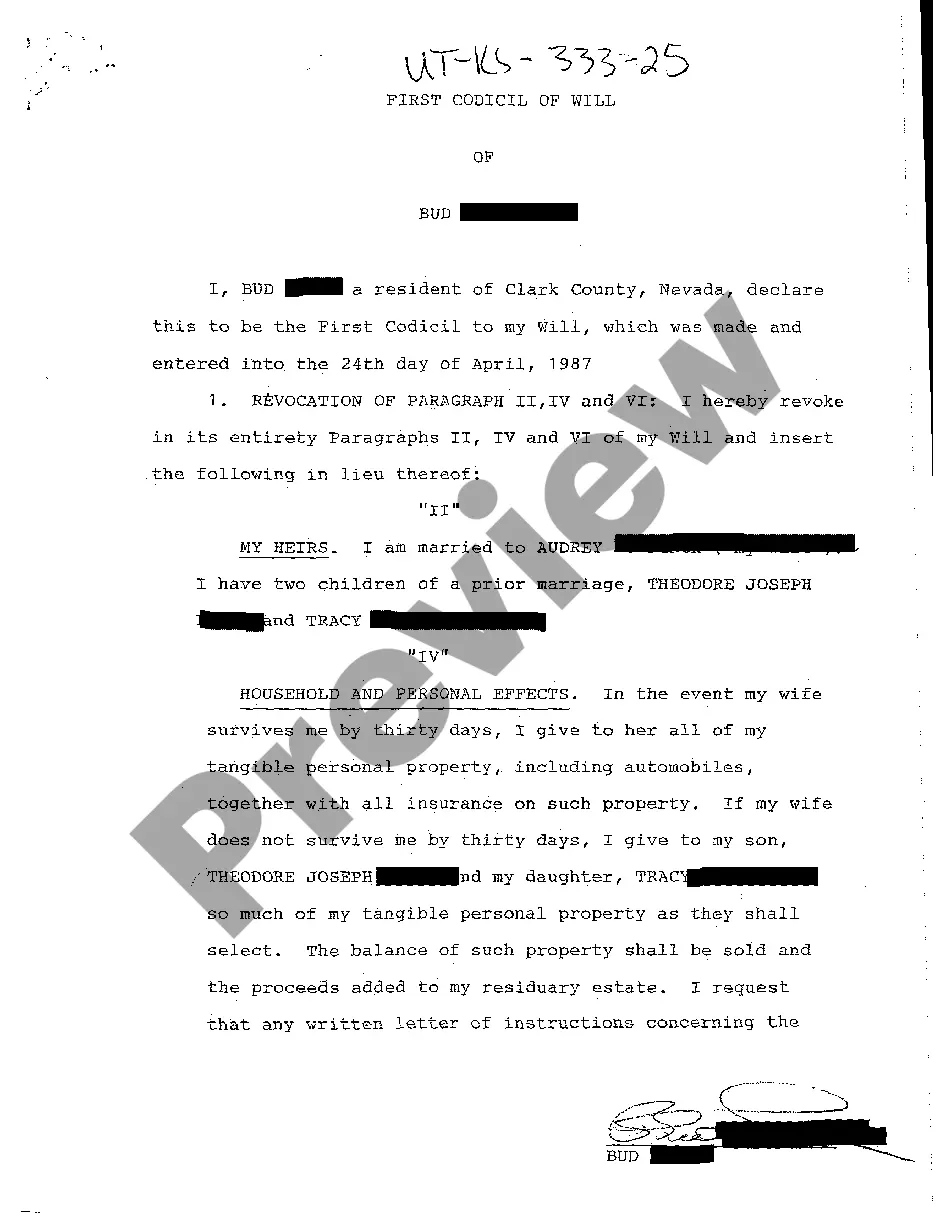
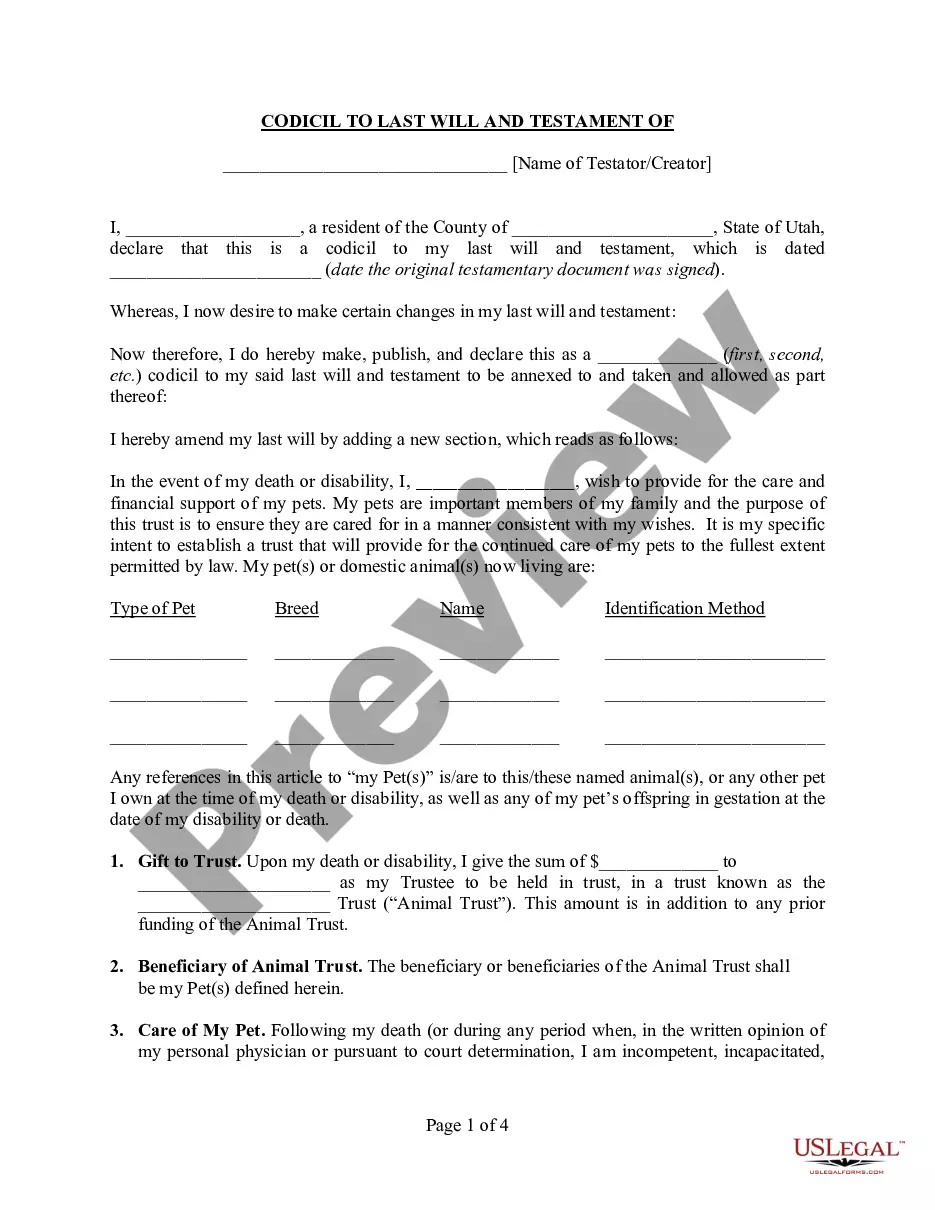
The Codicil to Will Form is used to amend or supplement an existing will without the need to create a new one. This form allows you to make specific changes to your will while affirming that all other provisions remain valid. It is particularly useful for minor changes, such as adding beneficiaries or altering the executor of the estate, making it a convenient option compared to drafting a completely new Last Will and Testament.
Key components of this form
- Identification of the testator and the original will.
- Specific articles for amending bequests or beneficiaries.
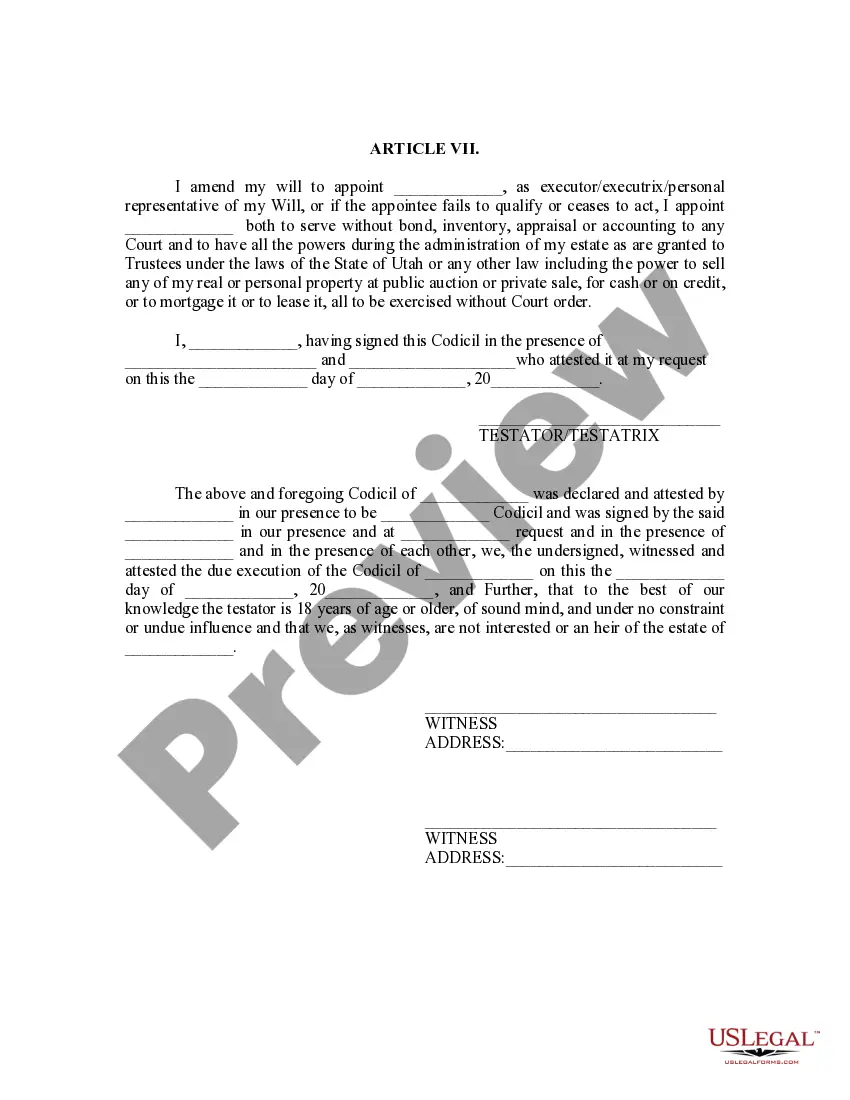
- Provisions for appointing executors or trustees.
- Clauses for revoking previous directives.
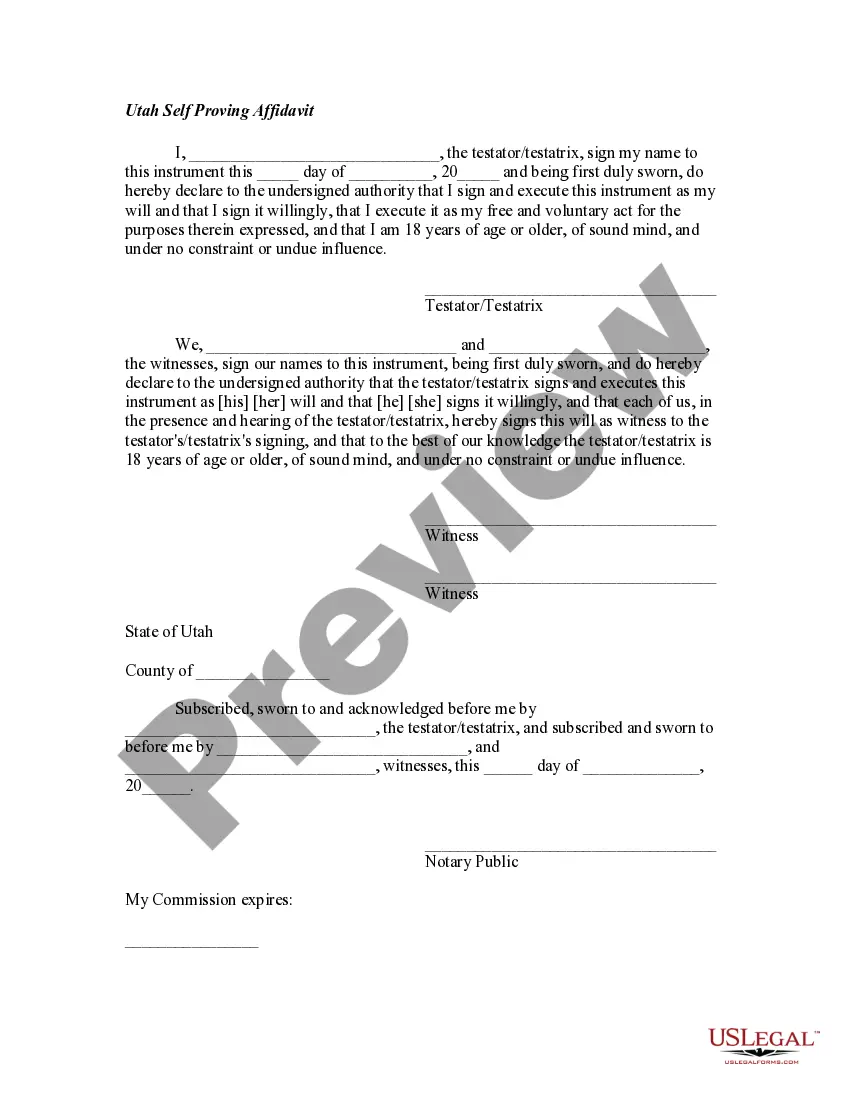
- Notary and witness requirements to solidify the codicil's legality.
Common use cases
You should use the Codicil to Will Form when you need to make specific changes to your existing will, such as adding a new beneficiary, changing an executor, or revoking a prior provision. It is ideal when the desired modifications are minor and do not necessitate creating an entirely new will.
Who this form is for
- Individuals who have an existing will that requires updates.
- Those seeking to clarify or modify specific provisions in their will.
- People looking for a cost-effective way to make legal changes without drafting a new will.
- Residents of Utah, as this form adheres to state-specific requirements.
How to complete this form
- Fill in your full name and the date of your original will.
- Specify the changes you want to make in the provided articles.
- Identify and appoint a new executor or guardian if necessary.
- Sign the codicil in front of witnesses as required by Utah law.
- Have the signatures notarized to enhance the document's validity.
Notarization guidance
Notarization is required for this form to take effect. Our online notarization service, powered by Notarize, lets you verify and sign documents remotely through an encrypted video session, available 24/7.
Get your form ready online
Our built-in tools help you complete, sign, share, and store your documents in one place.
Make edits, fill in missing information, and update formatting in US Legal Forms—just like you would in MS Word.
Download a copy, print it, send it by email, or mail it via USPS—whatever works best for your next step.
Sign and collect signatures with our SignNow integration. Send to multiple recipients, set reminders, and more. Go Premium to unlock E-Sign.
If this form requires notarization, complete it online through a secure video call—no need to meet a notary in person or wait for an appointment.
We protect your documents and personal data by following strict security and privacy standards.

Make edits, fill in missing information, and update formatting in US Legal Forms—just like you would in MS Word.

Download a copy, print it, send it by email, or mail it via USPS—whatever works best for your next step.

Sign and collect signatures with our SignNow integration. Send to multiple recipients, set reminders, and more. Go Premium to unlock E-Sign.

If this form requires notarization, complete it online through a secure video call—no need to meet a notary in person or wait for an appointment.

We protect your documents and personal data by following strict security and privacy standards.
Mistakes to watch out for
- Not signing the document in front of witnesses.
- Failing to update the original will reference.
- Not including clear and specific changes to be made.
Benefits of completing this form online
- Convenience of downloading and completing the form at your own pace.
- Editability allows you to customize the provisions easily.
- Designed by licensed attorneys, ensuring reliability and legal compliance.
Legal use & context
- This codicil is legally binding in Utah and must be executed according to state laws.
- It is an effective way to update your will without revoking the entire document.
- Legal enforceability depends on complying with all signing and witnessing requirements.
Main things to remember
- The Codicil to Will Form allows you to amend an existing will without creating a new one.
- Ensure all changes are clear and legally witnessed for validity.
- This form is tailored for use in Utah, adhering to state legal requirements.
Looking for another form?



Form popularity
FAQ
What makes a will legal?The will must be signed by at least two witnesses. The witnesses must watch you sign the will, though they don't need to read it. Your witnesses, in most states, must be people who won't inherit anything under the will.
What is a will? A will is simply a legal document in which you, the testator, declare who will manage your estate after you die. Your estate can consist of big, expensive things such as a vacation home but also small items that might hold sentimental value such as photographs.
Decide what to include in your will. Be specific about where all of your stuff goes. Select your beneficiaries. Choose an executor for your will. Name guardians for your children. Sign your will in front of witnesses. Let everyone know beforehand. Store your will in a legacy drawer.
Drafting the will yourself is less costly and may put you out about $150 or less. Depending on your situation, expect to pay anywhere between $300 and $1,000 to hire a lawyer for your will. While do-it-yourself will kits may save you time and money, writing your will with a lawyer ensures it will be error-free.