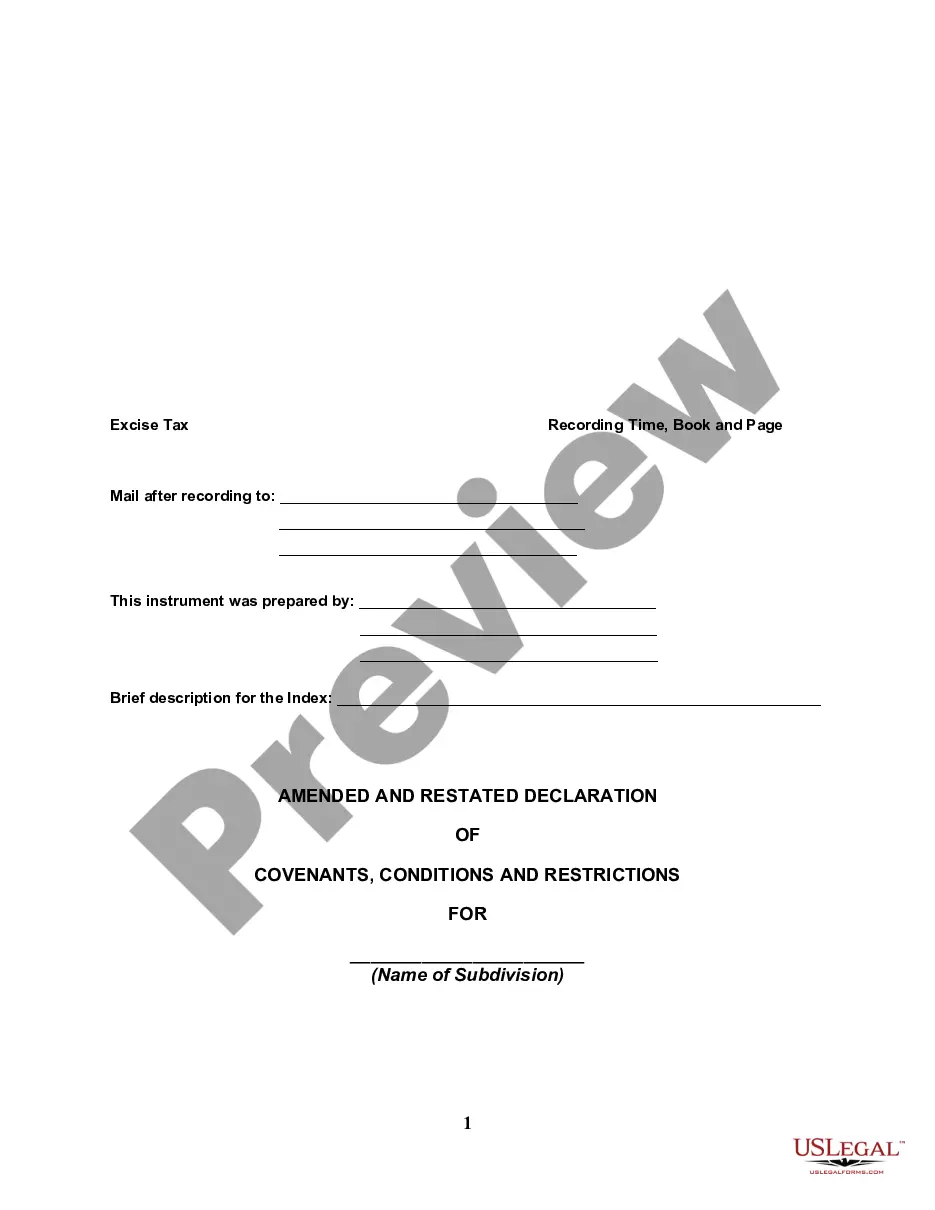
Utah Last Will and Testament for Widow or Widower with Minor Children
What this document covers
The Last Will and Testament for Widow or Widower with Minor Children is a legal document that specifies how your assets will be distributed after your death. This form is specifically designed for individuals who are widows or widowers and have minor children. It allows you to appoint a personal representative to manage your estate, designate beneficiaries for your property, and set up provisions for your children's inheritance, ensuring that their needs are met even after your passing.
Main sections of this form
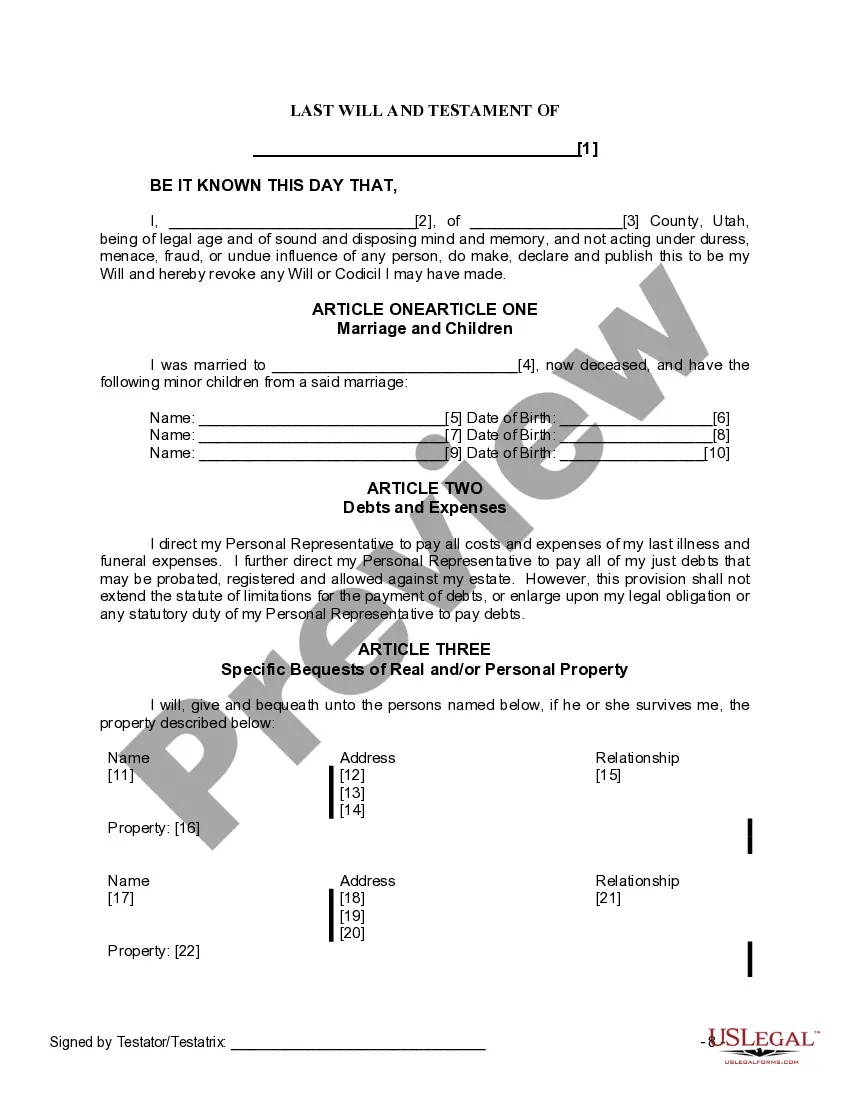
- Identification of the deceased spouse and minor children.
- Designation of a personal representative or executor.
- Specific bequests of property to individuals.
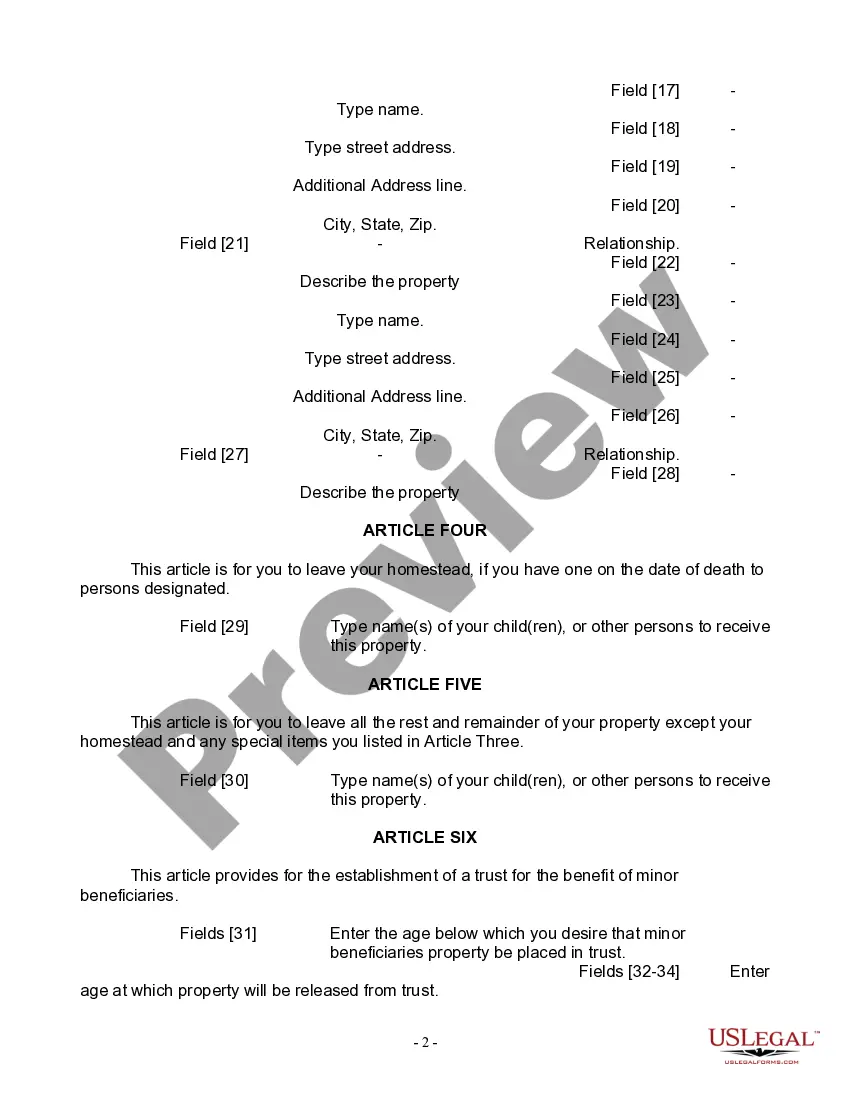
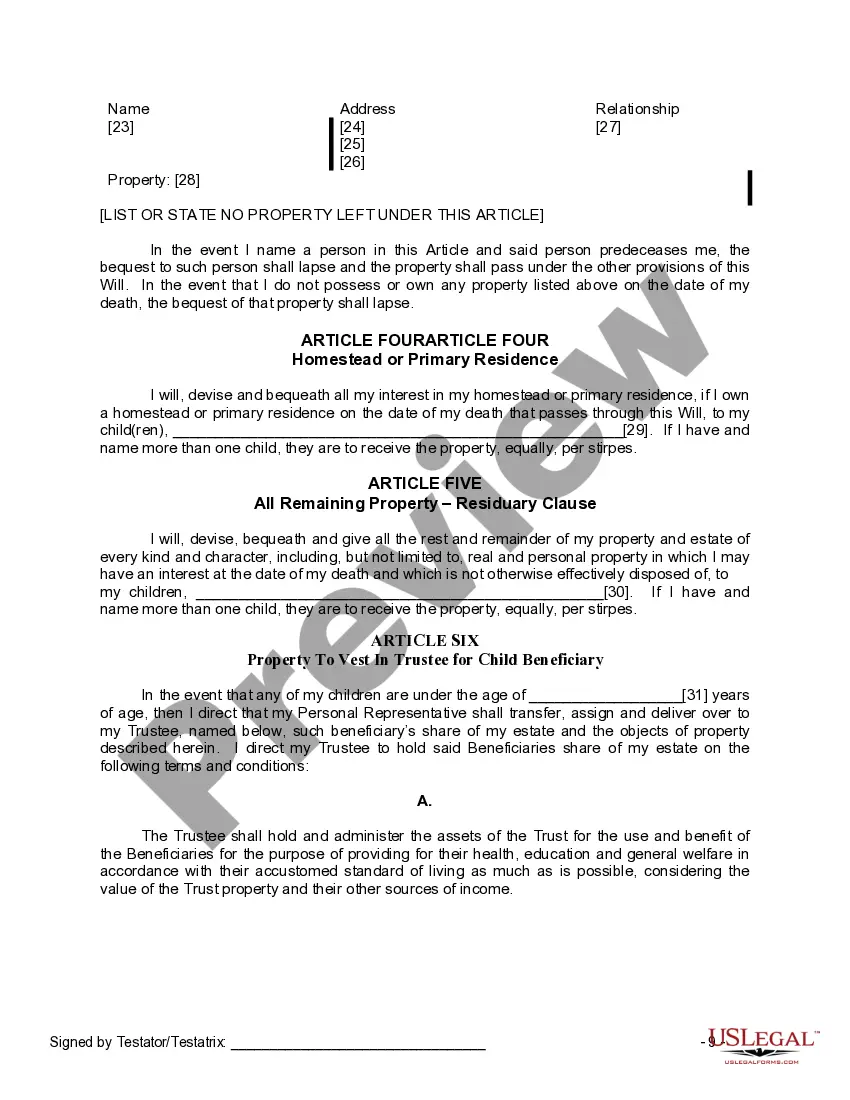
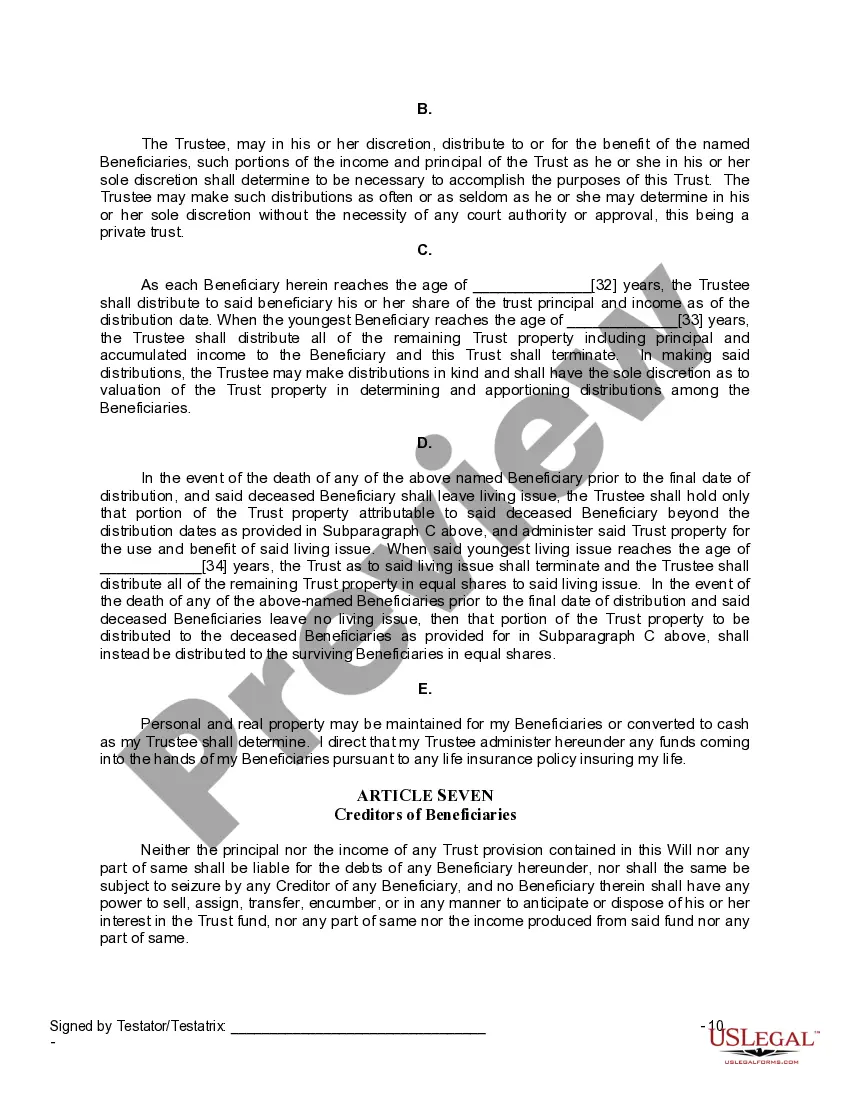
- Establishment of a trust for minor beneficiaries.
- Appointment of guardians for minor children.
- Signature requirements and witness provisions for legal validation.


When to use this document
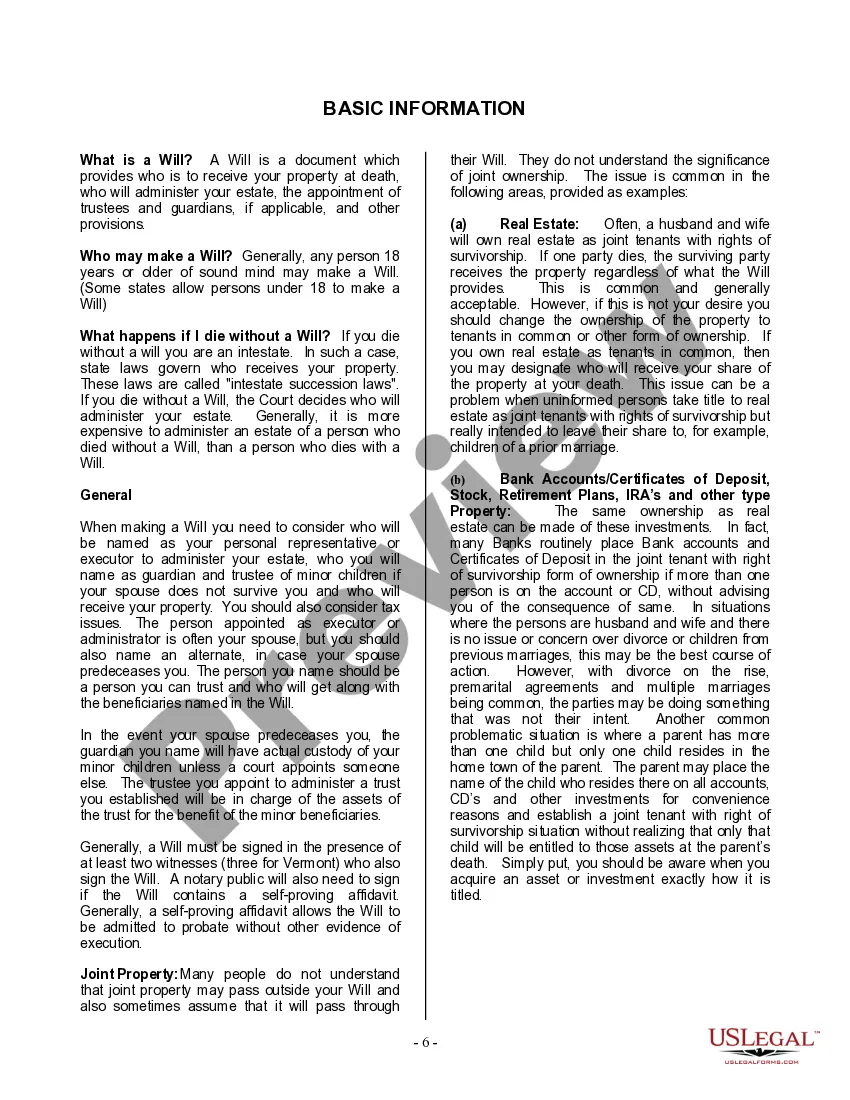
This form should be used when a widow or widower wants to establish a clear plan for the distribution of their estate, particularly when minor children are involved. If you have recently lost a spouse and need to ensure that your children are taken care of and that your wishes are honored regarding your assets, this Last Will and Testament is essential. Additionally, it is useful for avoiding conflicts among family members regarding the distribution of property after your demise.
Who needs this form
- Widows or widowers with minor children.
- Individuals seeking to ensure their children's financial security after their passing.
- Anyone who wishes to designate specific individuals to receive particular assets.
- Persons looking to avoid intestacy laws and ensure their estate is managed according to their wishes.
How to complete this form
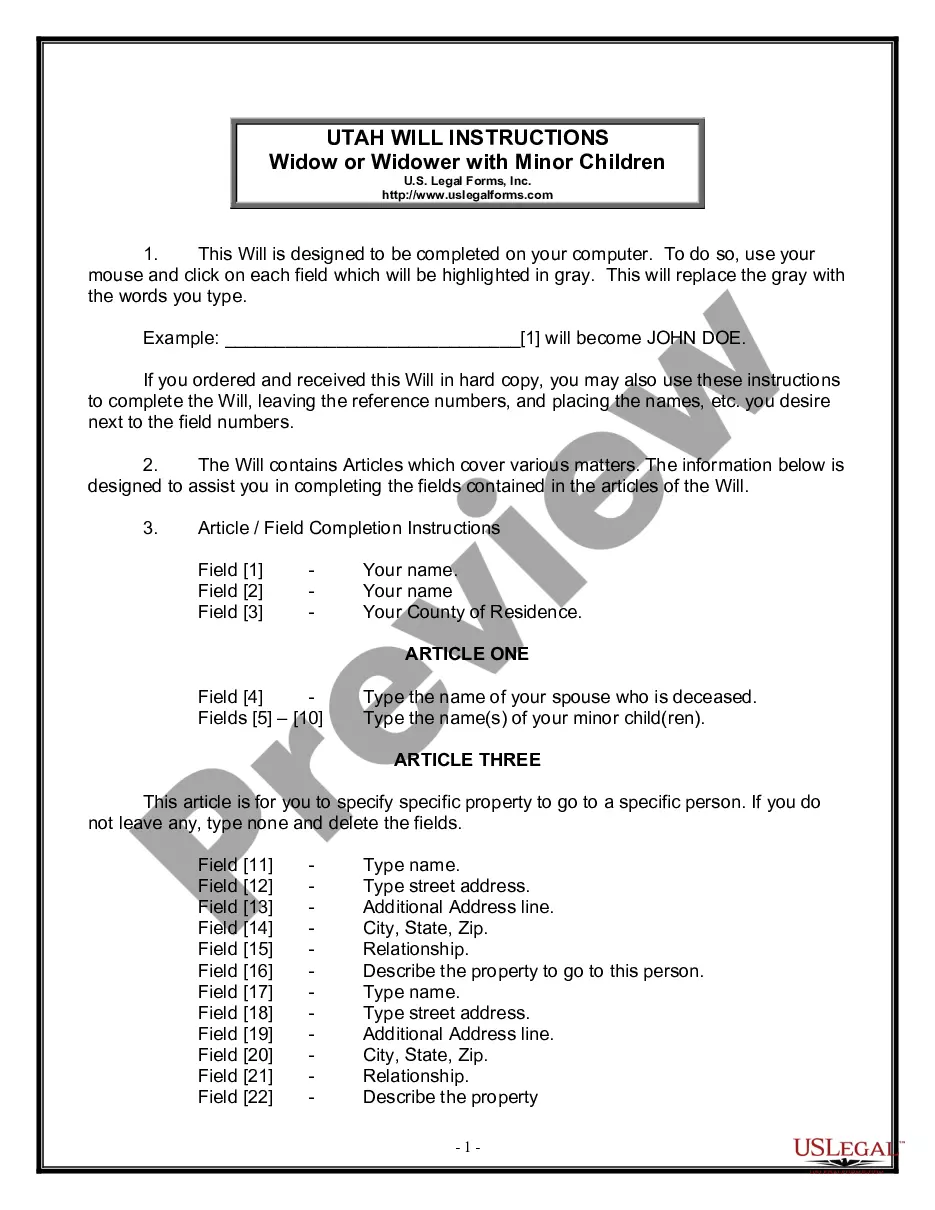
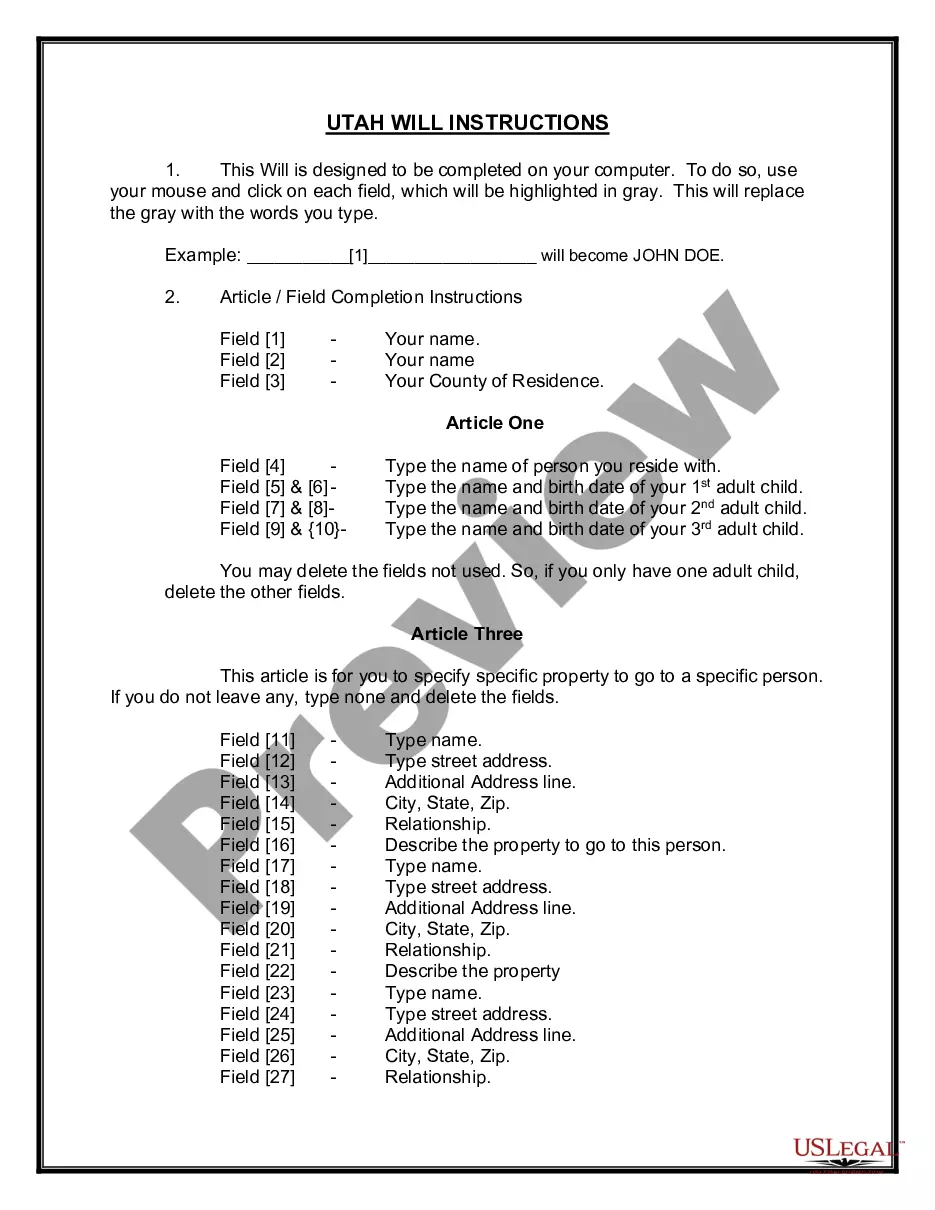
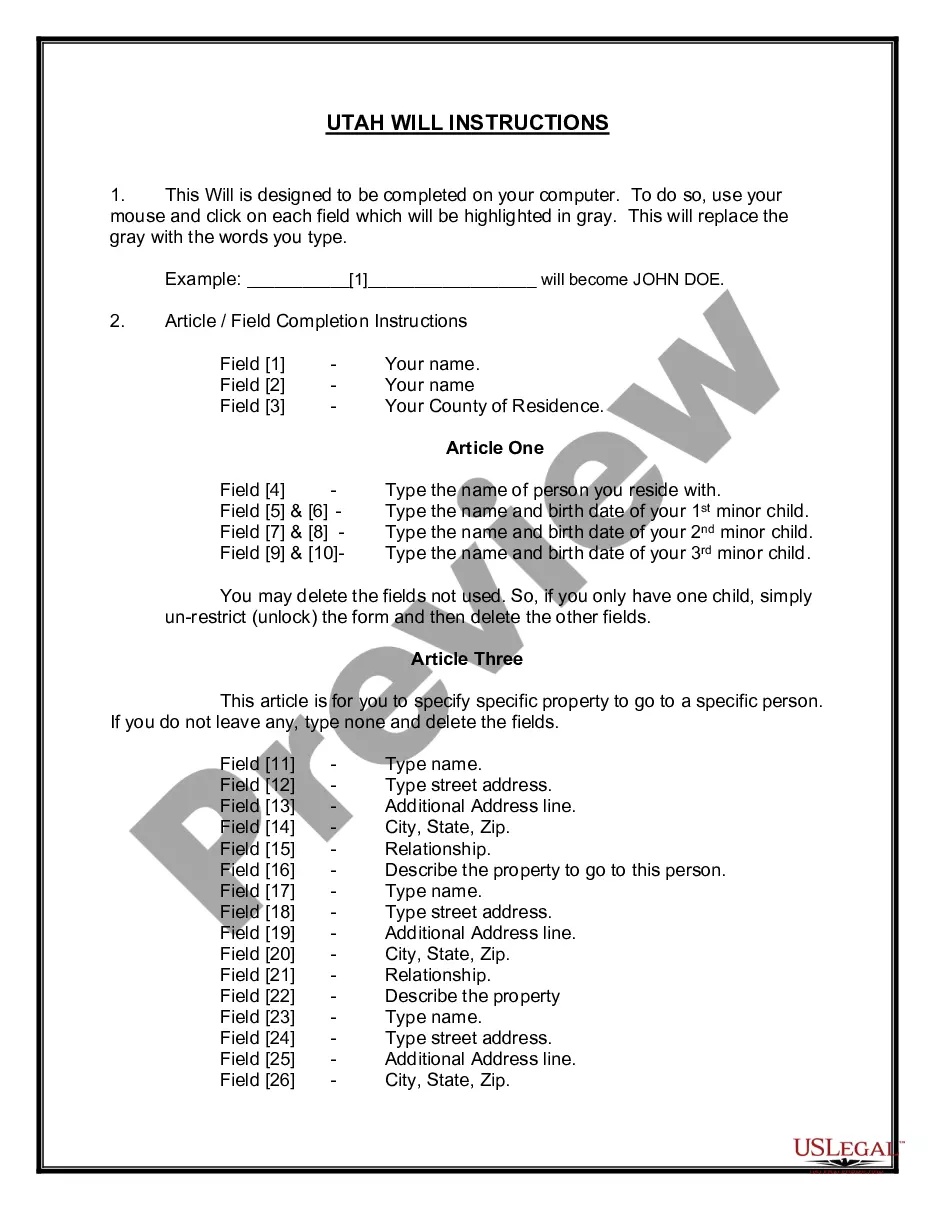
- Begin by entering your full name and county of residence.
- Specify the name of your deceased spouse and the names of your minor children.
- Designate specific bequests to individuals and provide detailed descriptions of the property.
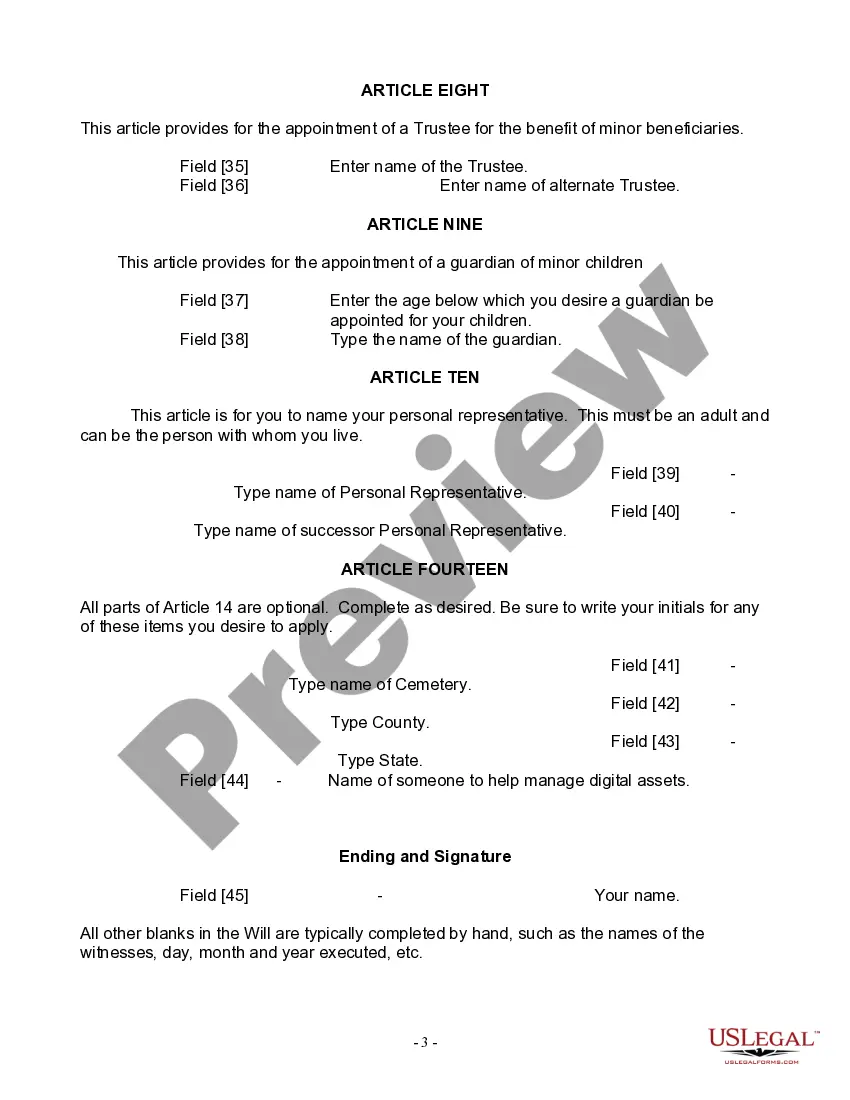
- Appoint a personal representative to administer your estate and include a backup representative.
- Include the names of any guardians you wish to appoint for your minor children.
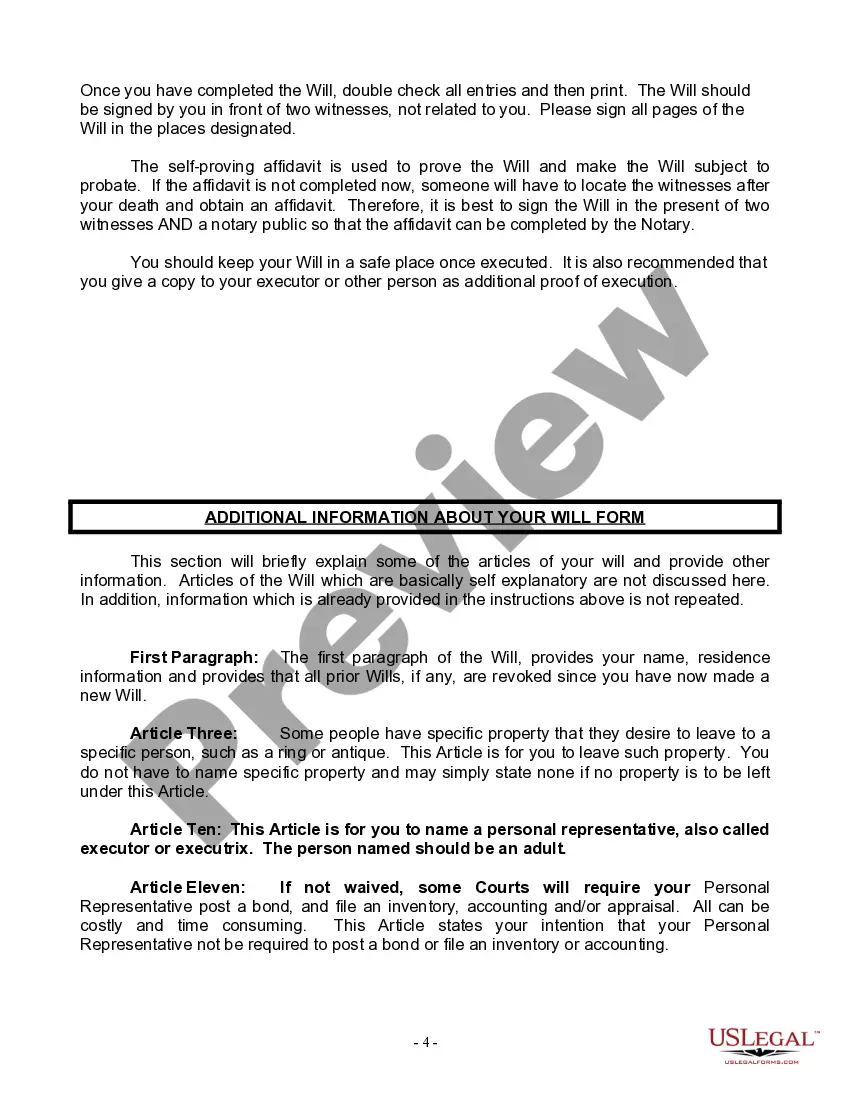
- Ensure you and two witnesses sign the document in accordance with state laws.
Notarization requirements for this form
Yes, this form must be notarized to be legally valid. Having a notary public present during the signing process adds an extra layer of authenticity and ensures that the document can be admitted to probate without additional witness statements. U.S. Legal Forms offers integrated online notarization options for your convenience, ensuring secure and efficient service.
Get your form ready online
Our built-in tools help you complete, sign, share, and store your documents in one place.
Make edits, fill in missing information, and update formatting in US Legal Forms—just like you would in MS Word.
Download a copy, print it, send it by email, or mail it via USPS—whatever works best for your next step.
Sign and collect signatures with our SignNow integration. Send to multiple recipients, set reminders, and more. Go Premium to unlock E-Sign.
If this form requires notarization, complete it online through a secure video call—no need to meet a notary in person or wait for an appointment.
We protect your documents and personal data by following strict security and privacy standards.

Make edits, fill in missing information, and update formatting in US Legal Forms—just like you would in MS Word.

Download a copy, print it, send it by email, or mail it via USPS—whatever works best for your next step.

Sign and collect signatures with our SignNow integration. Send to multiple recipients, set reminders, and more. Go Premium to unlock E-Sign.

If this form requires notarization, complete it online through a secure video call—no need to meet a notary in person or wait for an appointment.

We protect your documents and personal data by following strict security and privacy standards.
Typical mistakes to avoid
- Failing to designate a backup personal representative.
- Leaving out specific details about bequests, leading to ambiguity.
- Not having the document properly witnessed and notarized if required.
- Neglecting to update the will after significant life changes.
Advantages of online completion
- Convenient access: Download your form anytime, reducing time and hassle.
- Editability: Fill out the form digitally before printing, ensuring accuracy.
- Legally vetted: Forms are drafted by licensed attorneys to ensure compliance with legal standards.
Quick recap
- This form is specifically designed for widows or widowers with minor children.
- It includes provisions for appointing guardians and trustees for minor beneficiaries.
- Proper execution, including witness signatures and notarization where required, is essential for validity.
- Using this form helps ensure your wishes are honored after your passing.
Looking for another form?
Form popularity
FAQ
Include personal identifying information. Include a statement about your age and mental status. Designate an executor. Decide who will take care of your children. Choose your beneficiaries. List your funeral details. Sign and date your Last Will and Testament.
Create the initial document. Start by titling the document Last Will and Testament" and including your full legal name and address. Designate an executor. Appoint a guardian. Name the beneficiaries. Designate the assets. Ask witnesses to sign your will. Store your will in a safe place.
Contrary to popular belief, you do not need to have an attorney draft a will for you. Anyone can write this document on their own, and as long as it meets all of the legal requirements of the state, courts will recognize one you wrote yourself.
Find an online template or service. Make a list of your assets. Be specific about who gets what. If you have minor children, choose a guardian. Give instructions for your pet. Choose an executor. Name a 'residuary beneficiary' List your funeral preferences.
While you can write your own last will and testament, it's very important to follow your state's requirements. If the court finds it invalid, someone other than your chosen executor could handle your estate and distribute your assets differently than you intended.
You can make your own will in Utah, using Nolo's do-it-yourself will software or online will programs. However, you may want to consult a lawyer in some situations. For example, if you think that your will might be contested or if you want to disinherit your spouse, you should talk with an attorney.
Choose an online legal services provider or locate a will template. Carefully consider your distribution wishes. Identify a personal representative/executor. Understand the requirements to make your will legal. Make sure someone else knows about your will. Consult a lawyer if you have a more complicated estate.
Yes! Your Free Will Kit will be delivered to you at no-cost, no purchase necessary.
You can either download a template (many are free) and write your Will at your own pace offline using your word processor, or tell us your wishes in our online questionnaire and let us write it for you.