Montana Organizing your Personal Assets Package
Overview of this form package
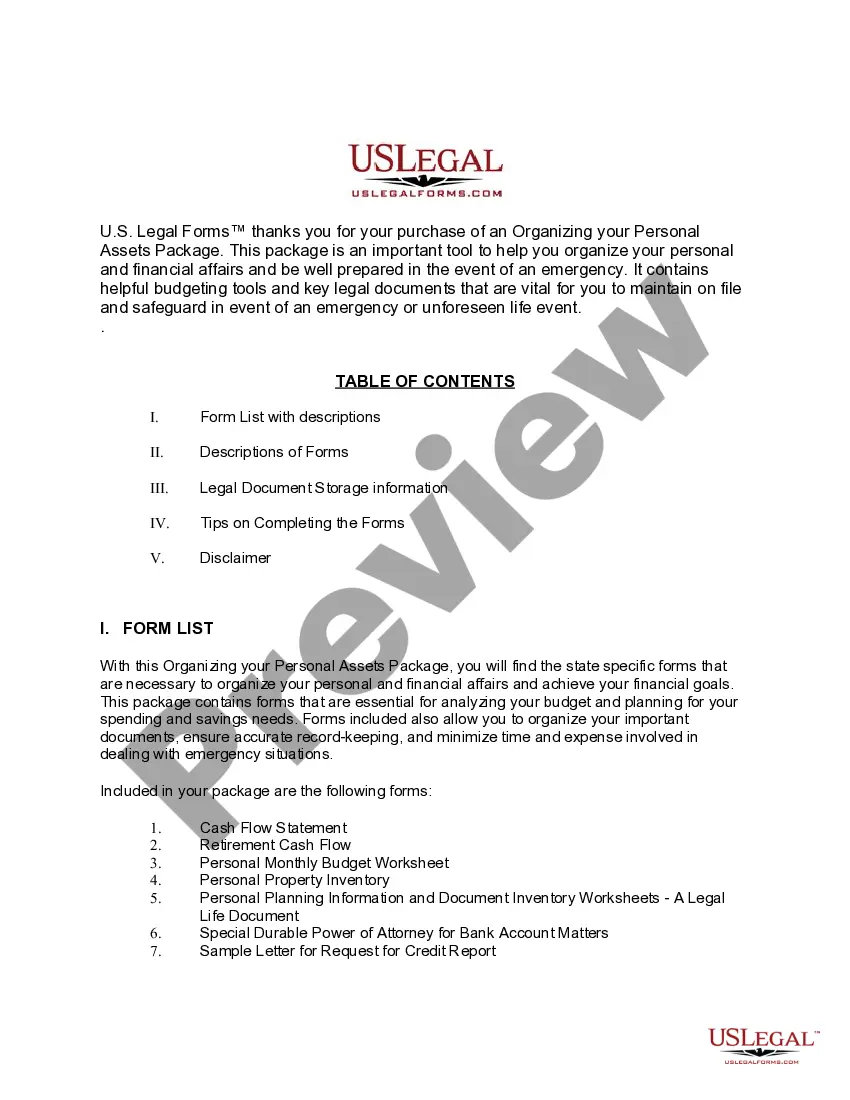
The Montana Organizing Your Personal Assets Package is a comprehensive set of state-specific forms designed to help you effectively manage your personal and financial affairs. Unlike other packages, this collection emphasizes budget analysis, spending and savings strategies, and efficient document organization. It's essential for anyone looking to achieve their financial goals while minimizing the hassle during emergencies.
Forms included in this package
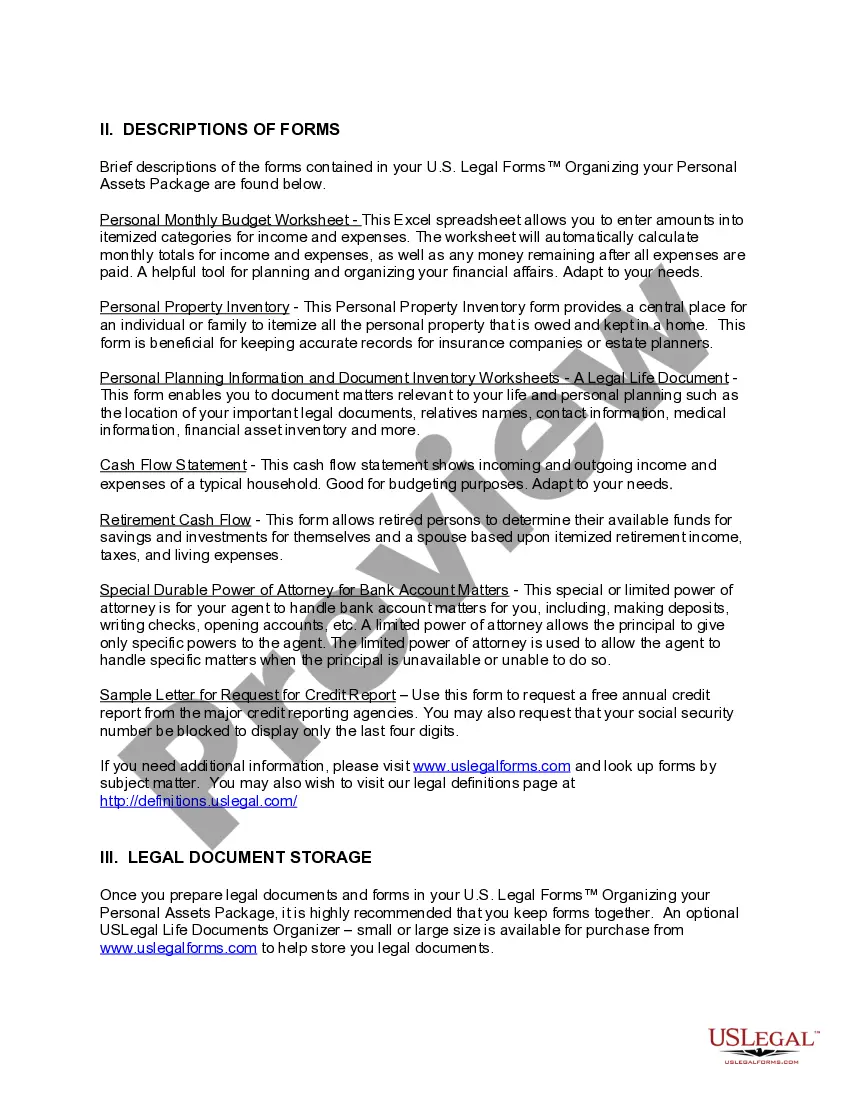
- Special Durable Power of Attorney for Bank Account Matters
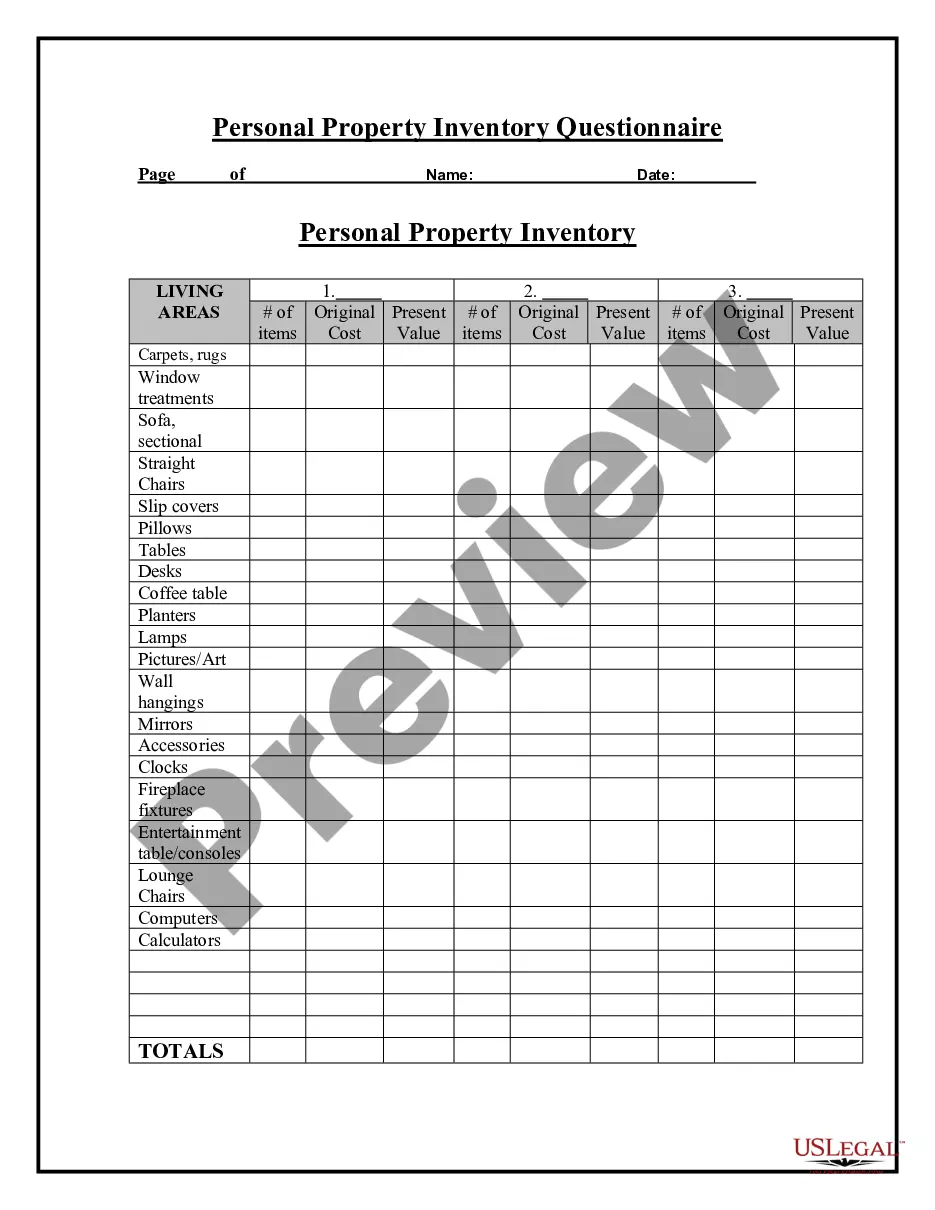
- Personal Property Inventory
- Sample Letter for Request for Free Credit Report Allowed by Federal Law
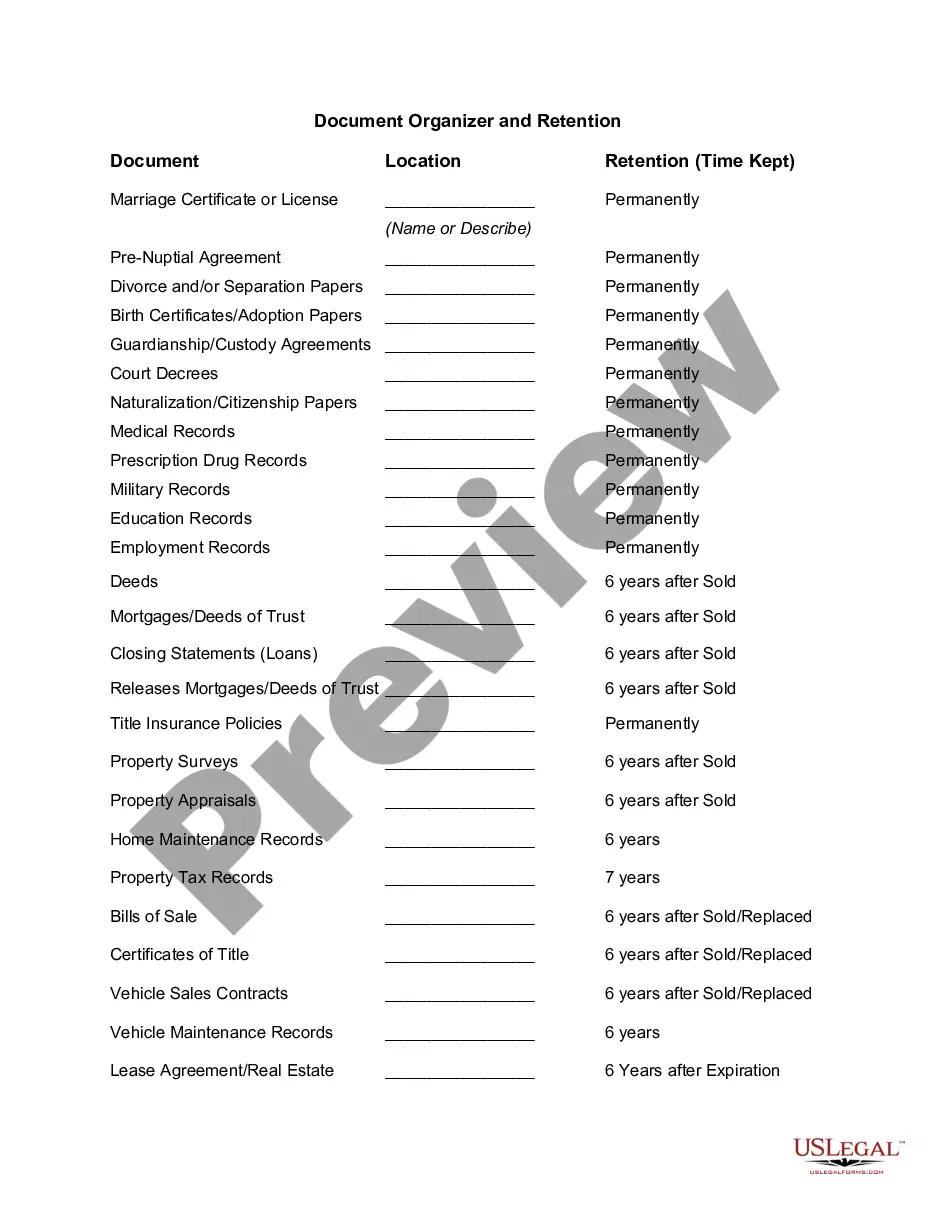
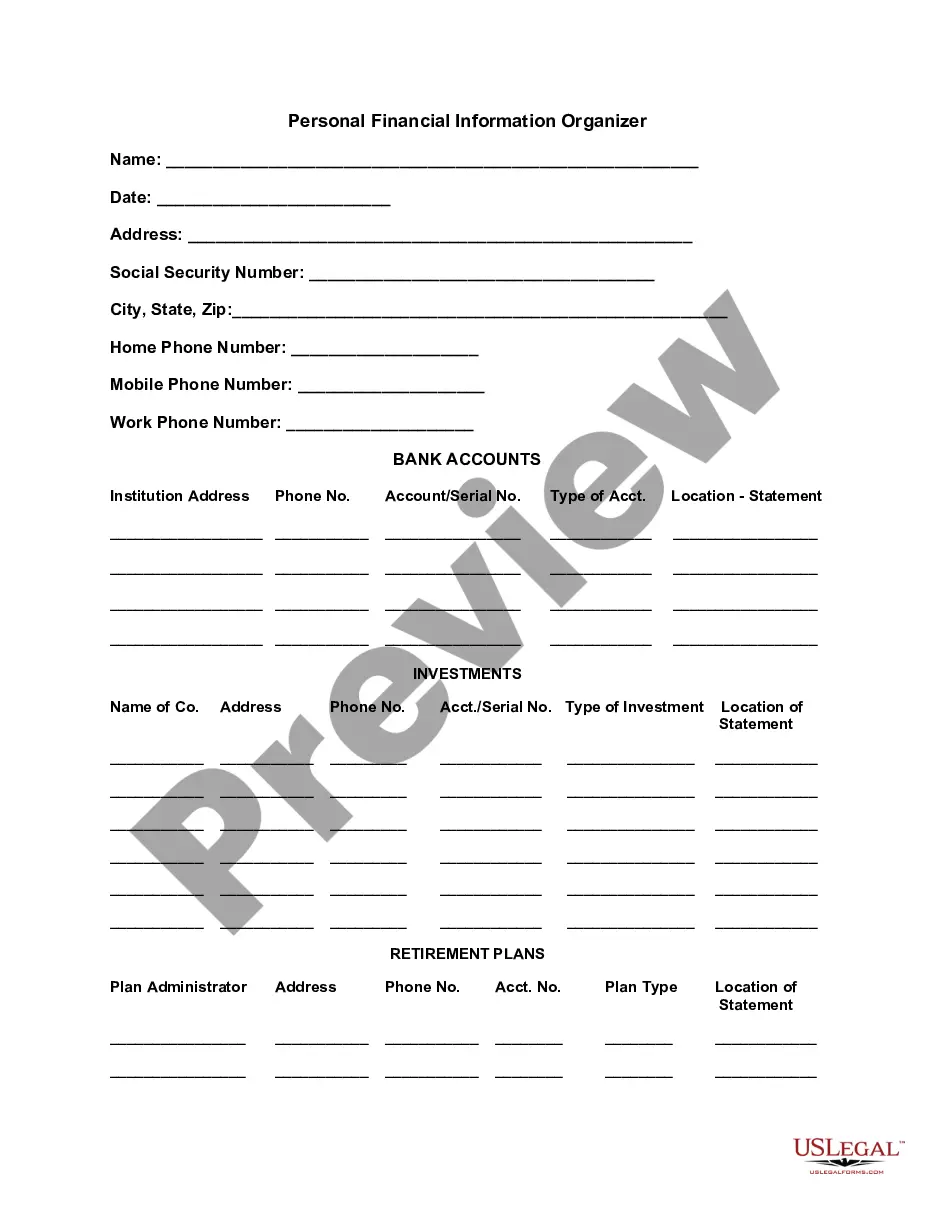
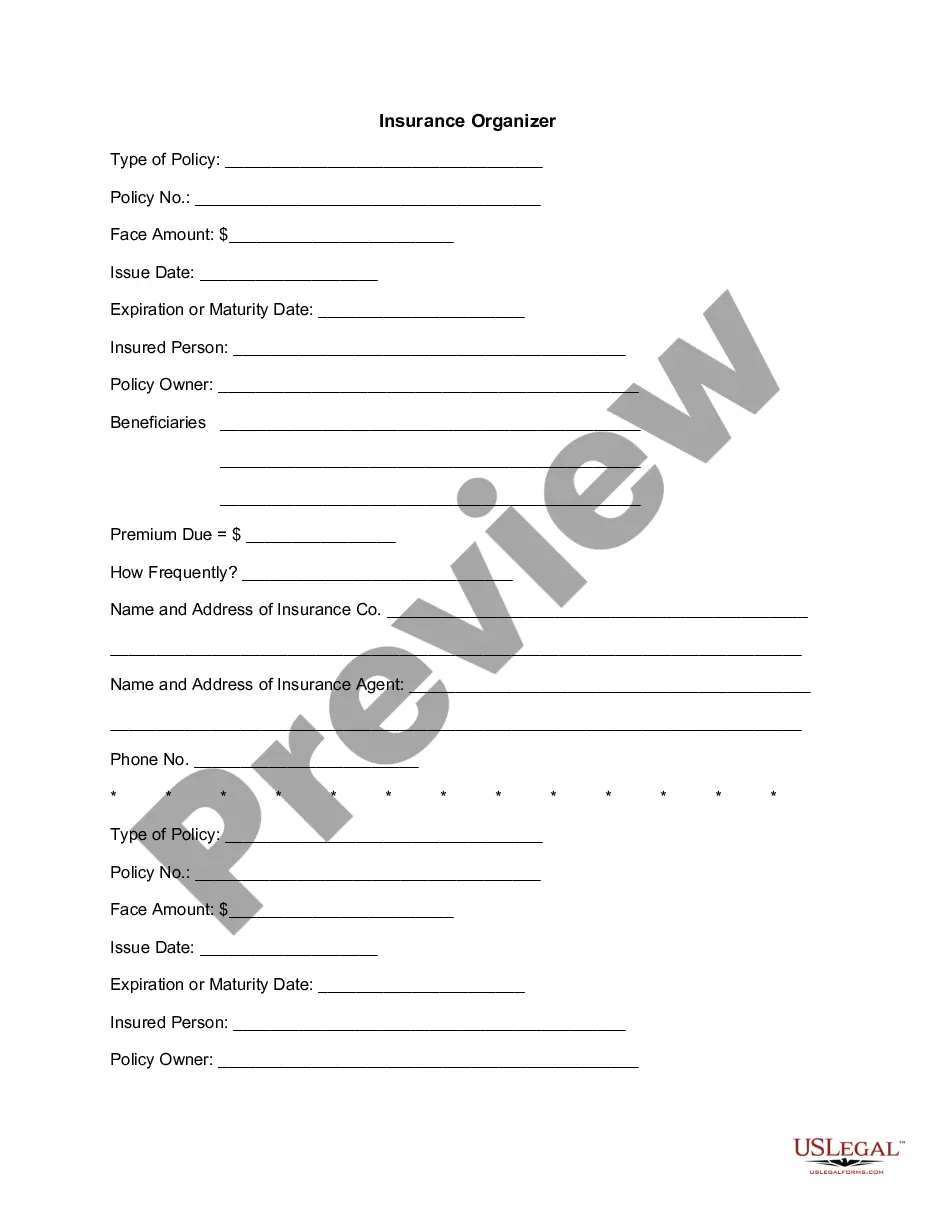
- Personal Planning Information and Document Inventory Worksheets - A Legal Life Document
- Cash Flow Statement
- Retirement Cash Flow
- Personal Monthly Budget Worksheet
Common use cases
This package is particularly useful in various real-world scenarios, including:
- When you need to create a detailed budget to track income and expenses.
- If you are preparing for retirement and want to manage your retirement cash flow.
- When you want to maintain an up-to-date inventory of your personal property for insurance or estate planning.
- If you are organizing important documents and planning for medical or financial futures.
- When requesting your annual credit report to manage your credit health.
Who this form package is for
- Residents of Montana seeking to organize their personal finances.
- Individuals preparing for retirement or transitioning into a new financial stage.
- Families wanting to maintain an accurate inventory of their personal assets.
- People who need reliable documentation for legal or emergency purposes.
- Anyone interested in improving their overall financial management.
How to prepare this document
- Review included forms to understand their purpose and functions.
- Organize your personal and financial information before starting to fill out the forms.
- Complete the forms using your computer or print them out and fill them out by hand.
- Ensure all essential information is entered in the designated fields.
- Store completed forms securely, and share their location with trusted individuals if necessary.
Notarization details for included forms
Notarization is required for one or more forms in this package. US Legal Forms provides secure online notarization powered by Notarize, allowing you to complete the process through a verified video call.
Get your form ready online
Our built-in tools help you complete, sign, share, and store your documents in one place.
Make edits, fill in missing information, and update formatting in US Legal Forms—just like you would in MS Word.
Download a copy, print it, send it by email, or mail it via USPS—whatever works best for your next step.
Sign and collect signatures with our SignNow integration. Send to multiple recipients, set reminders, and more. Go Premium to unlock E-Sign.
If this form requires notarization, complete it online through a secure video call—no need to meet a notary in person or wait for an appointment.
We protect your documents and personal data by following strict security and privacy standards.

Make edits, fill in missing information, and update formatting in US Legal Forms—just like you would in MS Word.

Download a copy, print it, send it by email, or mail it via USPS—whatever works best for your next step.

Sign and collect signatures with our SignNow integration. Send to multiple recipients, set reminders, and more. Go Premium to unlock E-Sign.

If this form requires notarization, complete it online through a secure video call—no need to meet a notary in person or wait for an appointment.

We protect your documents and personal data by following strict security and privacy standards.
Mistakes to watch out for
- Neglecting to keep forms updated with current information.
- Forgetting to review all completed forms for accuracy.
- Not storing important documents securely.
- Failing to share important document locations with trusted family members or advisors.
Benefits of using this package online
- Convenient access to essential legal forms from anywhere, at any time.
- Editability allows you to personalize documents easily to fit your specific needs.
- Reliability of forms drafted by licensed attorneys ensures legal compliance.
- Cost-effective, as purchasing the package saves you over 48 percent compared to individual form pricing.
Looking for another form?

Form popularity
FAQ
Your marginal federal income tax rate remained at 22.00%. Your effective federal income tax rate changed from 12.96% to 12.81%. Your federal income taxes changed from $9,787 to $9,675.
Montana has a "no fault" divorce law. To grant a divorce, the court must determine that: a) the couple has lived separately and apart for more than 180 consecutive days before the petition for divorce is filed; or b) there is serious marital discord between the parties and no reasonable prospect of reconciliation.
Overview of Montana TaxesMontana has relatively low taxes on residential real estate. The state's average effective property tax rate is 0.83%, lower than the national average of 1.07%.
The duration of payments is determined by a judge in Montana family court. Alimony length is usually based on length of marriage - one commonly used standard for alimony duration is that 1 year of alimony is paid every three years of marriage (however, this is not always the case in every state or with every judge).
WHAT ARE MY PROPERTY RIGHTS IN A MONTANA DIVORCE? Montana is an equitable division state, not a "community property" state.
Montana is moderately tax-friendly for retirees.For starters, the state has no sales tax, which lowers living costs for everyone. It also has relatively low property taxes. On the other hand, many retirees pay taxes on Social Security retirement benefits, which is fully exempt in most other states.
Marital property includes all property either spouse bought during the marriage. It does not matter whose name is on the title. For example, if a couple bought a home, but only the husband's name was on the deed, the wife would still be entitled to some of the value of the home if they were to get a divorce.
When it comes to taxes and fees, Montana is a mixed bag.In Montana it's more complicated and more expensive. The registration fee on a $23,407 vehicle in Montana is $153. Add in a personal property tax rate of 0.16 percent and that brings up the total cost to $190.45.
Montana is an equitable distribution state. Equitable distribution means that the marital property will be split between spouses in a way that is equitable, or fair.