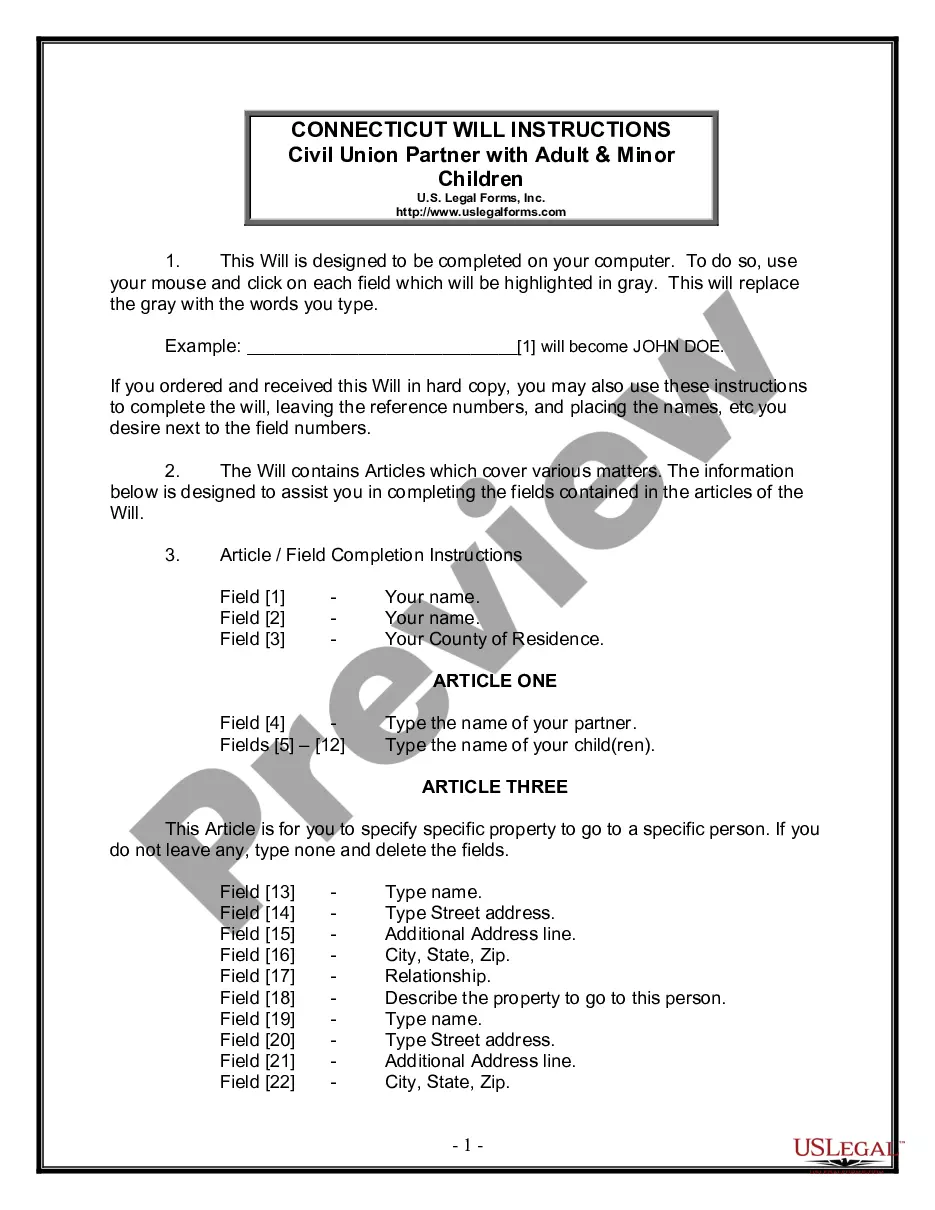
Mississippi Living Trust for Individual Who is Single, Divorced or Widow (or Widower) with No Children
What this document covers
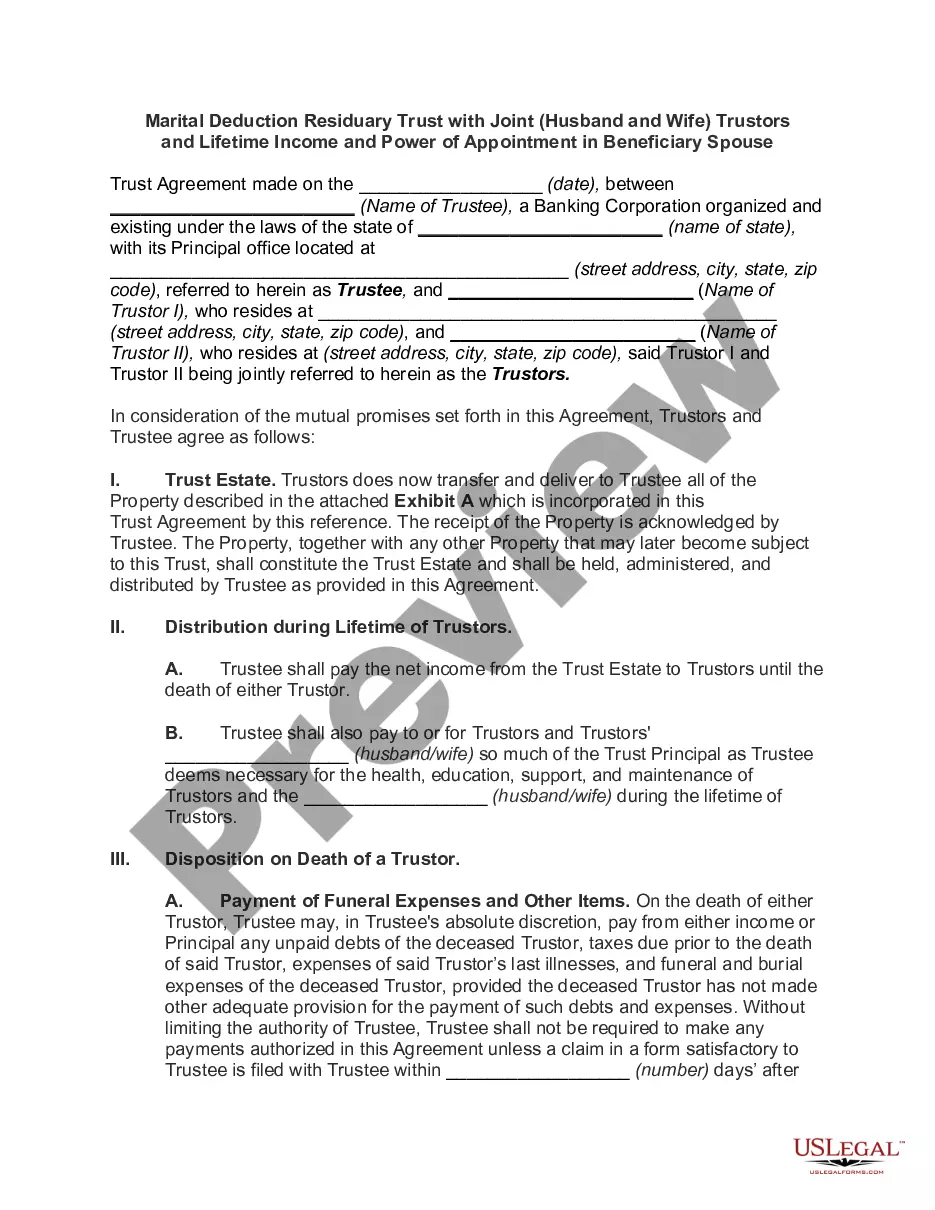
This Living Trust for Individual Who is Single, Divorced or Widow (or Widower) with No Children is a legal document designed for individuals without children who want to manage their assets while they are alive and ensure their distribution after their death. Unlike a will, this living trust allows assets to bypass the probate process, providing a more efficient transfer of property to beneficiaries. This form helps create a revocable trust, enabling the trustor to retain control over their assets and make changes as needed.
Main sections of this form
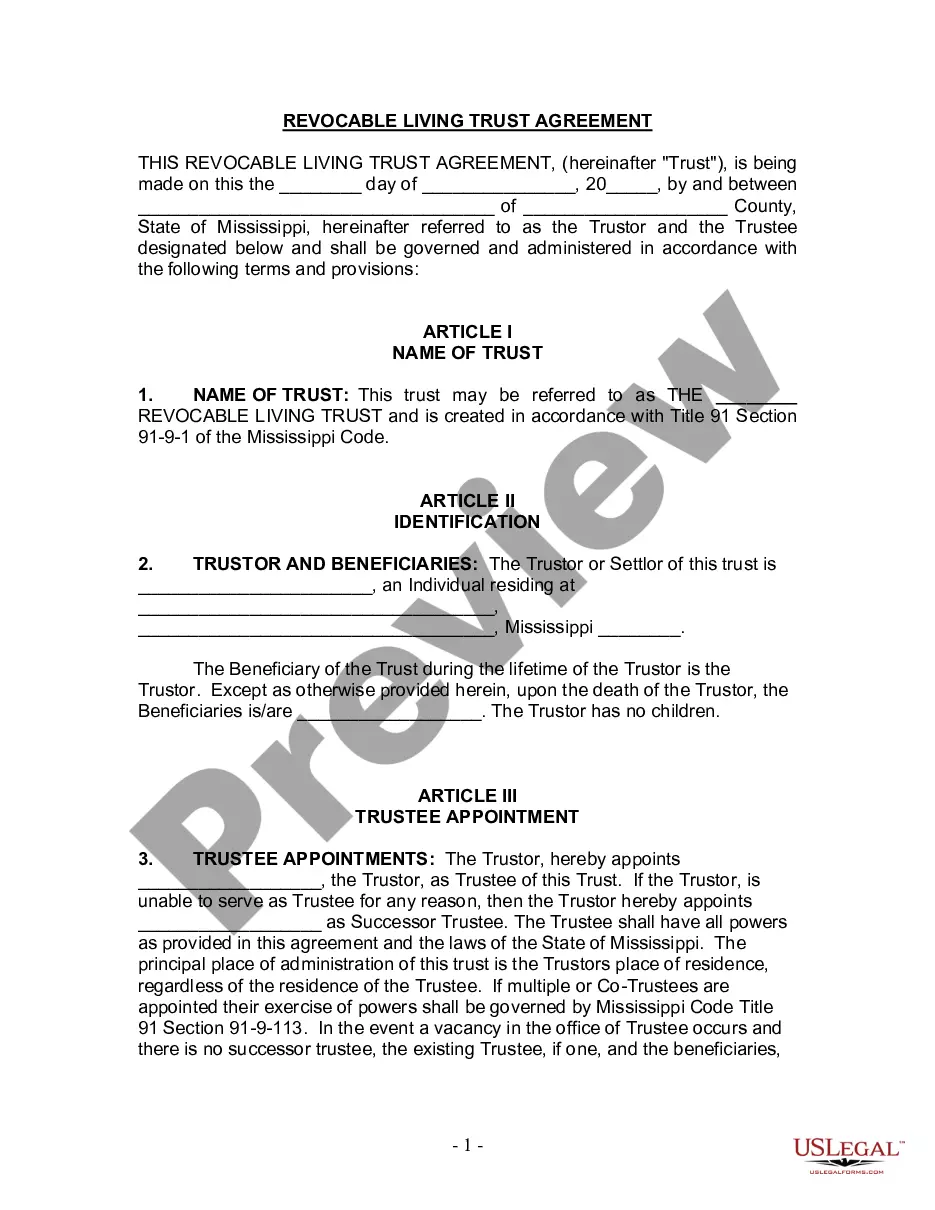
- Name of Trust: The trust is named and defined in the document.
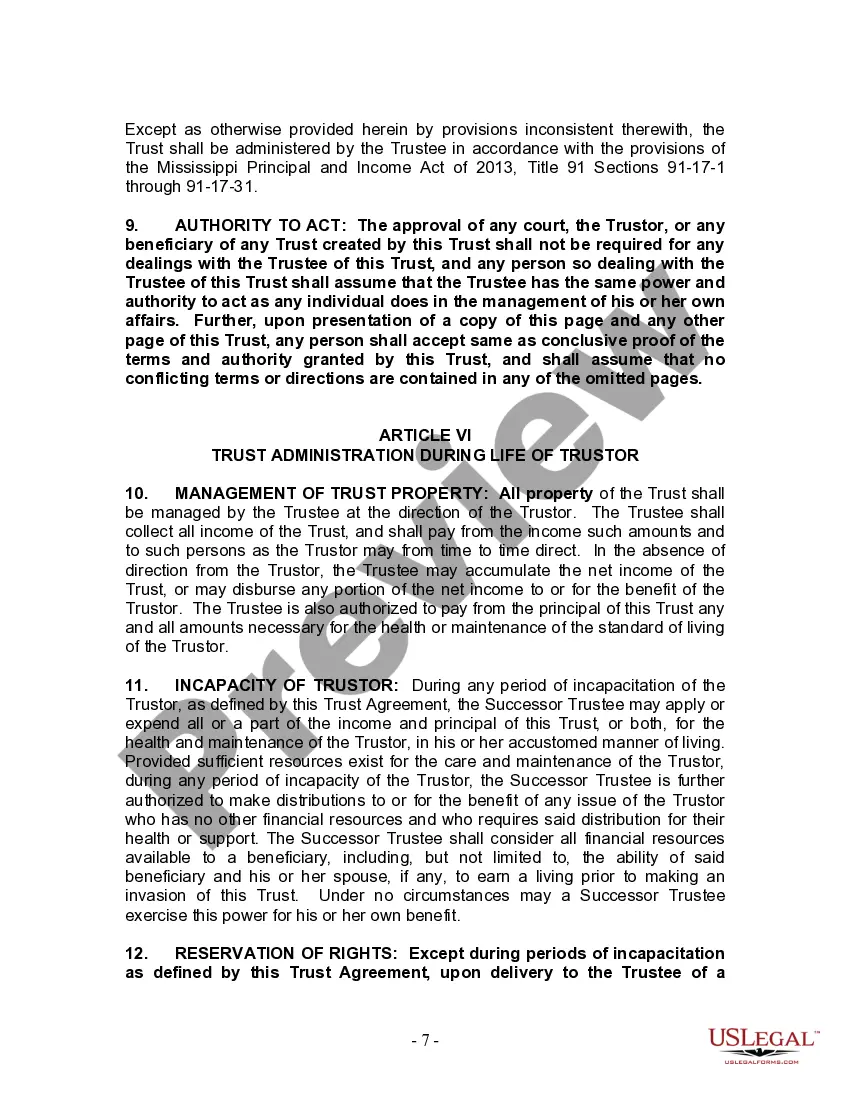
- Trustor and Beneficiaries: Identifies the trustor and the beneficiaries, typically the trustor themselves.
- Trustee Appointment: Designates the trustee who will manage the trust assets.
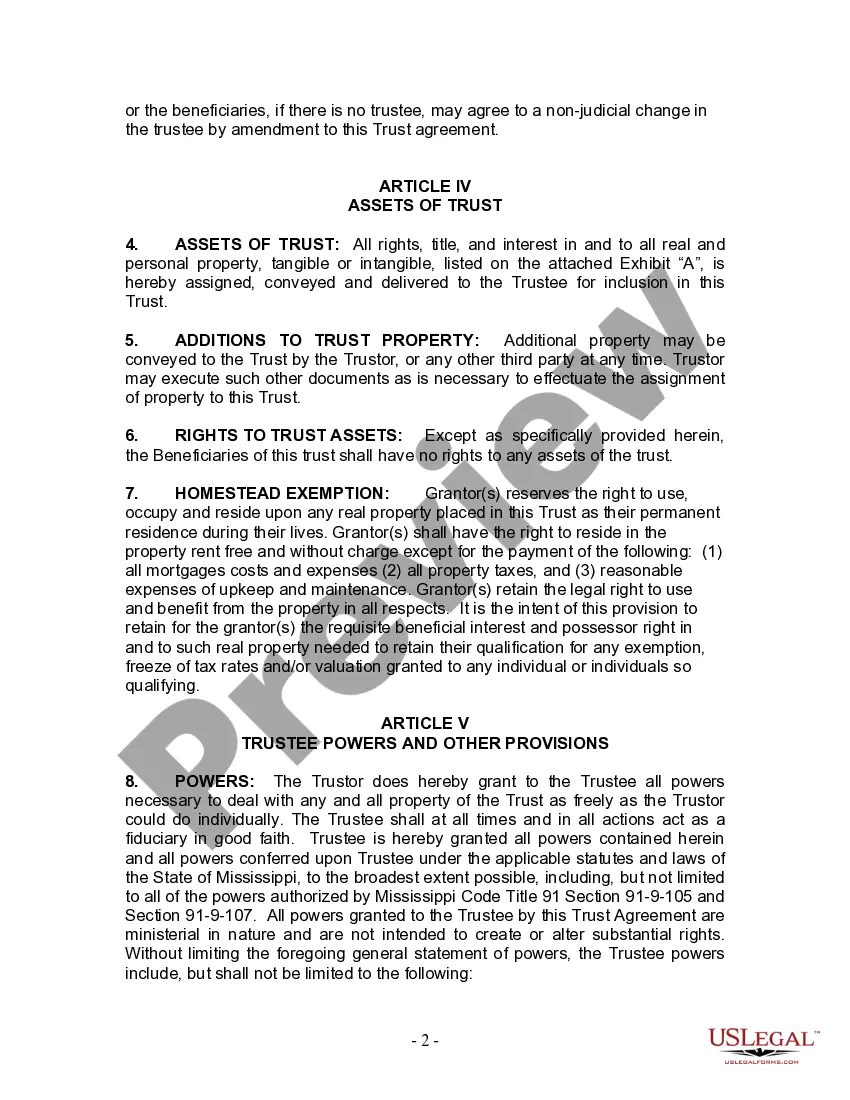
- Assets of Trust: Specifies the property and assets included in the trust.
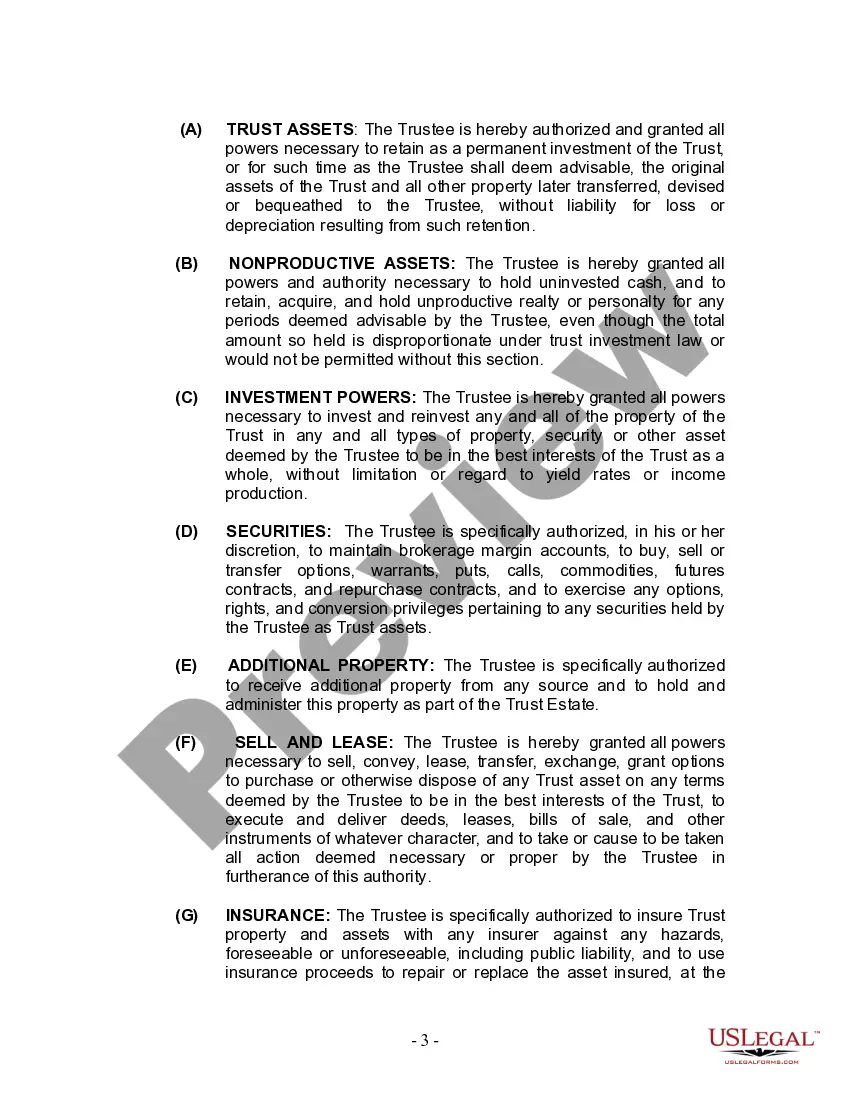
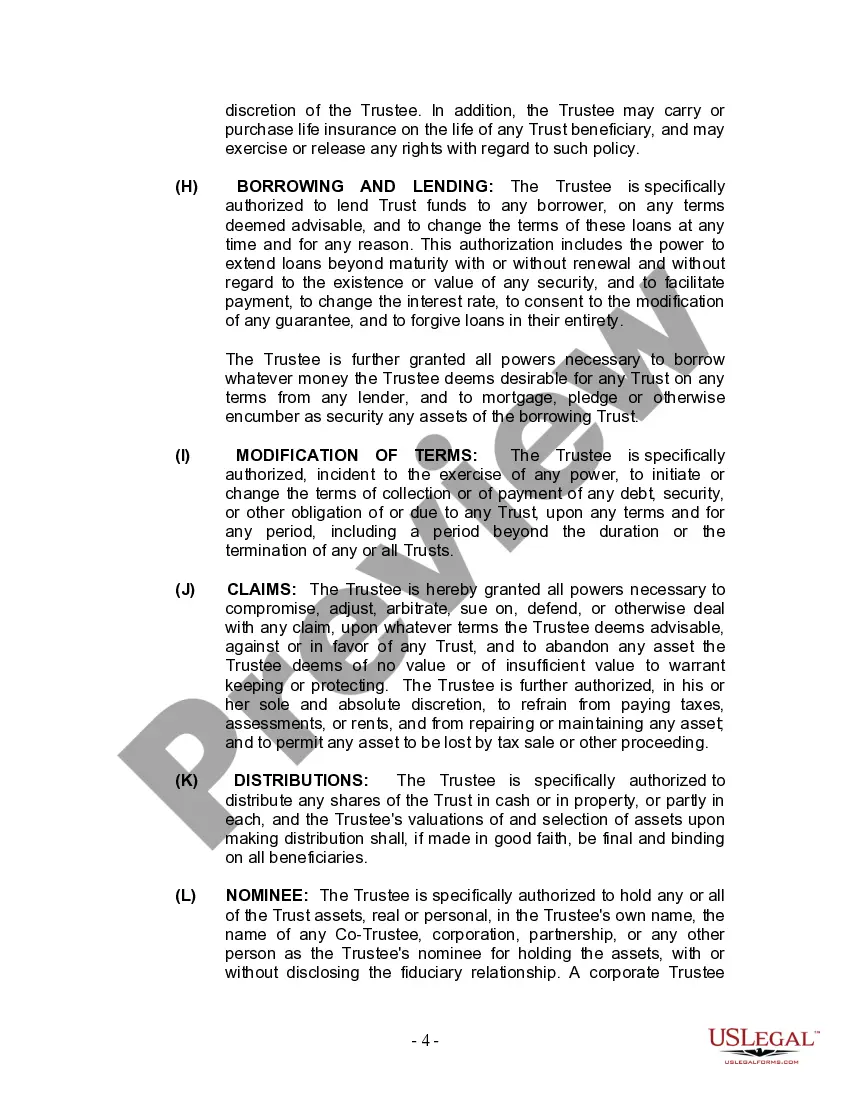
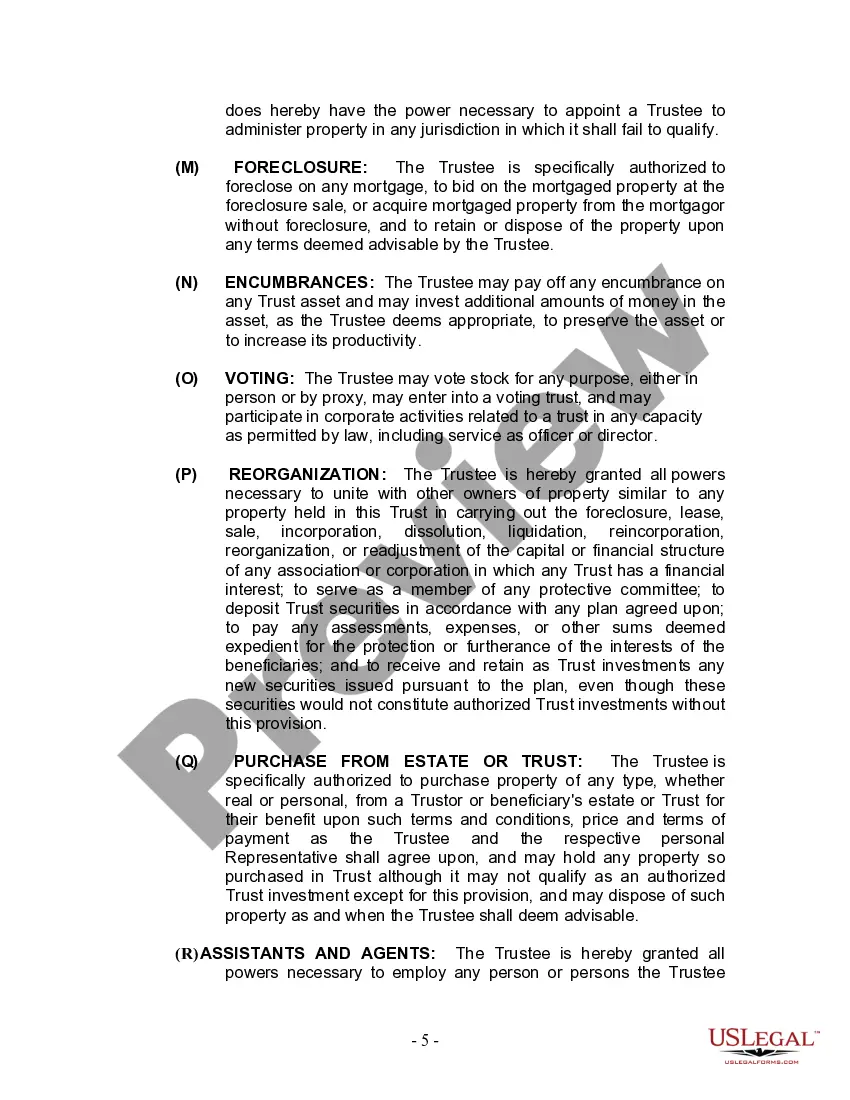
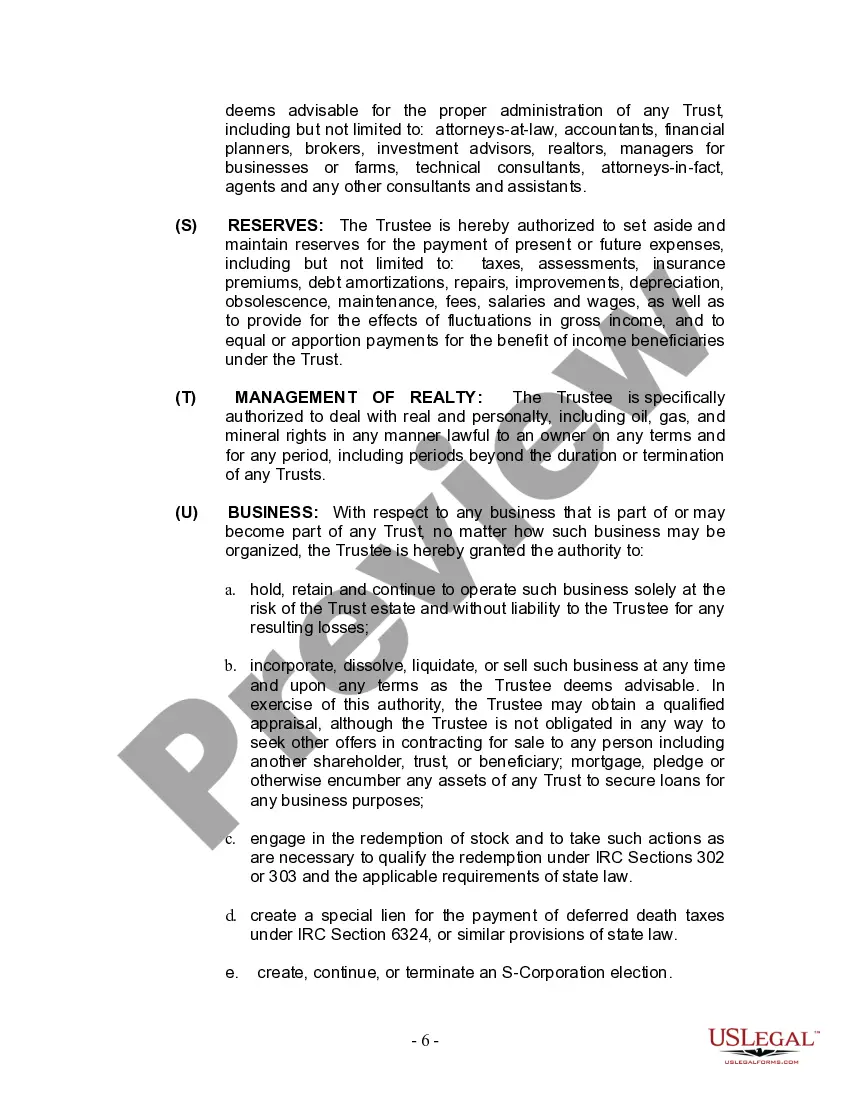
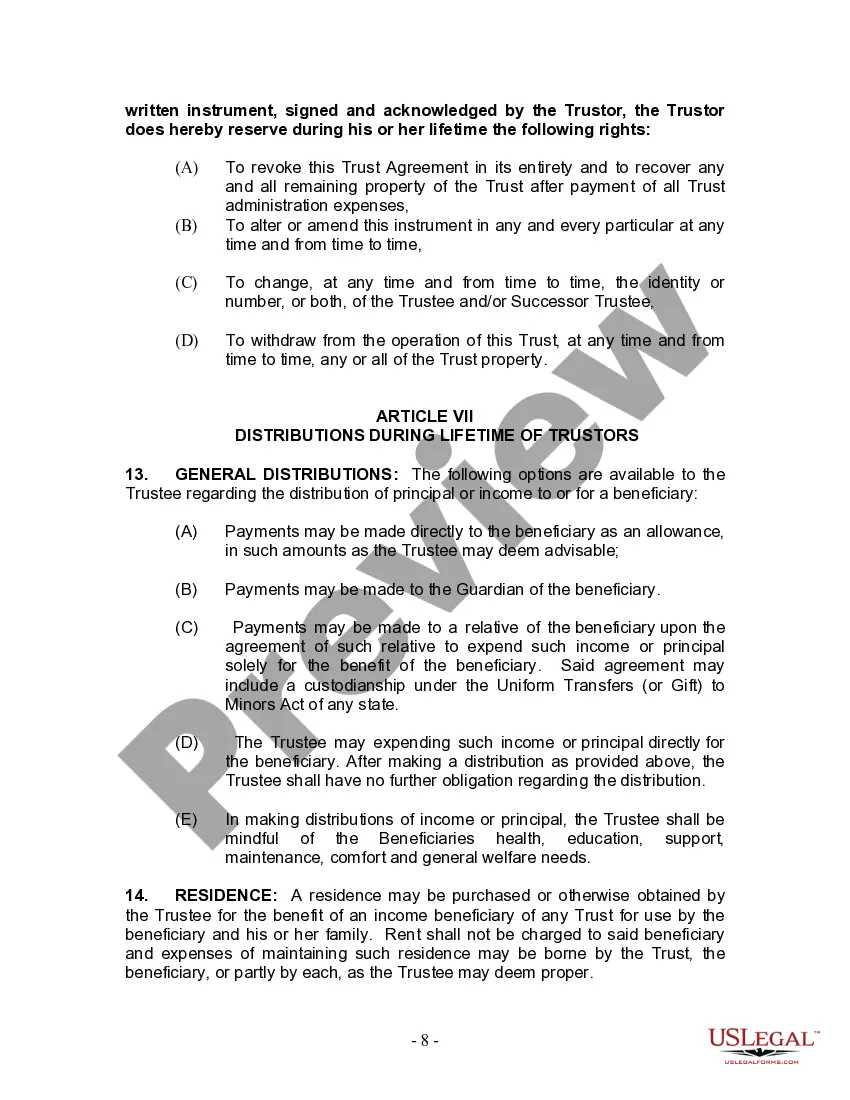
- Trustee Powers: Outlines the powers granted to the trustee for managing the trust.
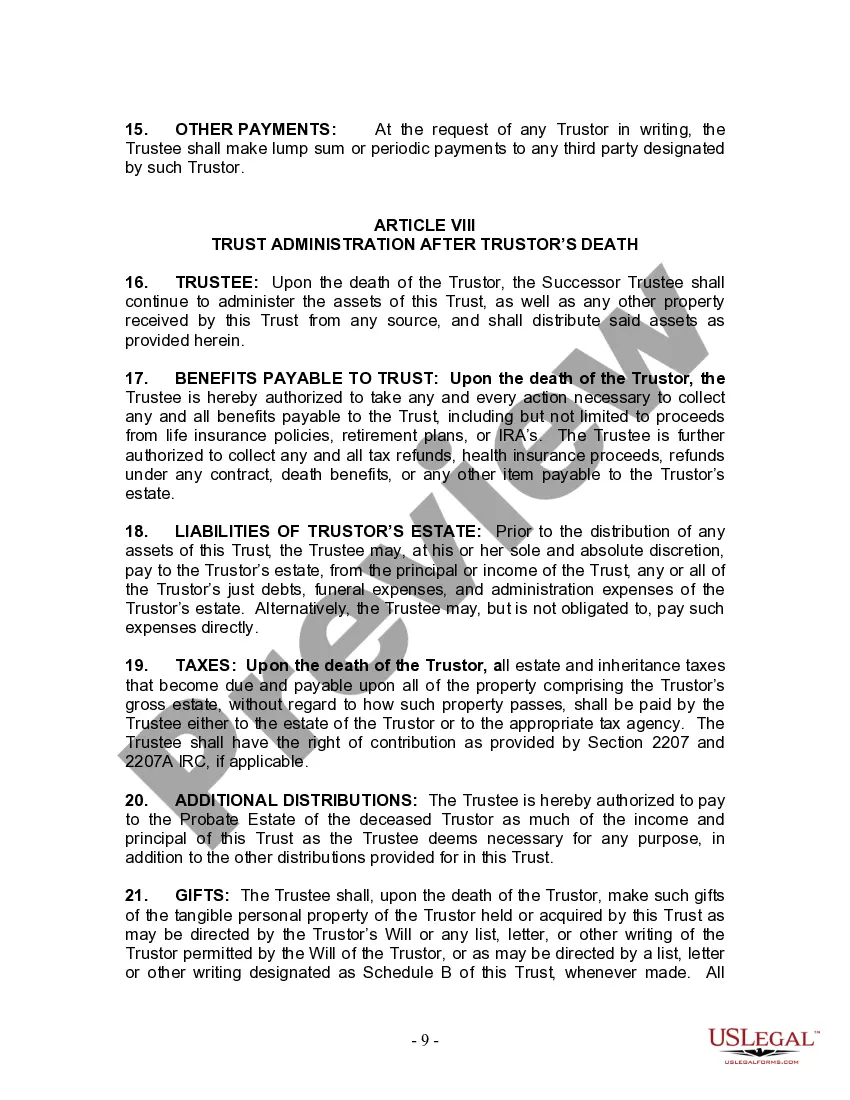
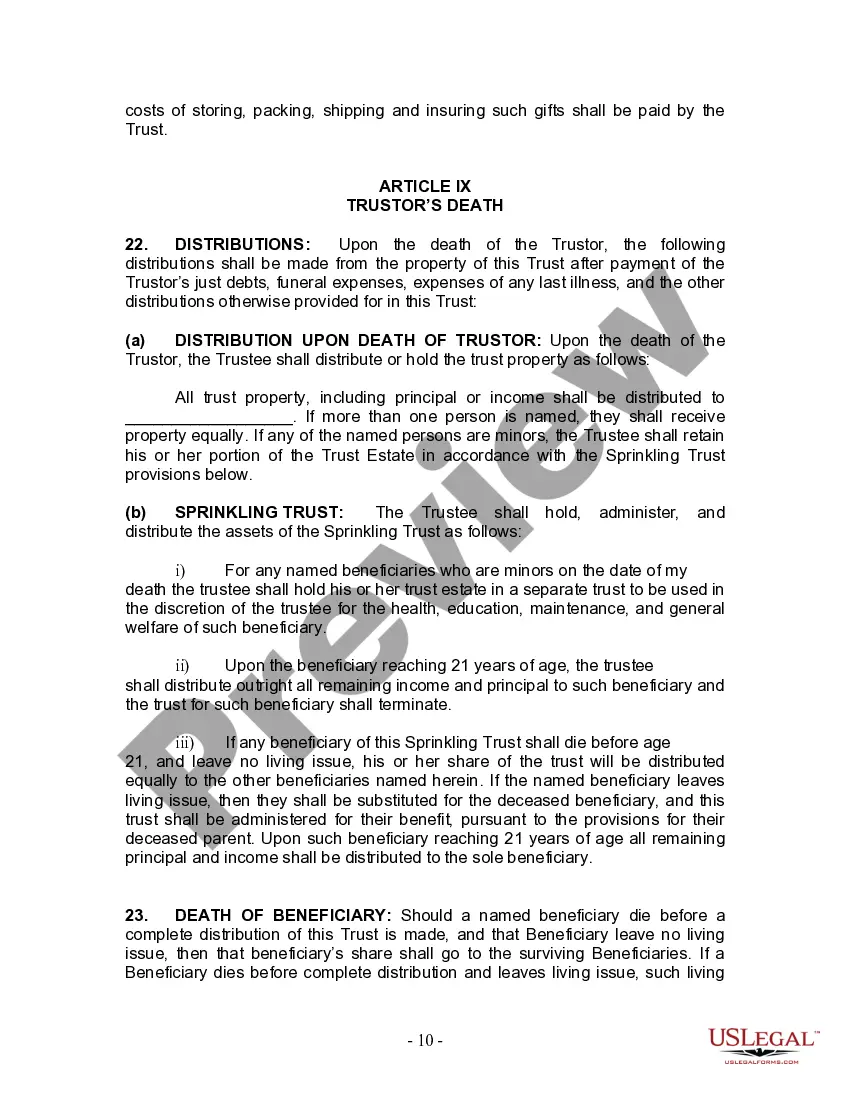
- Distributions: Details how and when trust assets are to be distributed to beneficiaries upon the trustor's death.




Common use cases
This form is essential for individuals who are single, divorced, or widowed and have no children. It is particularly beneficial for those looking to manage their estate efficiently, avoid the probate process, and have a clear plan for asset distribution upon their death. Situations in which this form may be beneficial include wanting to ensure that assets are handled according to specific wishes, minimizing estate taxes, or designating a trusted individual to manage their properties.
Who needs this form
This form is suitable for:
- Individuals who are single or divorced with no dependent children.
- Widows or widowers without children looking to manage their estate.
- Anyone wanting to retain control over their assets while providing for beneficiaries upon death.
Completing this form step by step
- Identify the parties involved: Fill in the names of the trustor, trustee, and any beneficiaries.
- Name the trust: Specify the name of the trust as it will appear throughout the document.
- List the assets: Include all properties and assets to be transferred into the trust.
- Designate powers: Outline the powers granted to the trustee for managing the trust assets.
- Sign and notarize: Ensure all signatures are collected and notarized as per Mississippi requirements.
Notarization guidance
This document requires notarization to meet legal standards. US Legal Forms provides secure online notarization powered by Notarize, allowing you to complete the process through a verified video call, available 24/7.
Get your form ready online
Our built-in tools help you complete, sign, share, and store your documents in one place.
Make edits, fill in missing information, and update formatting in US Legal Forms—just like you would in MS Word.
Download a copy, print it, send it by email, or mail it via USPS—whatever works best for your next step.
Sign and collect signatures with our SignNow integration. Send to multiple recipients, set reminders, and more. Go Premium to unlock E-Sign.
If this form requires notarization, complete it online through a secure video call—no need to meet a notary in person or wait for an appointment.
We protect your documents and personal data by following strict security and privacy standards.

Make edits, fill in missing information, and update formatting in US Legal Forms—just like you would in MS Word.

Download a copy, print it, send it by email, or mail it via USPS—whatever works best for your next step.

Sign and collect signatures with our SignNow integration. Send to multiple recipients, set reminders, and more. Go Premium to unlock E-Sign.

If this form requires notarization, complete it online through a secure video call—no need to meet a notary in person or wait for an appointment.

We protect your documents and personal data by following strict security and privacy standards.
Common mistakes
- Failing to list all assets in the trust document.
- Not identifying successor trustees to avoid management issues upon the original trustee's incapacity.
- Overlooking state-specific requirements for living trusts.
Benefits of completing this form online
- Convenience: Downloadable and instantly accessible from anywhere.
- Editability: Easily modify details before finalizing the document.
- Reliability: Created by licensed attorneys, ensuring compliance with legal standards.
What to keep in mind
- This Living Trust is ideal for individuals who are single, divorced, or widowed and do not have children.
- It provides a mechanism for managing assets during the Trustor's lifetime and facilitates a smoother transfer after death.
- Proper completion and notarization of the form are essential for legal validity.
Looking for another form?

Form popularity
FAQ
If you can't find original living trust documents, you can contact the California Bar Association for assistance. Trusts aren't recorded anywhere, so you can't go to the County Recorder's office in the courthouse to ask to see a copy of the trust.
In this article: A living trust is a type of estate planning tool that allows you to transfer ownership of your assets to a separate fund while you're still alive.In some circumstances, you can use a living trust to protect money you owe to creditors.
Benefits of a Revocable Trust Many grantors create a revocable trust to avoid probate, which it certainly does, but an irrevocable trust accomplishes that as well. A revocable trust specifically works well for a client who doesn't have serious tax issues, but wants to maintain control of his or her assets.
Livings Trusts. A living trust is usually created by the grantor, during the grantor's lifetime, through a transfer of property to a trustee. Testamentary Trusts. Irrevocable Life Insurance Trust. Charitable Remainder Trust.
Why Everyone Needs a Living Revocable Trust "A living revocable trust serves as far more than just where assets are to go upon your death and it does that in an efficient way," she said. Unlike a will, a living trust also covers you while you are still alive, Orman noted.
A revocable trust and living trust are separate terms that describe the same thing: a trust in which the terms can be changed at any time.Trusts are also a way to reduce tax burdens and avoid assets going to probate.
When it comes to protecting your loved ones, having both a will and a trust is essential. The difference between a will and a trust is when they kick into action. A will lays out your wishes for after you die. A living revocable trust becomes effective immediately.
Paperwork. Setting up a living trust isn't difficult or expensive, but it requires some paperwork. Record Keeping. After a revocable living trust is created, little day-to-day record keeping is required. Transfer Taxes. Difficulty Refinancing Trust Property. No Cutoff of Creditors' Claims.
There is no difference between a trust and a living trust.Trusts are considered separate entities that manage a person's assets. The person who manages the assets of a trust is called a trustee, who manages the assets based on the terms of the trust document.