Connecticut Letter to Lienholder to Notify of Trust
Overview of this form
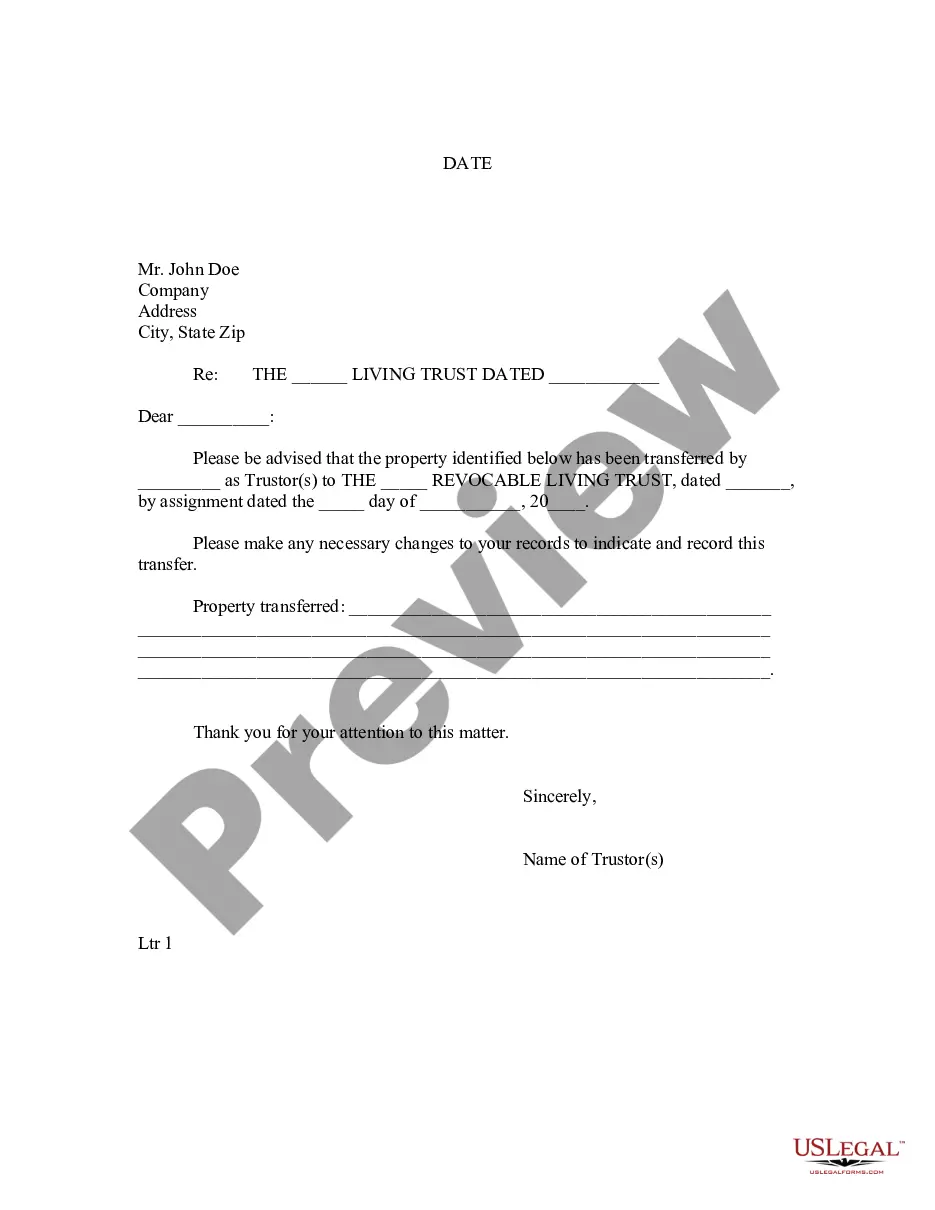
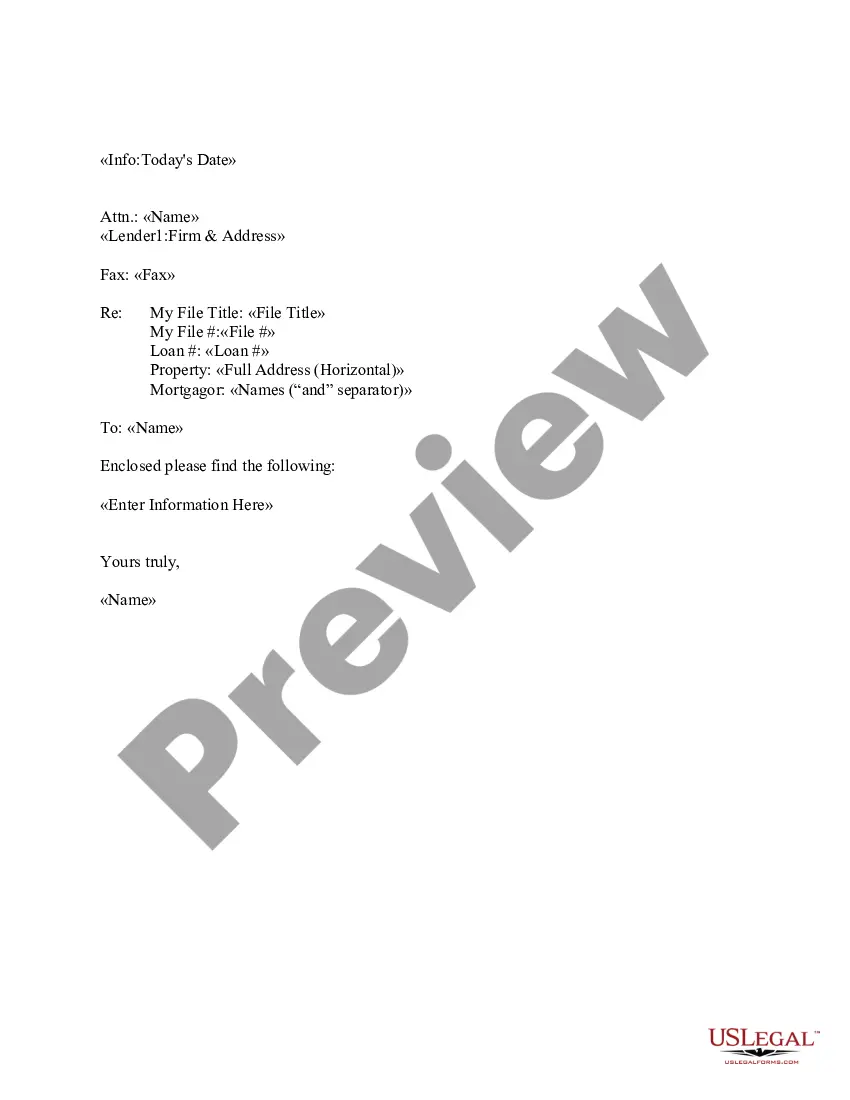
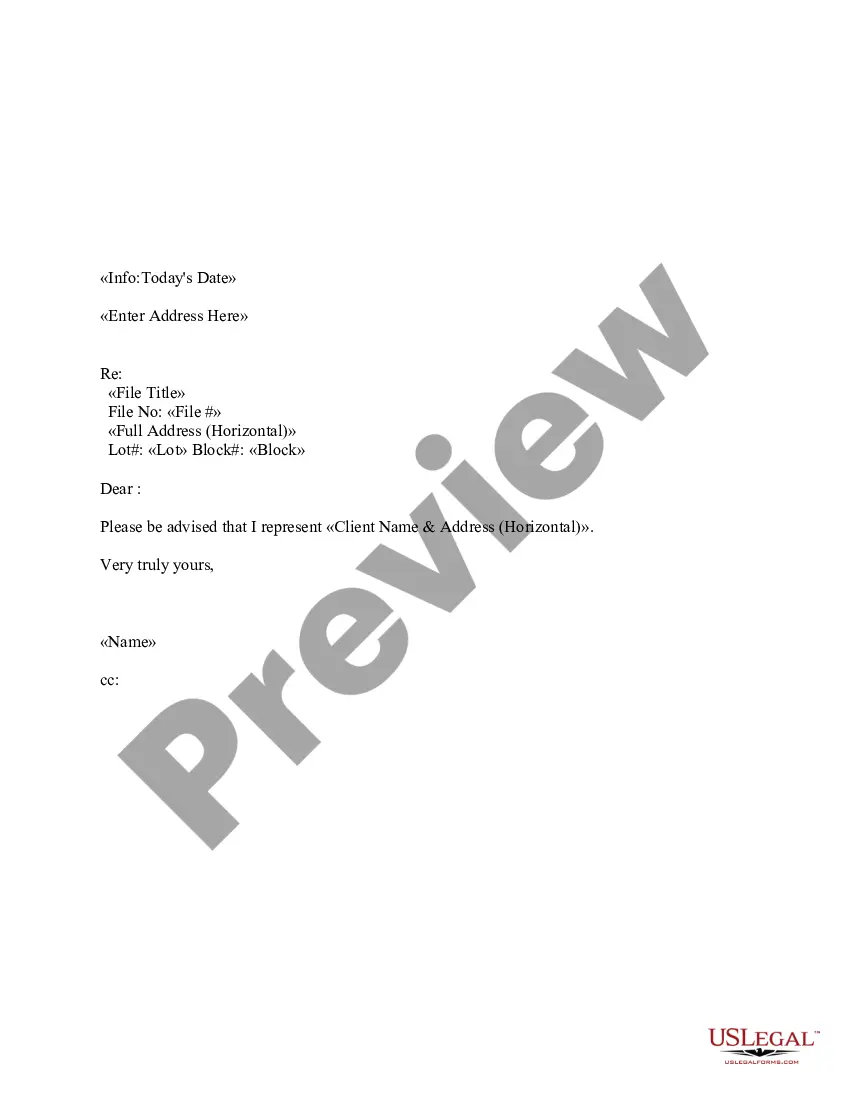
The Letter to Lienholder to Notify of Trust is a legal document used to inform a lienholder that property has been transferred to a living trust. This form is essential for ensuring that the lienholder updates their records following the transfer, distinguishing it from other notifications related to property ownership changes. It serves a critical role in estate planning by clearly specifying the assets held in a trust, allowing for seamless management after the trustor's passing.
Form components explained
- Date indicating when the letter is sent.
- Identification of the trustor(s) and the lienholder.
- Details about the property transferred to the trust.
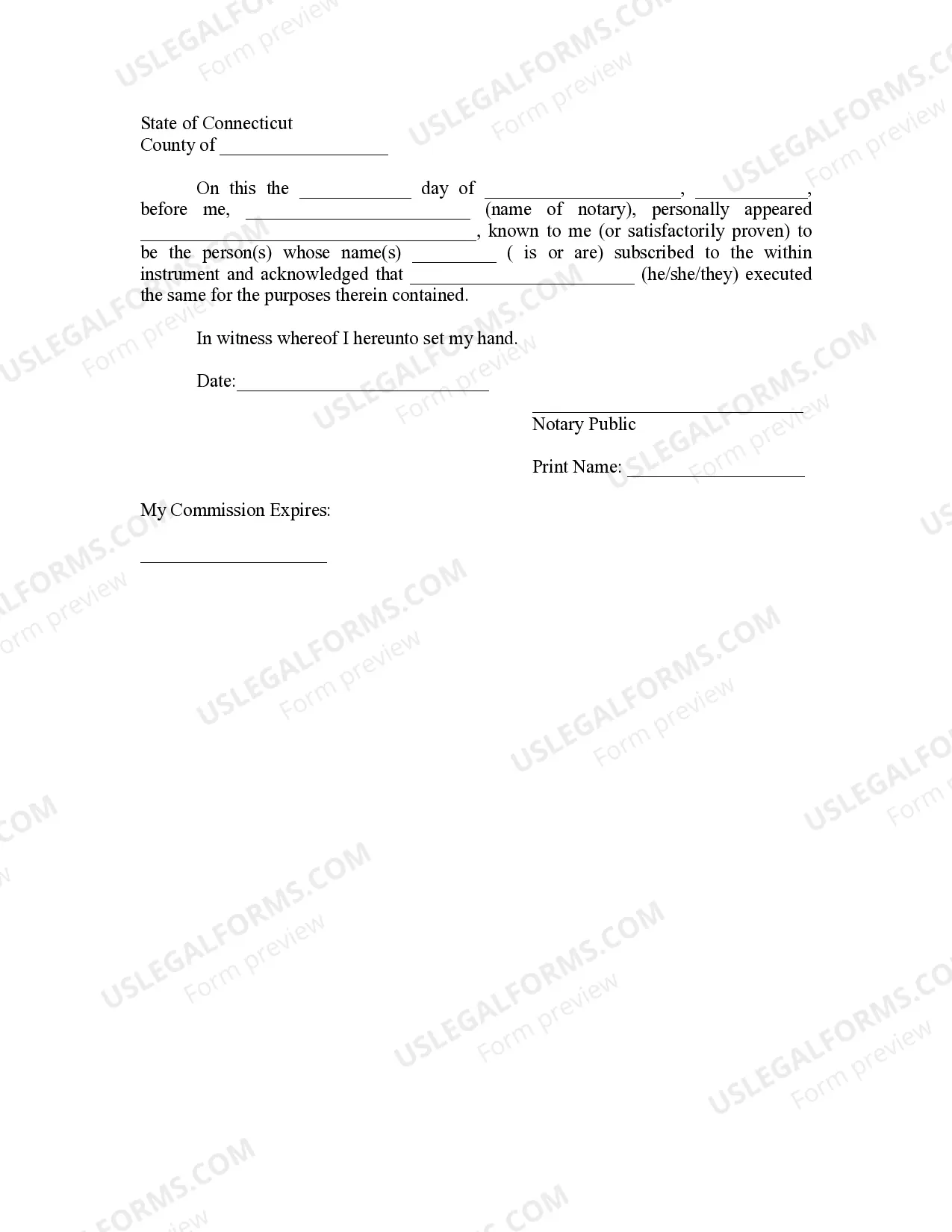
- Signature of the trustor(s) and notarization details.
When to use this form
This form should be used when you have transferred property into a living trust and need to formally notify the lienholder. Common scenarios include updating a mortgage lender about the trustâs ownership or notifying financial institutions holding liens on transferred assets, ensuring that all legal and financial records accurately reflect the current ownership status.
Who should use this form
- Individuals or couples establishing a living trust.
- Trustors who have transferred property into a trust.
- Legal representatives managing estate planning for clients.
Completing this form step by step
- Identify the date when the letter is being sent.
- Fill in the names and addresses of both the lienholder and trustor(s).
- Specify the details of the property being transferred to the living trust.
- Sign the letter as the trustor(s) to certify the information is accurate.
- Have the letter notarized to complete the process, if required.
Does this document require notarization?
Yes, this form must be notarized to be legally valid. It ensures the authenticity of the signature, confirming the trustor's identity. US Legal Forms offers integrated online notarization, available 24/7 through secure video calls, providing a convenient and legally equivalent alternative to in-person notarization.
Get your form ready online
Our built-in tools help you complete, sign, share, and store your documents in one place.
Make edits, fill in missing information, and update formatting in US Legal Forms—just like you would in MS Word.
Download a copy, print it, send it by email, or mail it via USPS—whatever works best for your next step.
Sign and collect signatures with our SignNow integration. Send to multiple recipients, set reminders, and more. Go Premium to unlock E-Sign.
If this form requires notarization, complete it online through a secure video call—no need to meet a notary in person or wait for an appointment.
We protect your documents and personal data by following strict security and privacy standards.

Make edits, fill in missing information, and update formatting in US Legal Forms—just like you would in MS Word.

Download a copy, print it, send it by email, or mail it via USPS—whatever works best for your next step.

Sign and collect signatures with our SignNow integration. Send to multiple recipients, set reminders, and more. Go Premium to unlock E-Sign.

If this form requires notarization, complete it online through a secure video call—no need to meet a notary in person or wait for an appointment.

We protect your documents and personal data by following strict security and privacy standards.
Avoid these common issues
- Failing to specify the complete details of the property transferred.
- Not providing accurate contact information for the lienholder.
- Neglecting to sign the letter or have it notarized.
Why complete this form online
- Instant availability and ease of download for quick access.
- Editability allows for personalized details without hassle.
- Reliability of templates drafted by licensed attorneys enhances legal compliance.
Looking for another form?
Form popularity
FAQ
No, Connecticut has not adopted the Uniform Probate Code in its entirety. However, it has its own probate laws that govern the administration of estates. Familiarizing yourself with these laws can help ensure compliance while managing assets in a trust, especially when corresponding with lienholders using a Connecticut Letter to Lienholder to Notify of Trust.
Yes, a properly established trust generally avoids the probate process in Connecticut. By transferring assets into a trust, they can directly pass to the beneficiaries without the need for probate court intervention. This benefit is particularly significant for individuals looking to streamline the process of asset distribution and when preparing a Connecticut Letter to Lienholder to Notify of Trust.
Connecticut has actively adopted the Uniform Trust Code to enhance trust governance within the state. This adoption aids in creating a consistent legal framework for trust administration while ensuring protection for the interests of beneficiaries. By understanding the provisions of the UTC, you can better navigate the requirements when executing a Connecticut Letter to Lienholder to Notify of Trust.
The Uniform Trust Code (UTC) is a model law that serves to unify trust laws across various states. It provides clear provisions on how trusts are established, managed, and terminated. States can adopt the UTC to simplify trust administration, offering legal clarity for trustees and beneficiaries, especially when drafting documents like a Connecticut Letter to Lienholder to Notify of Trust.
The Uniform Commercial Code (UCC) is a comprehensive set of laws that govern commercial transactions in the United States. Connecticut has adopted the UCC, which provides standardized regulations for sales, leases, and secured transactions. This consistency helps businesses operate smoothly within the state and is essential for anyone managing a trust with assets subject to these laws.
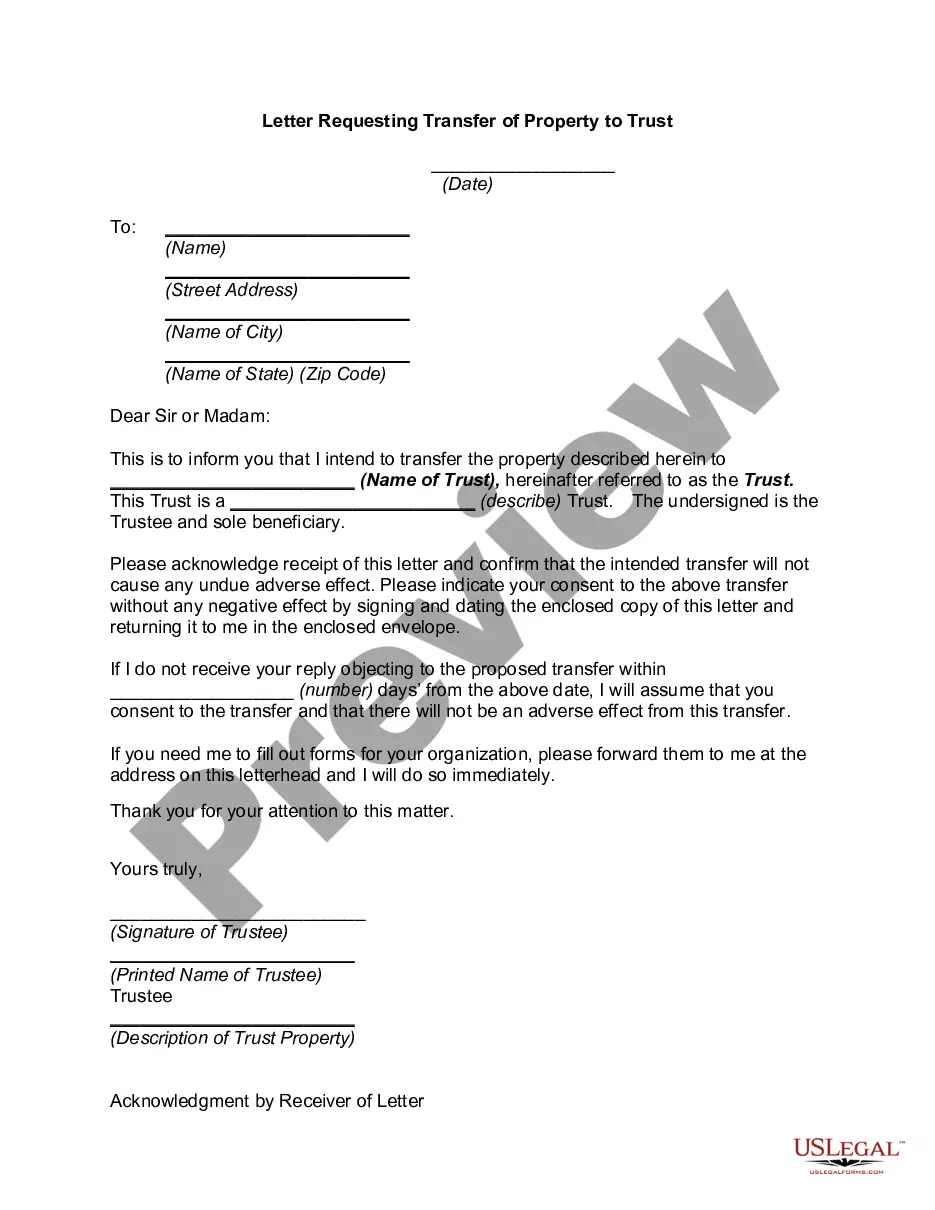
Writing a trust letter involves clearly outlining the details about the trust, including the trust's name, the trustee's responsibilities, and the beneficiaries. It is important to be concise and straightforward while including any necessary instructions or conditions. When notifying a lienholder about a trust, using a Connecticut Letter to Lienholder to Notify of Trust can help document these intentions formally.
A notice of intent to lien in Connecticut serves as a formal declaration to inform the involved parties about a pending lien. This notice gives the property owner an opportunity to address any outstanding debts before a lien is officially placed. Understanding this concept is crucial when dealing with properties in a trust, which may also involve a Connecticut Letter to Lienholder to Notify of Trust.
Setting up a trust in Connecticut is a straightforward process. First, decide on the type of trust you need, such as a revocable or irrevocable trust. Next, draft a trust document that specifies the terms and conditions, along with naming a trustee to manage the assets. To officially notify interested parties, including any lienholders, you may need a Connecticut Letter to Lienholder to Notify of Trust.
As mentioned previously, notarization is not a requirement for a trust's validity in Connecticut. While notarizing a trust document may help avoid disputes, it is not an essential step. It's best practice to ensure your trust is clear and well-documented, and using a Connecticut Letter to Lienholder to Notify of Trust can help streamline communications regarding the trust.
One major mistake parents make is failing to fund the trust properly. Establishing a trust is just the first step; you must transfer assets into the trust for it to hold value. Another common pitfall is not updating the trust as family circumstances change. To avoid complications, consider using a Connecticut Letter to Lienholder to Notify of Trust to keep all parties informed about the trust's assets.