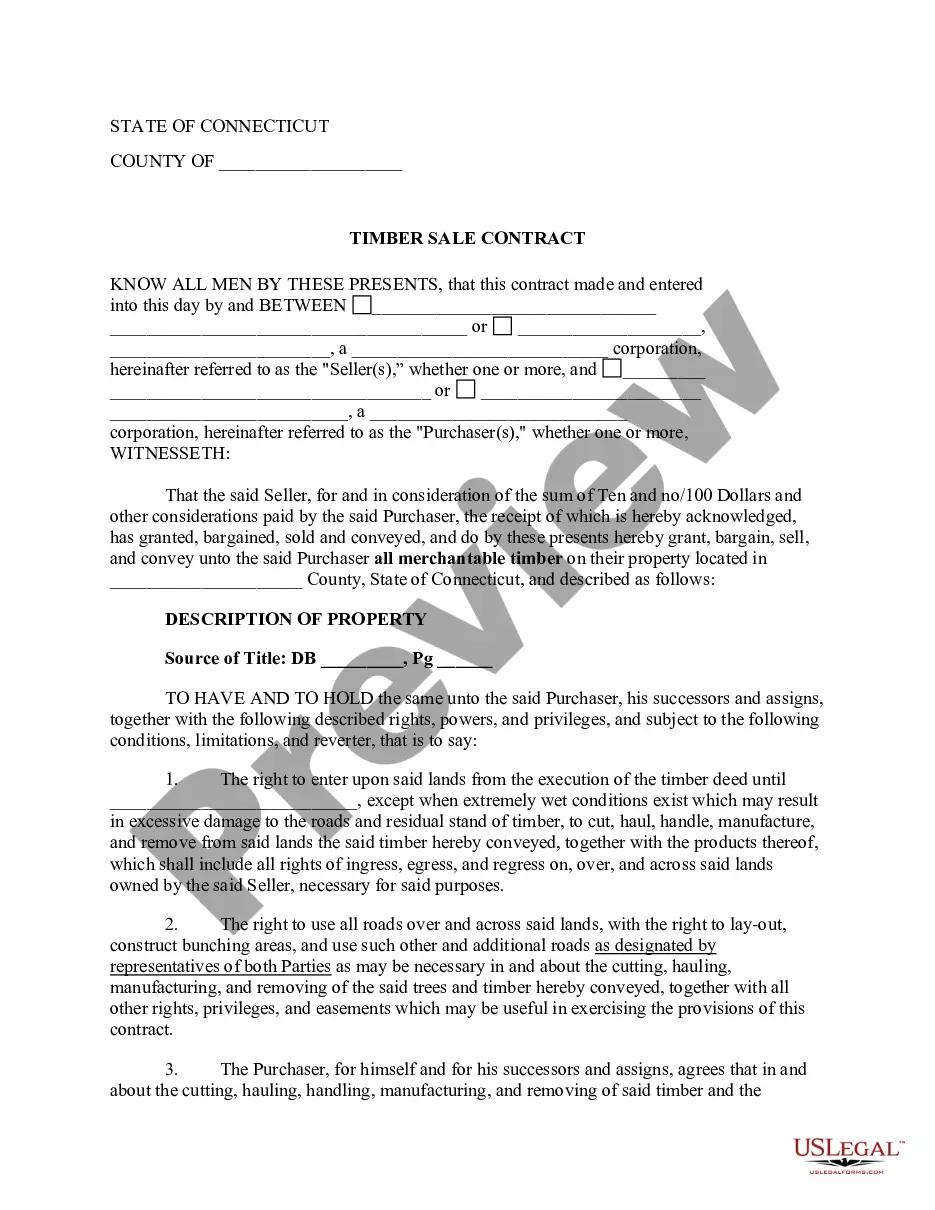
Connecticut Timber Sale Contract
Overview of this form
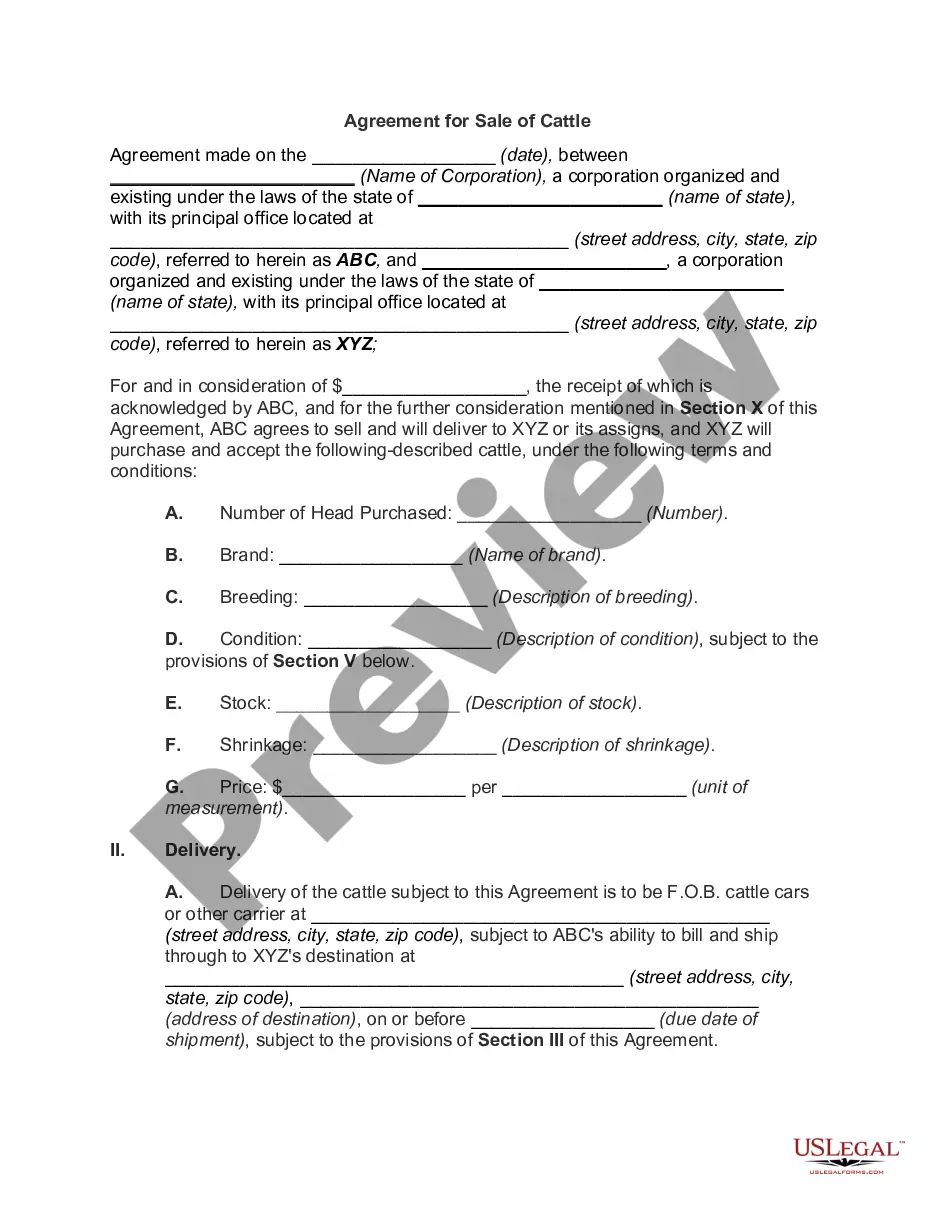
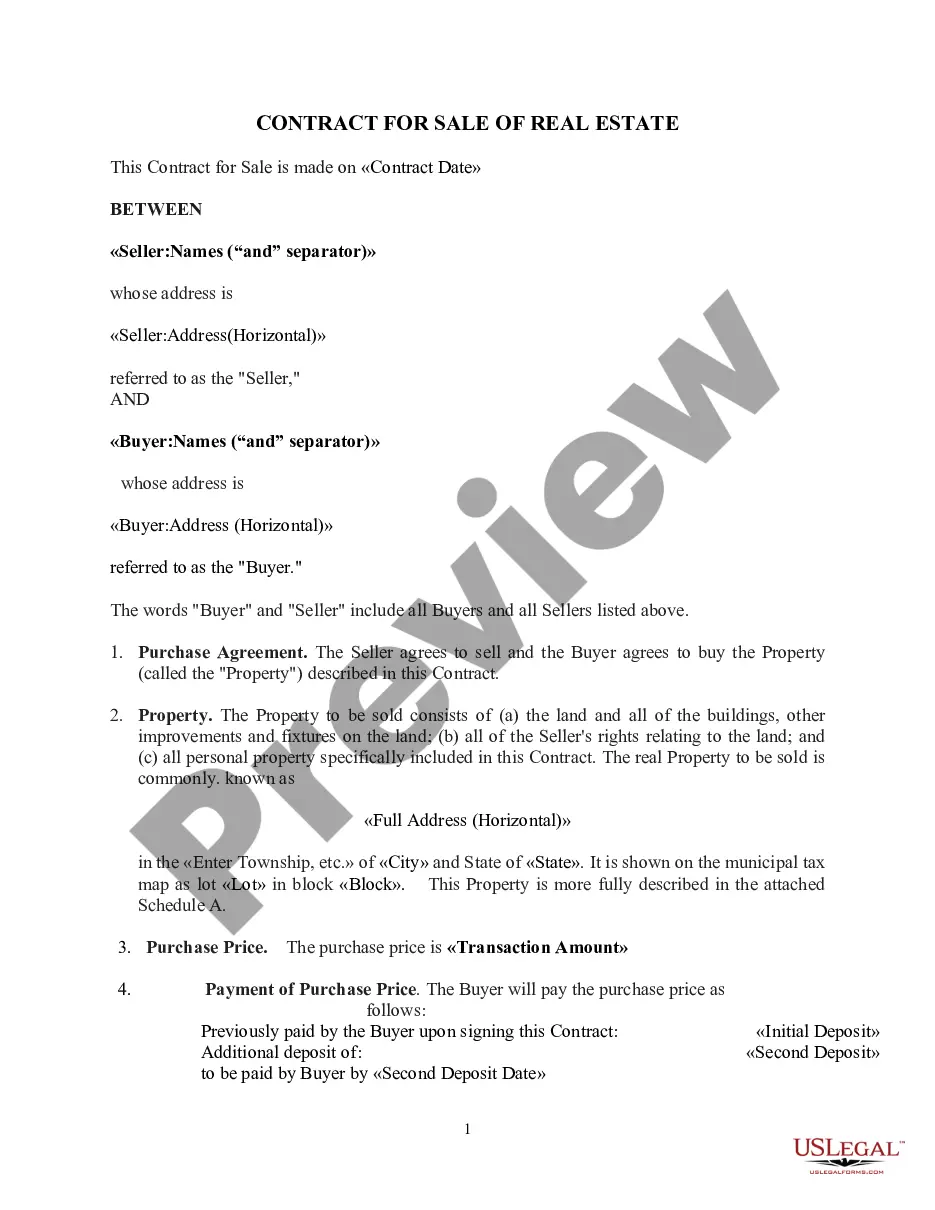
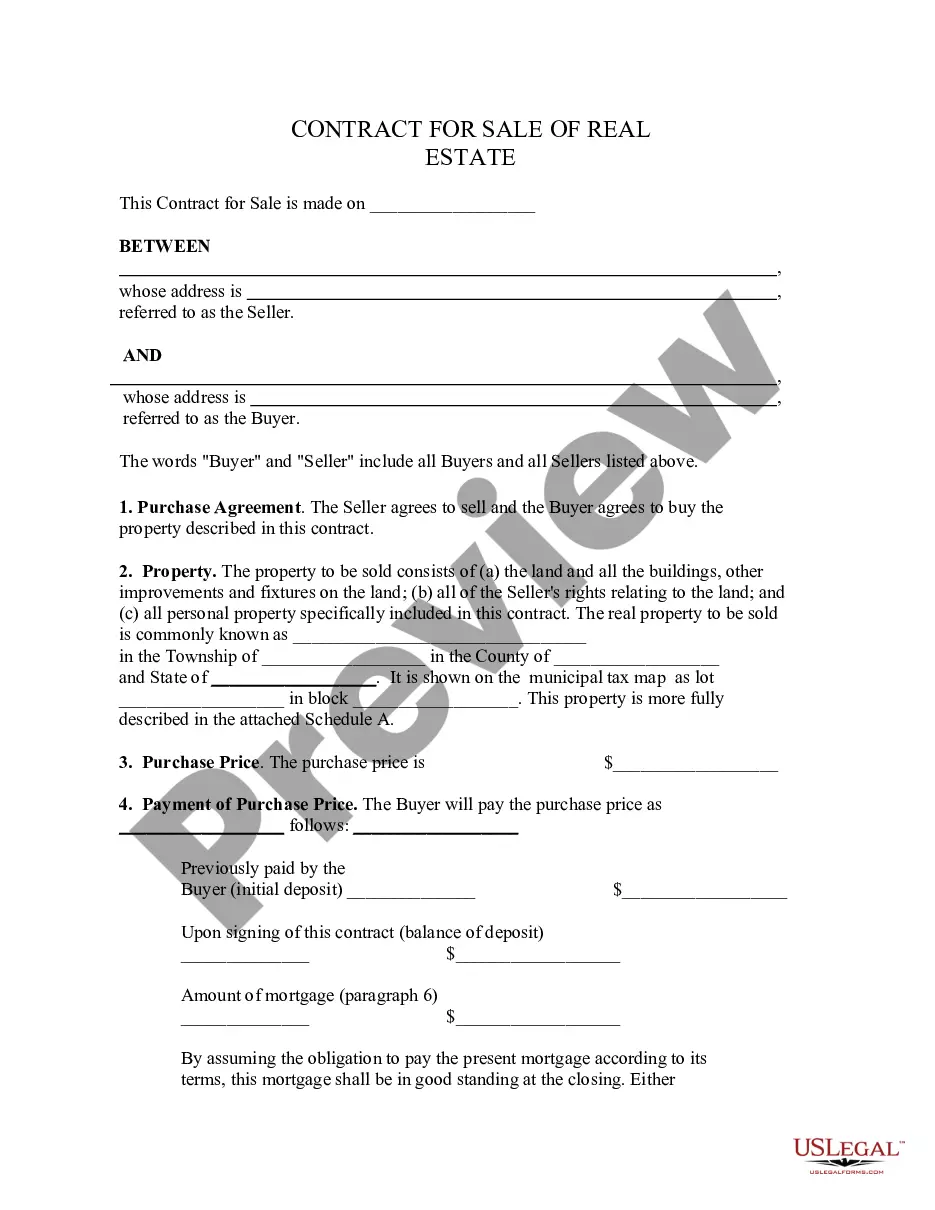
The Connecticut Timber Sale Contract is a legal agreement between a seller and a buyer regarding the sale of timber from the seller's property. This contract outlines the buyer's right to purchase designated timber and specifies the parameters for timber extraction, including access rights and responsibilities. It is essential for establishing clear terms to protect both parties and ensure compliance with local standards, differentiating it from other types of property sale agreements.
Key components of this form
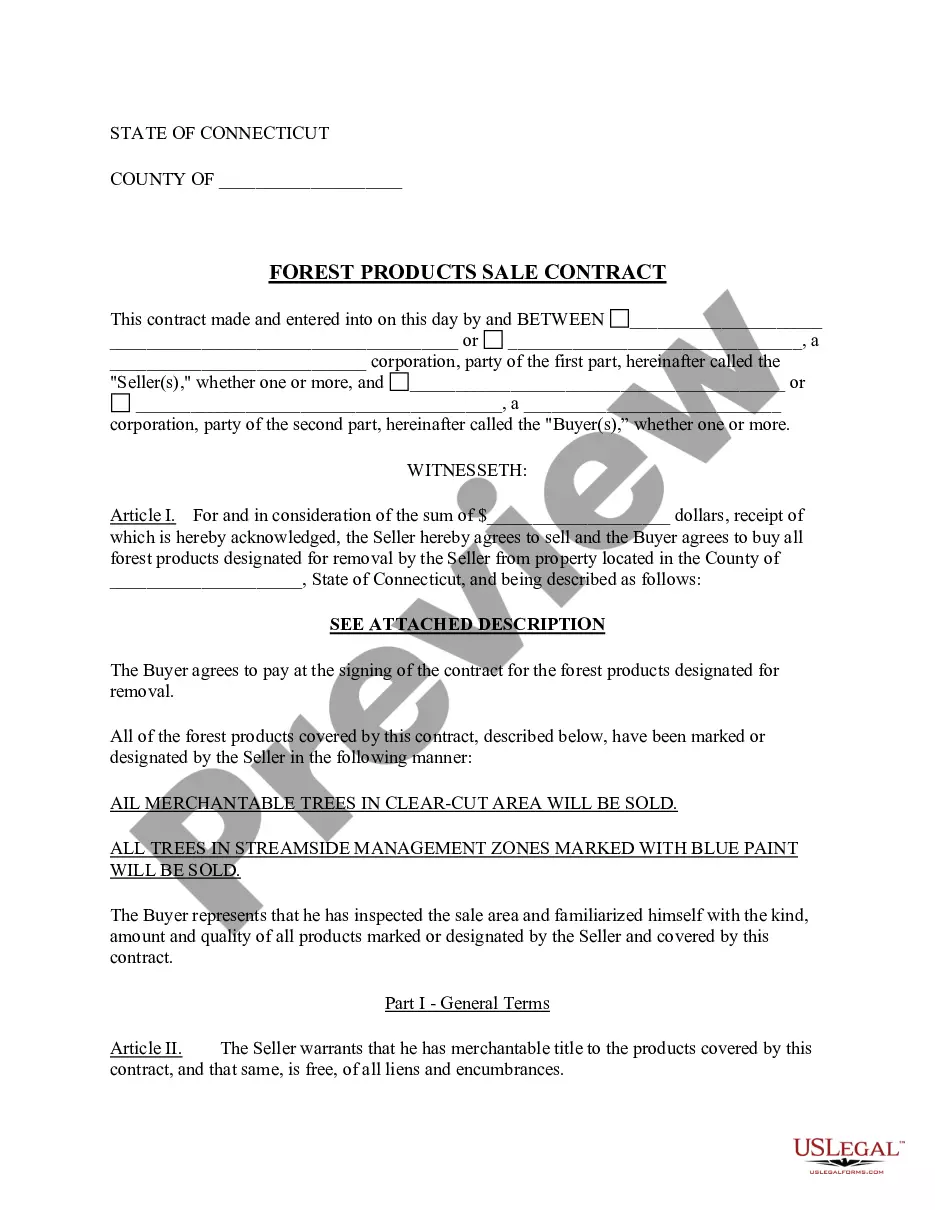
- Parties to the contract: Names of the seller(s) and buyer(s).
- Property description: Identification of the land from which timber will be harvested.
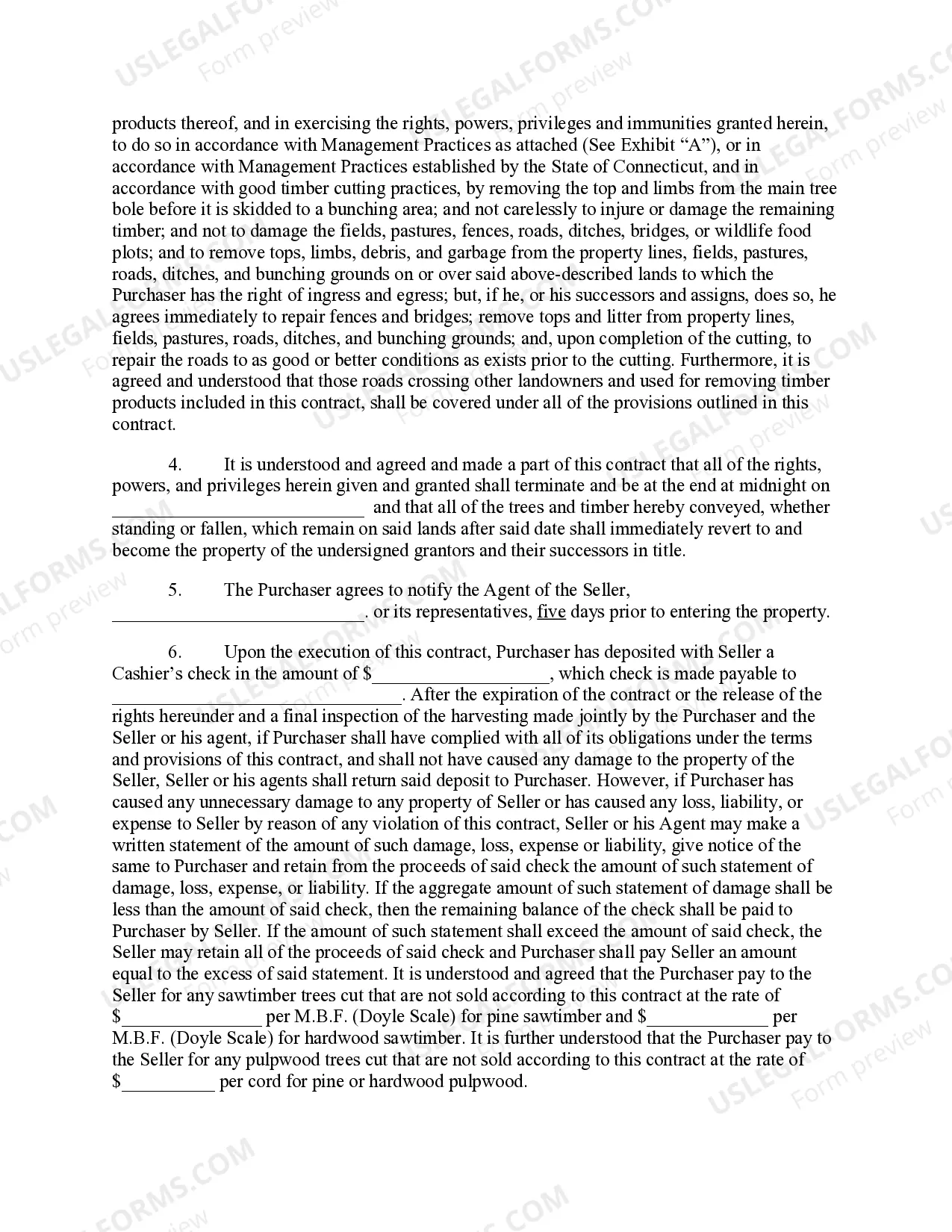
- Timber rights and privileges: Details about access to the property and harvesting practices.
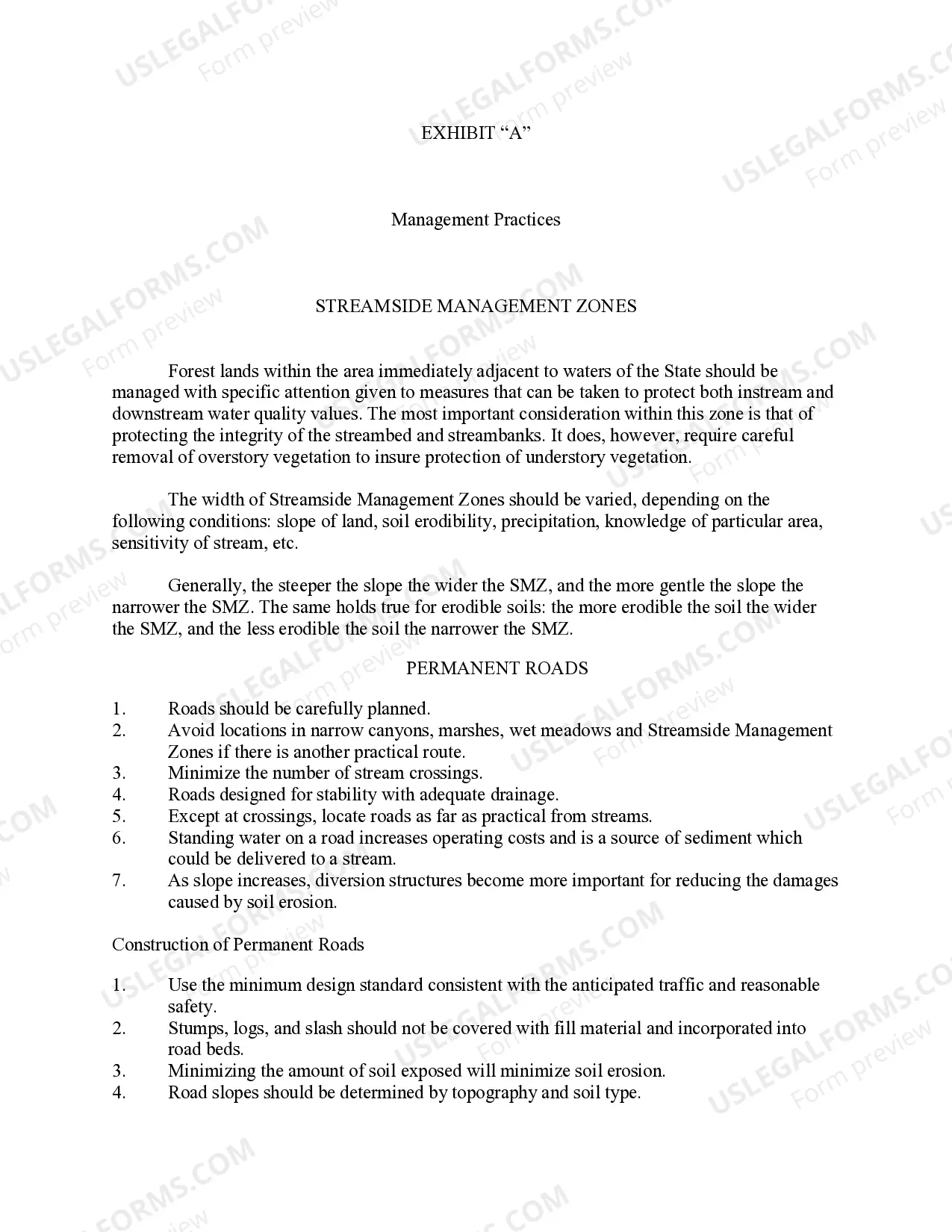
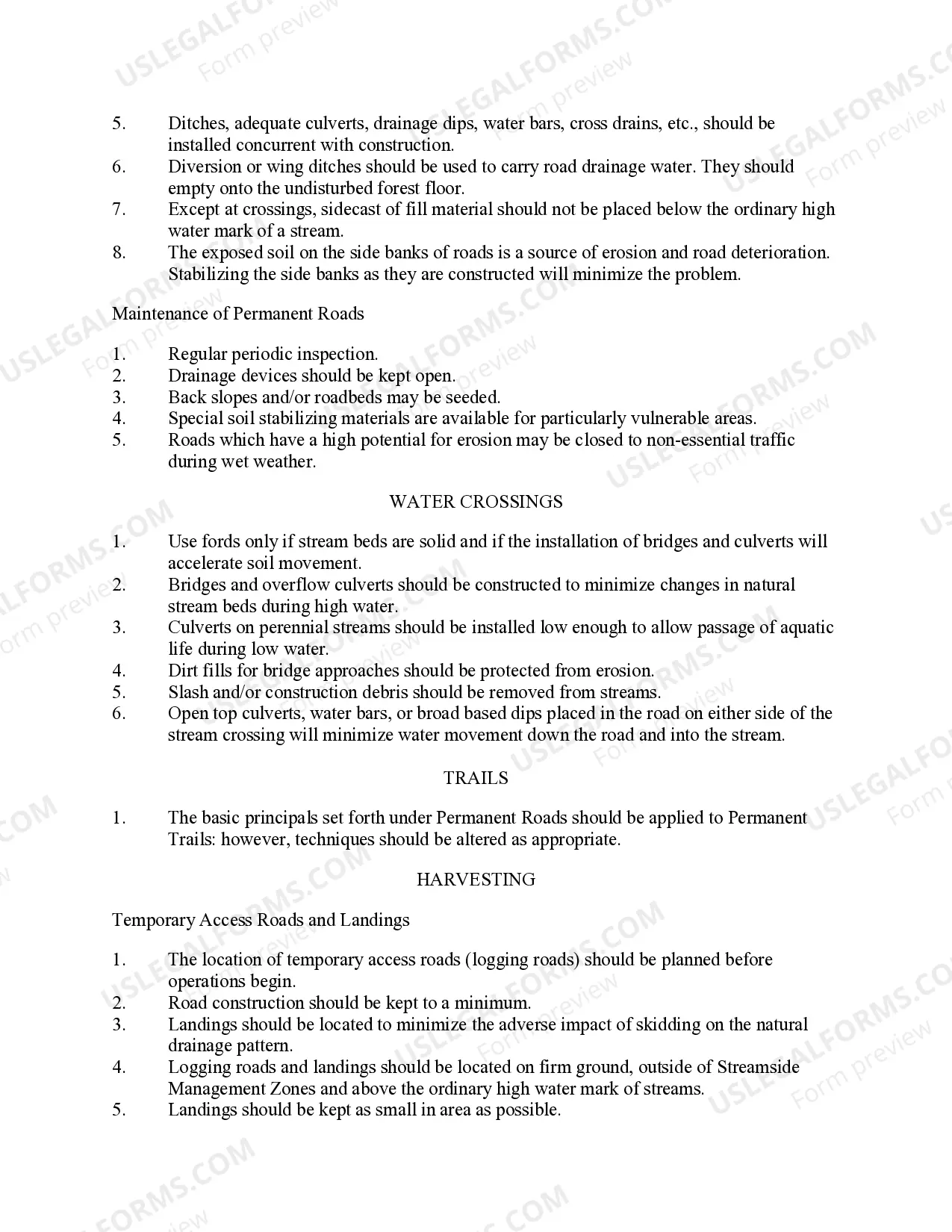
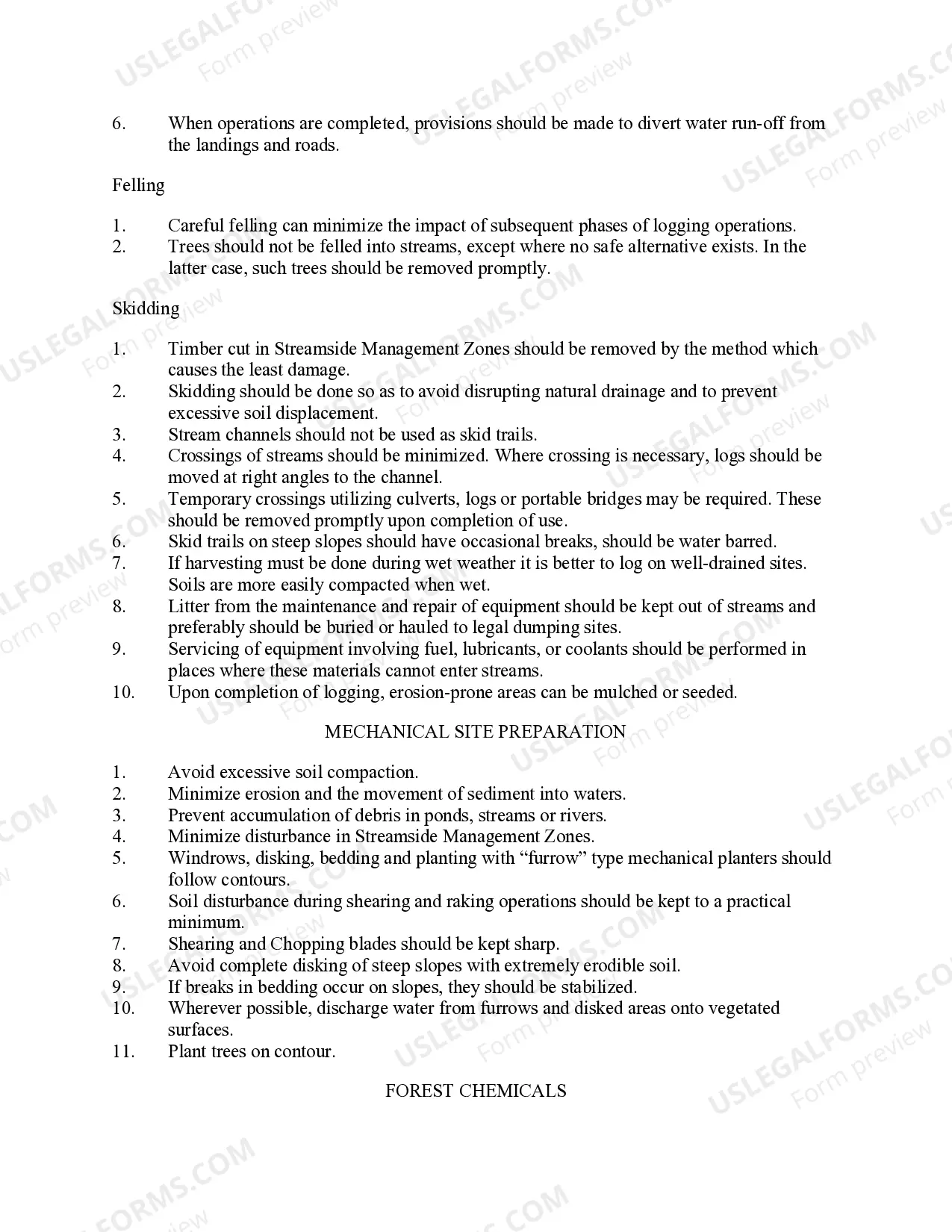
- Management practices: Guidelines for responsible timber cutting to protect the environment.
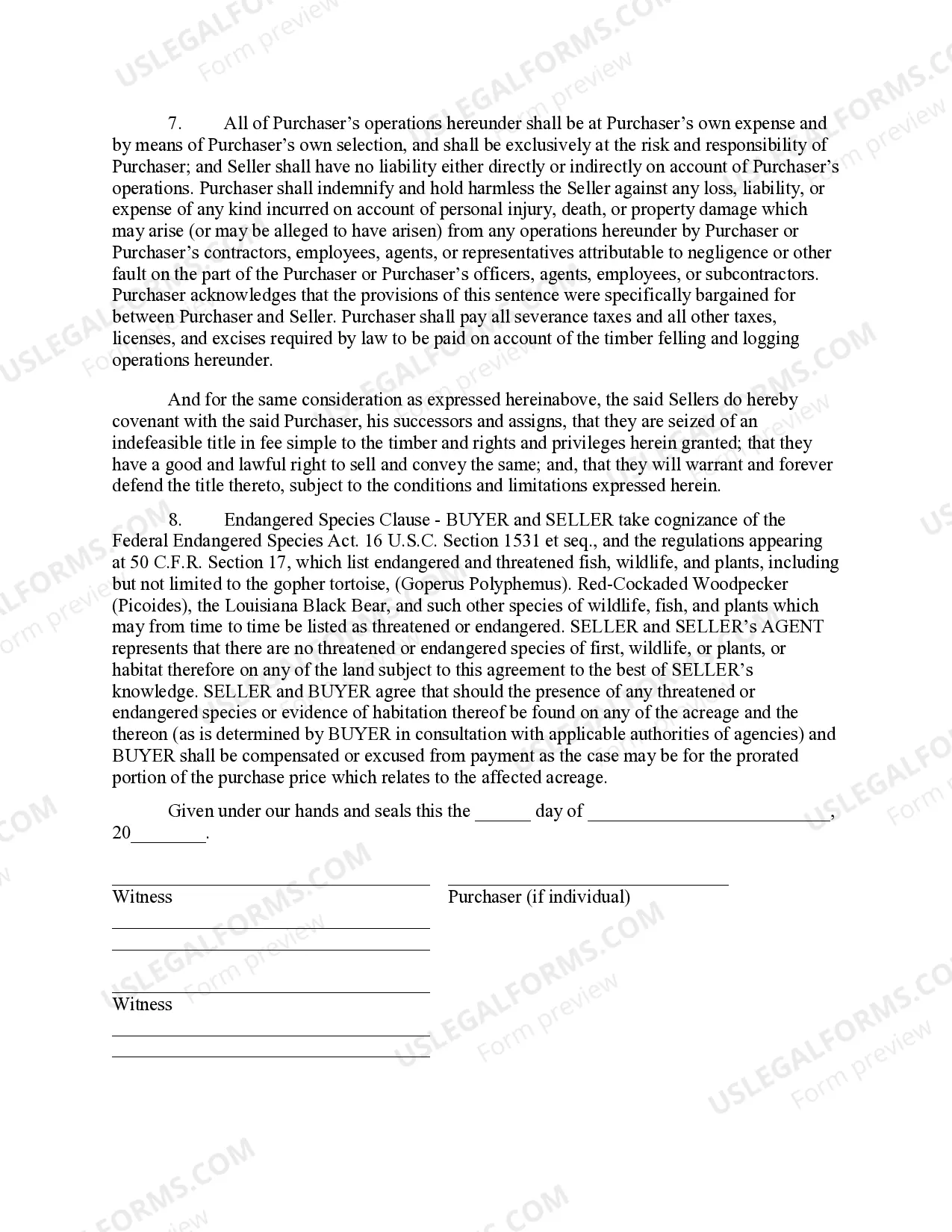
- Indemnification provisions: Buyerâs responsibility for any liabilities during the timber sale.
- Termination terms: Conditions under which the contract rights expire.

Common use cases
You should use the Connecticut Timber Sale Contract when you want to legally sell or purchase timber from a specific property in Connecticut. This form is applicable when negotiating a timber sale, ensuring both parties understand their rights and responsibilities related to timber extraction. It is particularly useful in transactions involving landowners and logging companies or individual buyers.
Who can use this document
- Landowners looking to sell timber from their property.
- Buyers interested in purchasing timber for logging or other uses.
- Forestry professionals involved in timber transactions.
- Legal representatives managing timber sales agreements.
Instructions for completing this form
- Identify the parties: Fill in the names of the seller(s) and buyer(s).
- Describe the property: Clearly specify the location and details of the land involved.
- Define timber rights: Outline the specific rights granted to the buyer regarding timber harvesting.
- Set management practices: Attach or reference any management practices to be followed during timber extraction.
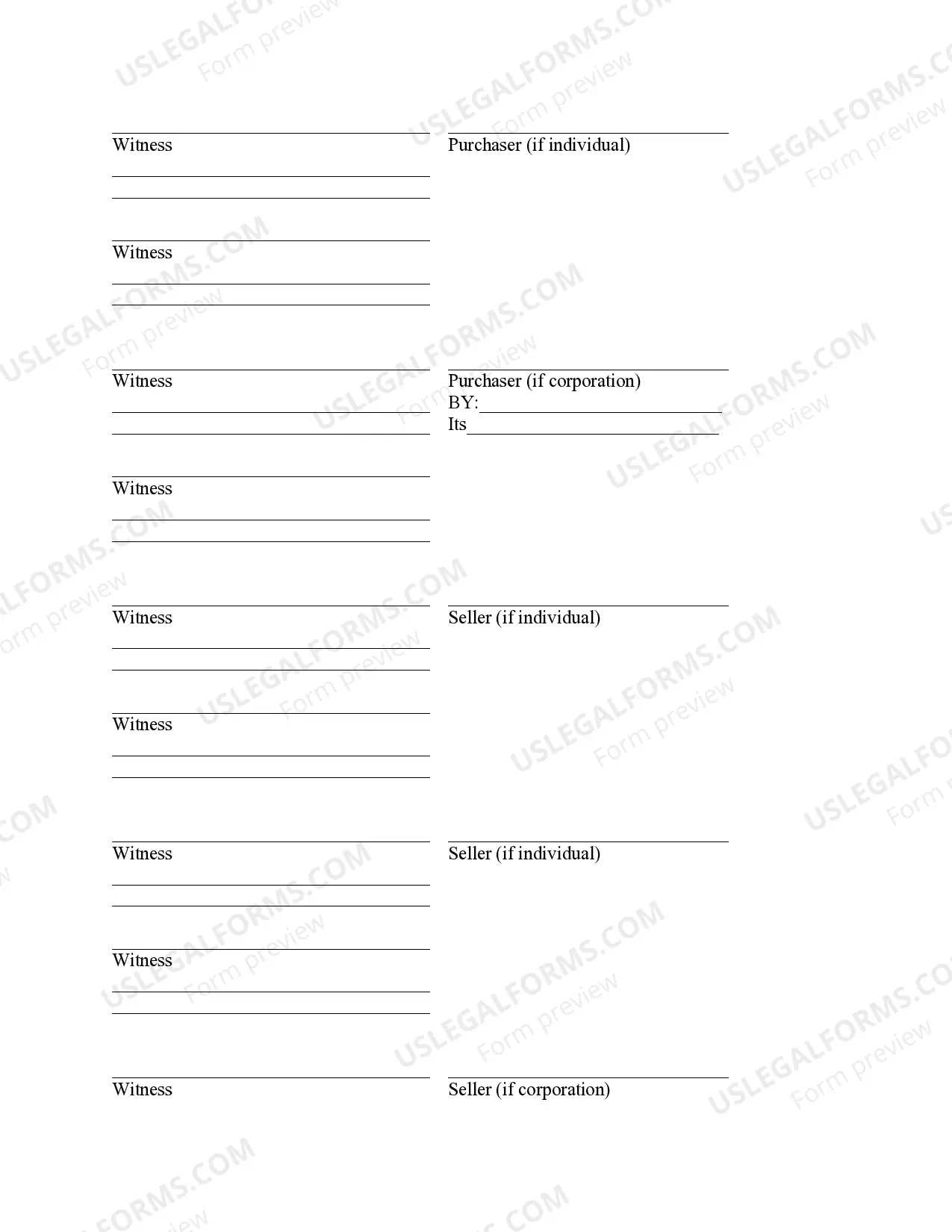
- Sign and date: Ensure both parties sign the document and date it to validate the agreement.
Does this form need to be notarized?
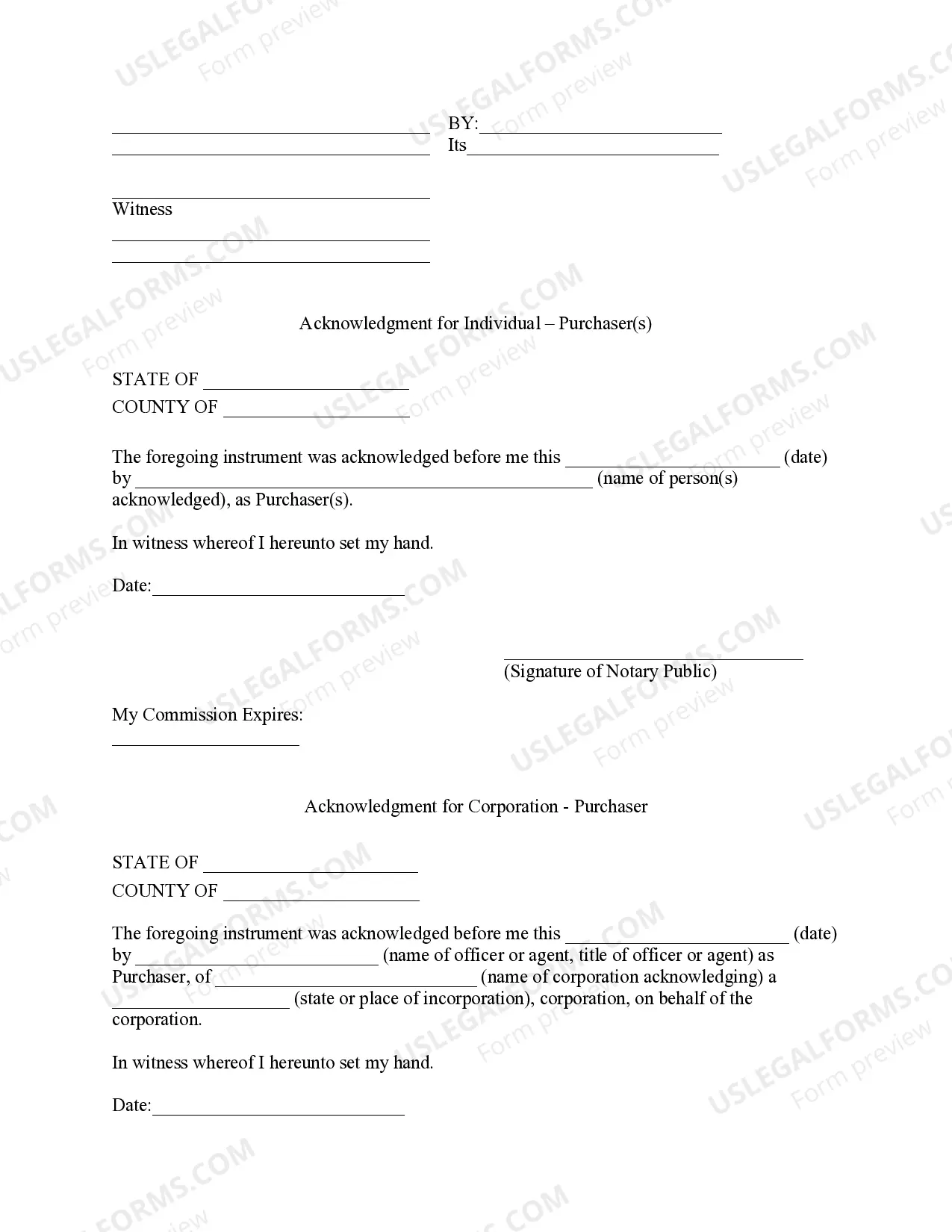
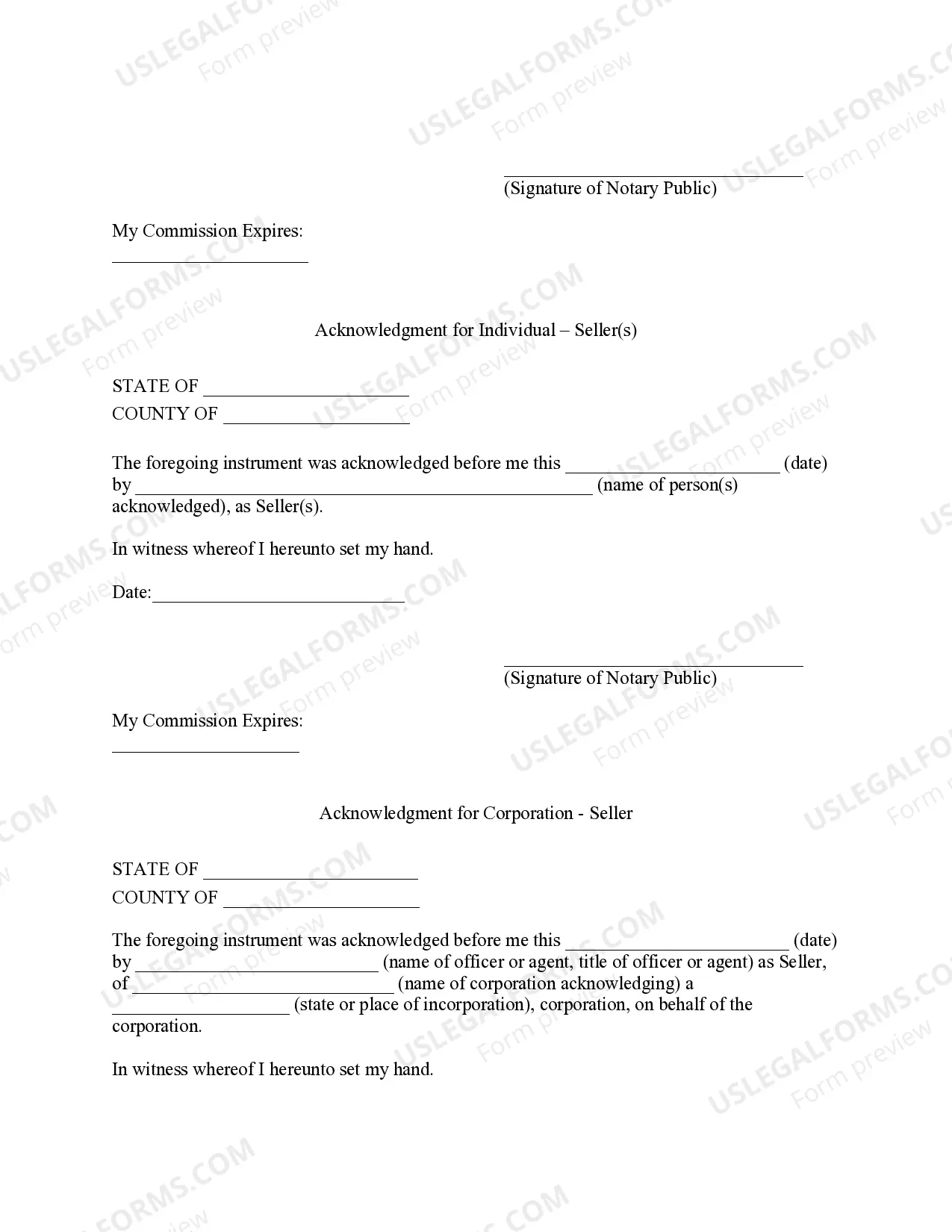
Yes, this form must be notarized to be legally valid. Notarization helps verify the identities of the parties involved and ensures that the document is executed correctly. US Legal Forms offers integrated online notarization available 24/7, allowing you to securely complete this process via a video call without the need for travel.
Get your form ready online
Our built-in tools help you complete, sign, share, and store your documents in one place.
Make edits, fill in missing information, and update formatting in US Legal Forms—just like you would in MS Word.
Download a copy, print it, send it by email, or mail it via USPS—whatever works best for your next step.
Sign and collect signatures with our SignNow integration. Send to multiple recipients, set reminders, and more. Go Premium to unlock E-Sign.
If this form requires notarization, complete it online through a secure video call—no need to meet a notary in person or wait for an appointment.
We protect your documents and personal data by following strict security and privacy standards.

Make edits, fill in missing information, and update formatting in US Legal Forms—just like you would in MS Word.

Download a copy, print it, send it by email, or mail it via USPS—whatever works best for your next step.

Sign and collect signatures with our SignNow integration. Send to multiple recipients, set reminders, and more. Go Premium to unlock E-Sign.

If this form requires notarization, complete it online through a secure video call—no need to meet a notary in person or wait for an appointment.

We protect your documents and personal data by following strict security and privacy standards.
Common mistakes to avoid
- Failure to accurately describe the property location.
- Not specifying the type and quantity of timber to be sold.
- Omitting critical terms regarding access and management practices.
- Neglecting to have both parties sign and date the contract.
Advantages of online completion
- Convenience: Access and fill out the form from anywhere at any time.
- Editability: Easily make modifications as needed before finalizing the agreement.
- Reliability: Use a legally vetted template prepared by licensed attorneys.
Looking for another form?

Form popularity
FAQ
When reporting timber royalties on your tax return, you should typically treat them as income. Use the details from your Connecticut Timber Sale Contract to accurately report these royalties, which generally falls under ordinary income. Proper records of the amounts received and associated expenses will aid in the reporting process. If you're unsure about how to classify these royalties, consulting with a tax expert can provide you with clarity.
Timber sales can be reported on Schedule F if your sale qualifies as a part of your farming business. If you structure your Connecticut Timber Sale Contract as part of your farming operations, you may report your income and expenses in this way. However, if the sale is a one-time transaction not related to your farming activities, it may not be appropriate to use Schedule F. Seeking guidance from a tax professional can help you determine the best reporting method.
When handling timber sales on your tax return, it's important to closely follow the guidelines set by the IRS. The proceeds from a Connecticut Timber Sale Contract should be reported as income, which might fall under capital gains or ordinary income, depending on the circumstances. Keeping detailed records of your timber sales will simplify this process. If you're uncertain, consider consulting a tax professional for tailored advice.
To avoid or minimize capital gains tax on timber sales, consider strategies such as re-investing proceeds into similar property or managing your timberland as an investment. Consulting with a tax professional can provide tailored strategies for your situation. Furthermore, a well-drafted Connecticut Timber Sale Contract can help ensure you're making informed decisions about your timber assets.
The amount you receive from selling timber depends on various factors, including timber species, quality, and local market conditions. Typically, prices can range based on these criteria, so it’s wise to evaluate multiple bids. A Connecticut Timber Sale Contract can help clarify expectations and ensure you receive fair compensation for your timber sale.
There is no universally defined minimum acreage requirement to sell timber, as it can vary by state and local regulations. However, having a larger tract of land may allow for better profitability and logging efficiency. If you are considering a sale, reviewing a Connecticut Timber Sale Contract can provide insights tailored to your land size and sale potential.
Yes, the sale of livestock generally results in a capital gain. When you sell livestock, any profit made from the sale may be subject to capital gains tax. To better understand how this applies to your specific situation, having a Connecticut Timber Sale Contract may provide guidance on managing timber sales alongside livestock sales.
Selling timber can be considered a farming activity under certain conditions. If you manage your land primarily for growing trees, and you harvest and sell timber, it can qualify as part of your farming operations. However, it may depend on local laws, so consulting with a professional is advisable. Additionally, a Connecticut Timber Sale Contract can help clarify these aspects.
There is no specific minimum acreage required to sell timber, but having at least 5 to 10 acres is often beneficial for economic feasibility. This size allows for better management practices and can lead to a more profitable sale. If you're considering a timber sale, reviewing your options through a Connecticut Timber Sale Contract can help you maximize your investment efficiently.
Claiming timber sales on your taxes involves reporting the income obtained from the sale as capital gain. It's important to maintain thorough records of your timber sales, including the Connecticut Timber Sale Contract, documentation of expenses, and photographs of the land. Additionally, working with a tax professional can ensure you take advantage of any deductions or credits related to timber management.