Illinois Deed of Distribution from Trust to Four Individuals
About this form
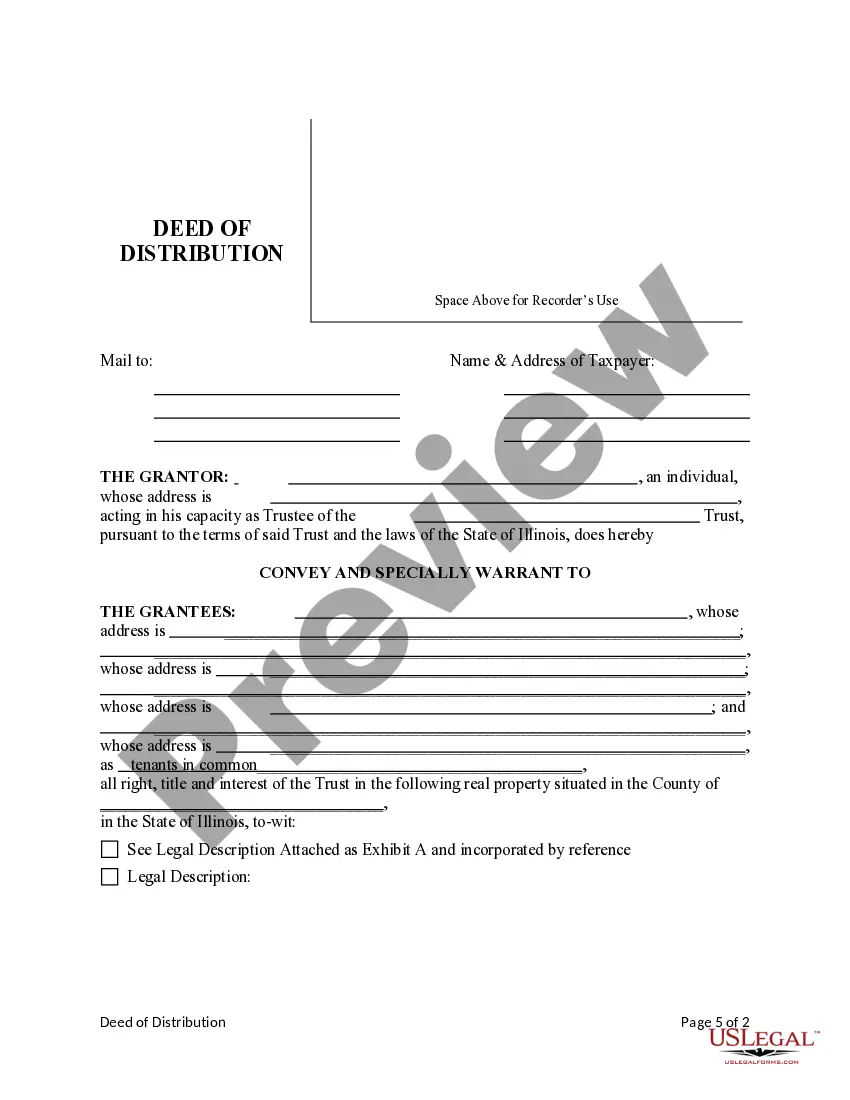
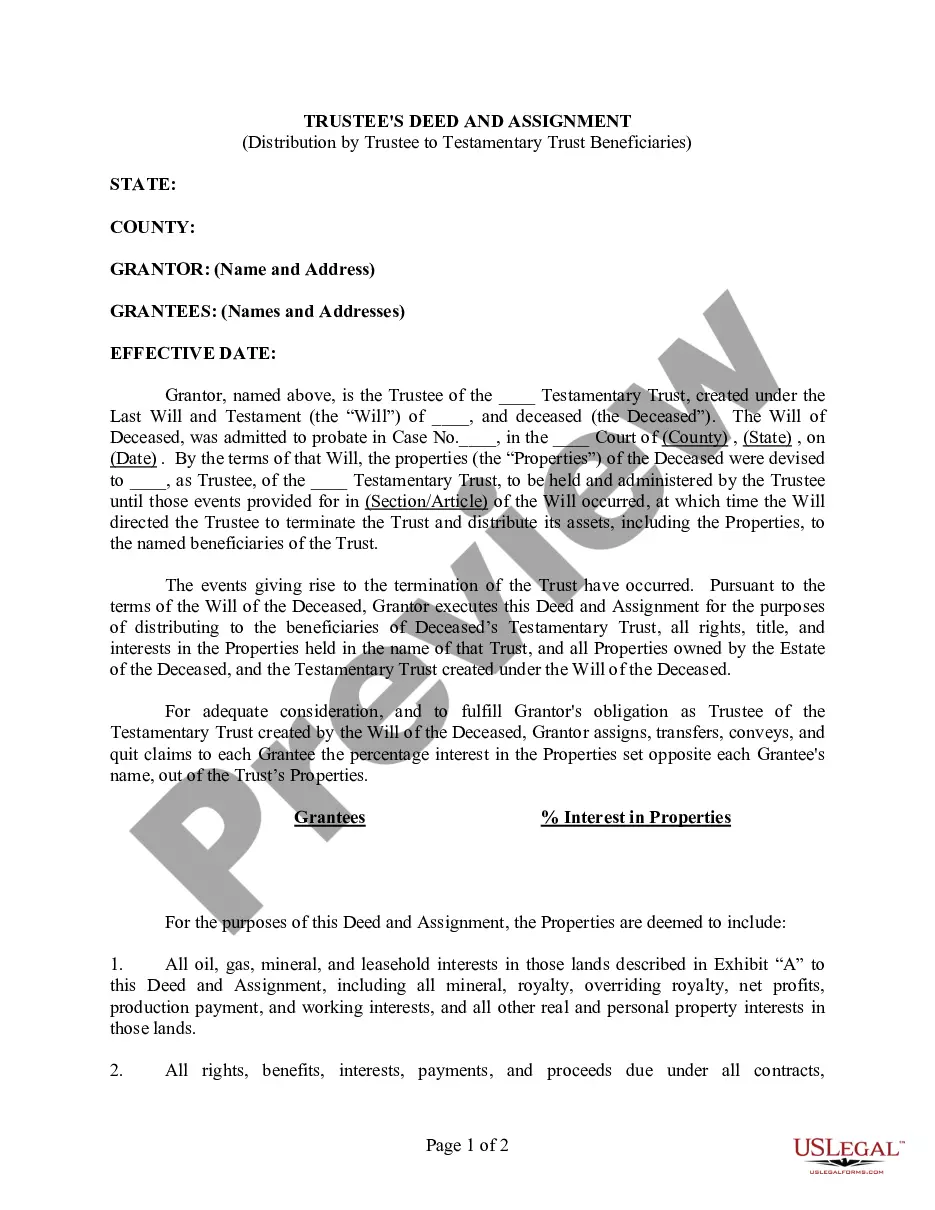
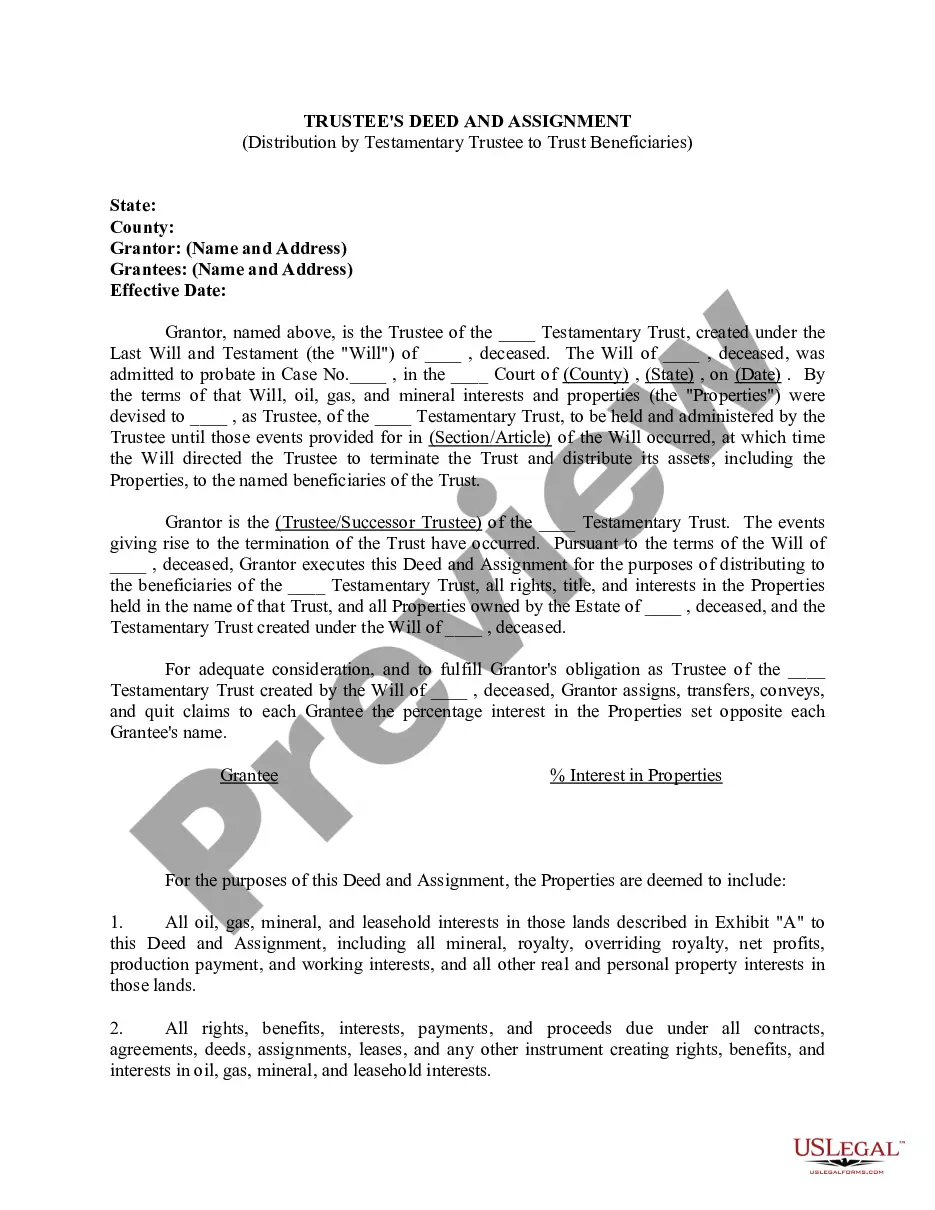
This Deed of Distribution is a legal document used to transfer real property from a trust to four individual beneficiaries. As the Trustee, the Grantor conveys and specifically warrants the stated property to the Grantees. This deed complies with all relevant state statutory laws, ensuring that the transfer is lawful and enforceable.
Key components of this form
- Grantor and Grantees: Identifies the individuals involved in the transfer.
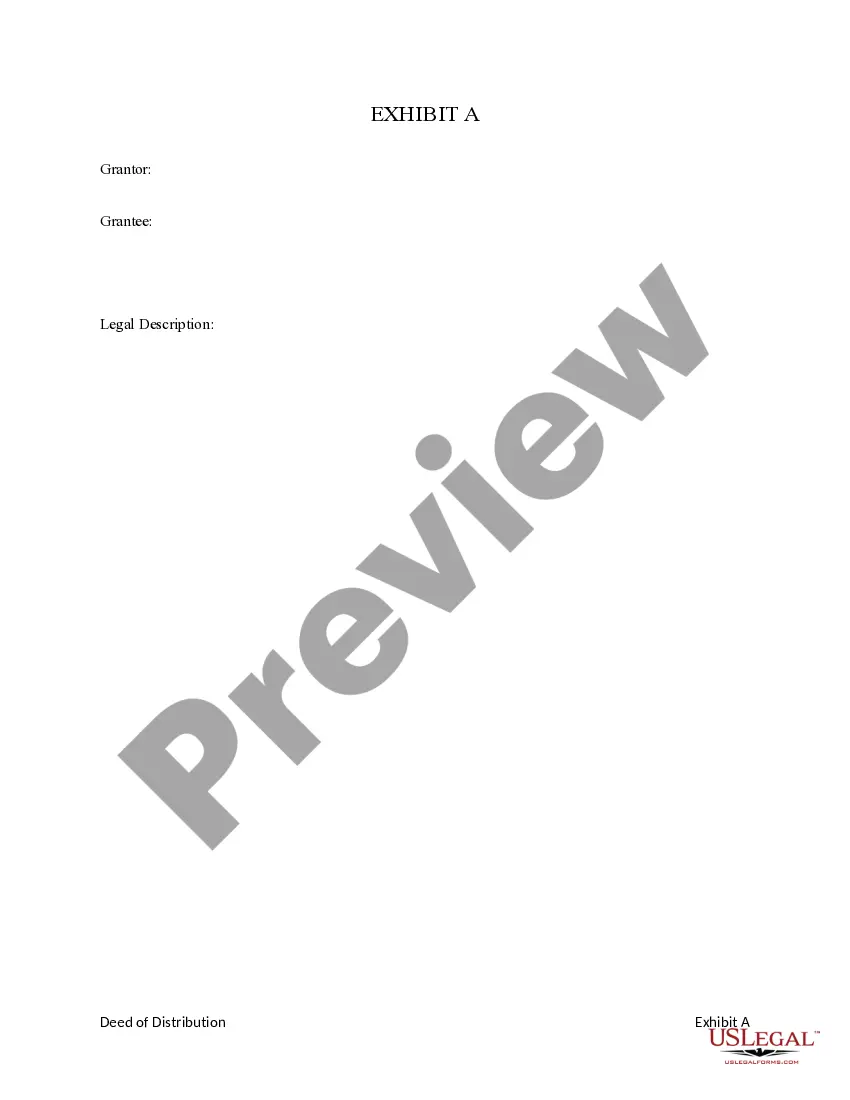
- Property Description: Provides a detailed account of the real estate being transferred.
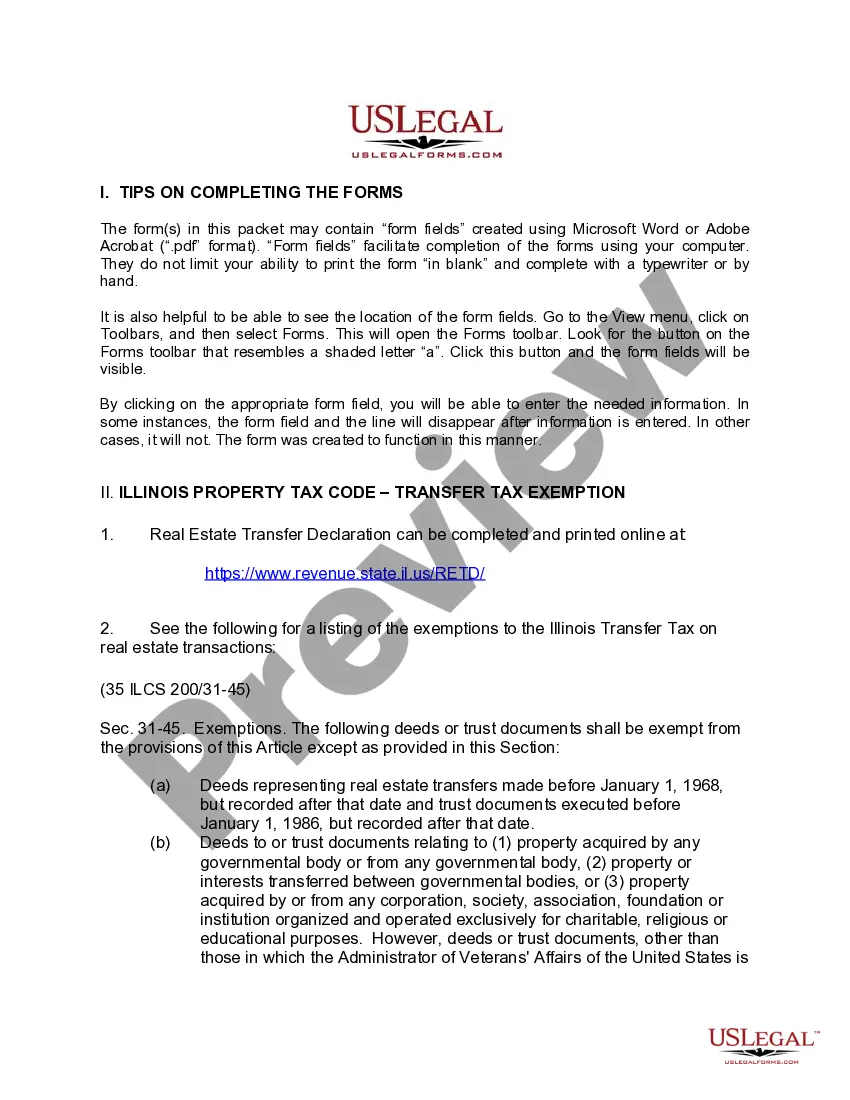
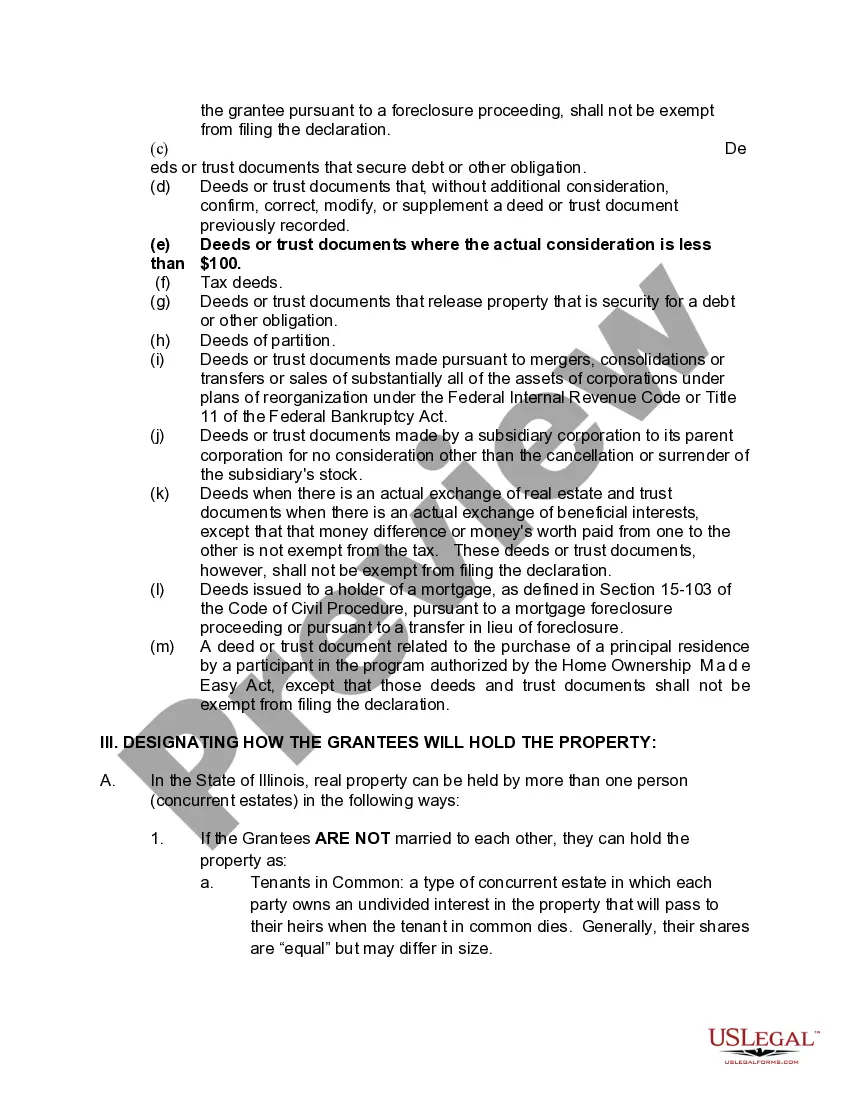
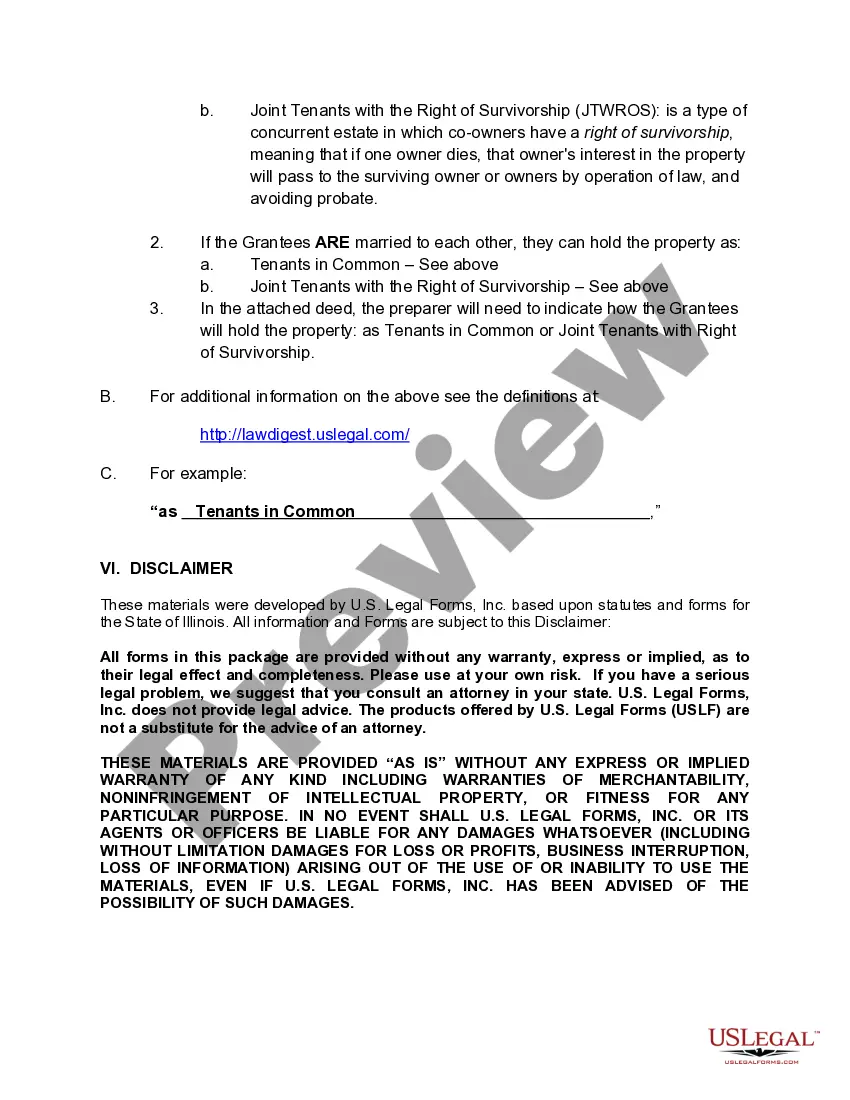
- Method of Ownership: Specifies how the Grantees will hold the property (as Tenants in Common or Joint Tenants with Right of Survivorship).
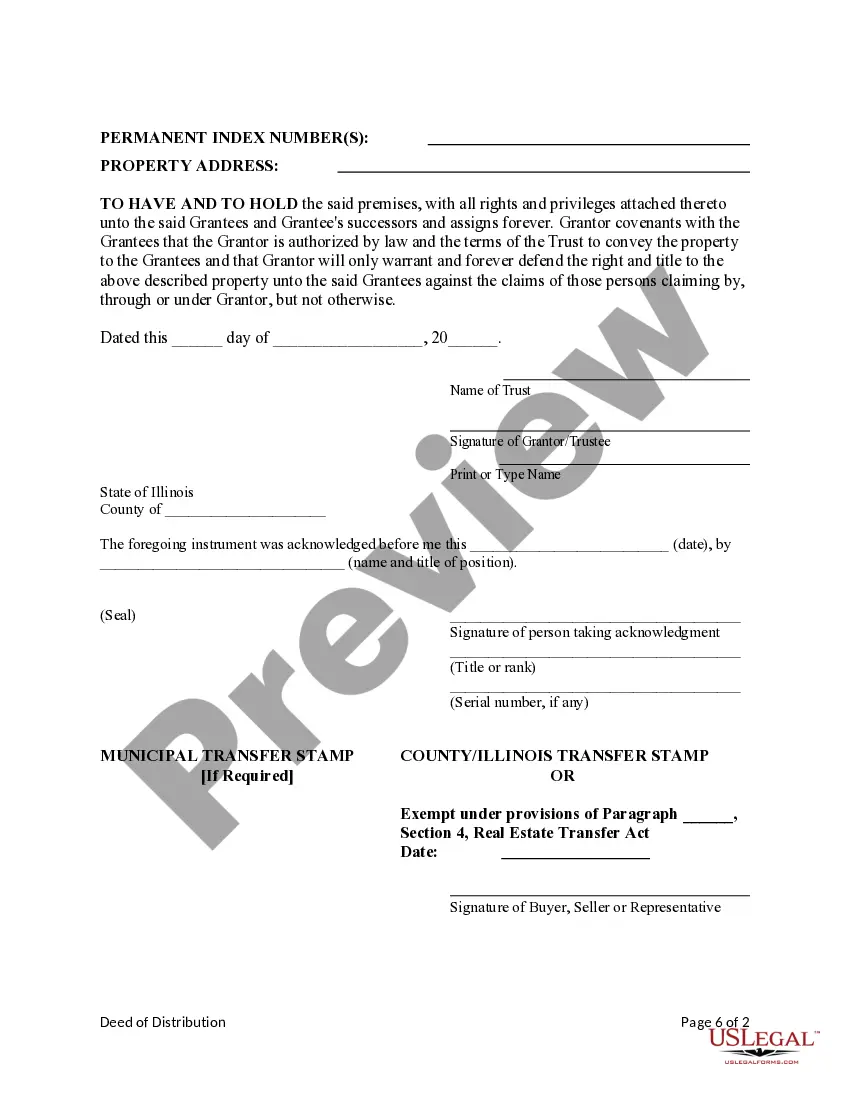
- Legal Recitals: Ensures compliance with state laws and outlines the purpose of the deed.
- Signatures: Requires the signature of the party taking acknowledgment and potentially other witnesses.

When to use this document
Use this form when you are acting as a Trustee and need to distribute real property from a trust to multiple individuals. This situation often arises during estate planning, asset distribution after a loved one's passing, or when a trust has reached a point of distribution. The deed helps clarify the ownership structure among the beneficiaries.
Who should use this form
This form is intended for:
- Trustees managing a trust who are legally authorized to transfer property.
- Individuals who have recently received assets from a trust.
- Beneficiaries seeking to understand their rights in property distribution.
How to complete this form
To complete this form, follow these steps:
- Identify the Grantor and the Grantees, ensuring all names are correct.
- Provide a detailed description of the real property being transferred.
- Specify how the Grantees will hold the property (as Tenants in Common or Joint Tenants with Right of Survivorship).
- Enter the date of the transaction and include any required acknowledgments.
- Sign and date the form in the appropriate sections to finalize the deed.
Is notarization required?
This form does not typically require notarization unless specified by local law. However, notarizing the deed can add an extra layer of legitimacy to the transaction, ensuring that the signatures are verified and legally recognized.
Get your form ready online
Our built-in tools help you complete, sign, share, and store your documents in one place.
Make edits, fill in missing information, and update formatting in US Legal Forms—just like you would in MS Word.
Download a copy, print it, send it by email, or mail it via USPS—whatever works best for your next step.
Sign and collect signatures with our SignNow integration. Send to multiple recipients, set reminders, and more. Go Premium to unlock E-Sign.
If this form requires notarization, complete it online through a secure video call—no need to meet a notary in person or wait for an appointment.
We protect your documents and personal data by following strict security and privacy standards.

Make edits, fill in missing information, and update formatting in US Legal Forms—just like you would in MS Word.

Download a copy, print it, send it by email, or mail it via USPS—whatever works best for your next step.

Sign and collect signatures with our SignNow integration. Send to multiple recipients, set reminders, and more. Go Premium to unlock E-Sign.

If this form requires notarization, complete it online through a secure video call—no need to meet a notary in person or wait for an appointment.

We protect your documents and personal data by following strict security and privacy standards.
Common mistakes to avoid
- Failing to accurately describe the real property can lead to legal disputes.
- Not specifying the manner in which the Grantees will hold the property may create confusion about ownership rights.
- Missing signatures or dates can invalidate the deed.
- Not acknowledging the form before an official may result in enforceability issues.
Benefits of using this form online
- Conveniently complete the form online, ensuring quick and easy access.
- Easily edit and customize the form to fit your specific distribution needs.
- Reliable content drafted by licensed attorneys to meet legal standards.
Main things to remember
- The Deed of Distribution is essential for transferring property from a trust to beneficiaries.
- Accurate completion is critical to avoid legal issues in property ownership.
- Understanding the different methods of holding property can impact estate planning decisions.
Looking for another form?
Form popularity
FAQ
A quitclaim deed can be used to transfer property from a trust, but a Special Warranty Deed seems to be a more common way to do this.
California Property TaxesTransferring real property to yourself as trustee of your own revocable living trust -- or back to yourself -- does not trigger a reassessment for property tax purposes. (Cal. Rev. & Tax Code § 62(d).)
Distribute trust assets outright The grantor can opt to have the beneficiaries receive trust property directly without any restrictions. The trustee can write the beneficiary a check, give them cash, and transfer real estate by drawing up a new deed or selling the house and giving them the proceeds.
In the context of a California mortgage transaction, a trust deed also transfer ownership. Only this time, the title is being placed in the hands of a third-party trustee, who holds the property on behalf of the lender and the homeowner-borrower until the mortgage is paid.
When you're ready to transfer trust real estate to the beneficiary who is named in the trust document to receive it, you'll need to prepare, sign, and record a deed. That's the document that transfers title to the property from you, the trustee, to the new owner.
Two documents are needed to transfer California real property from a trust to beneficiaries of the trust; a deed and an 'affidavit of death of trustee. ' An 'affidavit death of trustee' is a declaration, under oath, by the successor trustee.
Distributing assets from an irrevocable trust requires that the assets first be part of the trust's corpus. Tax laws allow trusts to recover the after-tax money locked up in the corpus as tax-free return of principal. Trusts pass this benefit along to their beneficiaries in the form of tax-free distributions.
Locate the deed that's in trust. Use the proper deed. Check with your title insurance company and lender. Prepare a new deed. Sign in the presence of a notary. Record the deed in the county clerk's office.