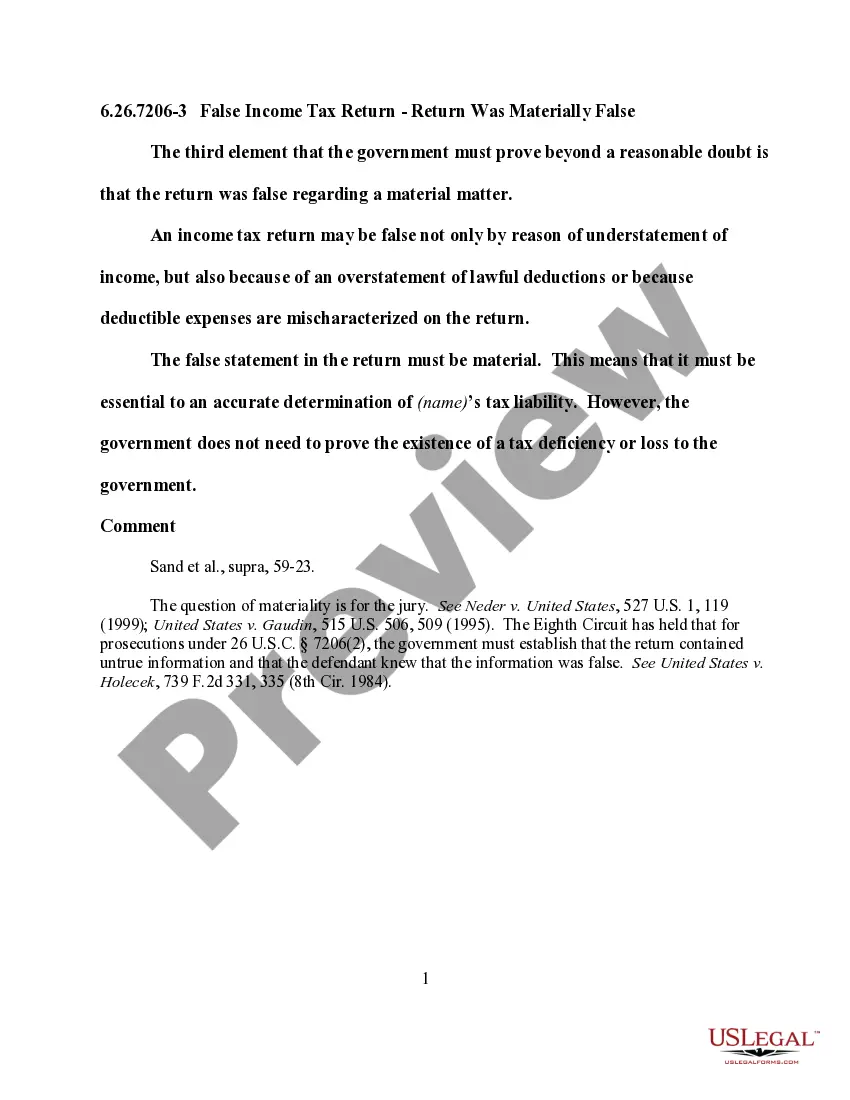
False Income Tax Return - Return Was Materially False
Understanding this form
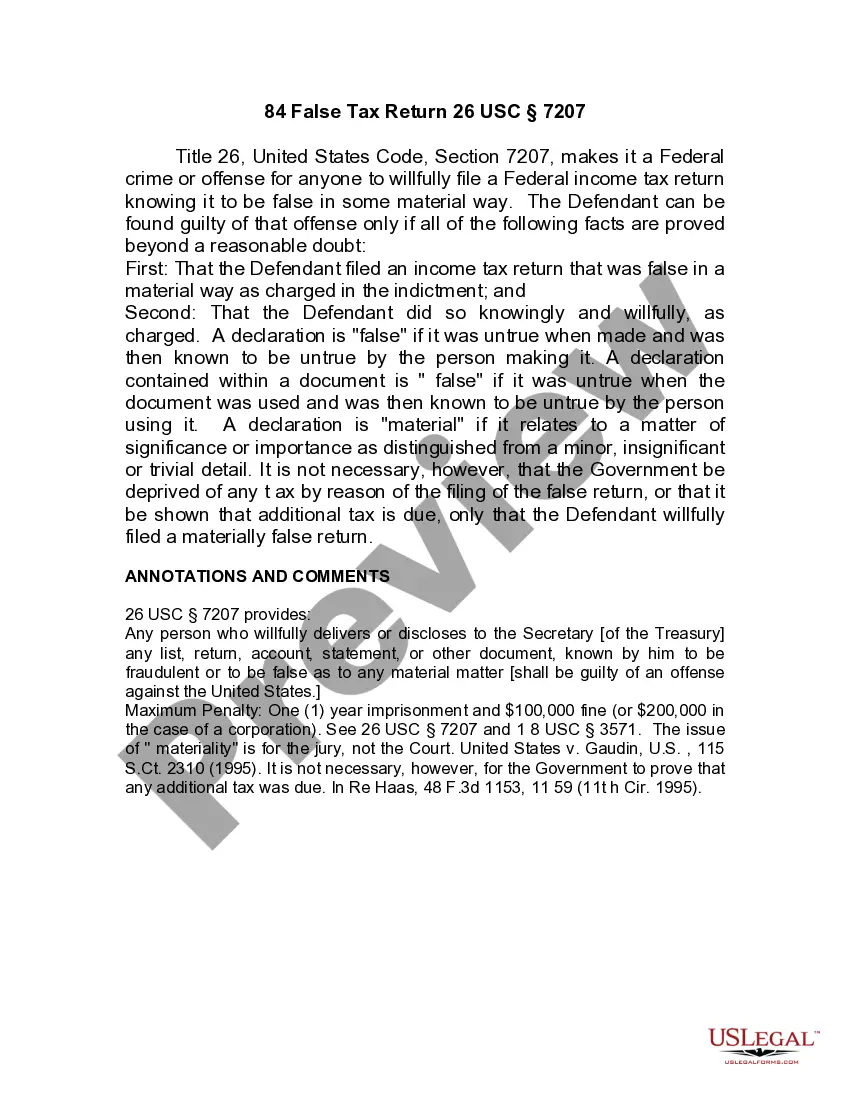
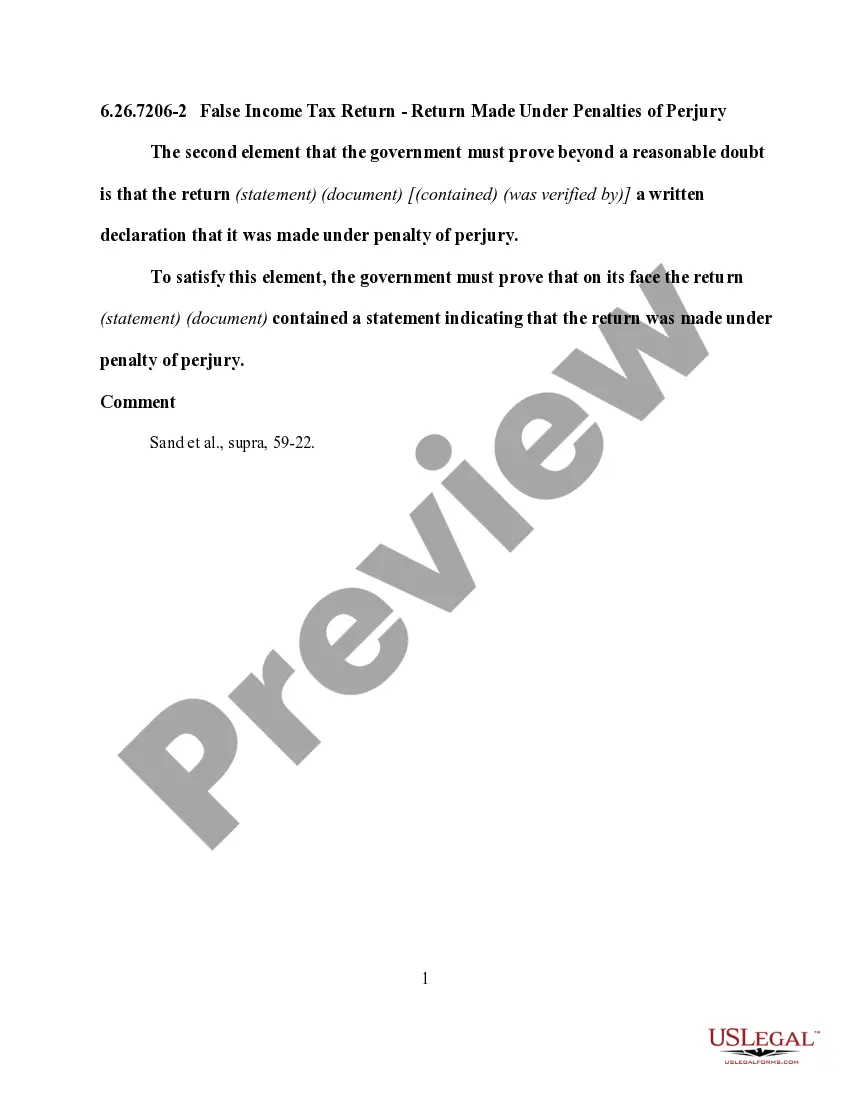
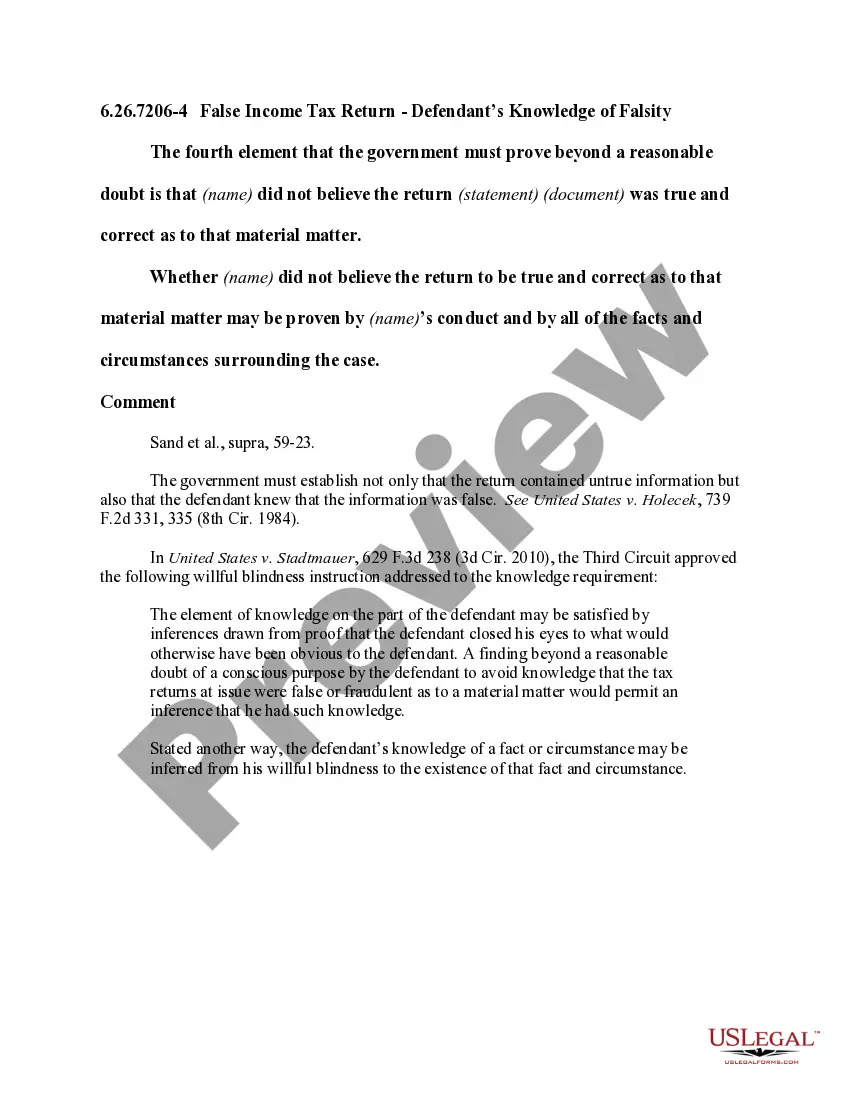
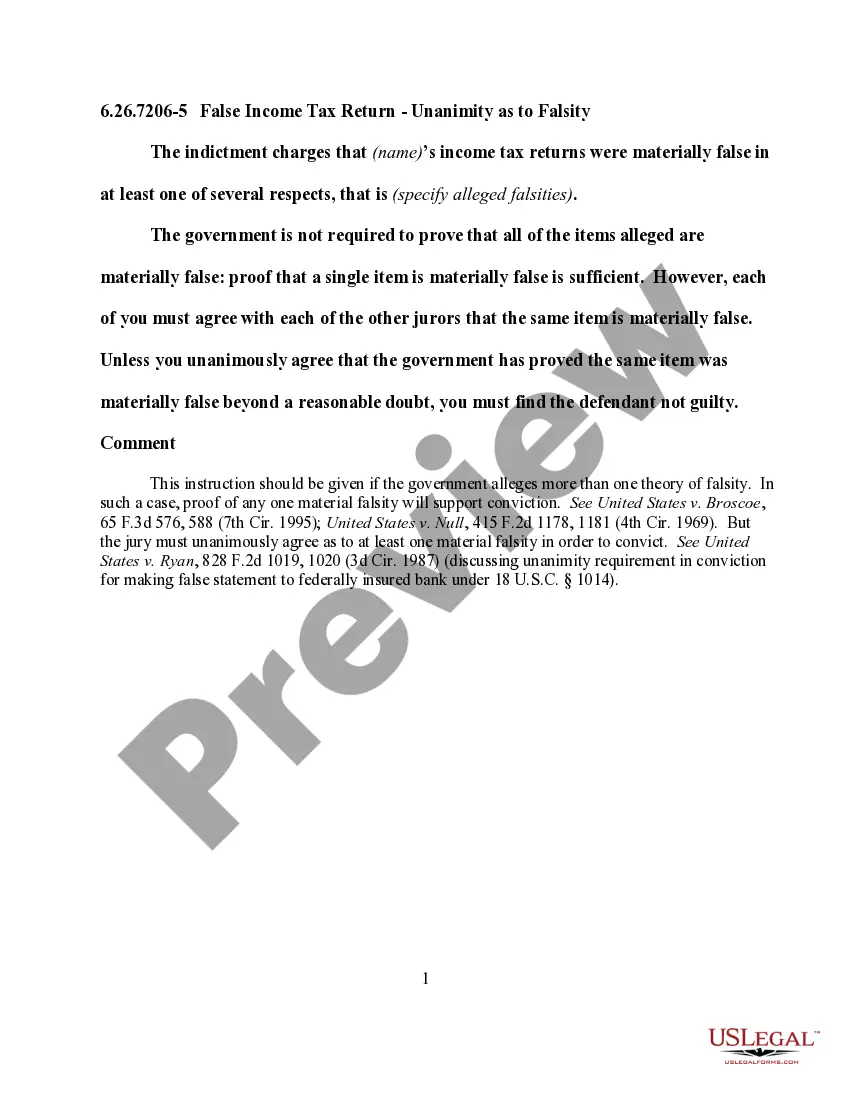
The False Income Tax Return - Return Was Materially False form is a legal document used to address situations where a person has knowingly filed an inaccurate income tax return. This form is distinct from other tax-related forms because it specifically deals with false statements that impact the determination of tax liability. Utilizing this form helps clarify the legal ramifications of filing a materially false tax return, ensuring compliance with the law.
What’s included in this form
- Identification of the individual whose tax return is in question.
- Details of the inaccuracies present in the filed return.
- Explanation of how the false information is material to tax liability.
- Statement acknowledging the individual's knowledge of the falsity of the return.

Situations where this form applies
This form is necessary when an individual realizes that their income tax return contains false information that is material to their tax liability. It is typically used in cases where there has been an error or misrepresentation that could lead to legal consequences, particularly when the inaccuracies could trigger an investigation by tax authorities.
Who should use this form
This form is intended for:
- Individuals who have filed an income tax return that they now believe contains false statements.
- Taxpayers under investigation for potential tax fraud or related offenses.
- Individuals seeking to correct a previously filed income tax return before any legal action is taken.
How to complete this form
- Identify the individual whose tax return is in question.
- Specify the details of the inaccuracies in the filed tax return.
- Indicate the materiality of the false statements in relation to tax liability.
- Certify that the individual was aware of the false information at the time of filing.
- Review the completed form for accuracy and completeness before submission.
Does this document require notarization?
Notarization is generally not required for this form. However, certain states or situations might demand it. You can complete notarization online through US Legal Forms, powered by Notarize, using a verified video call available anytime.
Get your form ready online
Our built-in tools help you complete, sign, share, and store your documents in one place.
Make edits, fill in missing information, and update formatting in US Legal Forms—just like you would in MS Word.
Download a copy, print it, send it by email, or mail it via USPS—whatever works best for your next step.
Sign and collect signatures with our SignNow integration. Send to multiple recipients, set reminders, and more. Go Premium to unlock E-Sign.
If this form requires notarization, complete it online through a secure video call—no need to meet a notary in person or wait for an appointment.
We protect your documents and personal data by following strict security and privacy standards.

Make edits, fill in missing information, and update formatting in US Legal Forms—just like you would in MS Word.

Download a copy, print it, send it by email, or mail it via USPS—whatever works best for your next step.

Sign and collect signatures with our SignNow integration. Send to multiple recipients, set reminders, and more. Go Premium to unlock E-Sign.

If this form requires notarization, complete it online through a secure video call—no need to meet a notary in person or wait for an appointment.

We protect your documents and personal data by following strict security and privacy standards.
Common mistakes to avoid
- Failing to provide detailed explanations of inaccuracies.
- Not acknowledging the knowledge of the falsity of information.
- Omitting essential personal and tax return details from the form.
- Submitting the form with incorrect or outdated information.
Advantages of online completion
- Convenience of accessing and completing the form from anywhere.
- Editability allows for corrections before final submission.
- Reliability from using professionally drafted templates by licensed attorneys.
Looking for another form?



Form popularity
FAQ
Failure to file penalty The penalty is $25,000 for each year you failed to file. You can face criminal tax evasion charges for failing to file a tax return if it was due no more than six years ago. If convicted, you could be sent to jail for up to one year.
In rare cases, the IRS can press criminal charges. When the IRS identifies fraud, the IRS can pursue civil or criminal charges. The IRS prosecutes relatively few cases each year ? and they usually involve large omissions of income, tax evasion or tax protest schemes, or lying to the IRS in an audit.
Can You be Prosecuted for Perjury or False Statements in Your Tax Returns? Yes, the Internal Revenue Code has its very own perjury and false statements statute. This crime is separate from the tax evasion statute, and different elements must be present for the taxpayer to be charged with perjury and false statements.
Examples of tax fraud include claiming false deductions; claiming personal expenses as business expenses; using a false Social Security number; and not reporting income. Tax evasion, or illegally avoiding payment of taxes owed, may be construed as an example of tax fraud.
That's something to keep in mind when you're wondering what is the penalty for tax evasion. For fraud and tax evasion, the tax law dictates that if you're convicted, you may be fined up to $100,000 and sent to jail for up to five years. The maximum fine for corporations is $500,000.
The maximum permissible fine is $250,000 for individuals and $500,000 for corporations. 1 Two kinds of tax evasion. Section 7201 creates two offenses: (a) the willful attempt to evade or defeat the assessment of a tax, and (b) the willful attempt to evade or defeat the payment of a tax. Sansone v.
Tax evasion ? the willful attempt to evade or defeat taxes ? is a felony and offenders can face up to five years in prison and a $100,000 fine.
Filing a false tax return or other document is treated seriously by the Internal Revenue Service. If its investigation turns up substantive information, civil cases can be referred for criminal tax investigation. Arrests and tax-related criminal charges could follow.