False Income Tax Return - Defendant's Knowledge of Falsity
Understanding this form
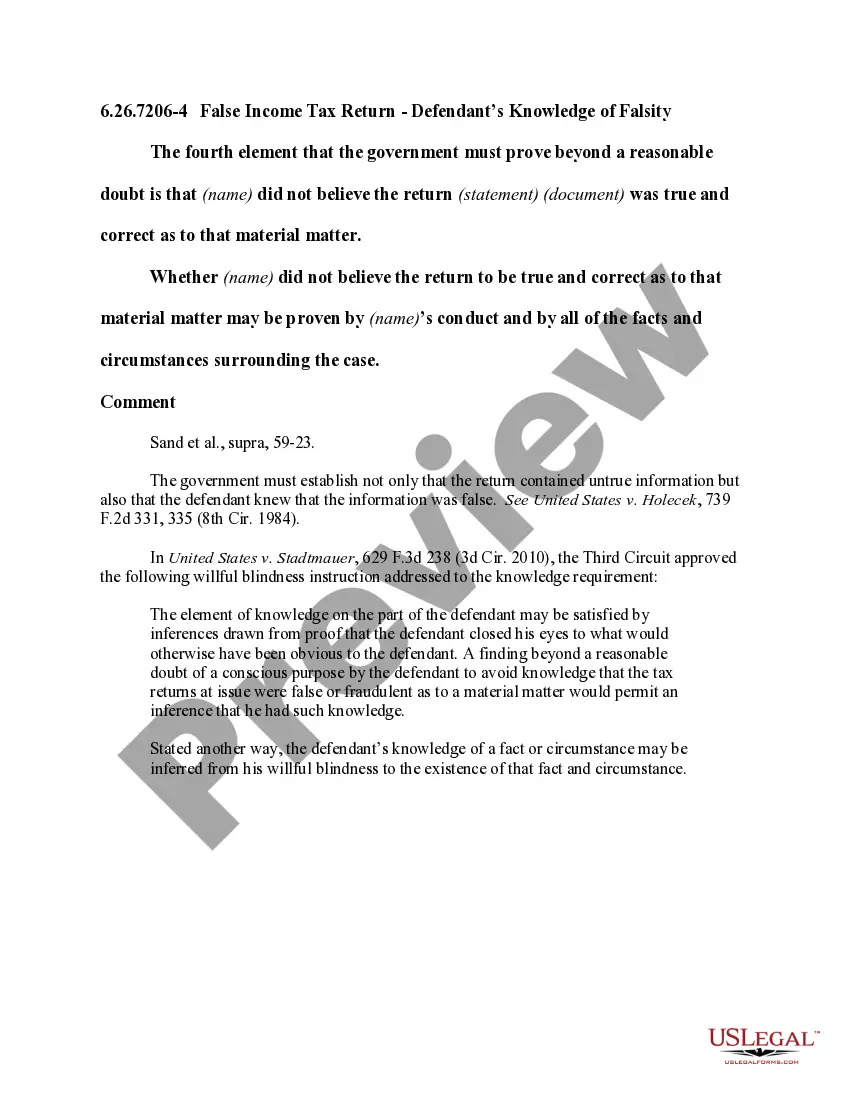
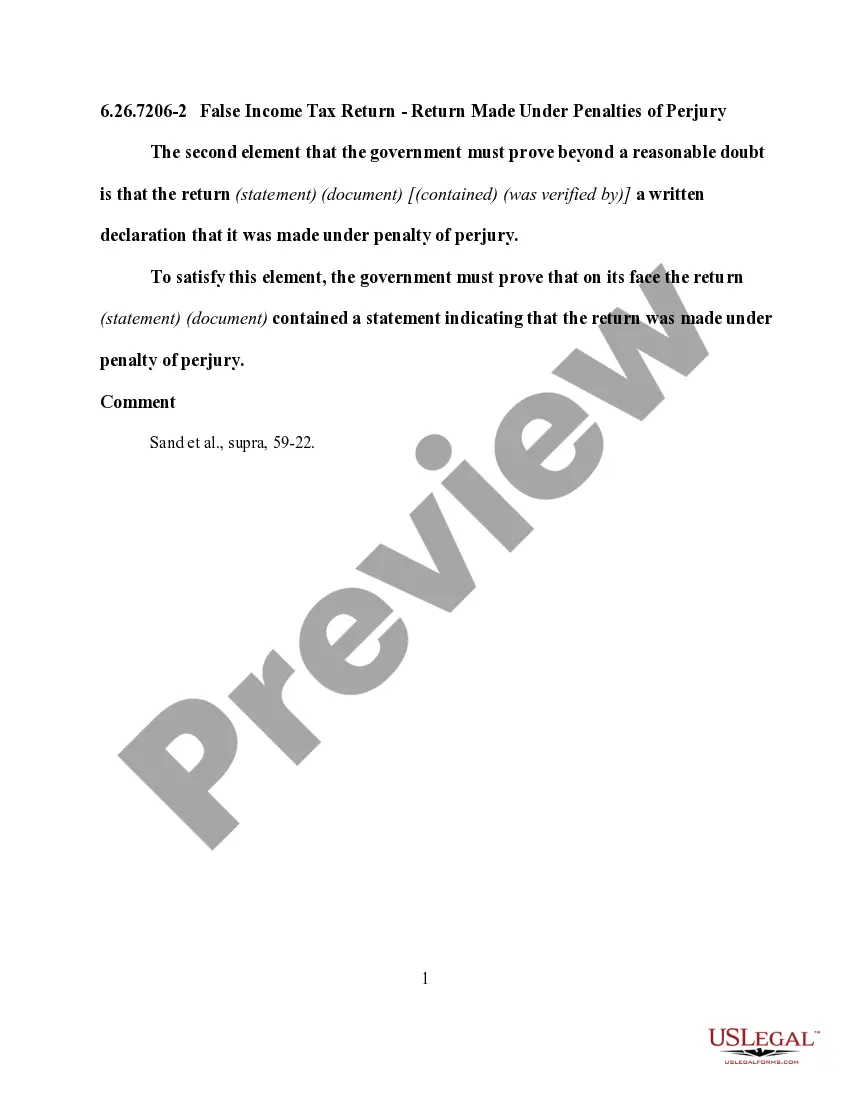
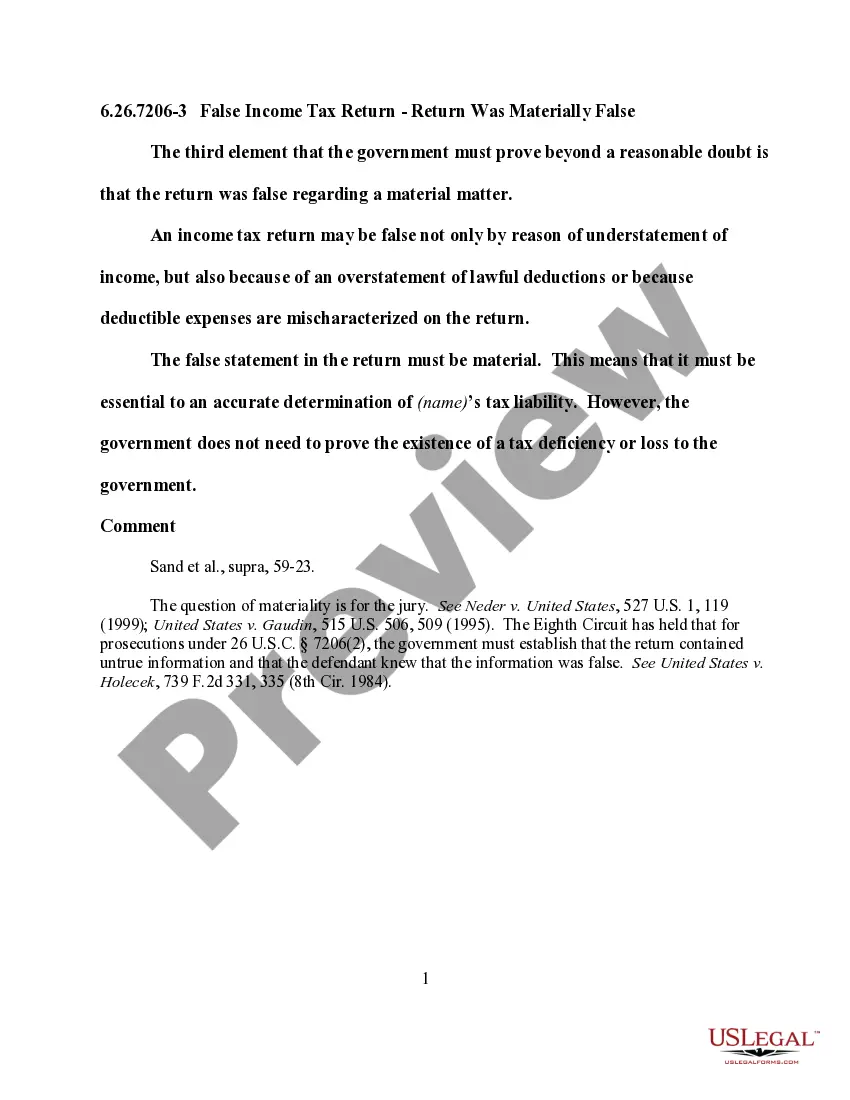
The False Income Tax Return - Defendant's Knowledge of Falsity form is a legal document used in criminal cases where a defendant is accused of filing an incorrect income tax return intentionally. This form specifically addresses the requirement that the government must prove the defendant knew the return contained false information. Unlike general tax forms, this document focuses on the criminal implications of knowingly submitting fraudulent returns.
Key components of this form
- Elements of knowledge requirement for the defendant.
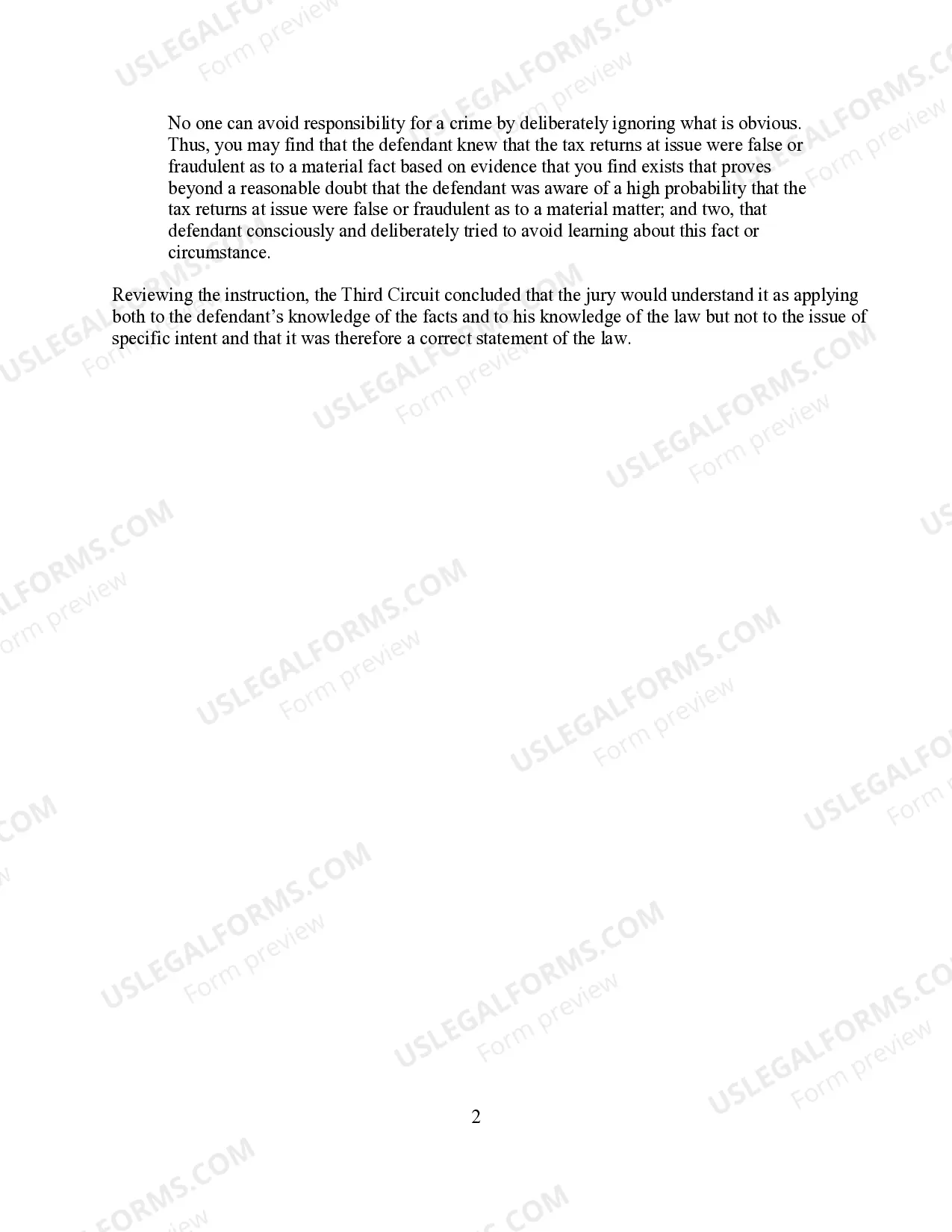
- Clarification of willful blindness as evidence of knowledge.
- Details on proving the defendant's intent regarding false statements.
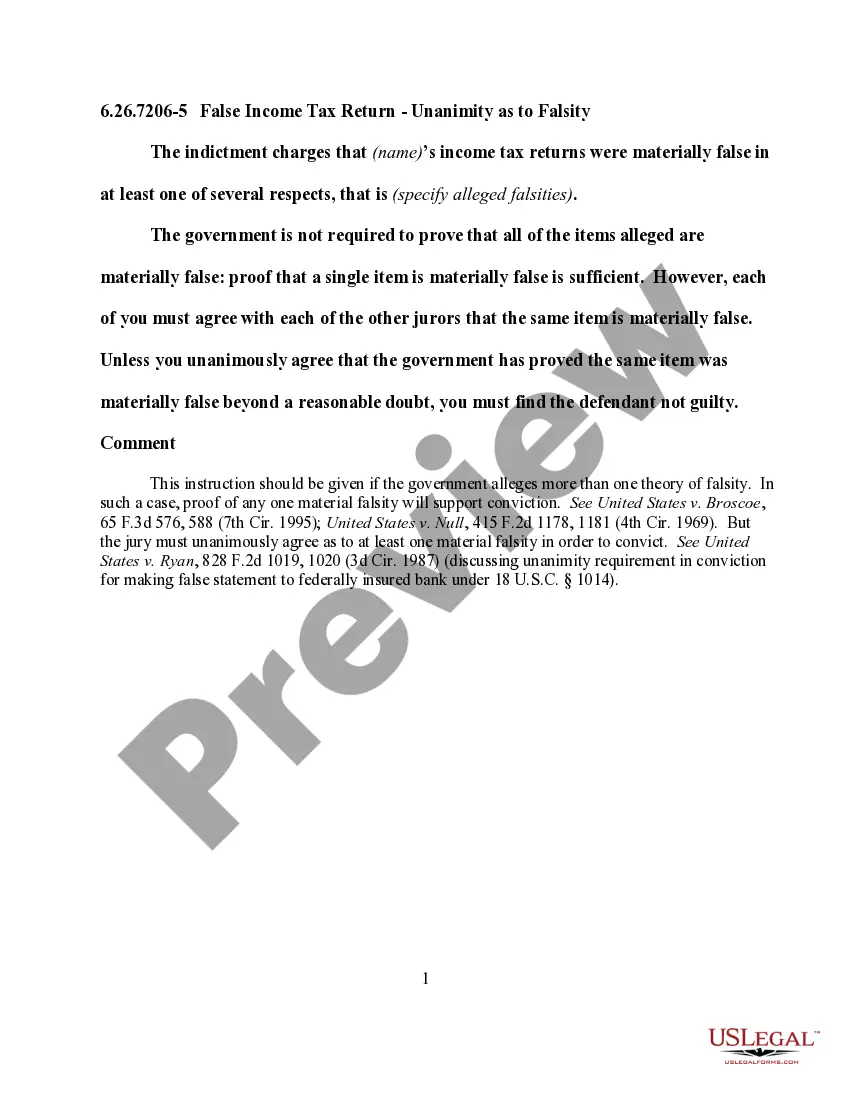
- Instructions for jury evaluation of evidence related to knowledge.

When to use this document
This form is used in criminal tax cases where an individual is accused of knowingly filing a false income tax return. It becomes necessary when the prosecution must demonstrate that the defendant was aware of the falsity of the statements made in their tax returns. This can occur during trials where tax fraud is suspected and evidence of intentional wrongdoing must be established.
Who this form is for
This form is intended for:
- Defendants in criminal tax fraud cases.
- Legal representatives preparing for trial in cases involving false tax returns.
- Prosecutors presenting a case of tax fraud to a jury.
How to complete this form
- Identify the parties involved, including the defendant's name and the prosecuting body.
- Detail the specific false claims made in the income tax return.
- Provide evidence supporting the claim of knowledge of falsity, including witness testimonies or documentation.
- Submit the completed form to the appropriate court prior to the trial date.
- Ensure that all relevant details are accurately represented to support the case being presented.
Is notarization required?
In most cases, this form does not require notarization. However, some jurisdictions or signing circumstances might. US Legal Forms offers online notarization powered by Notarize, accessible 24/7 for a quick, remote process.
Get your form ready online
Our built-in tools help you complete, sign, share, and store your documents in one place.
Make edits, fill in missing information, and update formatting in US Legal Forms—just like you would in MS Word.
Download a copy, print it, send it by email, or mail it via USPS—whatever works best for your next step.
Sign and collect signatures with our SignNow integration. Send to multiple recipients, set reminders, and more. Go Premium to unlock E-Sign.
If this form requires notarization, complete it online through a secure video call—no need to meet a notary in person or wait for an appointment.
We protect your documents and personal data by following strict security and privacy standards.

Make edits, fill in missing information, and update formatting in US Legal Forms—just like you would in MS Word.

Download a copy, print it, send it by email, or mail it via USPS—whatever works best for your next step.

Sign and collect signatures with our SignNow integration. Send to multiple recipients, set reminders, and more. Go Premium to unlock E-Sign.

If this form requires notarization, complete it online through a secure video call—no need to meet a notary in person or wait for an appointment.

We protect your documents and personal data by following strict security and privacy standards.
Common mistakes
- Failing to provide sufficient evidence of the defendant's knowledge of the falsity.
- Not addressing the willful blindness aspect during jury instruction.
- Incomplete details regarding the specific false statements made in the tax return.
Benefits of completing this form online
- Convenient access allows for immediate download and use.
- Editability ensures customization to fit specific case needs.
- Reliability of forms drafted by licensed attorneys ensures legal compliance.
Looking for another form?

Form popularity
FAQ
If you delay in responding promptly and correct errors or provide information, it can lead to: Additional tax; Possible penalties and interest; A different refund amount than expected; or.
In order for the government to achieve a conviction under § 7201, it must prove the following three elements beyond a reasonable doubt: an affirmative act constituting an attempt to evade or defeat a tax or the payment thereof, an additional tax due and owing, and. willfulness.
The IRS Penalizes Tax Preparers Who Make Mistakes. Under Sections 6695 and 6695 (the exact same section is listed twice?) BP1 of the Internal Revenue Code, tax preparers can face IRS penalties for making mistakes on their clients' returns. Similar penalties apply under California state law as well.
If you made a mistake on your tax return, you need to correct it with the IRS. To correct the error, you would need to file an amended return with the IRS. If you fail to correct the mistake, you may be charged penalties and interest. You can file the amended return yourself or have a professional prepare it for you.
No matter who prepares it, the accuracy of a tax return is ultimately the responsibility of the taxpayer.
Tax fraud occurs when an individual or business entity willfully and intentionally falsifies information on a tax return to limit the amount of tax liability.