Delaware New Resident Guide
Overview of this form
The New Resident Guide is an essential informational form designed to assist individuals who have recently relocated to a new state. This guide outlines the specific requirements for residency, voting registration, identification cards, driver's licenses, and vehicle title and registration. Unlike other generic relocation guides, this document provides detailed, state-specific instructions to help newcomers navigate their legal obligations efficiently.
Main sections of this form
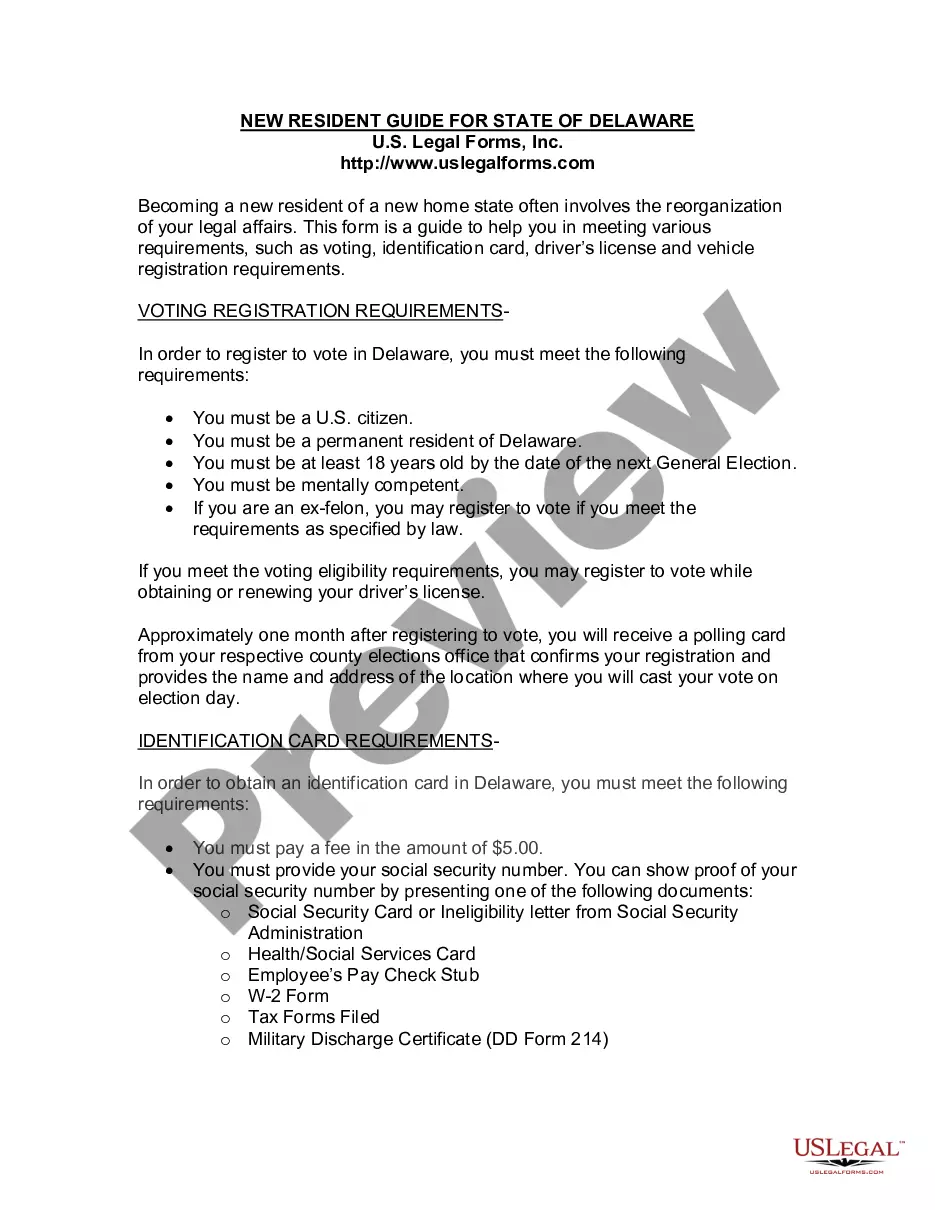
- Voting registration requirements: Eligibility, documentation needed, and process for registering to vote.
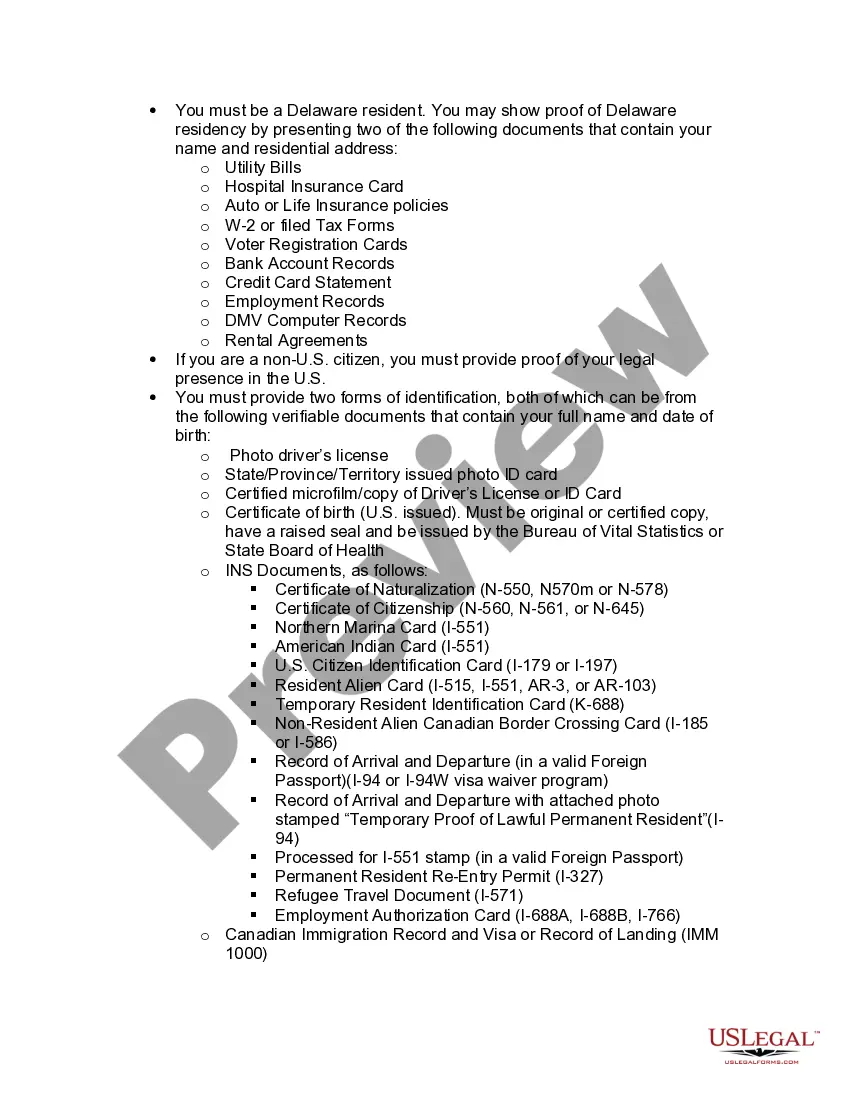
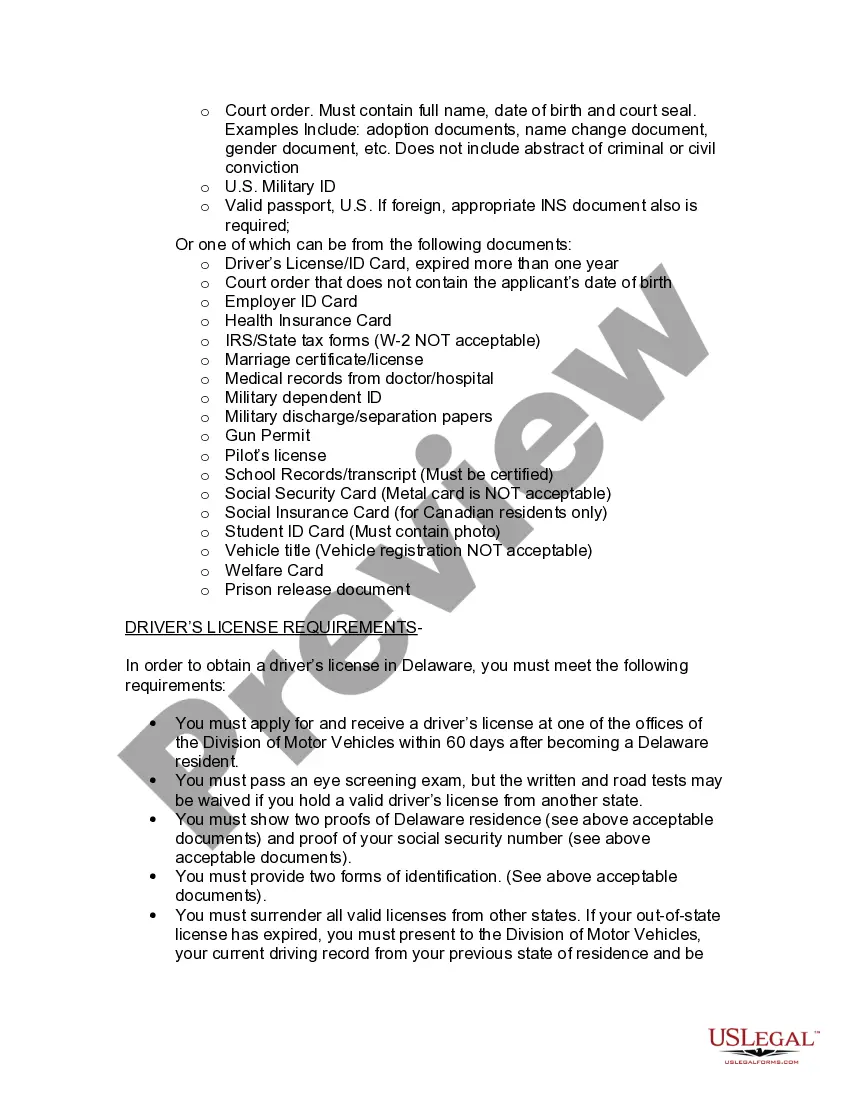
- Identification card requirements: Various forms of ID accepted, fees, and proof of residence needed.
- Driver's license requirements: Process and documentation needed to obtain a driver's license in your new state.
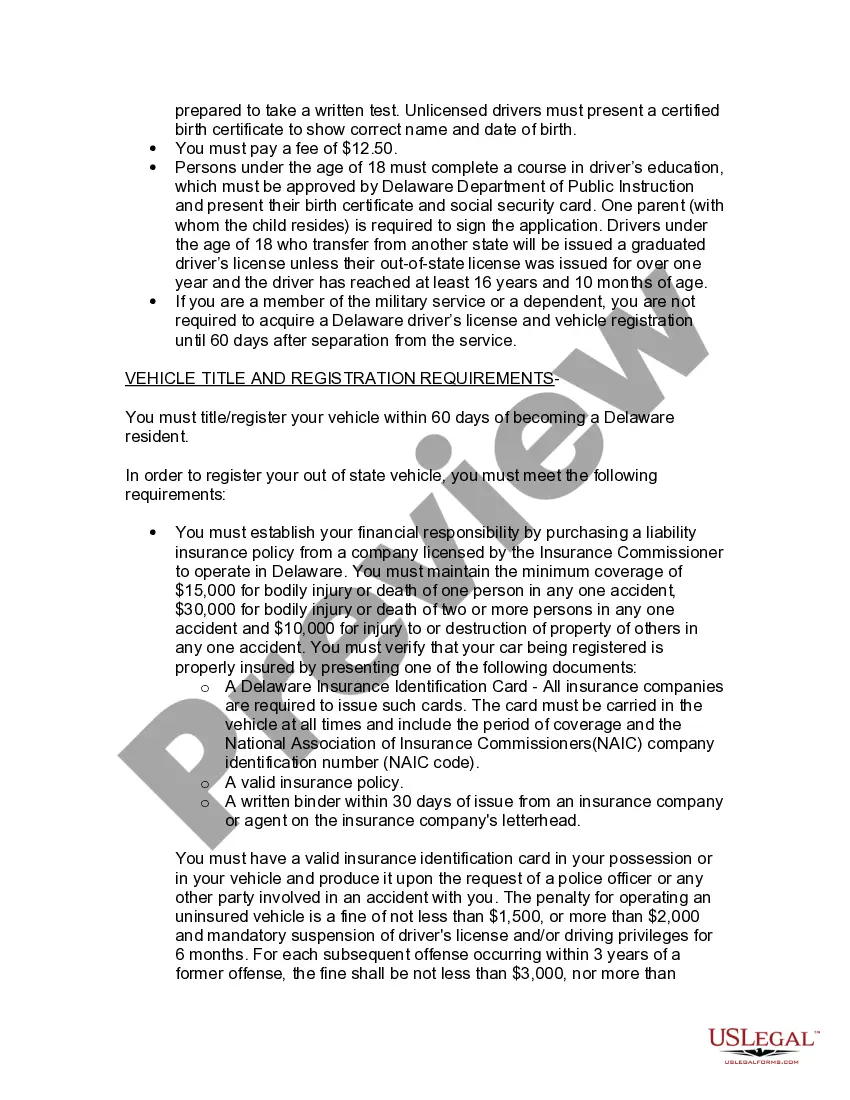
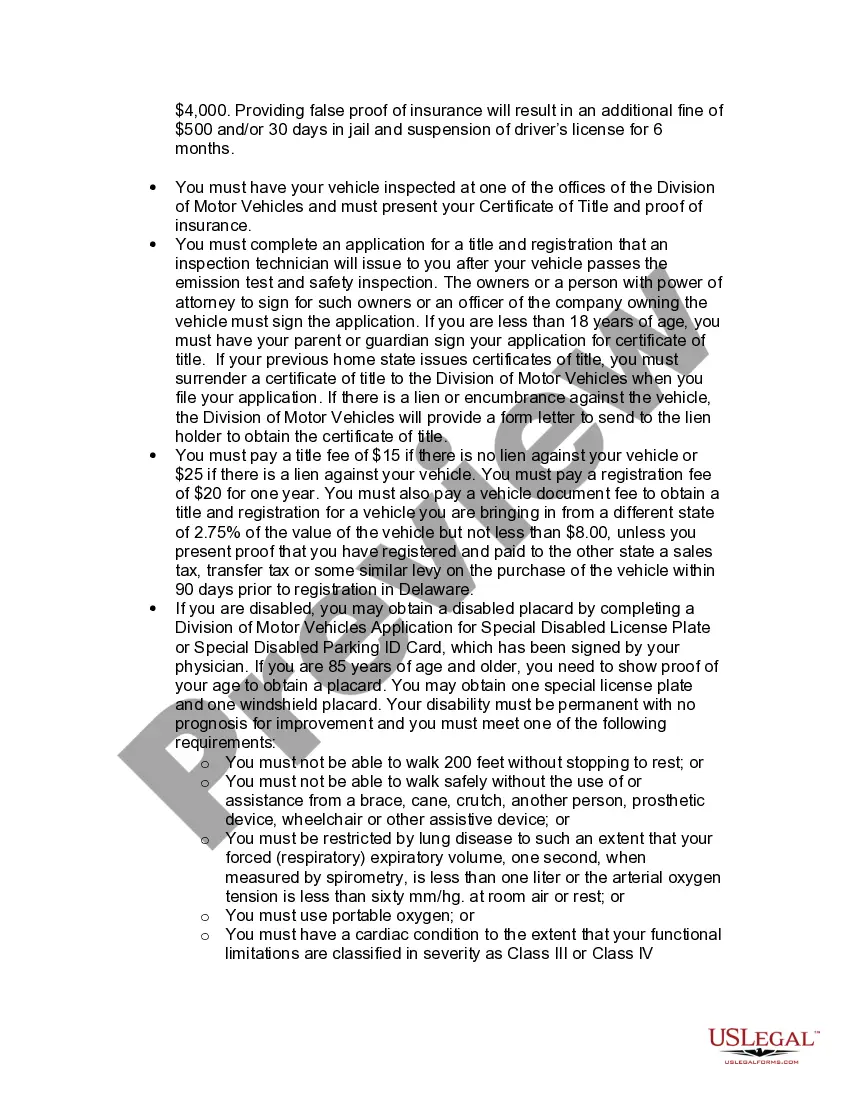
- Vehicle title and registration requirements: Steps to title and register your vehicle with corresponding fees and insurance proof.
- State-specific resources: Links and contact information for state agencies related to each requirement.
Common use cases
This form is useful when you have recently moved to a new state and need guidance on fulfilling your residency obligations. You should use this guide if you are registering to vote, obtaining an ID or driver's license, and registering your vehicle within the required time frames. It ensures you meet all pertinent legal requirements and avoid penalties.
Intended users of this form
This guide is intended for:
- Individuals who have relocated to a new state and need to establish residency.
- New voters looking to register in their new state.
- Residents needing to obtain state identification or driver's licenses.
- Vehicle owners who need to register their vehicles in a new state.
Completing this form step by step
- Review the eligibility criteria for voting, identification cards, and driver's licenses specific to your new state.
- Gather the requisite documentation, including proof of identity and residency.
- Ensure you are aware of deadlines for registration and obtain necessary appointments for ID and vehicle registration.
- Complete the applications provided by the relevant state agencies accurately.
- Submit all documents and fees according to the state-specific instructions.
Does this document require notarization?
In most cases, this form does not require notarization. However, some jurisdictions or signing circumstances might. US Legal Forms offers online notarization powered by Notarize, accessible 24/7 for a quick, remote process.
Get your form ready online
Our built-in tools help you complete, sign, share, and store your documents in one place.
Make edits, fill in missing information, and update formatting in US Legal Forms—just like you would in MS Word.
Download a copy, print it, send it by email, or mail it via USPS—whatever works best for your next step.
Sign and collect signatures with our SignNow integration. Send to multiple recipients, set reminders, and more. Go Premium to unlock E-Sign.
If this form requires notarization, complete it online through a secure video call—no need to meet a notary in person or wait for an appointment.
We protect your documents and personal data by following strict security and privacy standards.

Make edits, fill in missing information, and update formatting in US Legal Forms—just like you would in MS Word.

Download a copy, print it, send it by email, or mail it via USPS—whatever works best for your next step.

Sign and collect signatures with our SignNow integration. Send to multiple recipients, set reminders, and more. Go Premium to unlock E-Sign.

If this form requires notarization, complete it online through a secure video call—no need to meet a notary in person or wait for an appointment.

We protect your documents and personal data by following strict security and privacy standards.
Common mistakes to avoid
- Not gathering sufficient proof of residency or identification before applications.
- Missing registration deadlines for voting and vehicle registration.
- Forgetting to surrender previous state licenses or providing outdated information.
Advantages of online completion
- Access to up-to-date state-specific residency requirements.
- Convenient download of the guide, allowing for easy reference as you complete your forms.
- User-friendly layout makes finding necessary information straightforward and efficient.
Key takeaways
- The New Resident Guide helps you understand residency requirements in your new state.
- It provides necessary information for voter registration, identification, and vehicle registration.
- Using this guide can help avoid common mistakes and ensure compliance with state laws.
Looking for another form?
Form popularity
FAQ
Yes, you can buy a car in Delaware even if you live out of state. However, check the regulations for registering the vehicle in your home state afterward. The Delaware New Resident Guide provides useful information about car purchases, registration, and the necessary steps to take, ensuring you stay informed and compliant.
When transferring your license to another state, you'll need to gather essential documents. Most states require your current driver's license, proof of identity, proof of residency, and your Social Security number. The specifics can vary, so check your new state's requirements in the Delaware New Resident Guide for a smooth transition.
Transferring your driver's license to Delaware involves visiting your local Department of Motor Vehicles (DMV) office. You will present your current license, proof of residency, and other required documents. Follow the guidelines outlined in the Delaware New Resident Guide to ensure you have all necessary paperwork and to make the process seamless.
Yes, you will need a Delaware driver's license to register a car in the state. Having a local license ensures compliance with Delaware's vehicle laws and regulations. If you are new to Delaware, the Delaware New Resident Guide can help you understand the steps to obtain a license and register your vehicle efficiently.
To transfer your license to Delaware, you will need to provide several key documents for a smooth process. Firstly, you'll need your current out-of-state driver's license, proof of identity, and proof of residency in Delaware. Additionally, bring your Social Security number and any applicable documents that confirm your legal status. This information is essential and can be found detailed in the Delaware New Resident Guide.
To declare residency in Delaware, you should begin by obtaining a Delaware driver’s license or state ID. Additionally, registering to vote and updating your address on tax documents can solidify your residency status. For comprehensive guidance, consult our Delaware New Resident Guide, which details each step you need to take to successfully declare your residency.
While there is no strict duration to establish residency in Delaware, you must demonstrate an intention to make Delaware your home. Usually, living in the state for at least 183 days in a calendar year suffices, as described in the Delaware New Resident Guide. However, certain benefits and privileges may require a longer duration.
Proof of residency in Delaware can include documents such as a utility bill, bank statement, lease agreement, or any government-issued document showing your name and current address. It's essential to have at least two different documents to verify your residency status as per the Delaware New Resident Guide. These documents help establish your connection to the state.
In Delaware, two acceptable proofs of residency include a current utility bill and a lease contract. Both documents should clearly state your name and address to confirm your residency status. To ensure you have all the necessary documentation, refer to the Delaware New Resident Guide for a detailed overview.
The best proof of residency documents are those that clearly display your name and address. Typically accepted items include utility bills, bank statements, or a lease agreement. For anyone new to the state, the Delaware New Resident Guide provides extensive information on what documentation will satisfy residency requirements.