Arkansas Living Trust for Individual as Single, Divorced or Widow or Widower with No Children

About this form
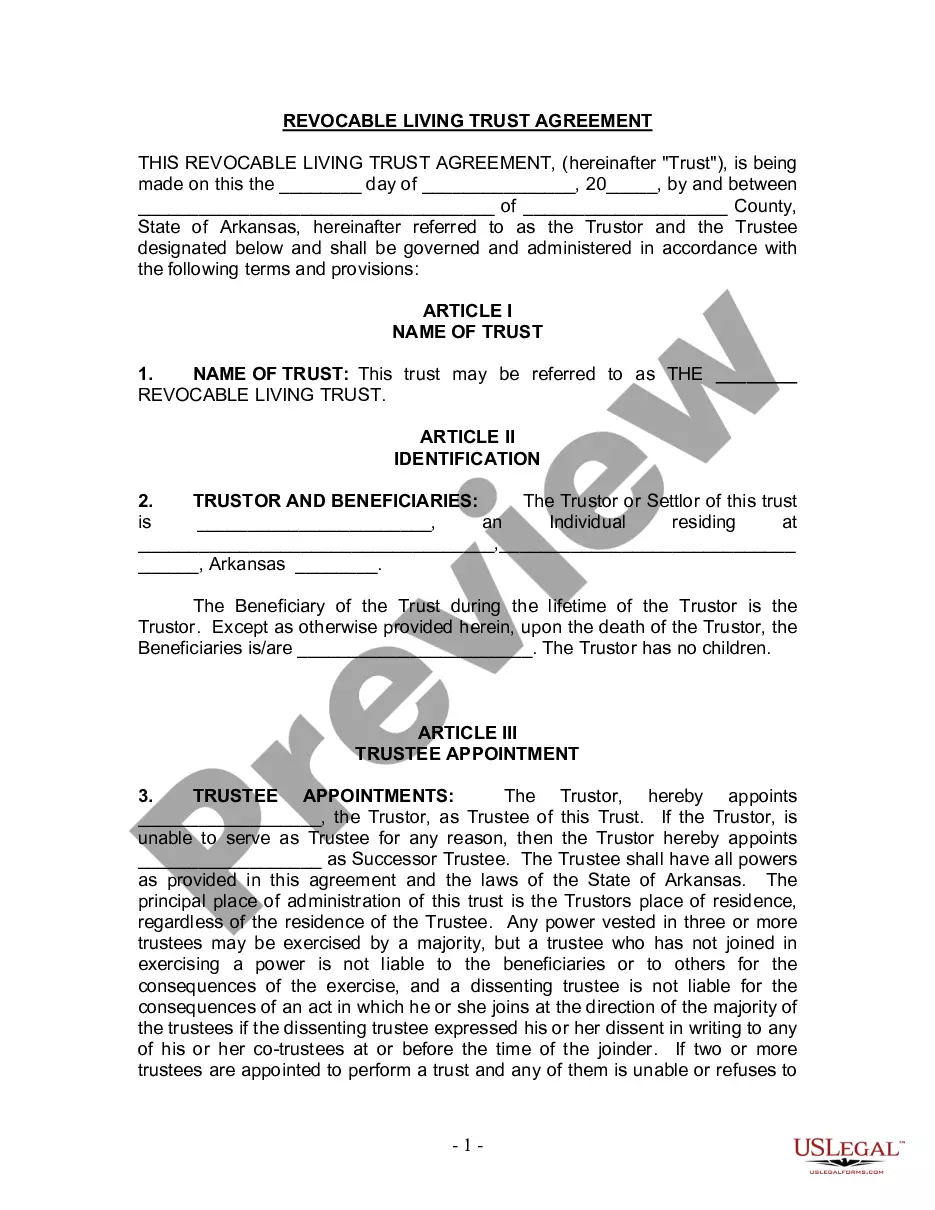
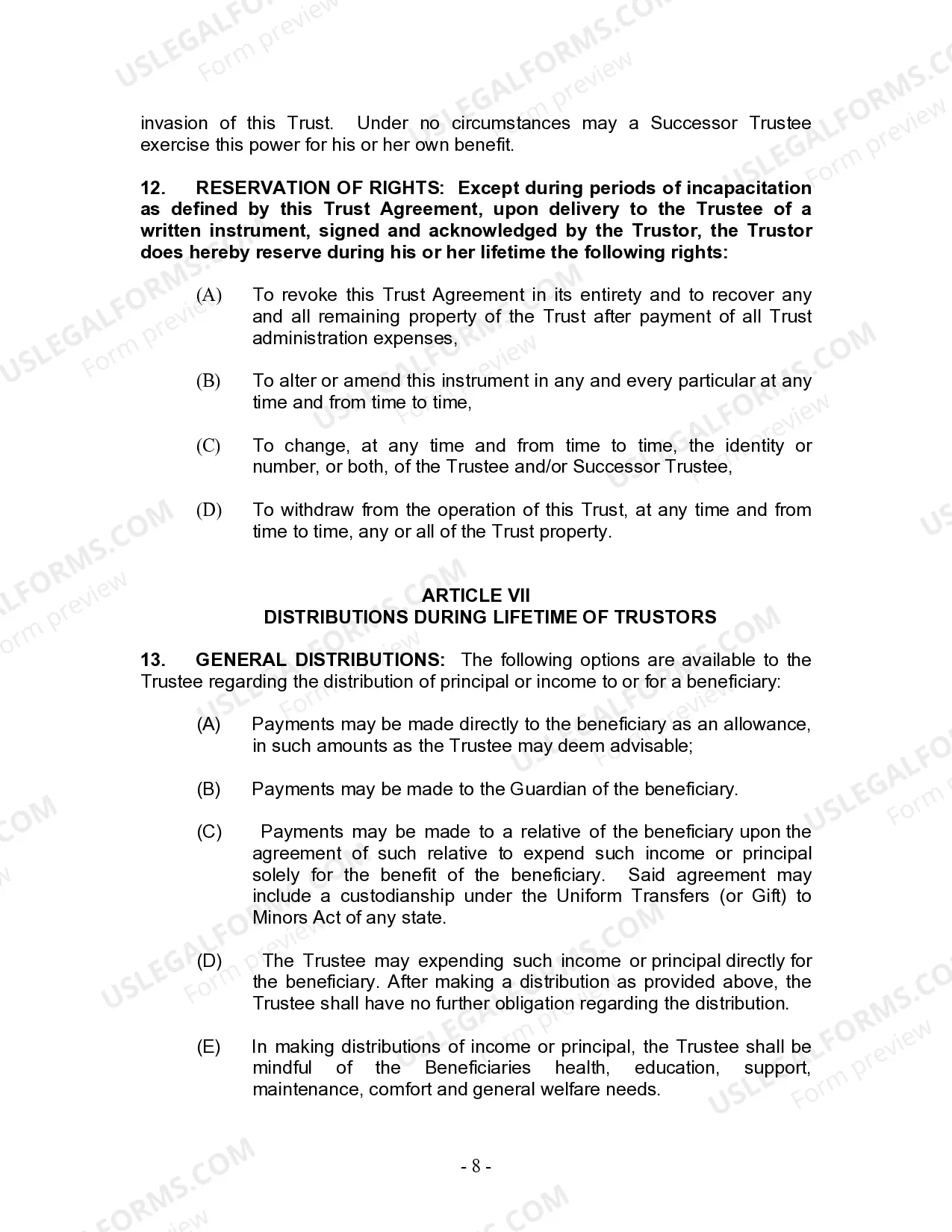
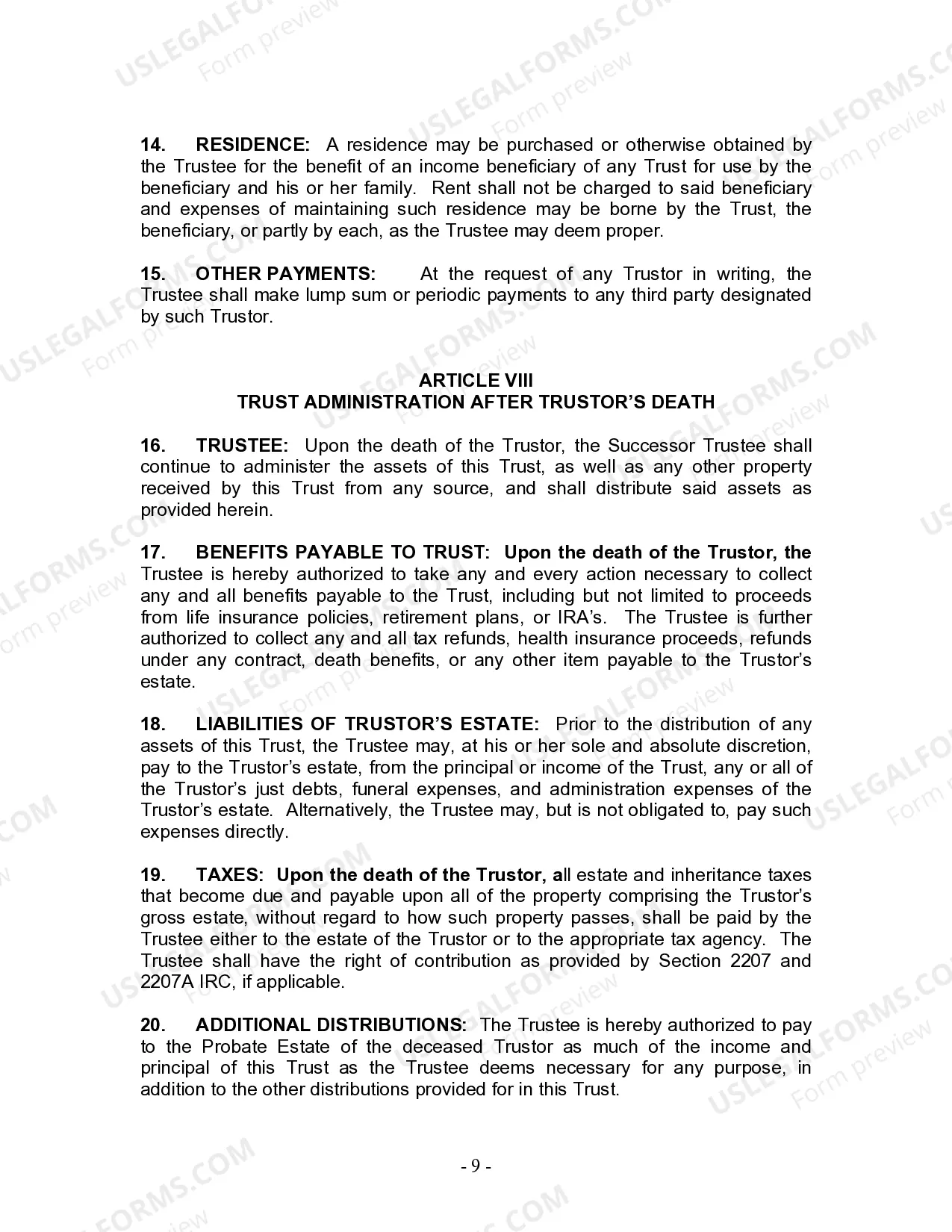
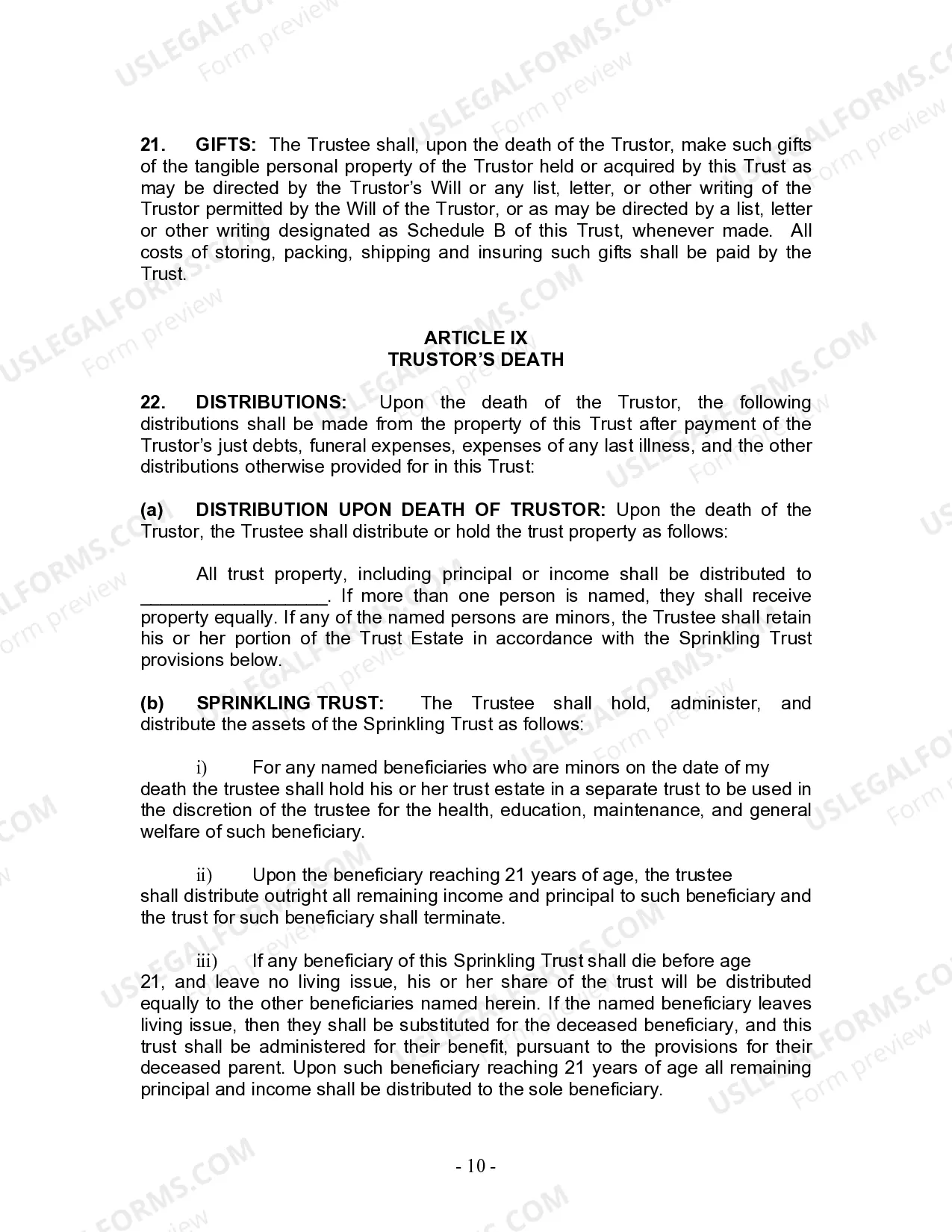
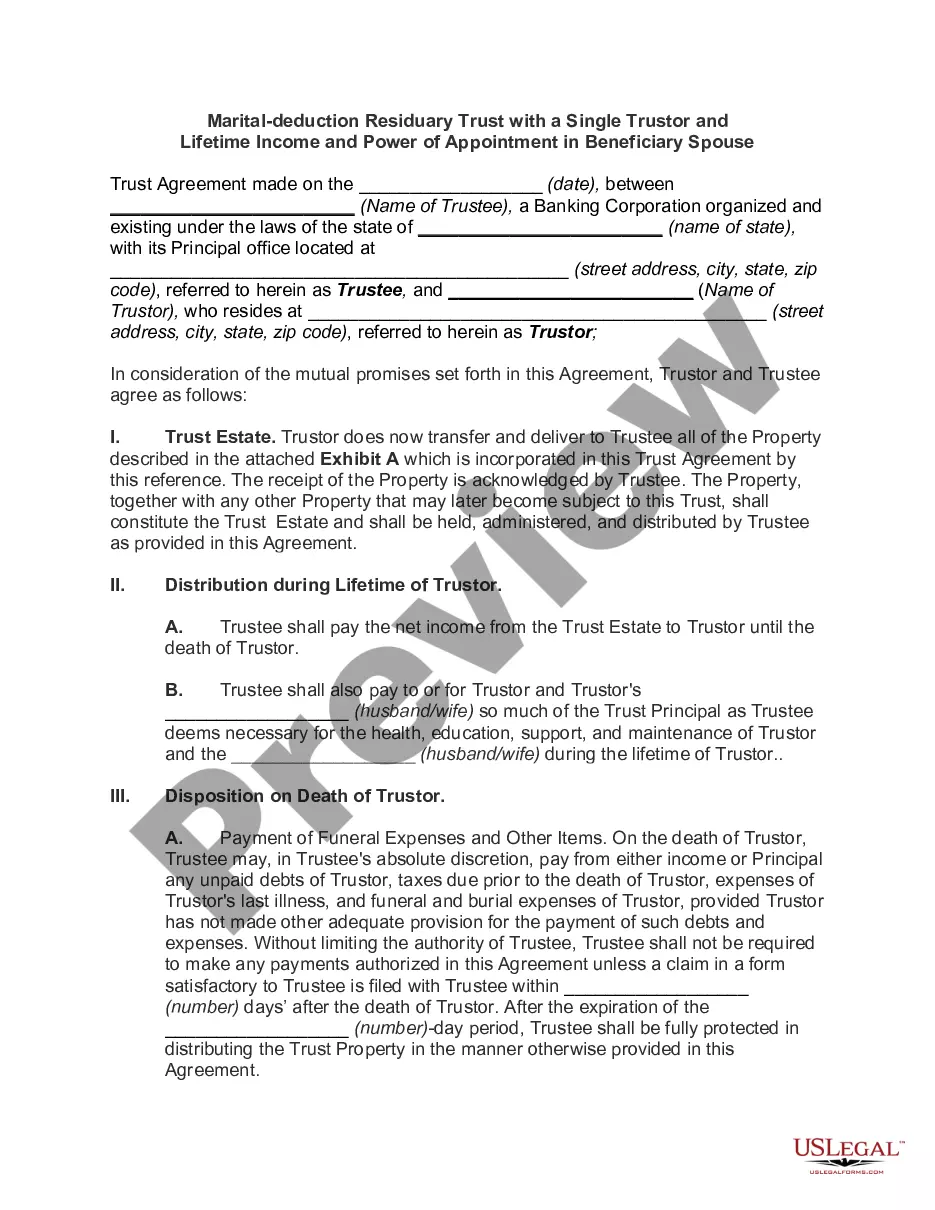
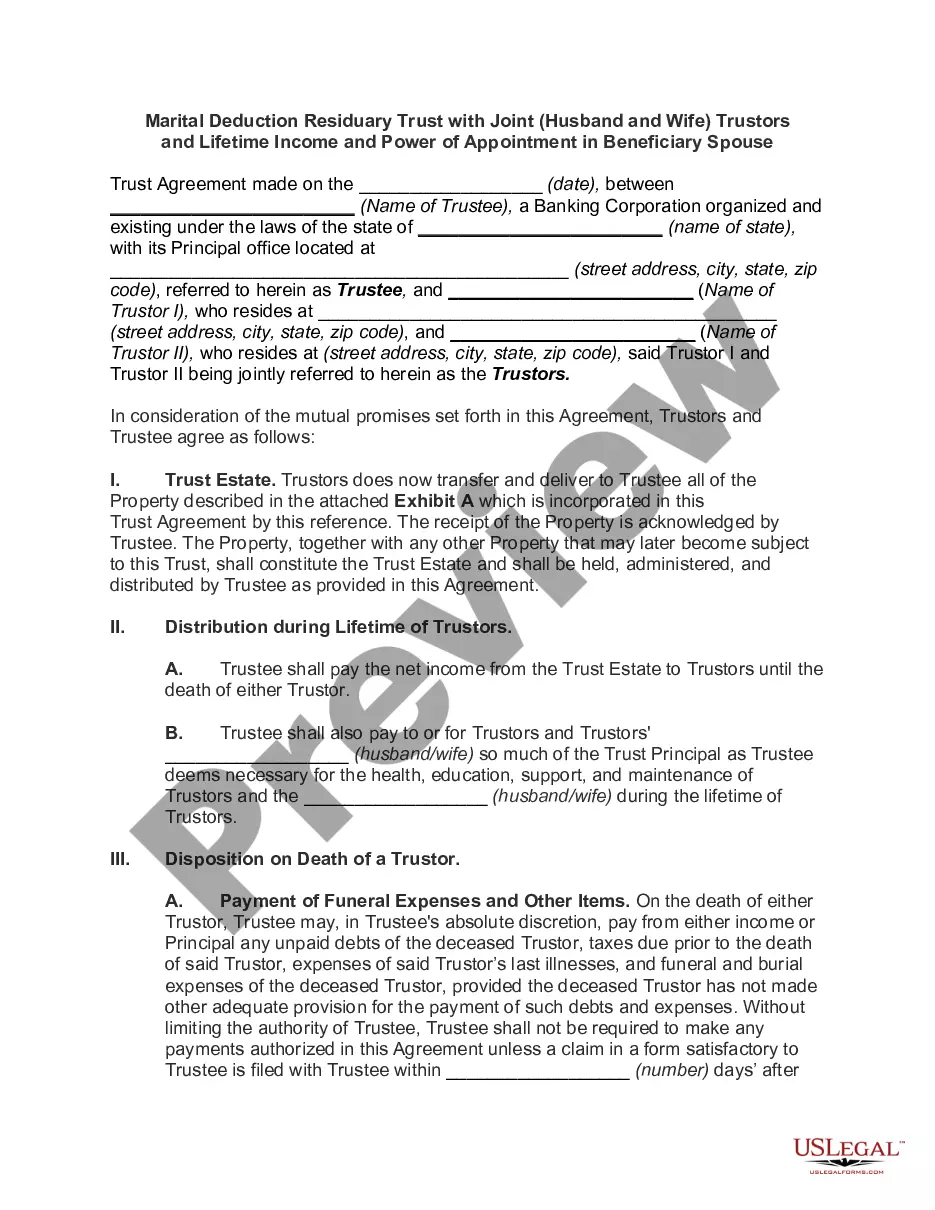
This Living Trust for Individual as Single, Divorced, or Widow or Widower with No Children is a legal document designed for individuals who are single, divorced, or widowed and have no children. The purpose of this living trust is to enable estate planning, allowing the individual to manage and protect their assets during their lifetime and specify how those assets will be distributed after their death without going through probate. This form differs from other trusts in that it is specifically tailored to individuals without children, providing a straightforward way to manage their estate according to their wishes.
Main sections of this form
- Identification of the Trustor and Trustee, including their address and roles.
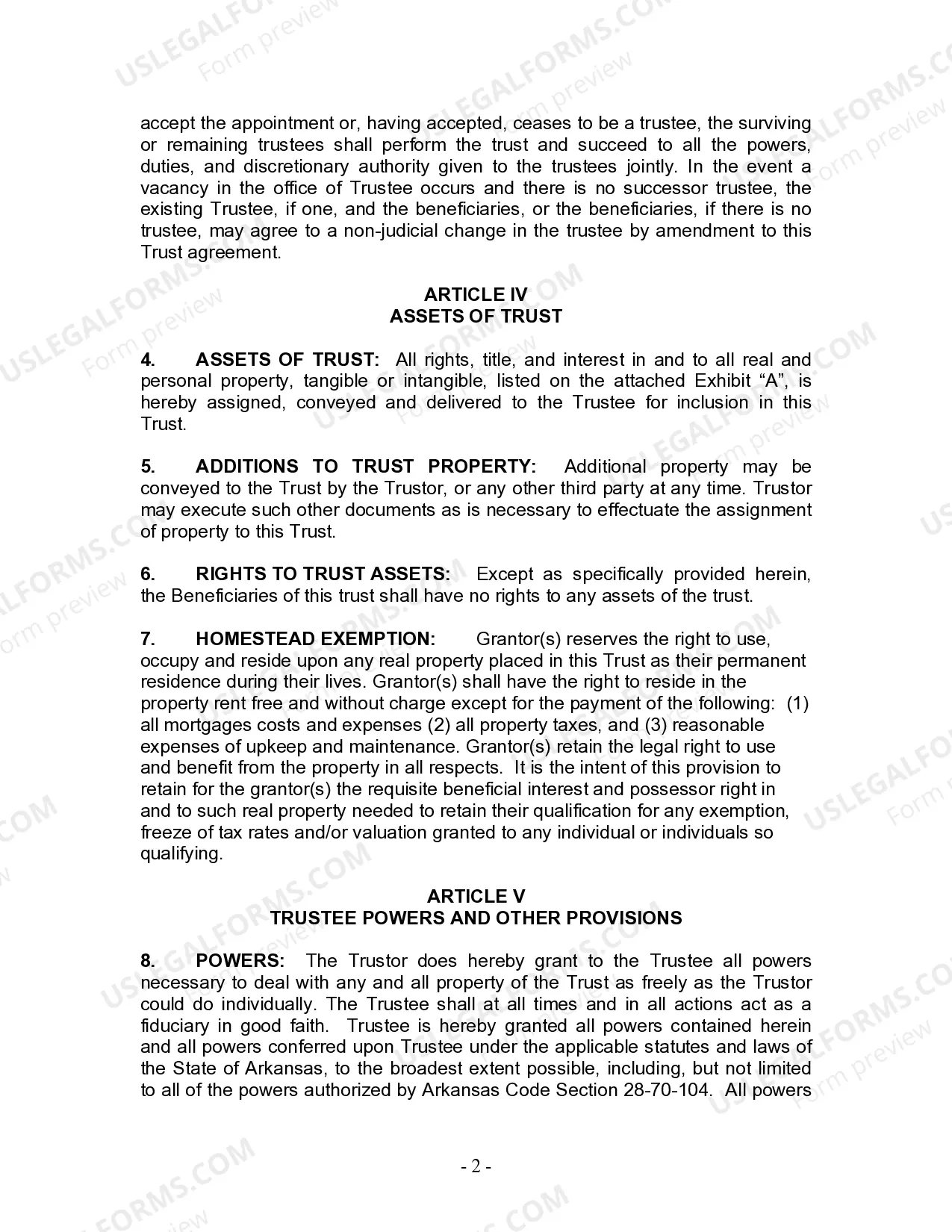
- Details of the trust property and any specific assets included.
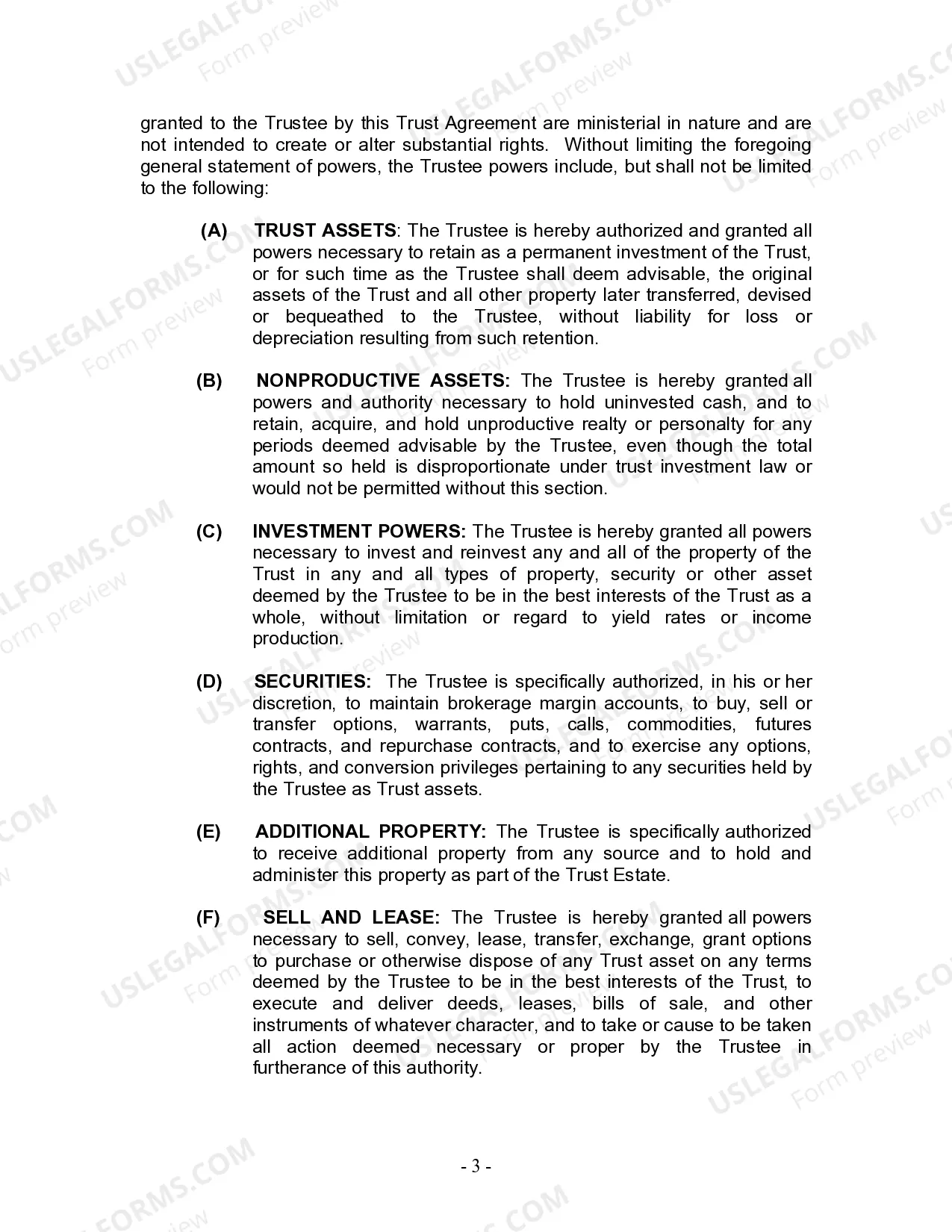
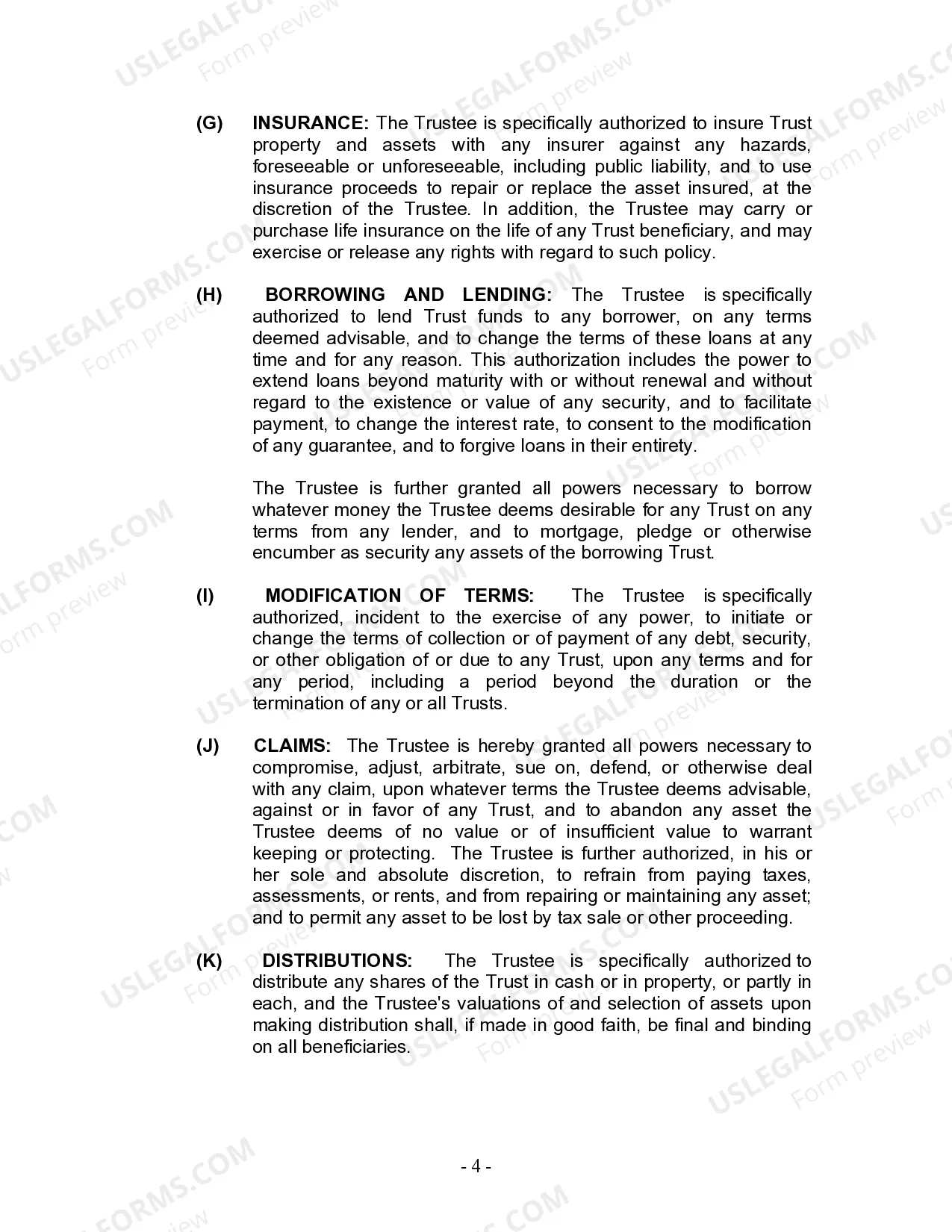
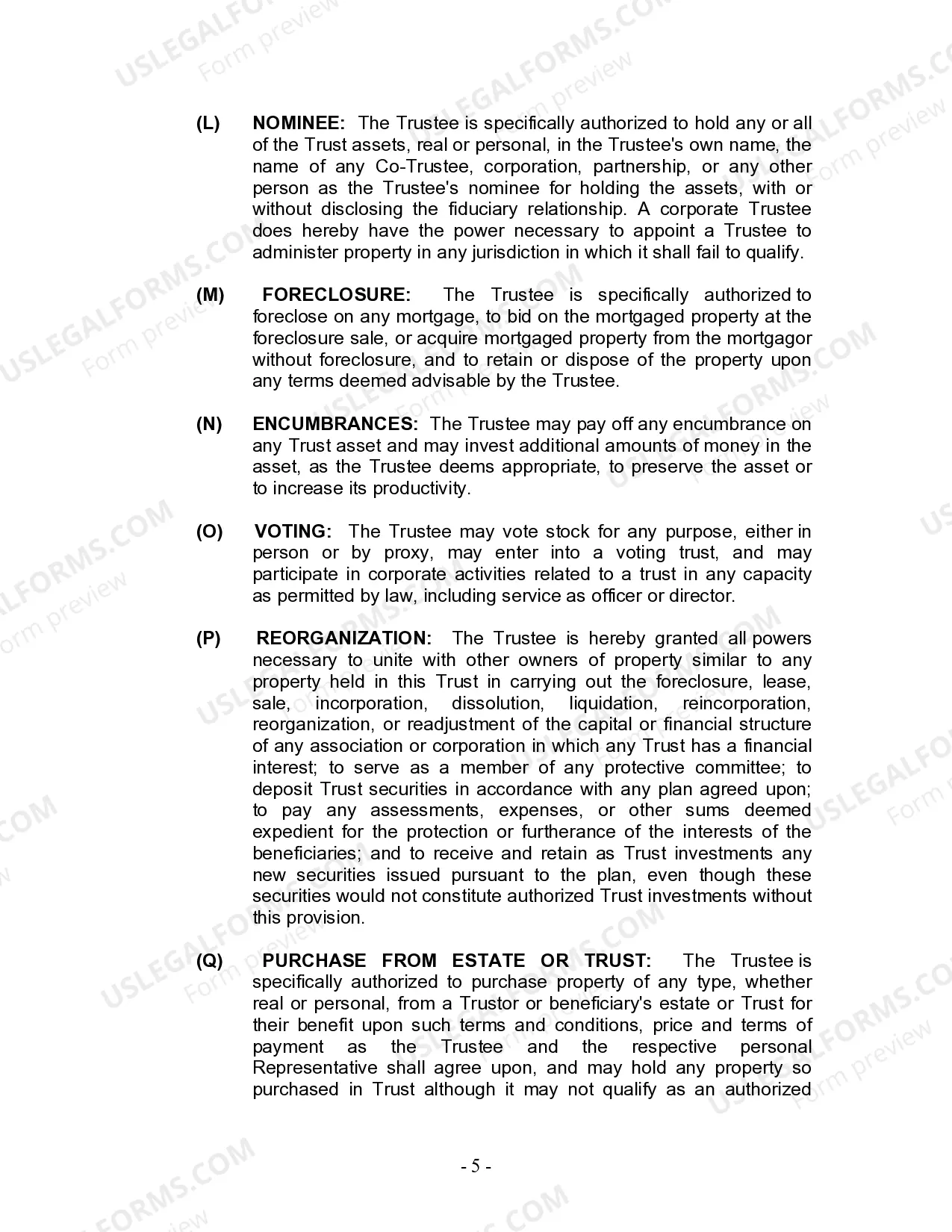
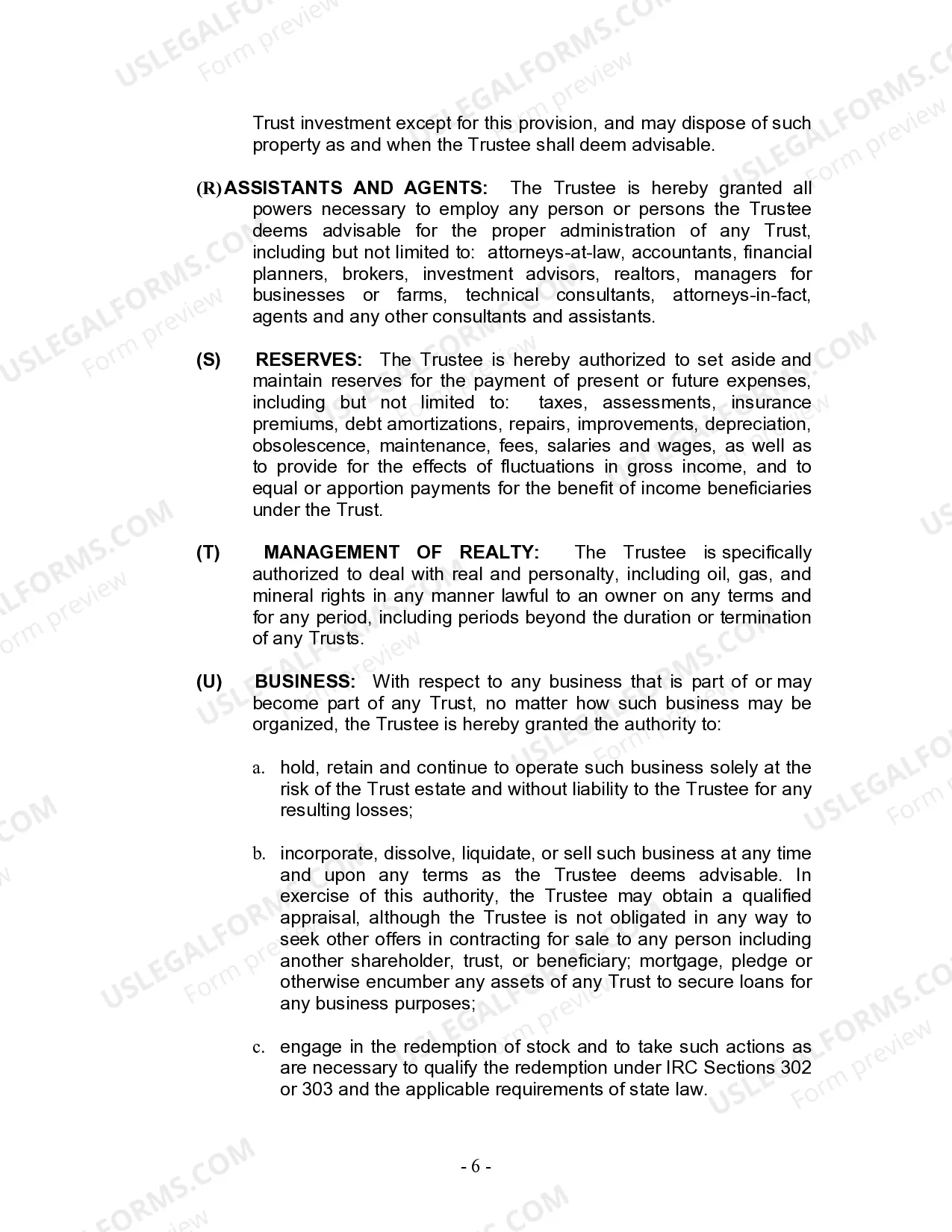
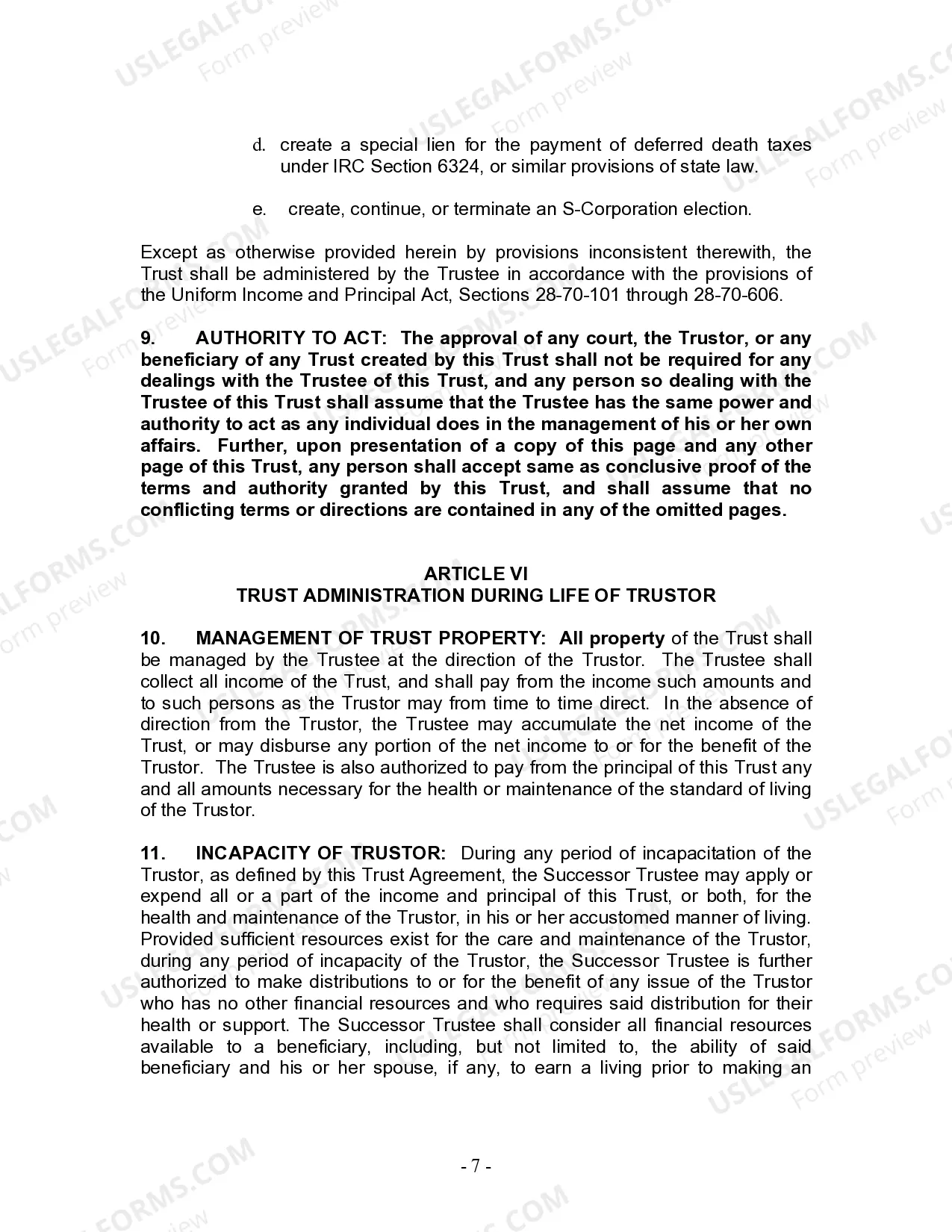
- Trustee powers, which outline the authority and responsibilities of the Trustee in managing the trust assets.
- Distribution instructions upon the Trustor's death, detailing how the assets are to be divided.
- Provisions for changes in trustee appointments, especially in cases of incapacity or death.




When this form is needed
This form should be used when an individual wishes to establish a living trust to manage their assets during their lifetime, especially if they are single, divorced, or widowed and have no children. It is particularly useful for individuals wanting to avoid the probate process after their death, ensuring a smoother and confidential transition of assets to beneficiaries. Additionally, this form can help in cases where the individual may become incapacitated, allowing for clear instructions on the management of their estate.
Who can use this document
- Individuals who are single, divorced, or widowed without children.
- Anyone looking to simplify the distribution of their estate upon death.
- Individuals who wish to retain control over their assets during their lifetime while ensuring their wishes are honored thereafter.
- People who want to avoid probate for a more efficient transfer of assets to their chosen beneficiaries.
How to prepare this document
- Identify the parties involved by entering the names and addresses of the Trustor and Trustee.
- Specify the name of the trust in the designated section.
- List the assets you wish to include in the trust, providing detailed descriptions.
- Designate any successor trustees and outline their powers and responsibilities.
- Sign the document in the presence of a notary public if required.
Is notarization required?
This form needs to be notarized to ensure legal validity. US Legal Forms provides secure online notarization powered by Notarize, allowing you to complete the process through a verified video call, available anytime.
Get your form ready online
Our built-in tools help you complete, sign, share, and store your documents in one place.
Make edits, fill in missing information, and update formatting in US Legal Forms—just like you would in MS Word.
Download a copy, print it, send it by email, or mail it via USPS—whatever works best for your next step.
Sign and collect signatures with our SignNow integration. Send to multiple recipients, set reminders, and more. Go Premium to unlock E-Sign.
If this form requires notarization, complete it online through a secure video call—no need to meet a notary in person or wait for an appointment.
We protect your documents and personal data by following strict security and privacy standards.

Make edits, fill in missing information, and update formatting in US Legal Forms—just like you would in MS Word.

Download a copy, print it, send it by email, or mail it via USPS—whatever works best for your next step.

Sign and collect signatures with our SignNow integration. Send to multiple recipients, set reminders, and more. Go Premium to unlock E-Sign.

If this form requires notarization, complete it online through a secure video call—no need to meet a notary in person or wait for an appointment.

We protect your documents and personal data by following strict security and privacy standards.
Mistakes to watch out for
- Failing to accurately list all assets intended for the trust.
- Not designating a successor trustee, leading to complications if the original trustee cannot serve.
- Overlooking the need for notarization, which may be required for the document to be legally binding.
- Not reviewing the completed form to ensure all sections are filled out correctly.
Why complete this form online
- Convenience of accessing the form anytime and anywhere.
- Editability allows users to customize the trust to fit their specific needs.
- Access to reliable templates prepared by licensed attorneys ensures legal validity.
- Quick download option to get the form instantly for immediate use.
Legal use & context
- A living trust created using this form is generally valid in Arkansas, provided it meets applicable legal requirements.
- Using a living trust helps avoid probate, making asset distribution more efficient and private.
- While this form covers essential aspects of a living trust, it is advisable to regularly review and update the document as personal circumstances change.
Quick recap
- This living trust is specifically designed for individuals without children, addressing their unique estate planning needs.
- Using this form allows individuals to manage their assets during their lifetime and dictate their distribution after death.
- Creating a living trust can prevent probate and facilitate a smoother transition of assets to beneficiaries.
Looking for another form?

Form popularity
FAQ
Yes, a single person without children can significantly benefit from an Arkansas Living Trust for Individual as Single, Divorced or Widow or Widower with No Children. A trust allows you to manage your assets according to your wishes, ensures a smooth transfer of your property, and can help minimize estate taxes. Even without children, your estate deserves careful planning to ensure your preferences are honored.
Many parents fail to clearly define the terms of their trust fund, which can lead to confusion and disputes later. When establishing an Arkansas Living Trust for Individual as Single, Divorced or Widow or Widower with No Children, clarity is essential. Ensure that you specify the assets involved and the intended beneficiaries. This helps avoid conflicts and provides peace of mind for the future.
A widow's trust is designed to provide financial security for a widow after her spouse passes away. By establishing an Arkansas Living Trust for Individual as Single, Divorced or Widow or Widower with No Children, you can ensure that the assets are distributed according to your wishes while keeping them protected. This trust can help manage expenses and provide for future needs without the complications of probate. Utilizing platforms like USLegalForms can help in setting up such trusts efficiently.
When one spouse dies, a living trust can simplify the management of their assets. In the context of an Arkansas Living Trust for Individual as Single, Divorced or Widow or Widower with No Children, the surviving spouse typically retains control over the trust properties. This arrangement reduces the stress of probate proceedings, allowing for a smoother transition. It's advisable to review the trust's terms with an attorney to ensure alignment with your wishes.
The 5 year rule for trusts generally refers to the time frame within which certain transfers to a trust must be completed to ensure they are exempt from gift taxes. For those considering an Arkansas Living Trust for Individual as Single, Divorced or Widow or Widower with No Children, understanding this rule is crucial. It helps you manage and protect your assets while minimizing tax implications. Consulting with a legal expert can provide clarity and guidance tailored to your specific situation.
There is generally no specific minimum amount required to establish an Arkansas Living Trust for Individual as Single, Divorced or Widow or Widower with No Children. The key is to fund the trust adequately to achieve your estate planning goals. Establishing a trust, regardless of the amount, can ensure that your assets are managed according to your wishes. If you're unsure how much to contribute, consulting resources or services like uslegalforms can help clarify your options.
Yes, you can create your own Arkansas Living Trust for Individual as Single, Divorced or Widow or Widower with No Children. However, it is essential to ensure that the trust meets all legal requirements to be valid. A well-structured trust can provide you with control over your assets and simplify the distribution process after your passing. Consider using platforms like uslegalforms to guide you in drafting a comprehensive living trust.