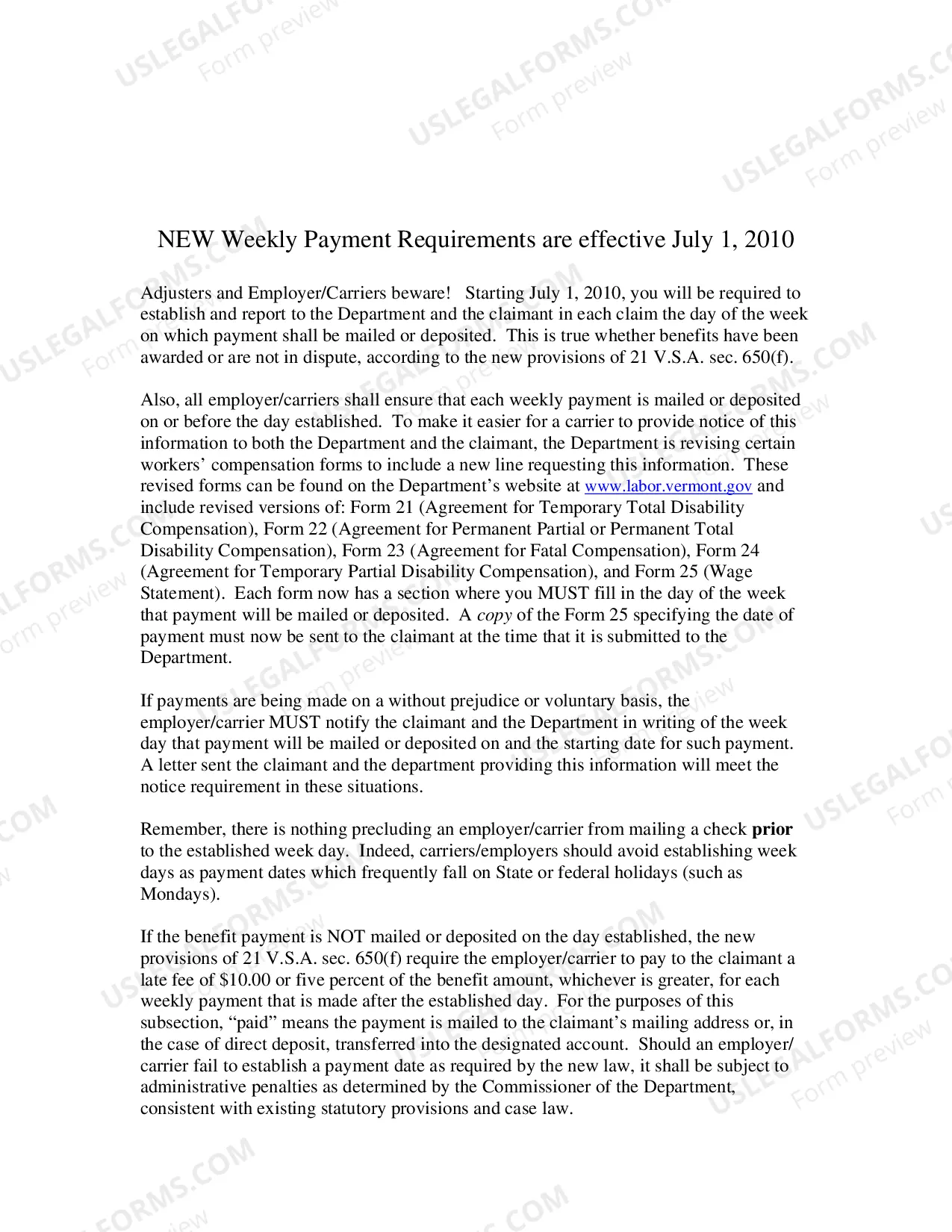
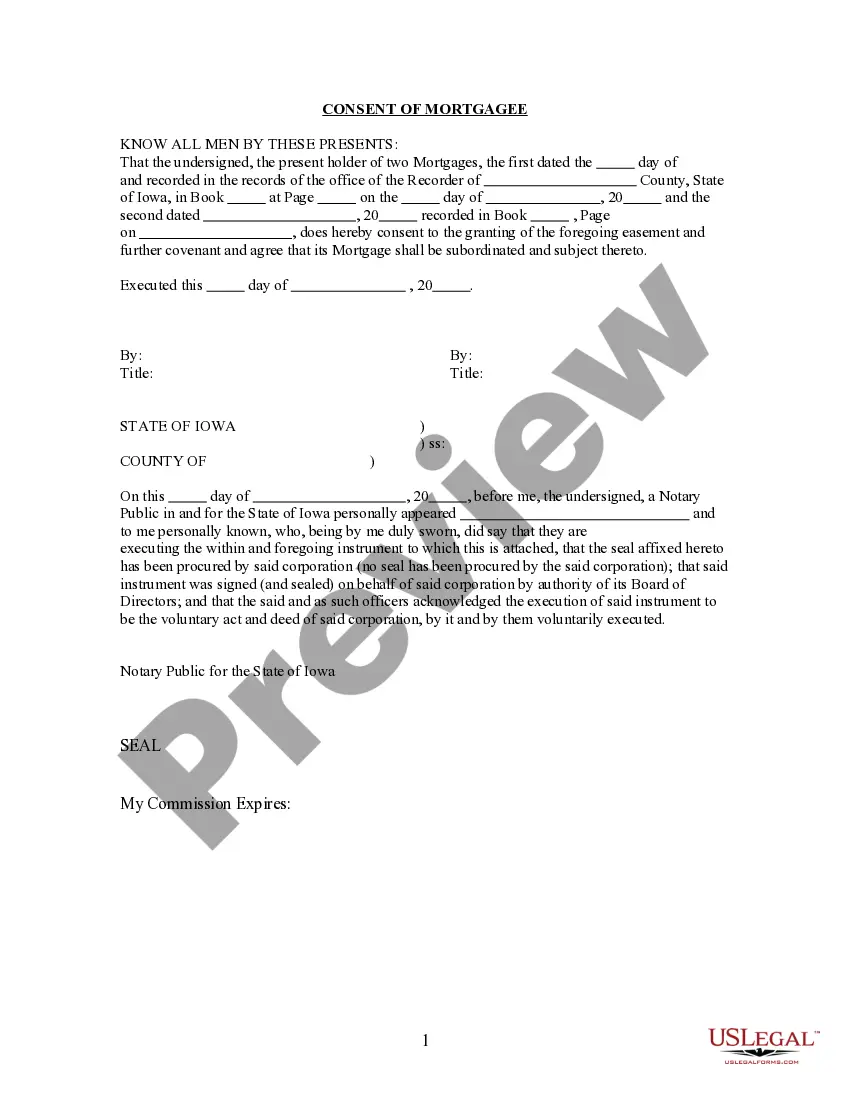
Iowa Consent of Mortgage - used when easement is needed with a mortgaged property
What this document covers
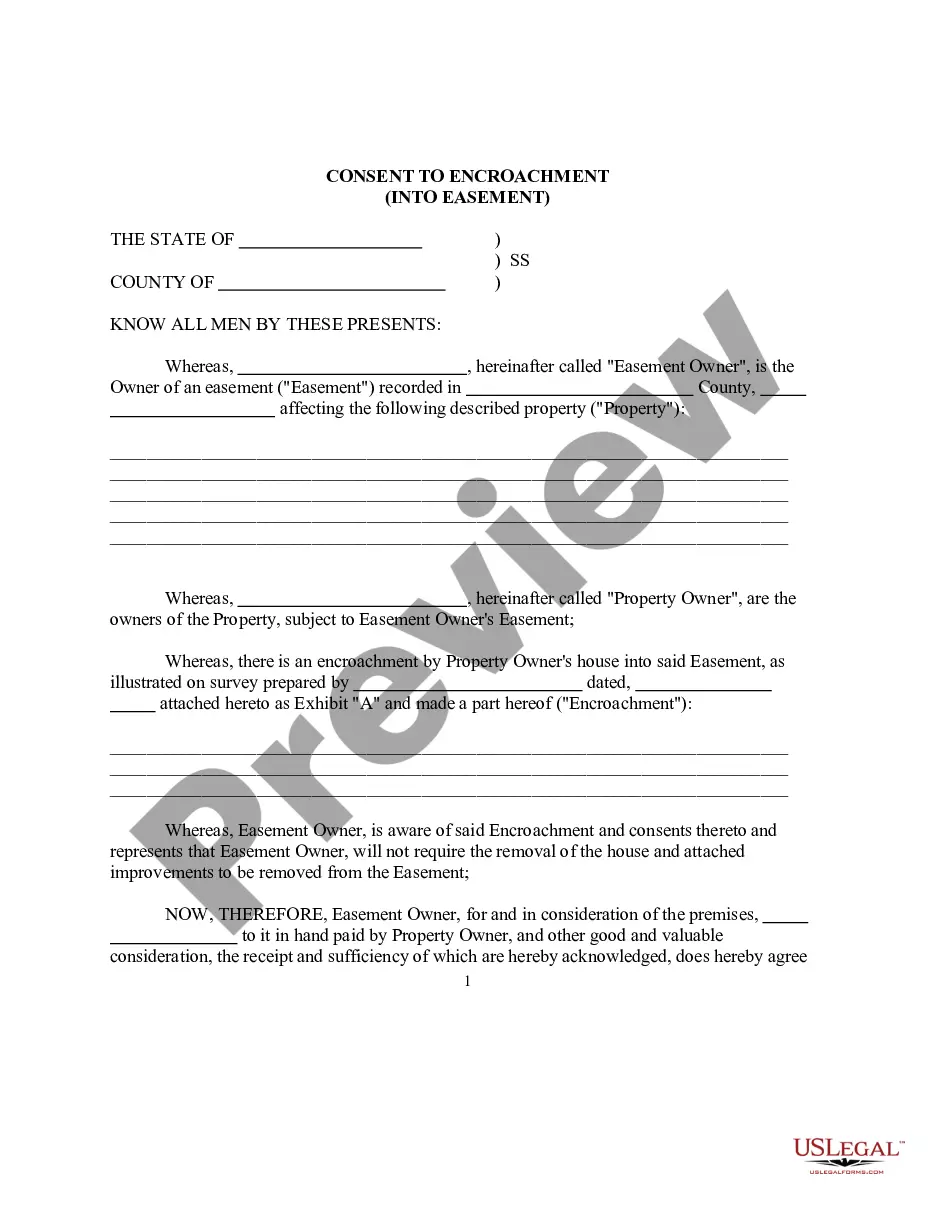
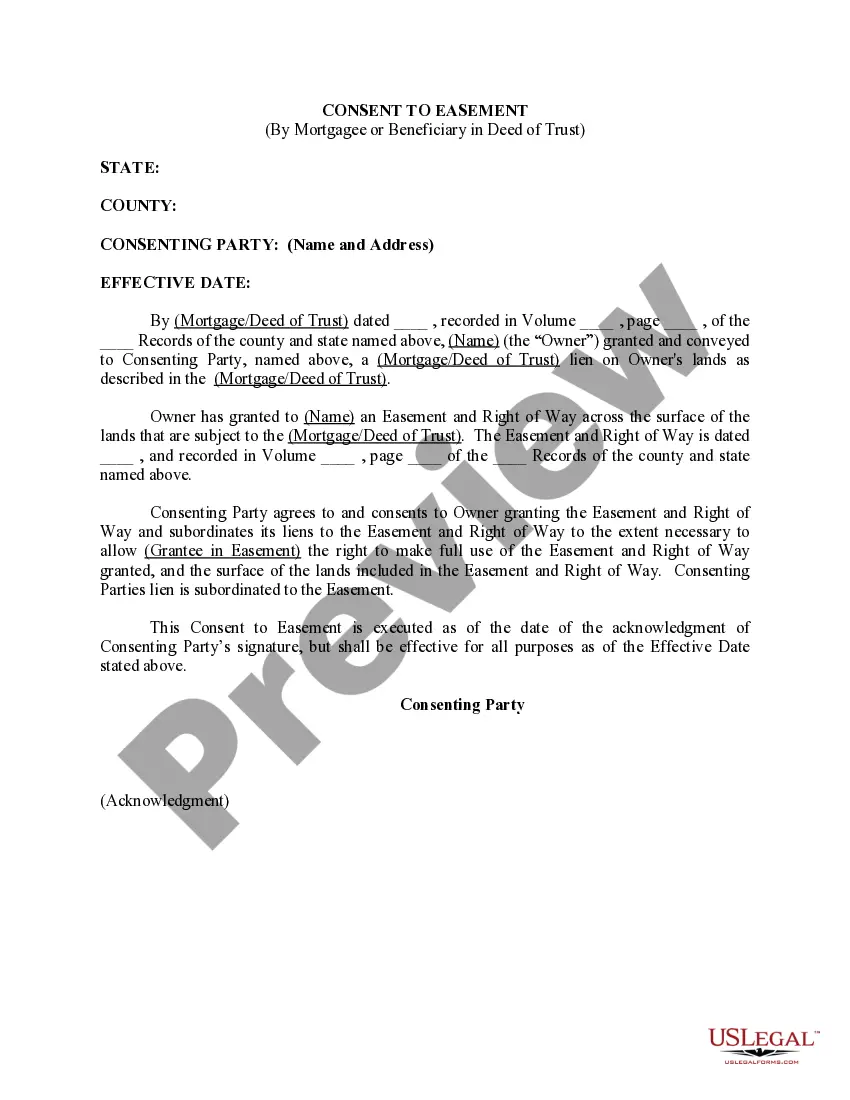
The Consent of Mortgage form is a legal document that ensures a mortgaged property remains subordinate to an easement. This form is essential when a property owner grants an easement while the property is under a mortgage. Unlike other property-related forms, this consent specifically addresses the relationship between a mortgage and an easement, clarifying the rights and responsibilities of the parties involved.
Main sections of this form
- Identification of the property subject to the easement.
- Details of the easement being granted.
- Consent from the mortgage holder indicating acknowledgment of the easement.
- Signatures of the parties involved, including the mortgagor and mortgagee.
- Notarization section, if required.
When this form is needed
This form is used when a property owner wishes to grant an easement over a mortgaged property. Common scenarios include allowing utility companies access for infrastructure installations, granting access for neighboring properties, or permitting easement for maintenance of communal assets. It is crucial to use this form to protect the rights of the mortgage holder while ensuring the easement is legally recognized.
Intended users of this form
- Property owners seeking to establish an easement while a mortgage is in place.
- Mortgage holders who need to consent to the establishment of an easement affecting their interest.
- Legal representatives assisting clients in real estate transactions involving easements.
Steps to complete this form
- Identify and enter the full legal description of the property.
- Specify the details and terms of the easement being granted.
- Obtain consent from the mortgage holder by having them sign the document.
- Include the date of agreement and any necessary witnesses.
- Schedule notarization, if applicable, to finalize the document.
Is notarization required?
This form does not typically require notarization unless specified by local law. However, notarizing the document can lend additional authenticity, particularly for real estate transactions.
Get your form ready online
Our built-in tools help you complete, sign, share, and store your documents in one place.
Make edits, fill in missing information, and update formatting in US Legal Forms—just like you would in MS Word.
Download a copy, print it, send it by email, or mail it via USPS—whatever works best for your next step.
Sign and collect signatures with our SignNow integration. Send to multiple recipients, set reminders, and more. Go Premium to unlock E-Sign.
If this form requires notarization, complete it online through a secure video call—no need to meet a notary in person or wait for an appointment.
We protect your documents and personal data by following strict security and privacy standards.

Make edits, fill in missing information, and update formatting in US Legal Forms—just like you would in MS Word.

Download a copy, print it, send it by email, or mail it via USPS—whatever works best for your next step.

Sign and collect signatures with our SignNow integration. Send to multiple recipients, set reminders, and more. Go Premium to unlock E-Sign.

If this form requires notarization, complete it online through a secure video call—no need to meet a notary in person or wait for an appointment.

We protect your documents and personal data by following strict security and privacy standards.
Common mistakes
- Failing to obtain consent from all mortgage holders.
- Not providing a complete legal description of the property.
- Omitting necessary signatures or dates.
- Neglecting to verify the specific requirements per state.
Advantages of online completion
- Convenience of downloading the form anytime, anywhere.
- Editable templates that allow for easy customization.
- Access to forms created by licensed attorneys, ensuring reliability.
- Instant access to updates in legal formatting or regulations.
Looking for another form?
Form popularity
FAQ
Declining a utility easement is an option, but various legal factors come into play. If the easement serves a public benefit, declining might not be a viable solution. It's key to analyze how Iowa Consent of Mortgage - used when easement is needed with a mortgaged property influences your rights. Relying on platforms like uslegalforms can provide the necessary information and forms to help you make an informed decision.
Refusing a utility easement in Iowa is possible, but it often hinges on specific legal conditions. If the easement is deemed necessary for public utility, refusal may not be upheld in court. Understanding how Iowa Consent of Mortgage - used when easement is needed with a mortgaged property impacts this decision is essential. Consulting with uslegalforms can equip you with the knowledge you need to approach this matter wisely.
In Iowa, easement rights allow the holder to use a portion of another person's property for specific purposes, such as utilities. These rights are generally set by the easement agreement and can include access, maintenance, and more. When dealing with Iowa Consent of Mortgage - used when easement is needed with a mortgaged property, it's important to understand both your rights and obligations. Uslegalforms offers reliable resources to navigate these aspects effectively.
You do have the option to say no to an easement, but it depends on the circumstances and legal requirements. If the easement is necessary for public utility or benefits other properties, denial may not be feasible. Understanding Iowa Consent of Mortgage - used when easement is needed with a mortgaged property is crucial, as it affects your decision. Seeking advice from uslegalforms can provide tailored guidance for your situation.
Yes, a property owner can block a utility easement under certain conditions. If the easement imposes unreasonable burden on the property or violates the owner's rights, they might have grounds to deny it. It's essential to consult with a legal expert familiar with Iowa Consent of Mortgage - used when easement is needed with a mortgaged property. Utilizing resources like uslegalforms can help clarify your rights and options.
Easement law in Iowa outlines how easements are established, enforced, and terminated. Typically, easements can be created through agreement, necessity, or prescription. For property owners dealing with a mortgaged property, particularly when considering the Iowa Consent of Mortgage - used when easement is needed, it is important to understand these laws thoroughly. Utilizing platforms like uslegalforms can provide valuable resources to help you navigate Iowa's easement laws effectively.
One significant disadvantage of granting an easement is the potential impact on your property’s value and use. An easement may limit your enjoyment of your property or restrict how you use certain areas. Additionally, if the easement affects a mortgaged property, understanding the implications of Iowa Consent of Mortgage - used when easement is needed is crucial. We recommend discussing these concerns with a knowledgeable attorney to navigate the complexities involved.
Yes, a landowner can refuse an easement if they do not agree with the terms or do not wish to allow access to their property. However, if the easement is necessary for utilities or for the public good, the entity requesting the easement may pursue legal action. Understanding your rights and obligations regarding easements is essential, especially in the context of Iowa Consent of Mortgage - used when easement is needed with a mortgaged property. Consult with a legal expert to explore your options.
A property owner may have limitations when it comes to blocking an easement. Legal agreements often dictate easement usage, and the Iowa Consent of Mortgage - used when easement is needed with a mortgaged property may add an extra layer of consideration. If the easement is valid and established, obstructing it could lead to legal consequences. For property owners facing this situation, consulting resources like UsLegalForms can provide clarity and guidance.
Easement rights refer to the legal rights that allow one party to use another party's property for a specific purpose. When dealing with a mortgaged property, the Iowa Consent of Mortgage - used when easement is needed with a mortgaged property, becomes essential. These rights can cover pathways, utilities, and access areas. Understanding these rights helps property owners navigate potential conflicts and ensure compliance.