Iowa Consent to Easement
Understanding this form
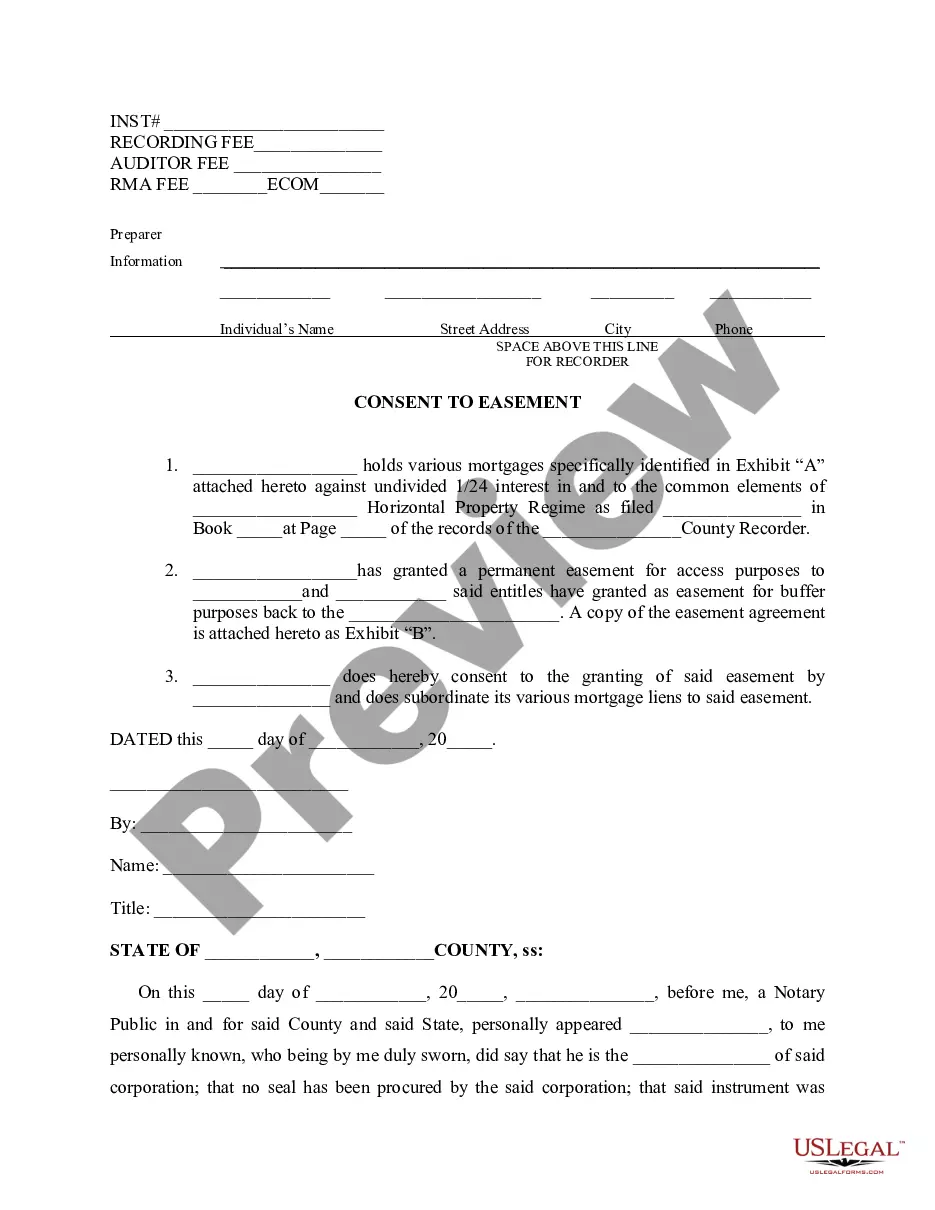
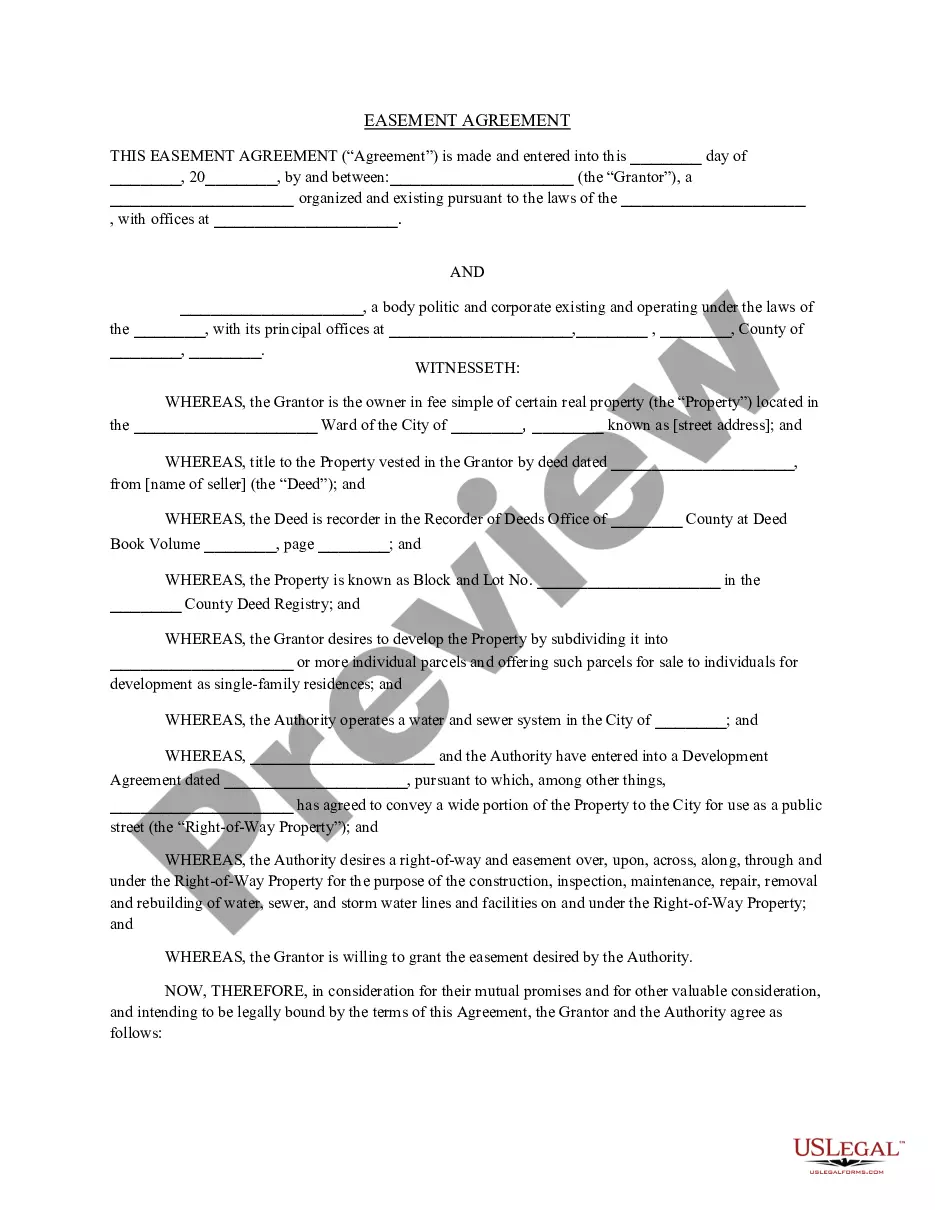
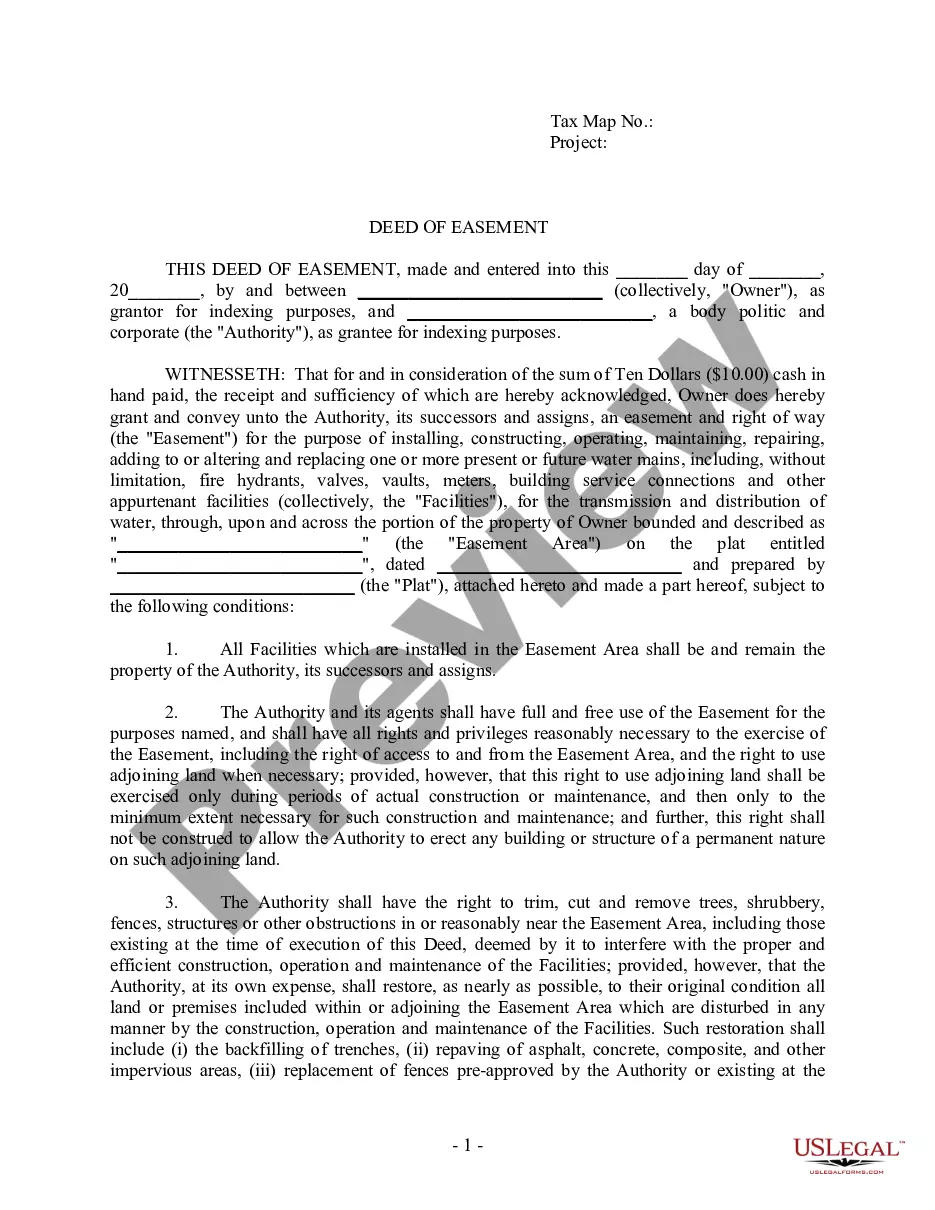
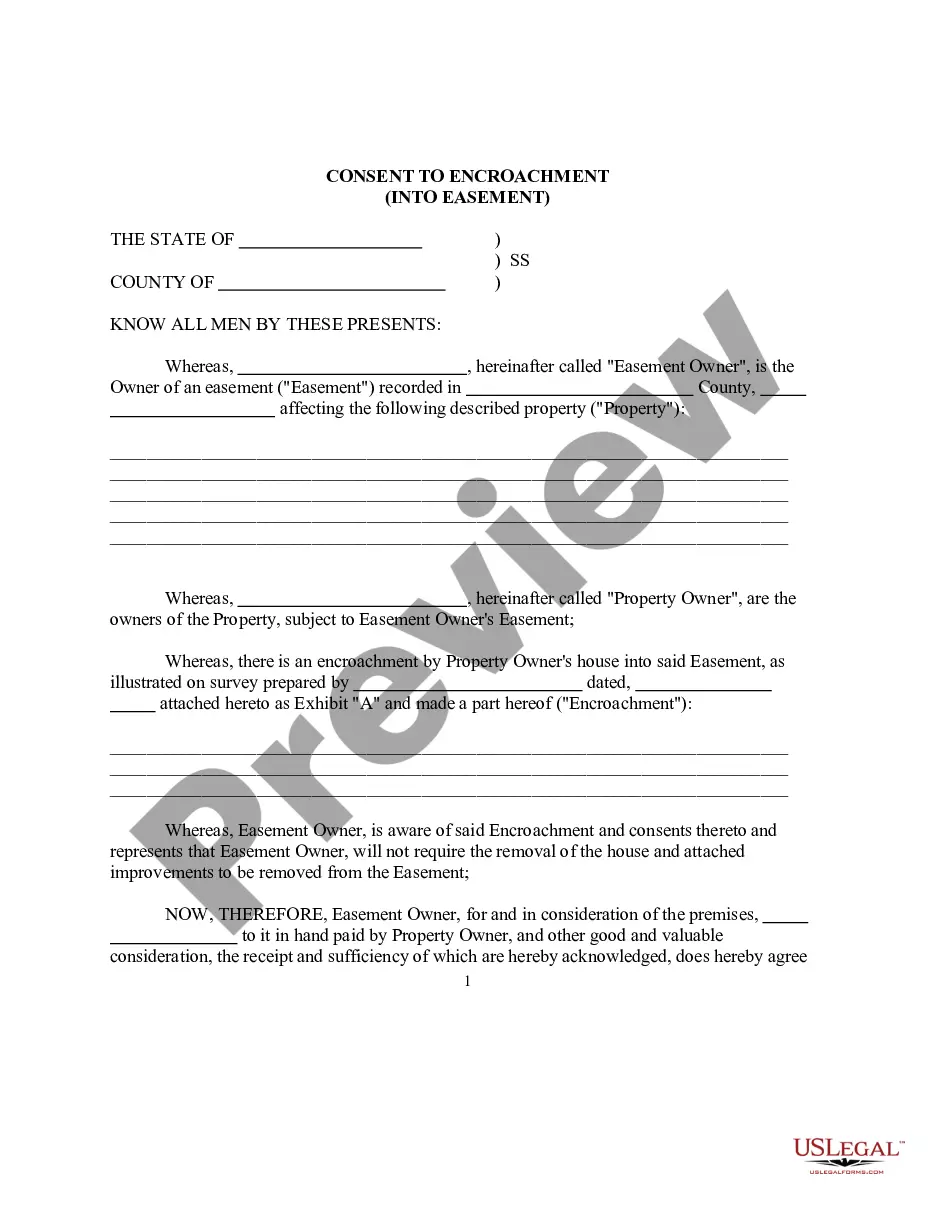
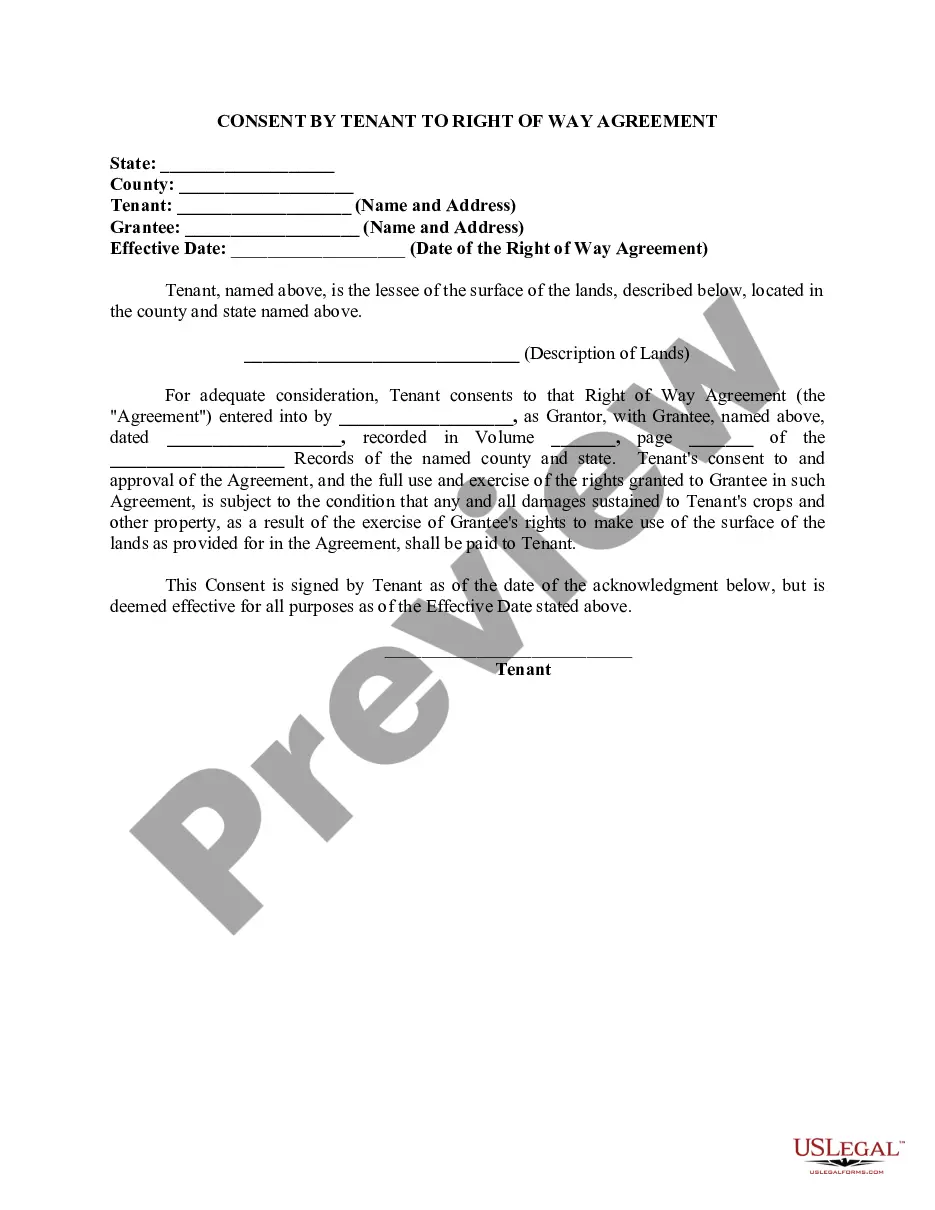
The Consent to Easement is a legal document that allows a property owner (grantor) to grant another party (grantee) the right to use a portion of their land for specific utility purposes. This form outlines the details of the easement and establishes the terms under which utilities can be installed, accessed, and maintained. It is essential for ensuring that both parties have a clear understanding of their rights and responsibilities regarding the use of the property, setting it apart from other real estate agreements.
Main sections of this form
- Identification of the parties involved: names and addresses of grantor and grantee.
- Description of the easement area: specific location and nature of the utility easement.
- Subordination clause: ensures that the easement takes precedence over existing mortgages or liens.
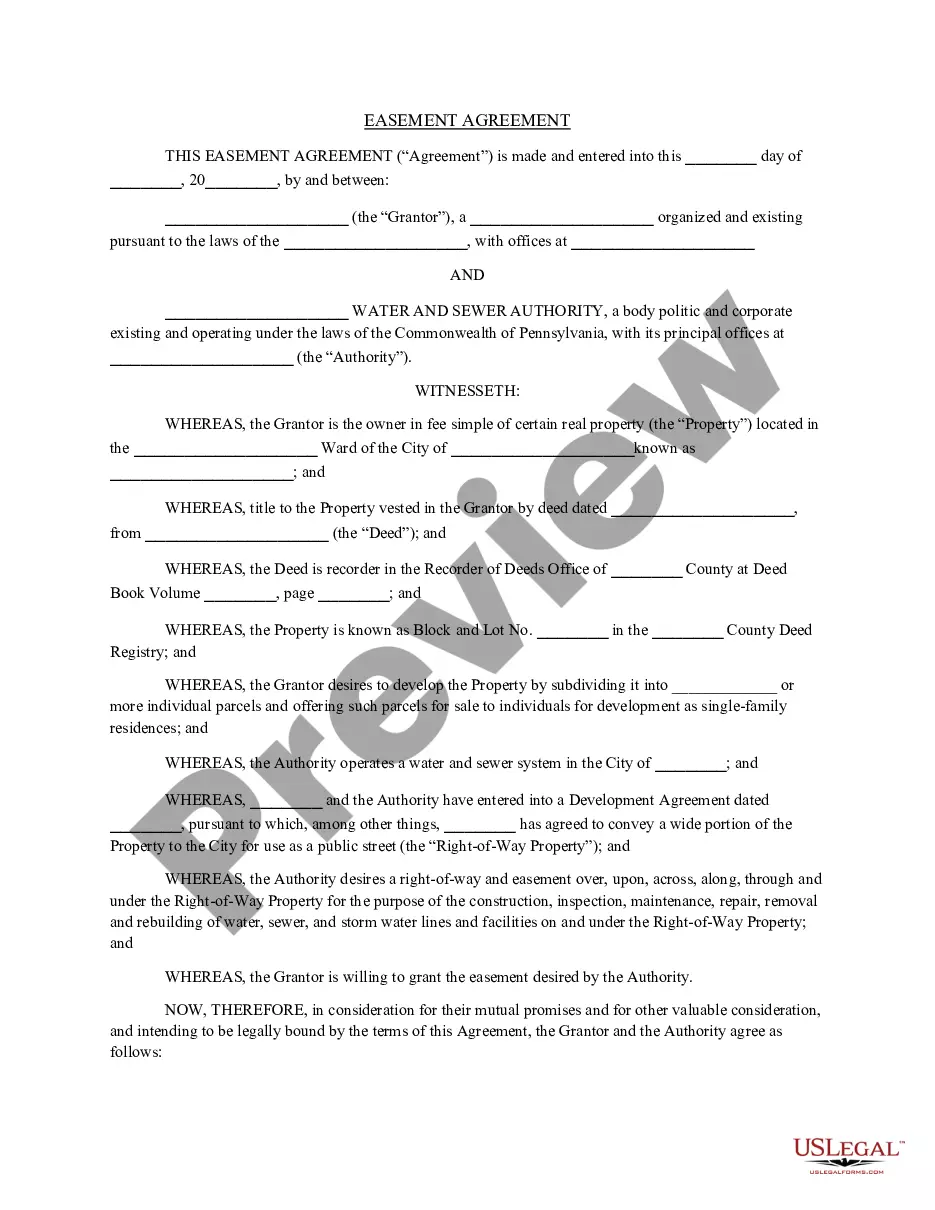
- Exhibits: attachments detailing specific mortgages and easement agreements.
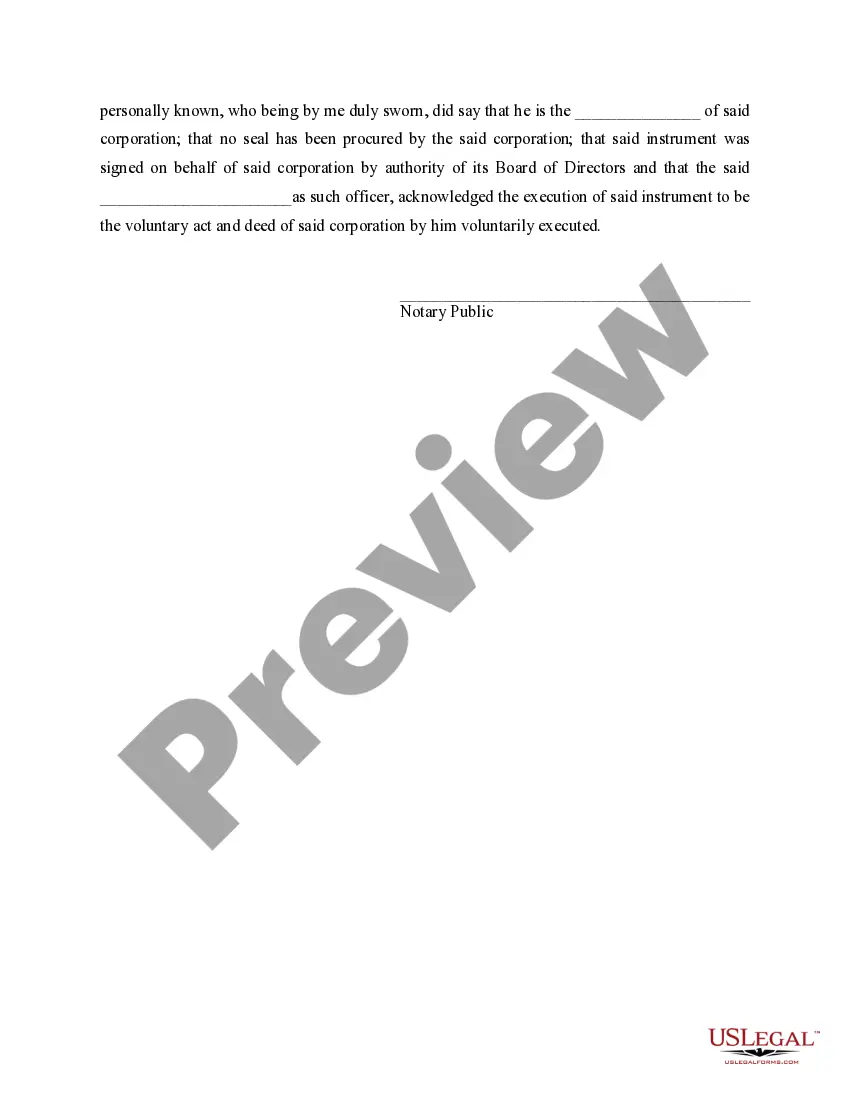
- Notarization section: legal acknowledgment of signatures for validity.
When this form is needed
This form should be used when a property owner needs to grant an easement for utility purposes to another party. Examples include scenarios where utility companies require access to install, maintain, or repair lines such as electricity, water, sewer, or telecommunications. It is especially relevant in property development situations where easements are necessary for infrastructure and compliance with local regulations.
Who this form is for
- Property owners who wish to grant easement rights to utility companies.
- Utility companies that need legal permission to access private property for installation or maintenance of utilities.
- Real estate professionals assisting clients with property development issues.
- Attorneys facilitating agreements related to property transactions.
How to prepare this document
- Identify the parties involved by entering their names and addresses in the designated fields.
- Provide a detailed description of the easement area, including the specific location on the property.
- Attach relevant exhibits, such as mortgages and existing easement agreements.
- Include the date of agreement and ensure all parties sign in the appropriate sections.
- Have the document notarized to validate the signatures, if applicable.
Is notarization required?
Yes, this form must be notarized to be legally valid. Notarization adds an extra layer of security by confirming the identities of the signers and the voluntary nature of their signatures. With US Legal Formsâ integrated online notarization, you can complete this process securely via a video call at any time, without the need for physical travel.
Get your form ready online
Our built-in tools help you complete, sign, share, and store your documents in one place.
Make edits, fill in missing information, and update formatting in US Legal Forms—just like you would in MS Word.
Download a copy, print it, send it by email, or mail it via USPS—whatever works best for your next step.
Sign and collect signatures with our SignNow integration. Send to multiple recipients, set reminders, and more. Go Premium to unlock E-Sign.
If this form requires notarization, complete it online through a secure video call—no need to meet a notary in person or wait for an appointment.
We protect your documents and personal data by following strict security and privacy standards.

Make edits, fill in missing information, and update formatting in US Legal Forms—just like you would in MS Word.

Download a copy, print it, send it by email, or mail it via USPS—whatever works best for your next step.

Sign and collect signatures with our SignNow integration. Send to multiple recipients, set reminders, and more. Go Premium to unlock E-Sign.

If this form requires notarization, complete it online through a secure video call—no need to meet a notary in person or wait for an appointment.

We protect your documents and personal data by following strict security and privacy standards.
Avoid these common issues
- Failing to specify the exact area of the easement can lead to misunderstandings.
- Not attaching necessary exhibits, such as existing mortgage documents or previous easement agreements.
- Leaving key sections blank, like party information or signatures.
- Overlooking the need for notarization, which may invalidate the form in certain jurisdictions.
Advantages of online completion
- Convenience of downloading the form anytime, from anywhere.
- Editability allows users to customize the form to their specific needs before finalizing.
- Access to legally-reviewed templates for reliability and compliance.
- Guided instructions help streamline the completion process.
Looking for another form?


Form popularity
FAQ
To file an easement in Iowa, you must first obtain Iowa Consent to Easement from the relevant property owner. After reaching an agreement, draft the easement document detailing the terms and the property involved. Next, you will need to record the easement with the county recorder’s office where the property is located. This process not only formalizes the easement but also ensures that it is legally recognized and enforceable.
In Iowa, easements grant certain rights to one party over a property owned by another. They can be used for various purposes, such as utility access or roadway passage. It's essential that these easements are documented properly to avoid any future legal issues. Using UsLegalForms can help you navigate the process smoothly and ensure your Iowa consent to easement aligns with state laws.
To write a property easement, start by gathering essential information about the property and the parties involved. Clearly detail the purpose of the easement, the specific area it covers, and any rights or limitations involved. It’s advisable to follow a standard easement template, which you can find on platforms like UsLegalForms. This approach helps ensure your Iowa consent to easement is both comprehensive and legally sound.
The most common way to create an easement in Iowa is through a written agreement between the property owner and the beneficiary. This agreement should outline the specifics of the easement, such as location, rights, and responsibilities. Another route is through necessity, where an easement is implied to allow access to landlocked property. Careful drafting of this agreement ensures both parties fulfill their obligations.
Every easement agreement should clearly specify the location and dimensions of the easement area. This detail is vital for preventing future disputes about use and access. Additionally, including the purpose of the easement is important, as it defines how the easement may be utilized. This clarity underpins a solid agreement for both parties involved.
The procedure for obtaining an Iowa consent to easement typically begins with a clear agreement between the property owner and the party seeking the easement. This includes defining the easement's purpose and scope. Once both parties agree, the easement document must be drafted and signed. Afterward, it's advisable to record the easement with the county recorder to ensure it is legally recognized.
Easements typically require permission from the property owner through a formal agreement. This agreement, known as Iowa Consent to Easement, outlines the rights and responsibilities of both parties involved. Without proper documentation, the easement may not be enforceable. Therefore, ensuring legal clarity through permissions is vital for avoiding disputes in the future.
While easements provide essential access rights, they can also diminish property value or restrict how a property owner uses their land. Property owners must maintain the easement and ensure it does not interfere with their own property usage. Understanding the implications of an Iowa Consent to Easement can help mitigate potential issues. It's important to weigh the benefits and limitations before establishing an easement.
In Iowa, you generally cannot force a property owner to grant an easement unless there are specific legal grounds, such as necessity or implied easement. Negotiation is often the most effective approach to secure an easement. If both parties can agree, a written Iowa Consent to Easement can outline the terms clearly. Using legal services can also assist in reaching a mutually beneficial agreement.
Easement law in Iowa governs how easements are created, maintained, and terminated. Generally, easements can be established through written agreements, necessity, or long-term use. In Iowa, it’s important to follow legal processes to ensure that easement terms are clear and enforceable. Consulting legal resources or platforms like USLegalForms can help clarify Iowa Consent to Easement matters.