Iowa Temporary Easement for Construction
What is this form?
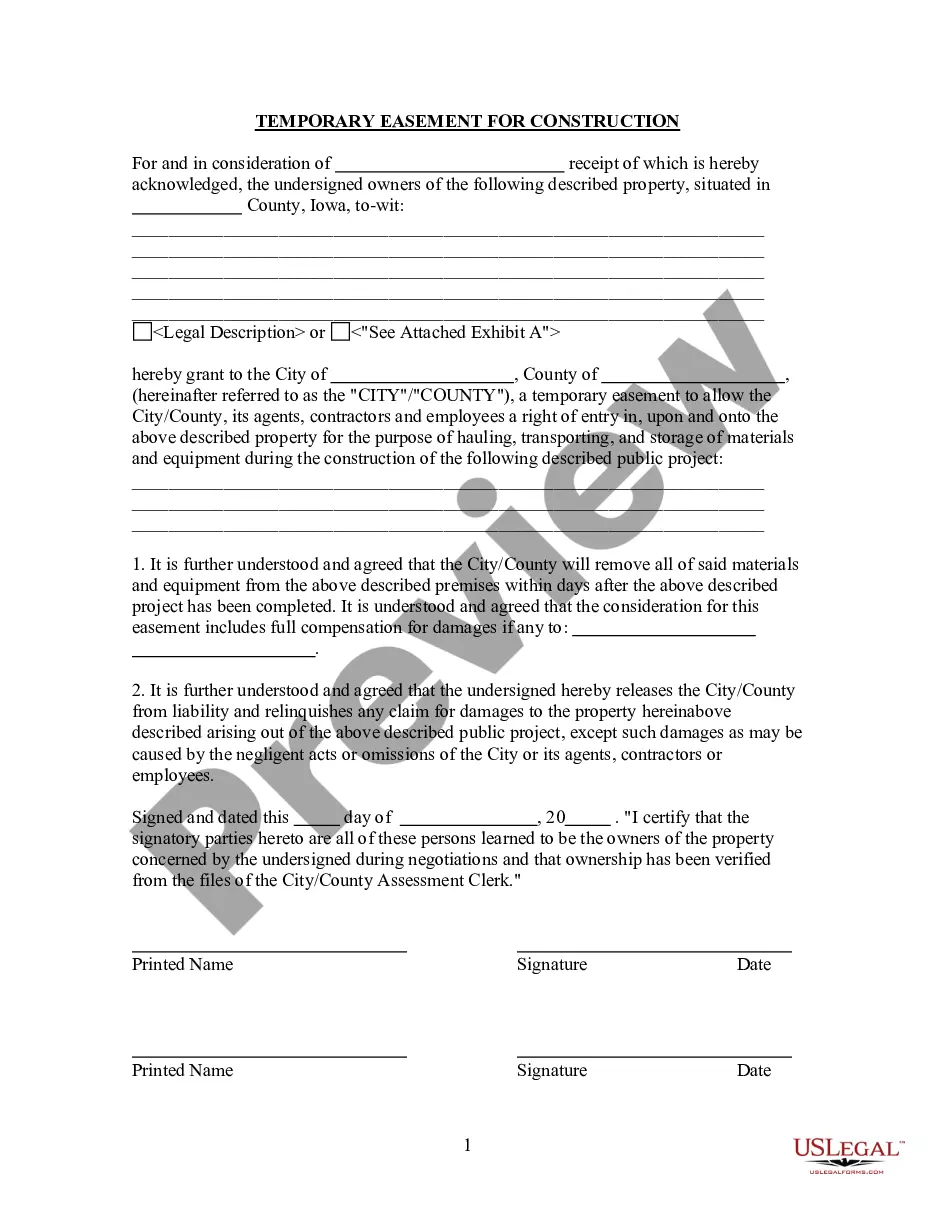
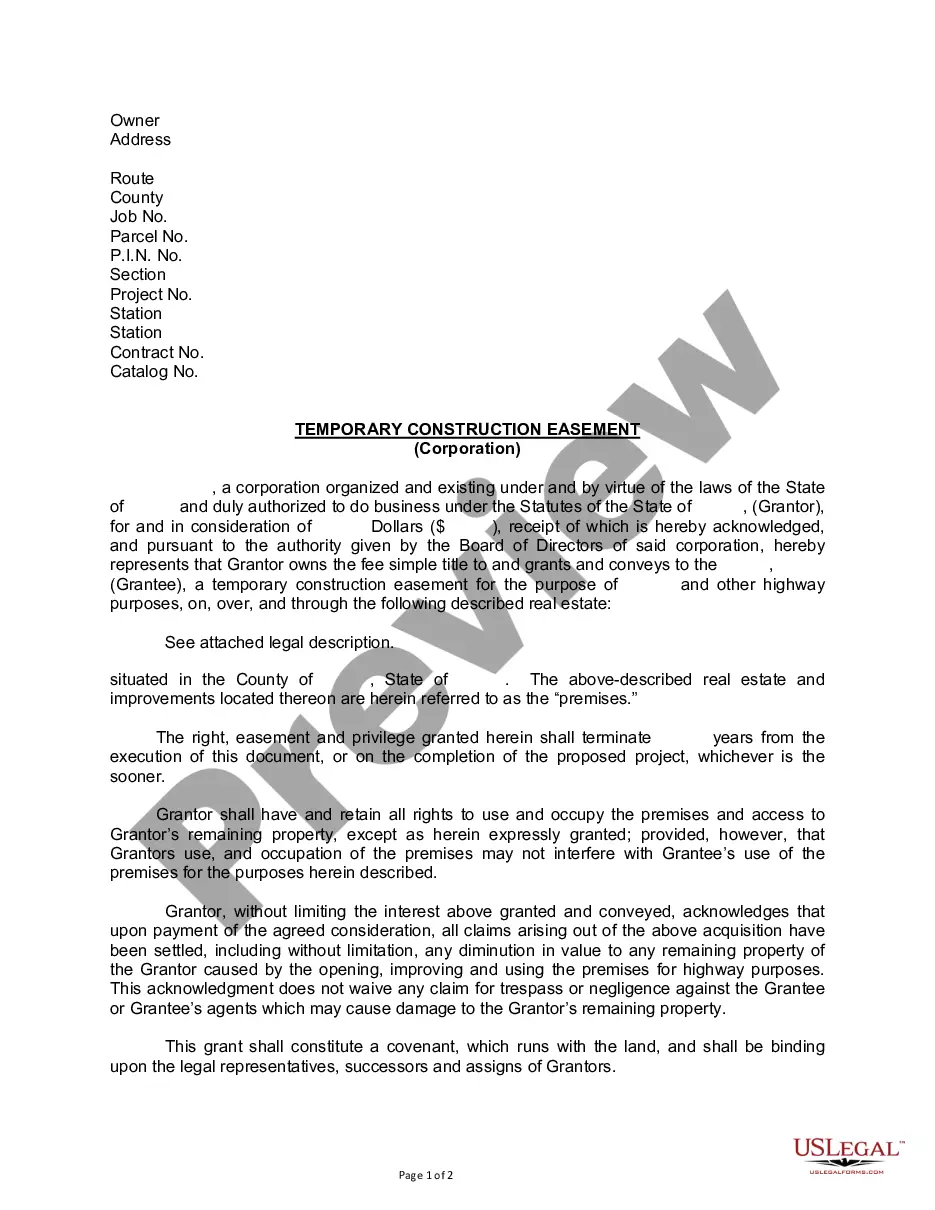
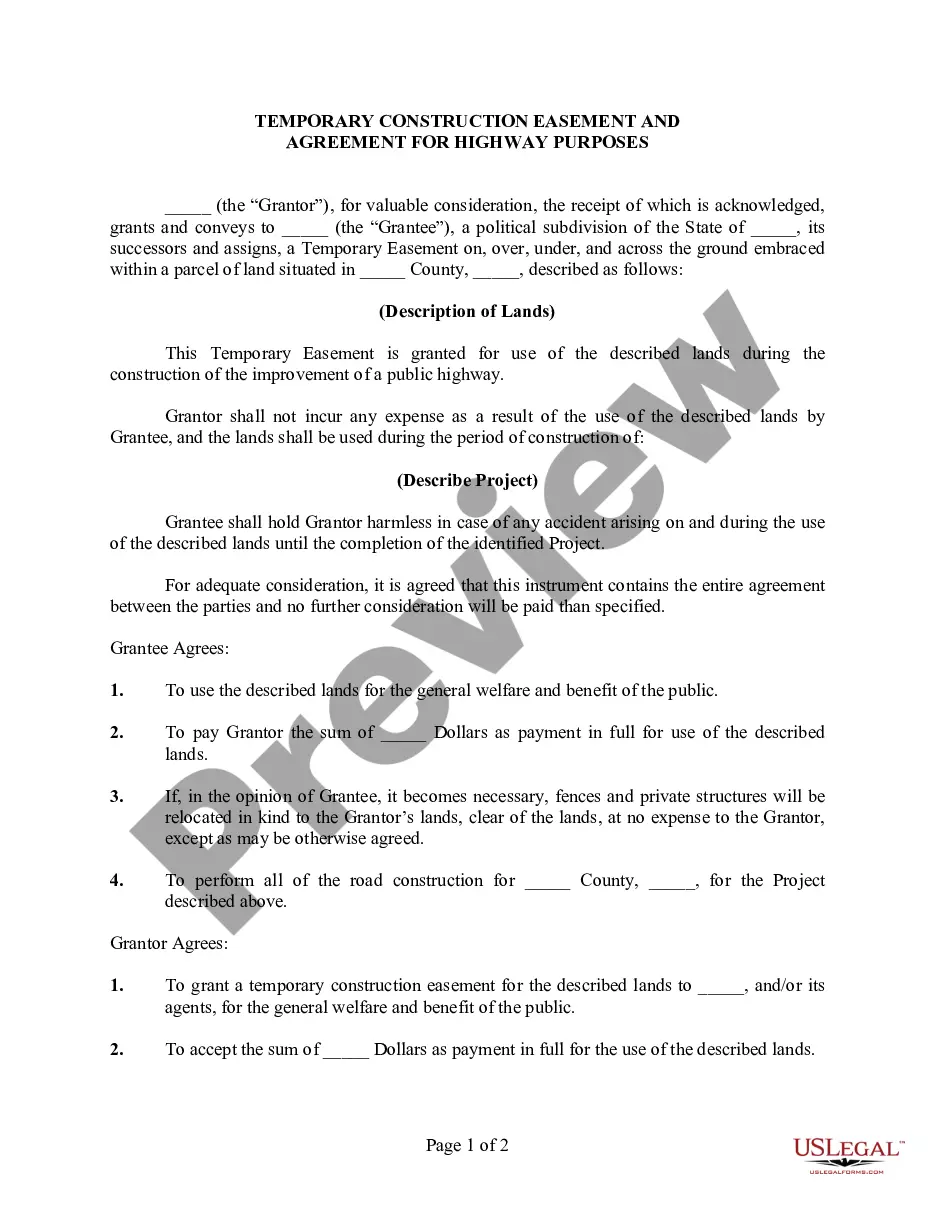
The Temporary Easement for Construction form allows a city or county to enter a property for the purpose of conducting a specific construction project. Unlike permanent easements, this form grants limited rights, ensuring that property owners understand the temporary nature of the access granted.
Form components explained
- Identification of the property subject to the easement.
- Description of the construction project, including its purpose and scope.
- Timeframe during which the easement will be active.
- Legal description of the easement area, potentially referenced as an attached exhibit.
- Acknowledgment of the property owner's rights and any conditions of the easement.
When this form is needed
This form is used when a government entity needs temporary access to private property for construction purposes, such as building roads, utility installations, or public infrastructure projects. It helps ensure that the owner understands the specifics of the access and the temporary nature of the agreement.
Who should use this form
- City or county officials overseeing construction projects.
- Property owners being approached for access to their land.
- Utility companies needing to perform temporary installations on private property.
How to complete this form
- Identify the parties involved in the easement agreement, including the city or county and the property owner.
- Specify the property by providing a legal description or reference under "Exhibit A."
- Describe the construction project, outlining its scope and purpose.
- Enter the dates during which the easement will be in effect.
- Ensure signatures from all parties involved are included to validate the agreement.
Does this document require notarization?
This form does not typically require notarization unless specified by local law. It is important to check local requirements to ensure validity.
Get your form ready online
Our built-in tools help you complete, sign, share, and store your documents in one place.
Make edits, fill in missing information, and update formatting in US Legal Forms—just like you would in MS Word.
Download a copy, print it, send it by email, or mail it via USPS—whatever works best for your next step.
Sign and collect signatures with our SignNow integration. Send to multiple recipients, set reminders, and more. Go Premium to unlock E-Sign.
If this form requires notarization, complete it online through a secure video call—no need to meet a notary in person or wait for an appointment.
We protect your documents and personal data by following strict security and privacy standards.

Make edits, fill in missing information, and update formatting in US Legal Forms—just like you would in MS Word.

Download a copy, print it, send it by email, or mail it via USPS—whatever works best for your next step.

Sign and collect signatures with our SignNow integration. Send to multiple recipients, set reminders, and more. Go Premium to unlock E-Sign.

If this form requires notarization, complete it online through a secure video call—no need to meet a notary in person or wait for an appointment.

We protect your documents and personal data by following strict security and privacy standards.
Typical mistakes to avoid
- Failing to provide a clear and detailed description of the construction project.
- Omitting the legal description of the property or not properly referencing Exhibit A.
- Not including a specific timeframe for the easement.
- Skipping signatures or not having them notarized when required.
Benefits of using this form online
- Convenience of downloading and accessing the form 24/7.
- Editable templates allow for easy customization to fit specific project needs.
- Forms are drafted by licensed attorneys to ensure legal compliance.
Legal use & context
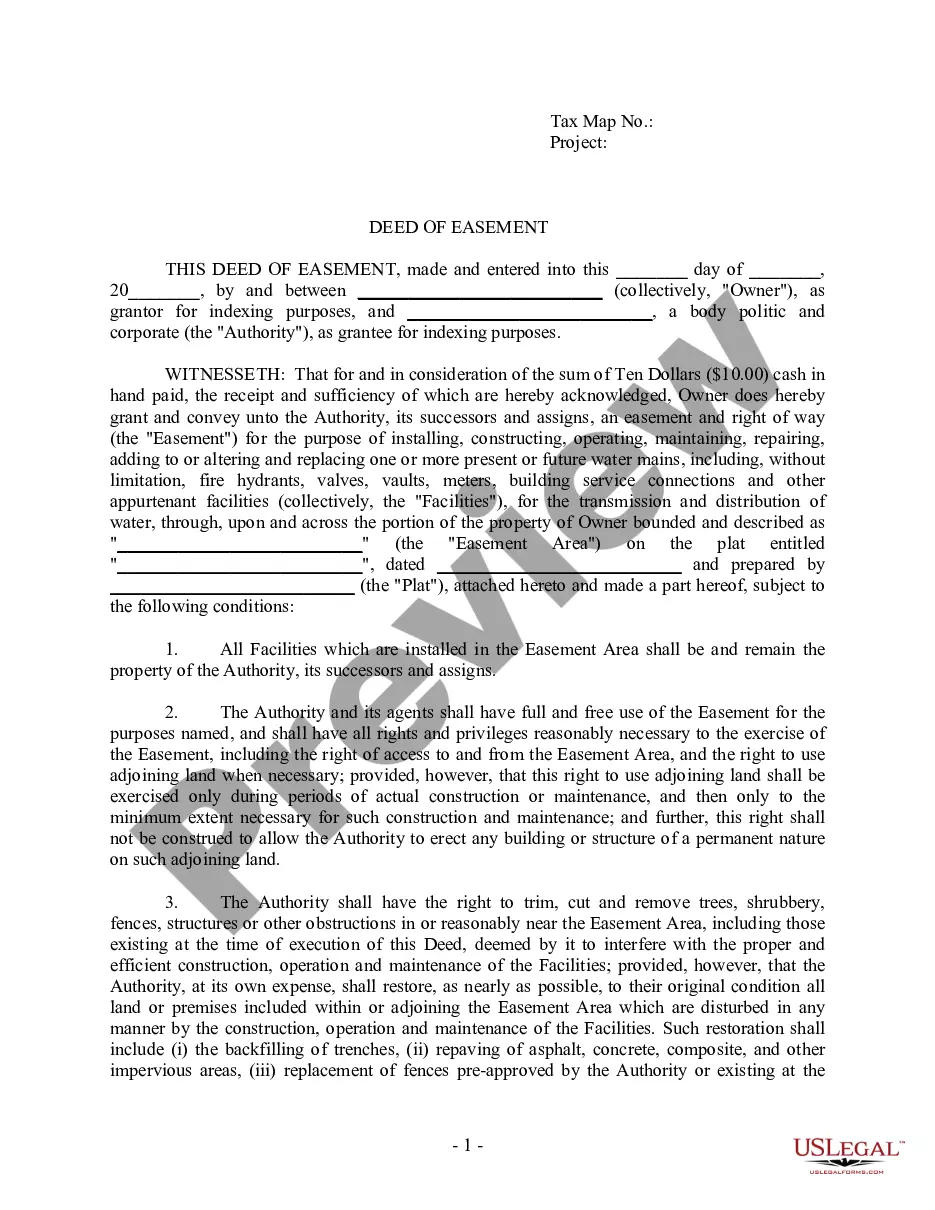
- A temporary easement is a legal right allowing designated access to private property.
- This form secures the necessary permissions to conduct construction without infringing on legal property rights.
Key takeaways
- The Temporary Easement for Construction only allows access for specific projects and for a limited time.
- Properly completing the form is crucial for both parties to understand their rights and obligations.
- Always verify the local laws applicable to easements to ensure compliance.
Looking for another form?

Form popularity
FAQ
To obtain a temporary easement for construction in Iowa, you need to start by discussing your needs with the landowner. Open communication can lead to an agreement that benefits both parties. Next, you'll want to draft a written agreement detailing the terms, duration, and purpose of the easement. Platforms like US Legal Forms provide templates and resources to simplify this process, ensuring you meet all legal requirements for the Iowa Temporary Easement for Construction.
A temporary easement for construction in Iowa allows property owners to grant permission for others to use their land for a specific period. This arrangement typically facilitates construction projects by providing space for equipment, materials, or access routes. Understanding this type of easement is crucial, as it ensures that both parties have clear expectations during the construction phase. For more guidance on navigating the Iowa Temporary Easement for Construction, consider utilizing US Legal Forms.
You cannot force someone to grant you an easement, as it requires mutual consent. However, if access is essential, you may pursue legal recourse to obtain an Iowa Temporary Easement for Construction through a court. Engaging legal experts can help you understand your rights and options in this process.
To acquire an easement in Iowa, start by identifying the landowner whose property you need to access. Then, negotiate terms directly or through written agreements. If negotiations fail, you may need to explore legal options, where using services like US Legal Forms can facilitate the necessary documentation for an Iowa Temporary Easement for Construction.
A permanent easement grants long-term access or use of another person's land for specific purposes. Unlike temporary easements, which are tied to particular projects, permanent easements remain in effect indefinitely. Understanding the distinction is crucial if you plan to pursue an Iowa Temporary Easement for Construction, as the duration and purpose may impact your project plans.
Obtaining an easement by necessity can be complex, as you must demonstrate that the easement is essential for accessing your property. In Iowa, a court typically examines the circumstances surrounding the property and confirm the need for legal access. To navigate this process effectively, consider consulting with professionals, like those at US Legal Forms, who can guide you through obtaining an Iowa Temporary Easement for Construction.
One disadvantage of an easement is the potential impact it can have on property value and use. While an Iowa Temporary Easement for Construction allows necessary work to proceed, it may restrict the property owner's control over their land temporarily. Furthermore, complications can arise if the easement is not well-defined, leading to misunderstandings among parties.
Generally, a property owner cannot block an easement if it is legally granted and documented. However, an Iowa Temporary Easement for Construction may have specific terms that outline the extent of access and use. If disputes arise, consulting legal resources or platforms like US Legal Forms can provide guidance on the rights of both parties involved.
Easement rights refer to the rights held by an individual or entity to use land owned by another for a specific purpose. In the context of an Iowa Temporary Easement for Construction, these rights ensure that construction can occur smoothly while respecting the property owner's interests. Understanding these rights is vital for both easement holders and property owners to maintain a cooperative relationship.
A construction easement is a temporary legal right that allows contractors to access a property for construction-related activities. Specifically, an Iowa Temporary Easement for Construction enables builders to perform necessary tasks without acquiring full property rights. This arrangement can expedite projects while minimizing disruptions for property owners.