Wisconsin Subcontractors Package
What this form package covers
The Wisconsin Subcontractors Package provides a comprehensive set of downloadable legal documents designed to assist subcontractors in managing construction projects and safeguarding their legal rights. Unlike other form packages, this one features a subcontractor's agreement tailored to comply with Wisconsin state law, ensuring that all contracts are legally sound and appropriate for the local context.
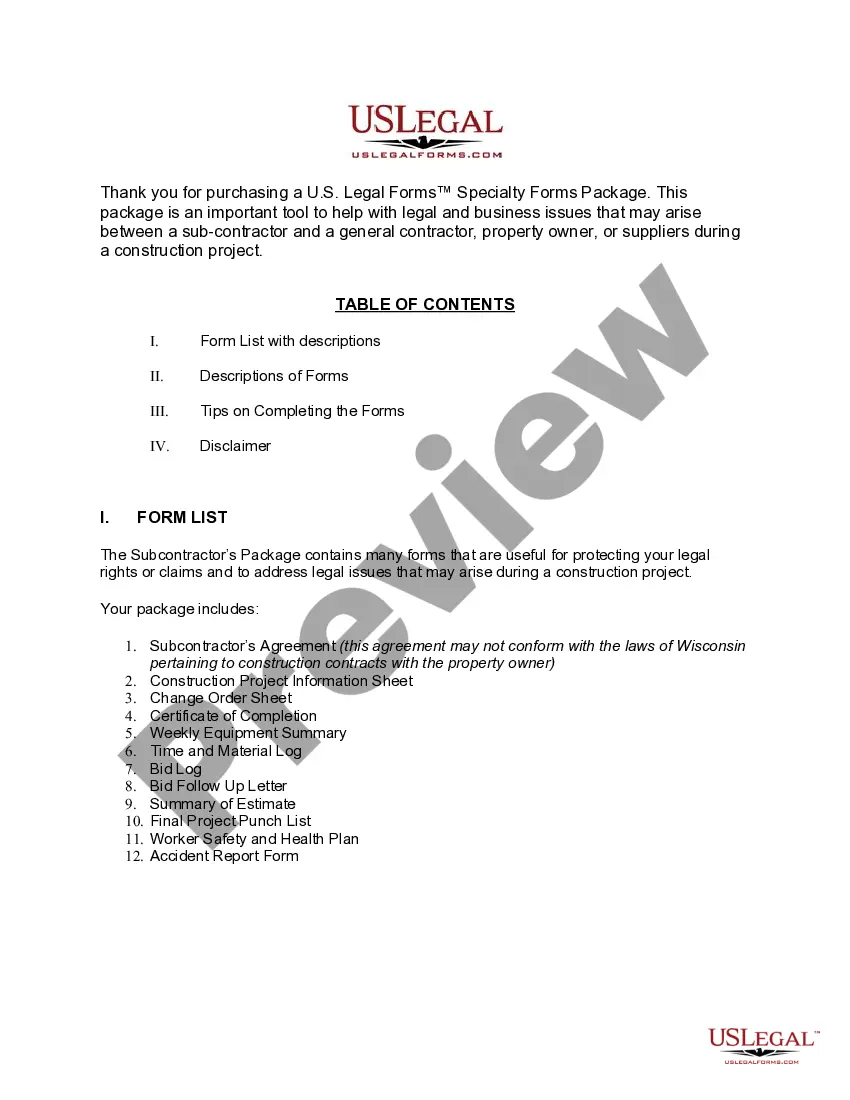
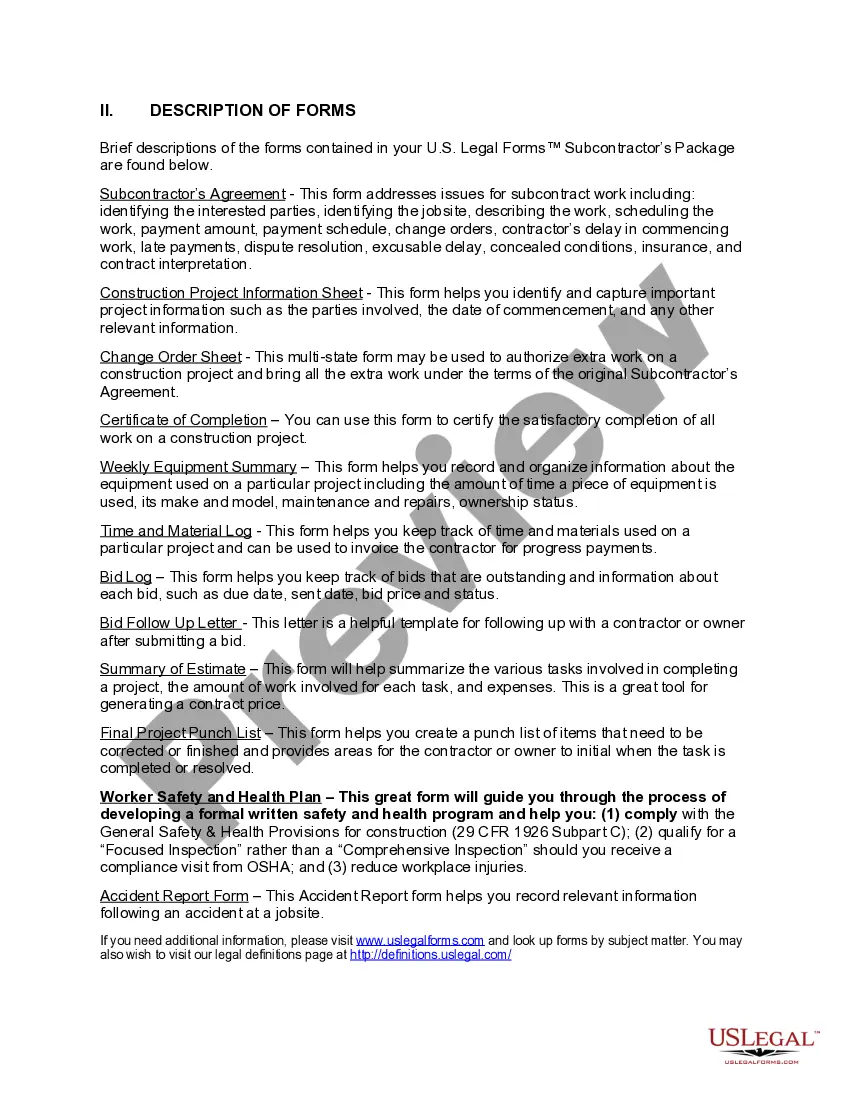
Documents contained in this package
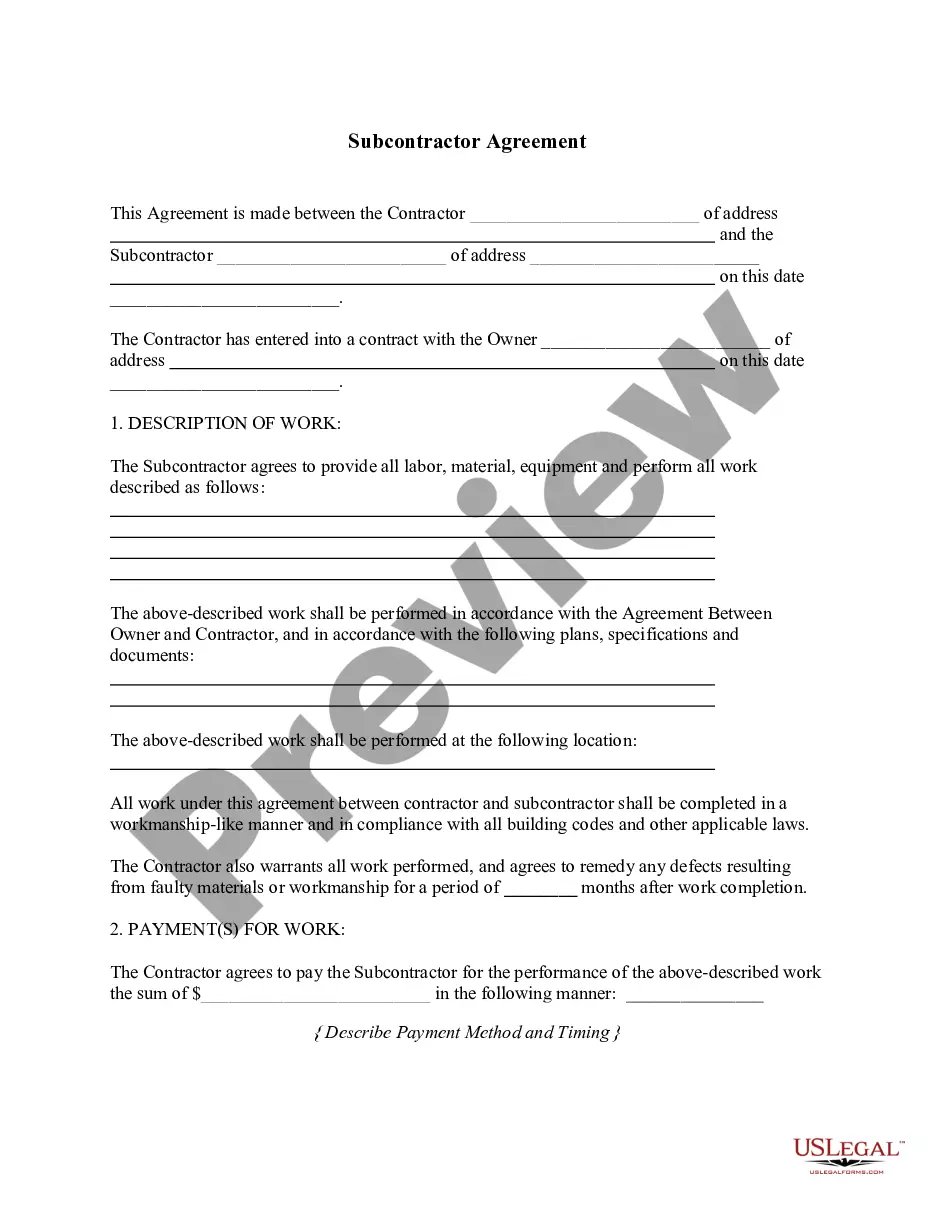
- Subcontractor's Agreement
- Contractor's Weekly Equipment Summary
- Contractor's Time and Materials Log
- Contractor's Bid Log
- Contractor's Bid Follow Up Letter
- Contractor's Summary of an Estimate
- Contractor's Final Punch List
- Construction Accident Report
- Construction Safety and Health Plan
- Change Order for Construction or Repairs by Contractor
- Certification of Completion by Contractor
- Construction Project Information Sheet





When to use this document
This form package is essential when you need to:
- Establish a legal agreement between a main contractor and subcontractors.
- Document changes in project scope through change orders.
- Certify the completion of work on a construction project.
- Manage project timelines, resources, and worker safety effectively.
Intended users of this form package
- Subcontractors working on construction projects in Wisconsin.
- General contractors seeking to formalize agreements with subcontractors.
- Construction companies needing standardized forms to manage compliance and safety.
- Individuals or entities involved in construction who require clear legal documentation.
Steps to complete these forms
- Review the included forms carefully to understand their purpose.
- Identify the parties involved, including contact information and roles.
- Enter necessary dates, project details, and terms into the relevant forms.
- Ensure that all stakeholders review and sign the forms where indicated.
- Keep a copy of completed forms for your records.
Do documents in this package require notarization?
Notarization is not commonly needed for forms in this package. However, if your state’s laws require it, our notarization service, powered by Notarize, allows you to finalize documents online 24/7 without in-person visits.
Get your form ready online
Our built-in tools help you complete, sign, share, and store your documents in one place.
Make edits, fill in missing information, and update formatting in US Legal Forms—just like you would in MS Word.
Download a copy, print it, send it by email, or mail it via USPS—whatever works best for your next step.
Sign and collect signatures with our SignNow integration. Send to multiple recipients, set reminders, and more. Go Premium to unlock E-Sign.
If this form requires notarization, complete it online through a secure video call—no need to meet a notary in person or wait for an appointment.
We protect your documents and personal data by following strict security and privacy standards.
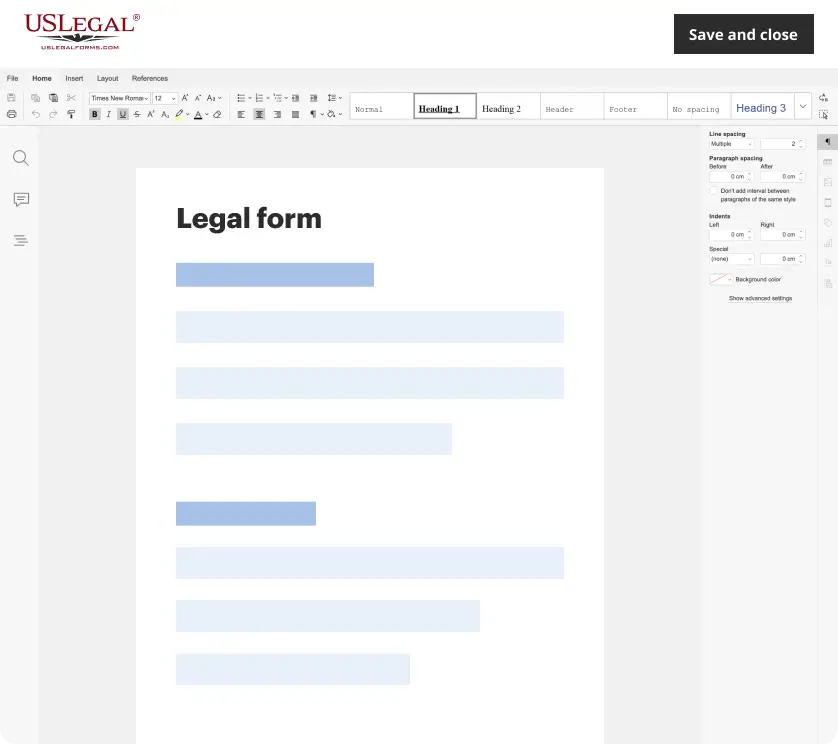
Make edits, fill in missing information, and update formatting in US Legal Forms—just like you would in MS Word.
Download a copy, print it, send it by email, or mail it via USPS—whatever works best for your next step.
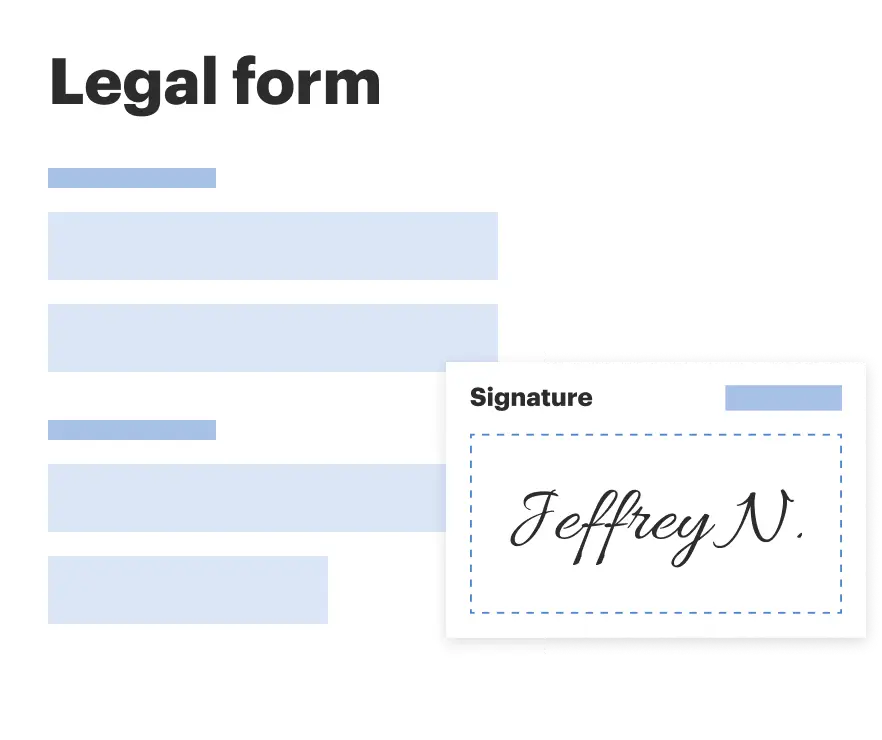
Sign and collect signatures with our SignNow integration. Send to multiple recipients, set reminders, and more. Go Premium to unlock E-Sign.
If this form requires notarization, complete it online through a secure video call—no need to meet a notary in person or wait for an appointment.
We protect your documents and personal data by following strict security and privacy standards.
Avoid these common issues
- Neglecting to review state-specific legal requirements before use.
- Failing to include all necessary parties in the agreements.
- Not properly documenting changes with a change order sheet.
- Omitting signatures from required forms, making them unenforceable.
Benefits of using this package online
- Convenient access to legal documents from anywhere, at any time.
- Forms are editable and customizable to fit specific project needs.
- Reliable preparation of legal forms drafted by licensed attorneys.
- Cost-effective solution, saving you money compared to purchasing forms individually.
Key takeaways
- The Wisconsin Subcontractors Package includes essential tools for managing construction projects.
- Each form within the package is designed to protect subcontractors' rights and streamline project documentation.
- Completing these forms accurately is crucial for compliance and project efficiency.
Looking for another form?
Form popularity
FAQ
Subcontractors do not get benefits, office space or equipment. Hiring contractors also relieves you of having to pay employee taxes and a full-time salary. When all is said and done, hiring a subcontractor is about 20 to 30 percent more cost effective than hiring full-time additional staff.
All subcontractors must file and pay taxes including state, local and federal income and self-employment taxes on their own. The general contractor must file IRS Form 1099-MISC if the subcontractor earns over $600.
Start with procurement standards. Execute all subcontracts prior to starting your projects. Help those who help you. Award the job to the lowest fully qualified bidder. Use contract scope checklists. Make sure you have tight clauses. Meet to review the proposed subcontract.
Licensing. Scope of Work and Payment. Timing. Defense and Indemnification.
A rule of thumb for independent contractors is that the vendor should be allowed to mark up your pay rate by about 15 percent when billing the client. This allows the vendor a respectable profit without making the bill rate outrageous.
A subcontractor will carry out duties on behalf of a contractor - who is responsible for their health, safety, and actions - and might be an individual or an organisation. However, the employees of a contractor are not considered subcontractors, they must be separate altogether.
Subcontractor markup will vary by trade and can be upwards of 25% depending on the trade and whether the work is union or non-union. To summarize, the contractor marks up work performed his own employed workers and each subcontractor (or supplier) hired by the contractor will mark up their own work.
The payment bond is backed by a surety company, and protects the owner and subcontractors. If a general contractor refuses to pay his subcontractors, they can make a claim against the payment bond. The surety company will pay out the subcontractors for at least part of their money and take the contractor to court.
Clients withhold retention against main contractors and main contractors withhold payment against sub-contractors. Retentions typically take the form of a percentage on the contract value. The rate can vary wildly but is typically around 5%.