Florida Bill of Sale of Automobile and Odometer Statement
What this document covers
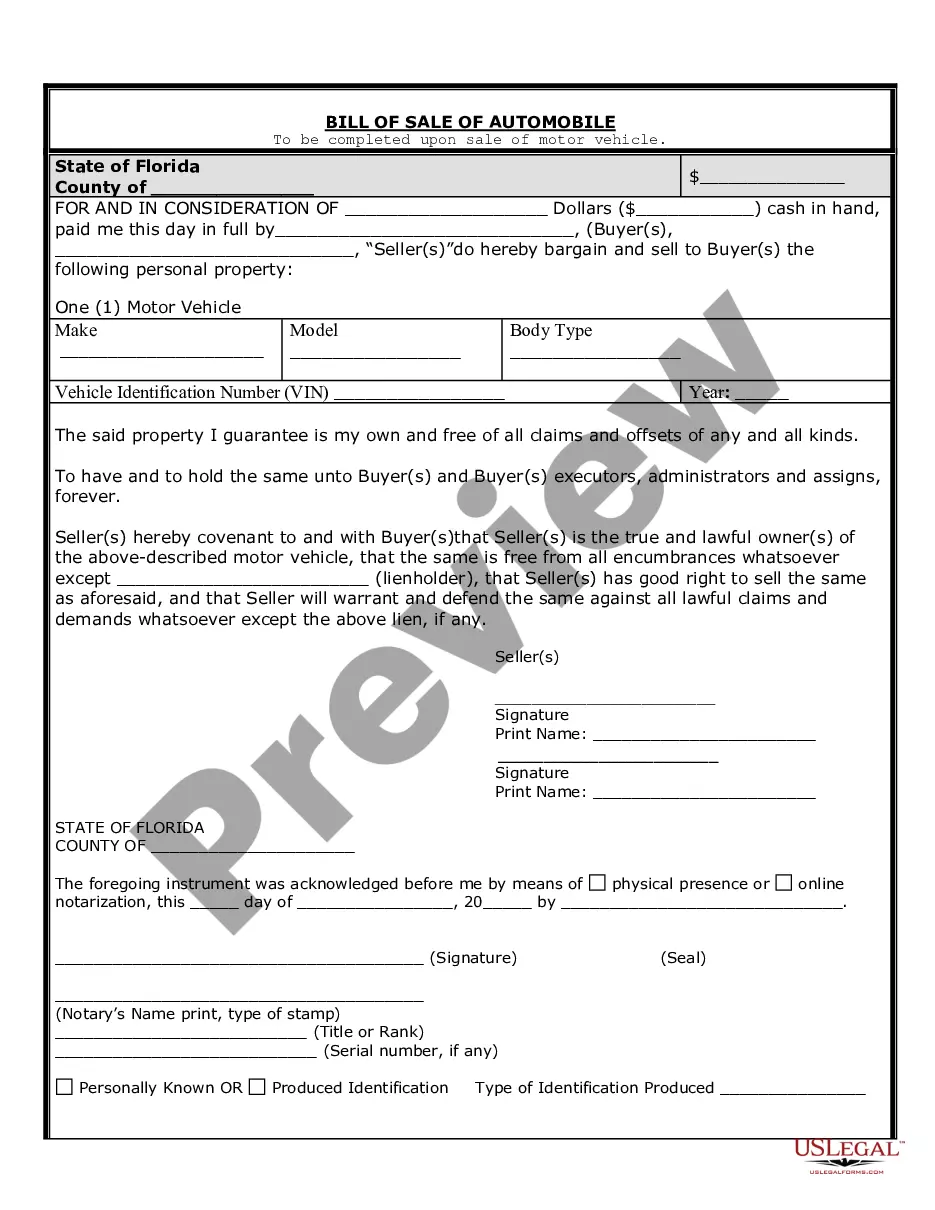
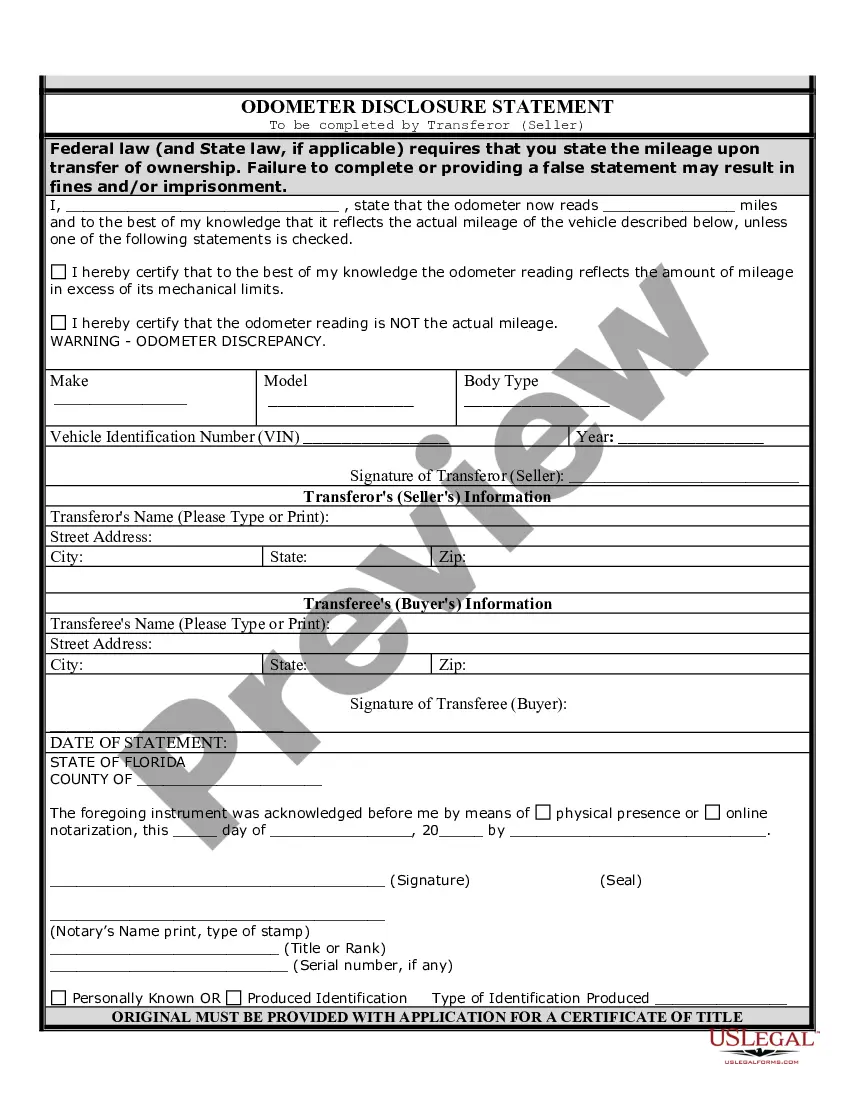
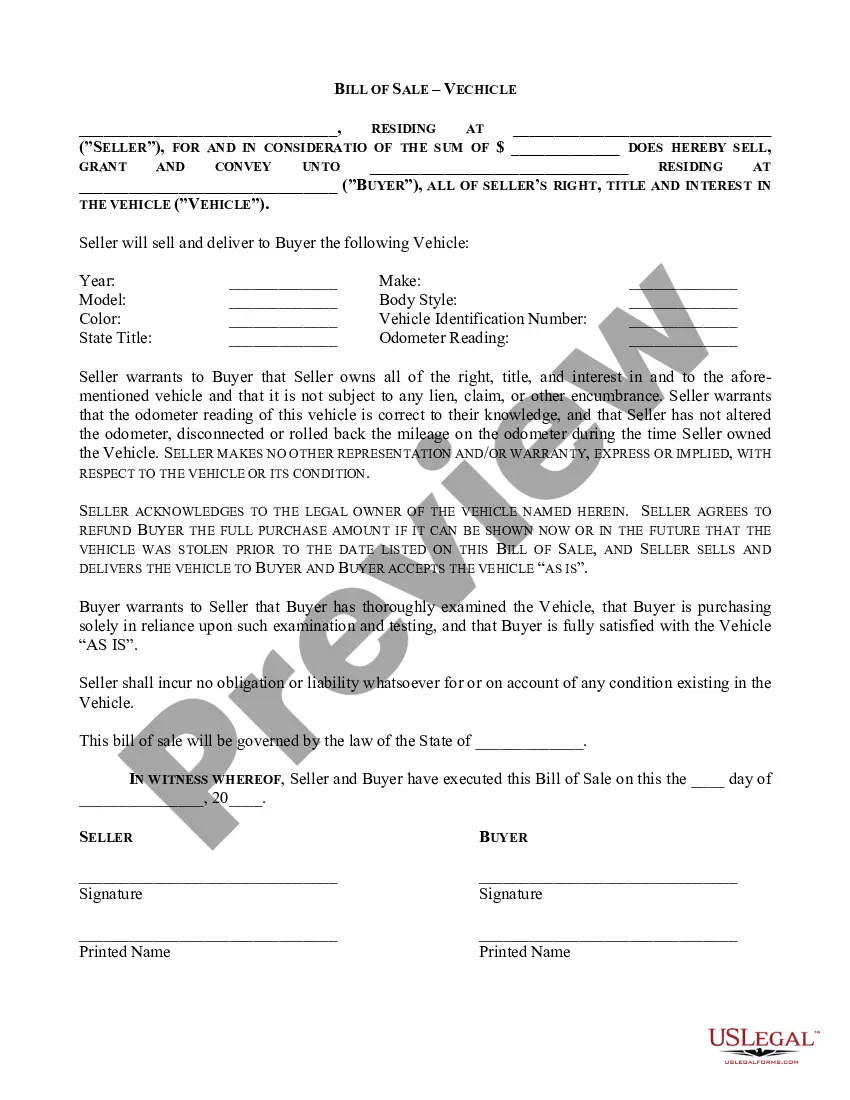
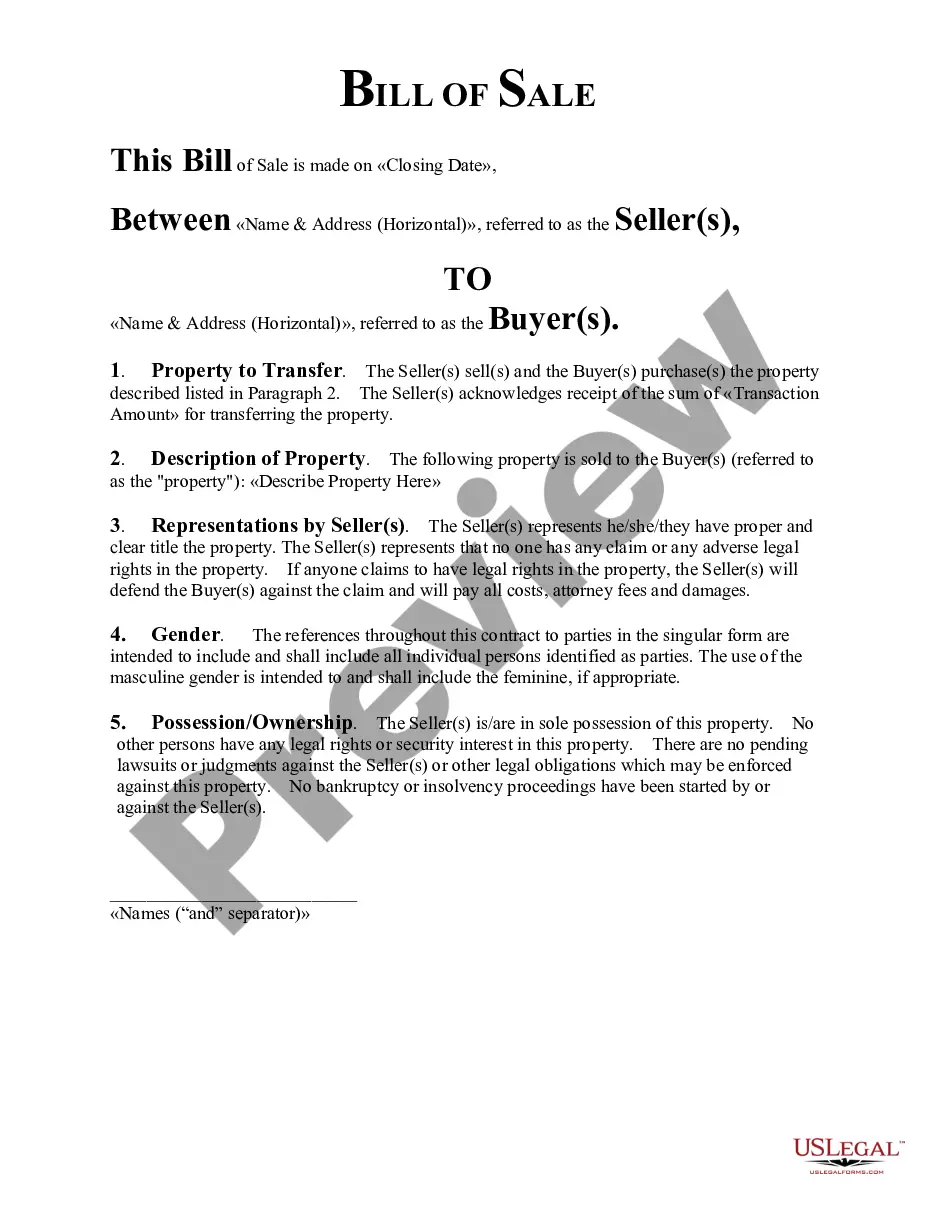
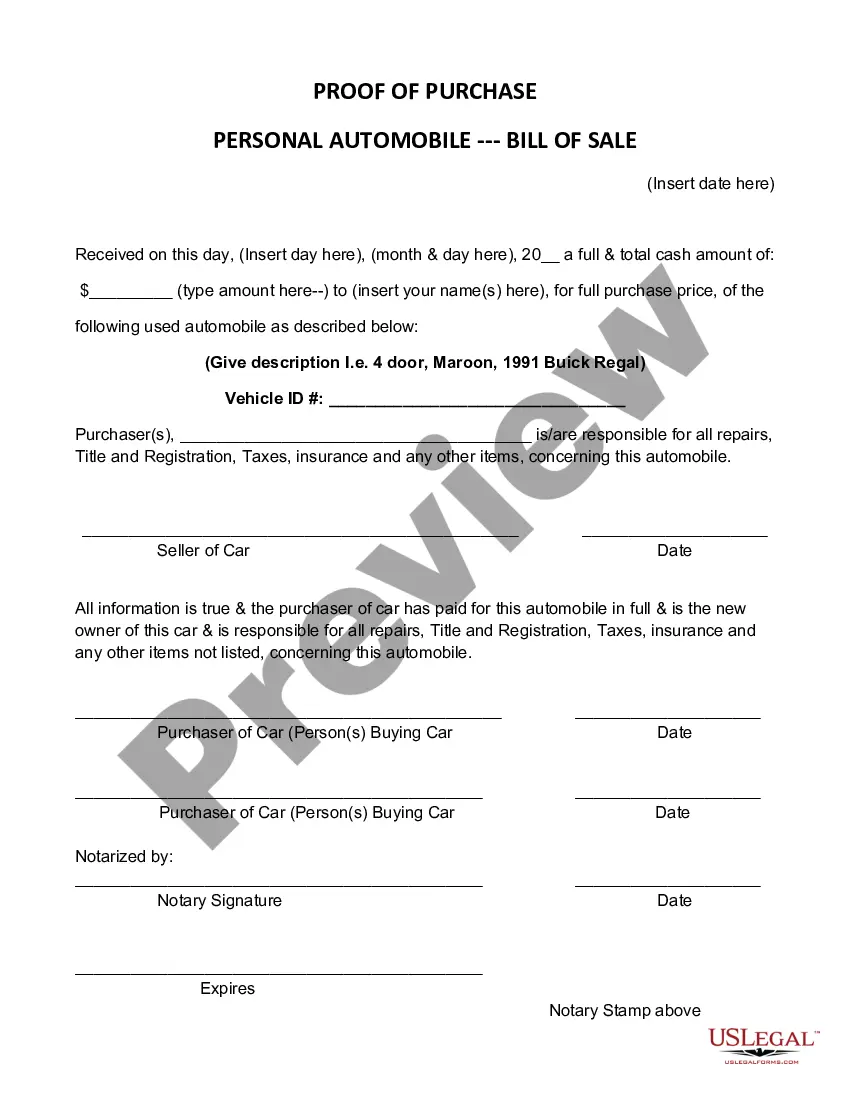
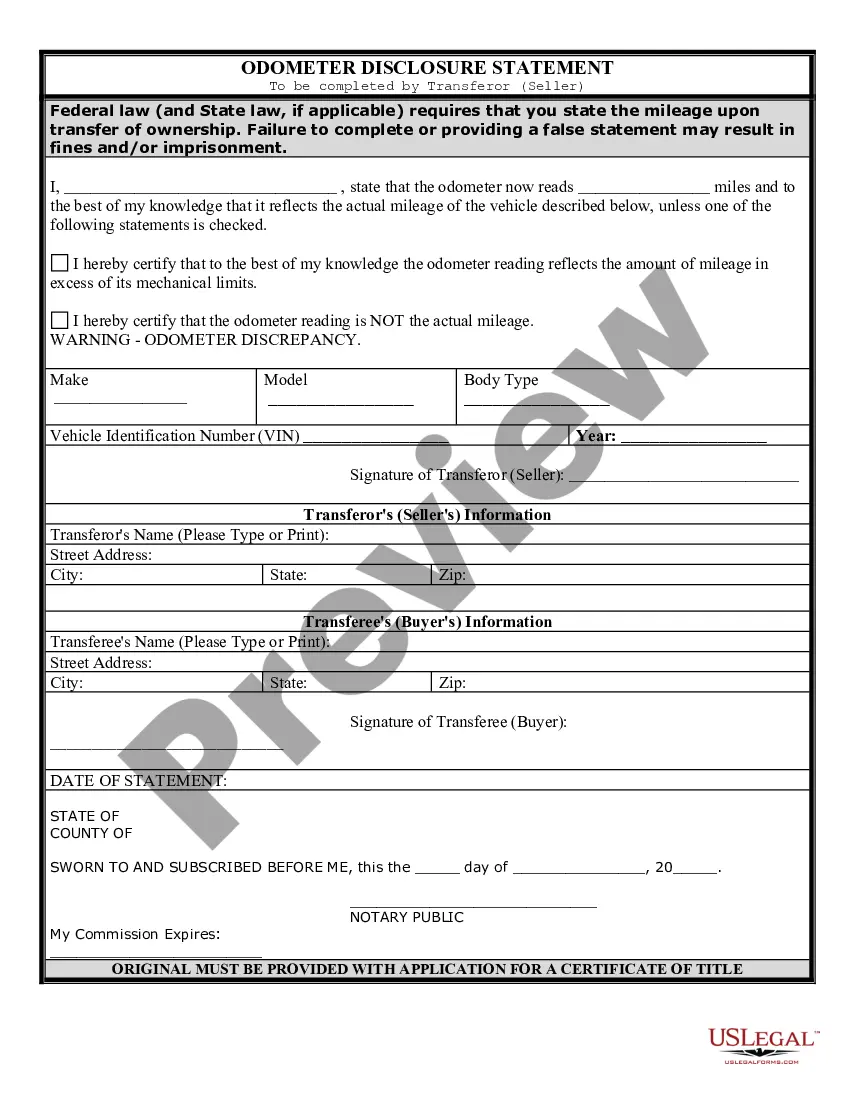
The Bill of Sale of Automobile is a legal document that records the transfer of ownership of a vehicle from one party to another. This form includes essential details such as the vehicle's make, model, and Vehicle Identification Number (VIN), in addition to an Odometer Disclosure Statement compliant with federal and state laws. This form ensures that the seller certifies their ownership and that the vehicle is free from any encumbrances, distinguishing it from other generic bill of sale forms.
Main sections of this form
- Identification of the seller and buyer, including signatures.
- Details of the vehicle being sold, such as make, model, year, and VIN.
- Odometer Disclosure Statement, confirming the vehicle's mileage at the time of sale.
- Seller's guarantee of ownership and freedom from claims or liens.
- Notarization section for legal confirmation of the transaction.
When to use this document
This form is used when an automobile is sold, ensuring both the buyer and seller have a clear record of the transaction. It is necessary when registering the vehicle in the buyer's name, or when a lien is involved. This bill of sale is especially important for private sales, where formal dealership sales processes may not be in place.
Intended users of this form
This form is suitable for:
- Individuals selling or buying a motor vehicle in a private transaction.
- Sellers who want to provide proof of sale and transfer of ownership.
- Buyers who need a record of the purchase for registration and future reference.
How to prepare this document
- Identify the parties involved by entering the names and details of both the buyer and the seller.
- Provide the vehicle details, including make, model, year, and VIN.
- State the sale price of the vehicle in words and numbers.
- Ensure the seller certifies the odometer reading and signs the Odometer Disclosure Statement.
- Have the form notarized to validate the transaction.
Is notarization required?
Notarization is required for this form to take effect. Our online notarization service, powered by Notarize, lets you verify and sign documents remotely through an encrypted video session, available 24/7.
Common mistakes
- Failing to complete the odometer disclosure accurately.
- Not notarizing the document when required.
- Leaving out crucial vehicle details such as the VIN or model year.
- Not having both parties sign the document before completion.
Advantages of online completion
- Easy access to a professionally drafted document tailored for vehicle sales.
- Convenience of downloading and completing the form at your own pace.
- Reliable format that meets legal requirements in Florida.
Legal requirements by state
This form is designed for use in Florida and includes provisions specific to state law regarding vehicle transfers. It ensures compliance with local regulations for both the Bill of Sale and Odometer Disclosure Statement.

Form popularity
FAQ
While the Florida DMV does not explicitly require a bill of sale for every transaction, having one is highly recommended for proper documentation. The Florida Bill of Sale of Automobile and Odometer Statement serves as proof of sale and protects both the buyer and seller in case of disputes. It also assists in ensuring that you correctly transfer the vehicle title and obtain any needed registration.
Filling out a Florida car title when selling requires attention to detail. You need to complete the seller's side and include the buyer's information, vehicle details, and transaction date. Make sure to sign the title and provide an accurate odometer reading. Having a Florida Bill of Sale of Automobile and Odometer Statement is also beneficial for both parties.
Yes, Florida requires odometer disclosure for most vehicles during the sale process. This disclosure helps to confirm the vehicle's mileage and prevents fraud. Ensure that you complete the odometer section correctly on your Florida Bill of Sale of Automobile and Odometer Statement so that both you and the buyer have a clear record.
In Florida, the VIN and odometer can be verified by law enforcement, licensed dealers, or certified mechanics. They have the authority to check the vehicle's identification number against official records. For individuals selling a car, having these items verified beforehand can streamline the sale process, especially when drafting a Florida Bill of Sale of Automobile and Odometer Statement.
To properly fill out a title when selling a car in Florida, first locate the transfer section on the back of the title. Enter the buyer's information, including their name and address, along with the date of the sale. Additionally, sign the title as the seller and provide the buyer with a copy of the Florida Bill of Sale of Automobile and Odometer Statement to complete the transaction satisfactorily.
In Florida, odometer status exempt refers to situations where a vehicle is not required to have an odometer disclosure. This often applies to vehicles over ten years old or certain types of vehicles such as trucks and motorcycles. If you find yourself in this category, ensure you indicate this exemption on your Florida Bill of Sale of Automobile and Odometer Statement to maintain accurate records.
If you need to sell your car with an odometer discrepancy, it's important to disclose the correct mileage in your documentation, including the Florida Bill of Sale of Automobile and Odometer Statement. Clearly explain the discrepancy to the buyer and provide any relevant information about the vehicle's history. Transparency is key to maintaining trust in the transaction. uslegalforms can help you create a bill of sale that includes necessary disclosures, making the process smoother.
An odometer disclosure is a legal requirement that records the mileage on a vehicle at the time of sale. This statement protects both the buyer and seller by preventing fraud related to the vehicle's actual mileage. When you use the Florida Bill of Sale of Automobile and Odometer Statement, you ensure compliance with state laws and provide peace of mind in the transaction. For comprehensive information, check out uslegalforms for useful templates.
In Florida, an odometer disclosure form does not need to be notarized to be valid. The primary requirement is that it must be completed accurately and signed by both the buyer and the seller. Keep in mind that including the Florida Bill of Sale of Automobile and Odometer Statement ensures that all parties are aware of the vehicle's mileage at the time of sale. For those looking for guidance or templates, uslegalforms offers a variety of resources.
To file a Florida Bill of Sale of Automobile and Odometer Statement, you typically need to complete the bill of sale form, which includes details about the vehicle, the buyer, and the seller. After filling out the form, both parties should sign it. You can then submit the completed form to your local county tax collector's office to officially register the vehicle. Utilizing platforms like uslegalforms can simplify this process by providing easy access to accurate forms.