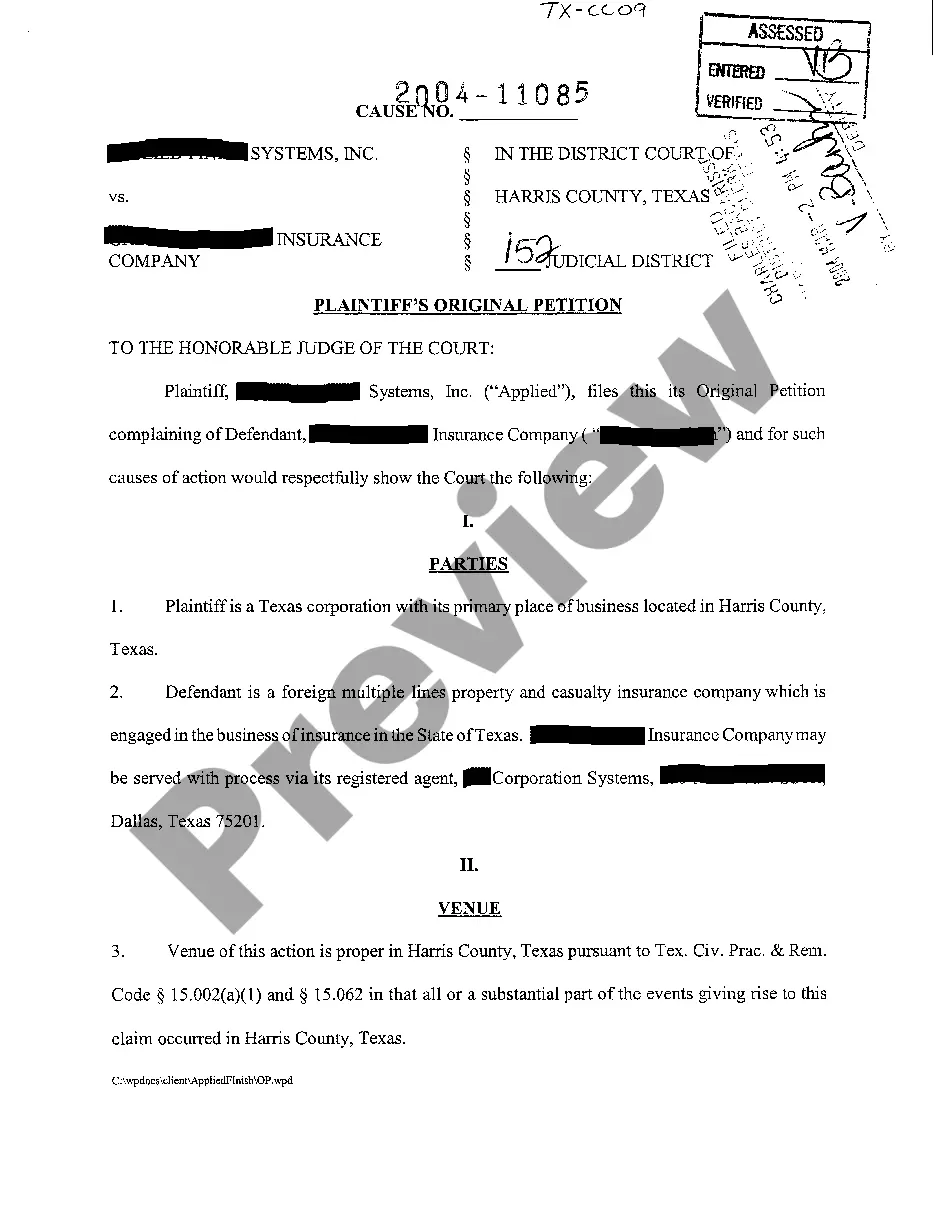
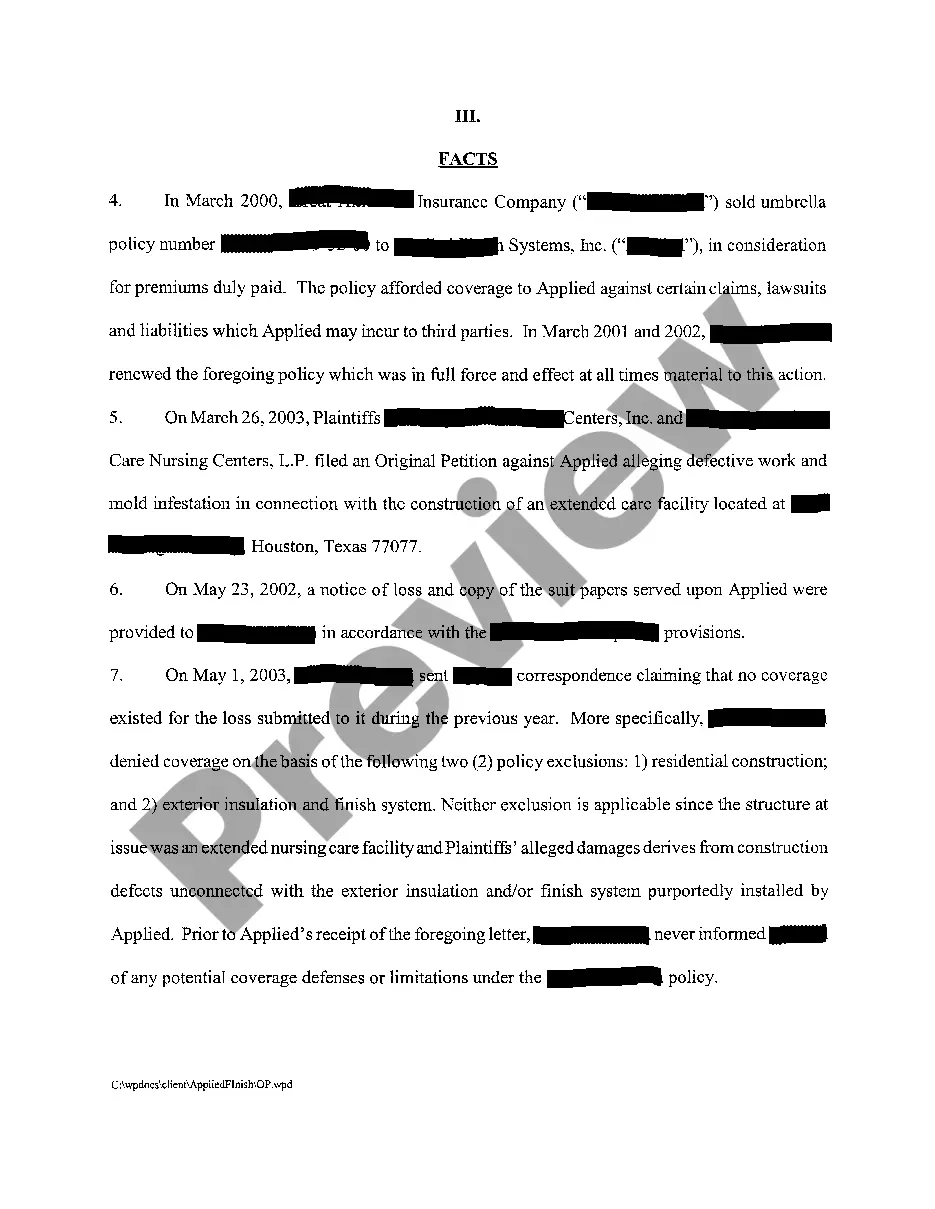
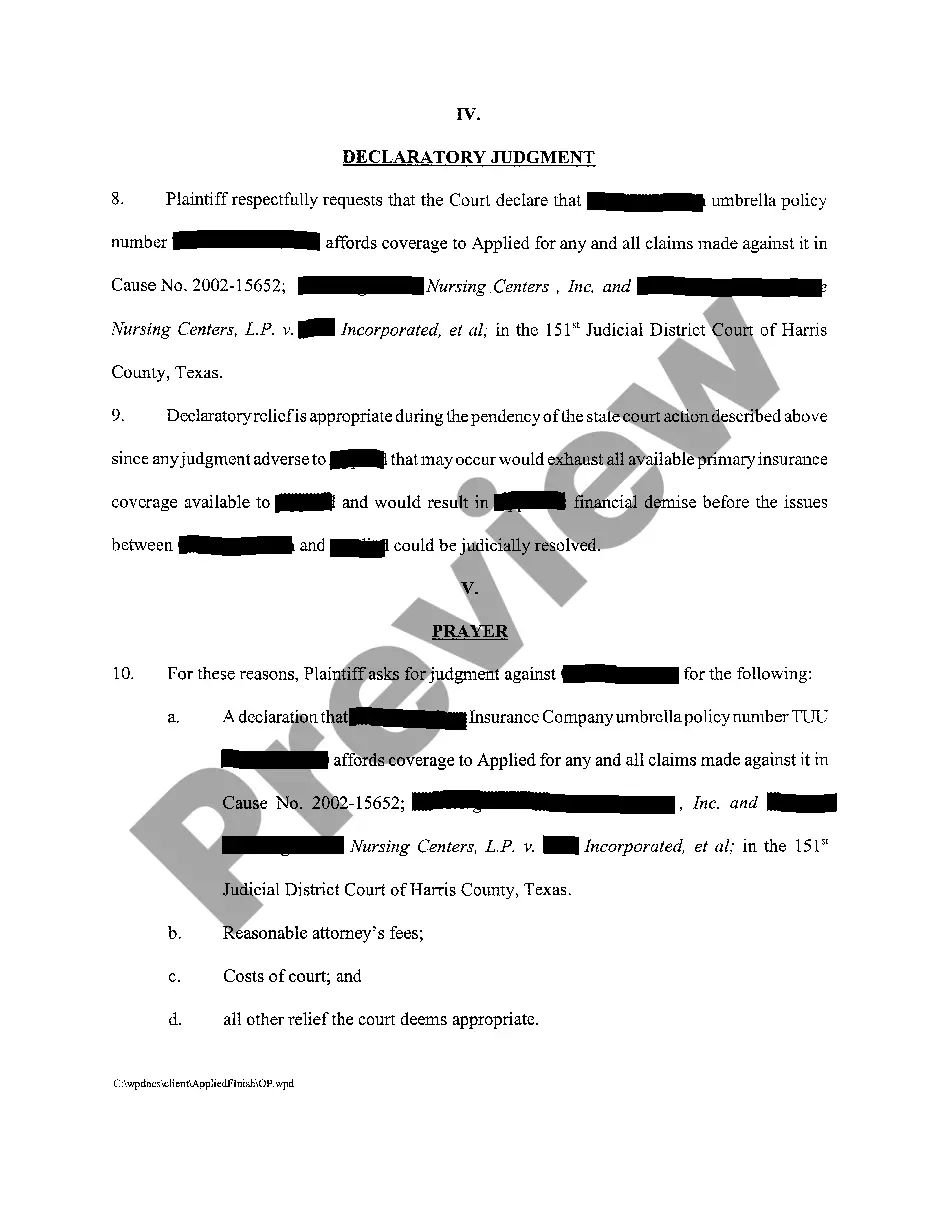
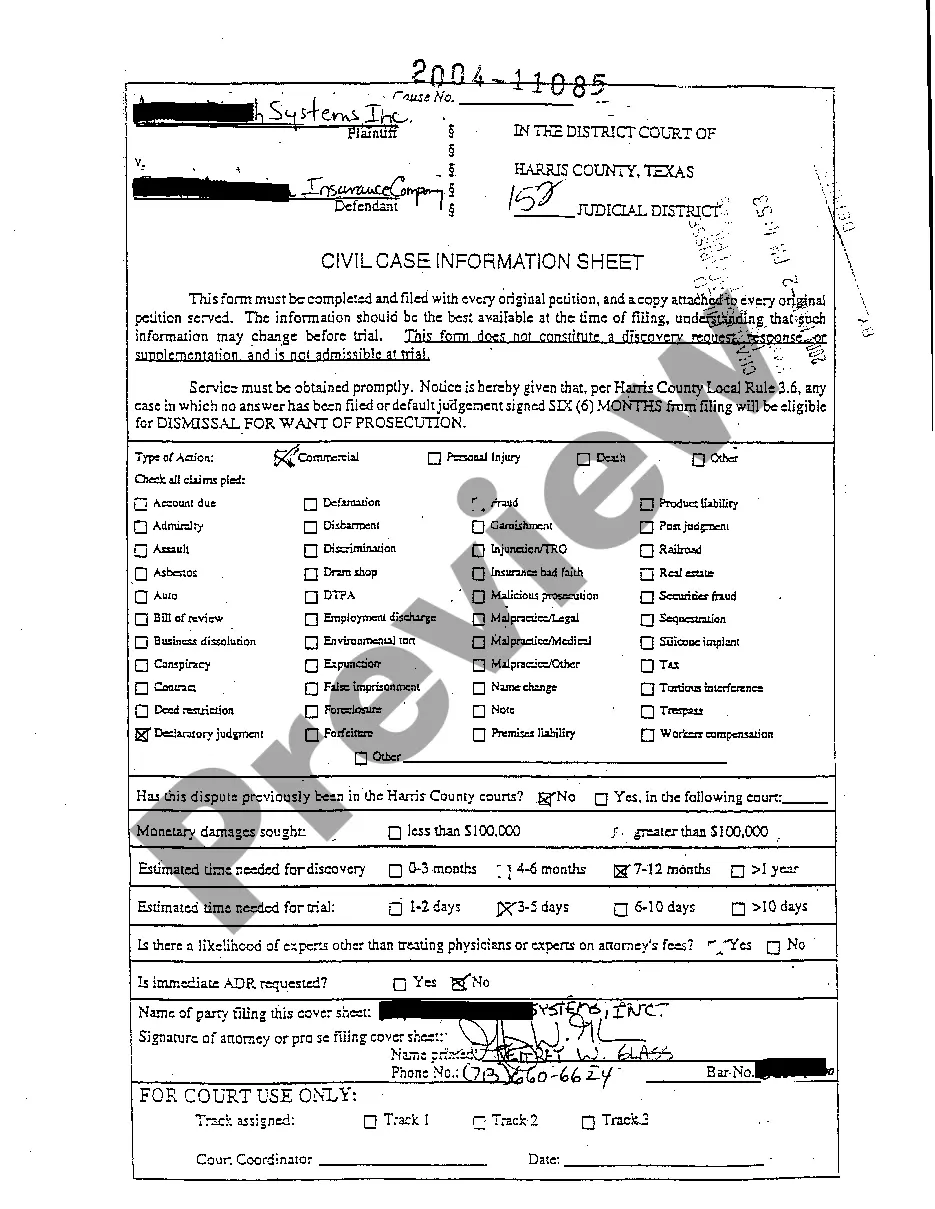
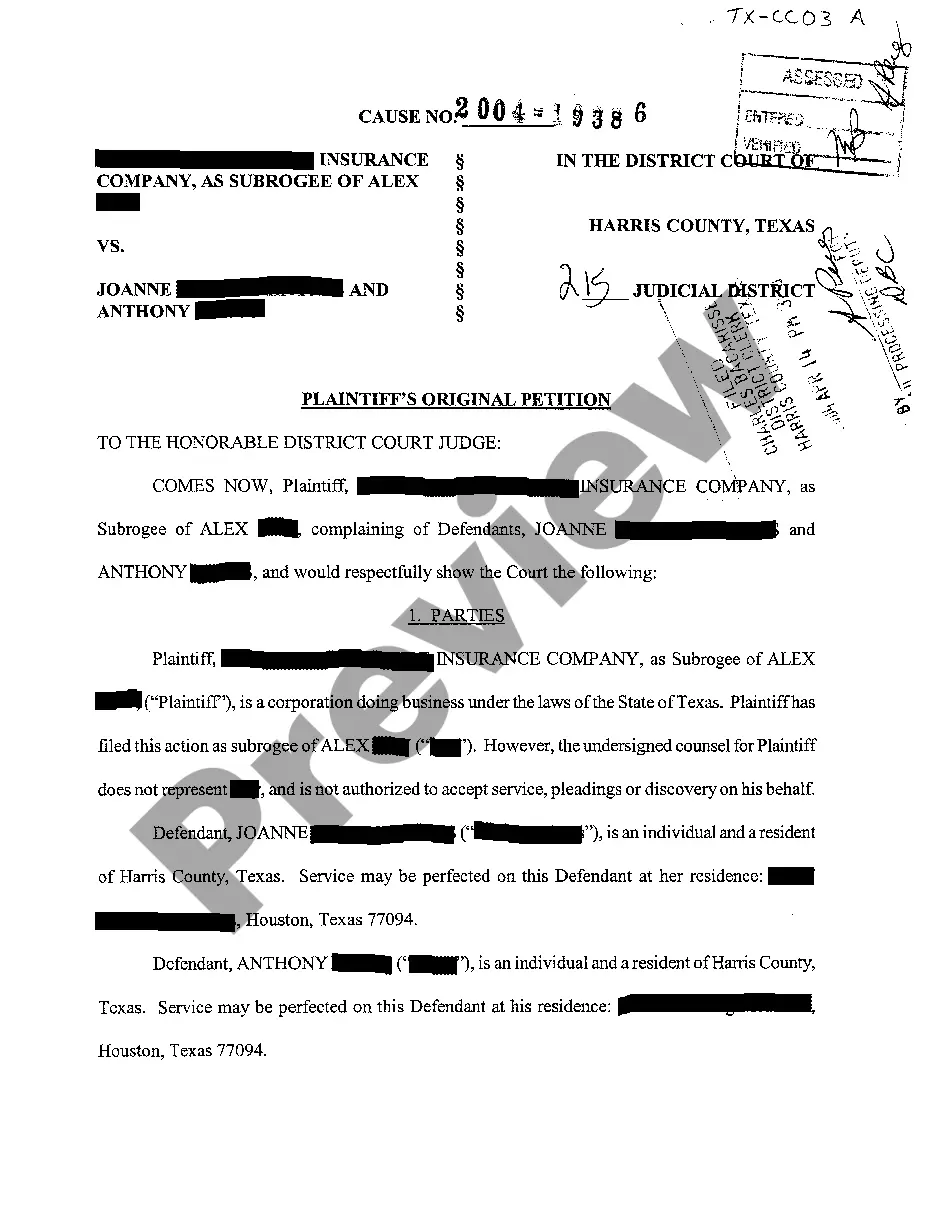
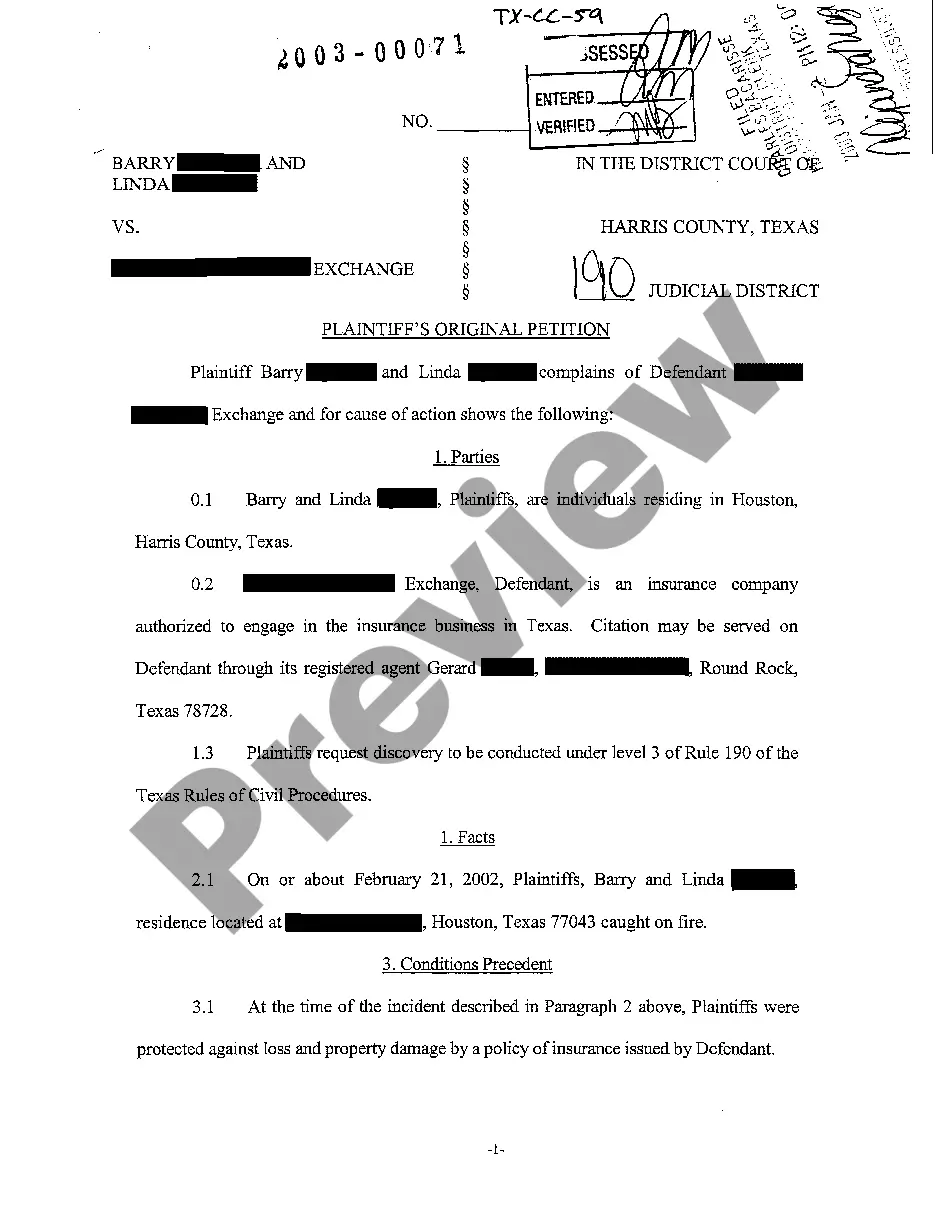
Texas Plaintiff's Original Petition for Declaratory Judgment regarding Insurance Coverage
Notarization requirements for this form
This form usually doesn’t need to be notarized. However, local laws or specific transactions may require it. Our online notarization service, powered by Notarize, lets you complete it remotely through a secure video session, available 24/7.



Form popularity
FAQ
Declaratory relief is appropriate where a litigant needs direction from a court before from taking future action. Such direction will afford the litigant relief from uncertainty or insecurity.
A declaratory judgment is a binding judgment from a court defining the legal relationship between parties and their rights in a matter before the court. Typically, a party will first send a cease and desist letter prior to seeking declaratory judgment from a court.
Declaratory relief refers to a court's judgment stating the rights of parties without ordering any specific action or listing awards for damages. When a party is requesting a declaratory judgment, the party is seeking an official declaration regarding the status of the controversy in issue.
A court-issued declaratory judgment outlines the rights and responsibilities of each involved party. This judgment does not require action or award damages. It helps to resolve disputes and prevent lawsuits.
The grounds for a cause of action for declaratory relief are codified in Code of Civil Procedure § 1060, which provides in part as follows: Any person interested under a written instrument, . . . or under a contract, or who desires a declaration of his or her rights or duties with respect to another, . . .
The Court clarified that declaratory judgment jurisdiction required disputes to be 'definite and concrete, touching the legal relations of the parties having adverse legal interests'; and that it be 'real and substantial' and 'admit of specific relief through a decree of a conclusive character, as distinguished from
Overview. A declaratory judgment is a binding judgment from a court defining the legal relationship between parties and their rights in a matter before the court. Typically, a party will first send a cease and desist letter prior to seeking declaratory judgment from a court.
A declaratory judgment is a judicial determination of the rights of respective parties, as opposed to coercive relief or damages. The purpose of declaratory judgments is to settle and afford relief from uncertainty and insecurity with respect to rights, status, and other legal relations.
Declaratory relief is defined as an action by any person interested in a deed, will, contract or other written instrument, executive order or resolution, to determine any question of construction or validity arising from the instrument, executive order or regulation, or statute, and for a declaration of his rights and