Complaint for Damages and Declaratory Judgment - Publication of false statements
What is this form?
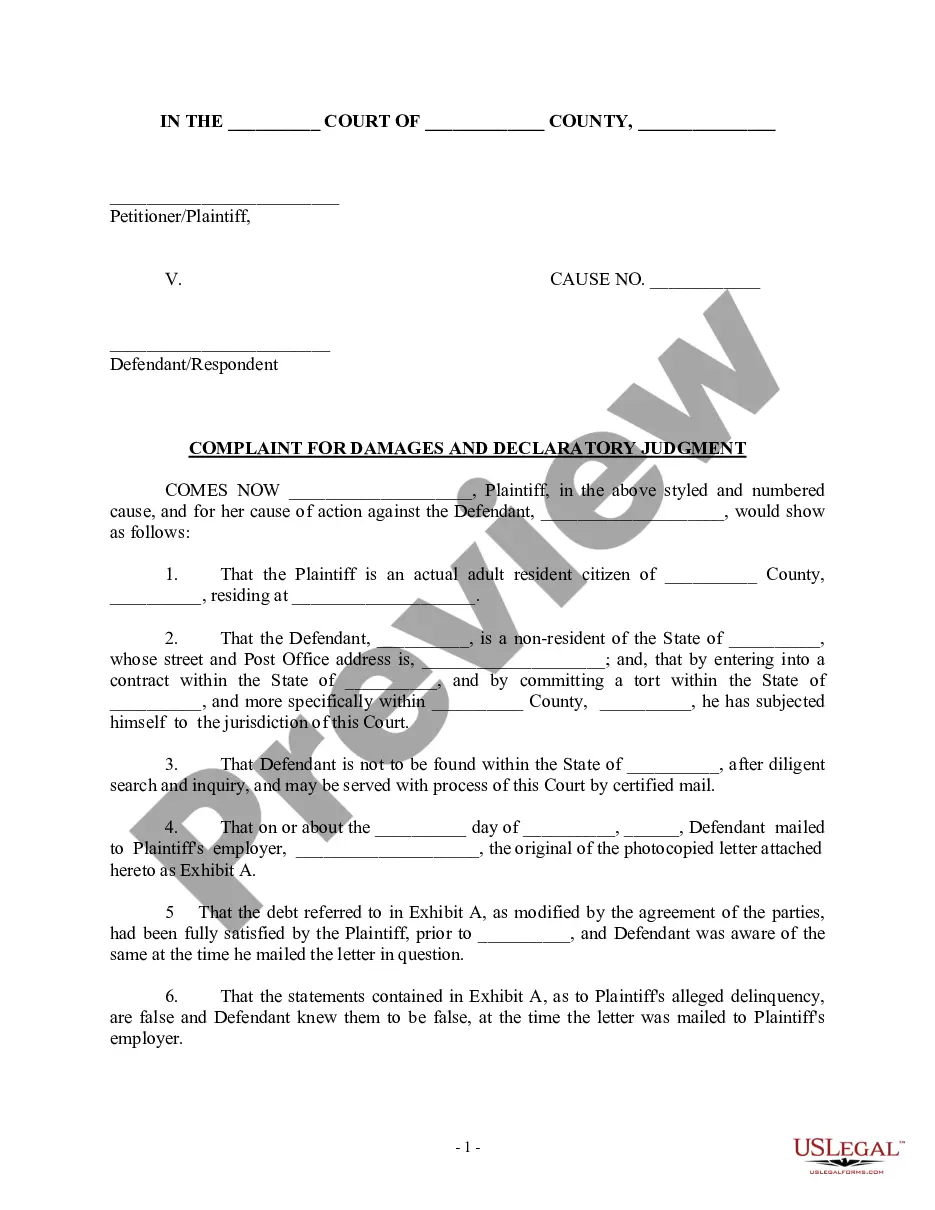
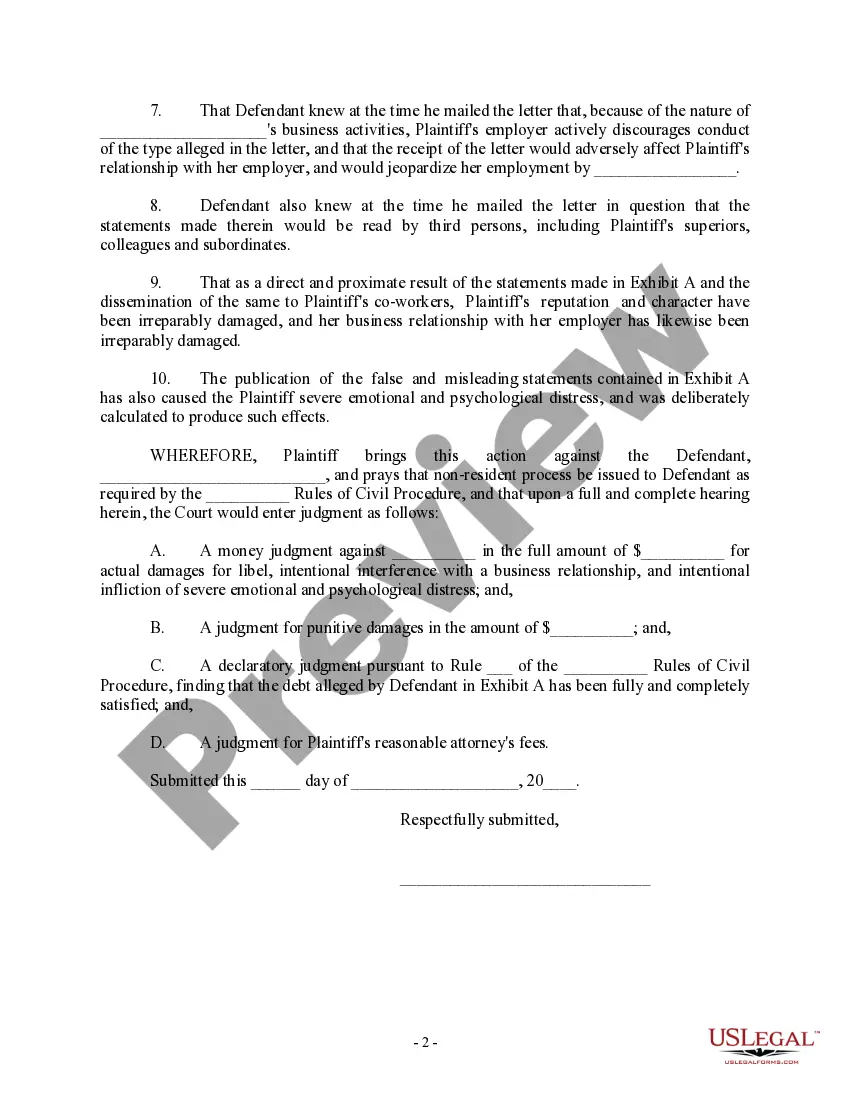
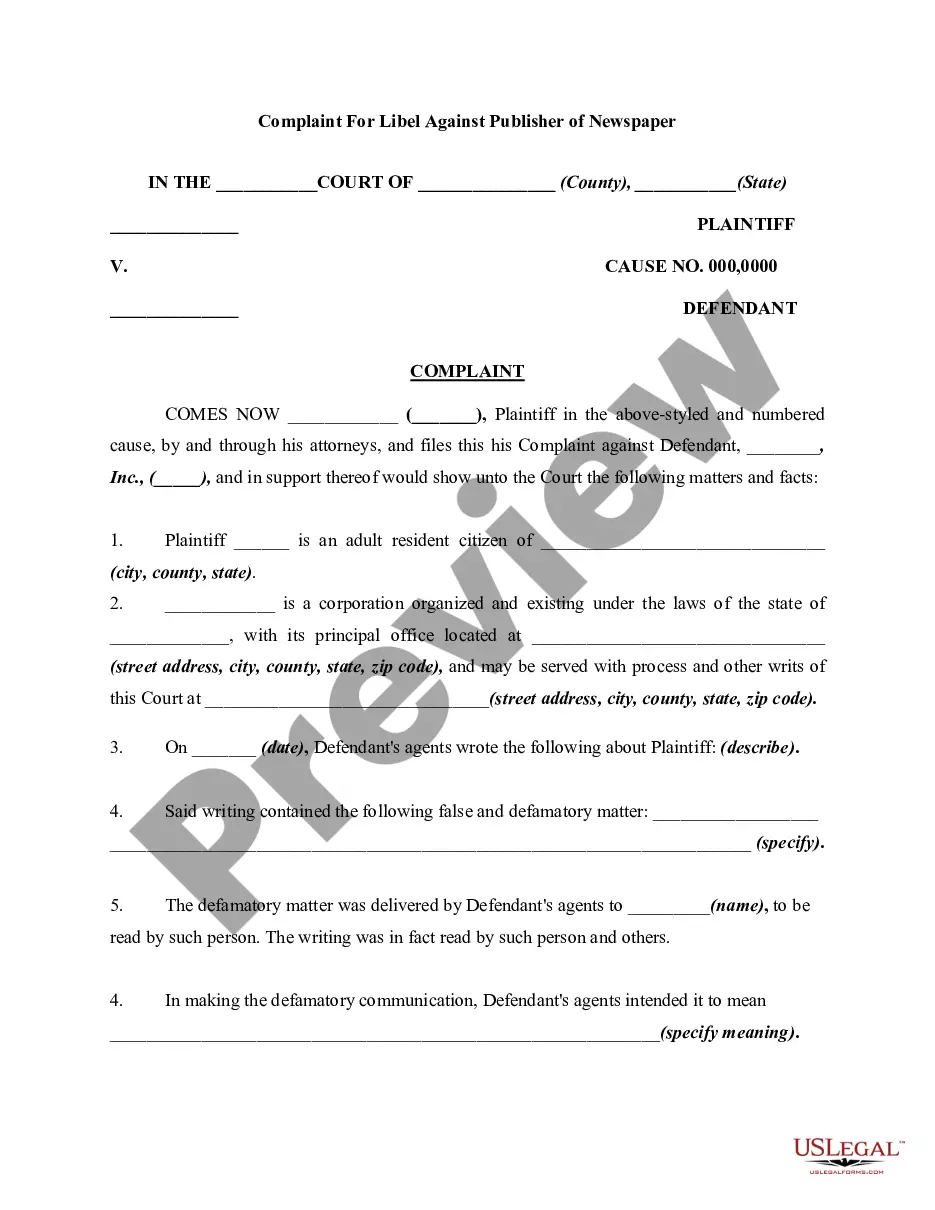
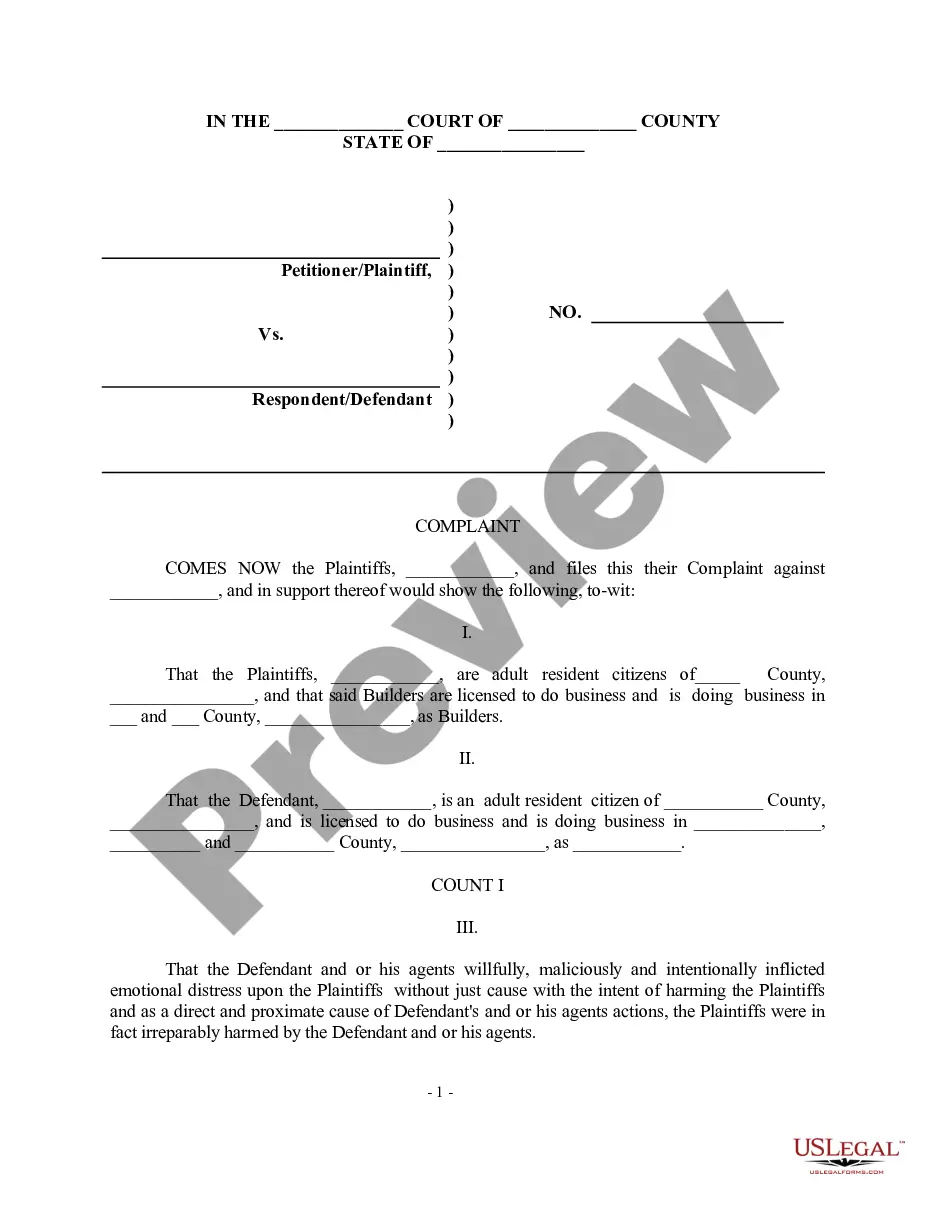
The Complaint for Damages and Declaratory Judgment is a legal document used to initiate a lawsuit for damages caused by the publication of false statements. This form is designed to assert claims for libel, interference with a business relationship, and emotional distress resulting from defamatory statements. Unlike other complaint forms, this specific document is tailored to address issues surrounding false public statements and the consequences that arise from them.
Main sections of this form
- Information about the plaintiff and defendant, including addresses.
- Jurisdiction details explaining how the court has authority over the defendant.
- Specific allegations regarding the false statements made by the defendant.
- Claims for damages, including actual damages and punitive damages.
- Request for a declaratory judgment on the satisfaction of the alleged debt.


When to use this document
This form is typically used when an individual or business has suffered harm due to false statements made by another party. Such statements may have been distributed to third parties, impacting their reputation, business relationships, or emotional well-being. It is appropriate to use this form when seeking to hold the responsible party accountable for damages caused by the publication of these false statements.
Who should use this form
- Individuals who believe they have been defamed through false statements.
- Business owners or employees whose professional reputation has been harmed by misleading information.
- Anyone seeking legal redress for emotional distress caused by such statements.
How to prepare this document
- Identify the parties involved, including their names and contact information.
- Clearly state the facts surrounding the false statements and their publication.
- List the damages you seek, including any actual damages and attorney fees.
- Include any relevant exhibits to support your claims, such as copies of the false statements.
- Sign and date the form before filing it with the appropriate court.
Does this form need to be notarized?
In most cases, this form does not require notarization. However, some jurisdictions or signing circumstances might. US Legal Forms offers online notarization powered by Notarize, accessible 24/7 for a quick, remote process.
Get your form ready online
Our built-in tools help you complete, sign, share, and store your documents in one place.
Make edits, fill in missing information, and update formatting in US Legal Forms—just like you would in MS Word.
Download a copy, print it, send it by email, or mail it via USPS—whatever works best for your next step.
Sign and collect signatures with our SignNow integration. Send to multiple recipients, set reminders, and more. Go Premium to unlock E-Sign.
If this form requires notarization, complete it online through a secure video call—no need to meet a notary in person or wait for an appointment.
We protect your documents and personal data by following strict security and privacy standards.

Make edits, fill in missing information, and update formatting in US Legal Forms—just like you would in MS Word.

Download a copy, print it, send it by email, or mail it via USPS—whatever works best for your next step.

Sign and collect signatures with our SignNow integration. Send to multiple recipients, set reminders, and more. Go Premium to unlock E-Sign.

If this form requires notarization, complete it online through a secure video call—no need to meet a notary in person or wait for an appointment.

We protect your documents and personal data by following strict security and privacy standards.
Common mistakes
- Failing to adhere to state-specific pleading requirements.
- Not clearly outlining the damages sought or the impact of the false statements.
- Omitting necessary supporting documents or exhibits.
Advantages of online completion
- Convenience of immediate access and download from any device.
- Editability to customize the form according to your specific case details.
- Reliable templates drafted by licensed attorneys, ensuring legal accuracy.
Legal use & context
- This form serves as the starting point for legal action against a party that has published defamatory statements.
- Filing this complaint does not guarantee a judgment in favor of the plaintiff; the case must be proven in court.
- Claimants should keep in mind the potential defenses the defendant may raise, such as truth or privilege.
Summary of main points
- The Complaint for Damages and Declaratory Judgment is essential for addressing defamation.
- Individuals and businesses can seek damages as a result of false public statements.
- Careful completion and adherence to procedural rules are crucial for a successful claim.
Looking for another form?
Form popularity
FAQ
In South African law, the onus of proof is on the person claiming that an act of defamation has occurred and he or she must submit proof that the violation was indeed wrongful. It is not one of the requirements of defamation for the statements or actions to be false.
A newspaper that publishes false information about a person, for example, can be sued for libel.Because such liability can be staggering, most journalists strive to exercise their freedom to publish in a responsible and ethical manner.
Overview. Defamation is a statement that injures a third party's reputation. The tort of defamation includes both libel (written statements) and slander (spoken statements).
Defamation. Defamation is the general term for a legal claim involving injury to one's reputation caused by a false statement of fact and includes both libel (defamation in written or fixed form) and slander (spoken defamation).
Reputational damages are a common consequence of defamation. A plaintiff's testimony alone may be insufficient to obtain an award for reputational damages. The best way to prove harm to your reputation is to offer third-party testimony or objective evidence of damage to your reputation.
Written defamation is called "libel," while spoken defamation is called "slander." Defamation is not a crime, but it is a "tort" (a civil wrong, rather than a criminal wrong). A person who has been defamed can sue the person who did the defaming for damages.
If the statement is made in writing and published, the defamation is called "libel." If the hurtful statement is spoken, the statement is "slander." Defamation is considered to be a civil wrong or a tort.
A court-issued declaratory judgment outlines the rights and responsibilities of each involved party. This judgment does not require action or award damages. It helps to resolve disputes and prevent lawsuits.
A declaratory judgment is a binding judgment from a court defining the legal relationship between parties and their rights in a matter before the court. Typically, a party will first send a cease and desist letter prior to seeking declaratory judgment from a court.