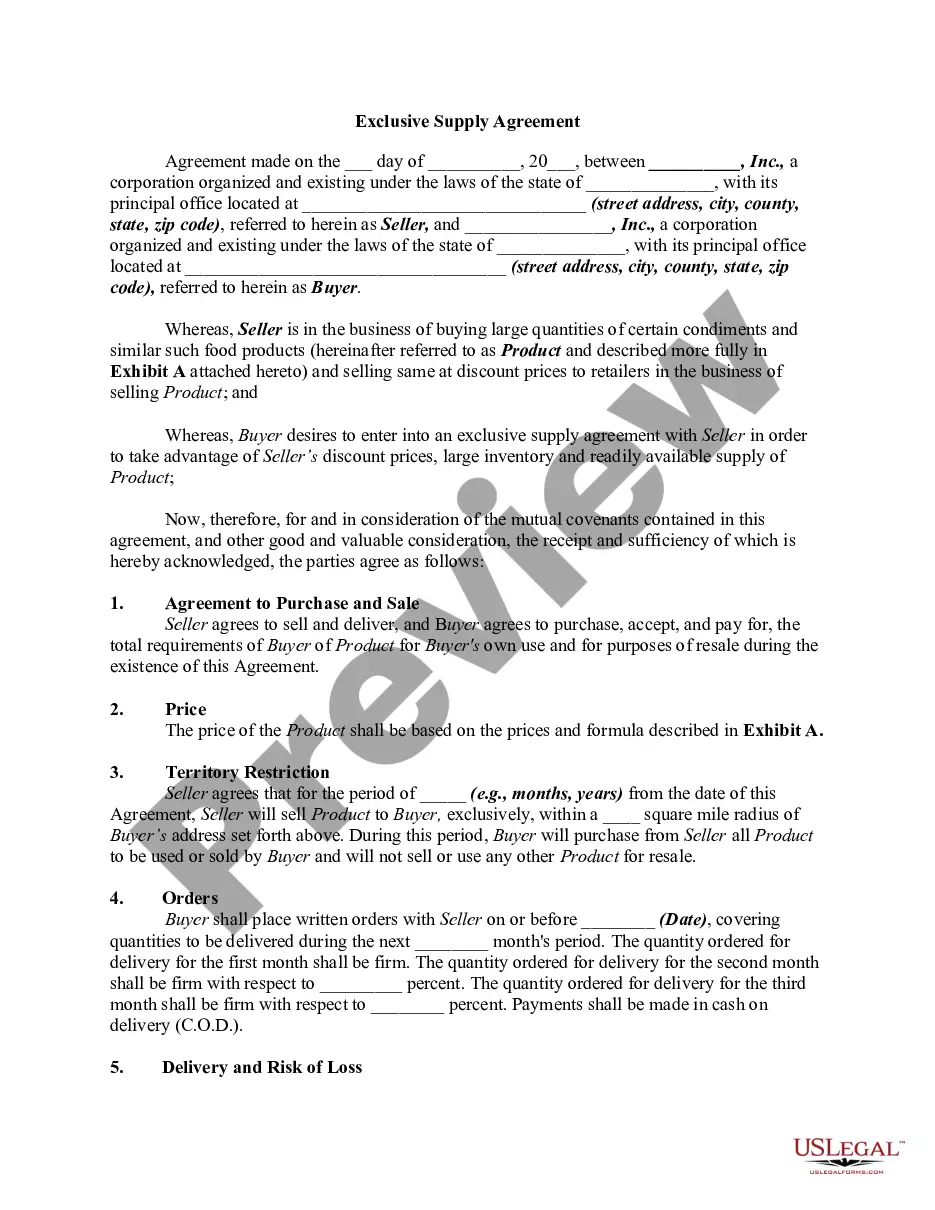
Exclusive Supply Agreement
What is this form?
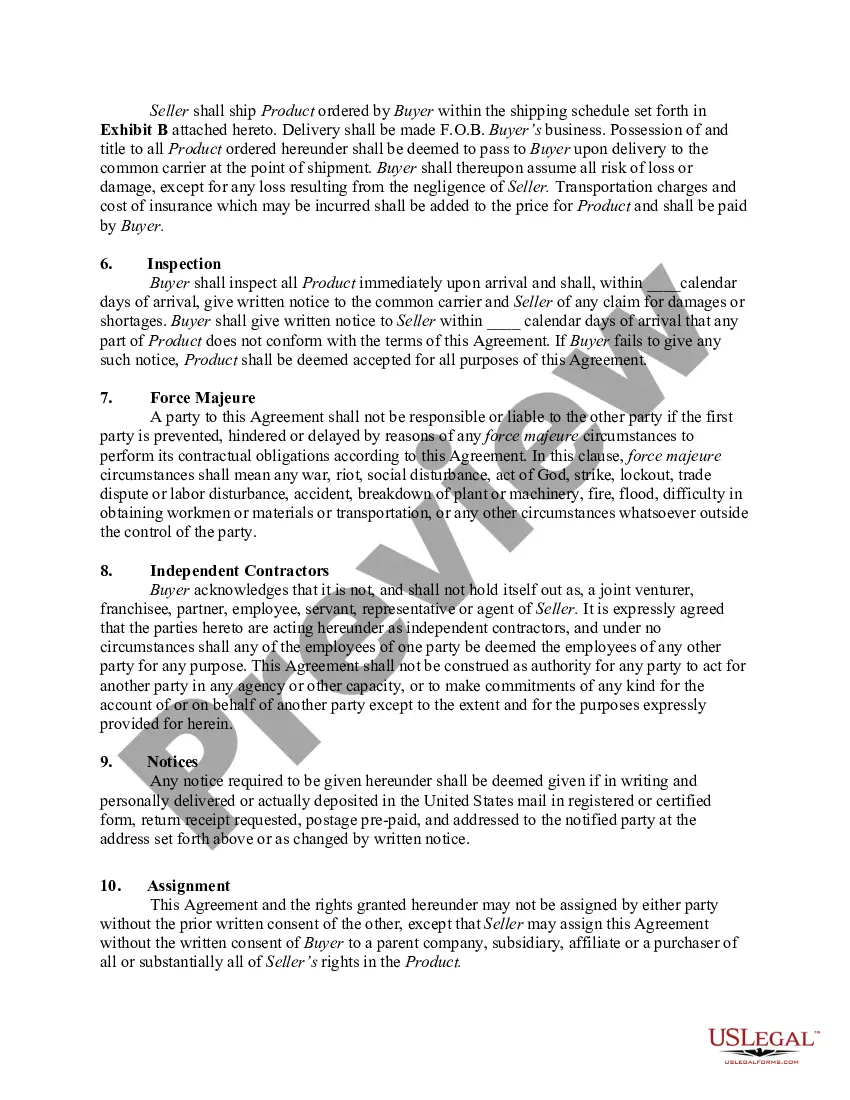
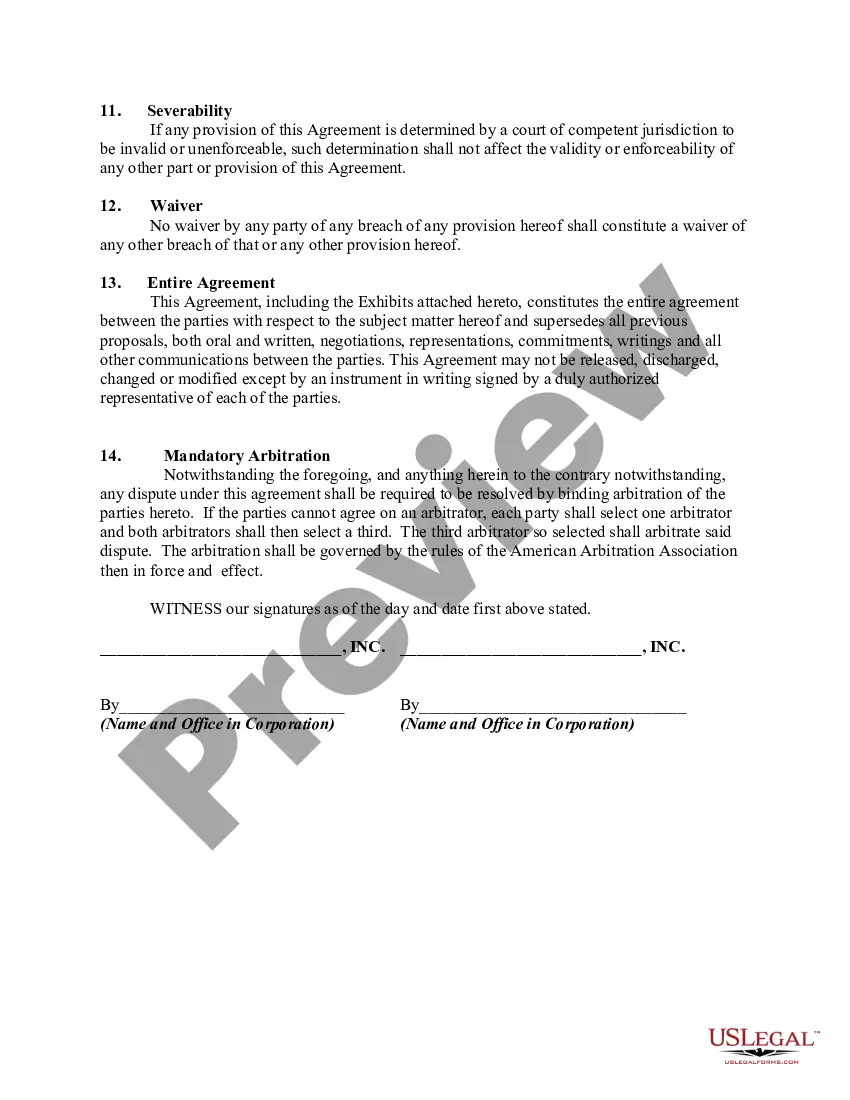
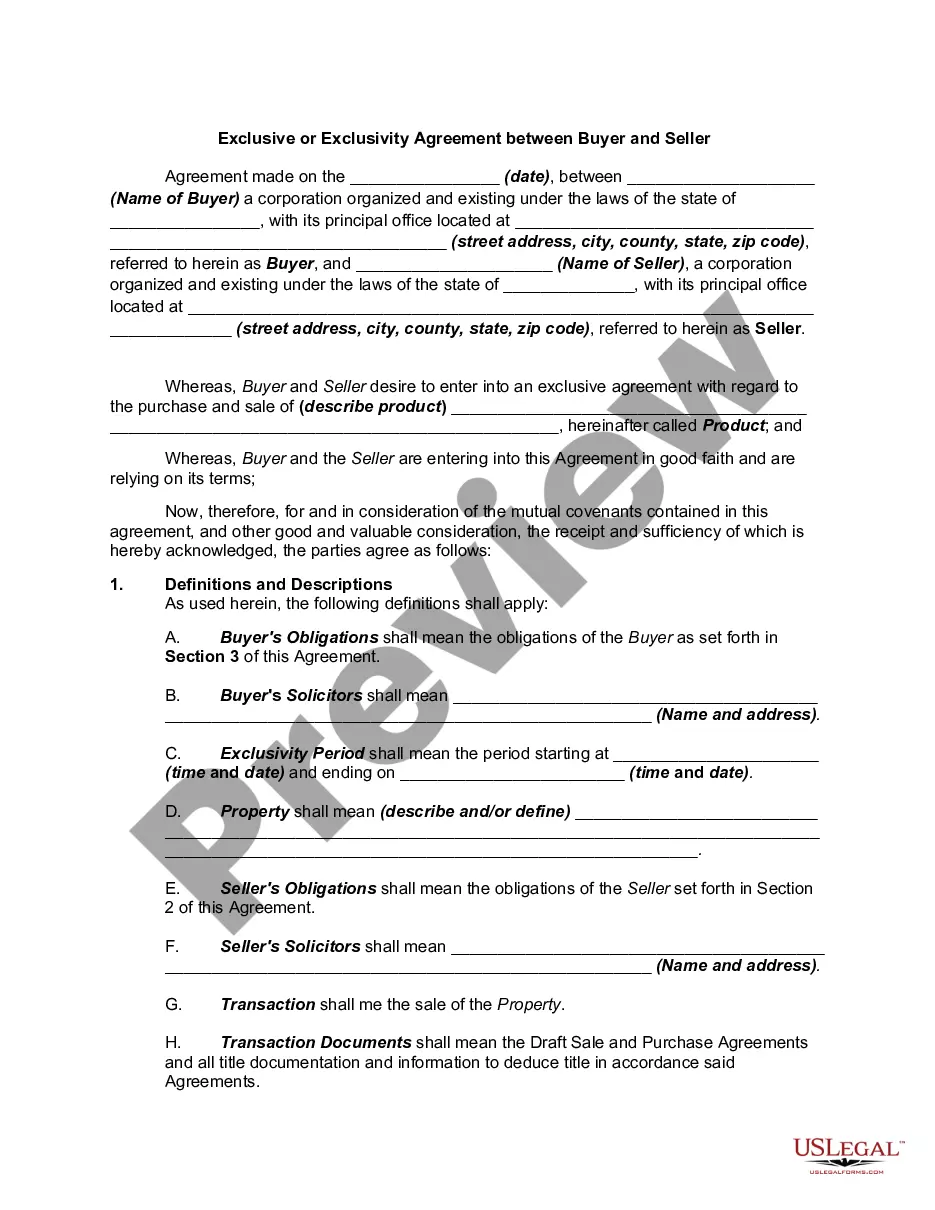
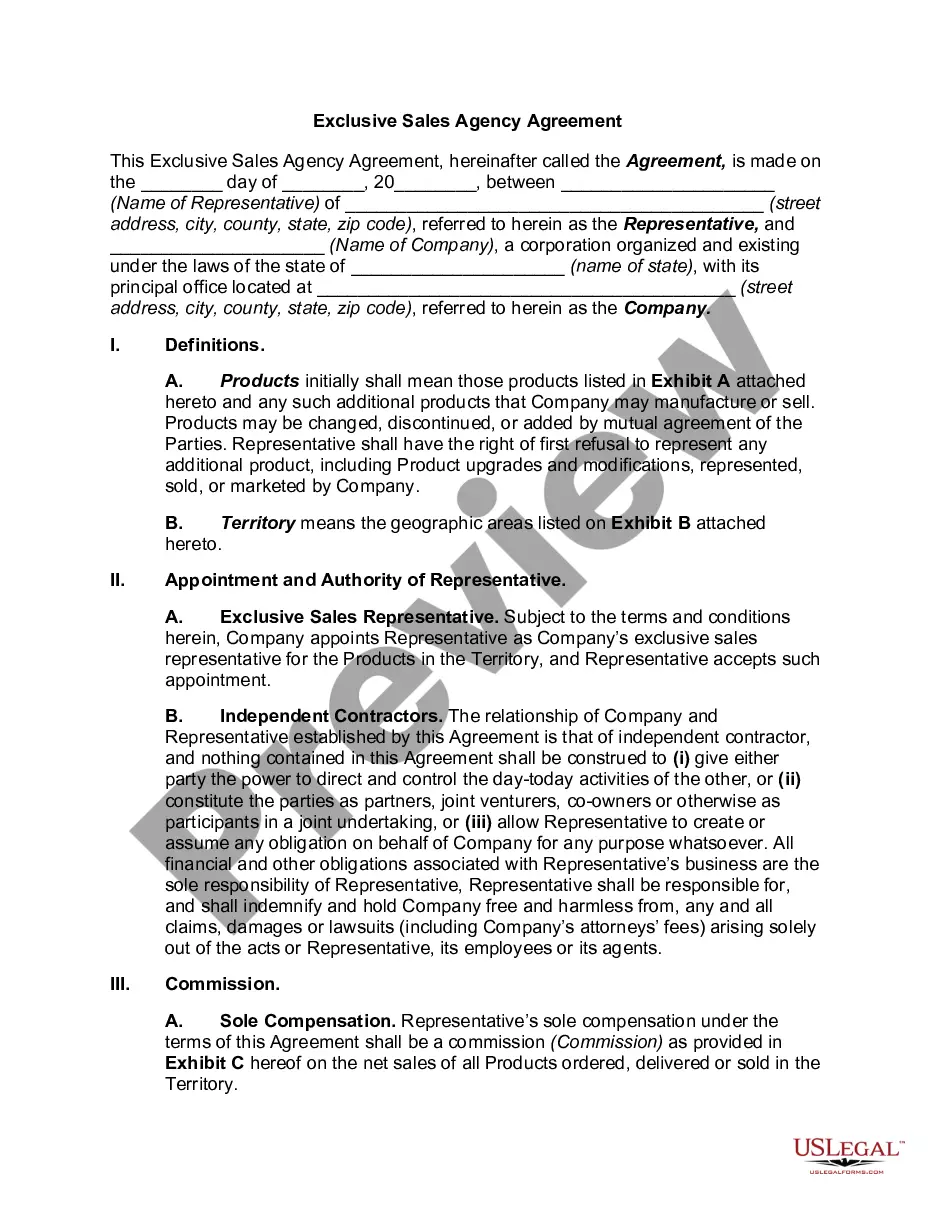
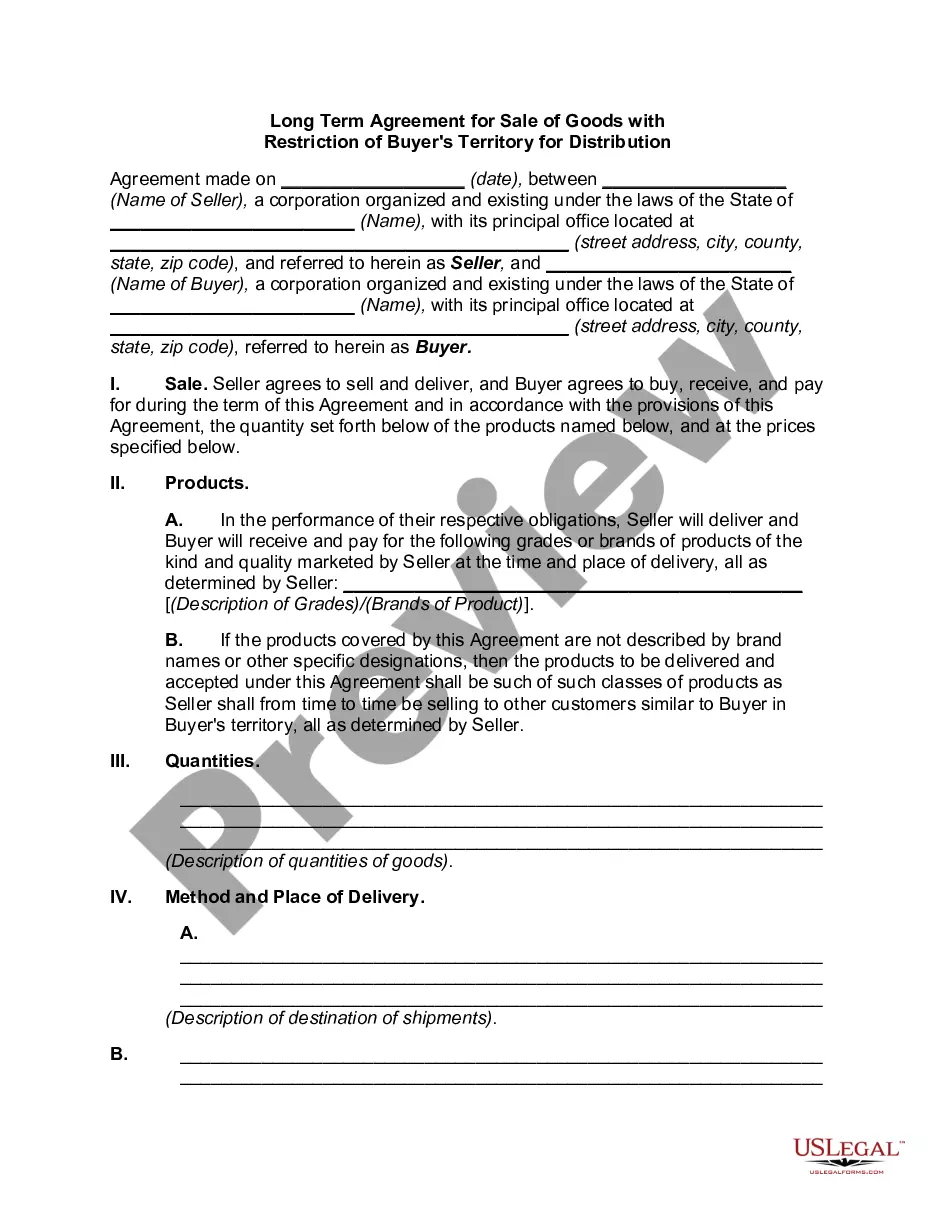
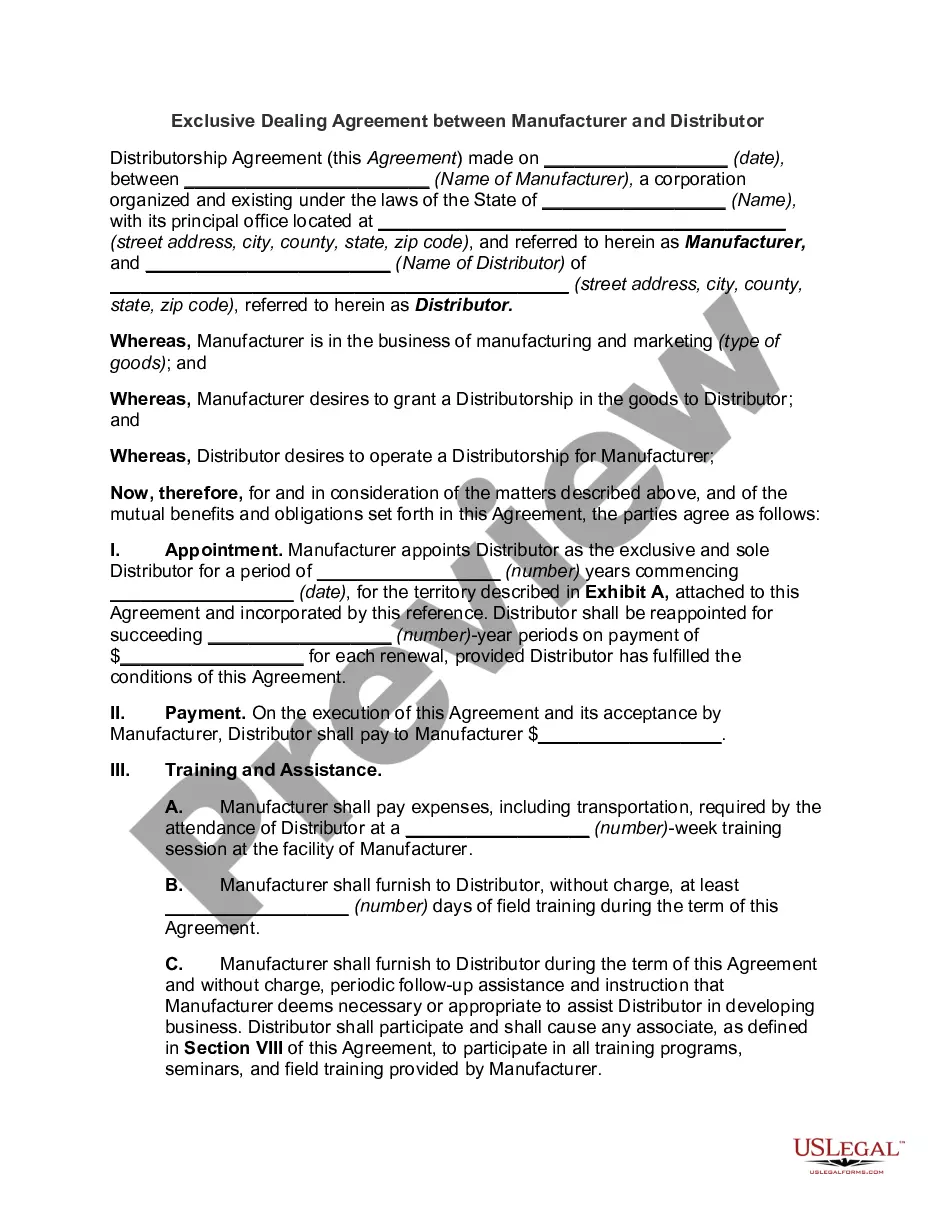
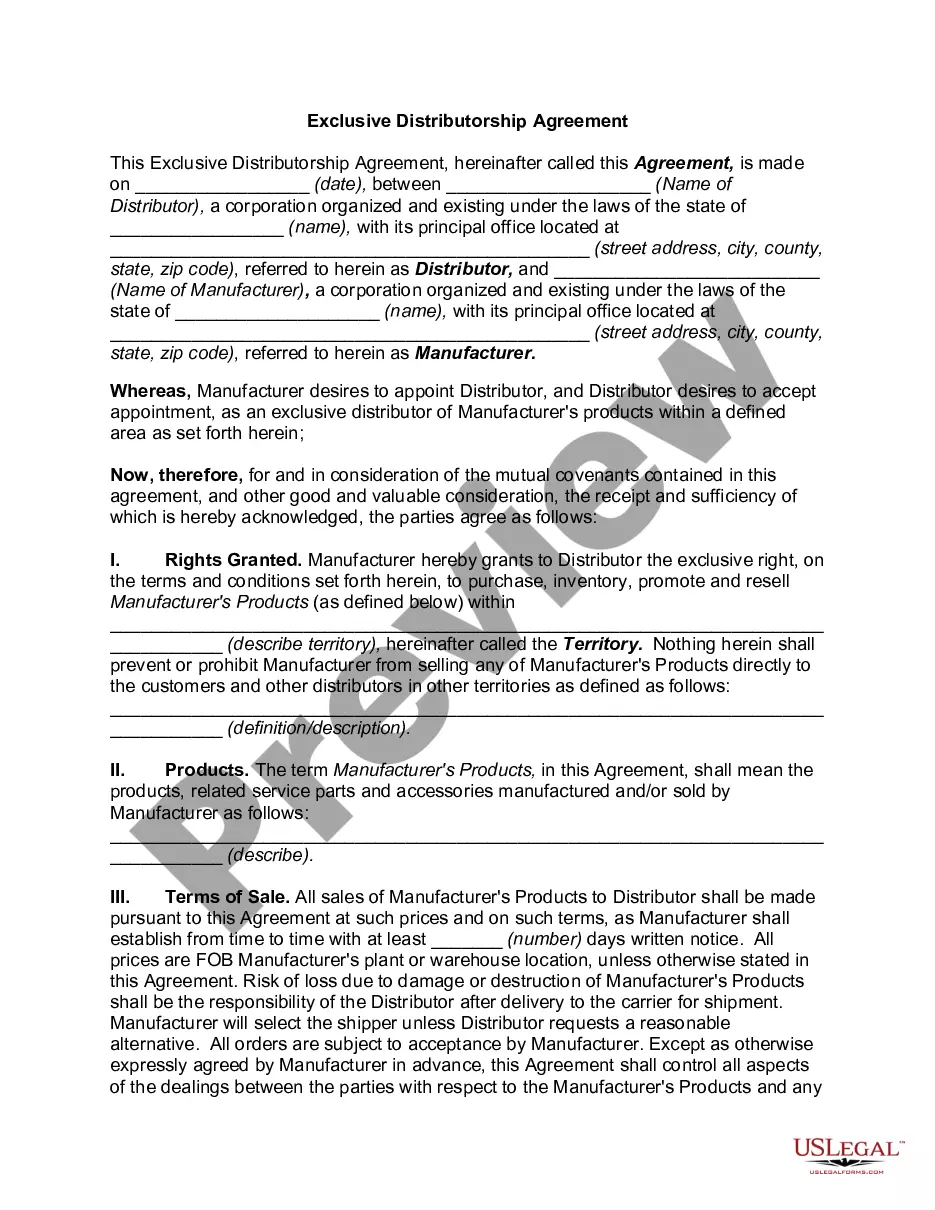
An Exclusive Supply Agreement is a legal document that establishes a contractual relationship between a supplier and a buyer, where the supplier agrees to sell products exclusively to the buyer within a specified territory. This form outlines important terms, including product specifications, pricing, and delivery obligations. It differs from general supply agreements by designating exclusivity, which can significantly influence market dynamics and pricing strategies.
Key parts of this document
- Agreement to purchase and sale, outlining the obligations of both parties.
- Pricing structure based on a specified formula in Exhibit A.
- Territory restrictions that define the exclusive selling area.
- Order requirements detailing how and when orders should be placed.
- Delivery conditions and risk of loss responsibilities.
- Inspection procedures for the products upon delivery.
Common use cases
This form is typically used when a buyer wants to secure exclusive rights to purchase products from a supplier. It is ideal for businesses looking to enter long-term supplier relationships, particularly in industries such as retail, where consistent supply and pricing are critical. If you are a retailer seeking to benefit from lower wholesale prices while ensuring that no competing retailers in your area can access the same products, an Exclusive Supply Agreement is essential.
Intended users of this form
This form is suited for:
- Businesses looking to establish exclusive purchasing agreements with suppliers.
- Retailers who want to secure competitive advantages through exclusive supply.
- Manufacturers aiming to restrict distribution to specific buyers to manage market presence.
- Suppliers interested in formalizing exclusive agreements with select buyers.
How to prepare this document
- Identify the parties involved by entering the legal names of the Seller and Buyer, along with their respective addresses.
- Specify the exclusive products by detailing them in Exhibit A.
- Define the territory for exclusivity to ensure clarity on the geographic limits.
- Outline the order placement schedule, including deadlines and required quantities.
- Provide conditions for delivery, including assumed risk during transit and inspection timelines.
Is notarization required?
Notarization is not commonly needed for this form. However, certain documents or local rules may make it necessary. Our notarization service, powered by Notarize, allows you to finalize it securely online anytime, day or night.
Get your form ready online
Our built-in tools help you complete, sign, share, and store your documents in one place.
Make edits, fill in missing information, and update formatting in US Legal Forms—just like you would in MS Word.
Download a copy, print it, send it by email, or mail it via USPS—whatever works best for your next step.
Sign and collect signatures with our SignNow integration. Send to multiple recipients, set reminders, and more. Go Premium to unlock E-Sign.
If this form requires notarization, complete it online through a secure video call—no need to meet a notary in person or wait for an appointment.
We protect your documents and personal data by following strict security and privacy standards.

Make edits, fill in missing information, and update formatting in US Legal Forms—just like you would in MS Word.

Download a copy, print it, send it by email, or mail it via USPS—whatever works best for your next step.

Sign and collect signatures with our SignNow integration. Send to multiple recipients, set reminders, and more. Go Premium to unlock E-Sign.

If this form requires notarization, complete it online through a secure video call—no need to meet a notary in person or wait for an appointment.

We protect your documents and personal data by following strict security and privacy standards.
Avoid these common issues
- Failing to specify the territory accurately, which can lead to disputes.
- Not clearly defining the products in Exhibit A, leading to misunderstandings.
- Overlooking the order schedules, which may cause supply interruptions.
- Neglecting to adhere to inspection requirements, risking acceptance of damaged goods.
Advantages of online completion
- Convenience of accessing and completing the form from anywhere.
- Editability allows customization to fit specific business needs.
- Reliability of forms drafted by licensed attorneys ensures legal compliance.
- Rapid download means you can initiate agreements quickly to meet business needs.
Looking for another form?

Form popularity
FAQ
The name and addresses of both parties involved. A description of the supplier's services and requirements. Payments terms and frequency of payments. Confidentiality clauses. Refunds and compensation clauses. Renewal terms. Signatures, dates and witness signatures if applicable.
A distribution agreement is a legal agreement between a supplier of goods and a distributor of goods. The supplier may be a manufacturer, or may itself be a distributor reselling another's goods.
Exclusive Distributor. Terms And Conditions Of Sale. Pricing. Term Of The Agreement. Marketing rights. Trademark licensing. The geographical territory covered by the agreement. Performance.
As discussed in the Fact Sheets on Dealings in the Supply Chain, exclusive contracts between manufacturers and suppliers, or between manufacturers and dealers, are generally lawful because they improve competition among the brands of different manufacturers (interbrand competition).
The name and addresses of both parties. timeframes. responsibilities of both parties. pricing and payment details, including schedule and invoicing process.
A distribution agreement, also known as a distributor agreement, is a contract between a supplying company with products to sell and another company that markets and sells the products. The distributor agrees to buy products from the supplier company and sell them to clients within certain geographical areas.
Key elements of a contract. For a contract to be valid, it must have four key elements: agreement, capacity, consideration, and intention.
Exclusive Supply Agreements: An exclusive supply agreement includes an agreement that restricts the purchaser from acquiring any goods or services from anyone other than the seller or any other person who may be nominatedvii.
Terms and conditions of sale; term for which the contract is in effect; marketing rights; trademark licensing; geographical territory covered by the agreement; performance; reporting; and. circumstances under which the contract may be terminated.