Exclusive Distributorship Agreement
What this document covers
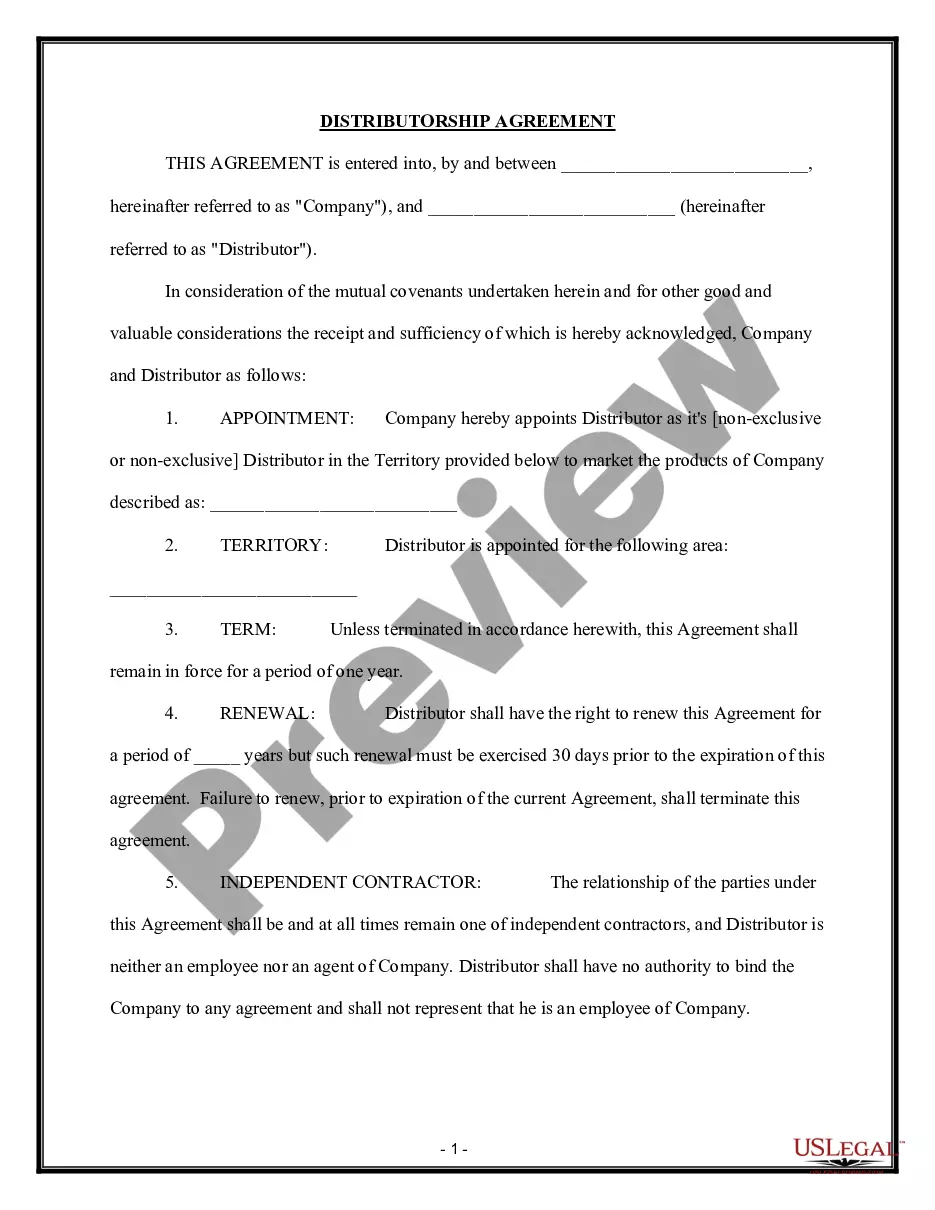
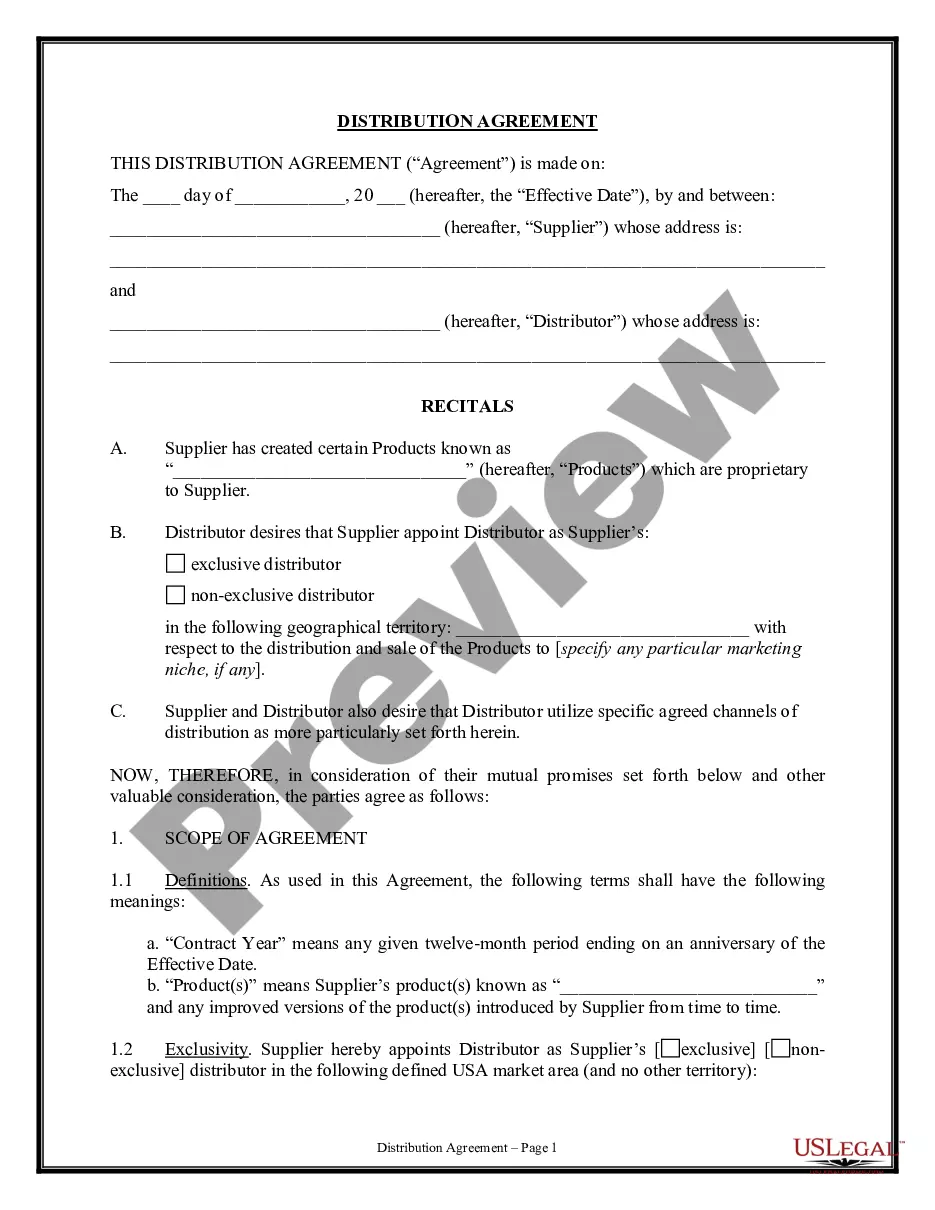
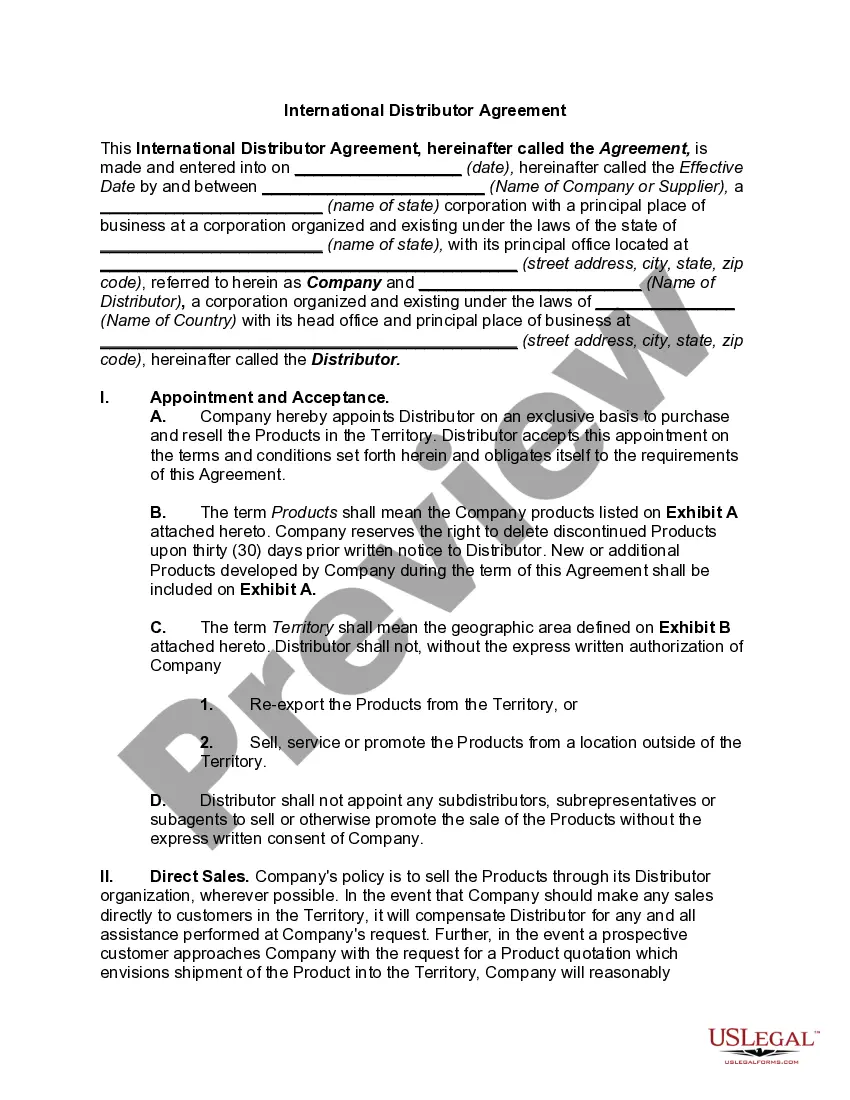
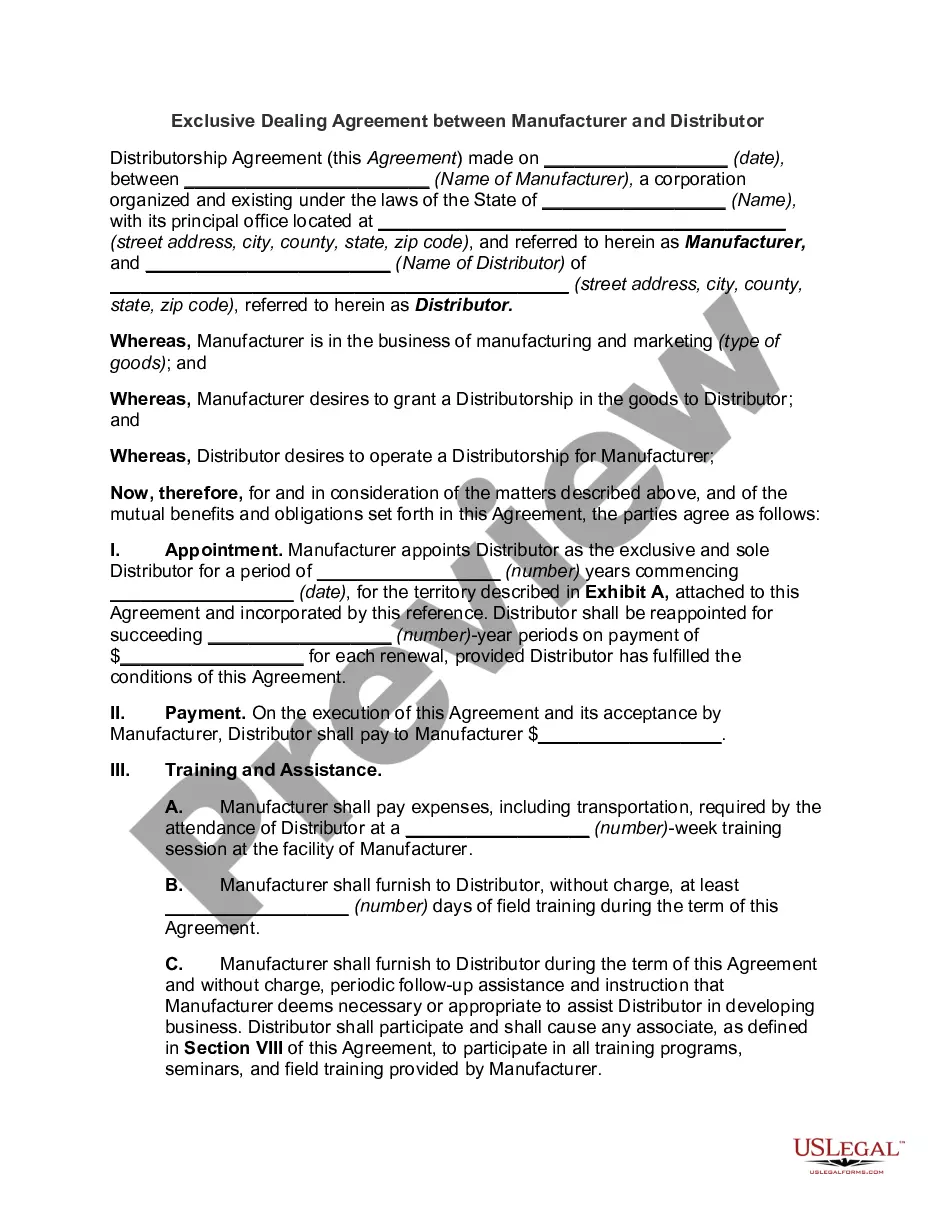
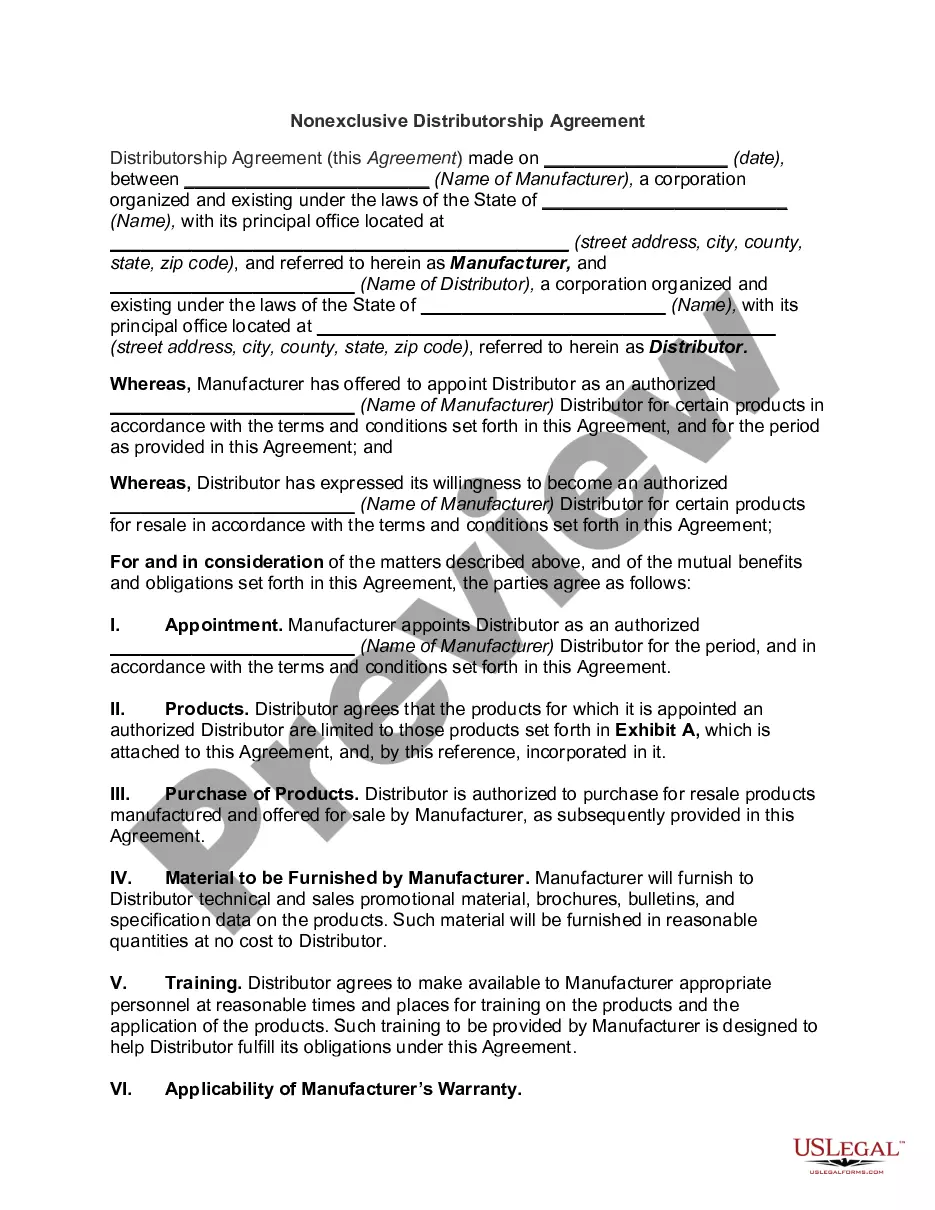
An Exclusive Distributorship Agreement is a legal document that establishes a business relationship between a manufacturer and a distributor. This form allows a supplier to appoint a distributor as the exclusive seller of its products within a specific territory, meaning the supplier will not sell the products through other distributors in that area. By granting exclusivity, the supplier often requires the distributor to meet certain purchasing commitments or performance standards. This agreement is crucial for protecting the interests of both parties and ensuring a clear framework for their business dealings.
Form components explained
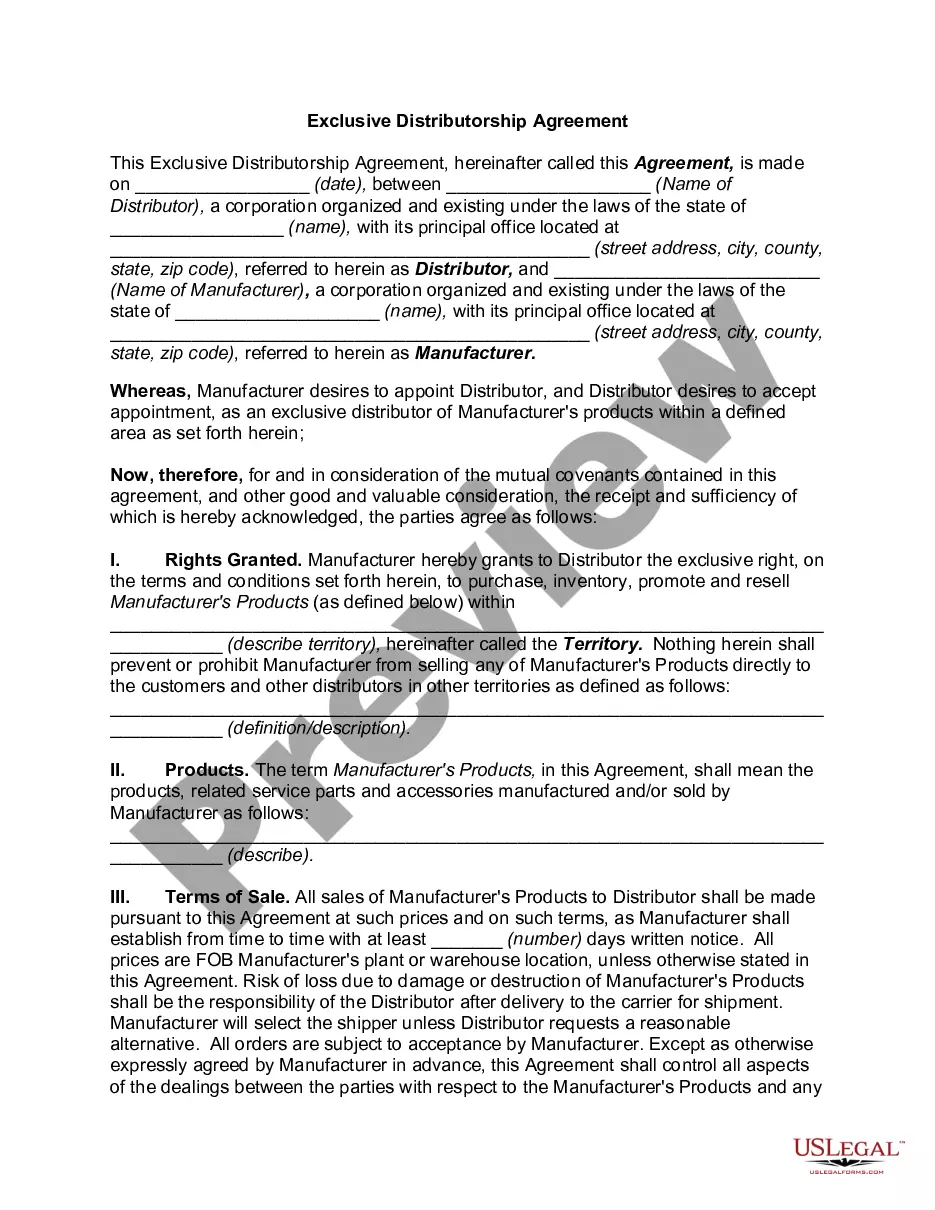
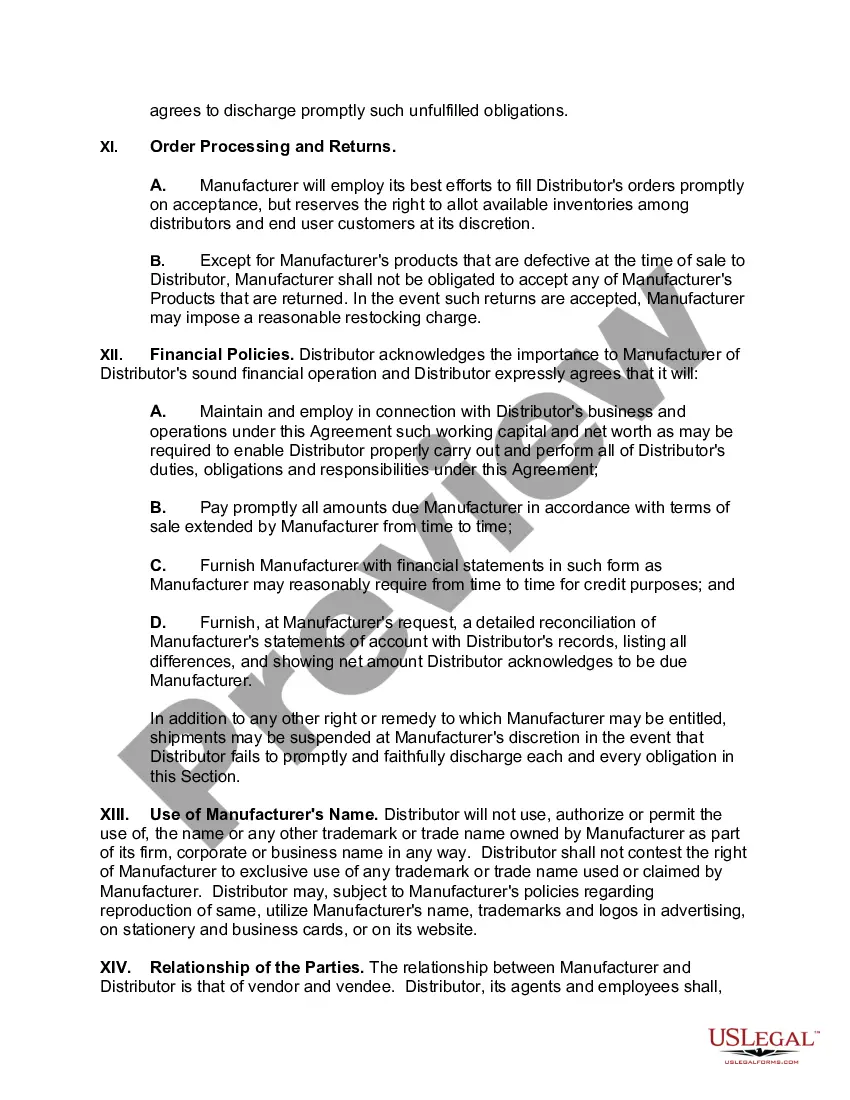
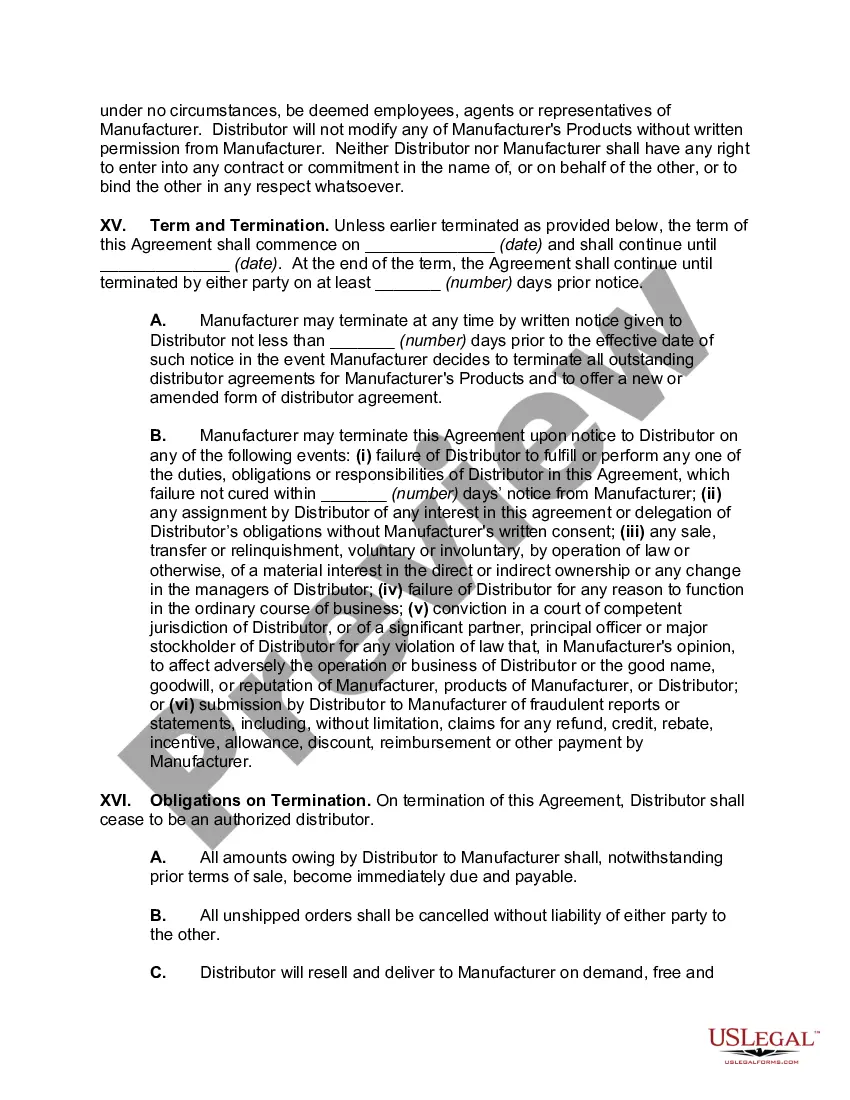
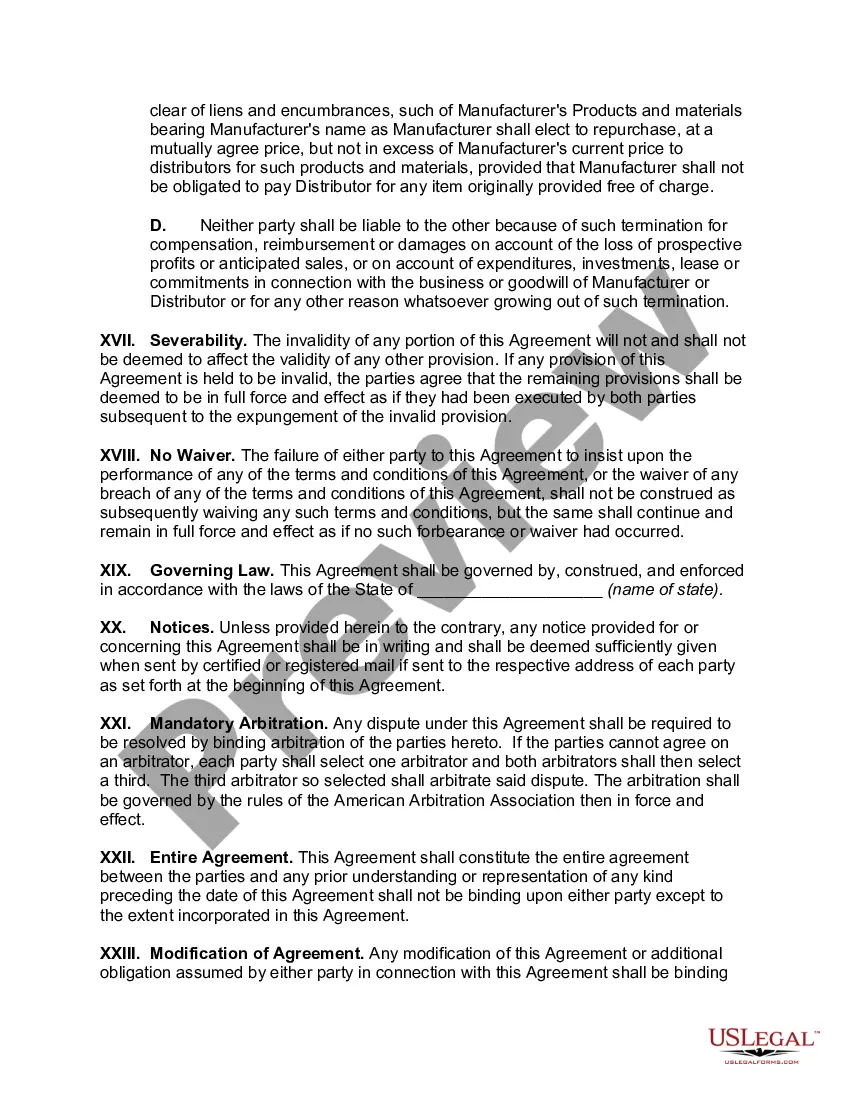
- Rights Granted: Specifies the exclusive rights assigned to the distributor in a defined territory.
- Products: Details the products and services covered under the agreement.
- Terms of Sale: Outlines pricing, payment terms, and the responsibilities during the sales process.
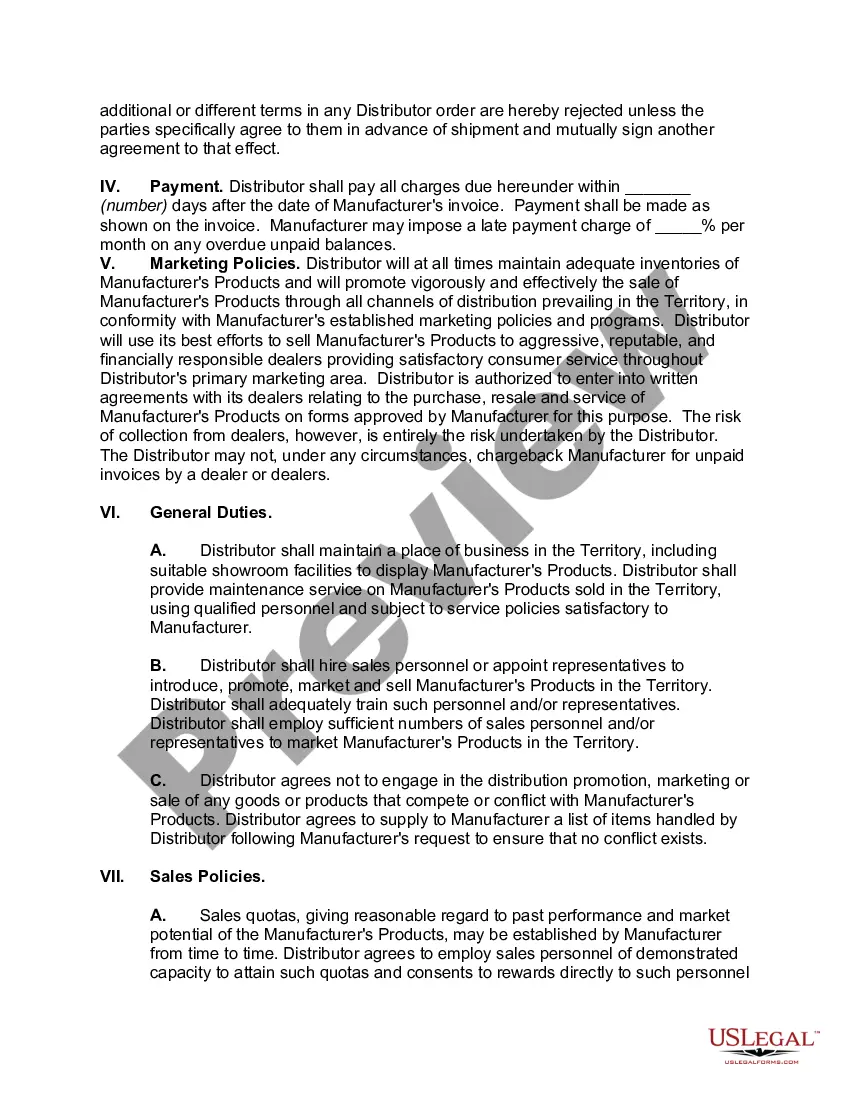
- Marketing Policies: Sets expectations for promoting and selling the manufacturer's products.
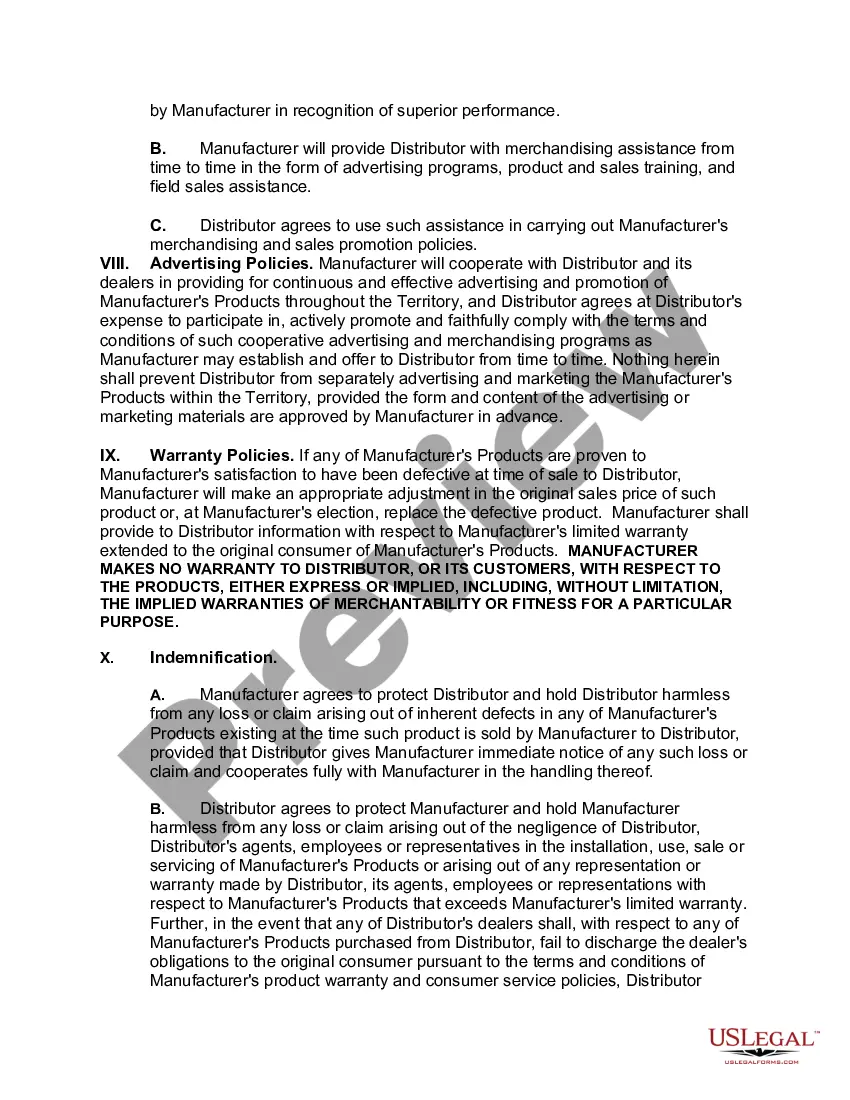
- Indemnification: Addresses the responsibilities of each party for claims arising from product defects or negligence.
- Term and Termination: Defines the duration of the agreement and conditions under which it can be terminated.
When to use this document
This form is used when a manufacturer wants to appoint a distributor to sell its products exclusively in a specific geographical area. It is particularly useful for manufacturers who wish to ensure that their products are marketed effectively in a certain territory without competition from other distributors. Businesses typically use this agreement to establish clear terms of engagement and expectations regarding sales performance, marketing efforts, and inventory management.
Who this form is for
- Manufacturers looking to establish an exclusive distribution relationship.
- Distributors who want to secure a rights agreement to sell products solely within a specific territory.
- Businesses seeking clarity on their rights and responsibilities in a distribution setup.
- Parties wanting to formalize their commercial relationship in a legally binding document.
Instructions for completing this form
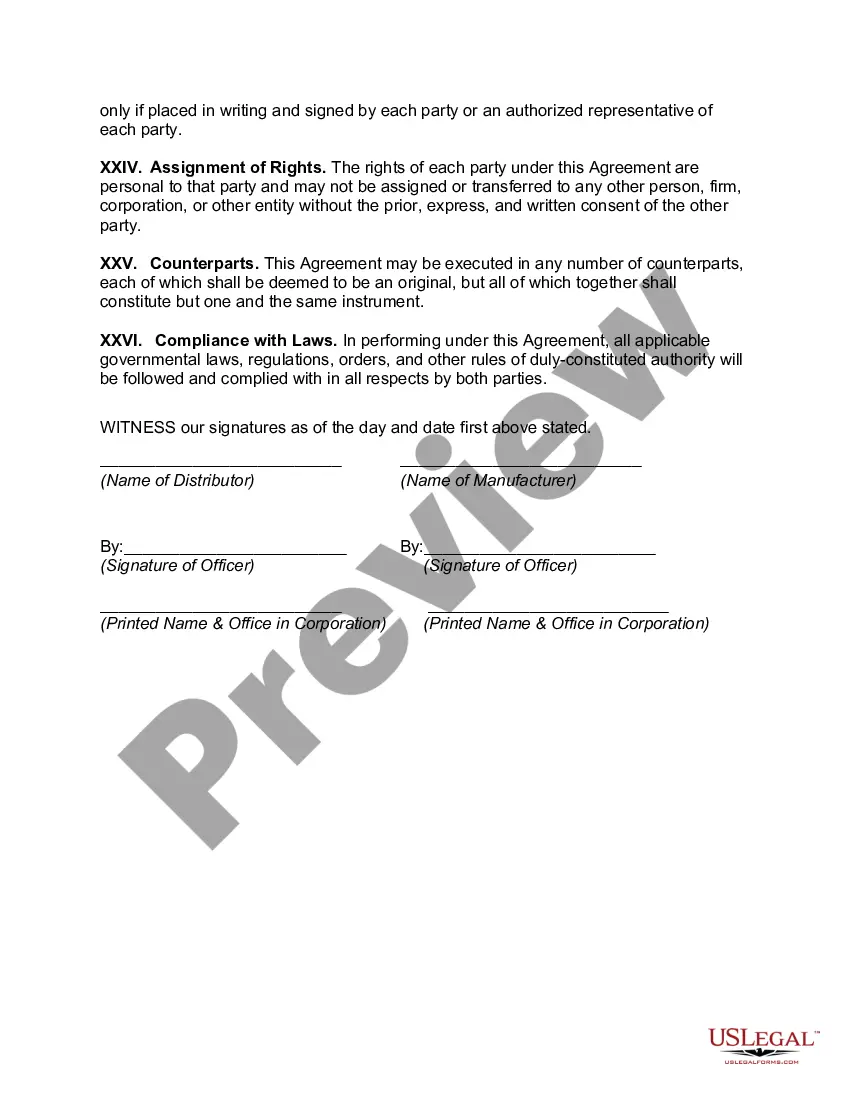
- Identify the parties: Fill in the names of the distributor and the manufacturer.
- Specify the territory: Clearly define the geographical area where the distributor will operate.
- List the products: Describe the specific products covered under the agreement.
- Set the terms of sale: Establish terms related to pricing, payment, and delivery.
- Enter dates and signatures: Make sure to include the commencement date and obtain signatures from authorized representatives of both parties.
Notarization guidance
This form does not typically require notarization unless specified by local law. However, it is always a good practice to have legal documents notarized for added security and validation.
Get your form ready online
Our built-in tools help you complete, sign, share, and store your documents in one place.
Make edits, fill in missing information, and update formatting in US Legal Forms—just like you would in MS Word.
Download a copy, print it, send it by email, or mail it via USPS—whatever works best for your next step.
Sign and collect signatures with our SignNow integration. Send to multiple recipients, set reminders, and more. Go Premium to unlock E-Sign.
If this form requires notarization, complete it online through a secure video call—no need to meet a notary in person or wait for an appointment.
We protect your documents and personal data by following strict security and privacy standards.

Make edits, fill in missing information, and update formatting in US Legal Forms—just like you would in MS Word.

Download a copy, print it, send it by email, or mail it via USPS—whatever works best for your next step.

Sign and collect signatures with our SignNow integration. Send to multiple recipients, set reminders, and more. Go Premium to unlock E-Sign.

If this form requires notarization, complete it online through a secure video call—no need to meet a notary in person or wait for an appointment.

We protect your documents and personal data by following strict security and privacy standards.
Common mistakes
- Failing to clearly define the territory can lead to disputes.
- Not specifying the products covered, leading to confusion.
- Ignoring payment terms, which can result in financial disagreements.
- Not obtaining the necessary signatures for legal effectiveness.
Advantages of online completion
- Convenience of downloading the document instantly and accessing it anytime.
- Editability allows users to customize the form to their specific needs.
- Reliability, as the form is drafted by licensed attorneys to meet legal standards.
Looking for another form?
Form popularity
FAQ
Exclusive distribution is an agreement between a distributor and a manufacturer that the manufacturer will not sell the product to anyone else and will sell it only to the exclusive distributor.
Exclusive Supply Agreements are defined under Section 3(4)(c) of the Competition Act, 2002 ("Act") as agreements restricting the purchaser from purchasing/dealing with goods other than those of the seller.Exclusive supply agreements are also known as 'single branding' agreements or 'quantity forcing' arrangements.
An exclusive distribution contract means only one distributor is appointed in a specific marketplace by a supplier. As part of the agreement, the supplier promises not to allow the distribution of the products by any other party in the given market area.
Exclusive distribution definition is a kind of distribution a manufacturer or supplier authorizes only one distributor to carry out within a definite region.An example of exclusive distribution is Apple solely authorizing AT&T to be the distributor of the iPhone to end users.
As discussed in the Fact Sheets on Dealings in the Supply Chain, exclusive contracts between manufacturers and suppliers, or between manufacturers and dealers, are generally lawful because they improve competition among the brands of different manufacturers (interbrand competition).
Exclusive dealing or requirements contracts between manufacturers and retailers are common and are generally lawful.
Terms and conditions of sale; term for which the contract is in effect; marketing rights; trademark licensing; geographical territory covered by the agreement; performance; reporting; and. circumstances under which the contract may be terminated.