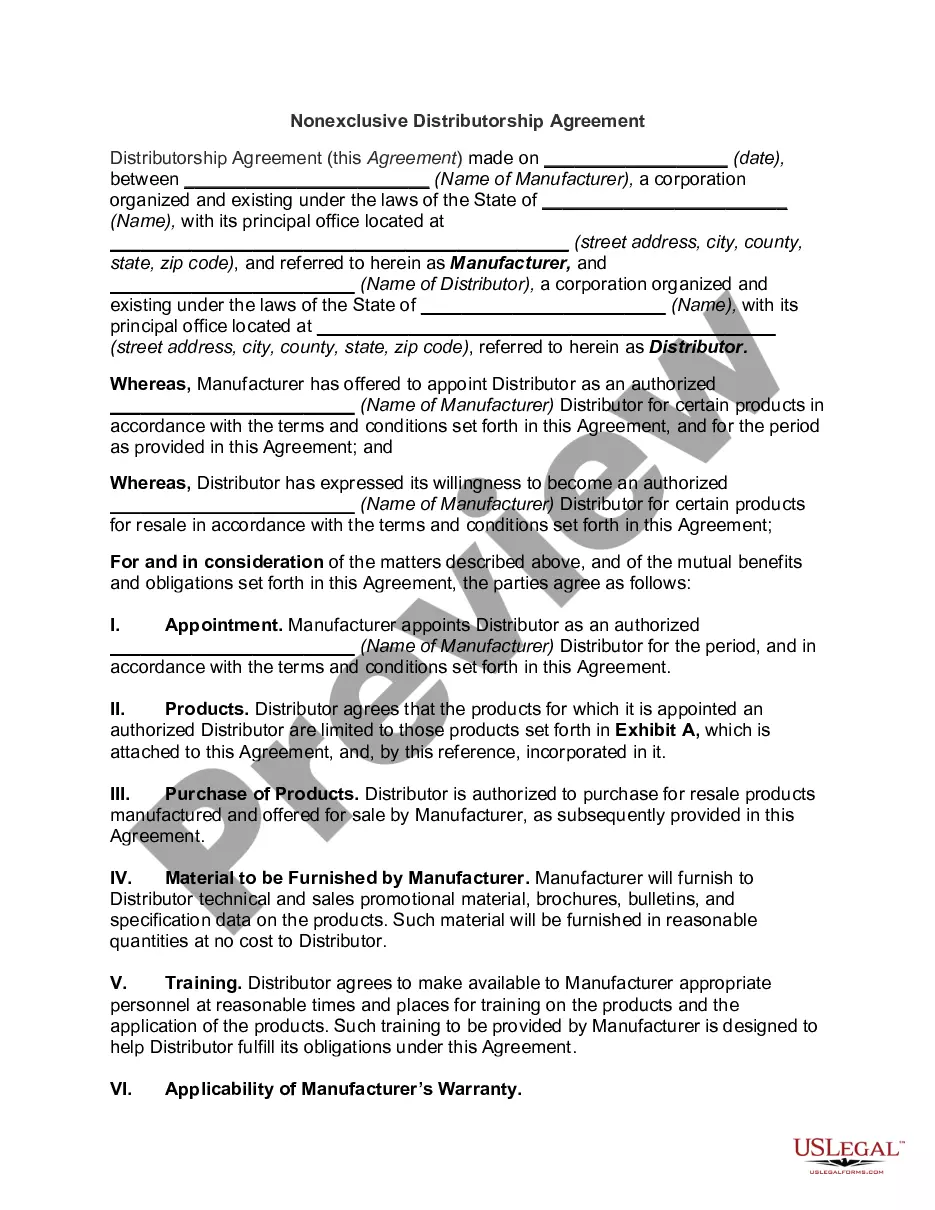
Nonexclusive Distributorship Agreement
Understanding this form
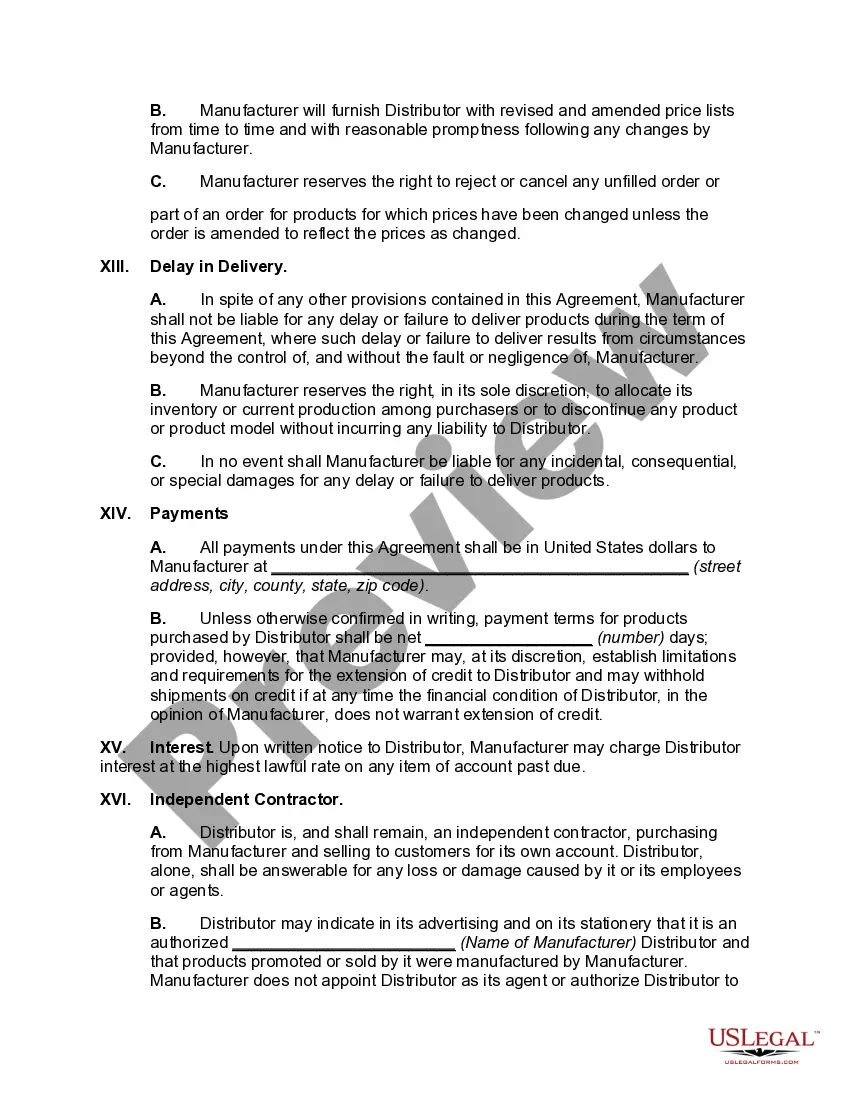
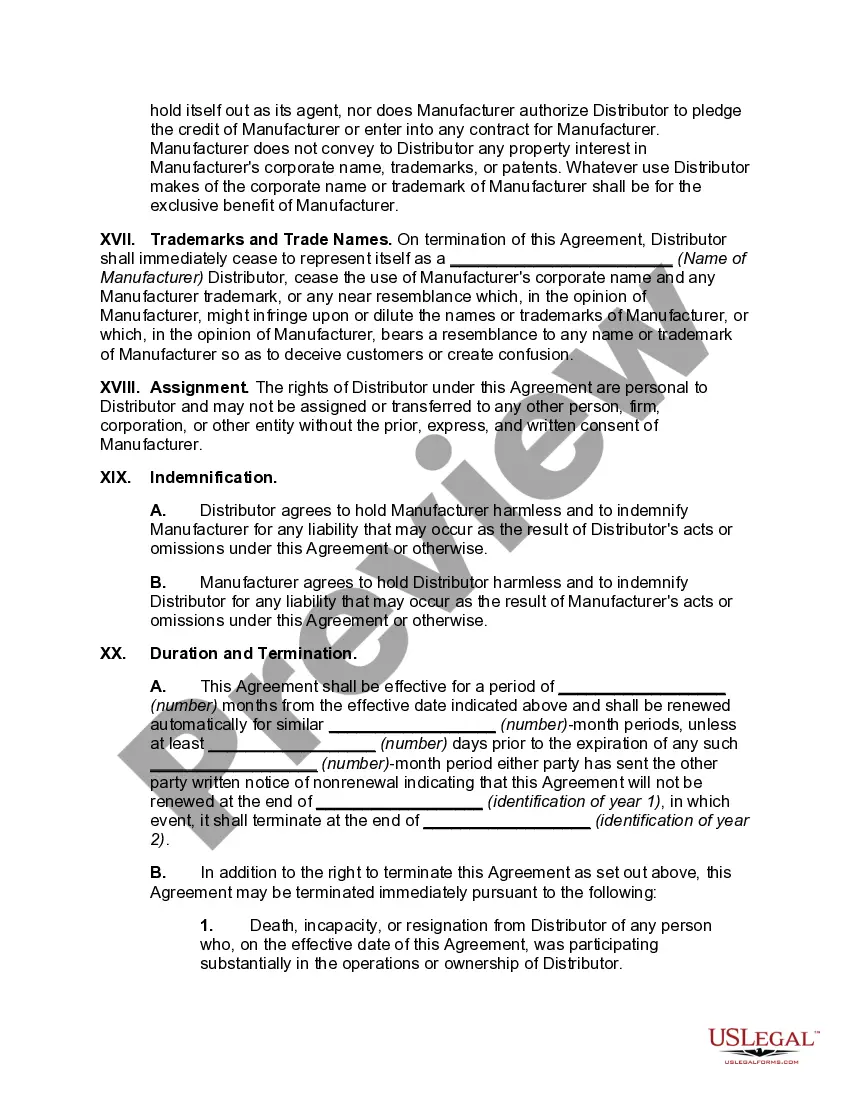
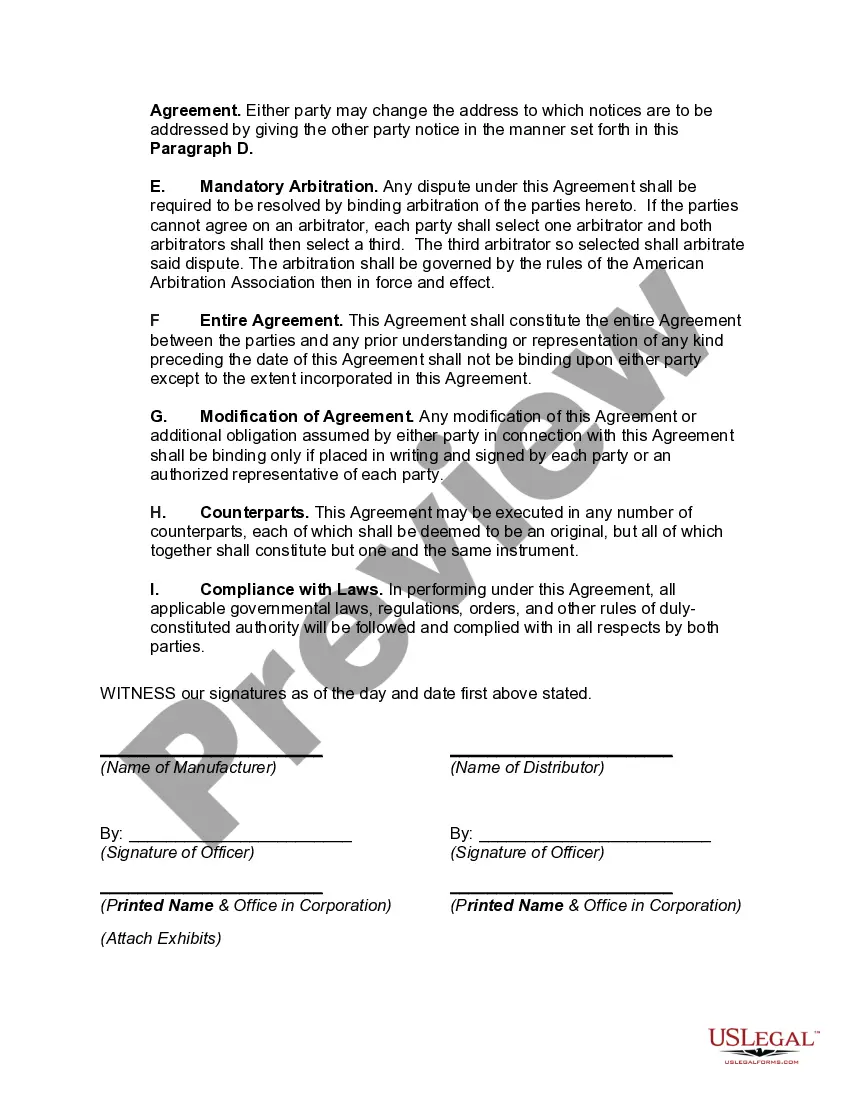
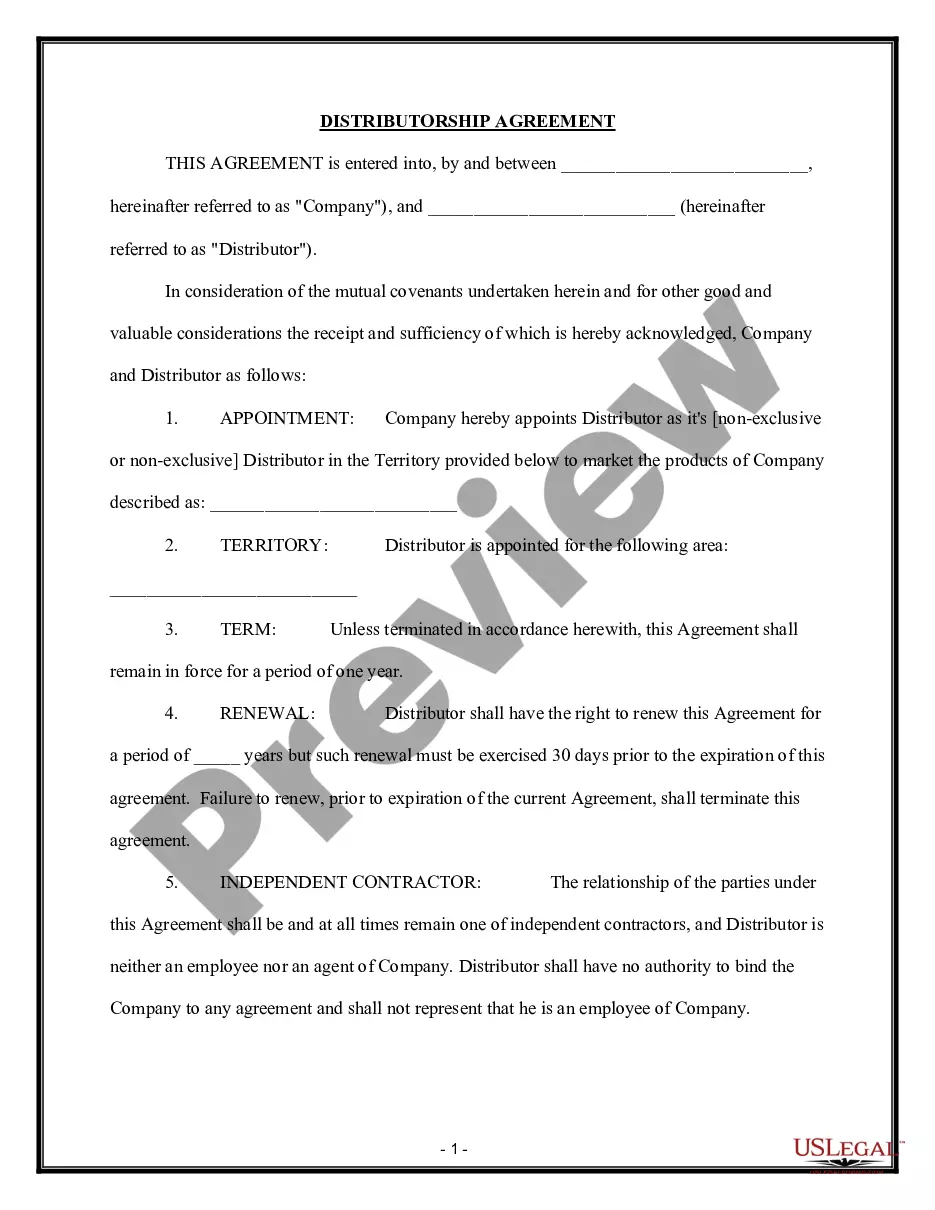
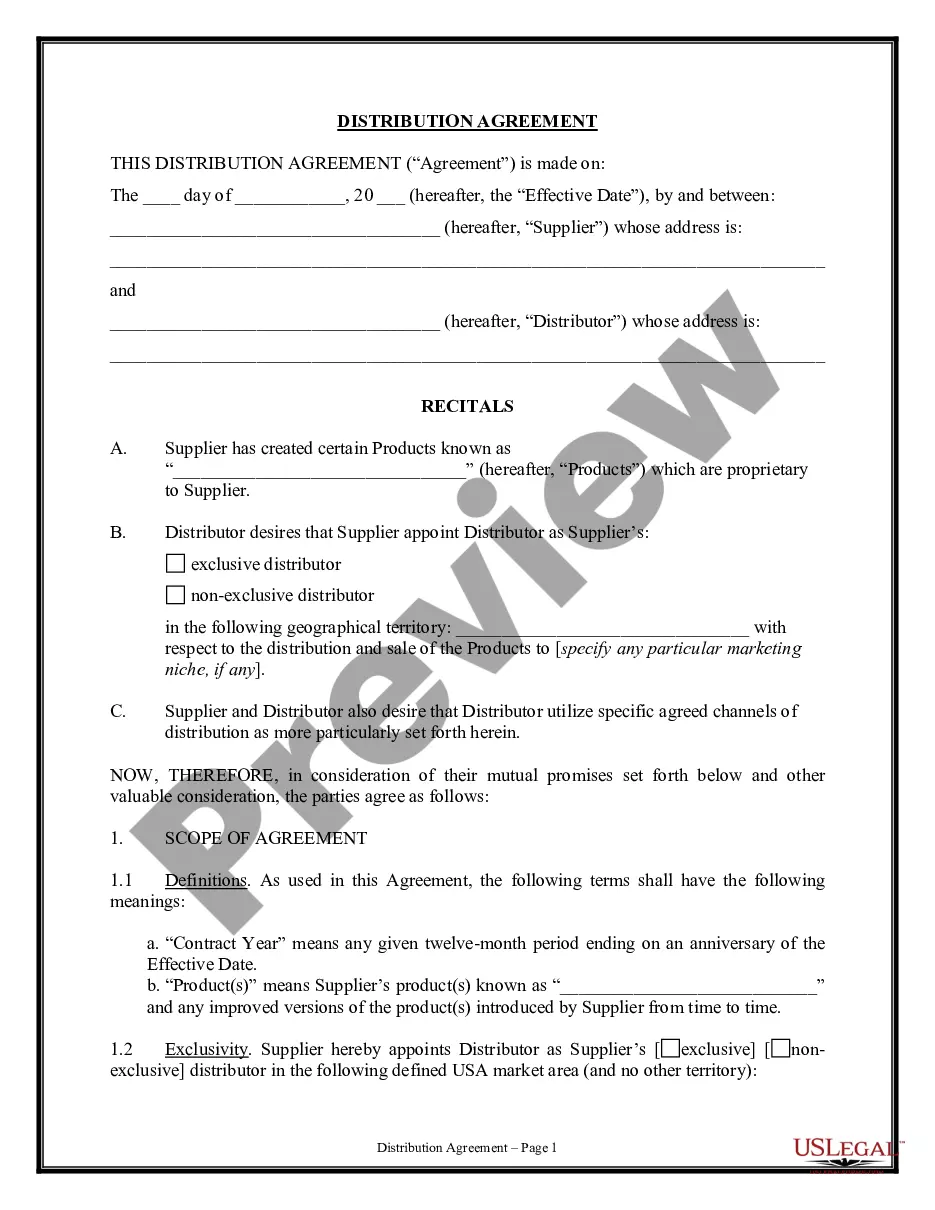
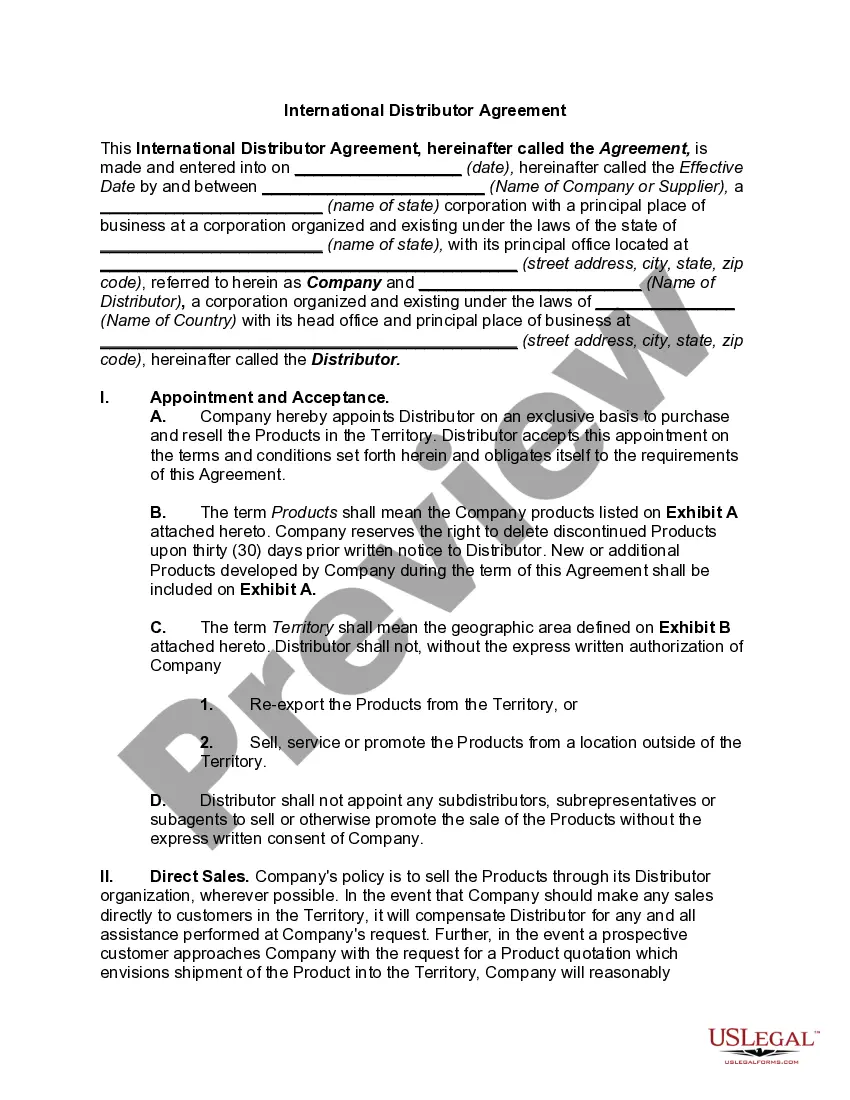
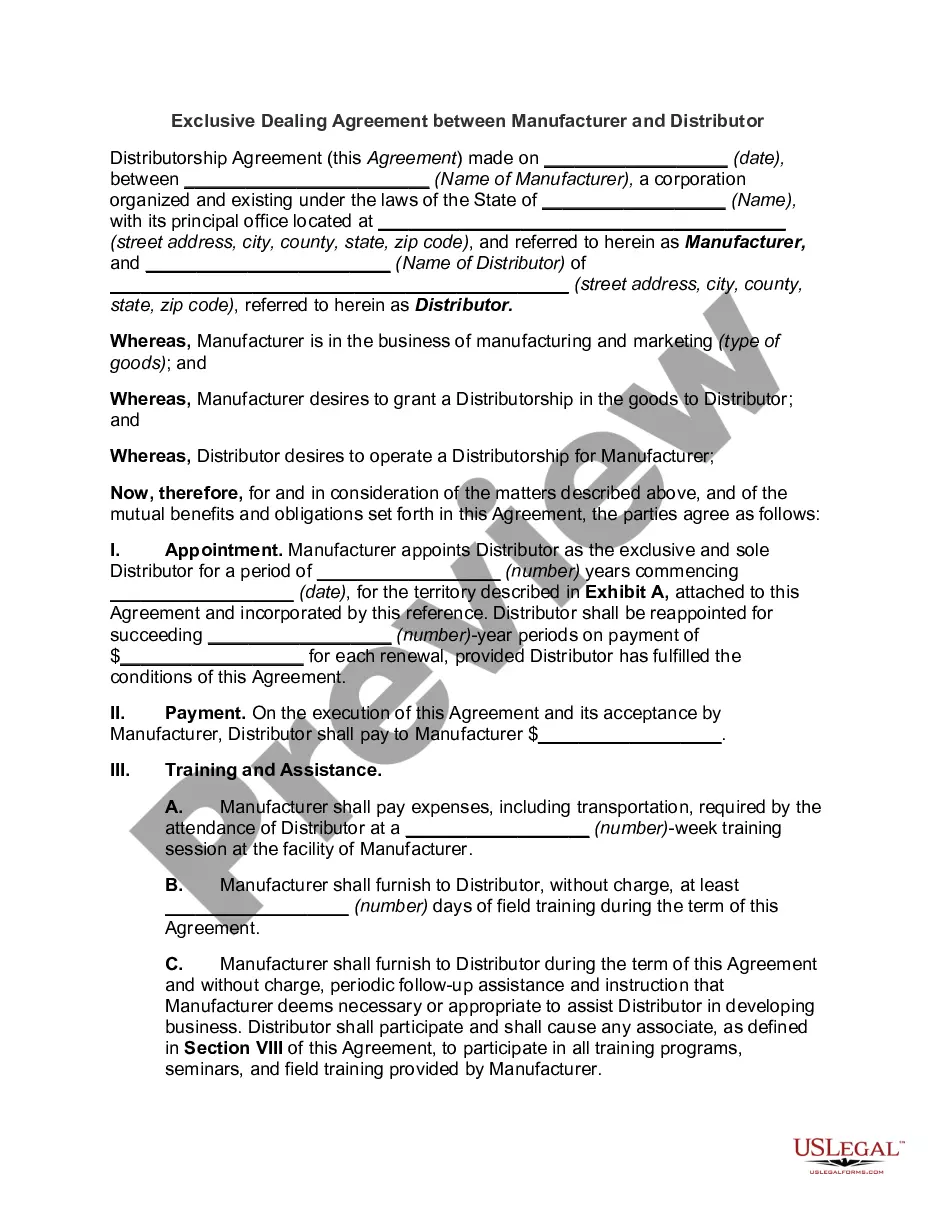
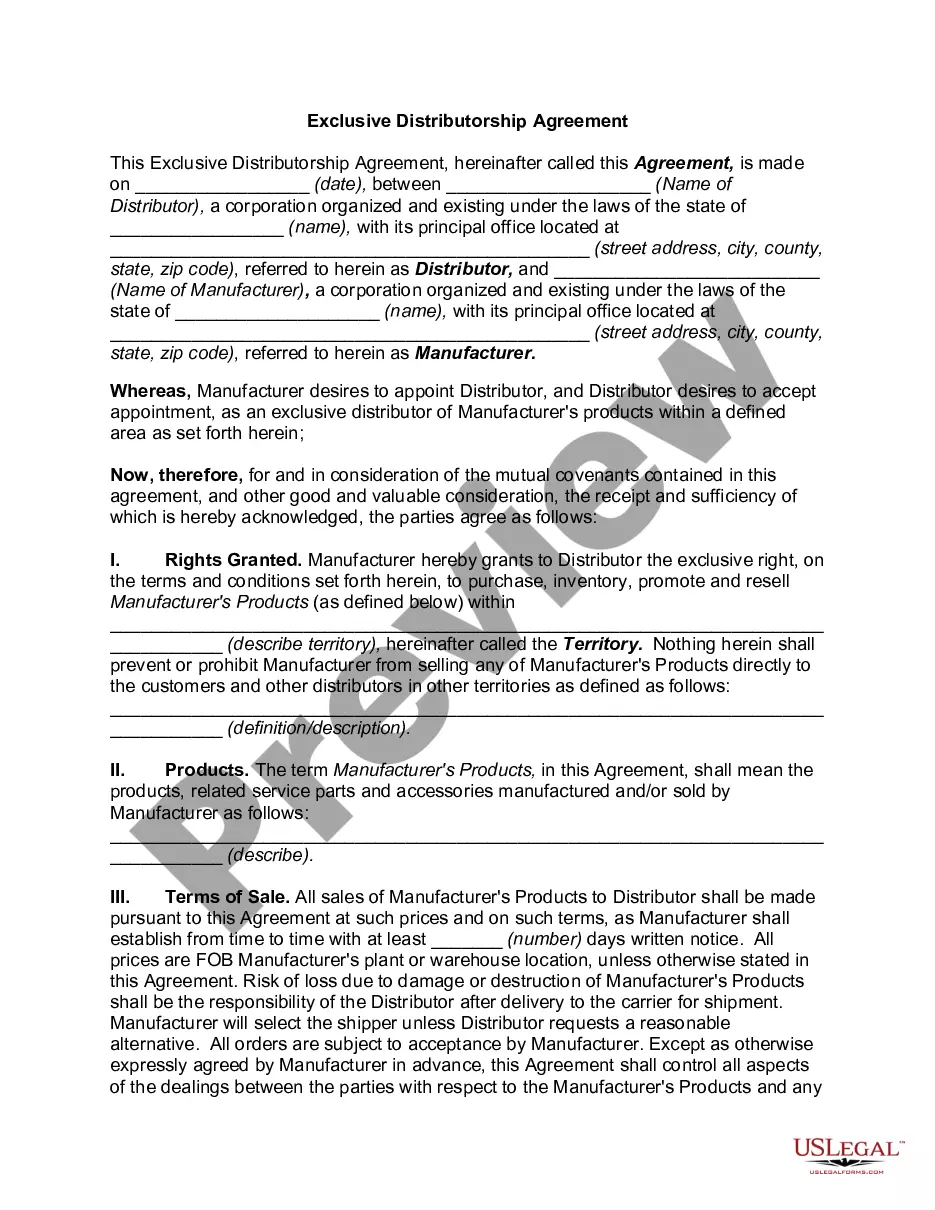
A Nonexclusive Distributorship Agreement is a legal contract between a supplier and a distributor outlining their respective rights and responsibilities regarding the sale and distribution of products. Unlike exclusive agreements, this type allows the supplier to appoint multiple distributors in the same territory, thereby increasing market reach. This agreement is crucial for businesses looking to establish distribution relationships while maintaining flexibility in their supply channels.
Key components of this form
- Appointment of distributor by the manufacturer.
- Specification of products covered under the agreement.
- Training and promotional materials provided by the manufacturer.
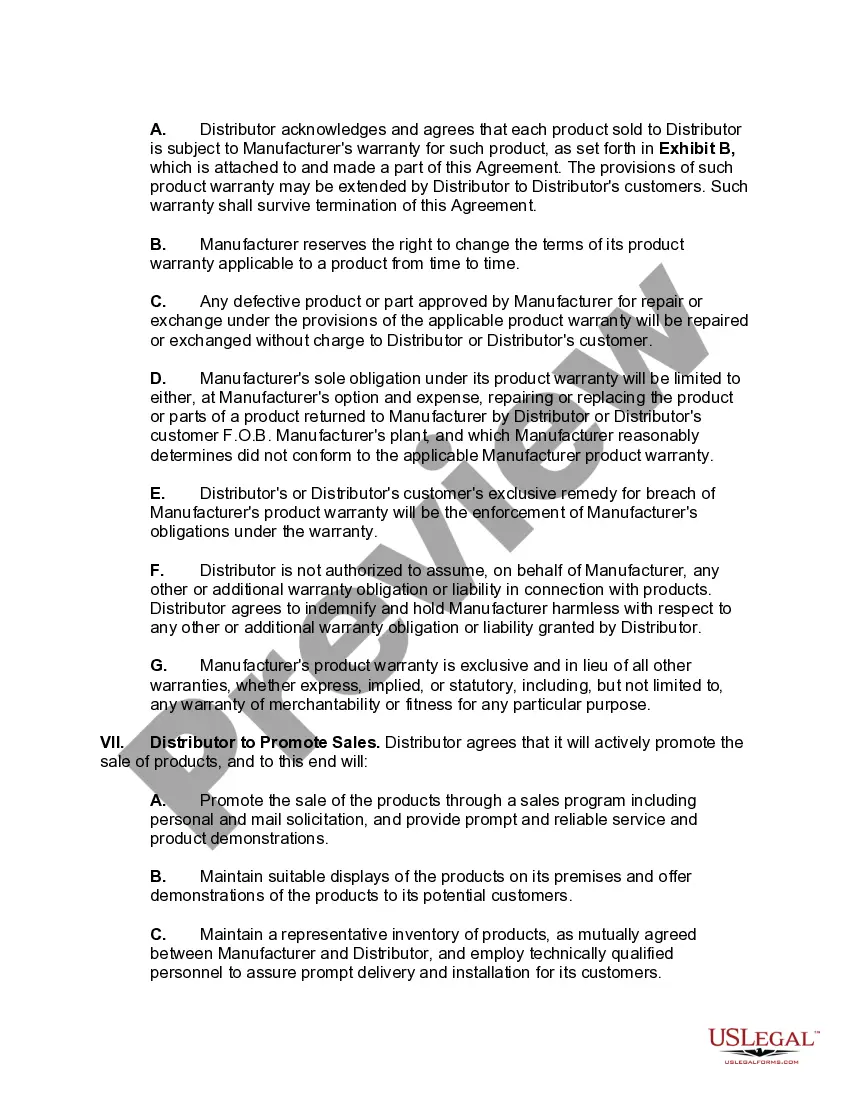
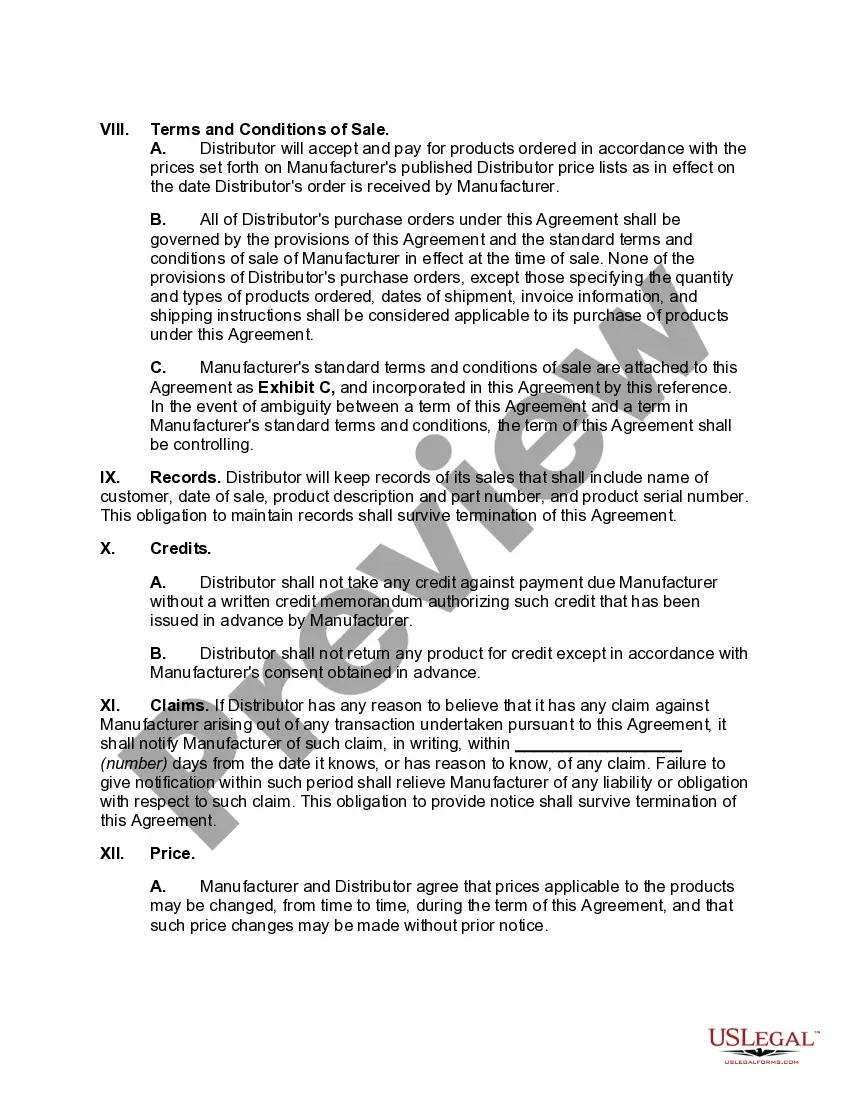
- Terms and conditions of sales, including pricing and payment obligations.
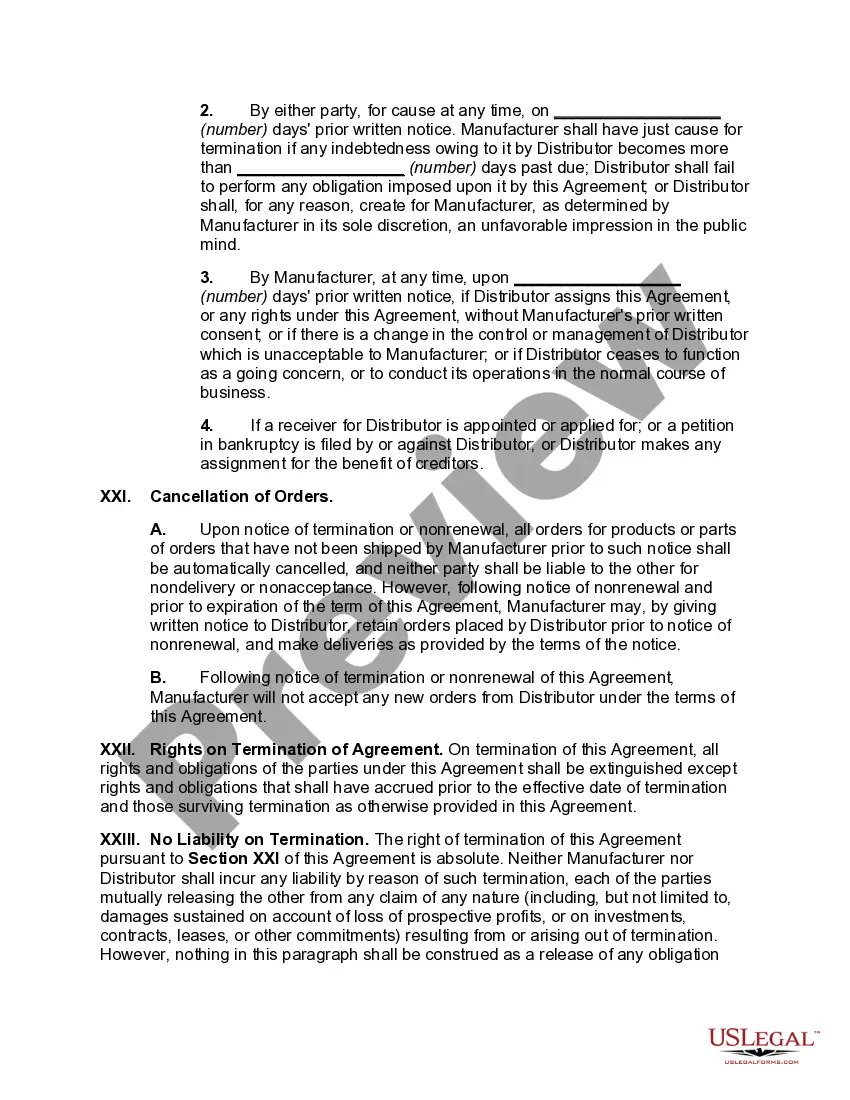
- Indemnification clauses protecting both parties.
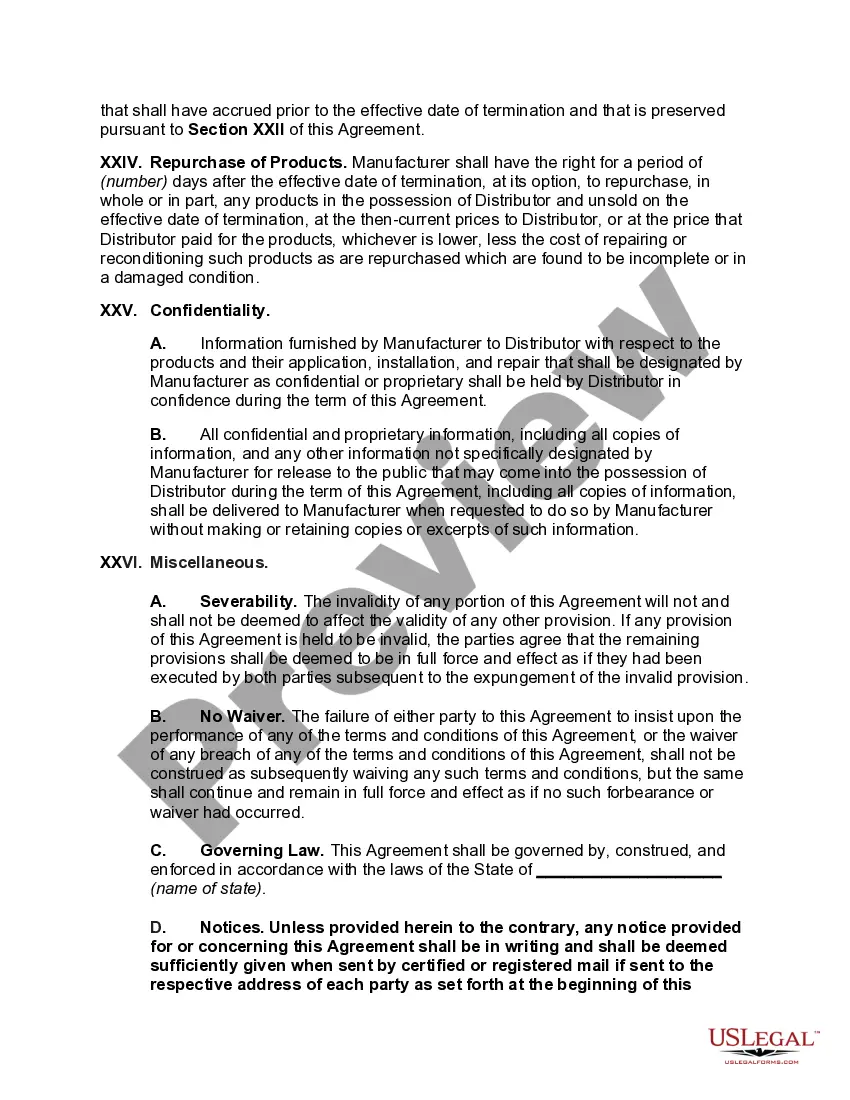
- Details regarding termination and renewal of the agreement.

Situations where this form applies
This agreement should be used when a manufacturer desires to collaborate with a distributor without granting exclusivity. It is particularly relevant when expanding into new markets, increasing product availability, or creating partnerships with various distributors within a territory.
Who should use this form
This agreement is intended for:
- Manufacturers seeking to distribute their products through multiple channels.
- Distributors looking to represent multiple brands or products.
- Businesses wanting clearly defined terms for their distribution relationships.
How to prepare this document
- Identify and fill in the names and addresses of both the manufacturer and the distributor.
- Specify the products covered under this agreement by referring to an attached exhibit.
- Designate the duration of the agreement and terms for termination or renewal.
- Outline payment terms and methods for credit or returns.
- Ensure both parties review and sign the agreement, retaining copies for their records.
Notarization requirements for this form
Notarization is not commonly needed for this form. However, certain documents or local rules may make it necessary. Our notarization service, powered by Notarize, allows you to finalize it securely online anytime, day or night.
Get your form ready online
Our built-in tools help you complete, sign, share, and store your documents in one place.
Make edits, fill in missing information, and update formatting in US Legal Forms—just like you would in MS Word.
Download a copy, print it, send it by email, or mail it via USPS—whatever works best for your next step.
Sign and collect signatures with our SignNow integration. Send to multiple recipients, set reminders, and more. Go Premium to unlock E-Sign.
If this form requires notarization, complete it online through a secure video call—no need to meet a notary in person or wait for an appointment.
We protect your documents and personal data by following strict security and privacy standards.

Make edits, fill in missing information, and update formatting in US Legal Forms—just like you would in MS Word.

Download a copy, print it, send it by email, or mail it via USPS—whatever works best for your next step.

Sign and collect signatures with our SignNow integration. Send to multiple recipients, set reminders, and more. Go Premium to unlock E-Sign.

If this form requires notarization, complete it online through a secure video call—no need to meet a notary in person or wait for an appointment.

We protect your documents and personal data by following strict security and privacy standards.
Avoid these common issues
- Failing to clearly define the scope of products covered in the agreement.
- Not specifying the territory in which the distributor can operate.
- Missing out on including clear termination clauses and renewal terms.
Why use this form online
- Instant access to professionally drafted agreements tailored to your needs.
- Easy to edit and customize the document to fit specific business requirements.
- Convenient downloading and printing options for immediate use.
Looking for another form?
Form popularity
FAQ
Distribution Agreement Non-exclusive distributions allow a producer to distribute goods and services to others, including customers and competitors.
Non-exclusive agreements The cons are that you may have to manage multiple contracts, reports, and payments, and that you may face competition or confusion from other distributors or platforms.
The difference between exclusive and non-exclusive agreement refers to how vendors and partners work with each other. Exclusive agreements exclude competitors for a set period of time, while non-exclusive agreements allow for competitors, often as motivating tools.
exclusive distribution agreement permits a supplier to collaborate with various distributors in the same market or territory. This provides more distribution flexibility to the supplier and broadens the market for the product.
The difference between exclusive and non-exclusive agreement refers to how vendors and partners work with each other. Exclusive agreements exclude competitors for a set period of time, while non-exclusive agreements allow for competitors, often as motivating tools.
Non-exclusive agreements The cons are that you may have to manage multiple contracts, reports, and payments, and that you may face competition or confusion from other distributors or platforms.
In conclusion, a non-exclusive agreement can be beneficial for both parties involved. It gives the party receiving permission freedom to use the material in multiple ways, while also allowing them to maintain control over their own intellectual property rights.
Pros and Cons of Non-Exclusive Distribution Clause A non-exclusive distribution agreement permits a supplier to collaborate with various distributors in the same market or territory. This provides more distribution flexibility to the supplier and broadens the market for the product.