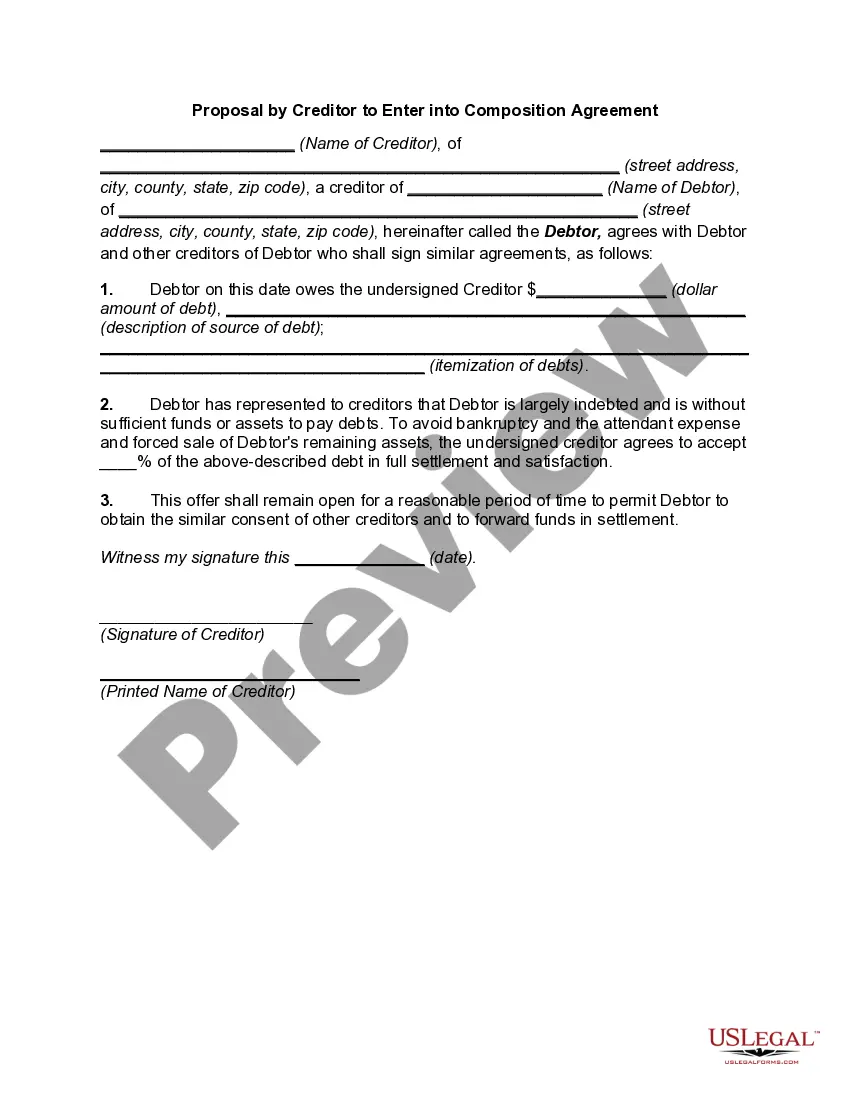
Proposal by Creditor to Enter into Composition Agreement
About this form
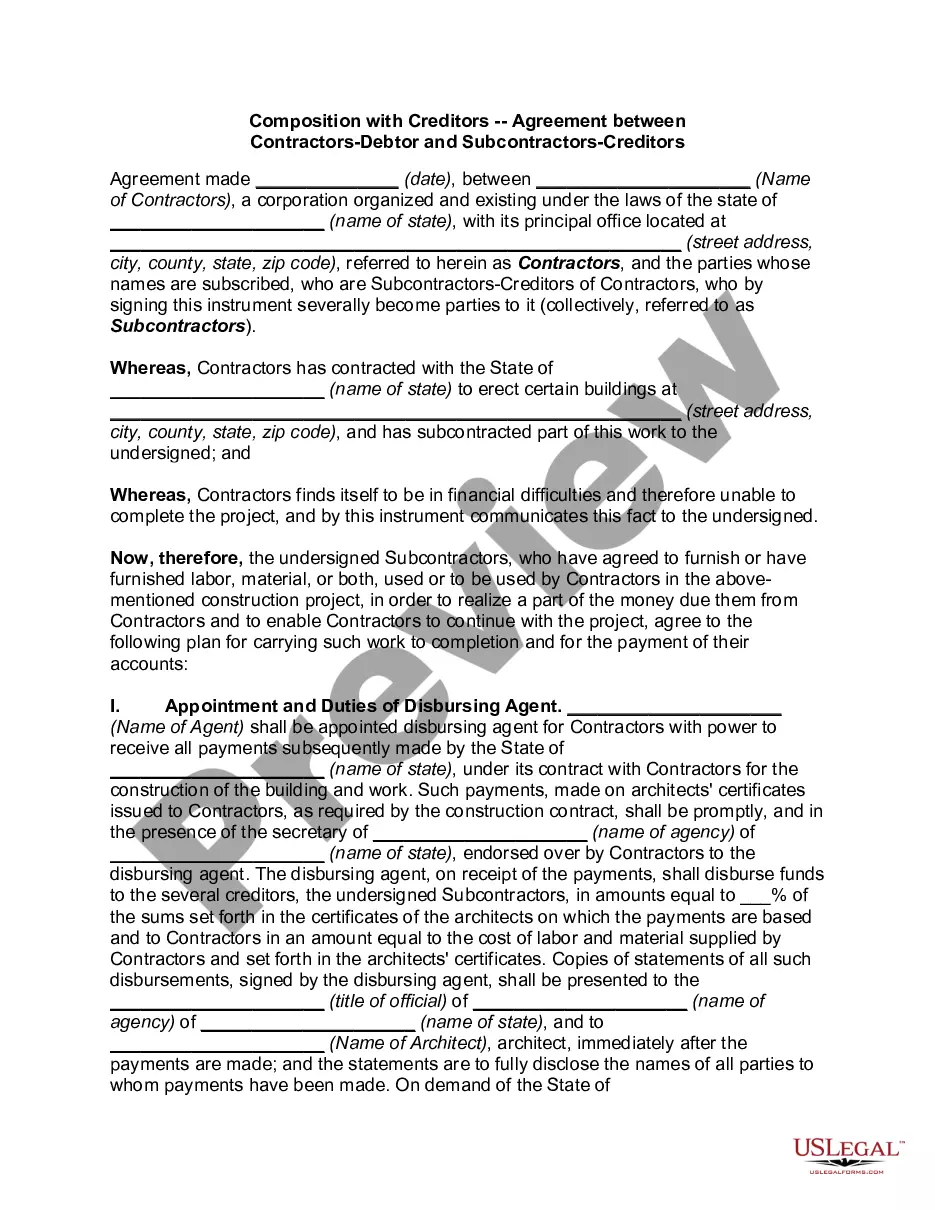
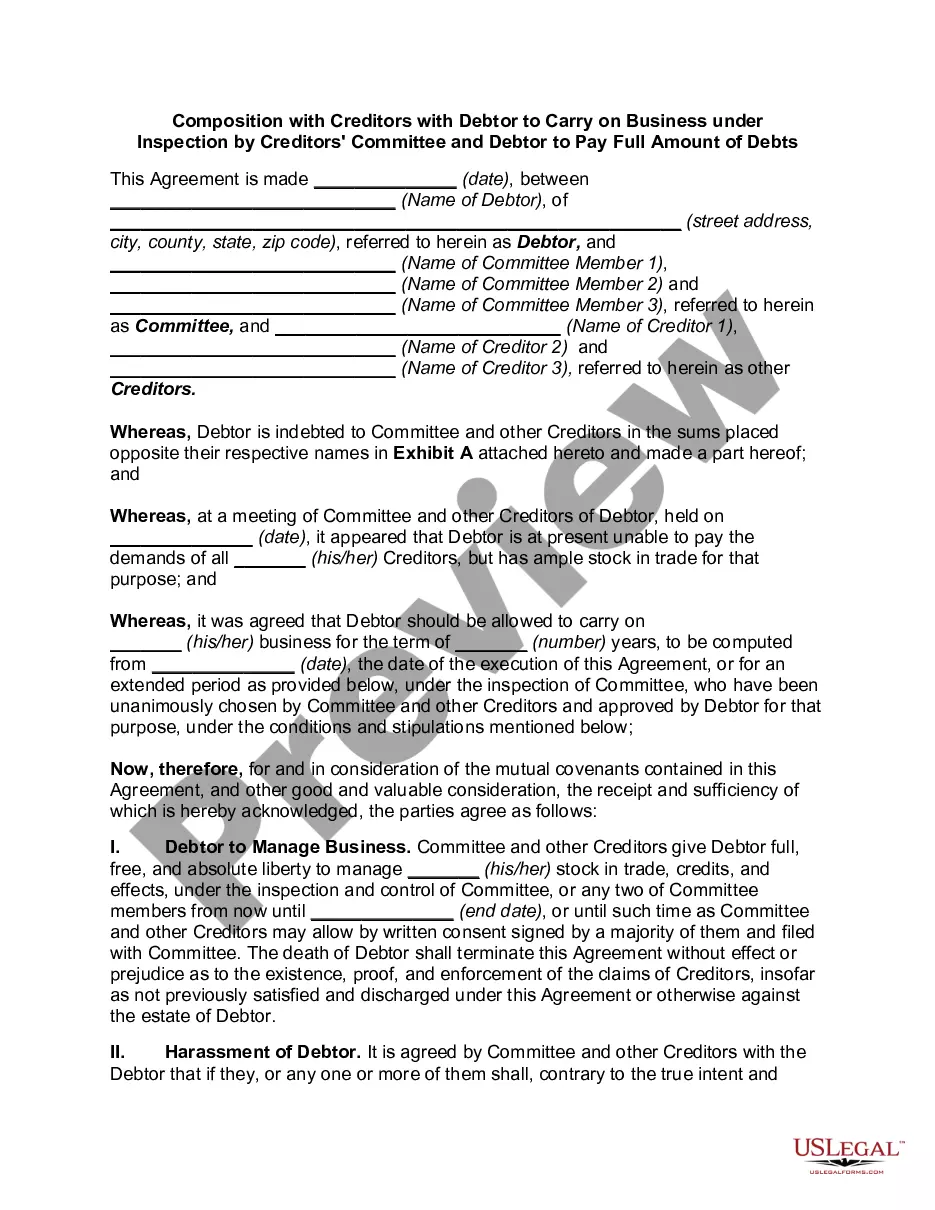
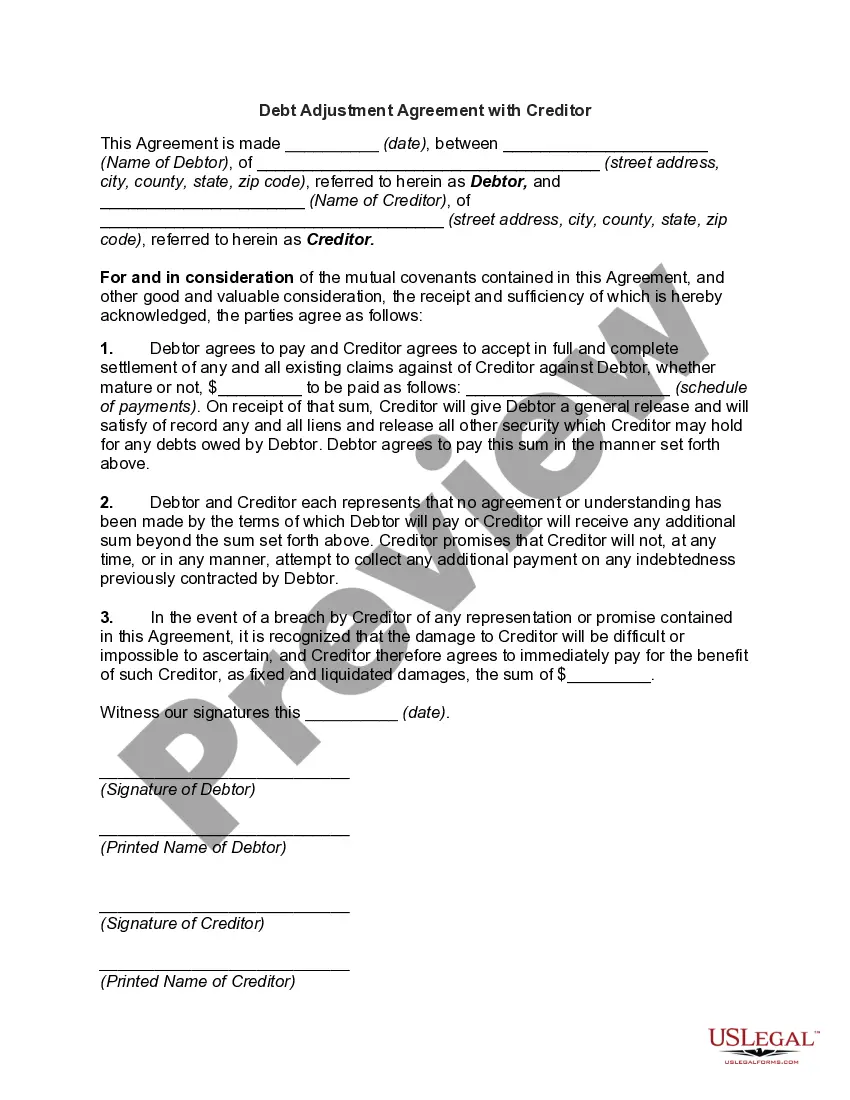
The Proposal by Creditor to Enter into Composition Agreement is a legal document that allows creditors to settle outstanding debts with a debtor who is facing financial difficulties. In this arrangement, creditors agree to accept a reduced payment as full settlement of their claims. This form outlines the terms of the composition agreement, differing from more formal bankruptcy proceedings by providing a more amicable solution for debtors and creditors alike.
Main sections of this form
- Parties involved: Identifies the creditor and debtor, including their names and addresses.
- Debt details: Specifies the amount owed and the source of the debt.
- Settlement terms: States the agreed amount the creditor will accept to satisfy the debt.
- Timeframe: Indicates how long the offer will remain open for acceptance by other creditors.
- Signatures: Requires signatures of the creditor and printed name to validate the agreement.
When to use this document
This form is useful when a debtor is unable to pay their debts in full but seeks to avoid bankruptcy. It is appropriate when a debtor contacts multiple creditors to negotiate a lower payment that can satisfy their debts without the need for formal bankruptcy proceedings. This agreement helps both debtors, by easing financial burdens, and creditors, by securing some repayment instead of risking total loss.
Who this form is for
- Debtors struggling with multiple debts and facing potential bankruptcy.
- Creditors willing to negotiate a reduced payment to resolve debts amicably.
- Financial advisors or attorneys representing debtors in negotiations with creditors.
How to complete this form
- Identify the parties: Fill in the names and addresses of the creditor and debtor.
- Specify the debt: Enter the total amount owed and describe the source of this debt.
- State the settlement: Indicate the reduced payment amount the creditor agrees to accept.
- Include terms: Mention how long the offer remains valid for other creditors to participate.
- Gather signatures: Both the creditor and the debtor need to sign and print their names to finalize the agreement.
Does this document require notarization?
This form does not typically require notarization unless specified by local law. It is advisable to check specific state requirements to ensure compliance with any notarization rules.
Get your form ready online
Our built-in tools help you complete, sign, share, and store your documents in one place.
Make edits, fill in missing information, and update formatting in US Legal Forms—just like you would in MS Word.
Download a copy, print it, send it by email, or mail it via USPS—whatever works best for your next step.
Sign and collect signatures with our SignNow integration. Send to multiple recipients, set reminders, and more. Go Premium to unlock E-Sign.
If this form requires notarization, complete it online through a secure video call—no need to meet a notary in person or wait for an appointment.
We protect your documents and personal data by following strict security and privacy standards.

Make edits, fill in missing information, and update formatting in US Legal Forms—just like you would in MS Word.

Download a copy, print it, send it by email, or mail it via USPS—whatever works best for your next step.

Sign and collect signatures with our SignNow integration. Send to multiple recipients, set reminders, and more. Go Premium to unlock E-Sign.

If this form requires notarization, complete it online through a secure video call—no need to meet a notary in person or wait for an appointment.

We protect your documents and personal data by following strict security and privacy standards.
Common mistakes
- Failing to include all creditor signatures, which may invalidate the agreement.
- Not specifying the exact amount that creditors will accept, leading to confusion.
- Omitting important details about the debt source and itemization.
- Not providing a clear timeframe for the offer's validity.
Benefits of using this form online
- Convenience: Download and complete the form at your own pace from anywhere.
- Editability: Make necessary adjustments easily before finalizing the agreement.
- Reliability: Access professionally crafted templates that meet legal standards.
Looking for another form?
Form popularity
FAQ
A creditor composition agreement is a non-statutory, out-of-court arrangement in which a debtor negotiates and enters into a settlement of its unsecured liabilities with its vendors, landlords, and other large creditors to provide debt relief and a restructuring.
This Creditor Composition Agreement is used when a company is doing an out of court workout and needs agreement of most of its unsecured creditors, usually trade creditors, to restructure their debts, due to financial difficulties.
Types of Debtors and Creditors In business, a creditor-debtor relationship is defined by a debt agreement (or contract) which explicitly states the legal obligations, responsibilities and binding rights of both parties.
The agreement is that the debtor will pay the creditors less than what they owe in order to settle the debt. This is called a composition. The creditors agree to this because they would rather get some of their money back than none at all.
An Individual Voluntary Arrangement ( IVA ) is an agreement with your creditors to pay all or part of your debts. You agree to make regular payments to an insolvency practitioner, who will divide this money between your creditors. An IVA can give you more control of your assets than bankruptcy.
An Individual Voluntary Arrangement ( IVA ) is an agreement with your creditors to pay all or part of your debts. You agree to make regular payments to an insolvency practitioner, who will divide this money between your creditors. An IVA can give you more control of your assets than bankruptcy.
Composition, in modern law, an agreement among the creditors of an insolvent debtor to accept an amount less than they are owed, in order to receive immediate payment.
Advantages. A composition with creditors usually benefits a debtor more than bankruptcy because it accomplishes the same end?discharge of all or most of a debtor's debts?without the stigma of bankruptcy. Unlike a bankruptcy discharge, a composition does not preclude future bankruptcy for six years.