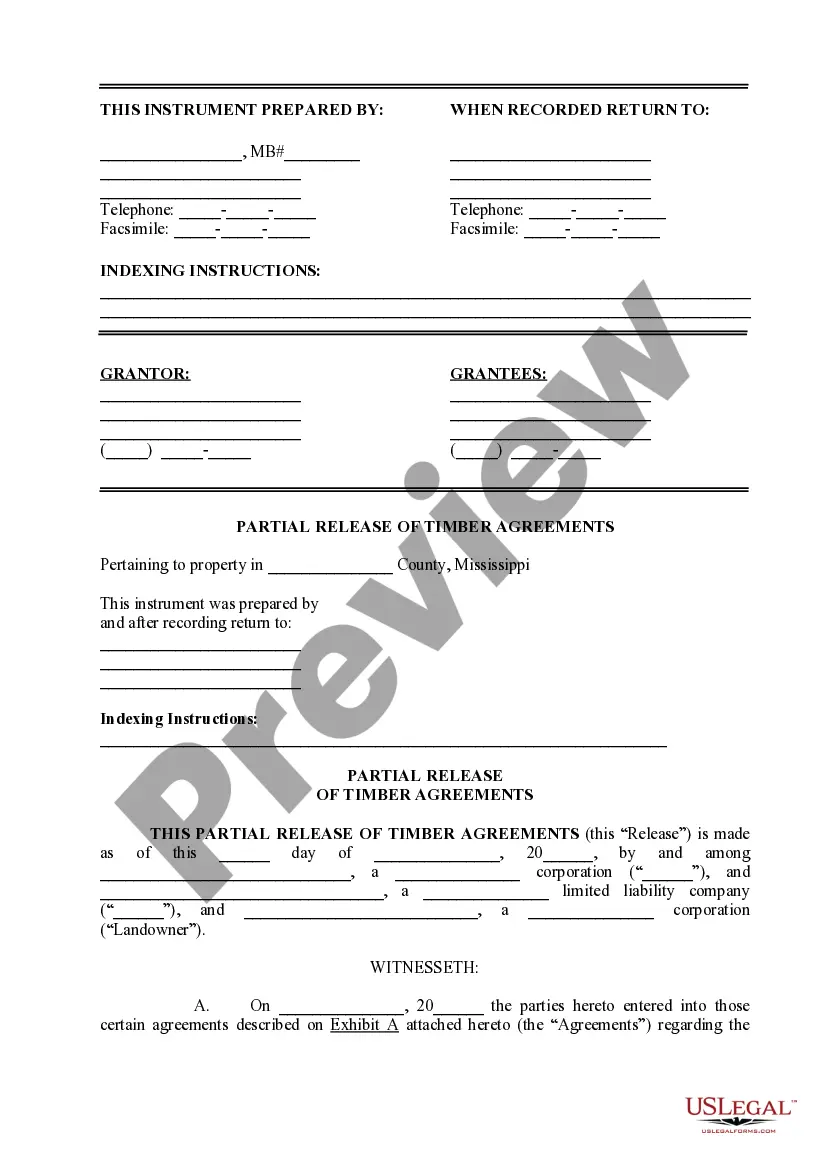
Pennsylvania Last Will and Testament for Widow or Widower with Minor Children
What this document covers
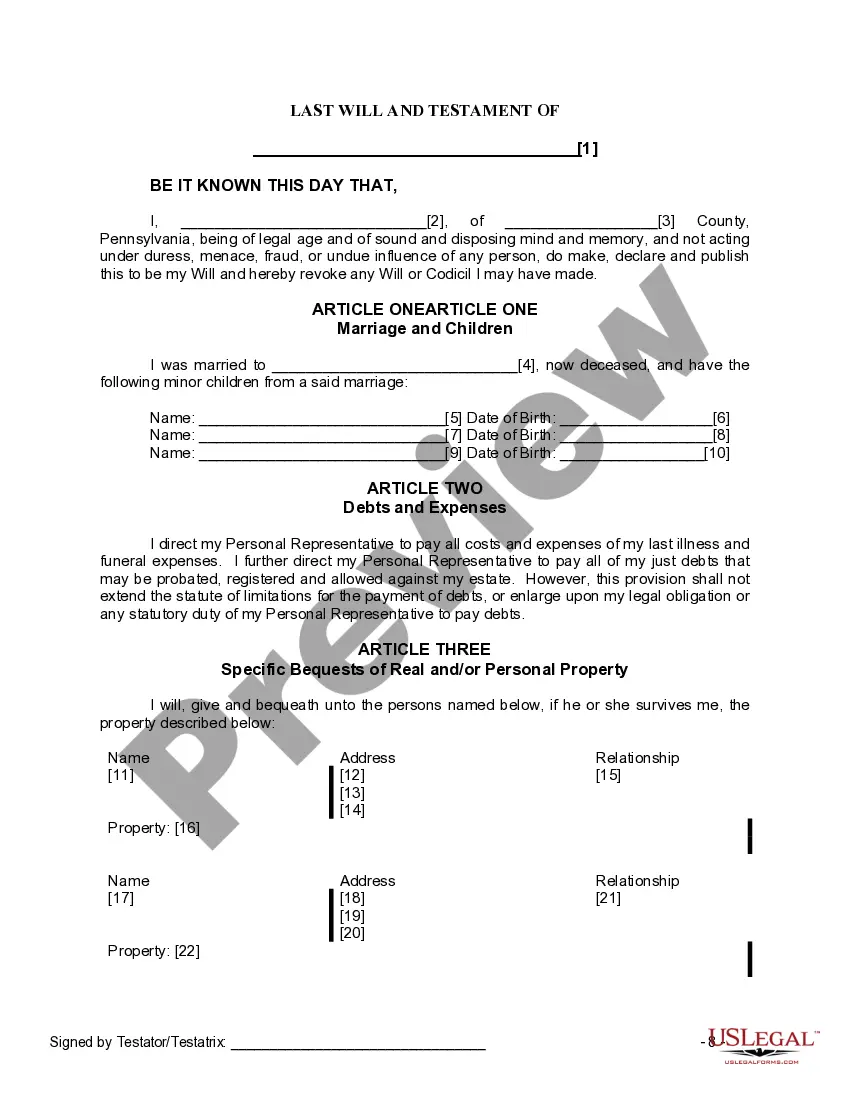
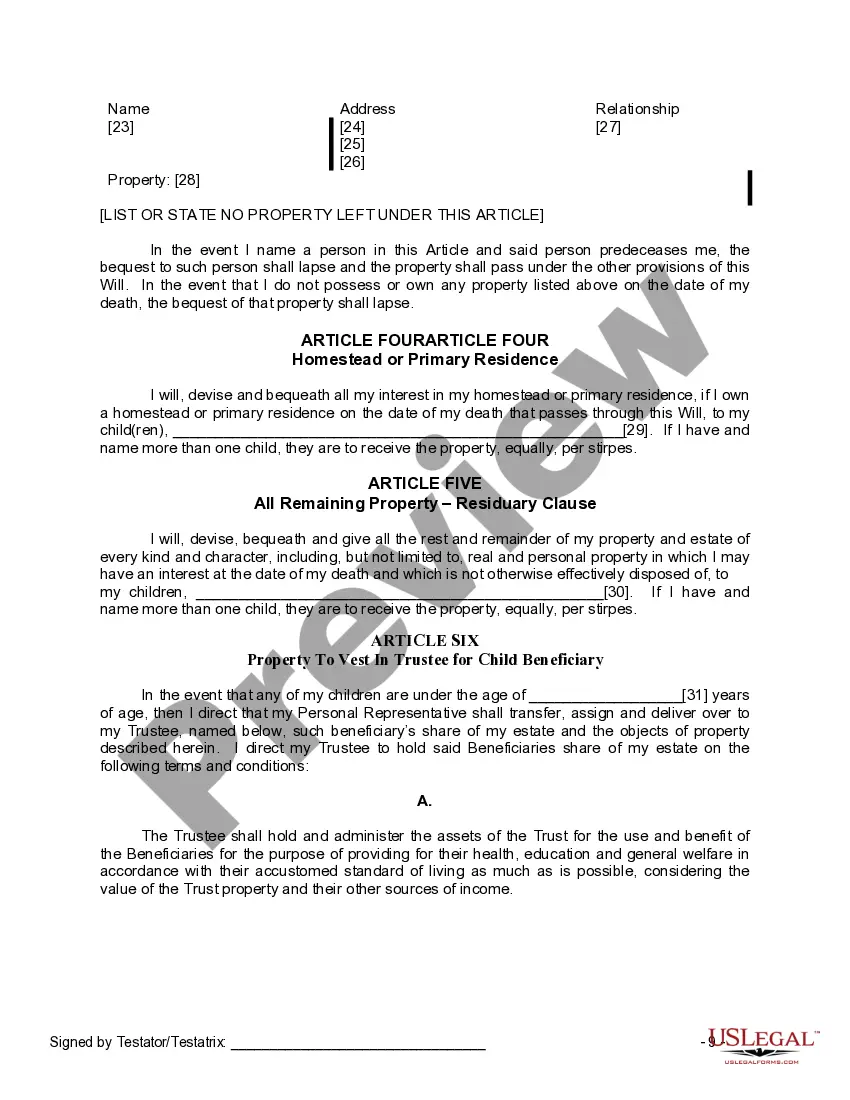
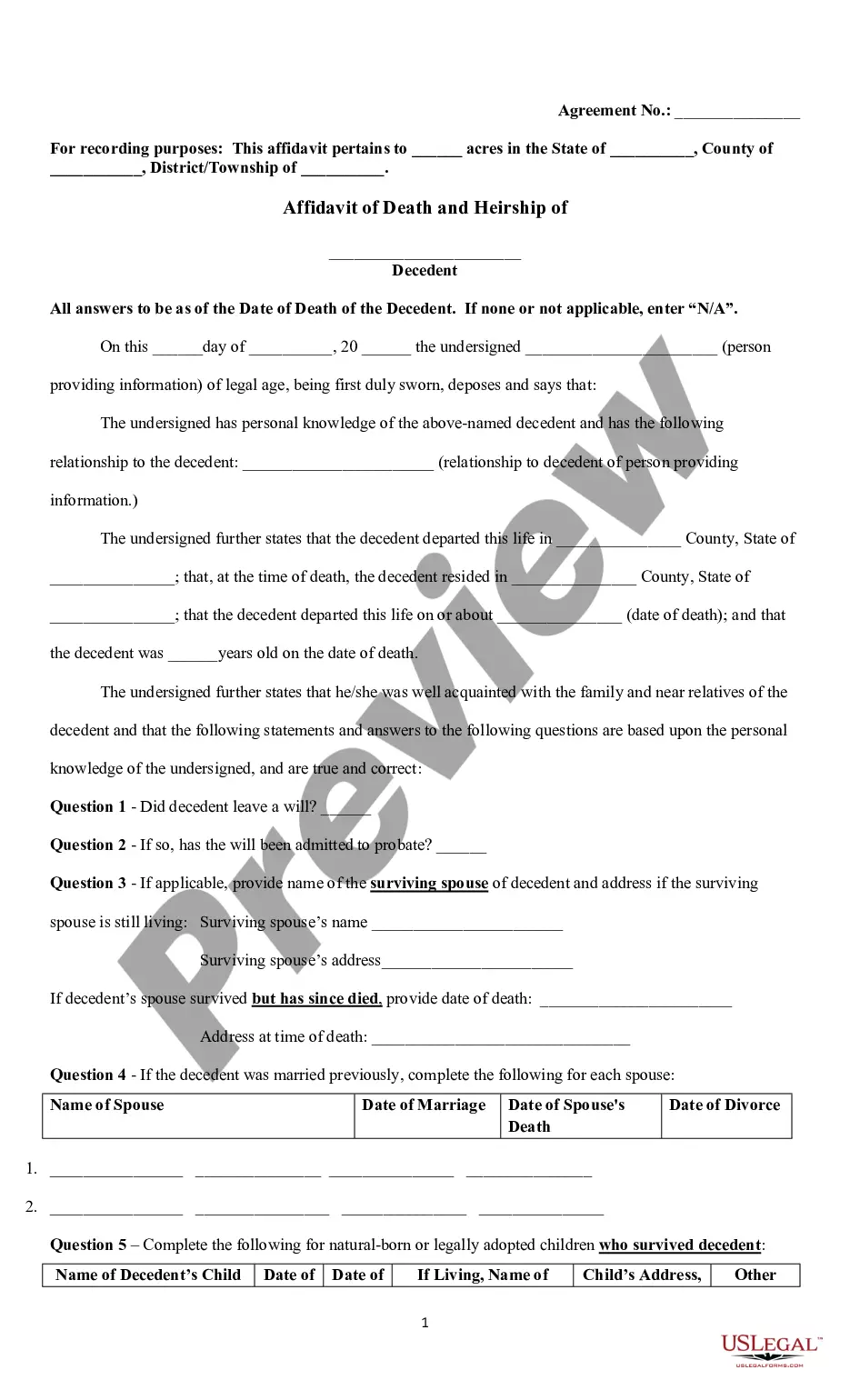
The Last Will and Testament for Widow or Widower with Minor Children is a legal document that outlines how a deceased person's assets should be distributed, particularly when they leave behind minor children. This form is specifically tailored for individuals who are widowed and provides instructions to appoint guardians, trustees, and specify beneficiaries for their estate, ensuring that the needs of minor dependents are adequately addressed. Unlike general wills, this document includes unique provisions relevant to the situation of a surviving spouse with children.
What’s included in this form
- Appointment of a personal representative or executor for estate management.
- Designation of beneficiaries who will receive the deceasedâs property.
- Provisions for appointing a guardian for minor children.
- Creation of a trust to manage assets intended for minor beneficiaries.
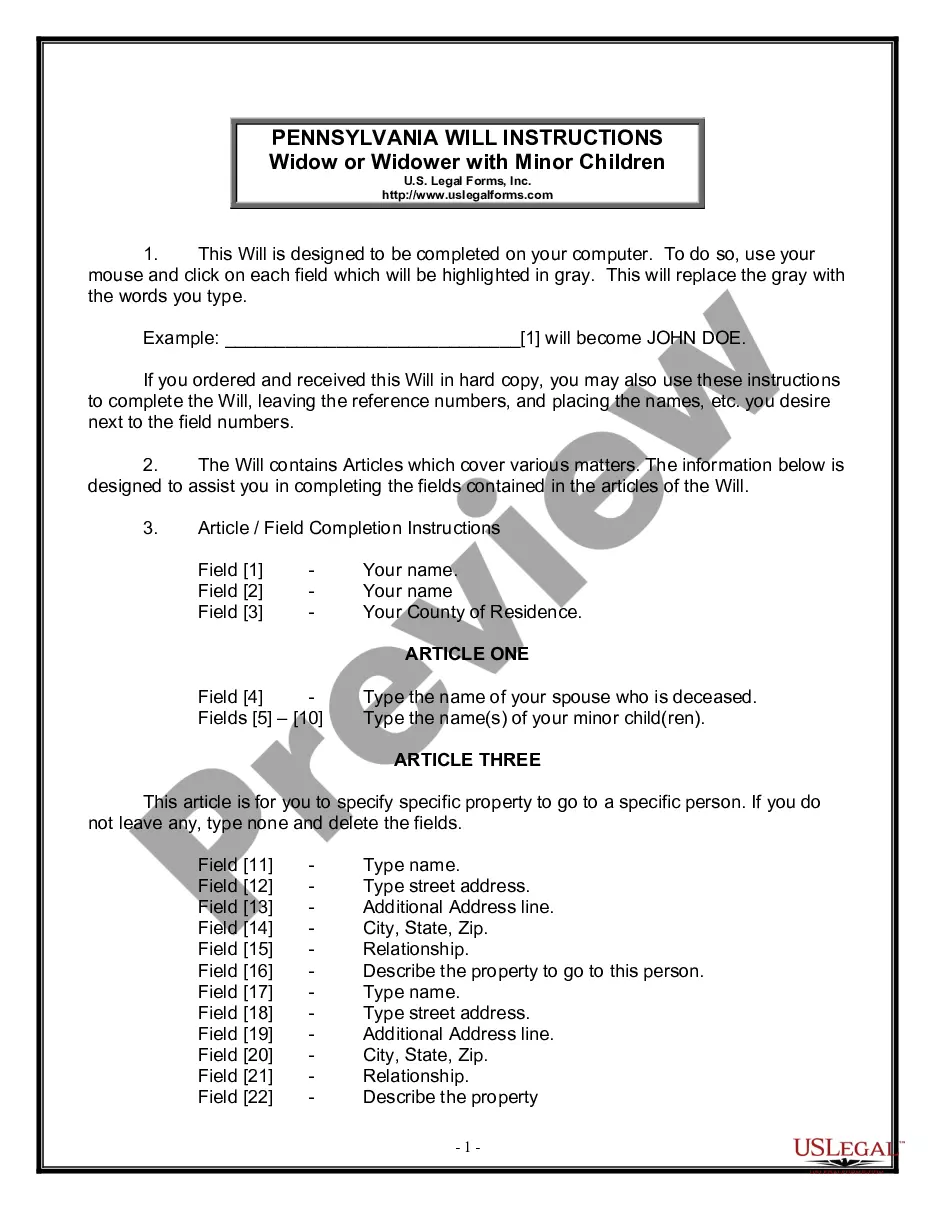
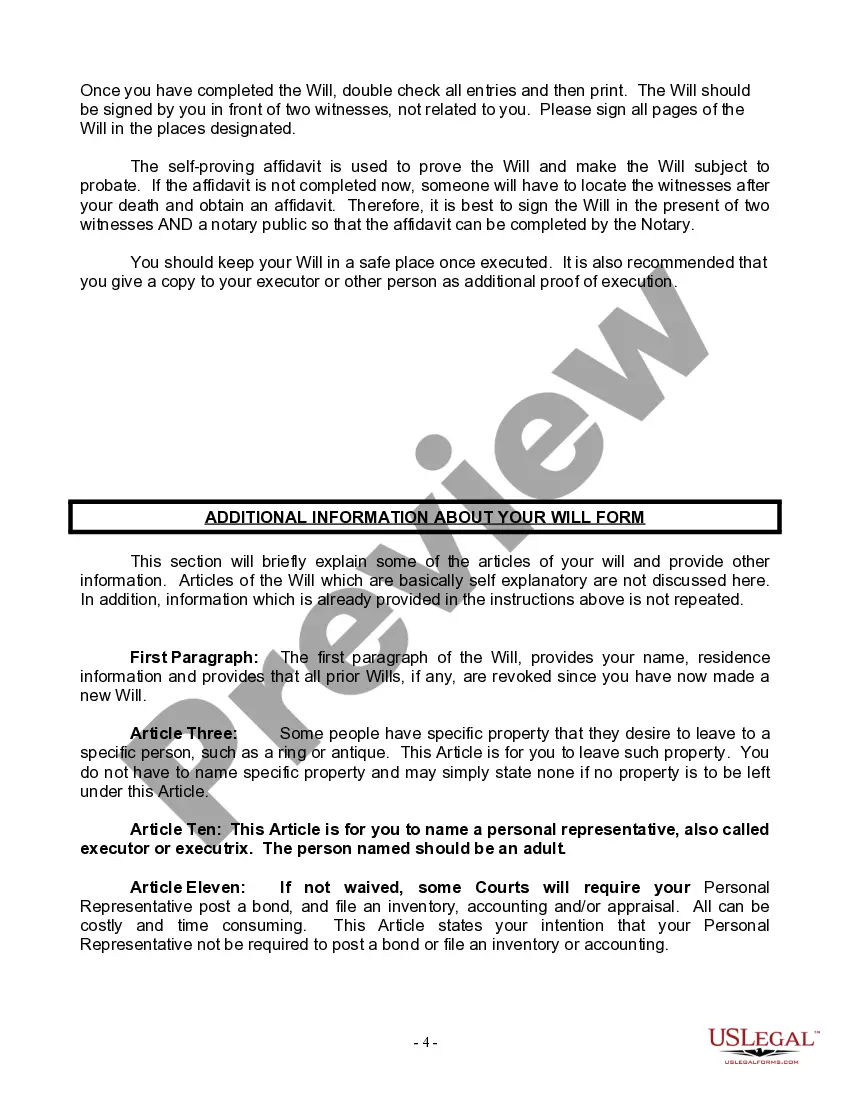
- Instructions for the Willâs execution and witness requirements.








When to use this document
This form should be used by a widow or widower who has minor children and wishes to ensure their assets are managed and distributed according to their wishes after their death. It is particularly important if the individual has specific desires regarding guardianship and asset management for their children. This form is appropriate when the individual wants to avoid intestacy laws that may complicate the distribution of their estate.
Intended users of this form
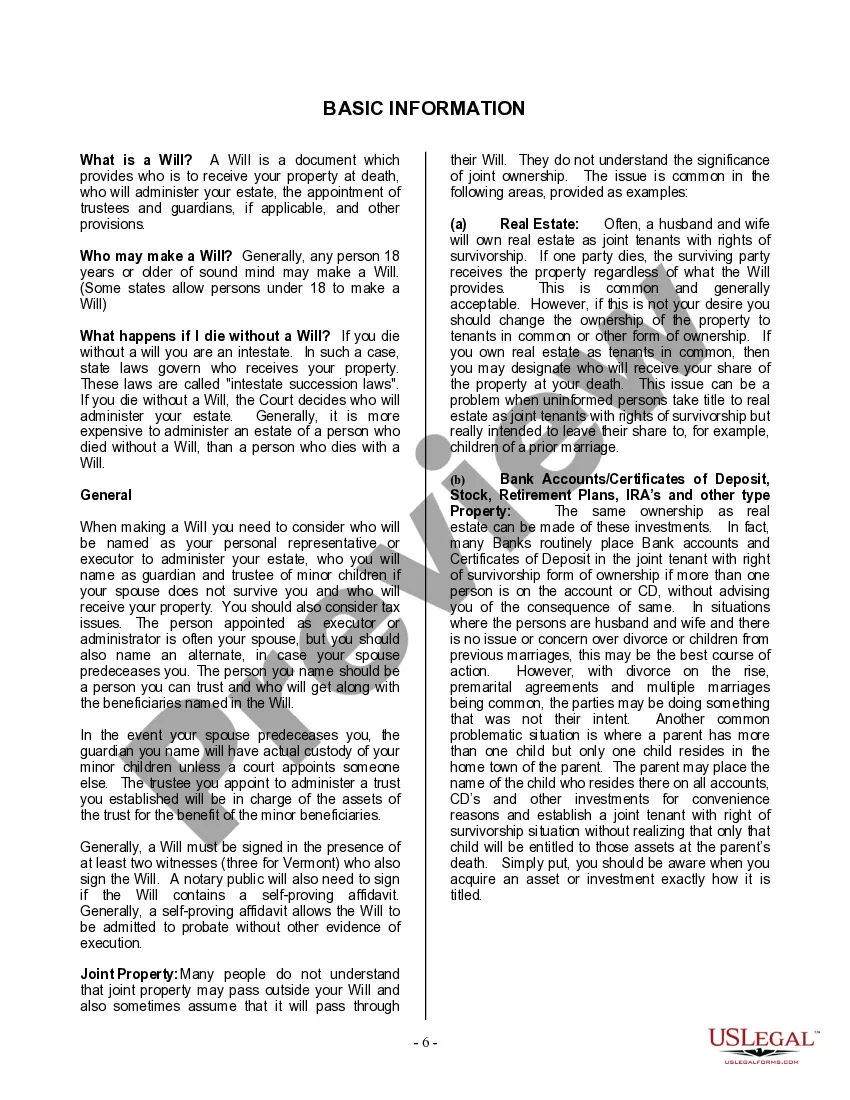
- Individuals over the age of eighteen who are widowed and have minor children.
- Surviving spouses looking to outline specific wishes for their estate and guardianship of their children.
- Persons who prefer to have a legal document prepared in advance rather than leaving decisions up to the state.
How to prepare this document
- Identify and enter your full name and county of residence.
- Provide the name of your deceased spouse and the names of your minor children.
- Specify any specific property that you want to bequeath to named individuals.
- Select a personal representative and a successor representative for your estate.
- Sign the document in front of two witnesses and a notary public, if applicable, ensuring compliance with local laws.
Notarization requirements for this form
Yes, this form must be notarized to be legally valid if it includes a self-proving affidavit. This requirement helps streamline the probate process by confirming the authenticity of signatures. Users can take advantage of US Legal Formsâ integrated online notarization for secure and convenient service.
Get your form ready online
Our built-in tools help you complete, sign, share, and store your documents in one place.
Make edits, fill in missing information, and update formatting in US Legal Forms—just like you would in MS Word.
Download a copy, print it, send it by email, or mail it via USPS—whatever works best for your next step.
Sign and collect signatures with our SignNow integration. Send to multiple recipients, set reminders, and more. Go Premium to unlock E-Sign.
If this form requires notarization, complete it online through a secure video call—no need to meet a notary in person or wait for an appointment.
We protect your documents and personal data by following strict security and privacy standards.

Make edits, fill in missing information, and update formatting in US Legal Forms—just like you would in MS Word.

Download a copy, print it, send it by email, or mail it via USPS—whatever works best for your next step.

Sign and collect signatures with our SignNow integration. Send to multiple recipients, set reminders, and more. Go Premium to unlock E-Sign.

If this form requires notarization, complete it online through a secure video call—no need to meet a notary in person or wait for an appointment.

We protect your documents and personal data by following strict security and privacy standards.
Mistakes to watch out for
- Failing to have the Will witnessed properly, which can invalidate the document.
- Not updating the Will after significant life events such as remarriage or the birth of additional children.
- Omitting critical details regarding guardianship or asset distribution that may lead to disputes later.
Benefits of using this form online
- Convenience of completing the form from home without the need for a legal office visit.
- Easy editing and customization to fit individual circumstances.
- Instant access to legal guidance and templates drafted by licensed attorneys.
What to keep in mind
- Utilizing a Last Will and Testament is essential to ensure your wishes are honored after death.
- Specific provisions in the Will can protect minor children and outline their future care.
- Always consult state laws to ensure compliance and validity of the Will.
Looking for another form?
Form popularity
FAQ
Identify beneficiaries. One of the main purposes of a last will is distributing your assets to certain people upon your death. Perform an inventory of property. Decide who gets what. Designate a personal representative. Draft the final will.
To create a valid will in Pennsylvania, the will creator (testator) must be 18 years of age and must possess a sound mind. Possessing a sound mind means that the testator is mentally competent and fully understands what property they own and who they are conveying their property to.
The Pennsylvania self-proving affidavit form is a legal instrument which acts as sworn testimony on behalf of two (2) witnesses and the Testator for the Testator's Last Will and Testament.Both witnesses must be impartial and, therefore, cannot be named beneficiaries themselves.
To create a valid will in Pennsylvania, the will creator (testator) must be 18 years of age and must possess a sound mind. Possessing a sound mind means that the testator is mentally competent and fully understands what property they own and who they are conveying their property to.
Self-written wills are typically valid, even when handwritten, as long as they're properly witnessed and notarized, or proven in court. A handwritten will that is not witnessed or notarized is considered a holographic will. Not all states accept holographic wills .
For example, California requires that all sections of the will necessary to make the will valid must be written entirely by hand and that the person writing the will must sign it. If these state rules aren't followed, the holographic will won't be valid.
No, in Pennsylvania, you do not need to notarize your will to make it legal. However, you must go to a notary to make your will self-proving, see above.
A handwritten will may be legal in Pennsylvania depending on the individual circumstances. Under Pennsylvania state code, wills must be in writing and signed by the person making the will, known as the testator.The state of Pennsylvania therefore makes no legal distinction between a handwritten and typed will.