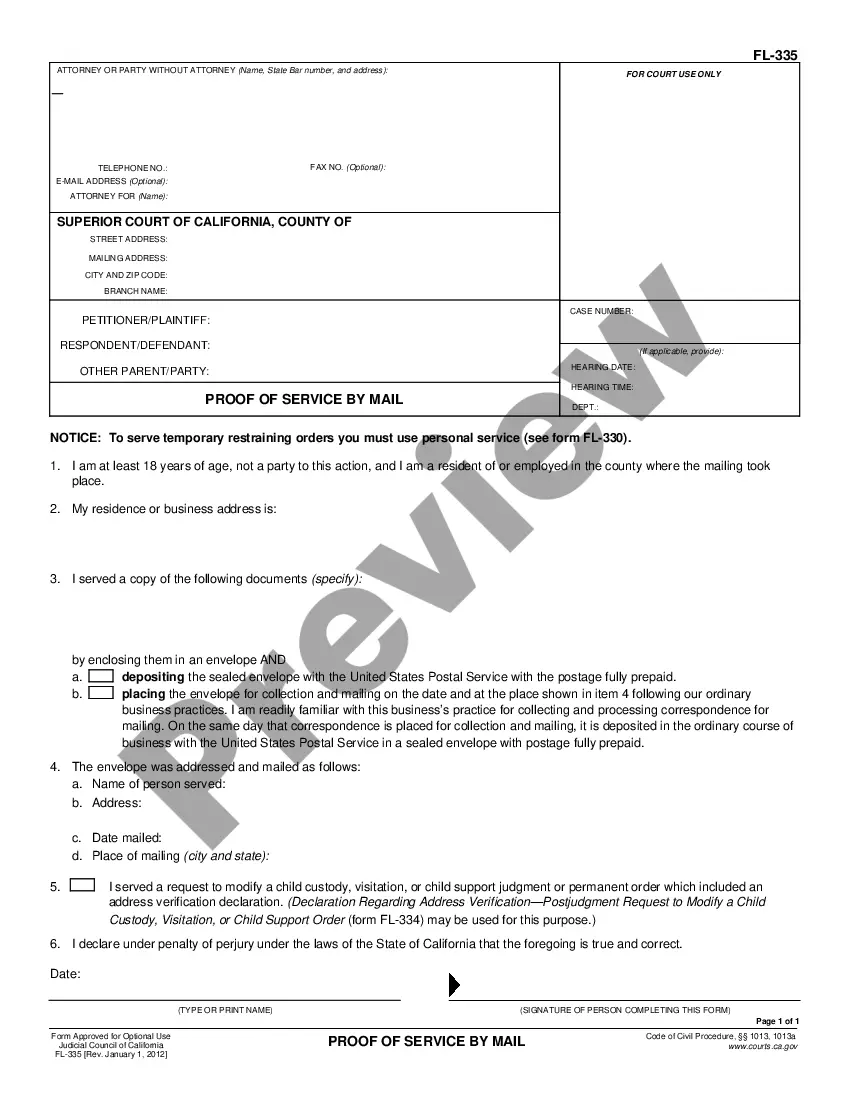
Mississippi Answer
Overview of this form
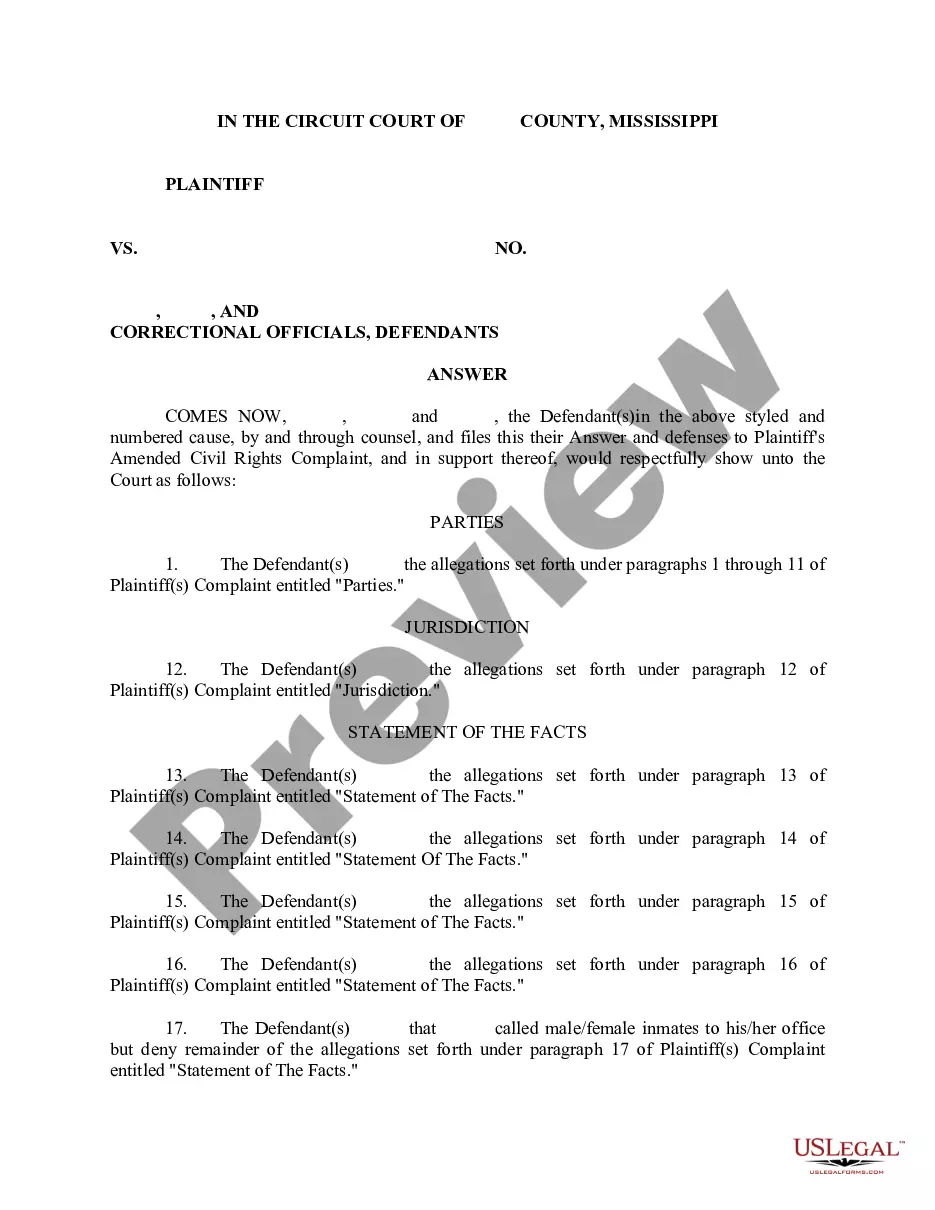
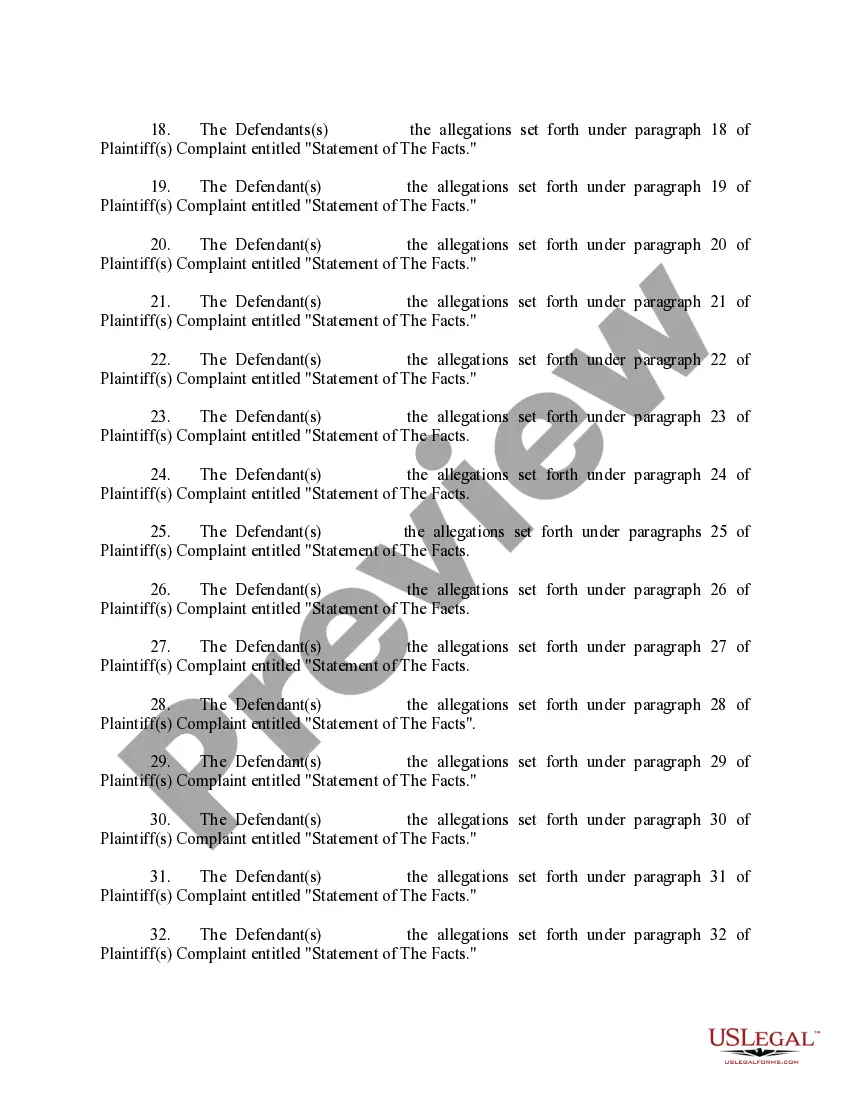
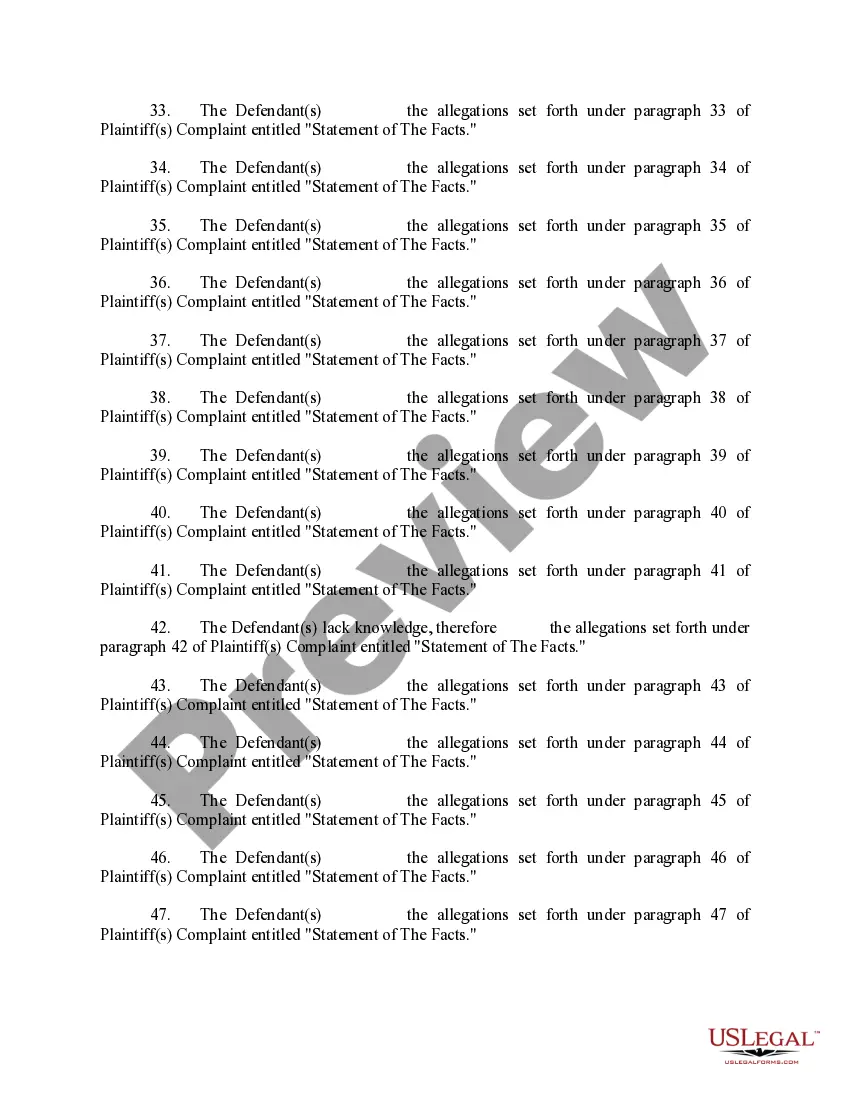
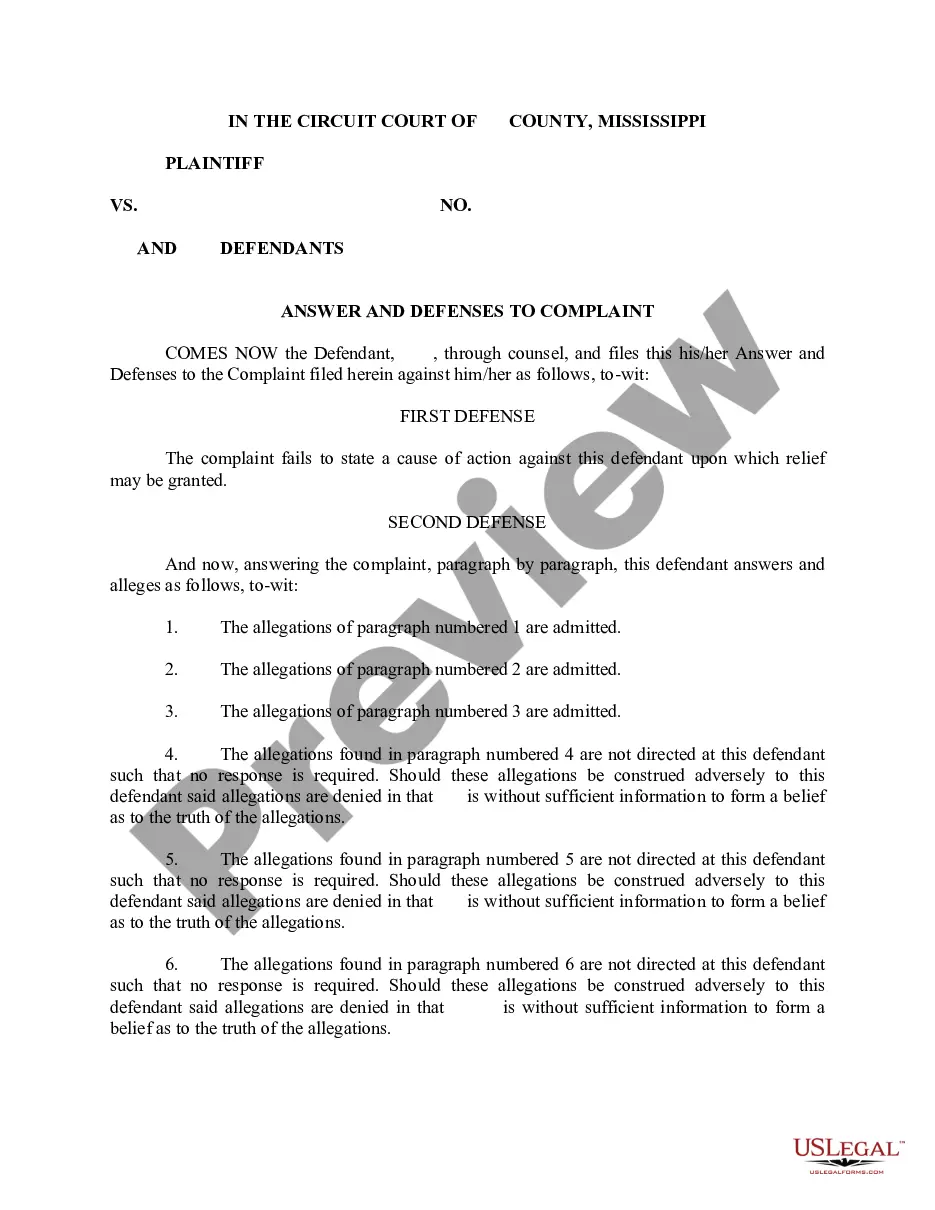
The A03 Answer is a legal document filed in response to a complaint that initiates a lawsuit. This form allows a defendant to formally respond to the allegations made by the plaintiff, outlining defenses and any affirmative matters. Unlike other forms, the A03 Answer focuses specifically on addressing the claims within the complaint, making it essential in the litigation process.
Key components of this form
- Introduction to the response, including the identification of the plaintiff and defendant.
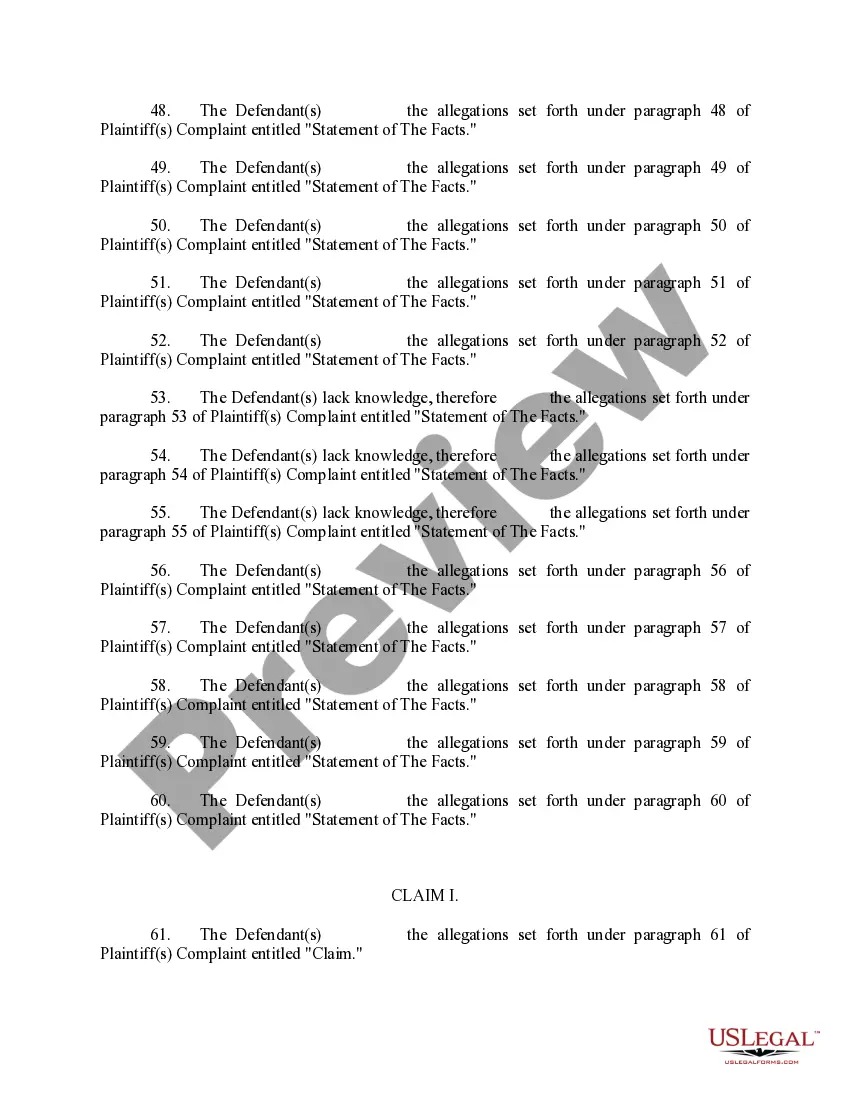
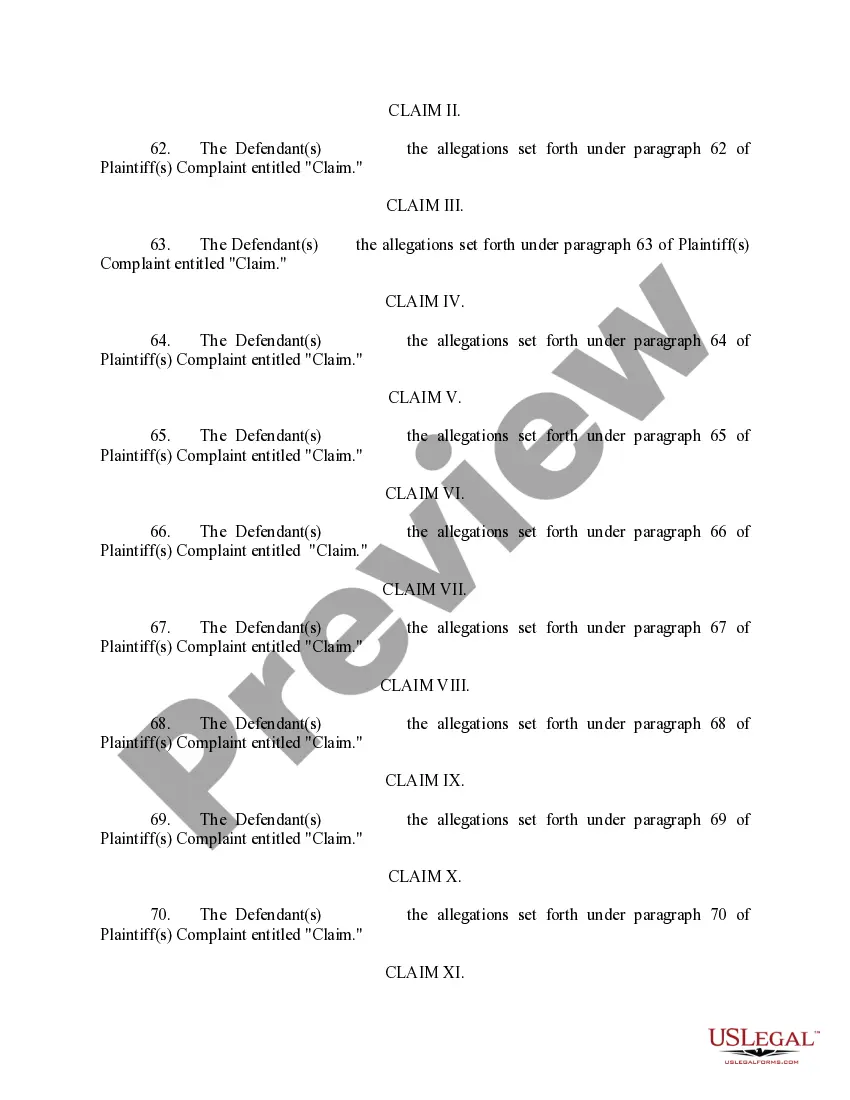
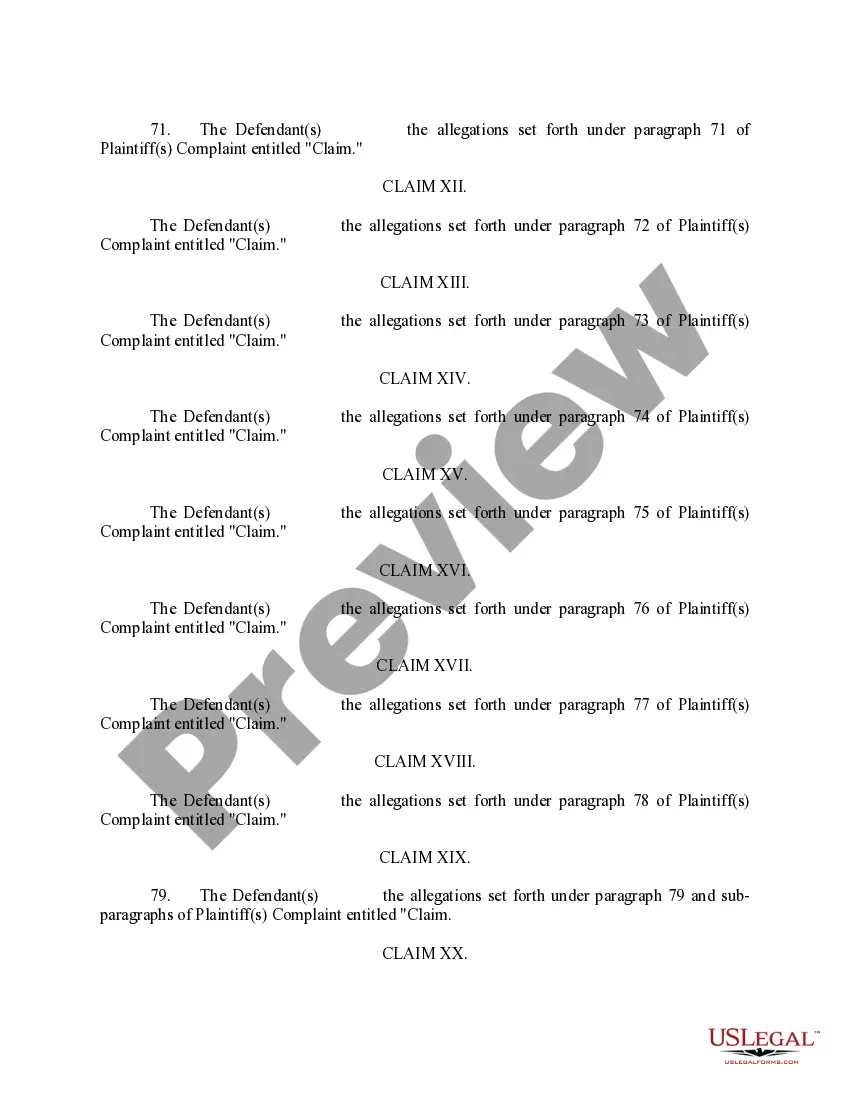
- Paragraph-by-paragraph response to the allegations in the complaint.
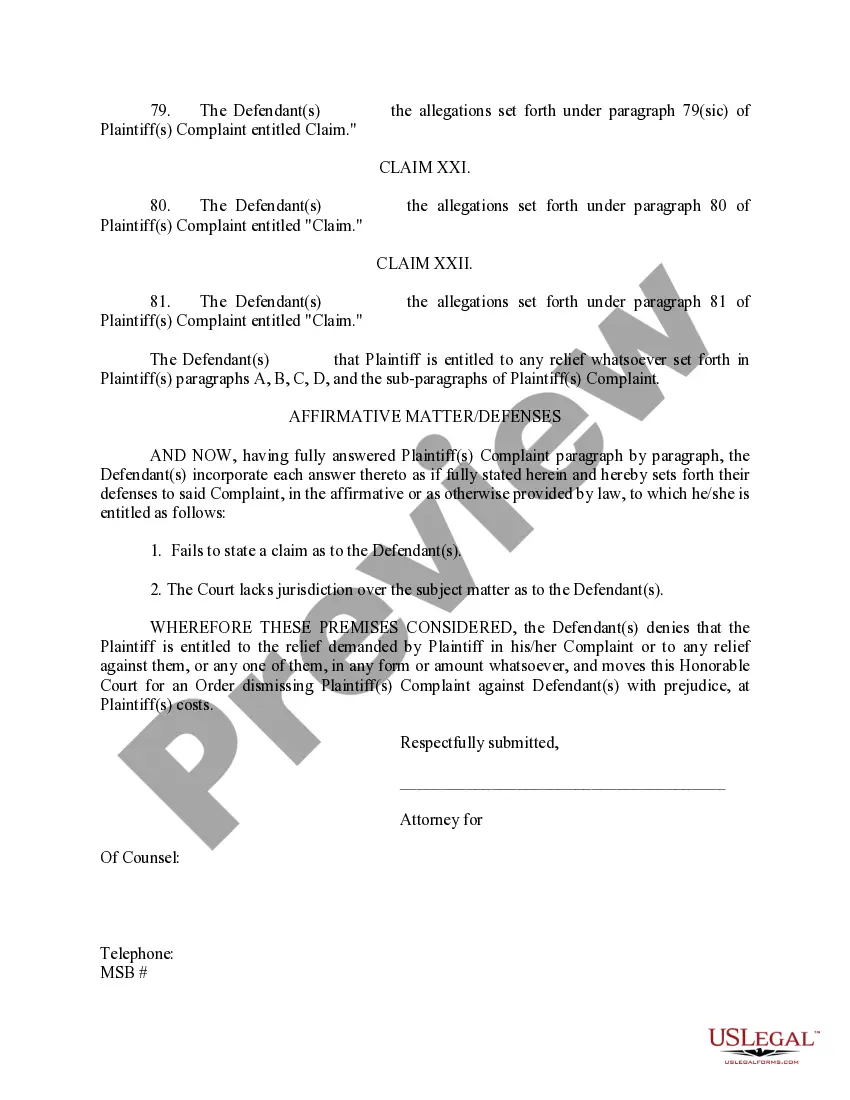
- Affirmative defenses that outline the reasons why the plaintiff's claims should be dismissed.
- A final statement requesting the court to dismiss the complaint with prejudice.

Common use cases
This form is used when a defendant has received a complaint and needs to respond legally. It is essential in any type of lawsuit, whether civil, small claims, or other forms of legal action. Using this form ensures that the defendant's side of the story is presented, and it preserves the right to contest the claims made by the plaintiff.
Intended users of this form
- Individuals or entities that have been served with a lawsuit or complaint.
- Defendants who wish to respond formally to the allegations made by the plaintiff.
- Legal representatives aiming to defend their clients against claims in court.
How to complete this form
- Identify the parties involved, including the plaintiff and defendant names.
- Address each allegation in the complaint, providing a specific response to each paragraph.
- Include any affirmative defenses that apply to the case.
- Complete the closing section, requesting the court to dismiss the plaintiff's complaint.
- Sign and date the form to validate your response.
Notarization guidance
This form does not typically require notarization unless specified by local law. Users should verify their jurisdiction's requirements to ensure compliance.
Get your form ready online
Our built-in tools help you complete, sign, share, and store your documents in one place.
Make edits, fill in missing information, and update formatting in US Legal Forms—just like you would in MS Word.
Download a copy, print it, send it by email, or mail it via USPS—whatever works best for your next step.
Sign and collect signatures with our SignNow integration. Send to multiple recipients, set reminders, and more. Go Premium to unlock E-Sign.
If this form requires notarization, complete it online through a secure video call—no need to meet a notary in person or wait for an appointment.
We protect your documents and personal data by following strict security and privacy standards.

Make edits, fill in missing information, and update formatting in US Legal Forms—just like you would in MS Word.

Download a copy, print it, send it by email, or mail it via USPS—whatever works best for your next step.

Sign and collect signatures with our SignNow integration. Send to multiple recipients, set reminders, and more. Go Premium to unlock E-Sign.

If this form requires notarization, complete it online through a secure video call—no need to meet a notary in person or wait for an appointment.

We protect your documents and personal data by following strict security and privacy standards.
Common mistakes to avoid
- Failing to respond to each allegation individually.
- Neglecting to include affirmative defenses where applicable.
- Omitting the signature or failing to date the form.
- Using overly complex language instead of clear, straightforward responses.
Why use this form online
- Convenient access to the form anytime, anywhere, allowing quick downloads.
- Edit and customize the document easily to fit your specific legal needs.
- Reliable templates drafted by licensed attorneys, ensuring legal compliance.
Legal use & context
- Recognized as a legitimate legal document in court settings.
- Failure to file an Answer may result in unfavorable legal outcomes.
- May be subject to specific territorial laws and rules based on the jurisdiction.
Main things to remember
- The A03 Answer is critical for responding to a Complaint in any lawsuit.
- It is essential to customize and accurately complete the form to present valid defenses.
- Ensure compliance with local jurisdictional requirements when filing.
Looking for another form?

Form popularity
FAQ
The law prohibits a person from following someone in or about a public place if done with intent to harass, annoy or alarm that person. You can report anyone who follows you to harass, annoy or alarm you.
If the judge is satisfied, he or she will issue a temporary protective order that will last ten days, but which can be extended upon request, up to the maximum length of one year, but can only last 30 days where the victim has minor children with the abuser.
In the law, we call these elements. California Code of Civil Procedure section 527.6 provides the party asking for the civil harassment restraining order must prove 1) a course of conduct composed of a series of acts over a period of time, however short, evidencing a continuity of purpose; 2) directed at a specific
(1) Any person who willfully, maliciously and repeatedly follows or harasses another person, or who makes a credible threat, with the intent to place that person in reasonable fear of death or great bodily injury is guilty of the crime of stalking, and upon conviction thereof shall be punished by imprisonment in the
The civil harassment laws say harassment is: Unlawful violence, like assault or battery or stalking, OR. A credible threat of violence, AND. The violence or threats seriously scare, annoy, or harass someone and there is no valid reason for it.
Under section 93-21-7(2) of the Mississippi Code, there is no cost to file for a protection order. . temporary restraining order. the clerk will fill out the information for you.
Proof of similar threats from the same person in the past. Footage of the incident(s) Testimonies from witnesses.
Criminal cases can end with a misdemeanor or felony conviction and can be punishable by prison time. A harassment charge is a legal charge filed against someone who intimidates, threatens, stalks, or otherwise makes another person feel unsafe or annoyed.