Minnesota Trim Carpentry Contractor Package
What is this form package?
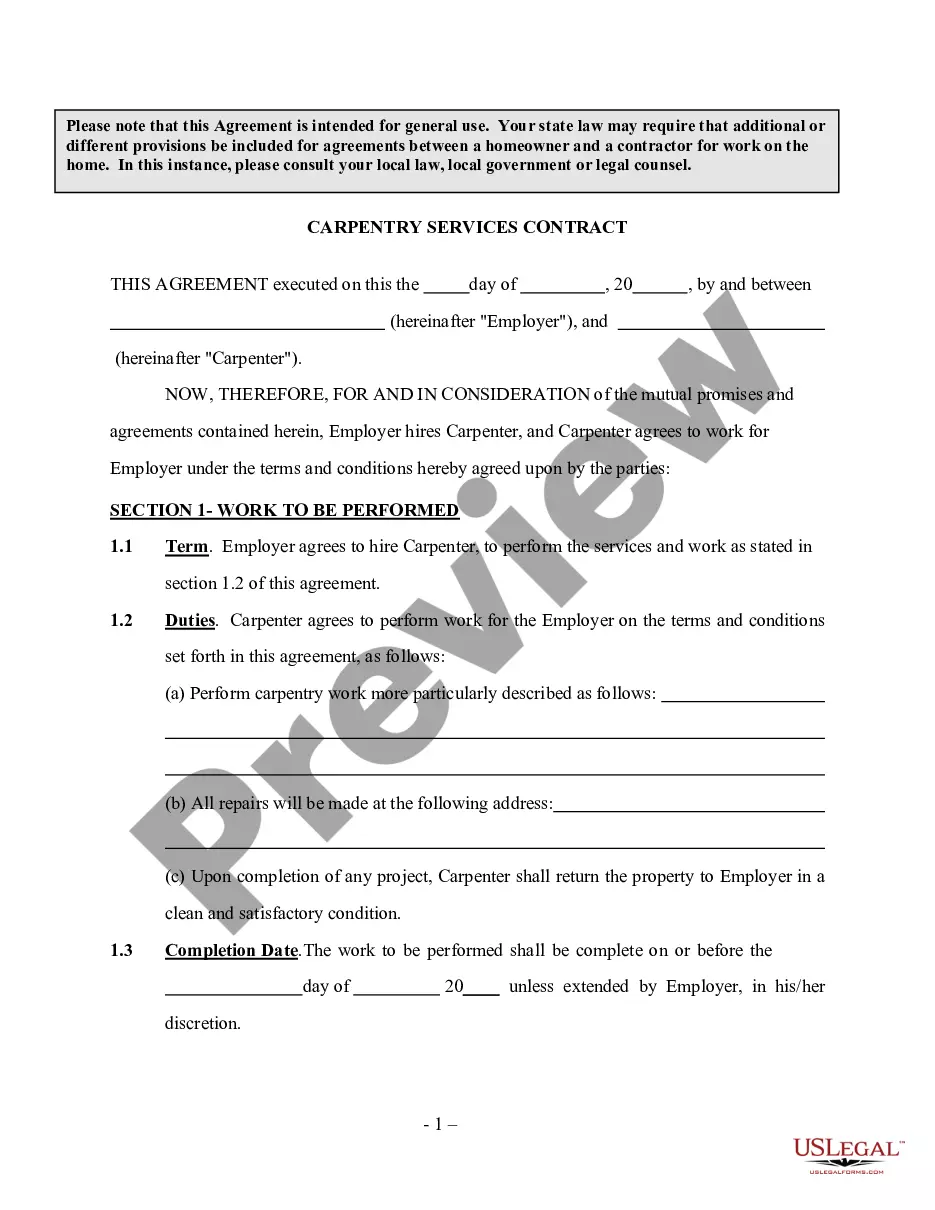
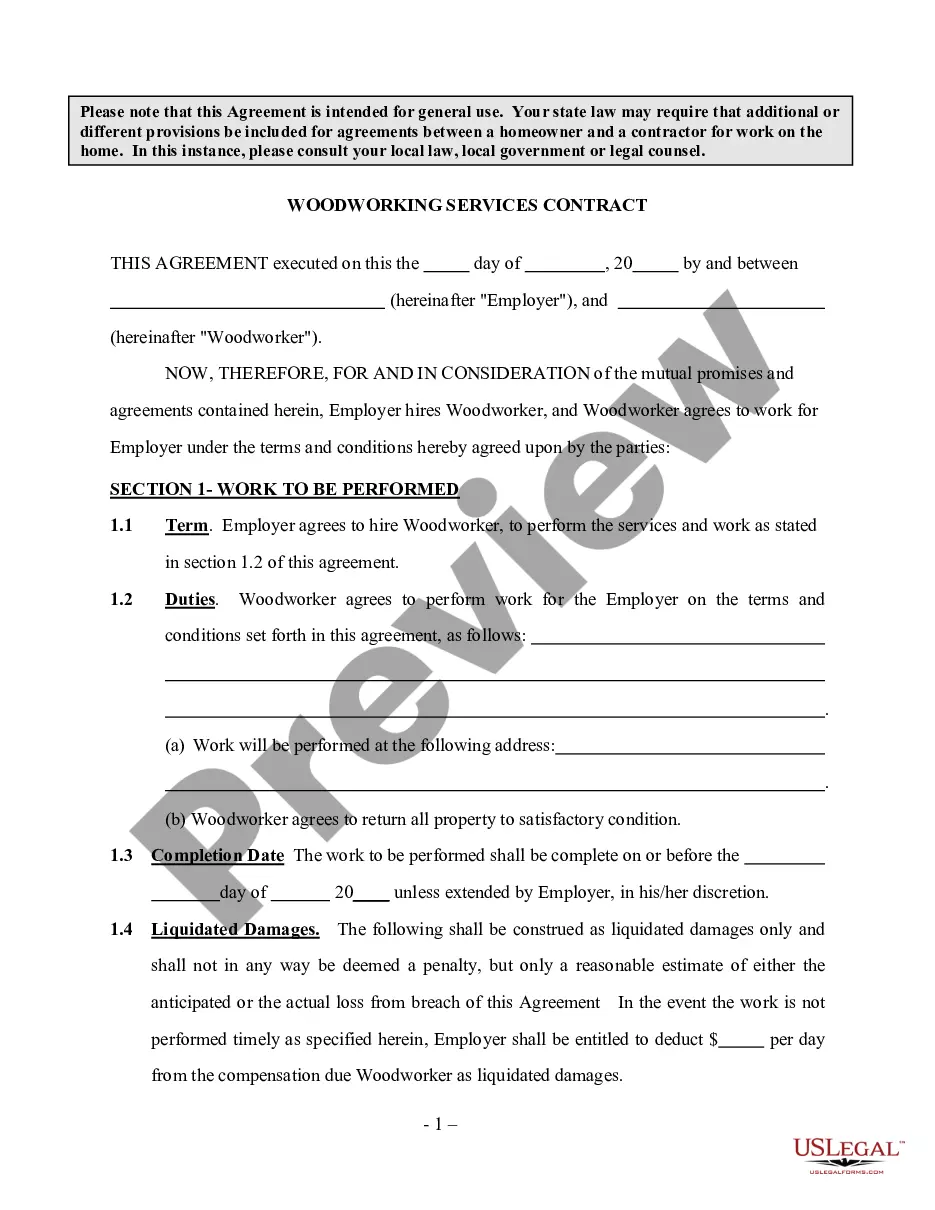
The Minnesota Trim Carpentry Contractor Package provides essential legal documents specifically designed for contractors who install millwork, cabinetry, or other trim finishes in residential structures. This package not only allows contractors to assert their legal rights and claims but also addresses crucial legal issues that may arise during their projects. Central to this package is the Trim Construction Contract, which complies with Minnesota state law, differentiating it from other general contractor form packages by tailoring it to the specific needs and regulations of this industry in Minnesota.
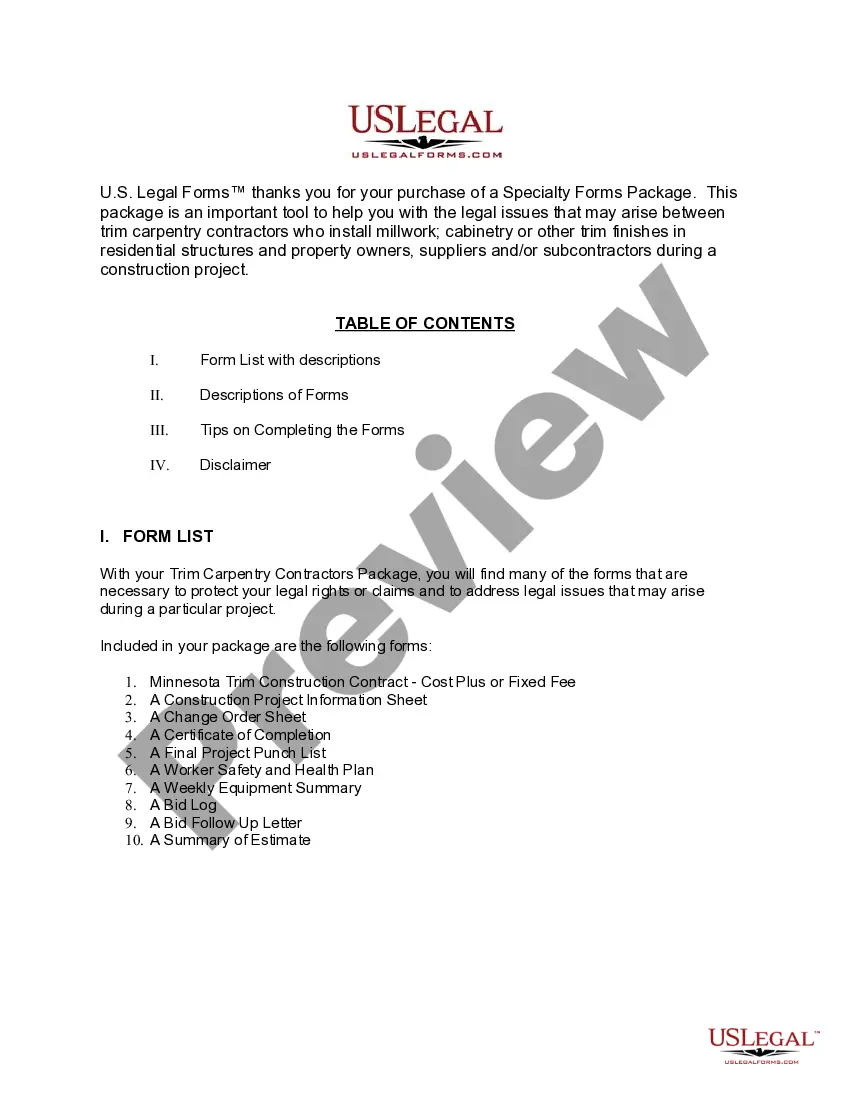
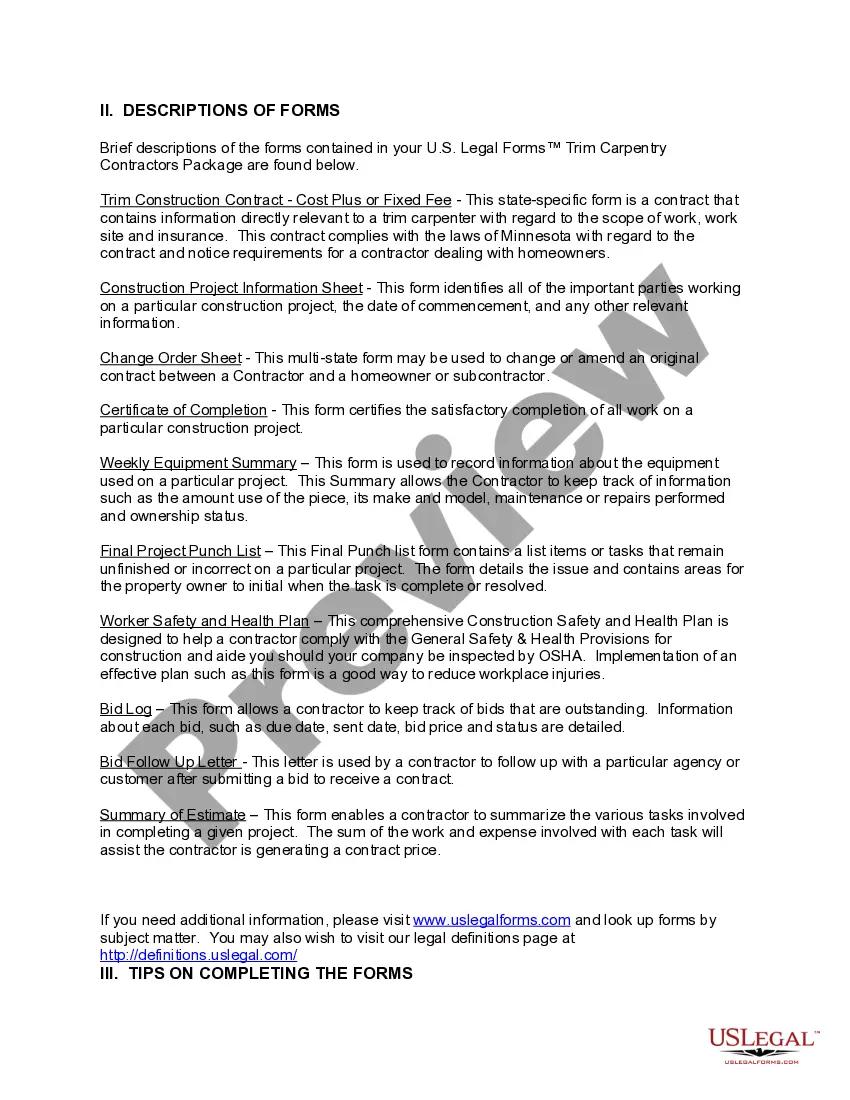
Forms you’ll find in this package
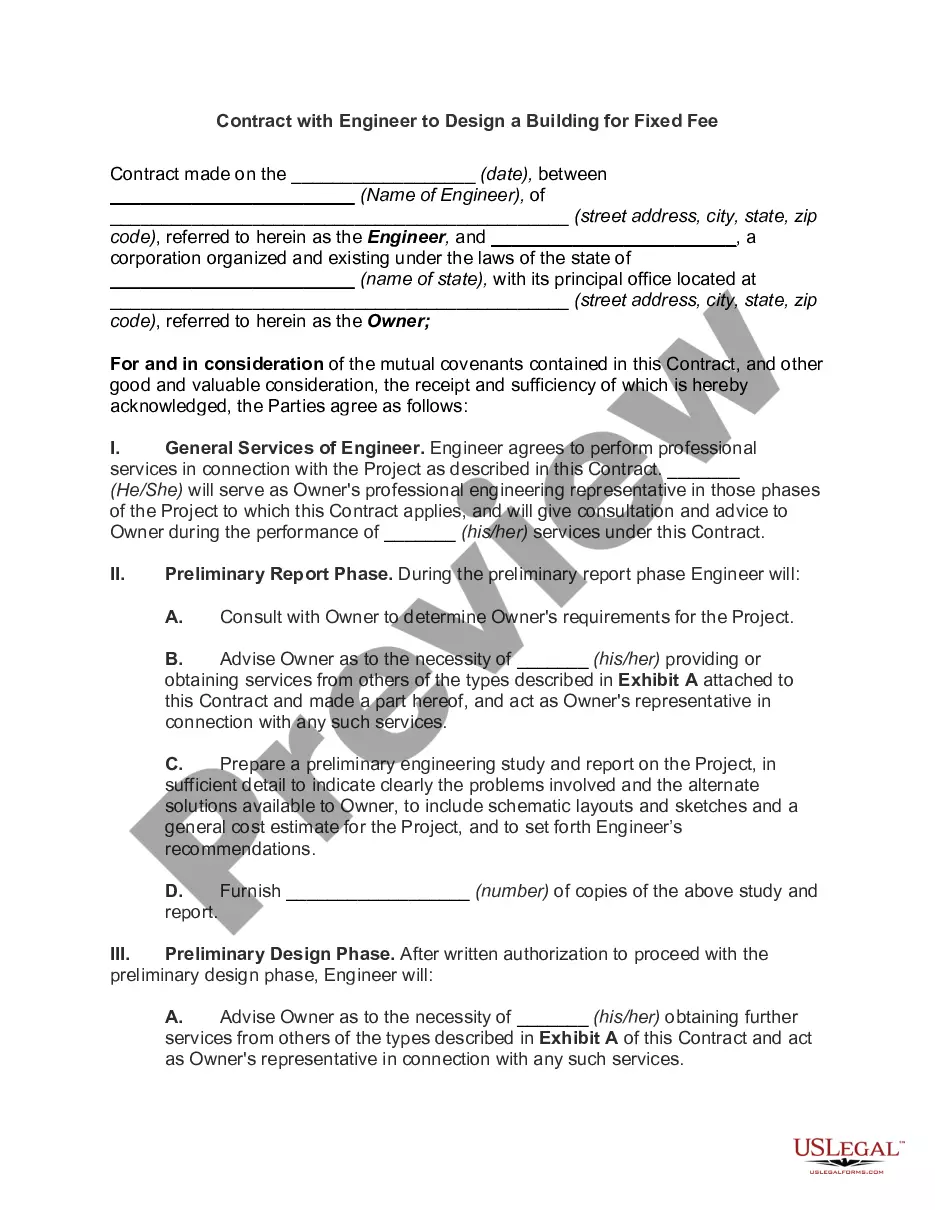
- Trim Carpenter Contract for Contractor
- Contractor's Weekly Equipment Summary
- Contractor's Bid Log
- Contractor's Bid Follow Up Letter
- Contractor's Summary of an Estimate
- Contractor's Final Punch List
- Construction Safety and Health Plan
- Change Order for Construction or Repairs by Contractor
- Certification of Completion by Contractor
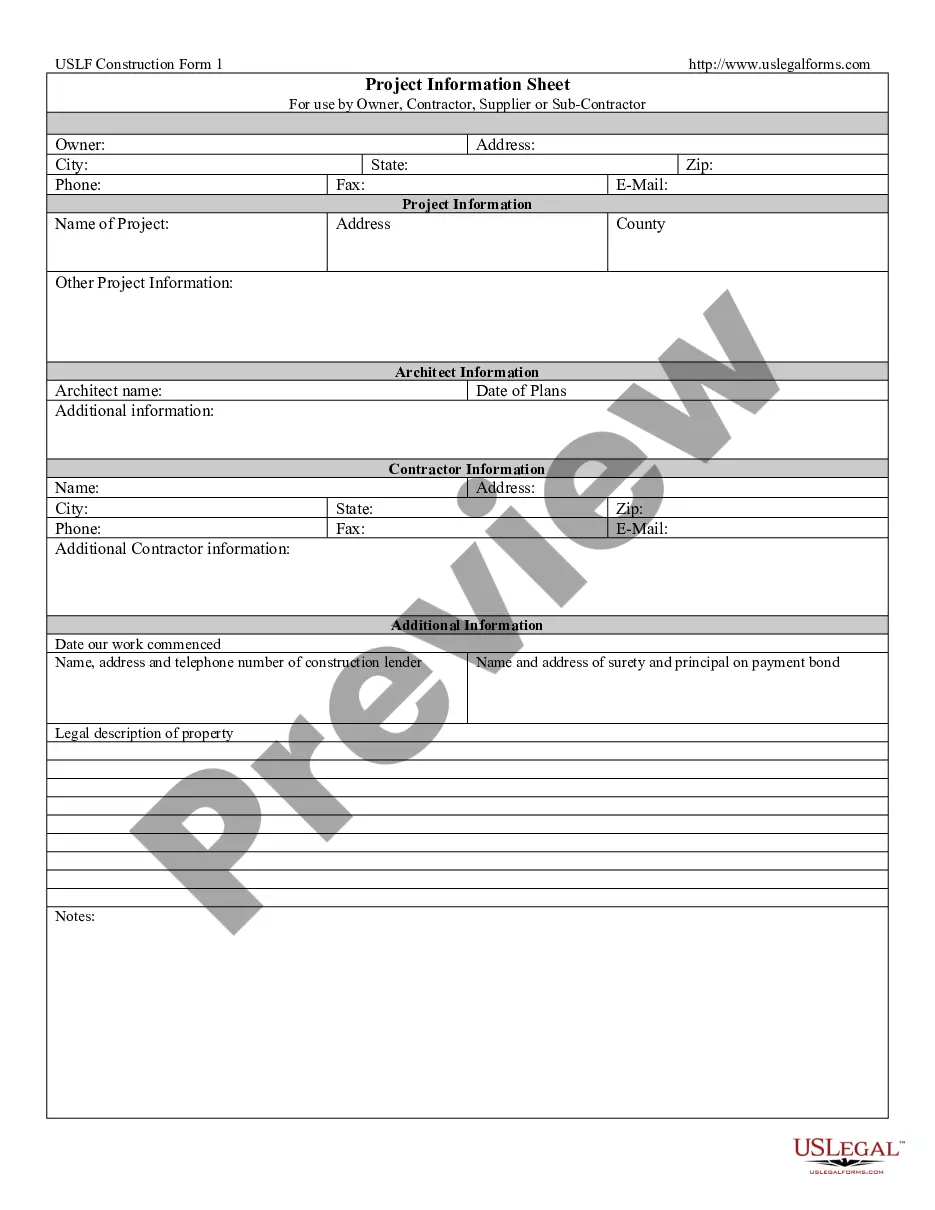
- Construction Project Information Sheet

When to use this document
This package is ideal for use in various scenarios, including:
- When starting a new trim carpentry project and needing a legally binding contract.
- To manage changes in the scope of work through change orders.
- To keep track of project completion and equipment usage.
- When documenting tasks that remain to be completed on a project with a final punch list.
Who can use this document
- Trim carpentry contractors working on residential projects in Minnesota.
- Contractors who require standard documentation for project management.
- Homeowners who wish to understand the contractual forms involved in their home projects.
Steps to complete these forms
- Review the included forms to understand the requirements for your specific project.
- Identify all parties involved in the construction project and accurately fill out the Construction Project Information Sheet.
- Customize the Trim Construction Contract by entering project specifics, including cost structure and timelines.
- Use the Change Order Sheet to formalize any amendments to the original contract.
- Collect necessary project documentation, such as the Weekly Equipment Summary and relevant safety plans.
- Finalize the project using the Certificate of Completion and Final Punch List to confirm completion and address any outstanding tasks.
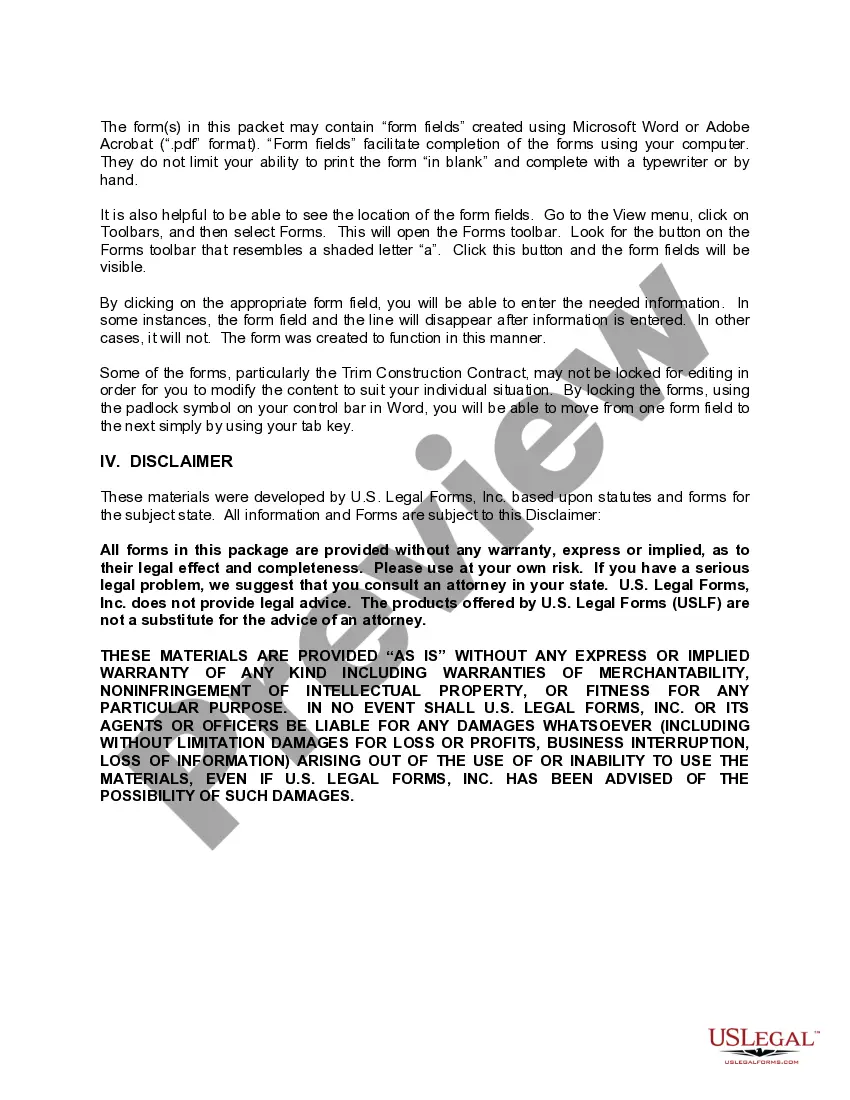
Do documents in this package require notarization?
Notarization is generally not required for forms in this package. However, specific circumstances or local laws may require it. You can complete notarization remotely through US Legal Forms, powered by Notarize, with 24/7 availability.
Get your form ready online
Our built-in tools help you complete, sign, share, and store your documents in one place.
Make edits, fill in missing information, and update formatting in US Legal Forms—just like you would in MS Word.
Download a copy, print it, send it by email, or mail it via USPS—whatever works best for your next step.
Sign and collect signatures with our SignNow integration. Send to multiple recipients, set reminders, and more. Go Premium to unlock E-Sign.
If this form requires notarization, complete it online through a secure video call—no need to meet a notary in person or wait for an appointment.
We protect your documents and personal data by following strict security and privacy standards.

Make edits, fill in missing information, and update formatting in US Legal Forms—just like you would in MS Word.

Download a copy, print it, send it by email, or mail it via USPS—whatever works best for your next step.

Sign and collect signatures with our SignNow integration. Send to multiple recipients, set reminders, and more. Go Premium to unlock E-Sign.

If this form requires notarization, complete it online through a secure video call—no need to meet a notary in person or wait for an appointment.

We protect your documents and personal data by following strict security and privacy standards.
Common mistakes
- Failing to specify project timelines and payment terms in the Trim Construction Contract.
- Neglecting to keep signed copies of documents for record-keeping.
- Overlooking necessary safety plans and certifications.
- Not updating the Change Order Sheet for modifications during the project.
Benefits of completing this package online
- Convenient online access allows for immediate downloads of legal documents.
- Edit forms digitally without errors associated with handwritten documents.
- Reliable templates that have been drafted by licensed attorneys, ensuring legal compliance.
- Time-saving, as the package contains all necessary forms in one complete bundle, rather than purchasing them separately.
Looking for another form?
Form popularity
FAQ
The general contractor test in Minnesota assesses an applicant's knowledge of building codes, construction practices, and business management. Passing this test ensures that contractors are equipped to manage construction projects safely and effectively. With the Minnesota Trim Carpentry Contractor Package, you can access resources to help you prepare for the test, ensuring you understand the essential concepts needed for success.
In Minnesota, subcontractors do not require a specific license to operate unless they perform certain types of work, such as electrical or plumbing services. However, it's important for subcontractors to work under a licensed general contractor. By utilizing the Minnesota Trim Carpentry Contractor Package, subcontractors can ensure they meet the necessary legal requirements while focusing on their craft.
Yes, you can be your own general contractor in Minnesota. This gives you the freedom to manage your project, schedule, and budget. However, keep in mind that being a general contractor also means that you are responsible for complying with local building codes and regulations. To streamline your process, consider utilizing the Minnesota Trim Carpentry Contractor Package from US Legal Forms, which provides essential documents and guidance to help you stay organized and legally compliant.
Check Contract Basics. The basic job of a contractor agreement is to spell out the scope of the project's work. Set a Payment Schedule. Schedule Start and End Dates. Specify Change Orders. Research Your Arbitration Options. Turn Down the Contractor's Warranty.
Identifying/Contact Information. Title and Description of the Project. Projected Timeline and Completion Date. Cost Estimate and Payment Schedule. Stop Work Clause and Stop Payment Clause. Act of God Clause. Change Order Agreement. Warranty.
Scope of Work, Selection Sheet and Drawings. License Number and Insurance. Description of Change Orders. Warranty information. Subcontractor Agreements. Payment schedule. Completion Schedule / Timeline. Clauses Required by Law.
Identify the parties involved in the contract. Determine the terms and conditions you want to include in your contract. Write a draft using all the details you have gathered. Ask opinion from people in the same line of business. Review and make changes to your work.