Alaska Company Employment Policies and Procedures Package
What is this form package?
The Alaska Company Employment Policies and Procedures Package is a comprehensive collection of legal forms designed to help businesses establish clear employment policies. This package stands out by providing tailored templates that address specific workplace issues, ensuring compliance with Alaska's legal regulations. By utilizing these documents, businesses can create a uniform understanding among employees and reduce the risk of grievances.
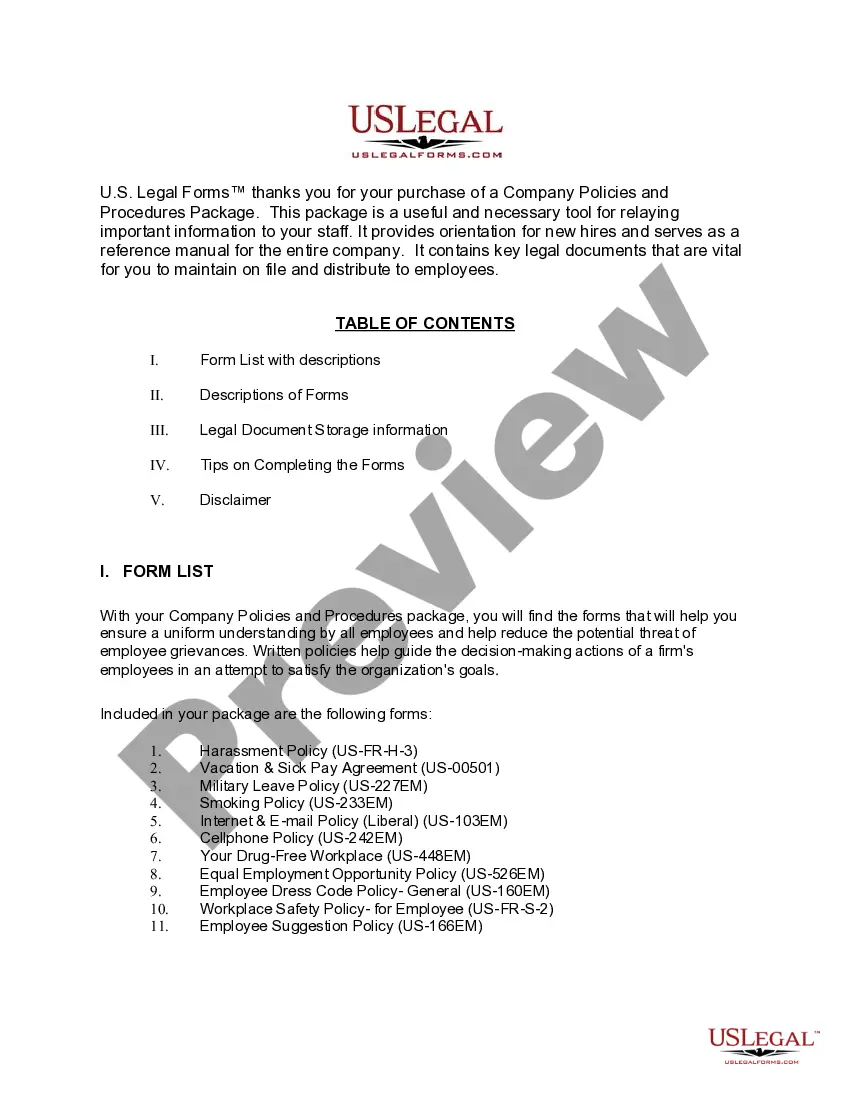
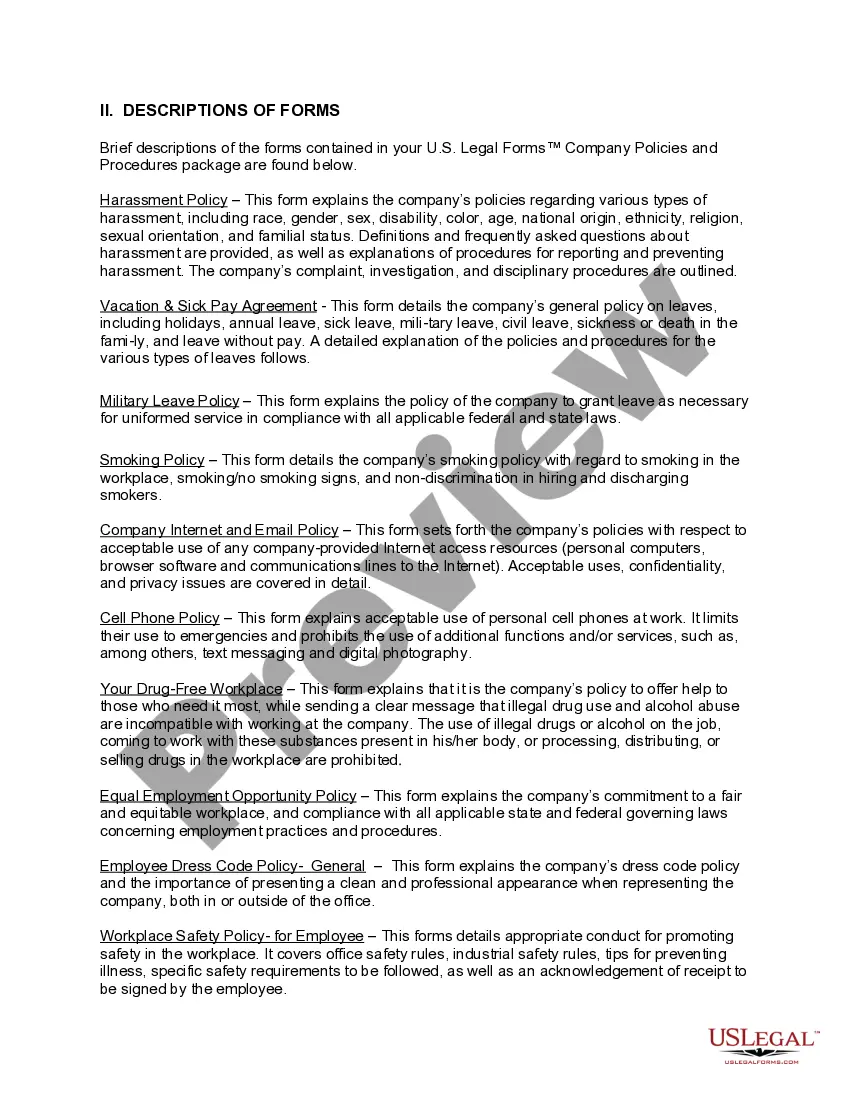
What’s included in this form package
- Employee Agreement - Vacation and Sick Pay
- Company Internet and Email Policy - Liberal
- Employee Dress Code Policy - General
- Employee Suggestion Policy
- Military Leave Policy
- Smoking Policy
- Employee Cell Phone Usage Policy
- Your Drug-Free Workplace
- Equal Employment Opportunity Policy Statement
- Employee - Company Harassment Policy - Workplace
- Workplace Safety Policy - For Employee

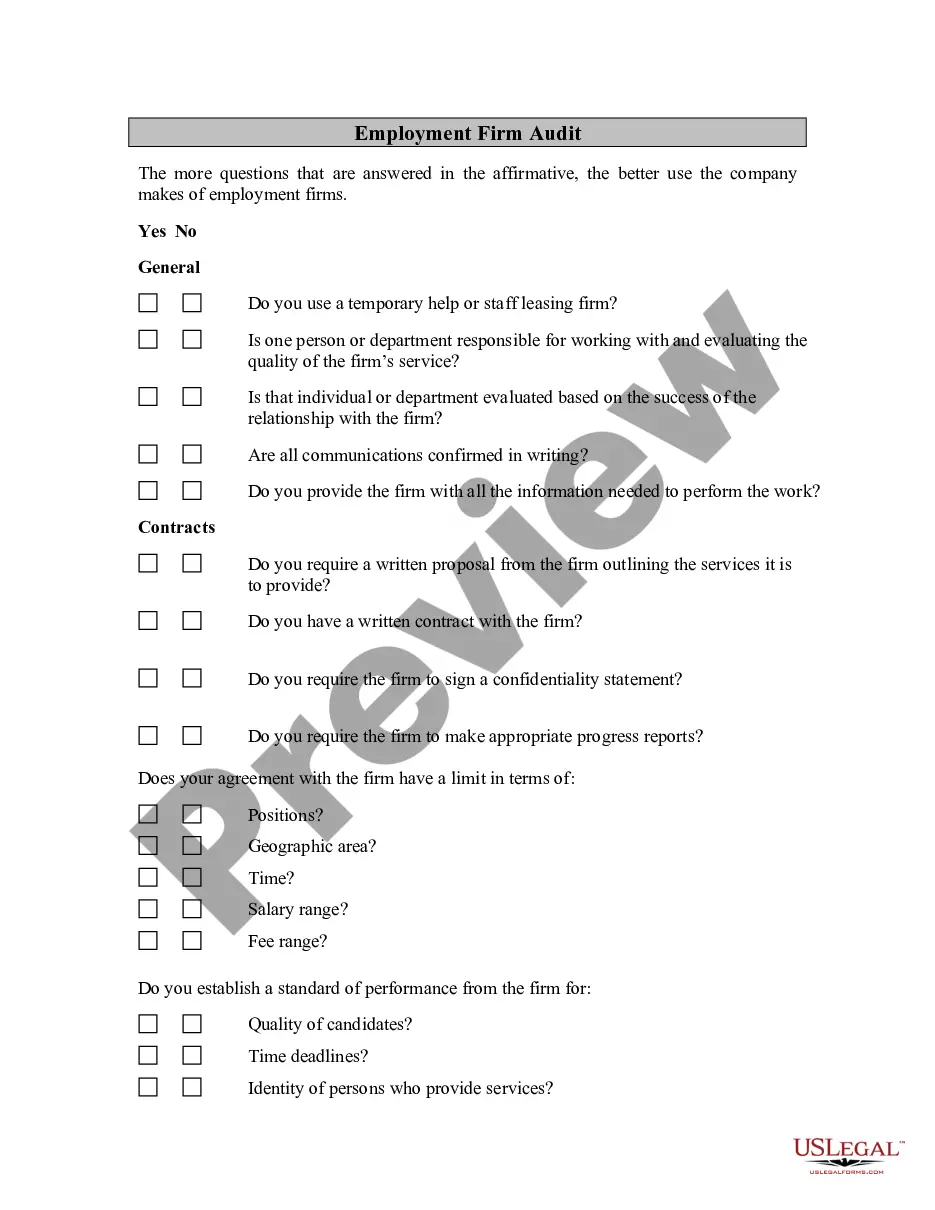
When this form package is needed
This form package is essential during the initial phases of setting up a business in Alaska. It is particularly useful for:
- Creating employment policies that comply with state laws.
- Establishing guidelines for workplace behavior and employee rights.
- Addressing common workplace issues such as absenteeism, drug use, and harassment.
- Ensuring clear communication of expectations to employees.
Who needs this form package
- Business owners and entrepreneurs starting a new venture in Alaska.
- Human resources managers responsible for developing employee policies.
- Companies looking to update their existing employment policies.
- Small business owners seeking compliance with workplace regulations.
Steps to complete these forms
- Review the included employment policy forms thoroughly.
- Customize each form to reflect your companyâs specific practices and culture.
- Ensure all policies comply with relevant state laws and regulations.
- Distribute the finalized policies to employees and ensure they understand the contents.
- Regularly review and update the policies as needed to keep them current.
Do forms in this package need to be notarized?
Forms in this package typically do not require notarization unless required by local law. Businesses should review Alaska's specific legal requirements to confirm if notarization is necessary for any of the included documents.
Get your form ready online
Our built-in tools help you complete, sign, share, and store your documents in one place.
Make edits, fill in missing information, and update formatting in US Legal Forms—just like you would in MS Word.
Download a copy, print it, send it by email, or mail it via USPS—whatever works best for your next step.
Sign and collect signatures with our SignNow integration. Send to multiple recipients, set reminders, and more. Go Premium to unlock E-Sign.
If this form requires notarization, complete it online through a secure video call—no need to meet a notary in person or wait for an appointment.
We protect your documents and personal data by following strict security and privacy standards.

Make edits, fill in missing information, and update formatting in US Legal Forms—just like you would in MS Word.

Download a copy, print it, send it by email, or mail it via USPS—whatever works best for your next step.

Sign and collect signatures with our SignNow integration. Send to multiple recipients, set reminders, and more. Go Premium to unlock E-Sign.

If this form requires notarization, complete it online through a secure video call—no need to meet a notary in person or wait for an appointment.

We protect your documents and personal data by following strict security and privacy standards.
Mistakes to watch out for
- Failing to customize forms adequately for the business's unique needs.
- Not regularly updating policies to remain compliant with changing laws.
- Overlooking specific state regulations that may affect policy content.
- Neglecting to communicate policy changes to employees effectively.
Benefits of using this package online
- Convenience of accessible templates that can be downloaded and edited anytime.
- Flexibility to tailor forms to the specific requirements of your business.
- Cost-effectiveness compared to hiring legal counsel for policy development.
- Reliability of professionally drafted templates created by licensed attorneys.
Legal use & context
- These forms are designed to comply with Alaska's employment law, helping ensure enforceability.
- Following the defined policies can protect the business from potential legal disputes.
- Always consult with a professional if uncertainties arise concerning legal obligations.
Key takeaways
- The Alaska Company Employment Policies and Procedures Package provides essential documents for establishing workplace policies.
- It is vital in helping businesses comply with state and federal laws.
- Customizing forms and maintaining periodic reviews are essential for effective policy management.
Looking for another form?


Form popularity
FAQ
Fixed price contracts. With a fixed price contract the buyer (that's you) doesn't take on much risk. Cost-reimbursable contracts. With a cost-reimbursable contract you pay the vendor for the actual cost of the work. Time and materials contracts.
An employer cannot use the fact that an employee has not signed the contract as a way to deny employees their statutory rights, for example to not allow them to take their annual leave. Equally, it does not give you an excuse to make changes to an employee's contract, such as reducing their hours or pay.
The terms employment contract and at-will employment agreement are often used interchangeably; however, they are not the same legal document.Some employers require employees to sign a written agreement stating that they are employed at-will.
There are three types of employment status: employee, worker and self-employed. The three are often not in practice used correctly and the difference is not always known.
Contract Types Overview. Express and Implied Contracts. Unilateral and Bilateral Contracts. Unconscionable Contracts. Adhesion Contracts. Aleatory Contracts. Option Contracts. Fixed Price Contracts.
All employment agreements are legally binding on the employer and, therefore, employers are best served by having them drafted and reviewed by an experienced employment law attorney. Contract law is a particularly complex discipline that relies largely on common law, which is law as developed by judges and court cases.
There is no requirement that you have to enter into a written employee contract with every employee that you have. However, there are some situations in which it makes sense to enter into an employment contract with your employees.
Types of Employment Contracts: Permanent employment, temporary employment and independent contractors.
There is no legal requirement for an employee to have a written contract of employment, although having something in writing can make it easier to understand what your contractual obligations and rights are.