Domain Name and Related Rights Assignment Agreement
What is this form?
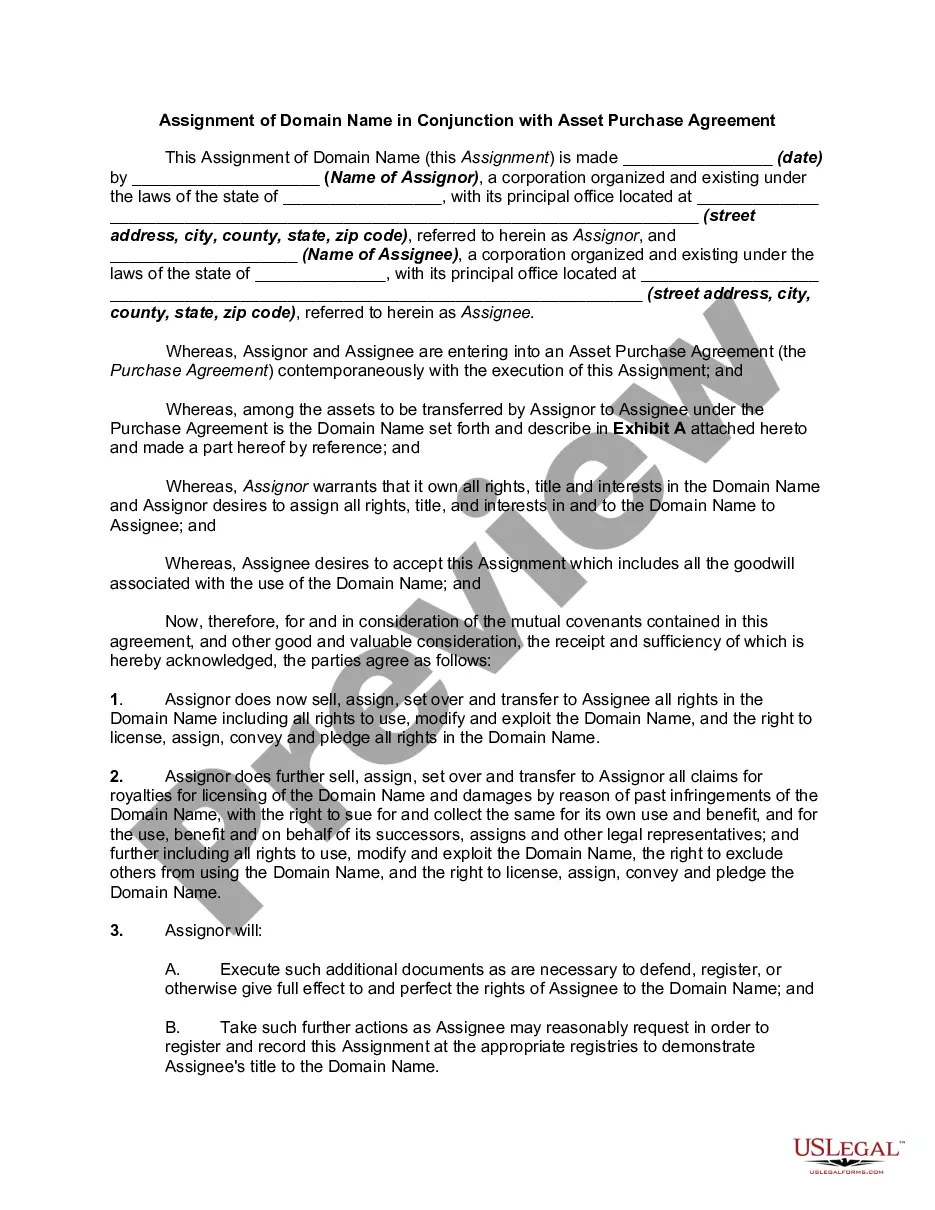
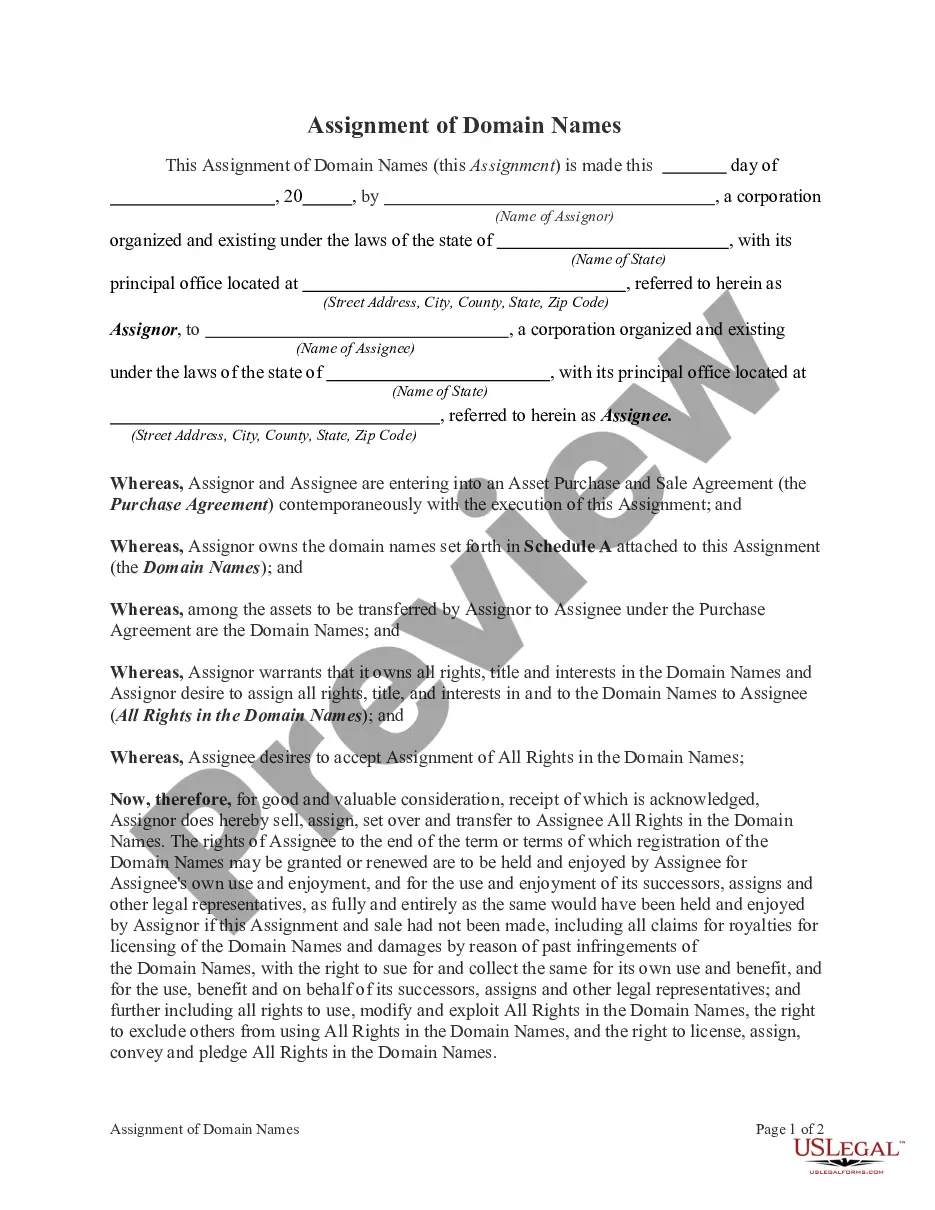
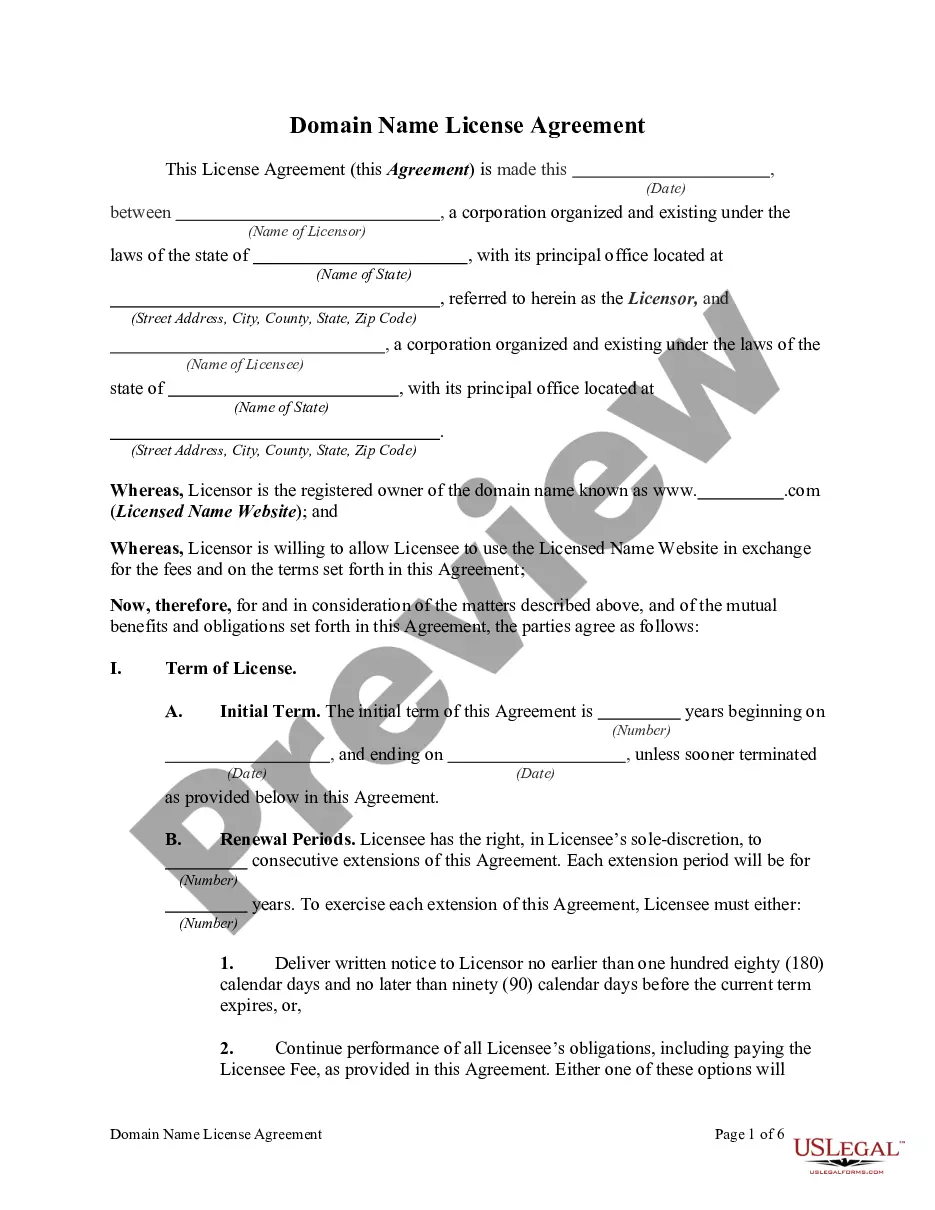
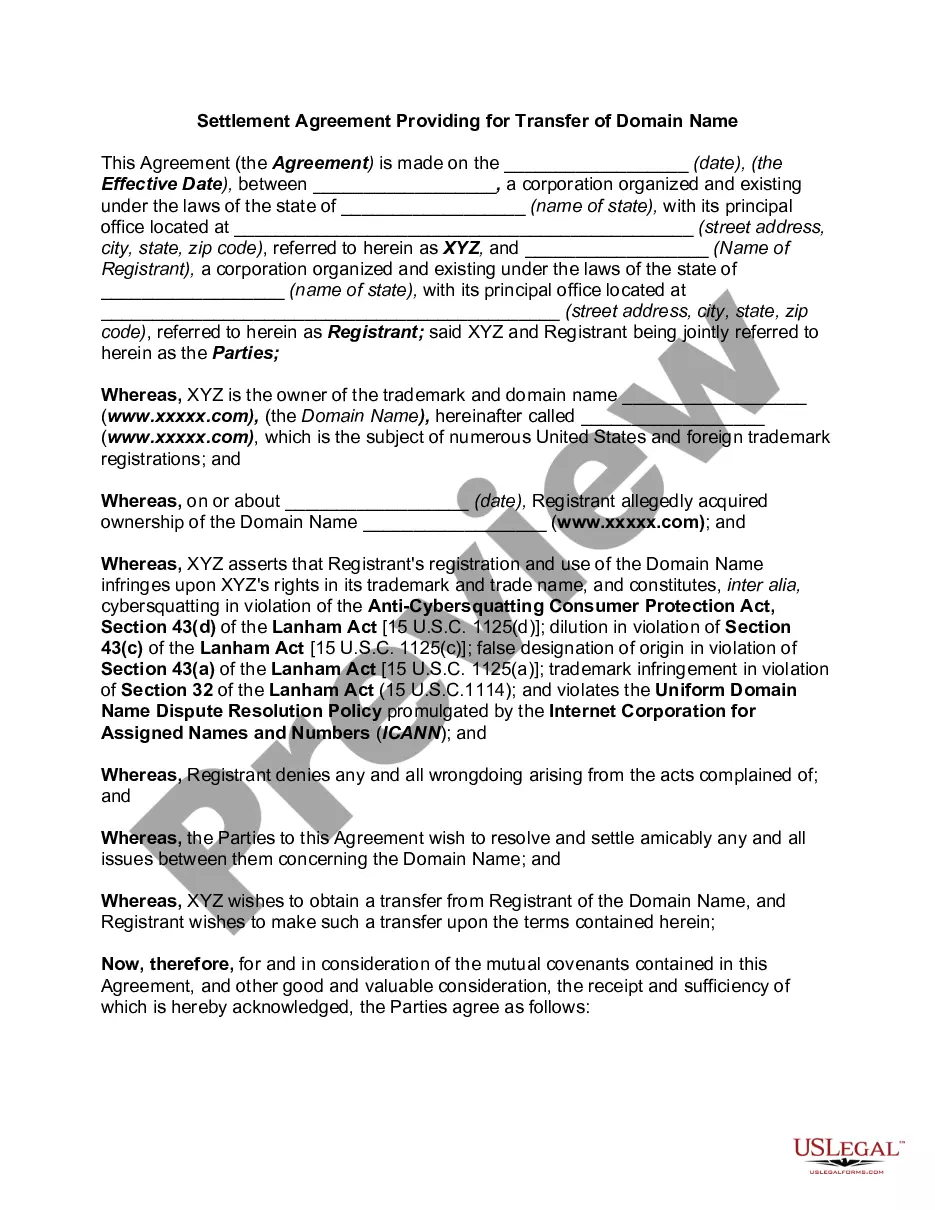
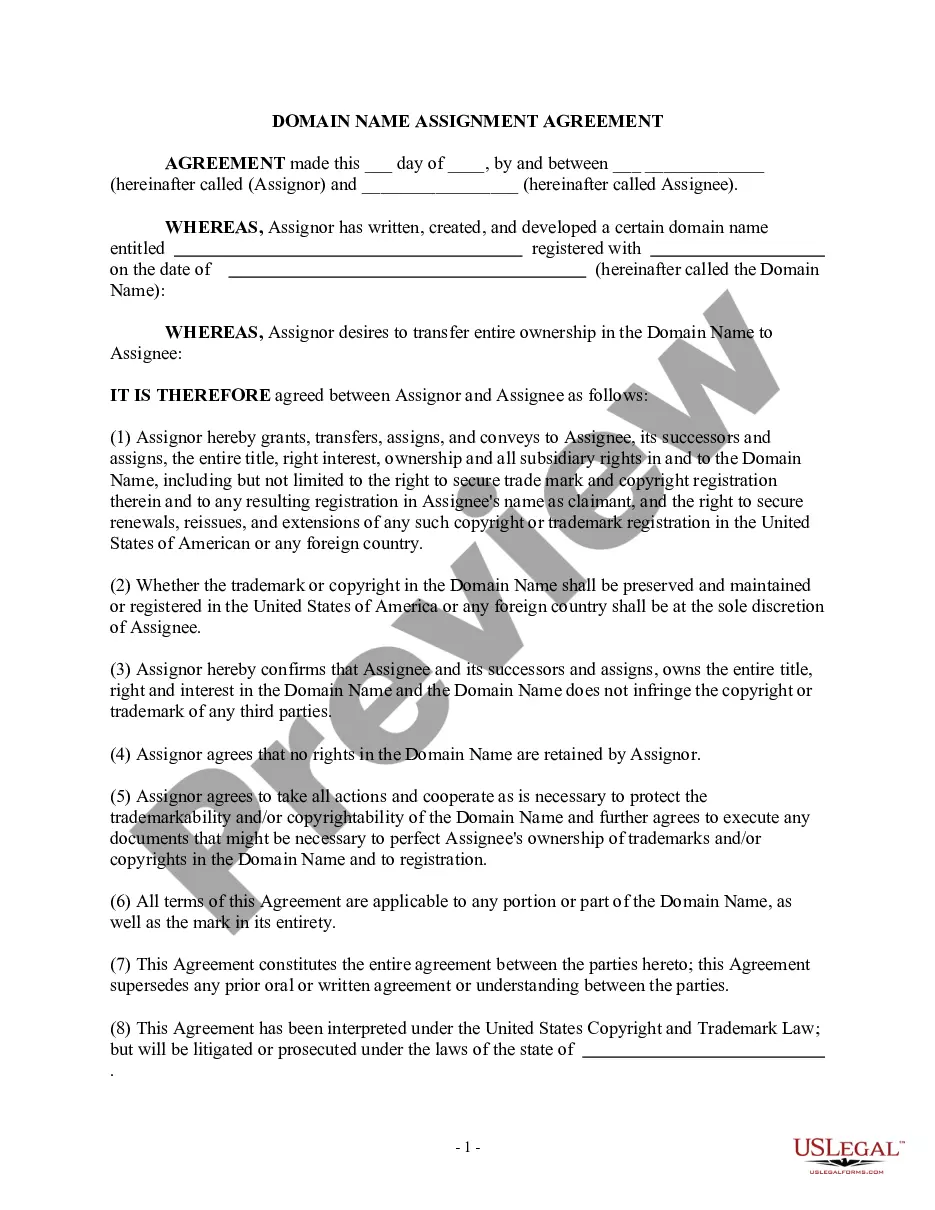
The Domain Name and Related Rights Assignment Agreement is a legal document that facilitates the transfer of domain name ownership from a seller to a buyer. This agreement outlines the rights, privileges, and any associated intellectual property that come with the domain name. It is distinct from similar forms as it specifically addresses the assignment of rights and trademarks linked to the domain, ensuring a clear and legal transfer of ownership and rights.
What’s included in this form
- Identification of Seller and Buyer: Parties are clearly defined at the beginning of the agreement.
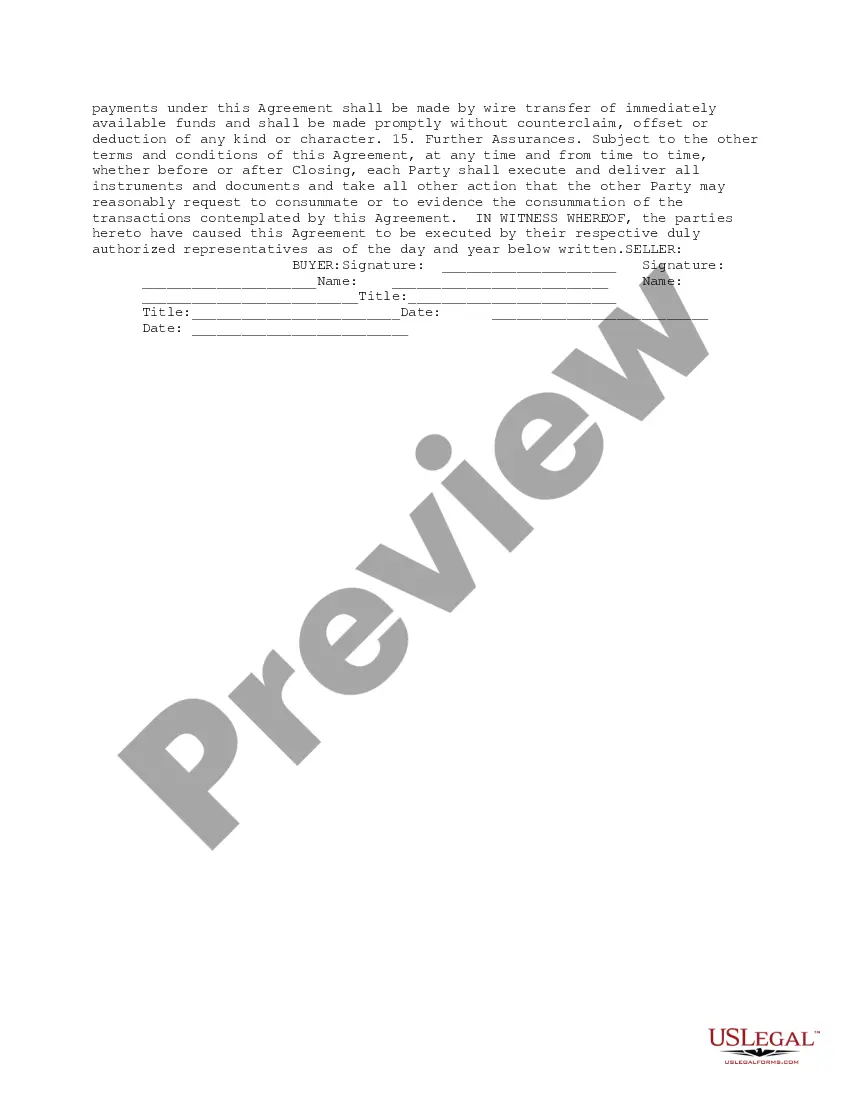
- Transfer of Rights: Explicitly details what rights and privileges are being transferred, including trademarks and related corporate names.
- Seller's Representations: Seller must affirm ownership and the absence of conflicts regarding the domain name.
- Payment Terms: Specifies the financial obligations of the Buyer upon successful execution of the agreement.
- Governing Law: The agreement includes a provision for determining the applicable jurisdiction.
- Effective Time: Defines when the transfer of ownership takes effect.


When this form is needed
This agreement should be used when a buyer is purchasing a domain name from a seller. It is crucial when the domain is associated with a business, trademark, or any intellectual property to ensure the transfer is legally binding and all relevant rights are included in the sale. It is applicable in situations where clarity is needed to prevent future disputes over domain rights.
Intended users of this form
This form is intended for:
- Business owners looking to purchase a domain name along with its associated rights.
- Individuals who are buying a domain that was previously owned by another entity.
- Legal professionals aiding clients in the acquisition of domain names.
- Anyone looking to ensure that the intellectual property associated with the domain is transferred correctly and legally.
How to complete this form
- Identify the parties: Enter the full names and contact information of the seller and buyer.
- Specify the domain name: Clearly write the domain name being transferred and any derivations.
- Complete the payment section: Fill in the agreed-upon fee for the domain name transfer.
- Affirm the representations: Ensure the seller completes all required declarations about ownership and rights.
- Sign and date: Both parties must sign and date the agreement to finalize the transfer.
Does this document require notarization?
In most cases, this form does not require notarization. However, some jurisdictions or signing circumstances might. US Legal Forms offers online notarization powered by Notarize, accessible 24/7 for a quick, remote process.
Get your form ready online
Our built-in tools help you complete, sign, share, and store your documents in one place.
Make edits, fill in missing information, and update formatting in US Legal Forms—just like you would in MS Word.
Download a copy, print it, send it by email, or mail it via USPS—whatever works best for your next step.
Sign and collect signatures with our SignNow integration. Send to multiple recipients, set reminders, and more. Go Premium to unlock E-Sign.
If this form requires notarization, complete it online through a secure video call—no need to meet a notary in person or wait for an appointment.
We protect your documents and personal data by following strict security and privacy standards.

Make edits, fill in missing information, and update formatting in US Legal Forms—just like you would in MS Word.

Download a copy, print it, send it by email, or mail it via USPS—whatever works best for your next step.

Sign and collect signatures with our SignNow integration. Send to multiple recipients, set reminders, and more. Go Premium to unlock E-Sign.

If this form requires notarization, complete it online through a secure video call—no need to meet a notary in person or wait for an appointment.

We protect your documents and personal data by following strict security and privacy standards.
Avoid these common issues
- Failing to include all variations of the domain name being transferred.
- Not verifying that the seller has the legal right to transfer the domain.
- Missing signatures or dates can render the agreement invalid.
- Overlooking state-specific requirements or regulations.
Benefits of completing this form online
- Convenience of ready-made legal templates that can be downloaded and completed at any time.
- Editability allows users to customize the agreement to fit their unique circumstances.
- Reliability from professionally drafted documents that ensure compliance with legal standards.
Looking for another form?

Form popularity
FAQ
Stick with .com. Use keywords in your domain name search. Keep your domain name short. Make it easy to pronounce and spell. Keep it unique and brandable. Avoid hyphens in domain name. Avoid doubled letters.
A domain name assignment is the transfer of an owner's property rights in a given domain name or names. Such transfers may occur on their own or as parts of larger asset sales or purchases. Domain name assignments both provide records of ownership and transfer and protect the rights of all parties.
The right to use a domain name is delegated by domain name registrars, which are accredited by the Internet Corporation for Assigned Names and Numbers (ICANN), the organization charged with overseeing the name and number systems of the Internet.
Disable WHOIS/domain privacy. Ensure admin email is up-to-date. Unlock the domain. Get the transfer authorization code. Request a domain transfer. Approve transfer request email. Contact Hover. Obtain a one-time PIN.
When you transfer a domain name, you're telling ICANN the Internet Corporation for Assigned Names and Numbers, that you want an alternative registrar to manage your domain. You may or may not decide to change your hosting provider at the same time.
Disable WHOIS/domain privacy. Ensure admin email is up-to-date. Unlock the domain. Get the transfer authorization code. Request a domain transfer. Approve transfer request email. Contact Hover. Obtain a one-time PIN.
No, there are no extra charges that come with a transfer. For most domain extensions, you will just be charged with a regular transfer fee. This fee includes domain renewal.
To make domain names widely available, ICANN allows companies to apply for accreditation and become a domain registrar. These companies then compete with each other to sell domain name licenses which allows you to get better service and tools when you purchase your domain name.
Check what the domain is currently being used for. Your first step should be to visit the domain you want to buy. Find out who owns the domain name. Determine what you're willing to pay. Contact the owner. Negotiate the purchase.