South Carolina STRUCTURING CURRENCY TRANSACTIONS

Does this form need to be notarized?
Notarization is generally not required for this form. However, certain states or situations might demand it. You can complete notarization online through US Legal Forms, powered by Notarize, using a verified video call available anytime.
Get your form ready online
Our built-in tools help you complete, sign, share, and store your documents in one place.
Make edits, fill in missing information, and update formatting in US Legal Forms—just like you would in MS Word.
Download a copy, print it, send it by email, or mail it via USPS—whatever works best for your next step.
Sign and collect signatures with our SignNow integration. Send to multiple recipients, set reminders, and more. Go Premium to unlock E-Sign.
If this form requires notarization, complete it online through a secure video call—no need to meet a notary in person or wait for an appointment.
We protect your documents and personal data by following strict security and privacy standards.

Make edits, fill in missing information, and update formatting in US Legal Forms—just like you would in MS Word.

Download a copy, print it, send it by email, or mail it via USPS—whatever works best for your next step.

Sign and collect signatures with our SignNow integration. Send to multiple recipients, set reminders, and more. Go Premium to unlock E-Sign.

If this form requires notarization, complete it online through a secure video call—no need to meet a notary in person or wait for an appointment.

We protect your documents and personal data by following strict security and privacy standards.
Looking for another form?

Form popularity
FAQ
Title 37 - Consumer Protection Code. Chapter 23 - HIGH-COST AND CONSUMER HOME LOANS. Section 37-23-70 - Prohibited acts; complaints; penalties; statute of limitations; enforcement; costs. (A) A lender may not engage knowingly or intentionally in the unfair act or practice of "flipping" a consumer home loan.
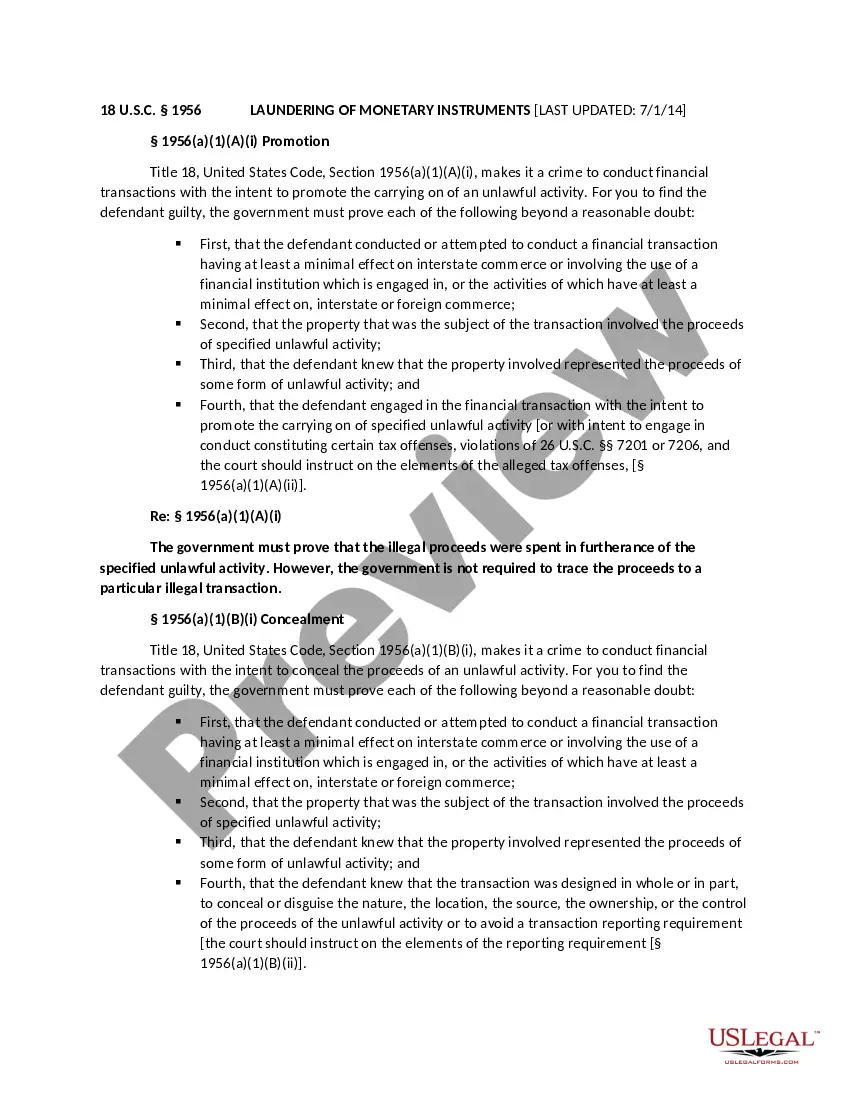
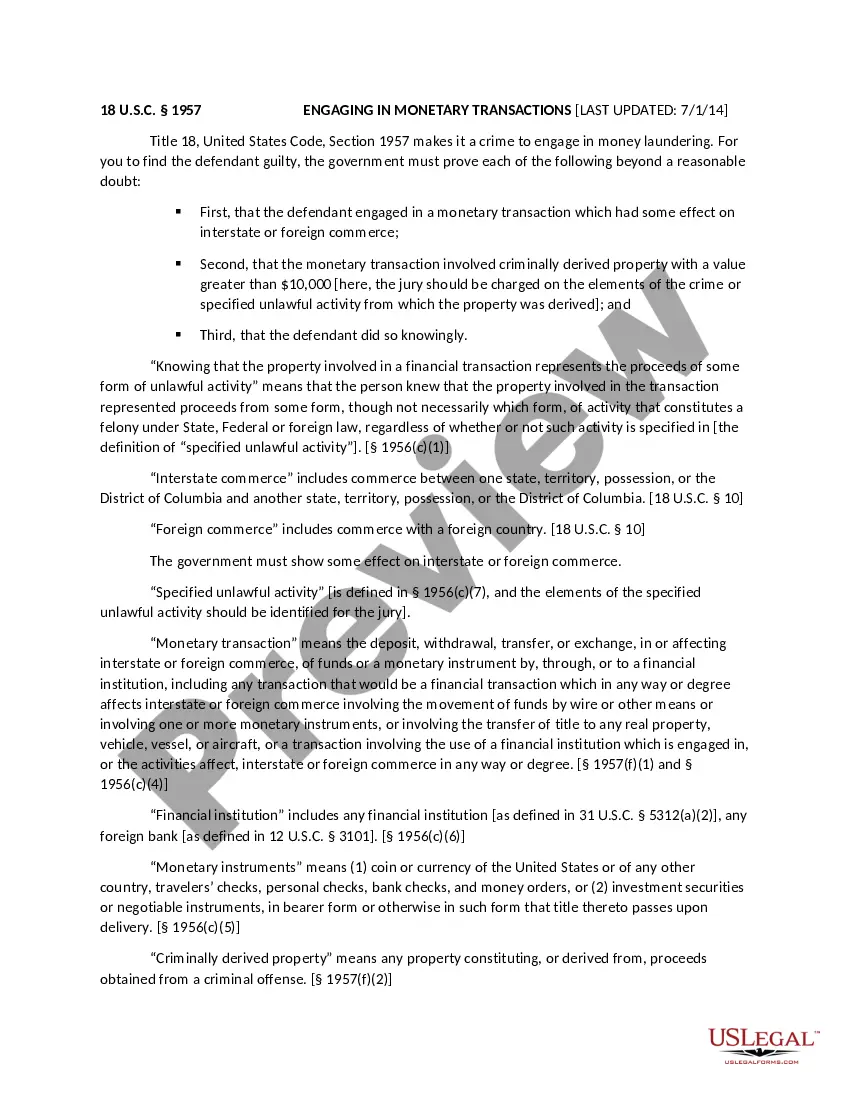
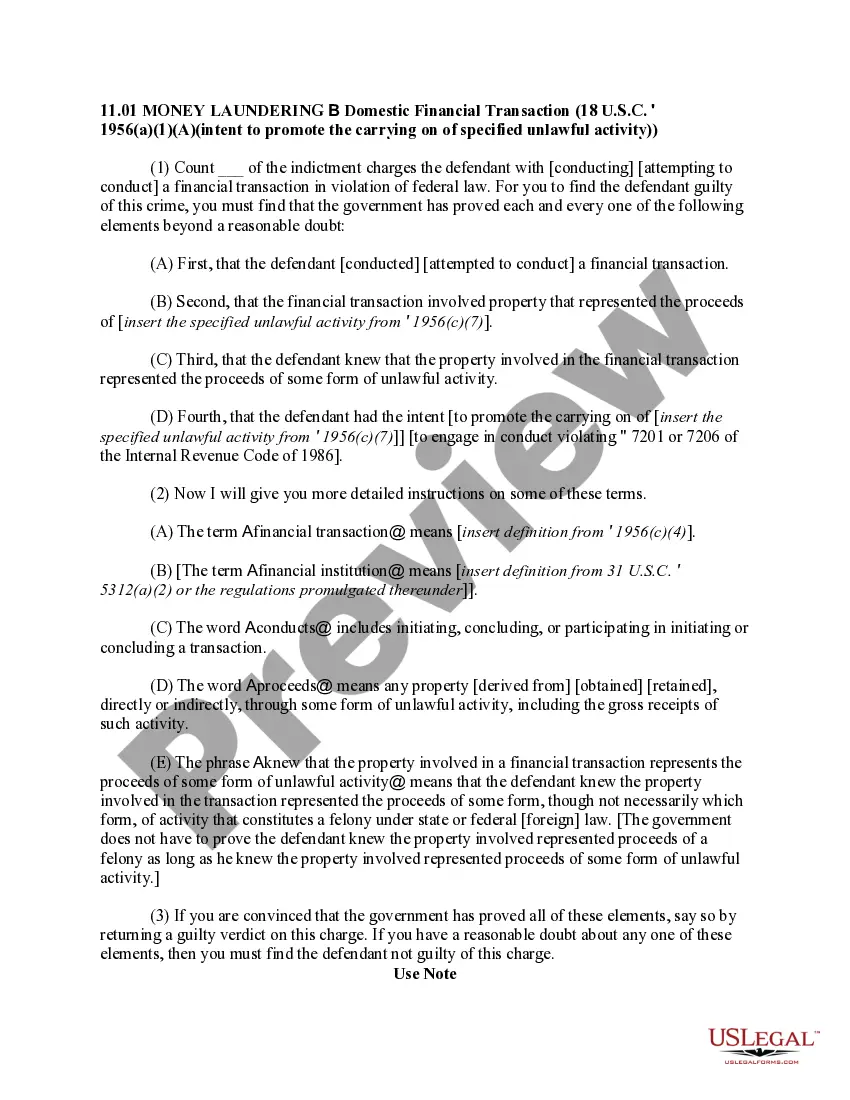
A "structured transaction" is a series of related transactions that could have been conducted as one transaction, but the financial institution and/or the transactor intentionally broke it into several transactions for the purpose of circumventing the reporting requirements of the Bank Secrecy Act (BSA).
In order to show that a person is guilty of structuring to avoid having a bank file a Currency Transaction Report (CTR) with the IRS, the government must prove three elements: (1) the defendant (or a claimant in a civil forfeiture case) must have engaged in acts of structuring cash desposits or withdrawals at a
Structuring and smurfing examples Let's say that someone has $90,000 in cash. If they want to avoid reporting requirements, they can split this into 10 transactions of $9,000. This is an example of structuring. Remember, structuring transactions in this way is illegal.
Rule. The requirement that financial institutions verify and record the identity of each cash purchaser of money orders and bank, cashier's, and traveler's checks in excess of $3,000.
For example, if someone has $50,000 in cash to deposit in their bank, should they choose to deposit it through five deposits of $9,999 and one deposit of $5, with the intent to avoid the reporting requirement, they have committed the crime of structuring.
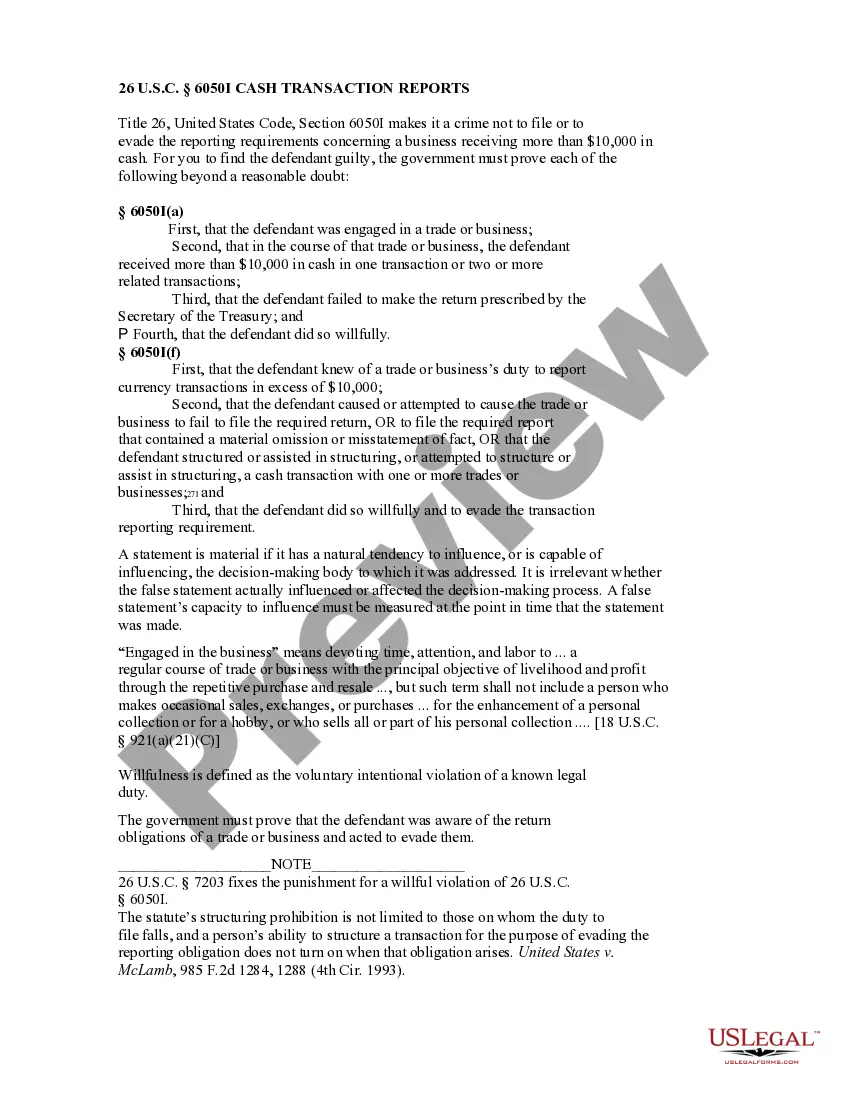
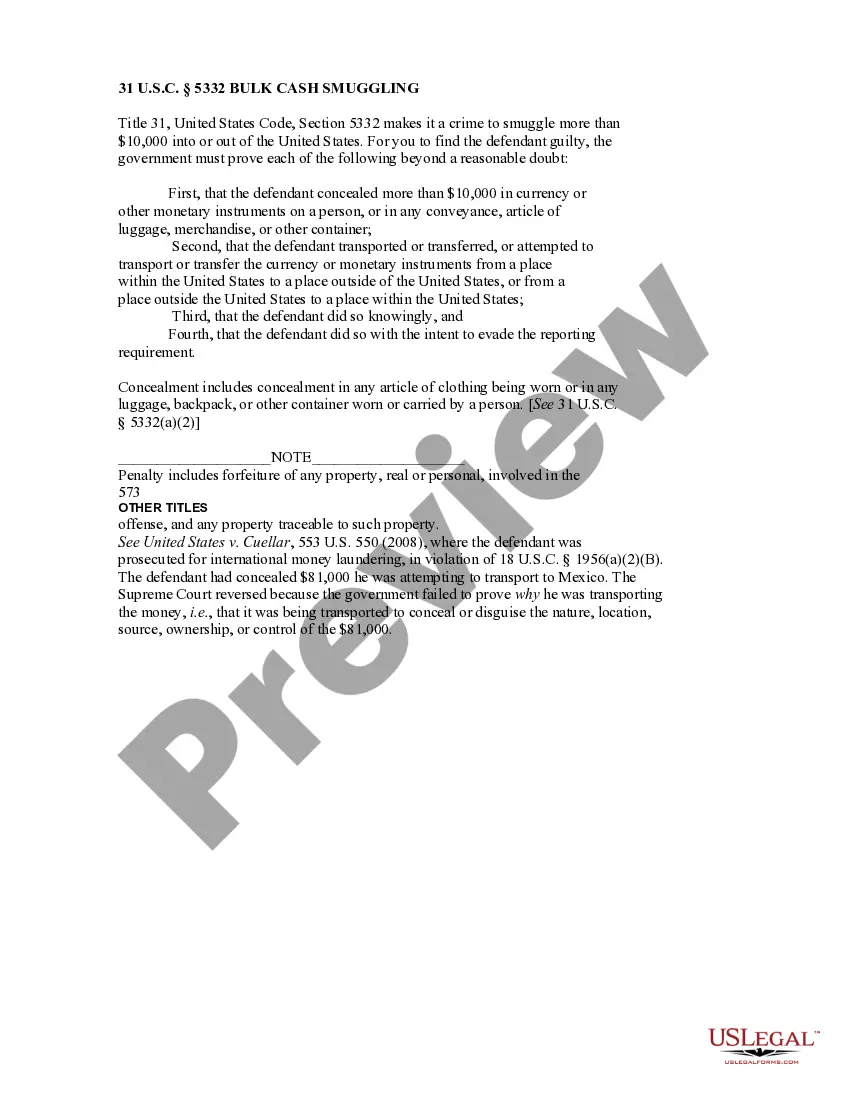
The most common reporting form is a Currency Transaction Report or CTR. Structuring money such as cash deposits to avoid the filing of a Currency Transaction Report (CTR) is illegal. Banks are required to file CTRs for cash transactions of $10,000 or more. This filing requirement is not discretionary; it is mandatory.
31 USC § 5324 defines structuring as a way of organizing large cash transactions into smaller deposits or payments in order to evade one's reporting requirements; causing or attempting to cause a financial institution to fail to perform its reporting requirements; obstructing or attempting to obstruct a business in