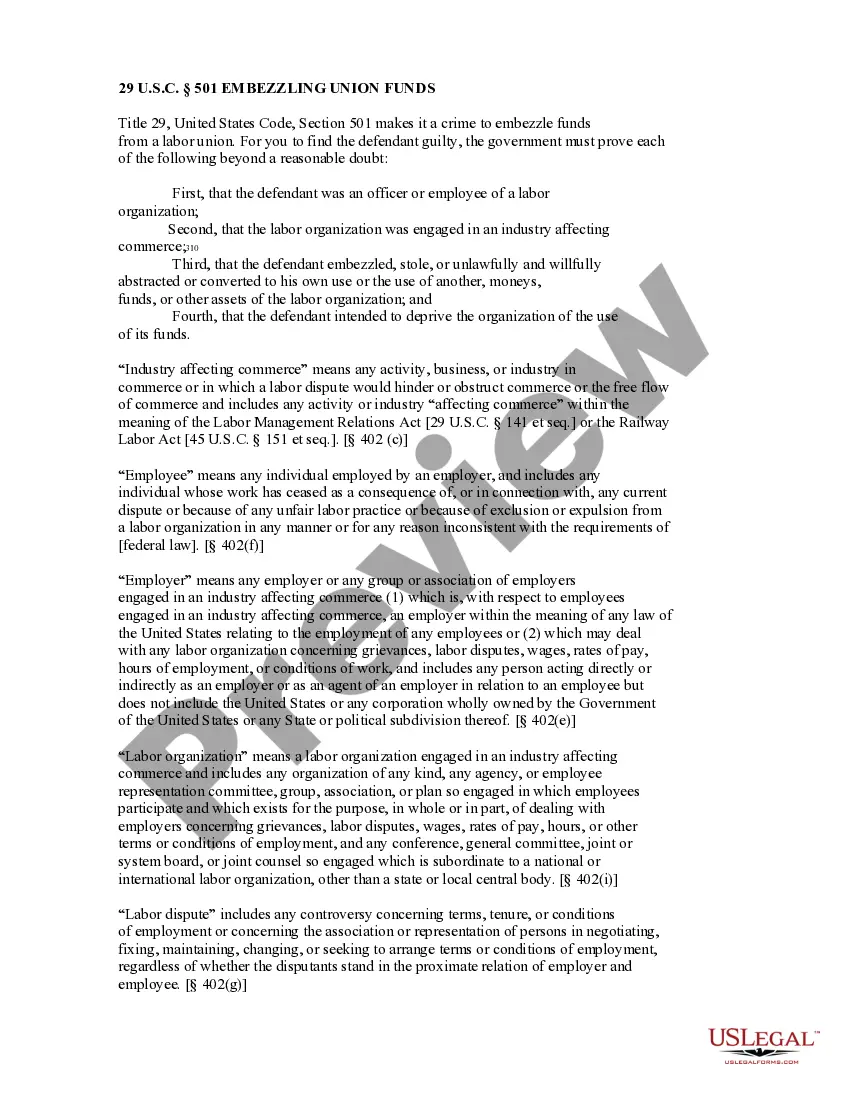
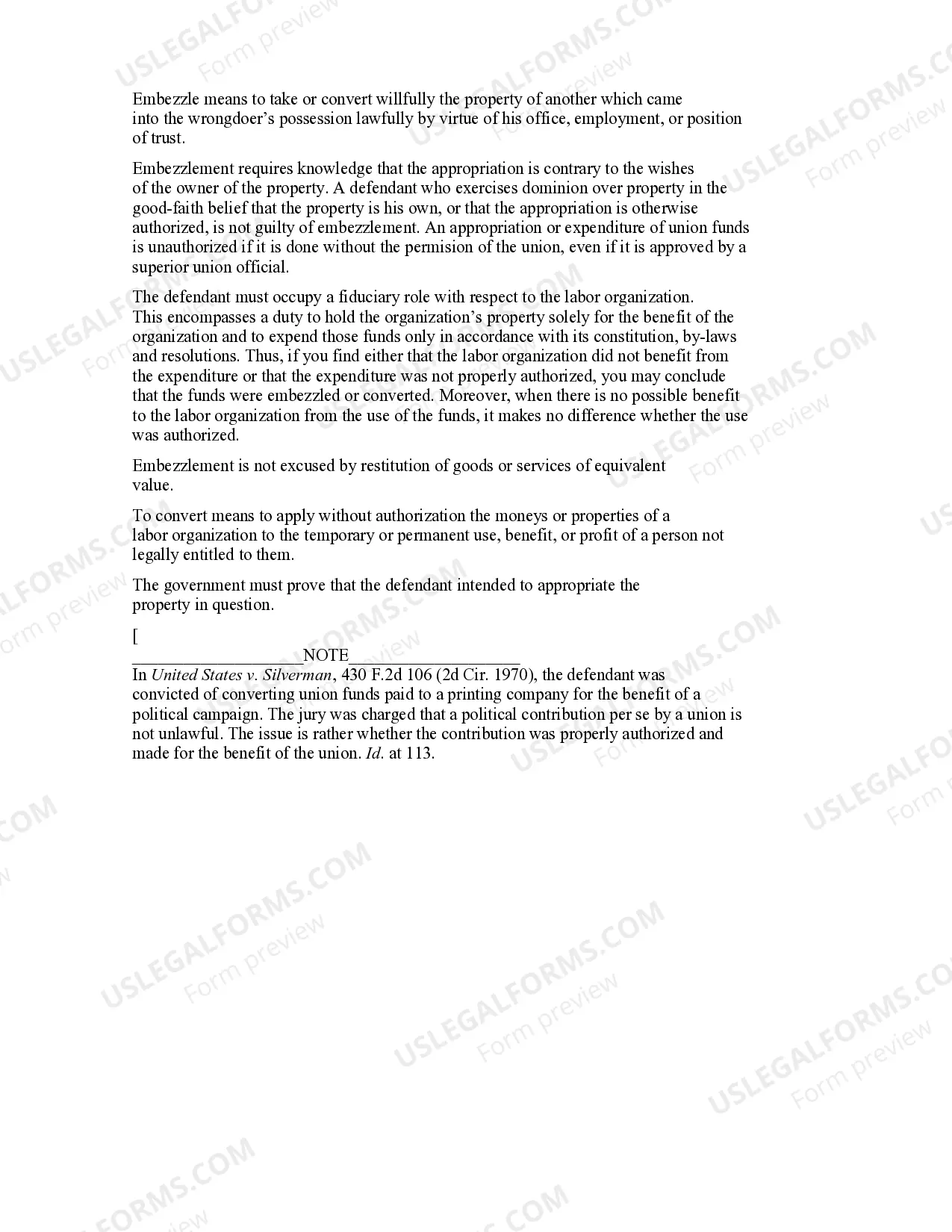
South Carolina EMBEZZLING UNION FUNDS
Notarization requirements for this form
This form does not typically require notarization to be legally valid. However, some jurisdictions or document types may still require it. US Legal Forms provides secure online notarization powered by Notarize, available 24/7 for added convenience.
Get your form ready online
Our built-in tools help you complete, sign, share, and store your documents in one place.
Make edits, fill in missing information, and update formatting in US Legal Forms—just like you would in MS Word.
Download a copy, print it, send it by email, or mail it via USPS—whatever works best for your next step.
Sign and collect signatures with our SignNow integration. Send to multiple recipients, set reminders, and more. Go Premium to unlock E-Sign.
If this form requires notarization, complete it online through a secure video call—no need to meet a notary in person or wait for an appointment.
We protect your documents and personal data by following strict security and privacy standards.

Make edits, fill in missing information, and update formatting in US Legal Forms—just like you would in MS Word.

Download a copy, print it, send it by email, or mail it via USPS—whatever works best for your next step.

Sign and collect signatures with our SignNow integration. Send to multiple recipients, set reminders, and more. Go Premium to unlock E-Sign.

If this form requires notarization, complete it online through a secure video call—no need to meet a notary in person or wait for an appointment.

We protect your documents and personal data by following strict security and privacy standards.
Looking for another form?


Form popularity
FAQ
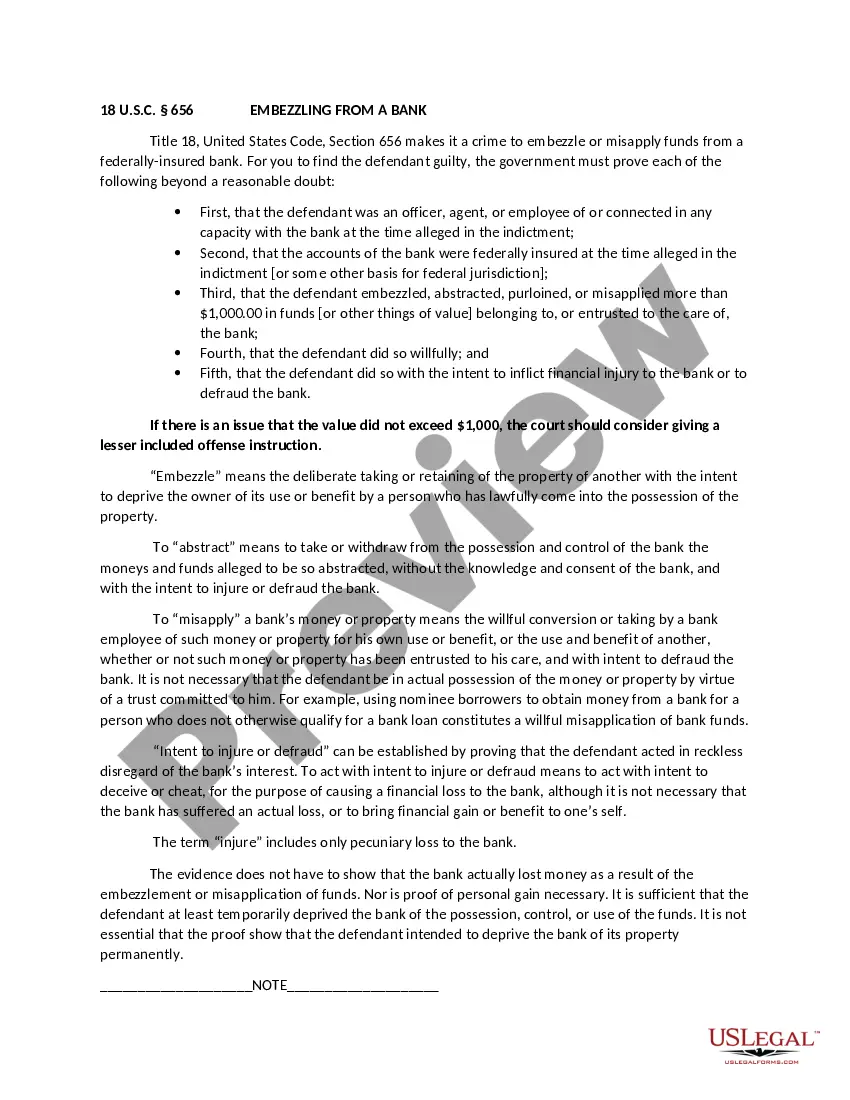
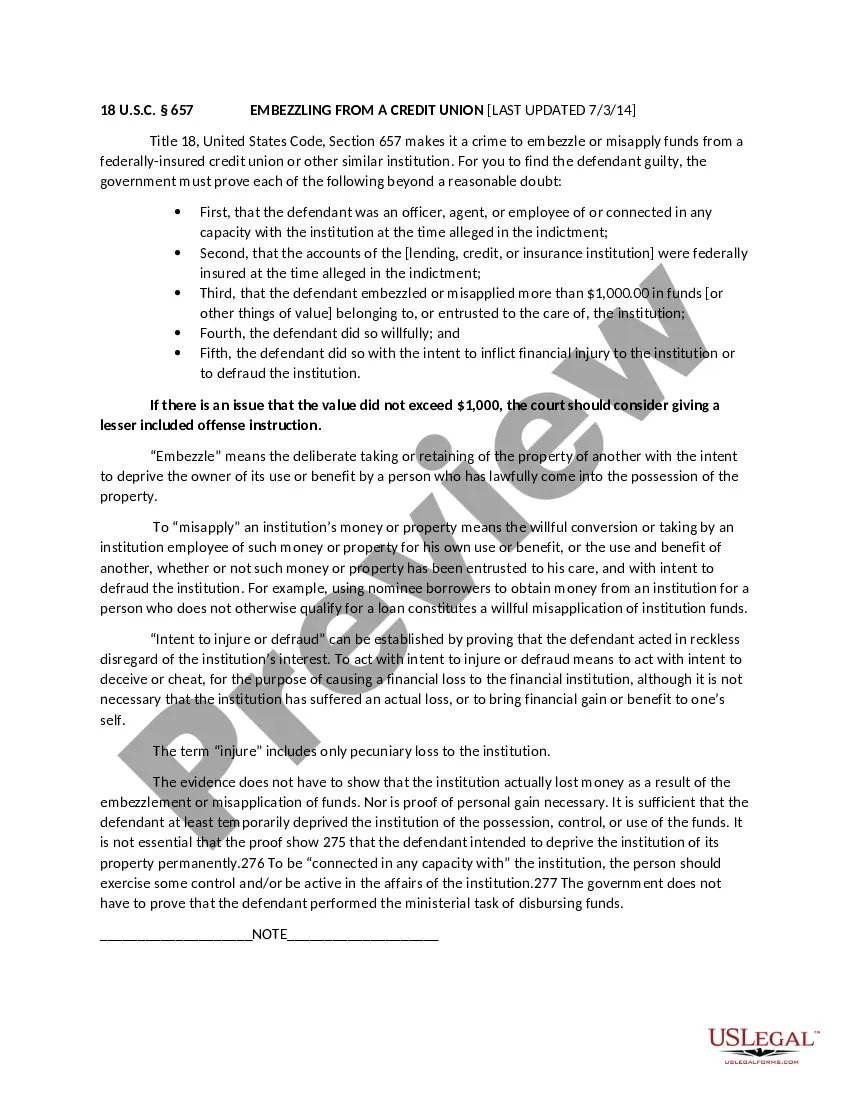
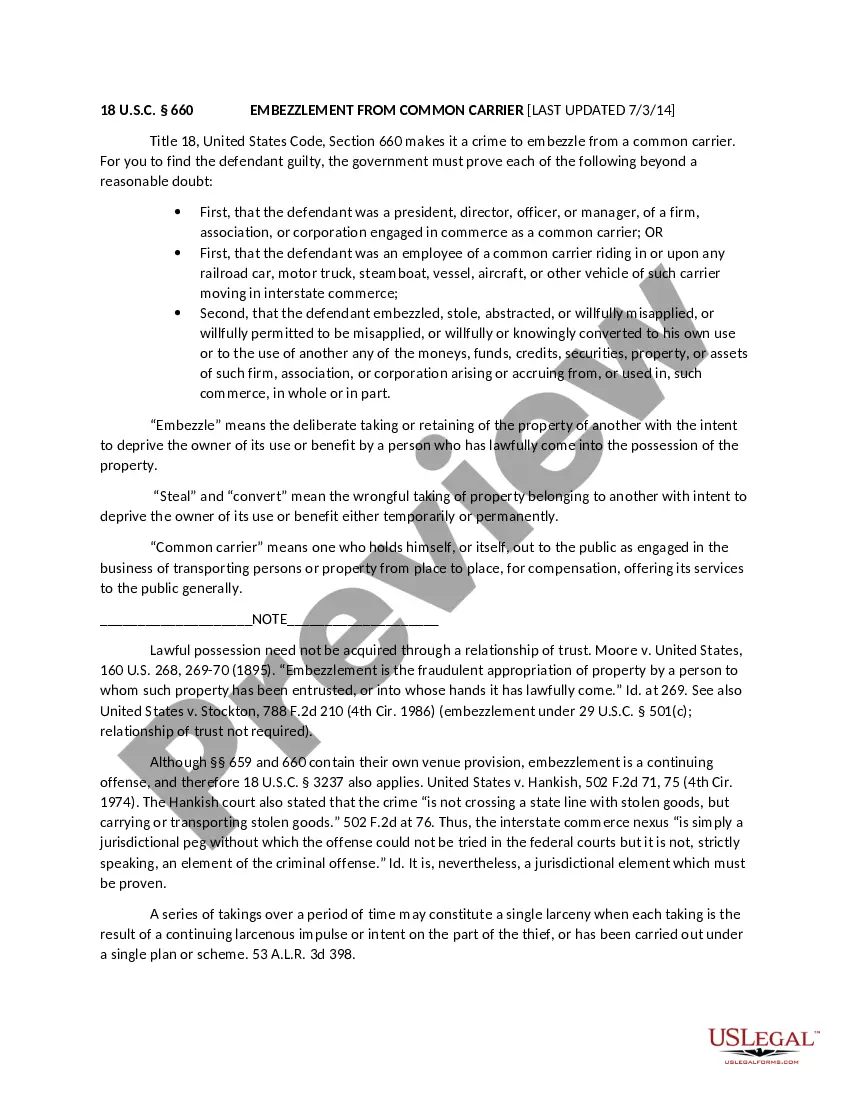
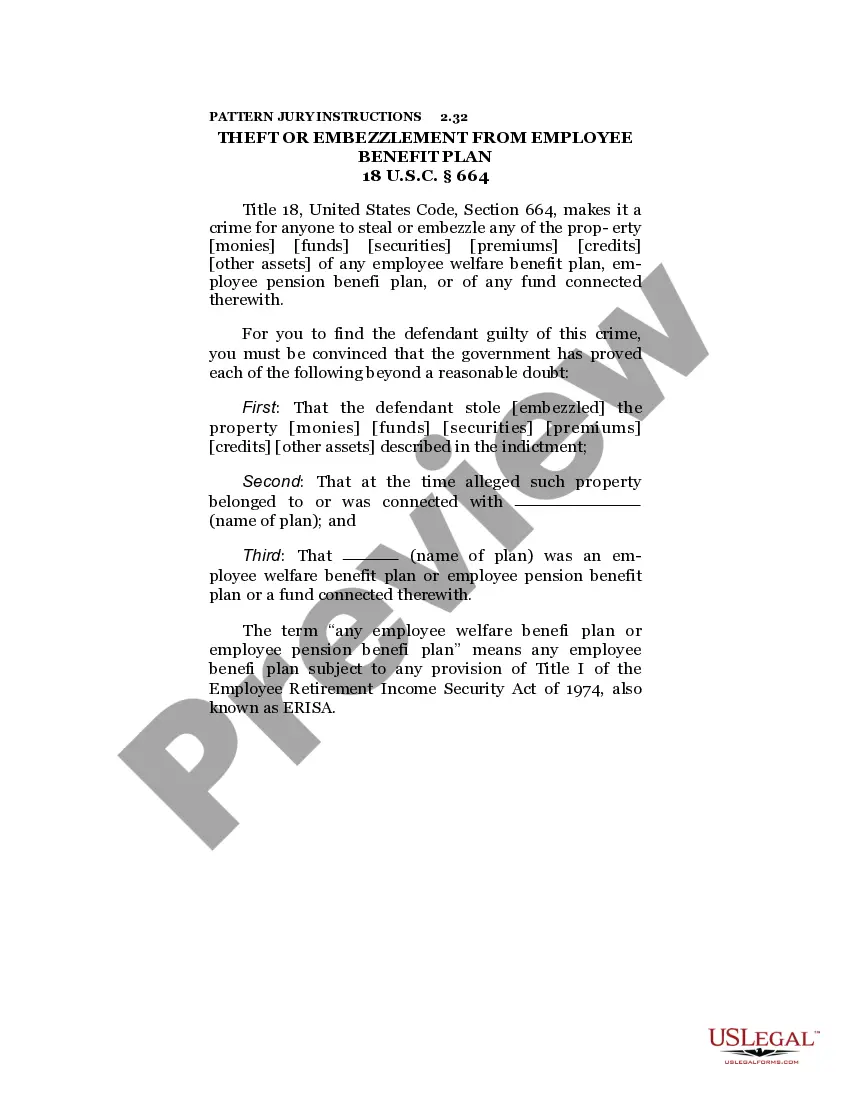
Embezzlement is the fraudulent taking of personal property by someone to whom it was entrusted. It is most often associated with the misappropriation of money. Embezzlement can occur regardless of whether the defendant keeps the personal property or transfers it to a third party.
A person commits grand larceny, a felony, when the value of the stolen property is over $2,000. South Carolina divides grand larceny into two categories, depending on the value of the taken property. Class F felony.
SECTION 16-13-210. Embezzlement of public funds. (A) It is unlawful for an officer or other person charged with the safekeeping, transfer, and disbursement of public funds to embezzle these funds.
In South Carolina, the embezzlement of public funds can result in a prison sentence of up to ten years. Smaller embezzlement cases may be charged as misdemeanors, but can still leave a black mark on your criminal record if you are convicted.
Under South Carolina law, there is no statute of limitations for any crime. There is no criminal statute of limitations in South Carolina.
In South Carolina, the embezzlement of public funds can result in a prison sentence of up to ten years. Smaller embezzlement cases may be charged as misdemeanors, but can still leave a black mark on your criminal record if you are convicted.
Under Section 16-13-210 (A) of the South Carolina Code of Laws, it is unlawful for any officer or other person entrusted with the ?safekeeping, transfer, and disbursement of public funds to embezzle said funds.? This simply means that any party who is entrusted with funds by another party must act in a reasonably