Washington Easement Agreement for Ingress and Egress
Understanding this form
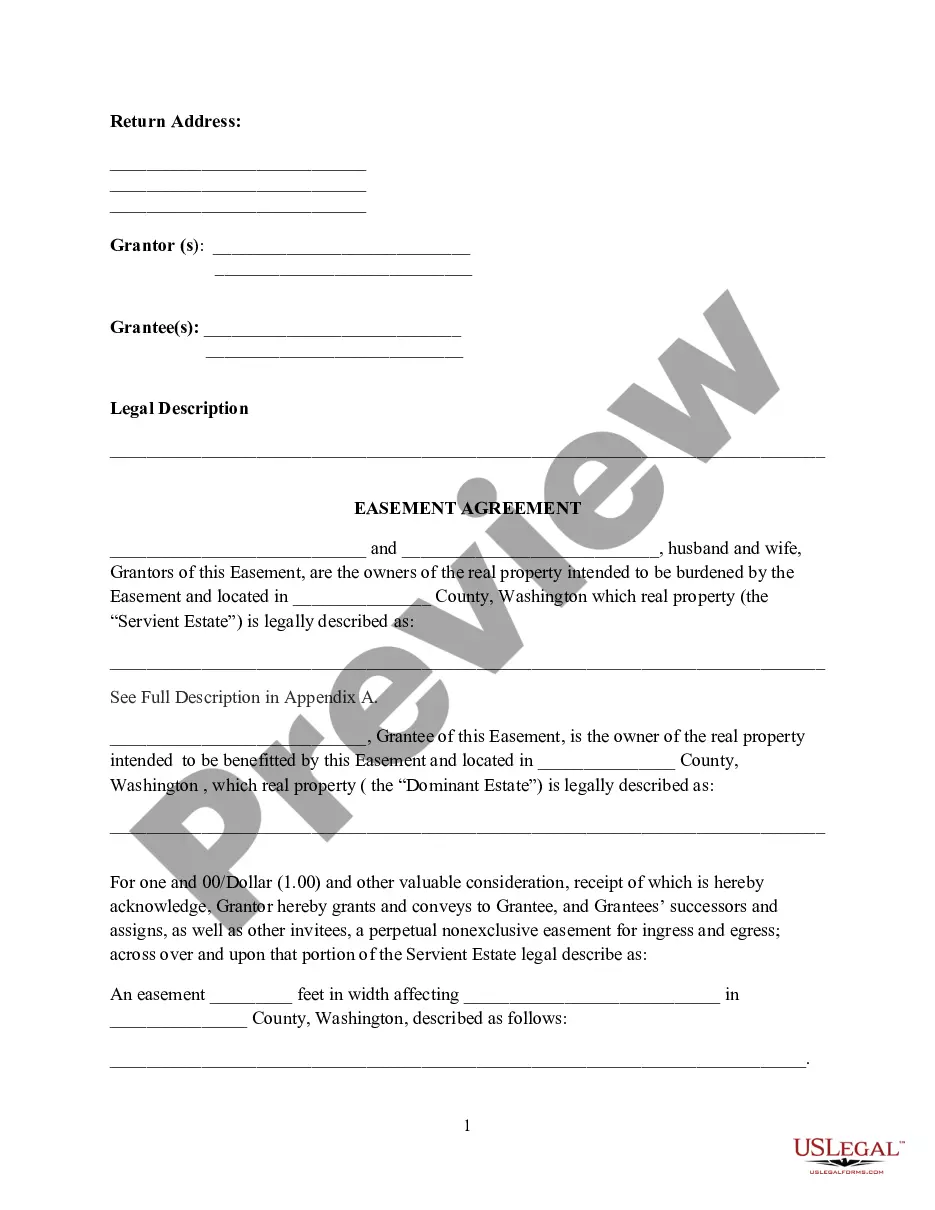
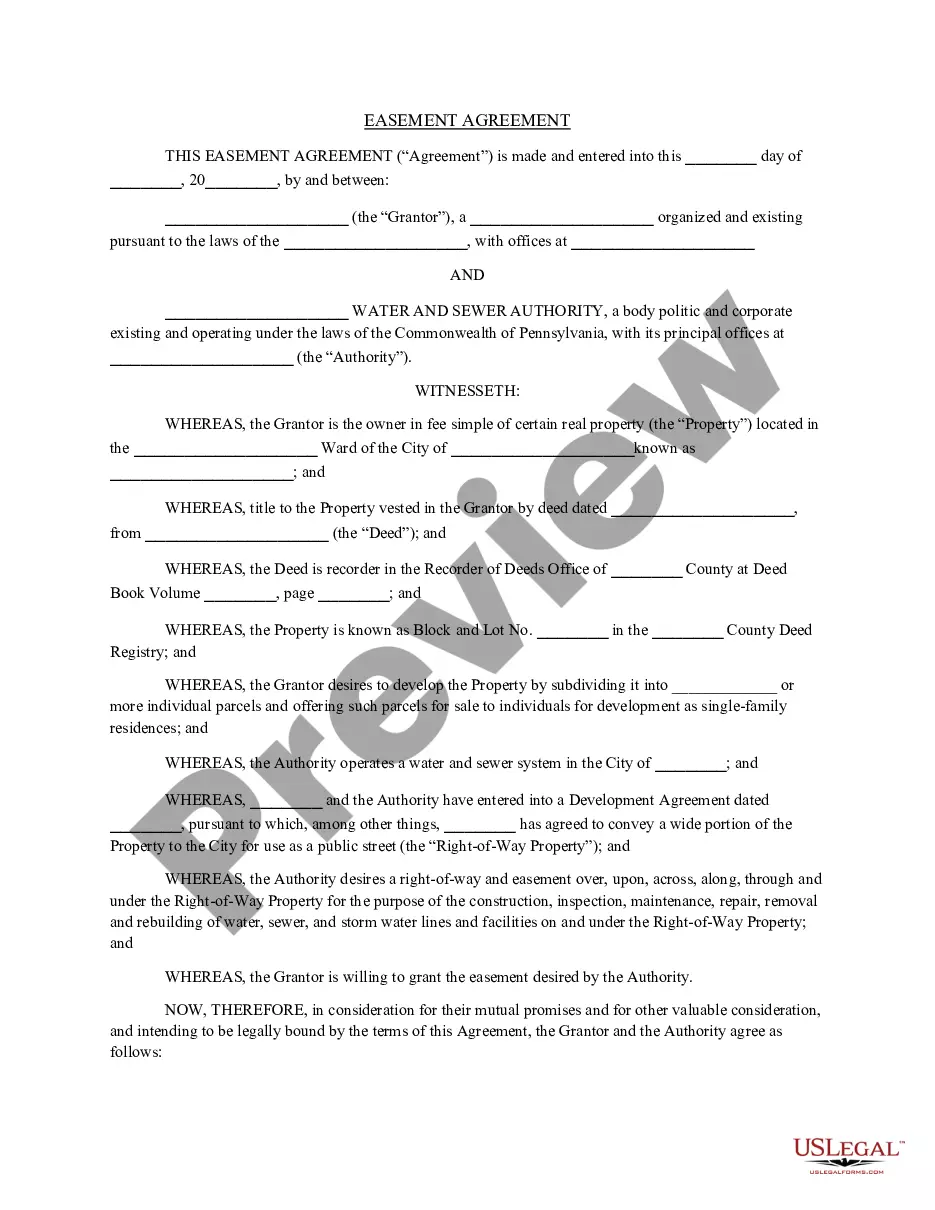
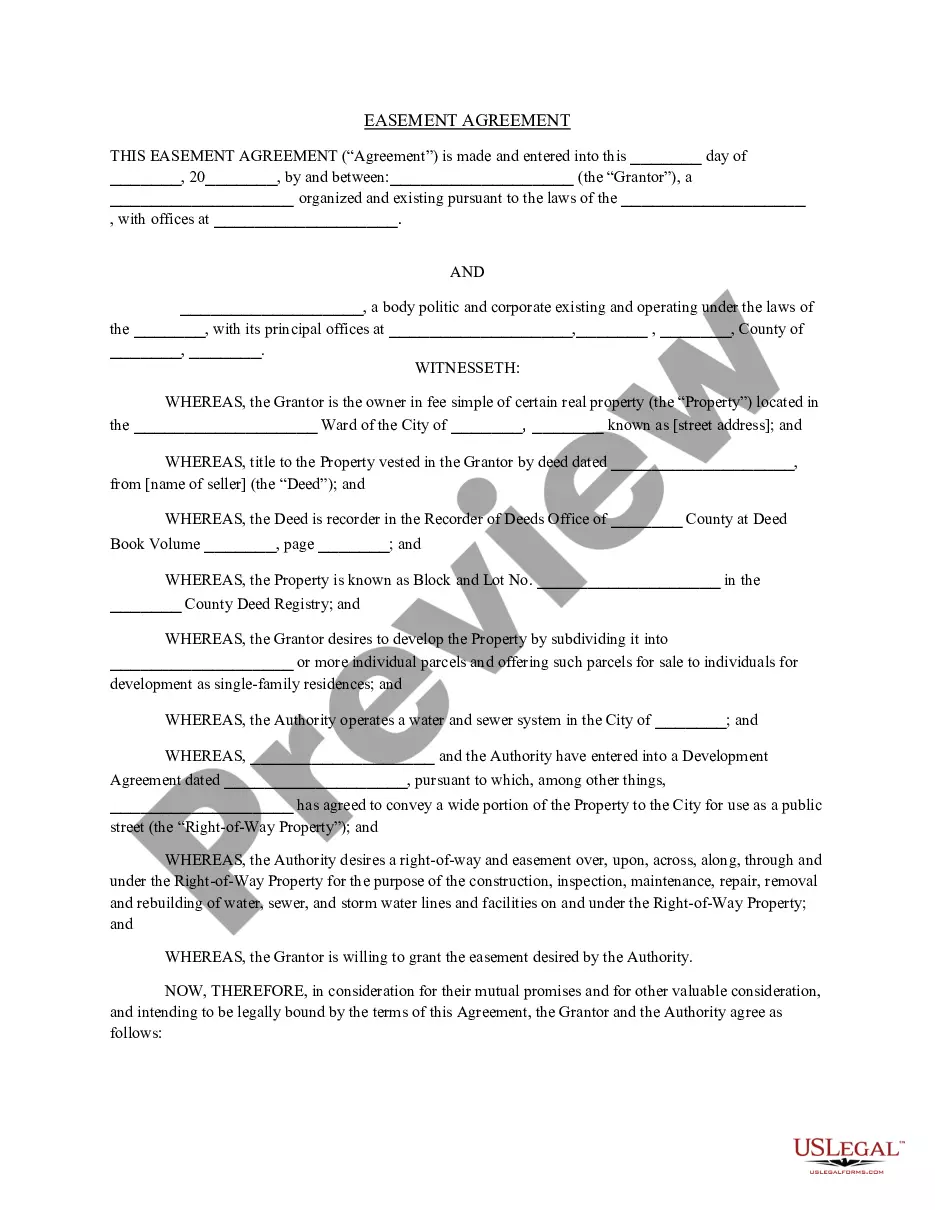
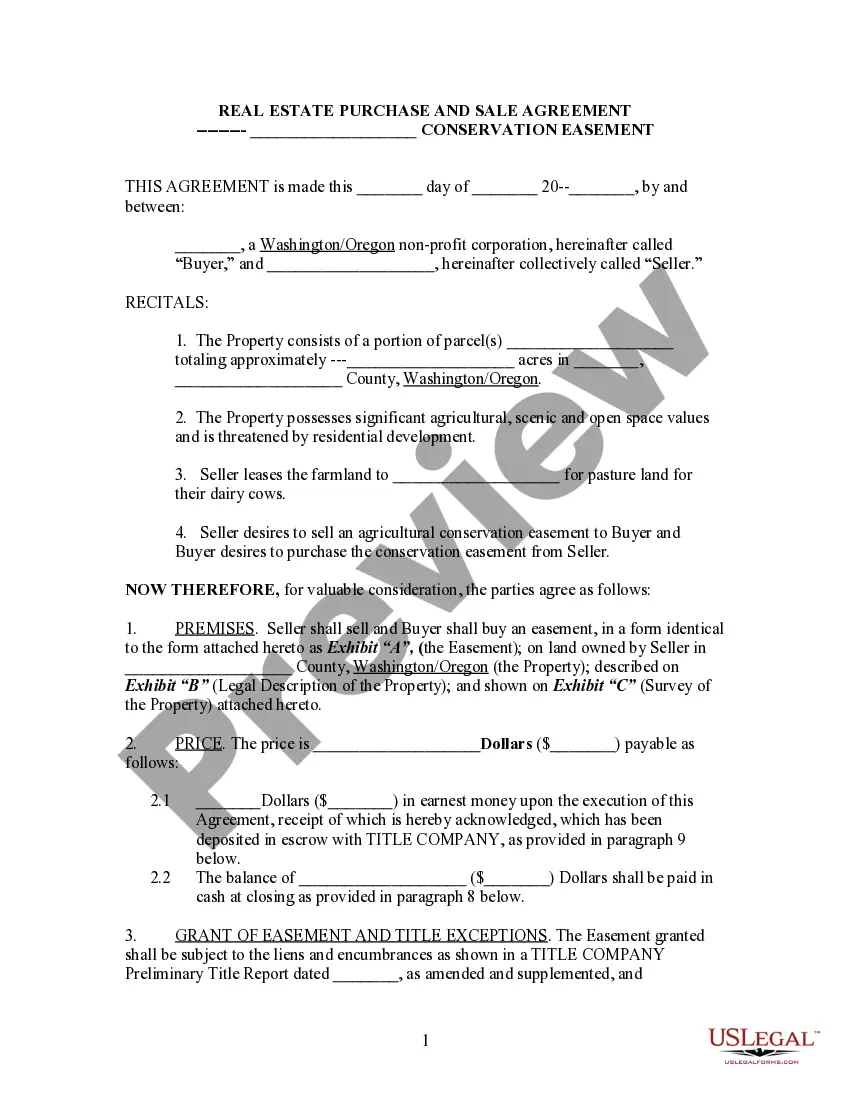
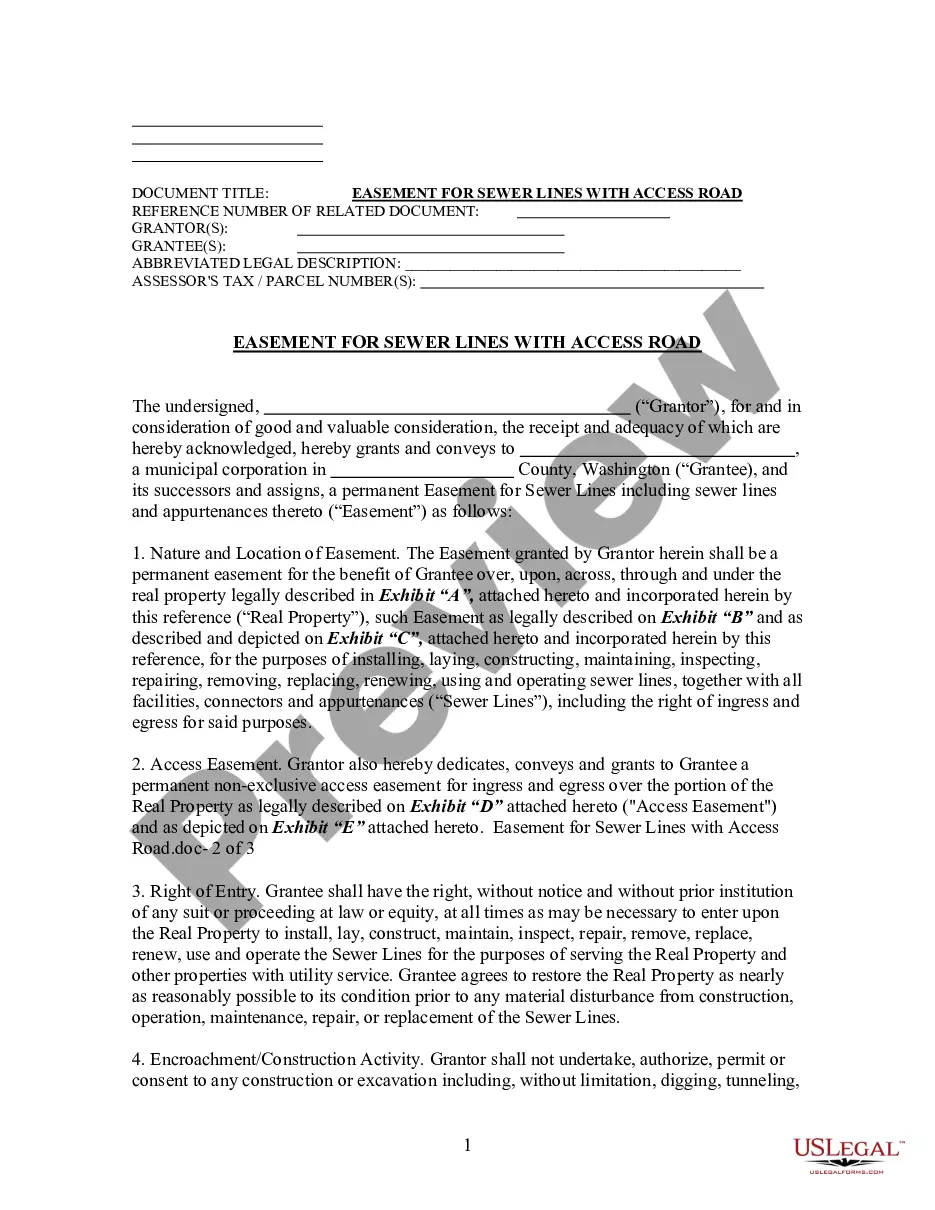
This Easement Agreement for Ingress and Egress is a legal document that allows one party (the grantee) to cross over another party's property (the grantor) for specific purposes, typically access to roads or other land areas. This form provides a perpetual, nonexclusive easement which differs from other agreements that may grant temporary access or specific use cases. It is particularly relevant for property owners in Washington state who need formal permission to access land across neighboring properties.
Form components explained
- Identification of the grantor(s) and grantee(s).
- Legal descriptions of both the servient estate (the burdened property) and the dominant estate (the benefited property).
- Details of the easement, including its width and location.
- Provisions regarding liability and indemnification.
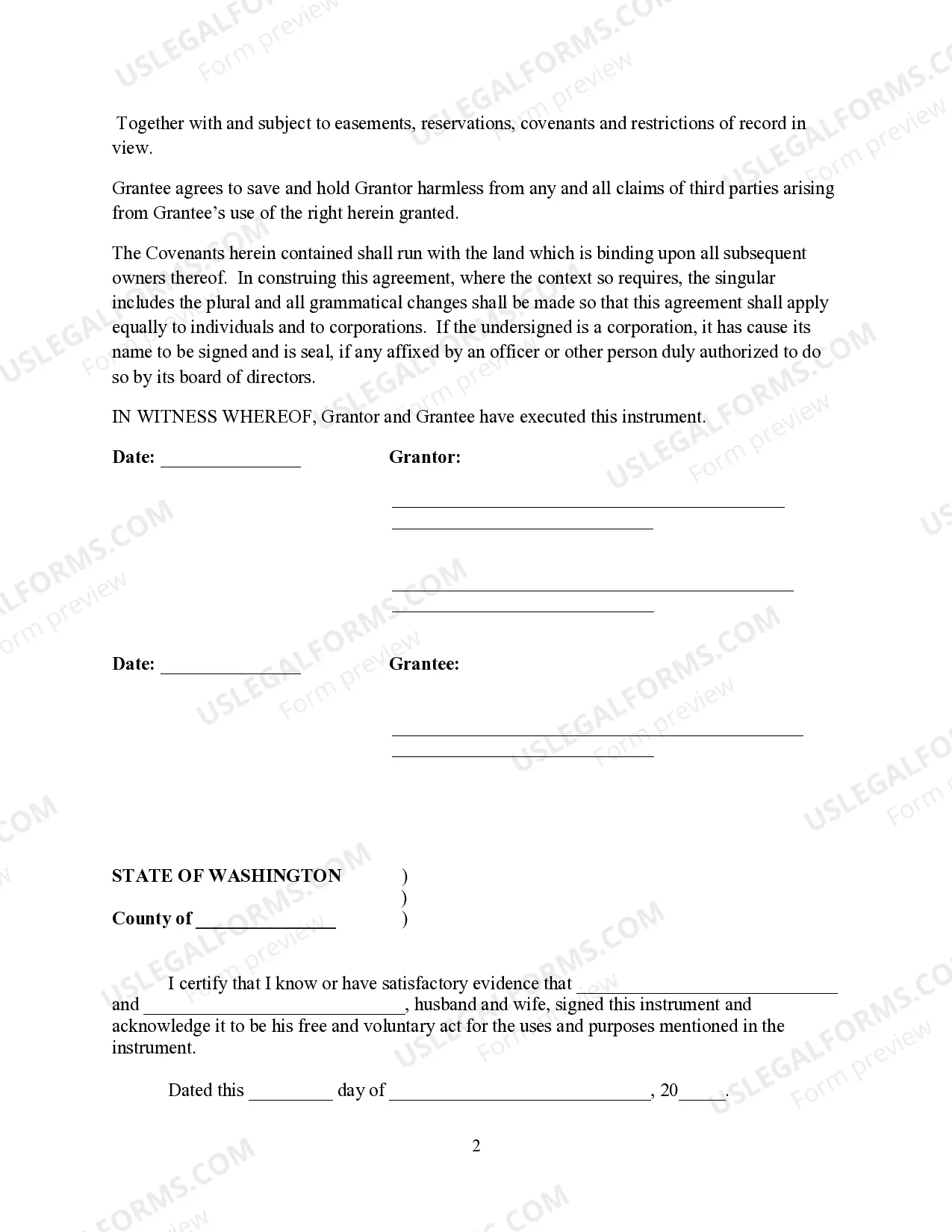
- Space for signatures and notarization.
Common use cases
This easement agreement should be used when a property owner wishes to allow another party access across their property for ingress and egress purposes. Common scenarios include situations where a landlocked property needs access to a public road or when neighbors need to cross each otherâs properties for maintenance or utility access.
Intended users of this form
This form is intended for:
- Property owners in Washington state who need to grant access over their land.
- Developers needing to secure easement rights for upcoming projects.
- Homeowners in residential areas where access to roads or utilities requires crossing neighbor properties.
Completing this form step by step
- Identify the grantor(s) and grantee(s) by entering their names in the designated fields.
- Provide the legal descriptions of both the servient estate and the dominant estate.
- Specify the width and location of the easement on the servient estate.
- Include the date of agreement and signatures of both grantor(s) and grantee(s).
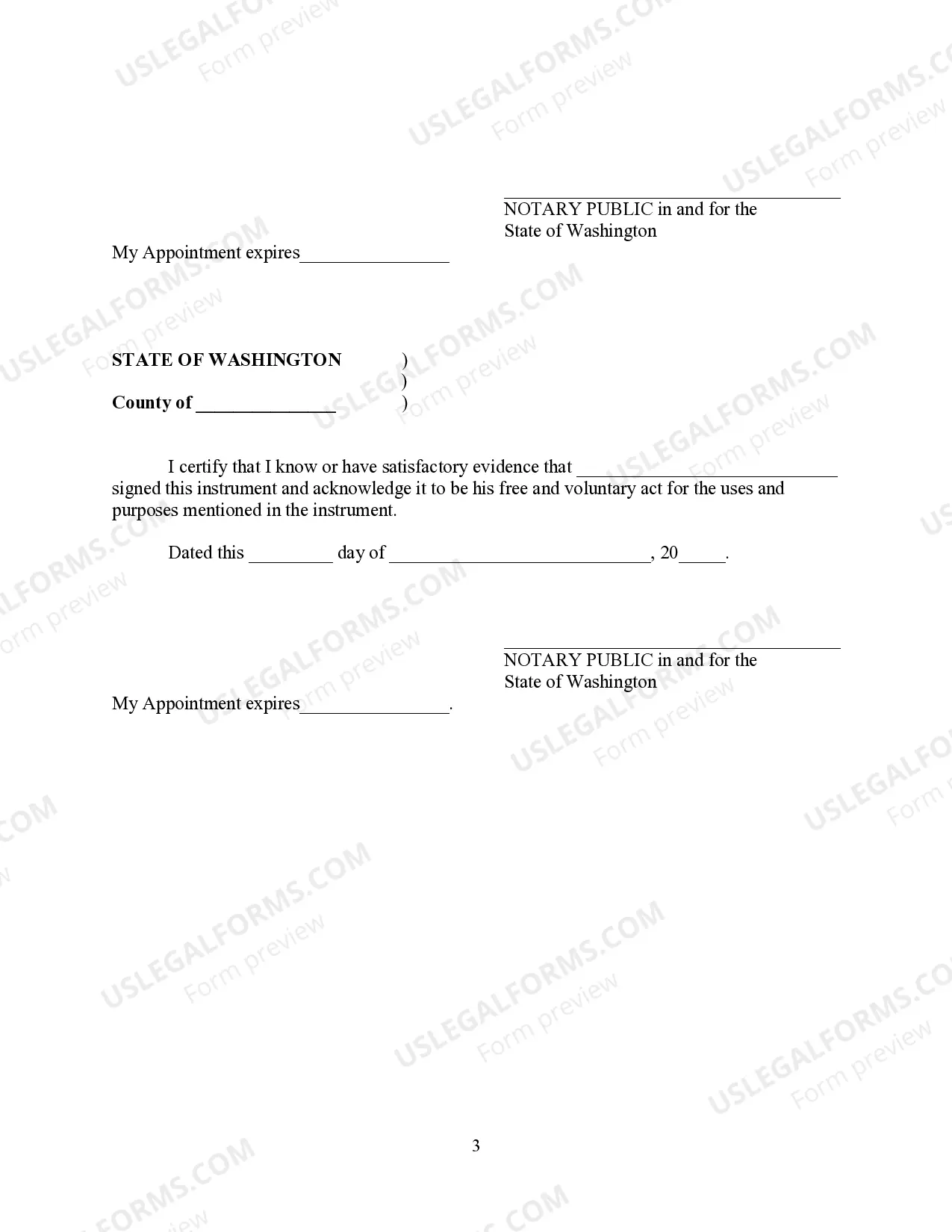
- Ensure the form is notarized for legal validation.
Does this document require notarization?
Yes, this form must be notarized to be legally valid in Washington state. US Legal Forms offers integrated online notarization services that provide 24/7 access, secure video calls, and legal equivalence without the need for travel.
Get your form ready online
Our built-in tools help you complete, sign, share, and store your documents in one place.
Make edits, fill in missing information, and update formatting in US Legal Forms—just like you would in MS Word.
Download a copy, print it, send it by email, or mail it via USPS—whatever works best for your next step.
Sign and collect signatures with our SignNow integration. Send to multiple recipients, set reminders, and more. Go Premium to unlock E-Sign.
If this form requires notarization, complete it online through a secure video call—no need to meet a notary in person or wait for an appointment.
We protect your documents and personal data by following strict security and privacy standards.

Make edits, fill in missing information, and update formatting in US Legal Forms—just like you would in MS Word.

Download a copy, print it, send it by email, or mail it via USPS—whatever works best for your next step.

Sign and collect signatures with our SignNow integration. Send to multiple recipients, set reminders, and more. Go Premium to unlock E-Sign.

If this form requires notarization, complete it online through a secure video call—no need to meet a notary in person or wait for an appointment.

We protect your documents and personal data by following strict security and privacy standards.
Avoid these common issues
- Failing to accurately describe the easement area.
- Not including required signatures or dates.
- Omitting legal descriptions of the properties involved.
- Neglecting to have the document notarized.
Advantages of online completion
- Convenience of instant download and editing from home.
- Access to templates drafted by licensed attorneys which ensures legal compliance.
- Ability to fill out the form at your own pace without the pressure of a legal office visit.
Looking for another form?

Form popularity
FAQ
Non-Exclusive Easement: The easement recipient has no rights to limit use of the easement area by others.
In this case, ingress refers to having the right to enter a property, while egress refers to the right to exit a property. An example of this type of easement is a shared driveway where your neighbor may own the property but you have the right to drive on your neighbor's property to access your home.
Example: An easement commonly grants the right to cross or use someone elses land for ingress and egress. This is known as a right of way.
Prescriptive easements ? To obtain a prescriptive easement in Washington, one property owner must openly, hostilely, and continuously use part of another's land for 10 years without permission. The laws for establishing a prescriptive easement are almost the same as the requirements for establishing adverse possession.
A ?non-exclusive easement? exists when one party has an easement on or over real estate, but the landowner can grant additional easements to other parties on or over the same real estate.
Ingress means to enter, and egress means to exit. In terms of easements, this typically pertains to entering and exiting a property parcel. It can also grant access to utility companies and water drainage.
Non-exclusive means that a number of different parties can use the easement. Non-exclusive can also mean that additional parties could be granted the right to use that same easement in the future. A common example of a non-exclusive easement is an access or roadway easement in a shopping center.