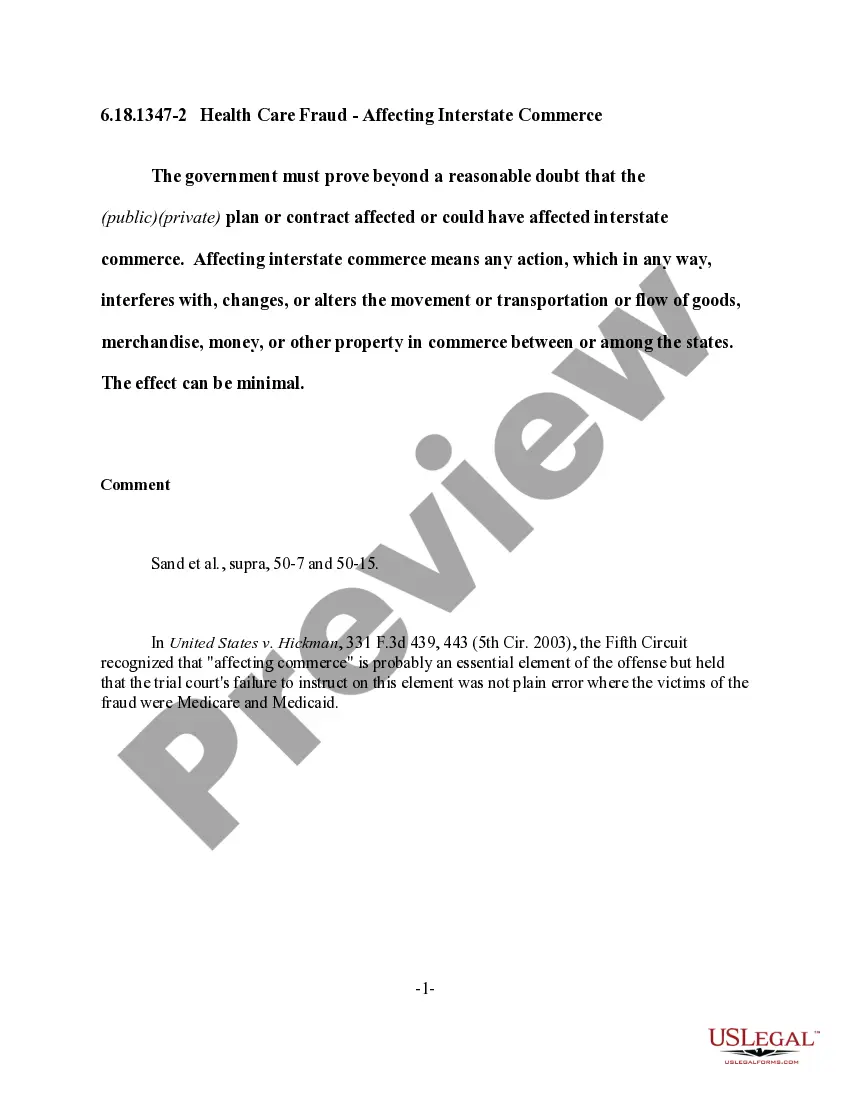
Health Care Fraud - Affecting Interstate Commerce
What is this form?
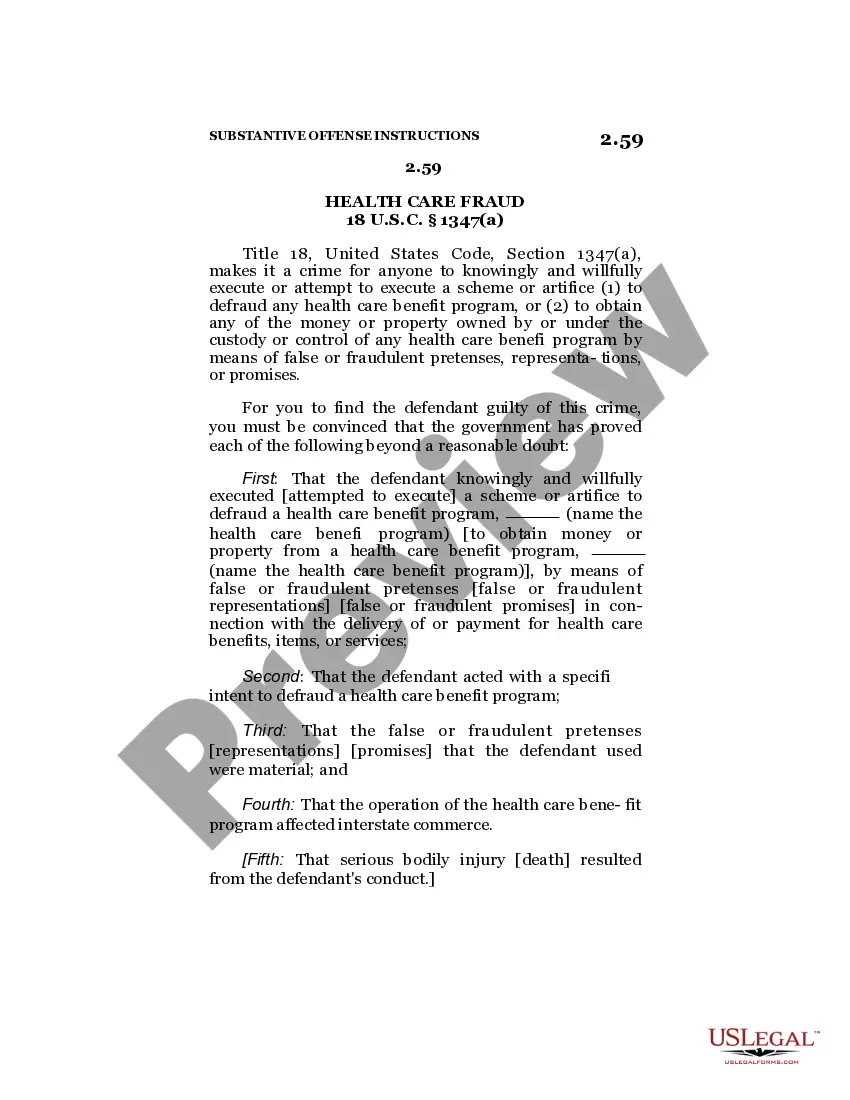
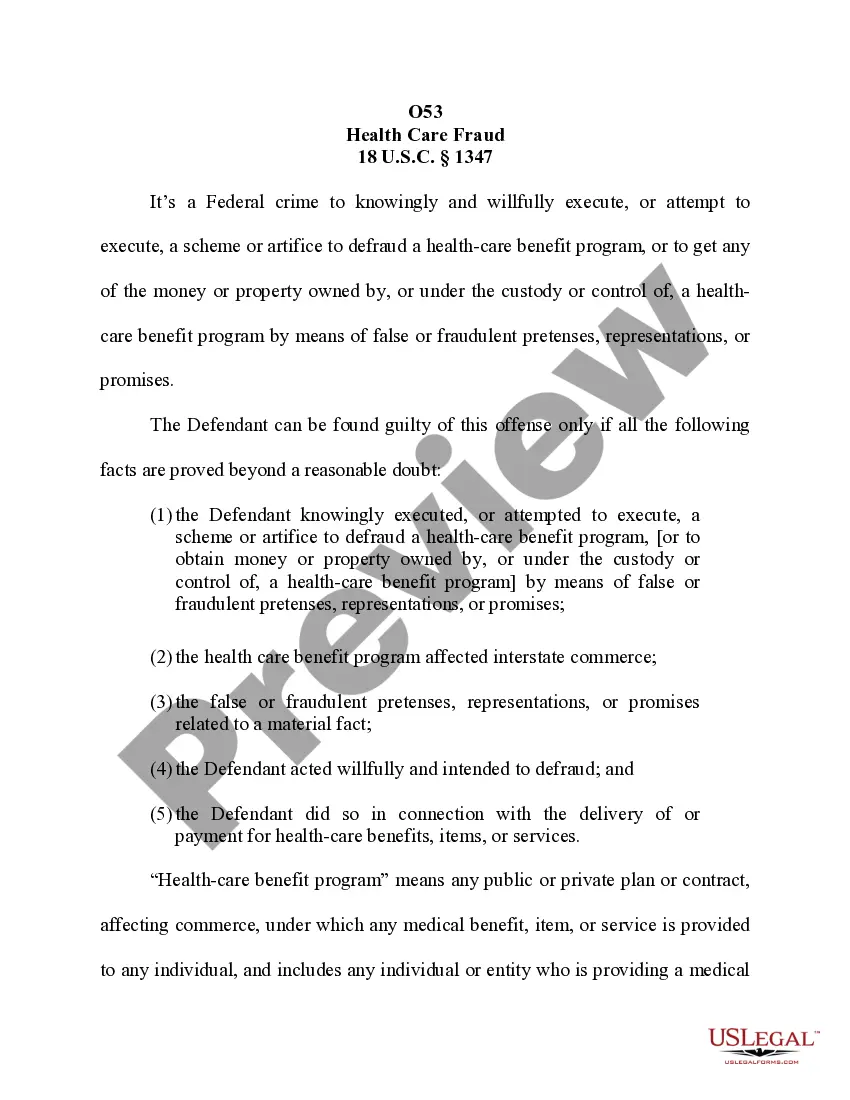
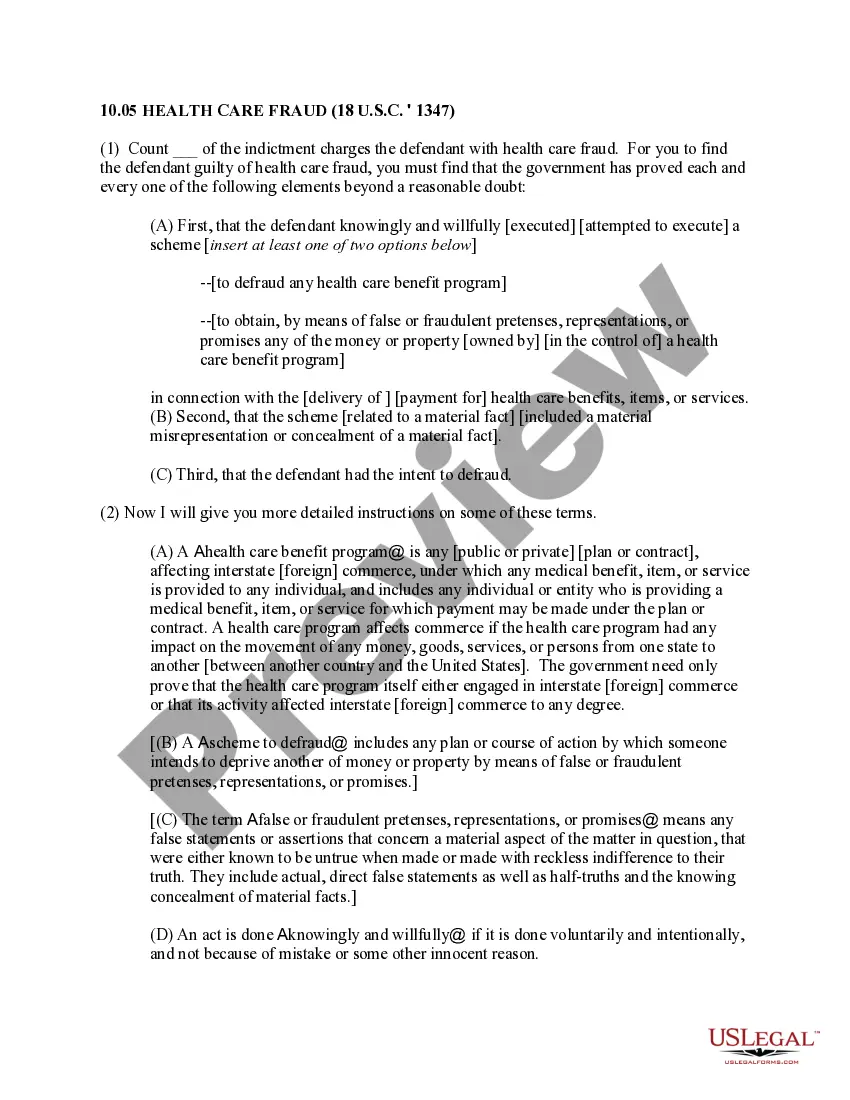
The Health Care Fraud - Affecting Interstate Commerce form is a legal document used to address specific fraudulent activities in health care that have an impact on interstate commerce. This form outlines the necessary elements that must be proven in cases of health care fraud, distinguishing it from other types of fraud forms by focusing on how such actions interfere with the movement of goods, services, or funds between states. Understanding this form is essential for legal professionals handling cases involving inaccuracies or deceit in health care provisions affecting multiple states.
Form components explained
- Definition of health care fraud and its relation to interstate commerce.
- Explanation of the government's burden to prove fraud beyond a reasonable doubt.
- Clarification of what constitutes affecting interstate commerce within health care contexts.
- References to relevant case law and judicial instructions.
Situations where this form applies
This form should be used in legal proceedings involving allegations of health care fraud that have implications across state lines. It is particularly relevant when the fraud affects programs such as Medicare or Medicaid, which operate federally but also involve state regulations. Legal representatives, prosecutors, or defense attorneys dealing with such cases will find this form necessary in developing their arguments or defenses based on state and federal laws.
Intended users of this form
- Prosecutors handling health care fraud cases.
- Defense attorneys representing clients accused of health care fraud.
- Legal scholars or students studying criminal law related to health care.
- Health care administrators needing to understand fraud implications on interstate commerce.
How to prepare this document
- Identify the type of health care plan or contract involved in the fraud.
- Gather evidence demonstrating how the fraudulent actions affected interstate commerce.
- Ensure all parties involved are correctly named and their roles clearly defined.
- Specify the factual basis of the alleged fraud, including dates and amounts involved.
- Compile the required documentation and prepare for submission to the appropriate legal authority.
Does this document require notarization?
Notarization is generally not required for this form. However, certain states or situations might demand it. You can complete notarization online through US Legal Forms, powered by Notarize, using a verified video call available anytime.
Get your form ready online
Our built-in tools help you complete, sign, share, and store your documents in one place.
Make edits, fill in missing information, and update formatting in US Legal Forms—just like you would in MS Word.
Download a copy, print it, send it by email, or mail it via USPS—whatever works best for your next step.
Sign and collect signatures with our SignNow integration. Send to multiple recipients, set reminders, and more. Go Premium to unlock E-Sign.
If this form requires notarization, complete it online through a secure video call—no need to meet a notary in person or wait for an appointment.
We protect your documents and personal data by following strict security and privacy standards.

Make edits, fill in missing information, and update formatting in US Legal Forms—just like you would in MS Word.

Download a copy, print it, send it by email, or mail it via USPS—whatever works best for your next step.

Sign and collect signatures with our SignNow integration. Send to multiple recipients, set reminders, and more. Go Premium to unlock E-Sign.

If this form requires notarization, complete it online through a secure video call—no need to meet a notary in person or wait for an appointment.

We protect your documents and personal data by following strict security and privacy standards.
Typical mistakes to avoid
- Failing to adequately prove the connection to interstate commerce.
- Not including sufficient evidence to support allegations of fraud.
- Omitting important dates and details of the fraudulent actions.
- Misidentifying the party liable for the fraud.
Why complete this form online
- Immediate access to a legal template approved by licensed attorneys.
- Convenient downloading and editing options to customize as necessary.
- Resourceful guide to ensure all legal requirements are met effectively.
Looking for another form?
Form popularity
FAQ
Yes. 18 U.S.C.A. §1033(e) provides that any individual who has been convicted of "any criminal felony involving dishonesty or a breach of trust" may not engage in the 'business of insurance" as defined therein. Violation of the prohibition is punishable by fine or imprisonment or both.
1033. Failure to inform the Division of a prior felony conviction on a license application could result in a violation of statute and constitute denial of an insurance producer license.
18 U.S.C §1033 defines "business of insurance" as: (1) the writing of insurance, or (2) the reinsuring of risks, by an insurer, including all acts necessary or incidental to such writing or reinsuring and the activities of persons who act as, or are, officers, directors, agents, or employees of insurers or who are
Federal and state law: Federal law does not distinctly address insurance fraud. Instead, it is encompassed by The Violent Crime Control and Law Enforcement Act (1994), giving the federal government jurisdiction over insurance fraud when it affects interstate commerce.
The criminal enforcement of §1033(e) is the responsibility of the federal government. However, state insurance commissioners and agencies continue to have authority to regulate the insurance industry in their states, including overseeing §1033(e) waiver requests and determining whether or not to grant such waivers.
In California, healthcare fraud is considered a ?wobbler? crime, which means it can be charged as a misdemeanor or a felony. Typically, the prosecutor decides based on the amount of money involved.
18 U.S. Code § 1033 - Crimes by or affecting persons engaged in the business of insurance whose activities affect interstate commerce. for the purpose of influencing the actions of such official or agency or such an appointed agent or examiner, shall be punished as provided in paragraph (2).