Health Care Fraud
What this document covers
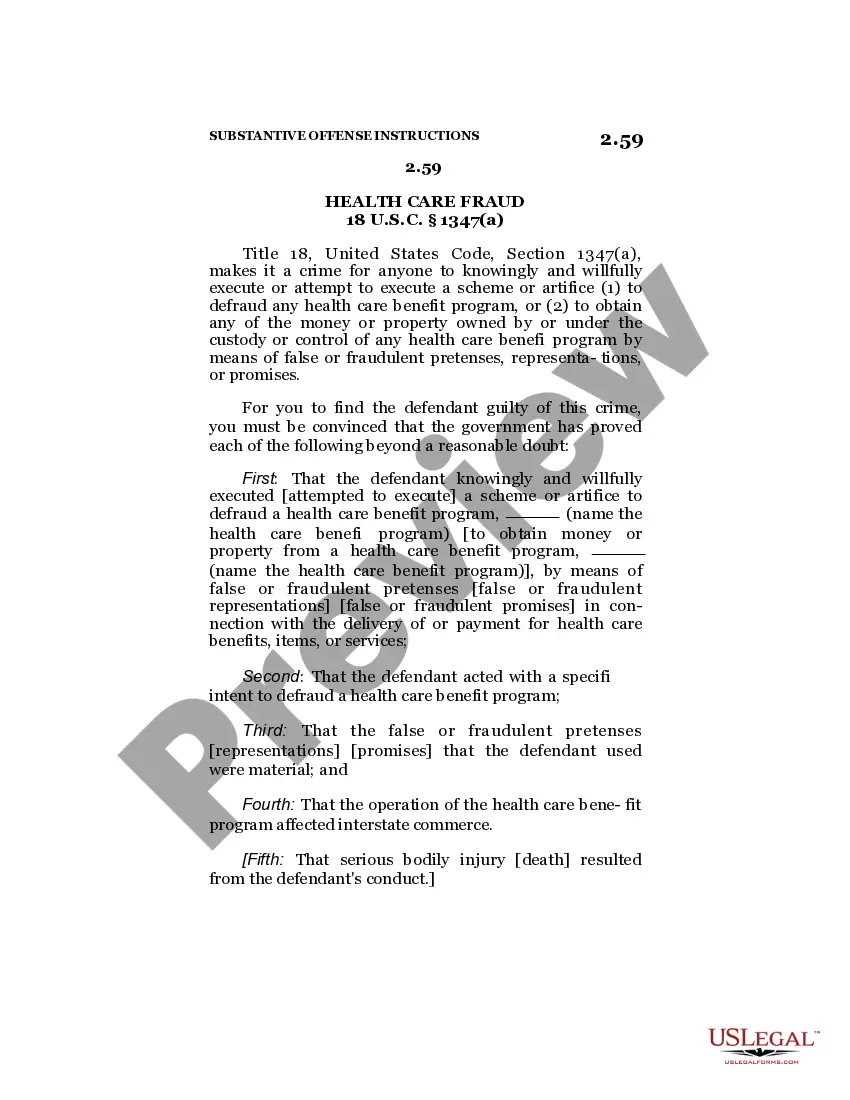
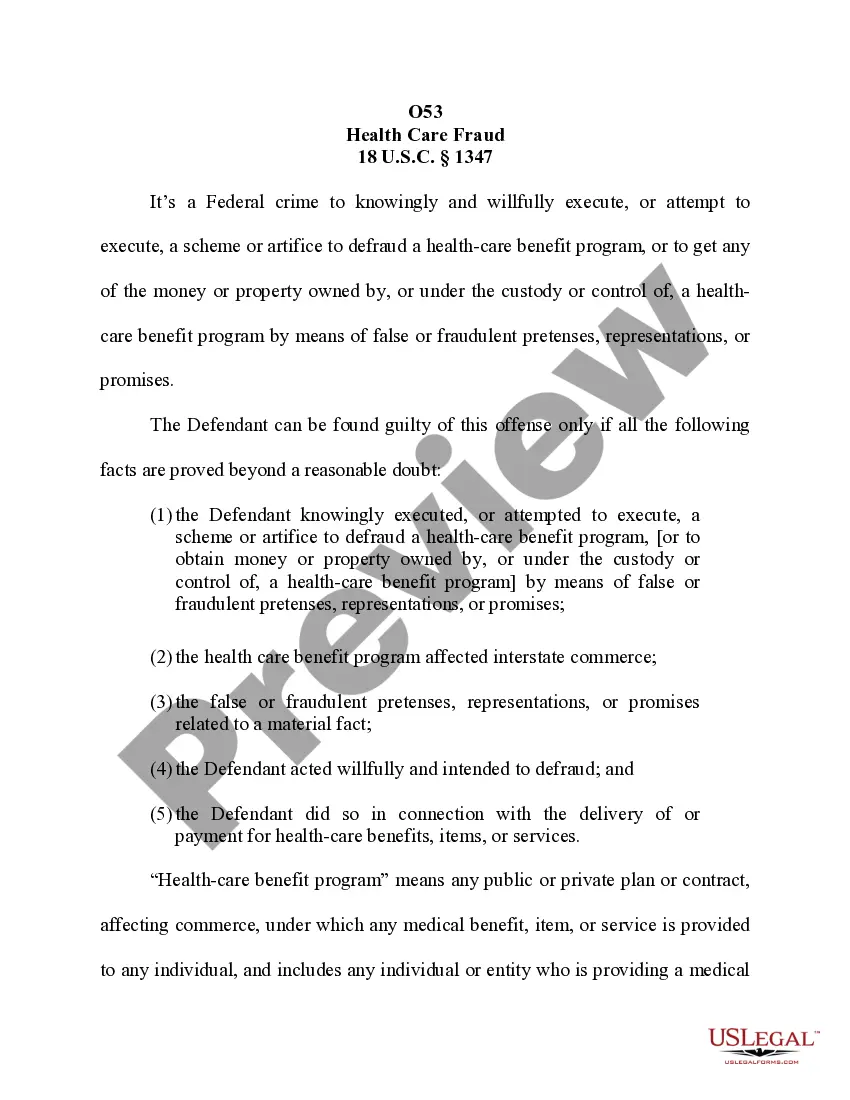
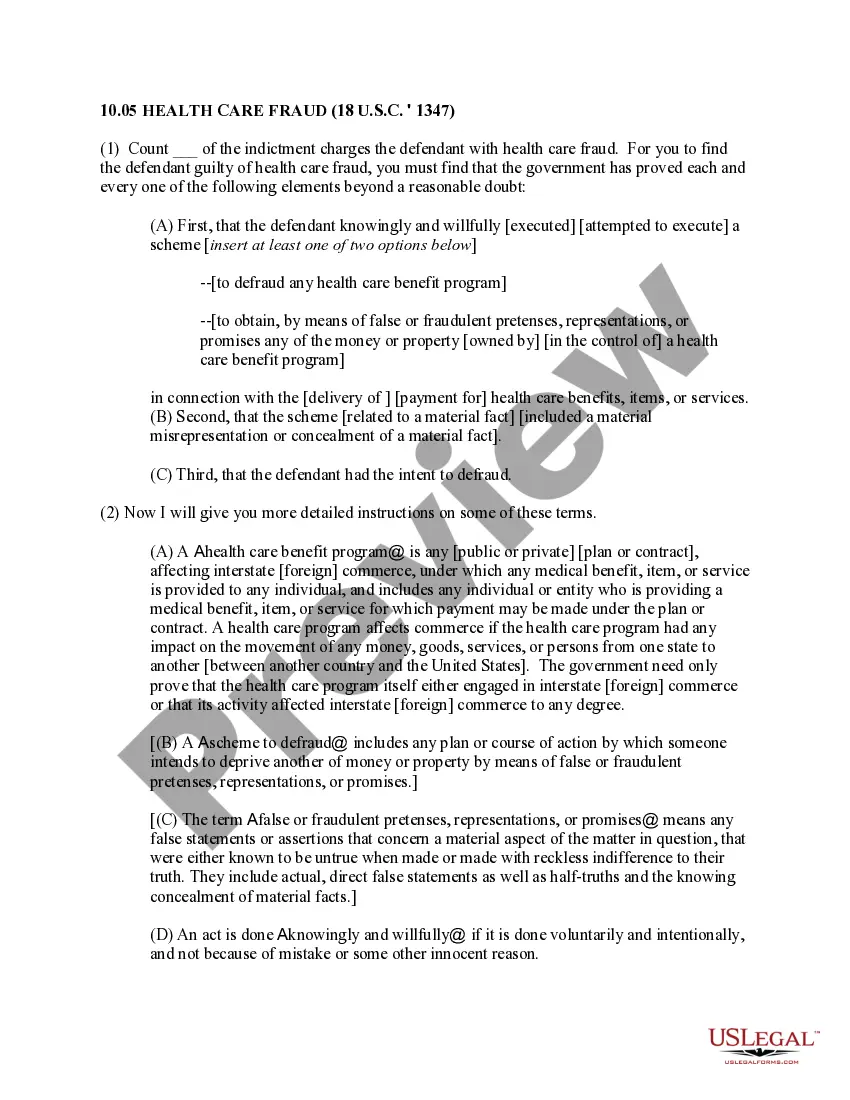
The Health Care Fraud form is a legal document designed to outline the elements of a scheme to defraud health care benefit programs, as defined under Title 18, United States Code, Section 1347(a). This form specifies the criteria required to establish that an individual has knowingly and willfully engaged in fraudulent activities aimed at misleading health care programs. This distinguishes it from other forms related to fraud, emphasizing specific intent and the impact on interstate commerce.
Key parts of this document
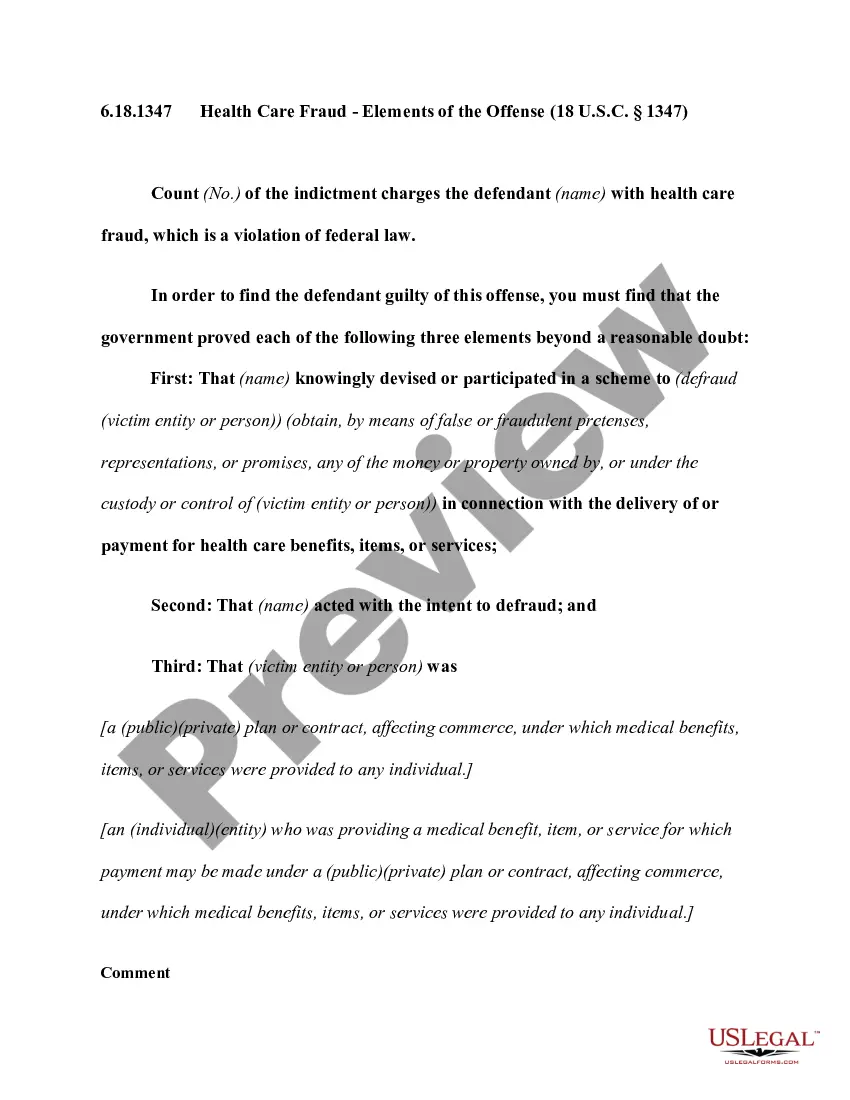
- Definition of Health Care Fraud: Specifies that it involves knowingly executing a scheme to defraud health care benefit programs.
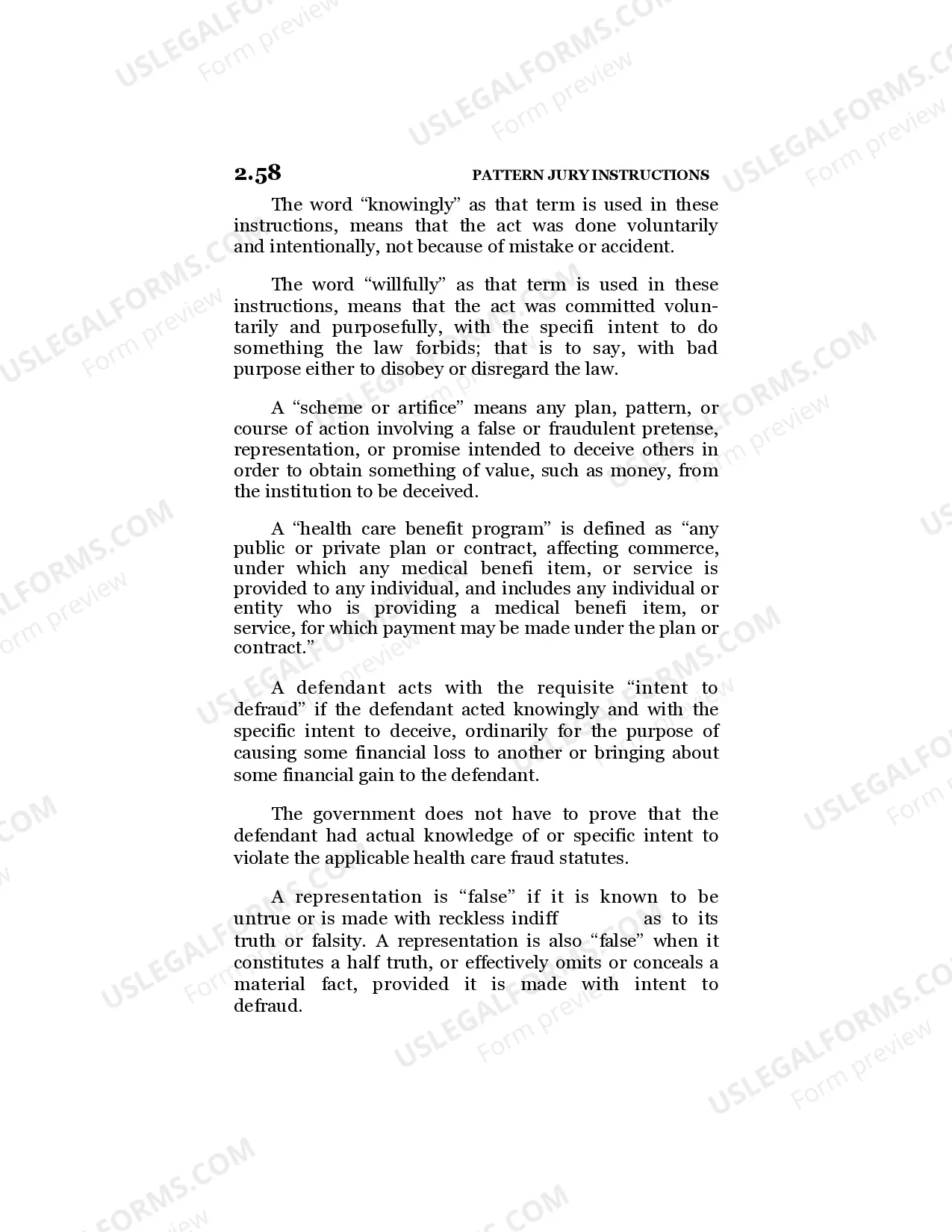
- Intent to Defraud: Clarifies that the defendant must act with a specific intent to deceive for financial gain.
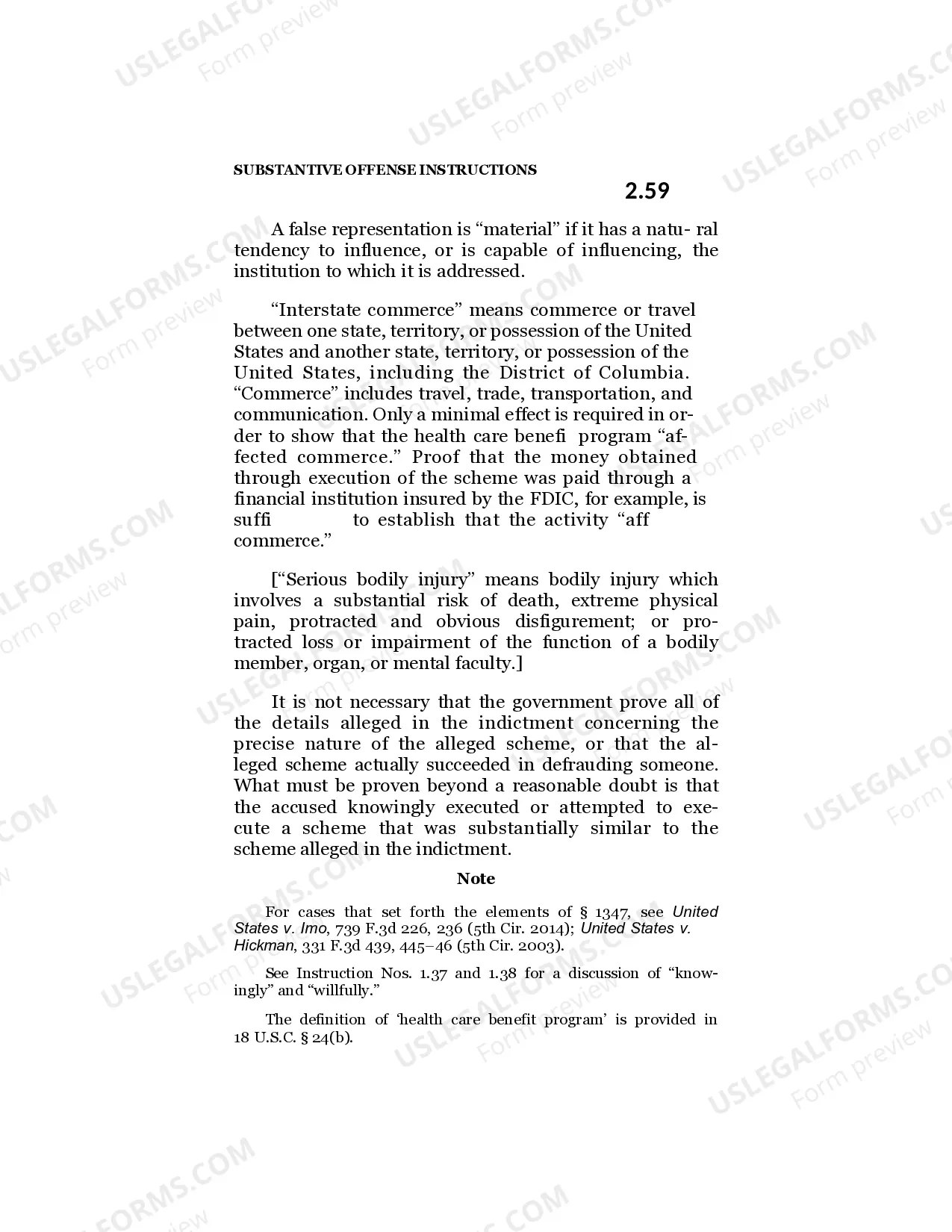
- Materiality of False Representations: Details that a false representation is material if it can influence the health care programâs decisions.
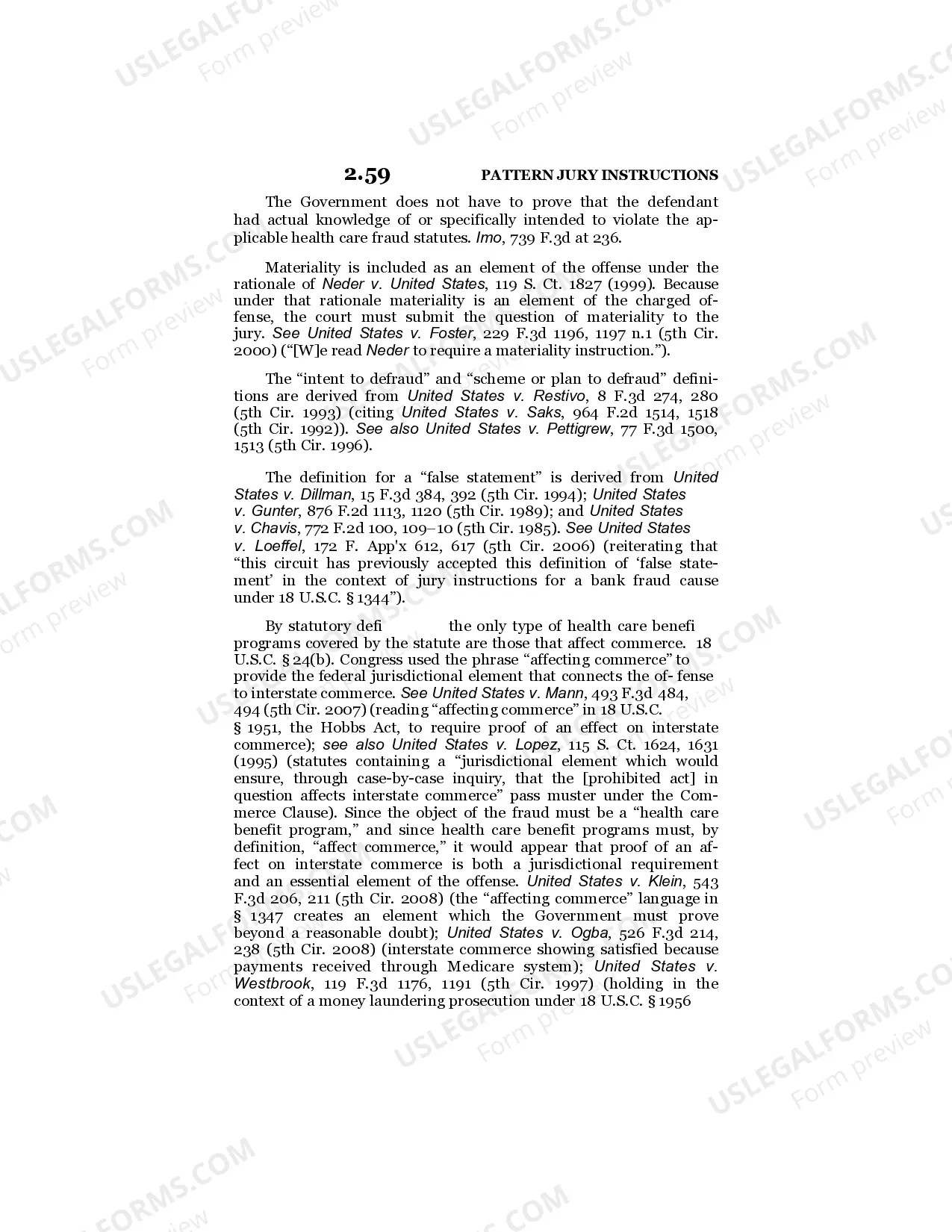
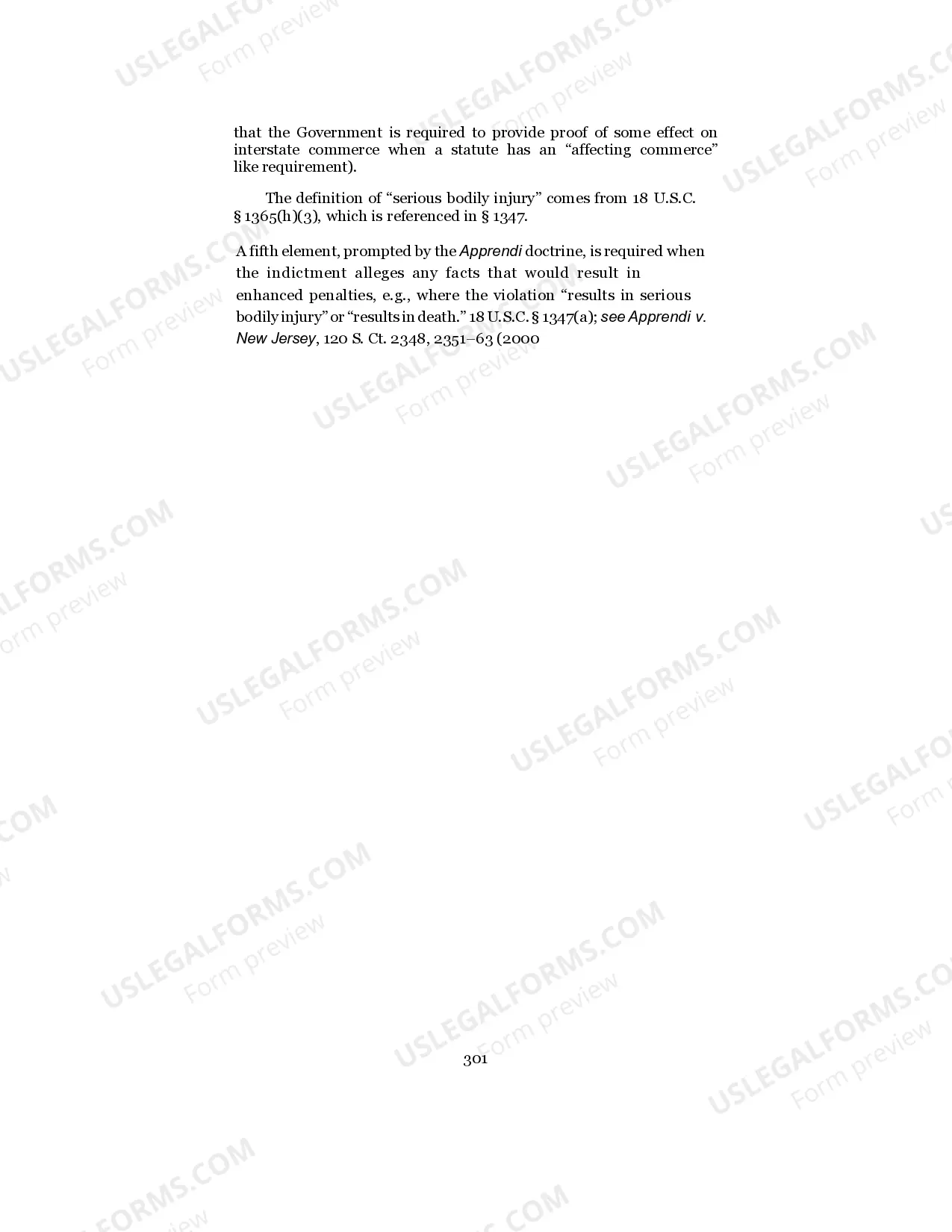
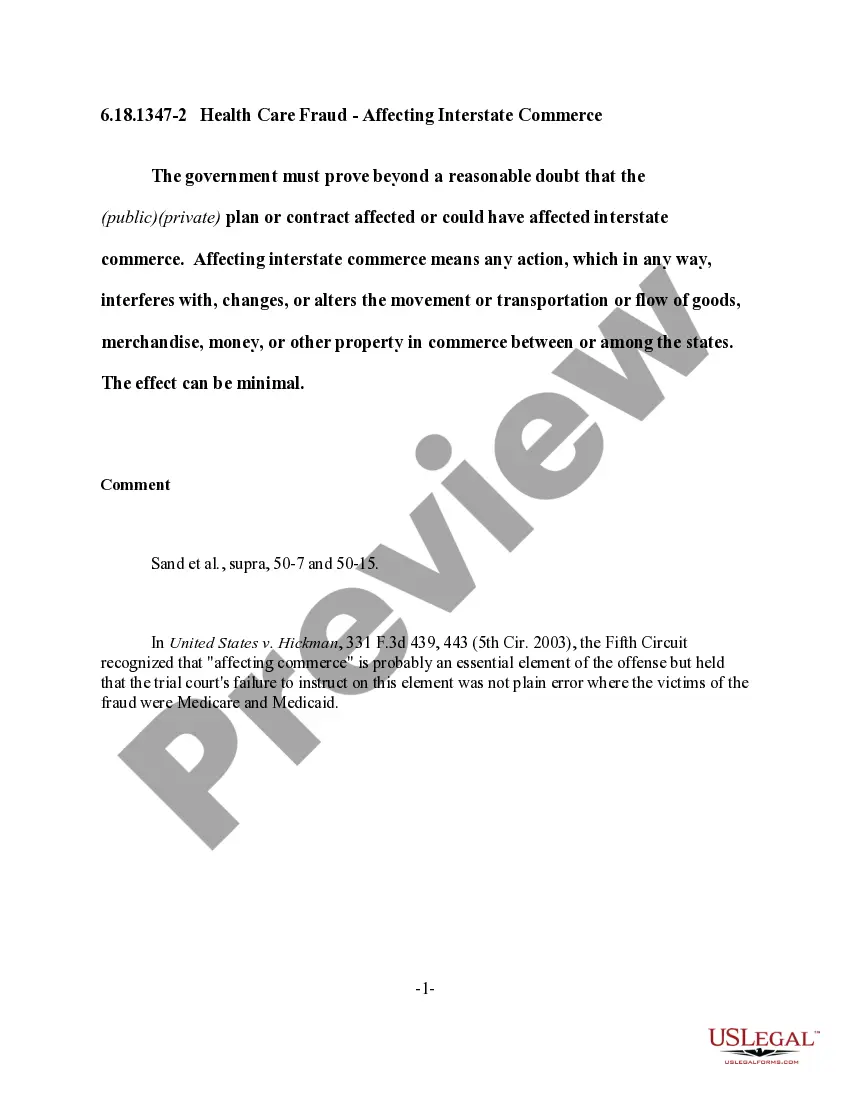
- Effect on Interstate Commerce: States that the operation of the health care program must affect commerce between states.
- Serious Bodily Injury: Addresses enhanced penalties if the fraud results in serious bodily injury or death.

Common use cases
This form should be used in legal contexts where allegations of health care fraud are made. It is relevant during criminal proceedings to establish the legality of actions taken by health care providers or individuals regarding benefits under health care programs. It can be applied in both prosecutorial and defensive strategies in fraud cases concerning health care benefits.
Intended users of this form
This form is intended for:
- Individuals or entities accused of health care fraud.
- Attorneys representing clients in health care fraud cases.
- Prosecutors involved in cases of alleged health care fraud against government programs.
- Regulatory agencies investigating potential fraud in health care services.
Instructions for completing this form
To properly complete the Health Care Fraud form, follow these steps:
- Identify the defendant and the health care benefit program involved in the alleged fraud.
- Clearly outline the specific fraudulent scheme or artifice used.
- State the intent to defraud and provide evidence of actions taken.
- Document the materiality of any false representations made during the process.
- Include any impacts on interstate commerce relevant to the case.
- Specify any consequences, such as serious bodily injury or death that resulted from the fraudulent activities.
Does this document require notarization?
This form does not typically require notarization unless specified by local law. Users should check with local regulations to ensure compliance.
Get your form ready online
Our built-in tools help you complete, sign, share, and store your documents in one place.
Make edits, fill in missing information, and update formatting in US Legal Forms—just like you would in MS Word.
Download a copy, print it, send it by email, or mail it via USPS—whatever works best for your next step.
Sign and collect signatures with our SignNow integration. Send to multiple recipients, set reminders, and more. Go Premium to unlock E-Sign.
If this form requires notarization, complete it online through a secure video call—no need to meet a notary in person or wait for an appointment.
We protect your documents and personal data by following strict security and privacy standards.

Make edits, fill in missing information, and update formatting in US Legal Forms—just like you would in MS Word.

Download a copy, print it, send it by email, or mail it via USPS—whatever works best for your next step.

Sign and collect signatures with our SignNow integration. Send to multiple recipients, set reminders, and more. Go Premium to unlock E-Sign.

If this form requires notarization, complete it online through a secure video call—no need to meet a notary in person or wait for an appointment.

We protect your documents and personal data by following strict security and privacy standards.
Mistakes to watch out for
- Failing to clearly define the health care benefit program involved.
- Omitting essential details of the alleged fraudulent scheme.
- Not demonstrating the requisite intent to defraud.
- Neglecting to establish the materiality of false statements made.
Why use this form online
- Convenience: Access and download the form anytime, streamlining the legal process.
- Editability: Easily fill out or modify the form to suit specific case details.
- Reliability: Developed by licensed attorneys, ensuring legal compliance and clarity.
- The form serves as a framework for establishing elements of health care fraud in legal proceedings.
- It outlines requirements set by federal law and guides users in understanding the implications of such fraud.
- While this form is crucial for prosecutorial purposes, defendants may use it to understand the charges against them.
Key takeaways
- The Health Care Fraud form is essential for addressing legal frameworks in fraudulent health care claims.
- Understanding the intent, materiality, and interstate commerce aspect are critical in using this form.
- Common pitfalls include inadequate definition of the fraud scheme and failure to meet legal definitions of intent and materiality.
Legal terms and meanings
- Knowingly: Acting voluntarily with awareness of one's actions.
- Willfully: Purposefully conducting actions that violate law.
- Health care benefit program: Any plan providing medical benefits through contracts or public programs.
- Serious bodily injury: An injury posing a substantial risk of death or requiring extensive medical treatment.
Looking for another form?
Form popularity
FAQ
A common type of Medicaid or health care fraud scheme is billing for a treatment or procedure never rendered -- such as X-rays, laboratory tests, or drugs that were never dispensed. Fraudulent providers also "upcode" various medical procedures.
Over a period of at least six years, Fata submitted $34 million USD in fraudulent charges to private health practices and Medicare. At the time of his arrest, Fata owned Michigan Hematology-Oncology, one of Michigan's largest cancer practices.
The most common kind of healthcare fraud involves false statements or deliberate omission of information that is critical in the determination of authorization and payment for services. Healthcare fraud can result in significant monetary liabilities and, in some cases, subject the perpetrator to criminal prosecution.
DOJ charges hundreds in connection with $6B in healthcare fraud in largest takedown ever. The Department of Justice (DOJ) charged 345 people across 51 federal districts in the largest healthcare fraud takedown in the agency's history.
In California, healthcare fraud is considered a ?wobbler? crime, which means it can be charged as a misdemeanor or a felony. Typically, the prosecutor decides based on the amount of money involved.
(August 2022) In fiscal year 2021, there were 336 health care fraud offenders, who accounted for 8.0% of all theft, property destruction, and fraud offenses. The number of health care fraud offenders decreased by 28.7% since fiscal year 2017.
$30 Million Health Clinics Medicare Fraud Huachillo defrauded Medicare of over $31 million while evading over $3.4 million in federal income taxes. His multiple healthcare clinics in New York City claimed to provide injection and infusion treatments to HIV/AIDS patients, but were merely healthcare fraud mills.