False Statements Relating to Health Care Matters
What this document covers
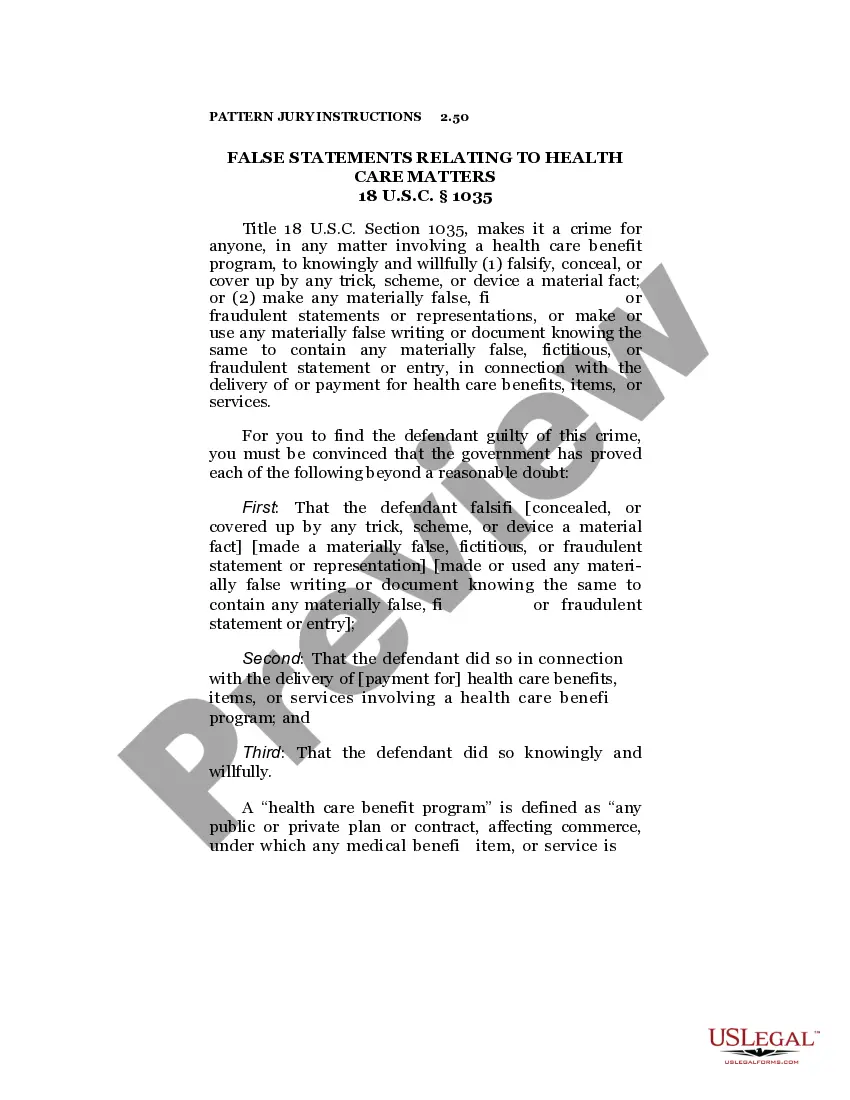
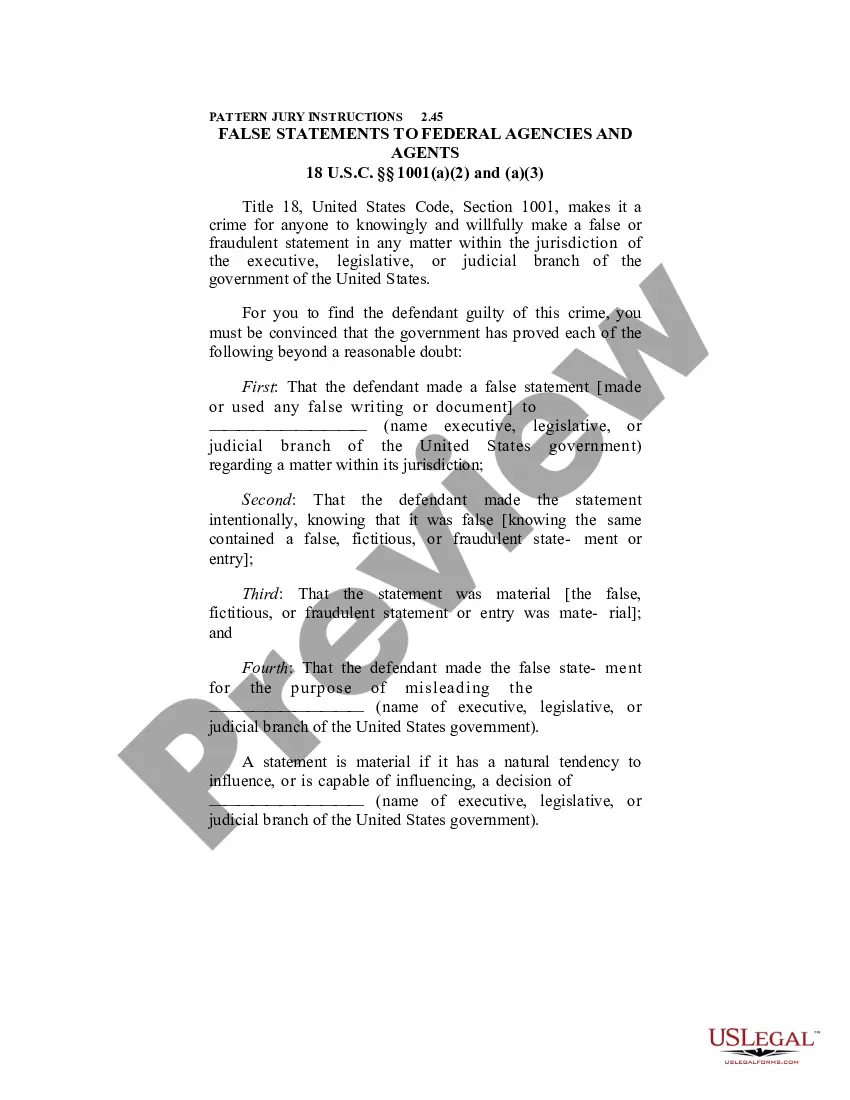
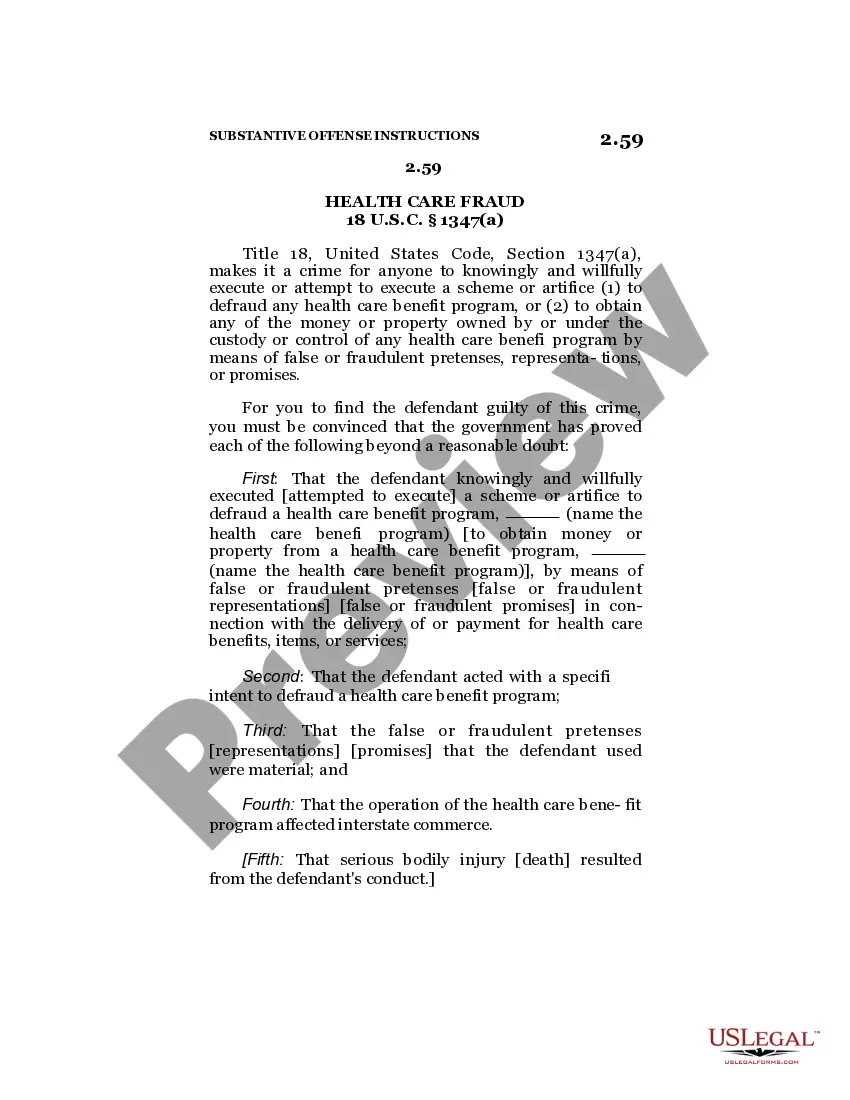
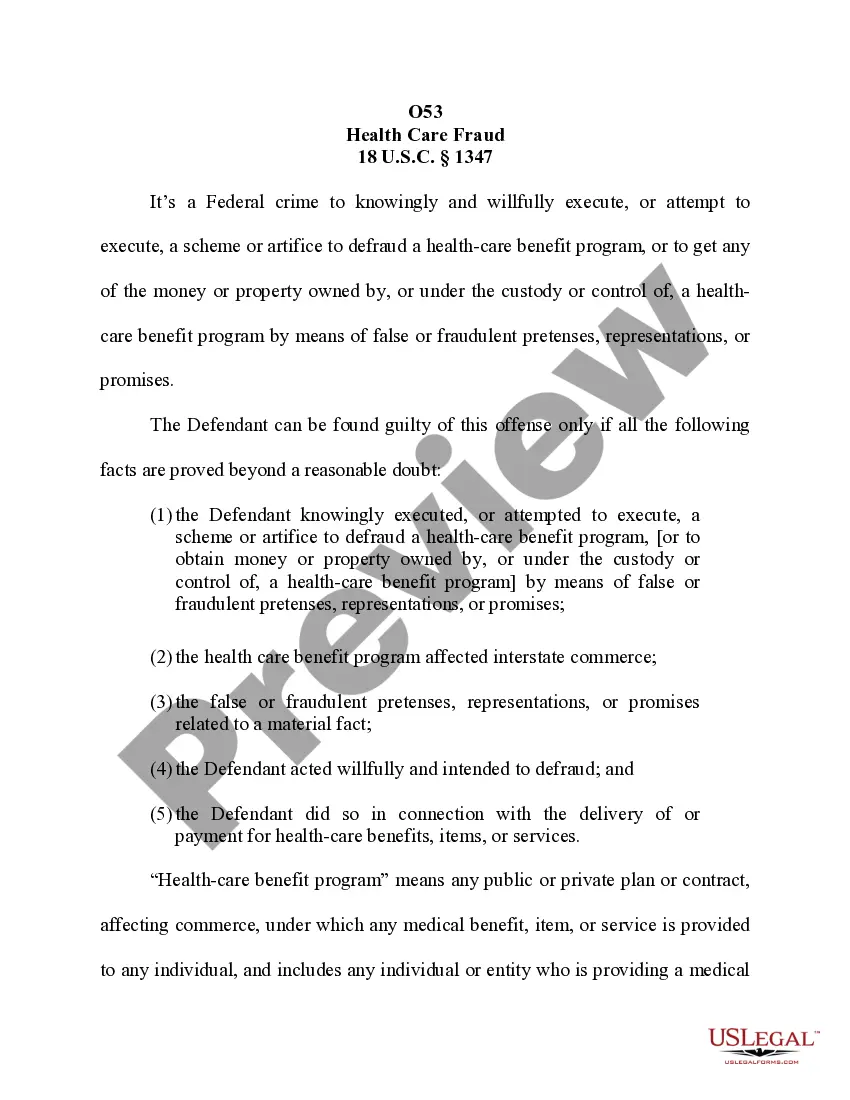
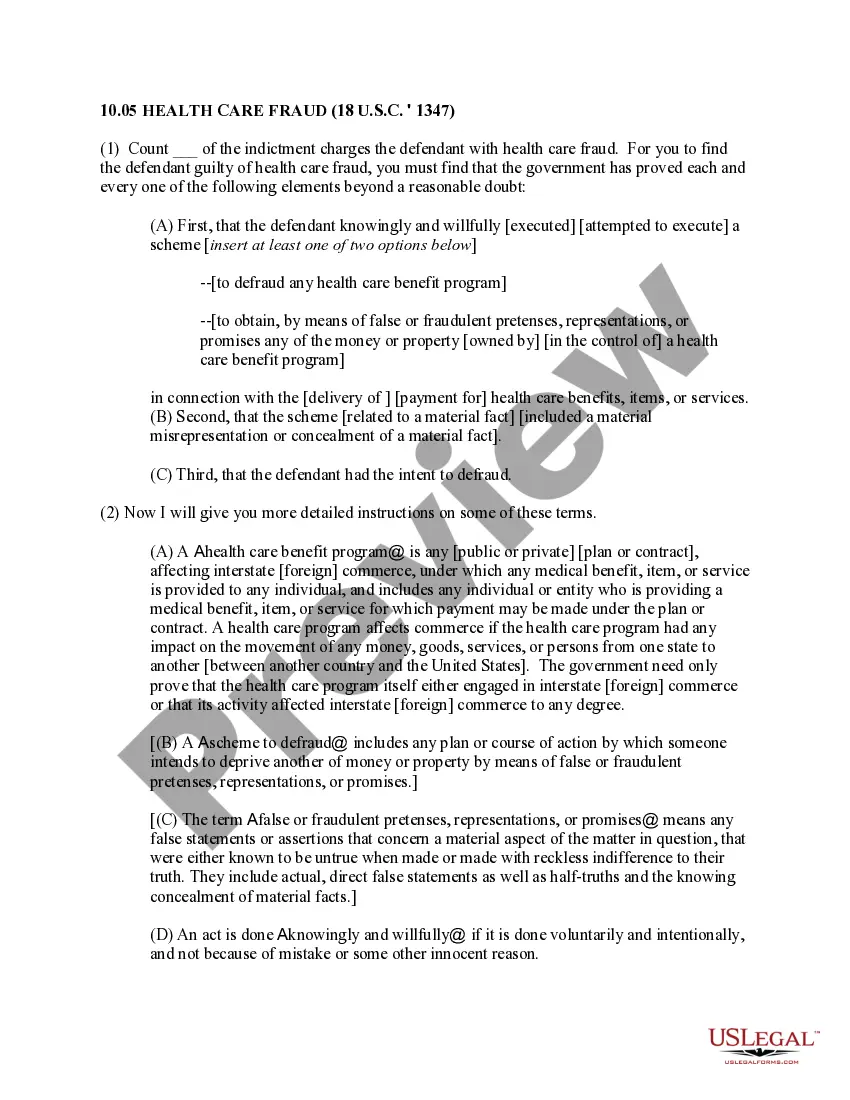
The False Statements Relating to Health Care Matters form is a legal document that delineates actions deemed criminal under Title 18 U.S.C. Section 1035. This form is utilized to address the legal implications of knowingly making false statements or representations in healthcare-related matters. Unlike other legal forms, this document specifically targets fraudulent representations related to health care benefit programs, ensuring that individuals are aware of the serious legal consequences associated with such offenses.
Main sections of this form
- Definition of false statements specific to health care.
- Criteria for proving guilt in connection to health care benefits.
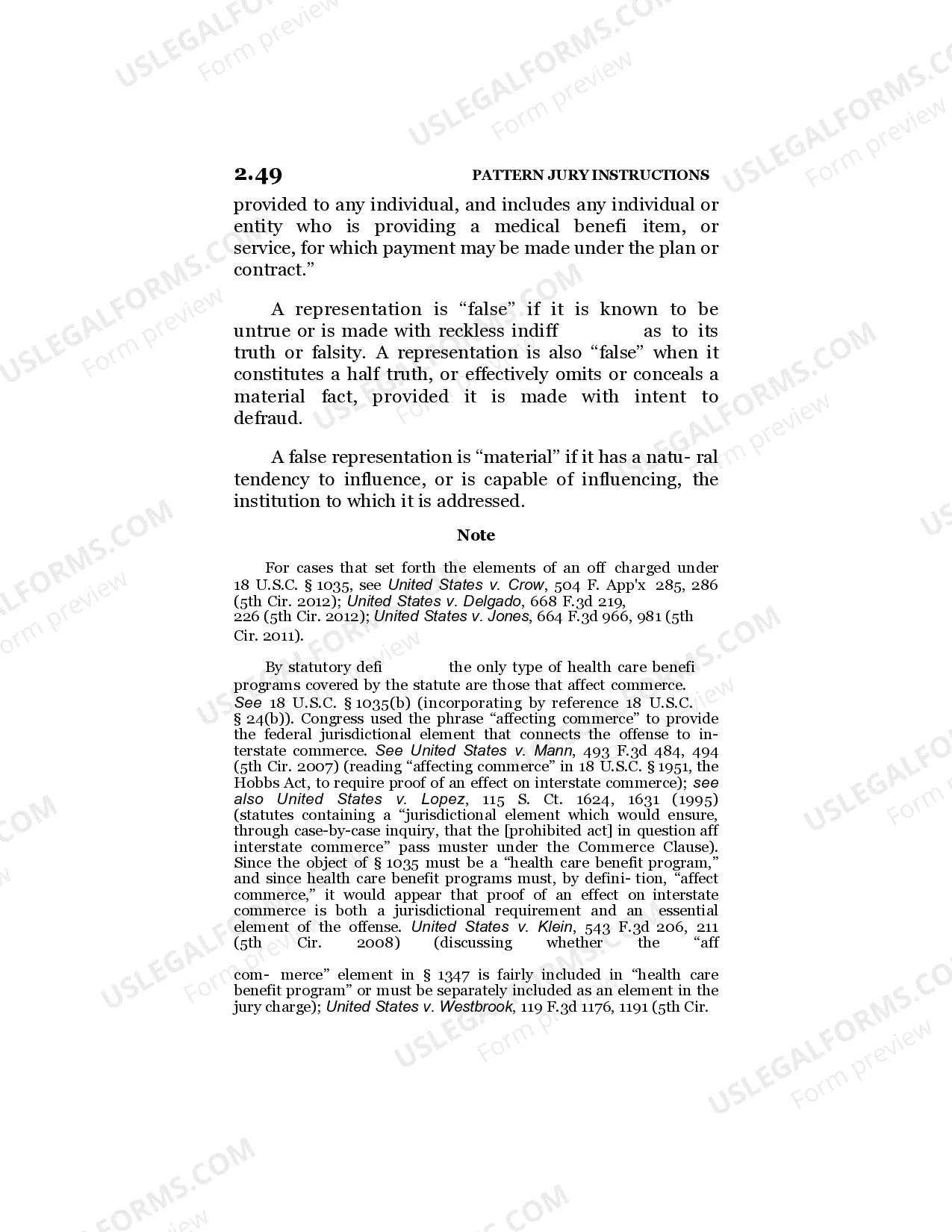
- Explanation of material facts and their influence on decision-making.
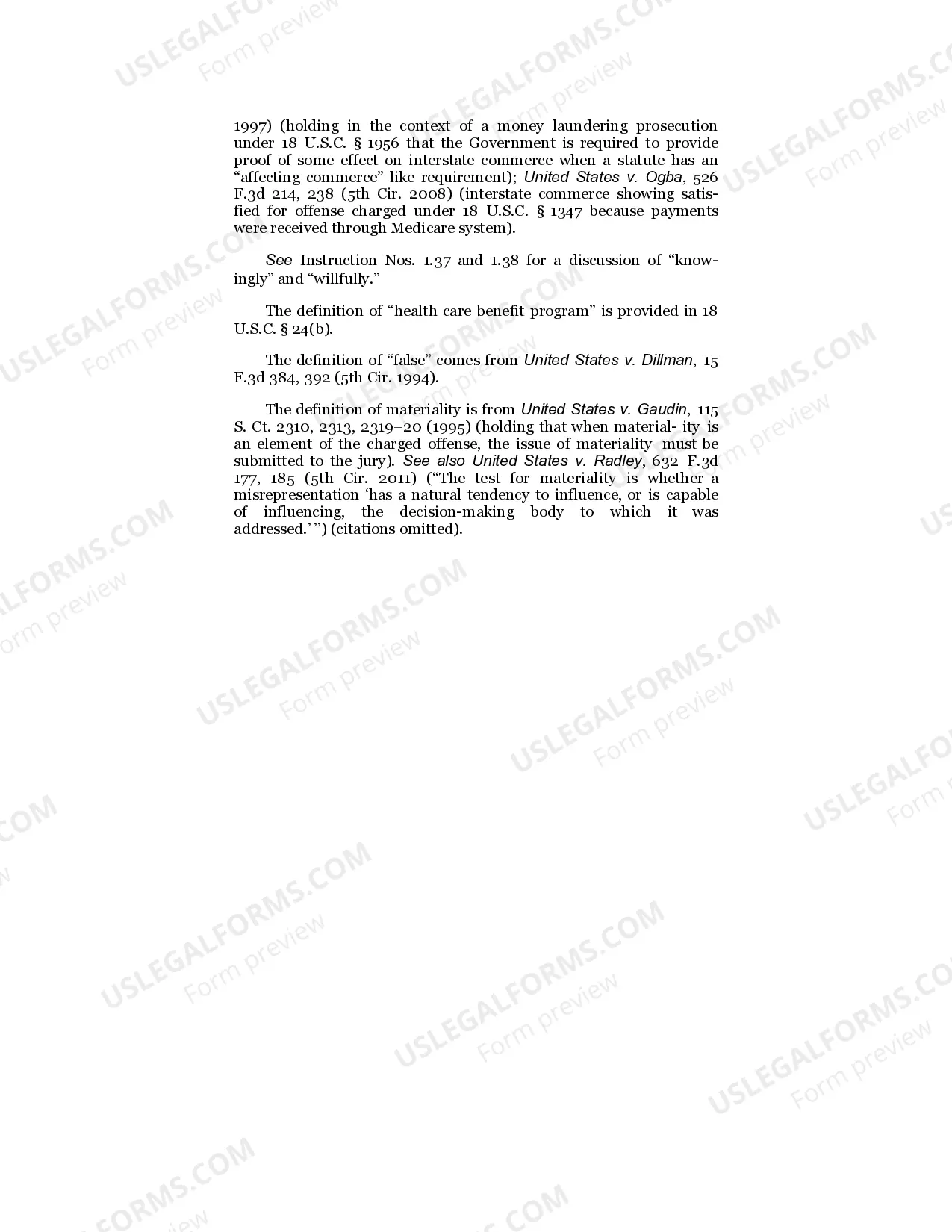
- Jurisdictional requirements tied to interstate commerce.
- Elements necessary to establish willful action in falsifying information.

Common use cases
This form should be used in situations where an individual or entity is accused of making false statements concerning healthcare benefits, items, or services. It is crucial for defendants in healthcare fraud cases to understand their rights and the legal standards that apply to them, particularly when charged with violations under 18 U.S.C. Section 1035.
Intended users of this form
- Individuals accused of making false representations in health care matters.
- Legal professionals representing clients in healthcare fraud cases.
- Healthcare providers needing clarity on the ramifications of false testimonies.
- Entities engaged in healthcare benefit programs seeking to ensure compliance.
How to complete this form
- Identify the parties involved, including any accused individual or organization.
- Outline the specific false statements or representations made.
- Detail the connections to health care benefit programs affected by the allegations.
- Specify the intent behind the statements, establishing willfulness.
- Provide signatures and dates to validate the document.
Does this document require notarization?
Notarization is generally not required for this form. However, certain states or situations might demand it. You can complete notarization online through US Legal Forms, powered by Notarize, using a verified video call available anytime.
Get your form ready online
Our built-in tools help you complete, sign, share, and store your documents in one place.
Make edits, fill in missing information, and update formatting in US Legal Forms—just like you would in MS Word.
Download a copy, print it, send it by email, or mail it via USPS—whatever works best for your next step.
Sign and collect signatures with our SignNow integration. Send to multiple recipients, set reminders, and more. Go Premium to unlock E-Sign.
If this form requires notarization, complete it online through a secure video call—no need to meet a notary in person or wait for an appointment.
We protect your documents and personal data by following strict security and privacy standards.

Make edits, fill in missing information, and update formatting in US Legal Forms—just like you would in MS Word.

Download a copy, print it, send it by email, or mail it via USPS—whatever works best for your next step.

Sign and collect signatures with our SignNow integration. Send to multiple recipients, set reminders, and more. Go Premium to unlock E-Sign.

If this form requires notarization, complete it online through a secure video call—no need to meet a notary in person or wait for an appointment.

We protect your documents and personal data by following strict security and privacy standards.
Mistakes to watch out for
- Failing to clearly define the false statements involved.
- Omitting relevant details about the healthcare benefit programs impacted.
- Not establishing intent or willfulness comprehensively.
- Neglecting to review state-specific variations that might apply.
Why complete this form online
- Convenience of immediate access to legal documentation.
- Editability allows for personalization based on individual circumstances.
- Reliable templates drafted by licensed attorneys ensure legal compliance.
- Environmentally friendly option with downloadable formats.
Legal use & context
- This form is grounded in federal law, addressing issues of fraud in health care.
- Violation can lead to significant legal consequences, including criminal charges.
- Successful defense requires a clear understanding of the law and careful documentation.
Looking for another form?
Form popularity
FAQ
False Claims Act 31 U.S.C. It is illegal to submit claims for payment to Medicare or Medicaid that you know or should know are false or fraudulent. Filing false claims may result in fines of up to three times the programs' loss plus $11,000 per claim filed.
18 U.S.C. § 1035 is specific to false statements that are ?knowingly and willfully? made in connection with the delivery of or payment for any healthcare programs, benefits, items or services.
In connection with the delivery of or payment for health care benefits, items, or services, shall be fined under this title or imprisoned not more than 5 years, or both.
18 U.S.C. § 1035 is specific to false statements that are ?knowingly and willfully? made in connection with the delivery of or payment for any healthcare programs, benefits, items or services.
The False Claims Act: A Primer The FCA provided that any person who knowingly submitted false claims to the government was liable for double the government's damages plus a penalty of $2,000 for each false claim.