False Statement s to Federal Agencies and Agents
About this form
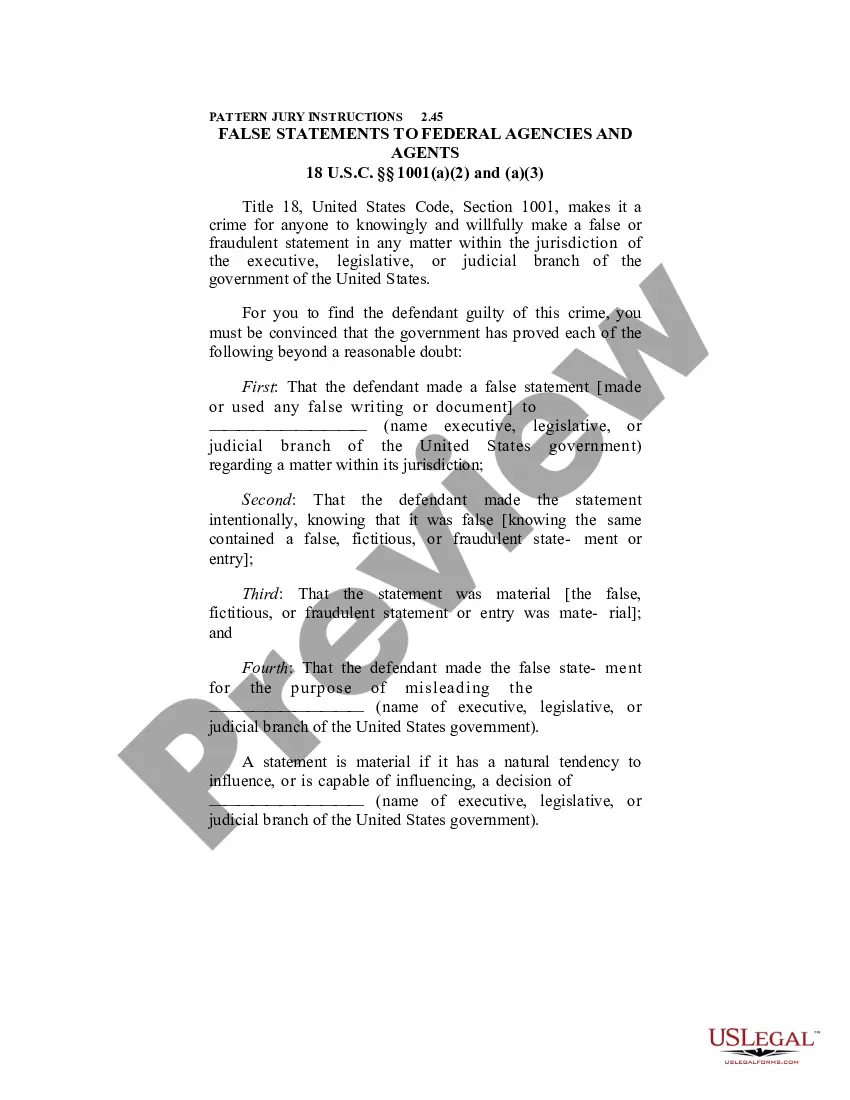
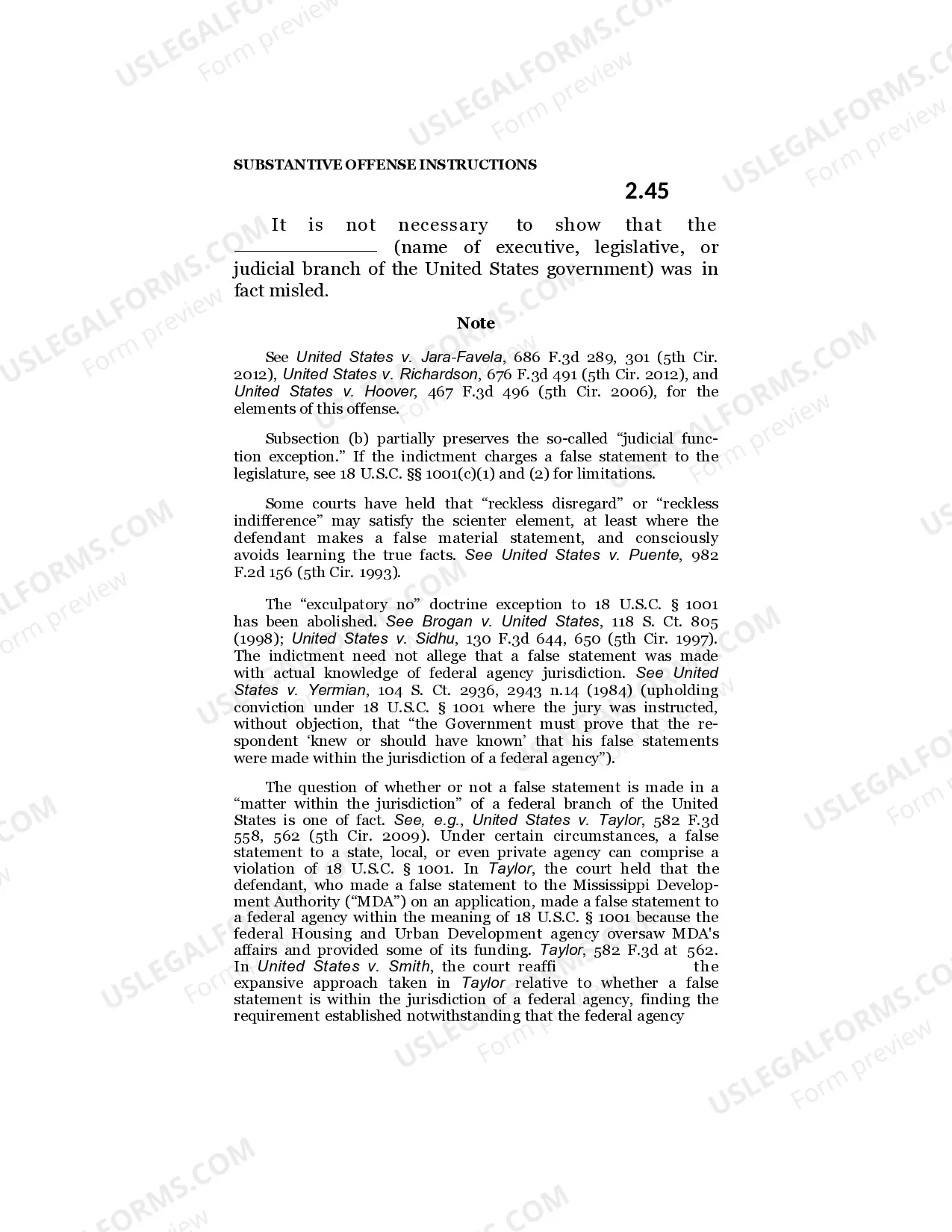
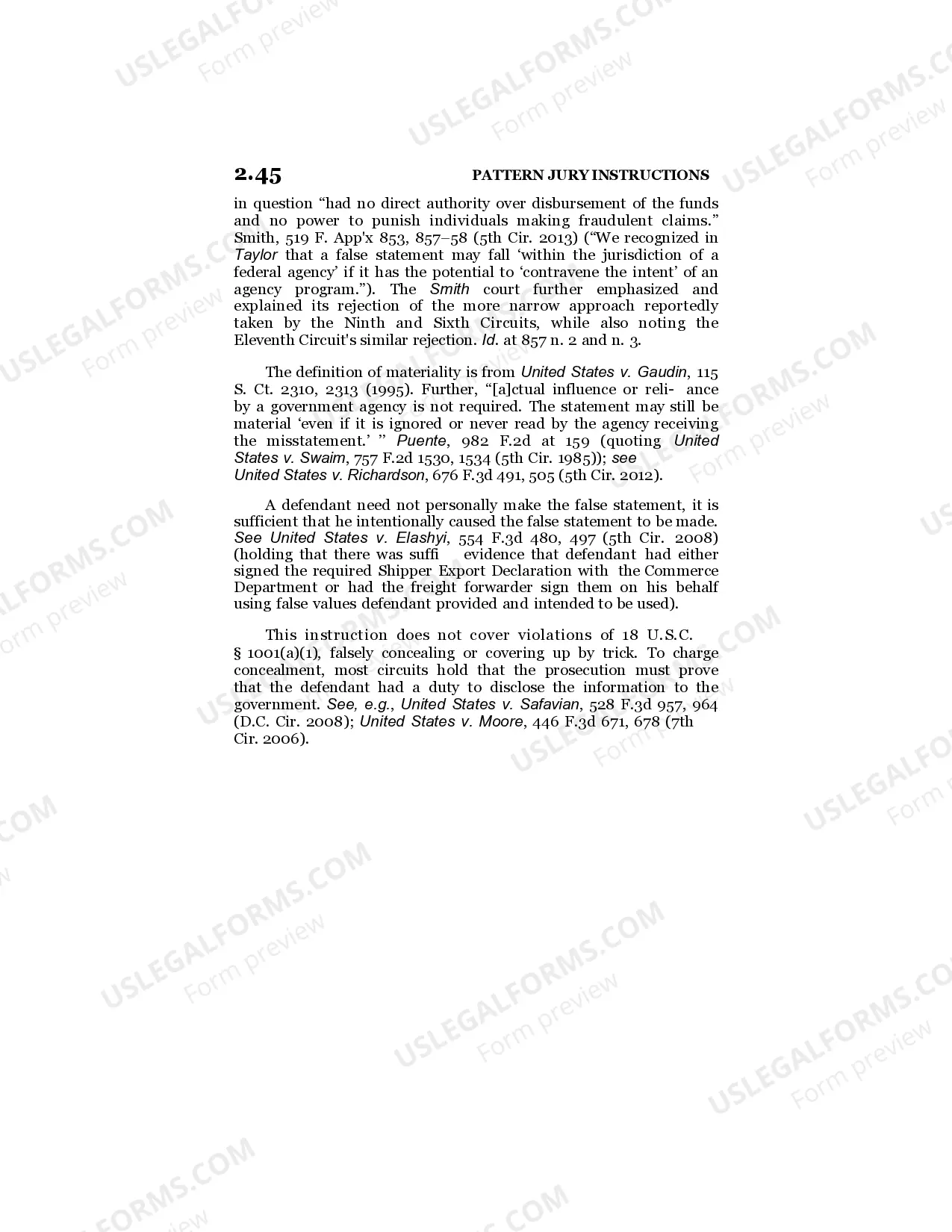
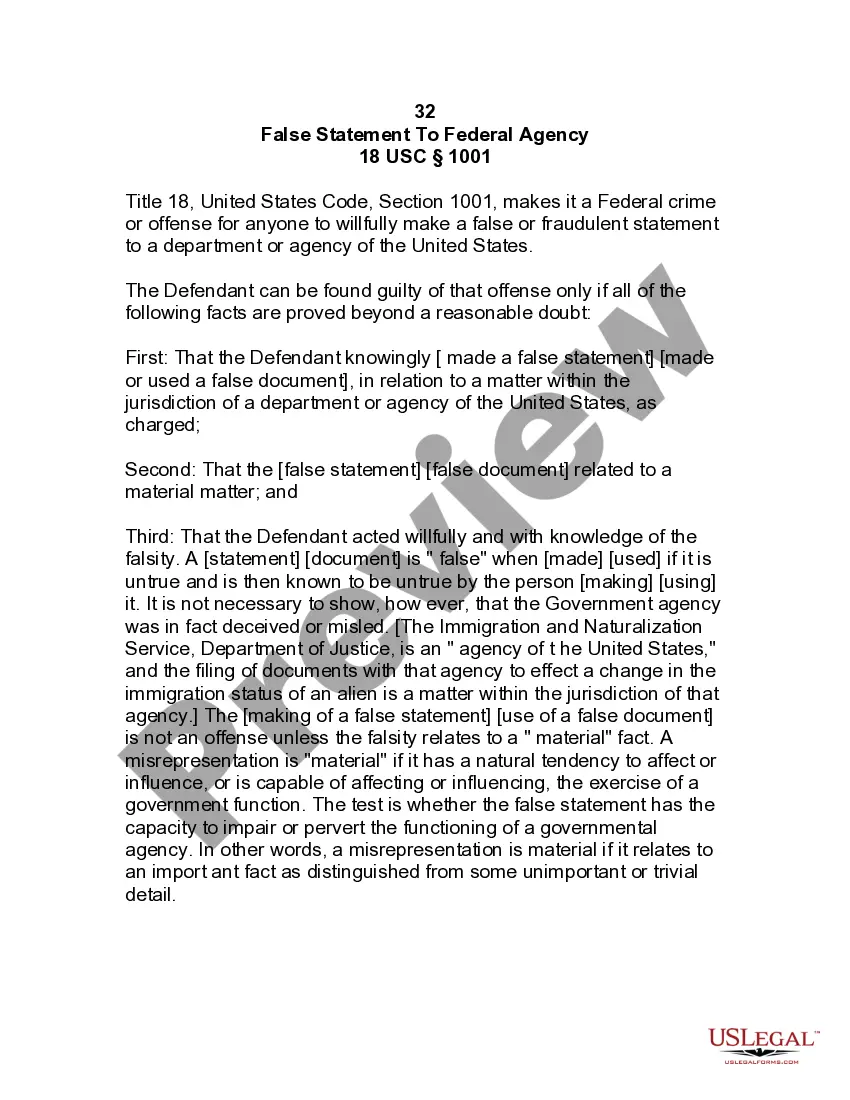
The False Statements to Federal Agencies and Agents form is a legal document that outlines the prohibition against making false or fraudulent statements to government agencies. Under Title 18, United States Code, Section 1001, this form explicitly defines the actions that constitute the crime of making a false statement in matters that fall under the jurisdiction of U.S. governmental branches. This form is essential for ensuring accountability and accuracy when dealing with federal agencies, differentiating it from forms that may pertain to state or local regulations.
Main sections of this form
- Definition of false statements and their legal implications
- Elements needed to prove the crime, such as intent and materiality
- Specific jurisdictions affected
- Judicial precedents relevant to the prosecution of false statements
- Clarification on the necessity of the agent's knowledge of jurisdiction
Common use cases
This form is necessary in situations where an individual is required to submit statements, applications, or documents to federal agencies. It is particularly relevant when there is a concern that false or misleading information may be submitted, whether intentionally or unintentionally. This form serves as a cautionary reminder of the legal consequences of misrepresentation, protecting both the individual and the integrity of government processes.
Who should use this form
- Individuals applying for government benefits or permits
- Businesses submitting documents to federal regulatory agencies
- Any party involved in legal proceedings that require submissions to federal authorities
- Legal professionals advising clients on compliance with federal disclosure requirements
How to complete this form
- Identify the federal agency to which the statement is directed.
- Clearly articulate the false statement or information to be disclosed.
- Provide relevant details about the context or matter in question.
- Ensure that the intent behind the statement is noted, understanding that it must indicate knowledge of its falsehood.
- Sign and date the form as required.
Notarization guidance
This form does not typically require notarization unless specified by local law. Users should always check local regulations to confirm specific requirements for submission to federal agencies.
Get your form ready online
Our built-in tools help you complete, sign, share, and store your documents in one place.
Make edits, fill in missing information, and update formatting in US Legal Forms—just like you would in MS Word.
Download a copy, print it, send it by email, or mail it via USPS—whatever works best for your next step.
Sign and collect signatures with our SignNow integration. Send to multiple recipients, set reminders, and more. Go Premium to unlock E-Sign.
If this form requires notarization, complete it online through a secure video call—no need to meet a notary in person or wait for an appointment.
We protect your documents and personal data by following strict security and privacy standards.

Make edits, fill in missing information, and update formatting in US Legal Forms—just like you would in MS Word.

Download a copy, print it, send it by email, or mail it via USPS—whatever works best for your next step.

Sign and collect signatures with our SignNow integration. Send to multiple recipients, set reminders, and more. Go Premium to unlock E-Sign.

If this form requires notarization, complete it online through a secure video call—no need to meet a notary in person or wait for an appointment.

We protect your documents and personal data by following strict security and privacy standards.
Mistakes to watch out for
- Failing to clearly define the false statement, which can lead to misunderstandings.
- Neglecting to establish intent, essential for legal defense.
- Assuming that materiality is self-evident without proper documentation.
- Overlooking the jurisdiction of the agency involved in the submission.
Benefits of using this form online
- Convenience of instant access to legal documentation.
- Editability allows users to customize the form to their specific needs.
- Reliability of forms drafted by licensed attorneys, ensuring legal compliance.
- Time savings by avoiding lengthy consultations with legal advisors.
Looking for another form?


Form popularity
FAQ
Intentionally making false statements or concealing a material fact to a federal agent or investigator is a federal crime, punishable by up to five years in prison and a fine of up to $250,000.
Intentionally making false statements or concealing a material fact to a federal agent or investigator is a federal crime, punishable by up to five years in prison and a fine of up to $250,000.
The price you might pay for a single false statement made to the FBI can be steep. This offense is a federal crime and a felony, meaning a conviction could haunt you for the rest of your life. If you are convicted of making a false statement, you could face up to five years in federal prison.
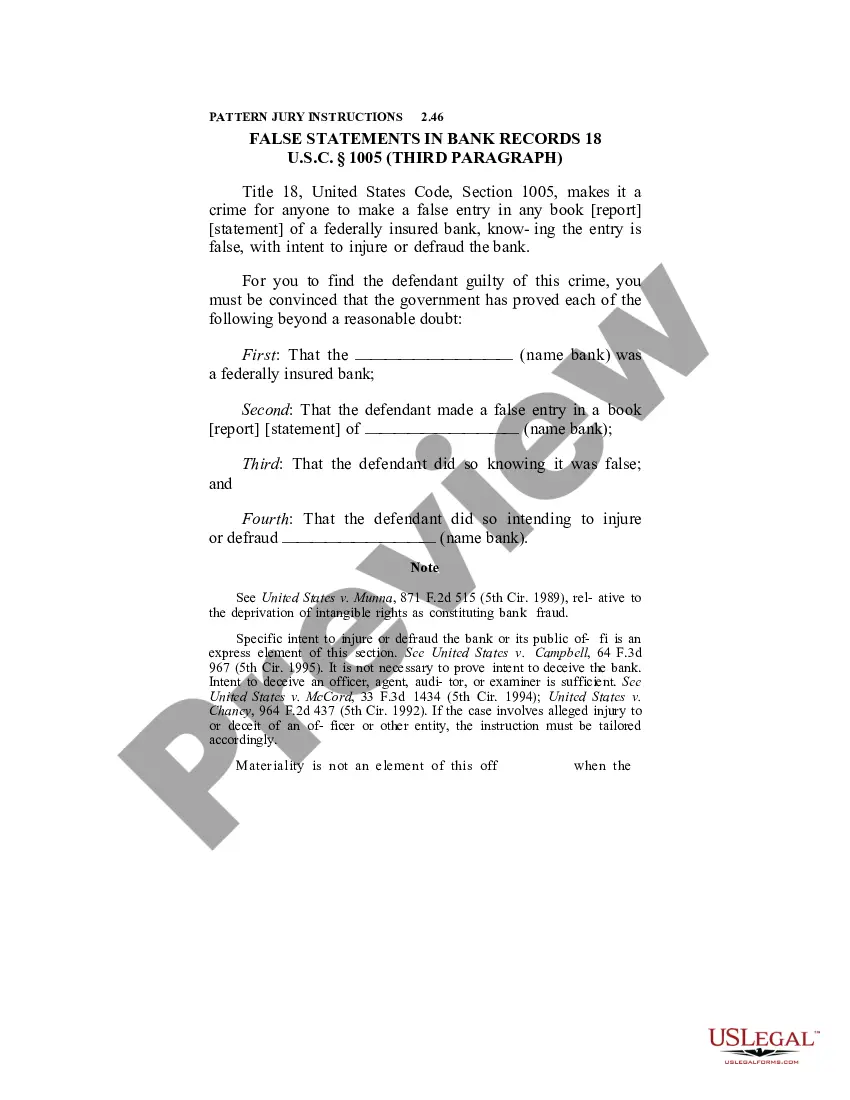
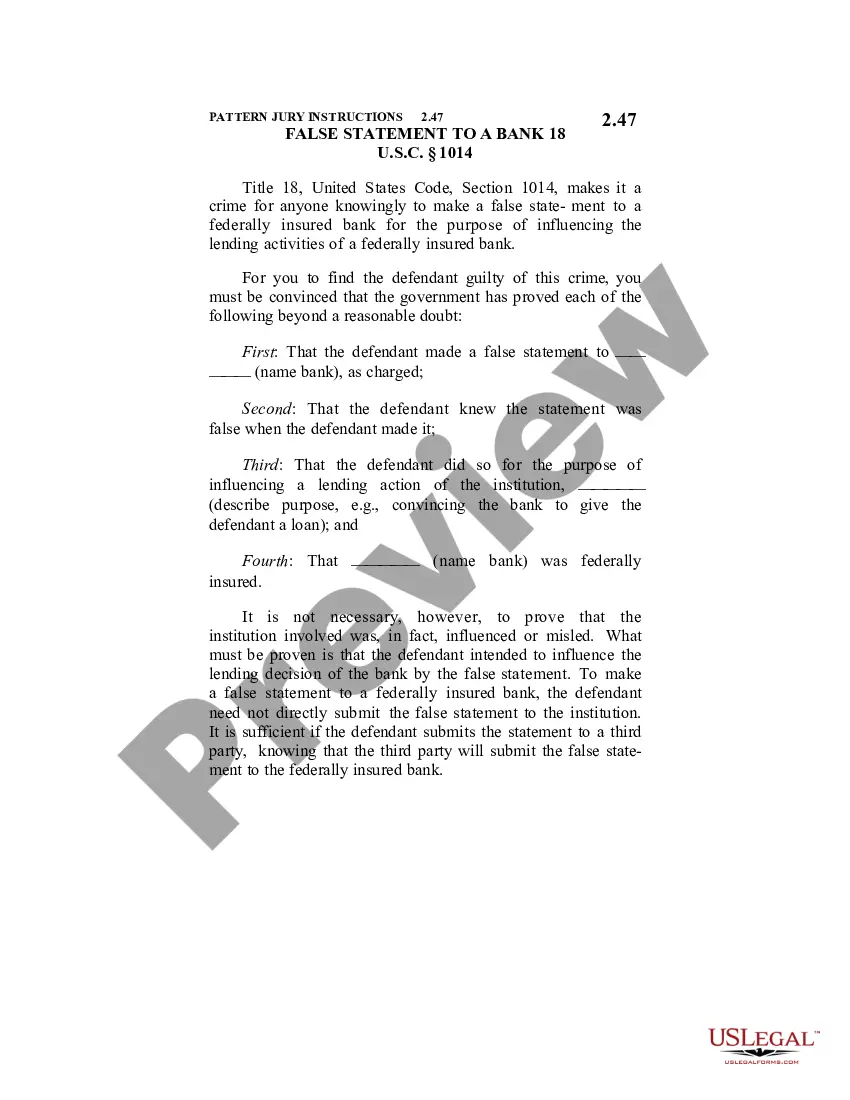
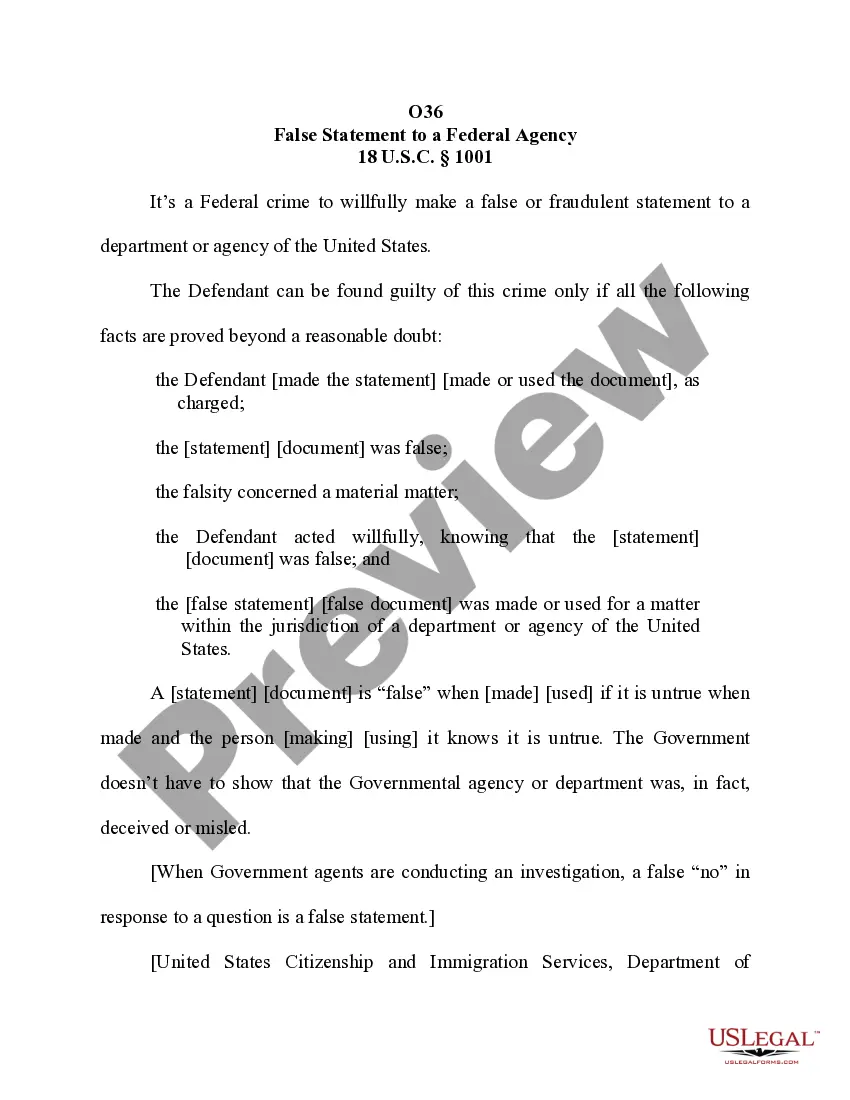
"To prove a false statement in violation of 18 U.S.C. § 1001, the government must show that the defendant: (1) knowingly and willfully, (2) made a statement, (3) in relation to a matter within the jurisdiction of a department or agency of the United States, (4) with knowledge of its falsity." United States v.
Under Section 1001 of title 18 of the United States Code, it is a federal crime to knowingly and willfully make a materially false, fictitious, or fraudulent statement in any matter within the jurisdiction of the executive, legislative, or judicial branch of the United States.
A person who lies to police during an investigation could face charges of making false or misleading statements to police or public officials. To commit this crime, most state laws require that the person knew the statement was false and intended to mislead police or hinder an investigation by making the statement.
18 U.S.C. § 1001 makes it a felony crime make a ?false statement? to an agent of the government related to a federal matter.
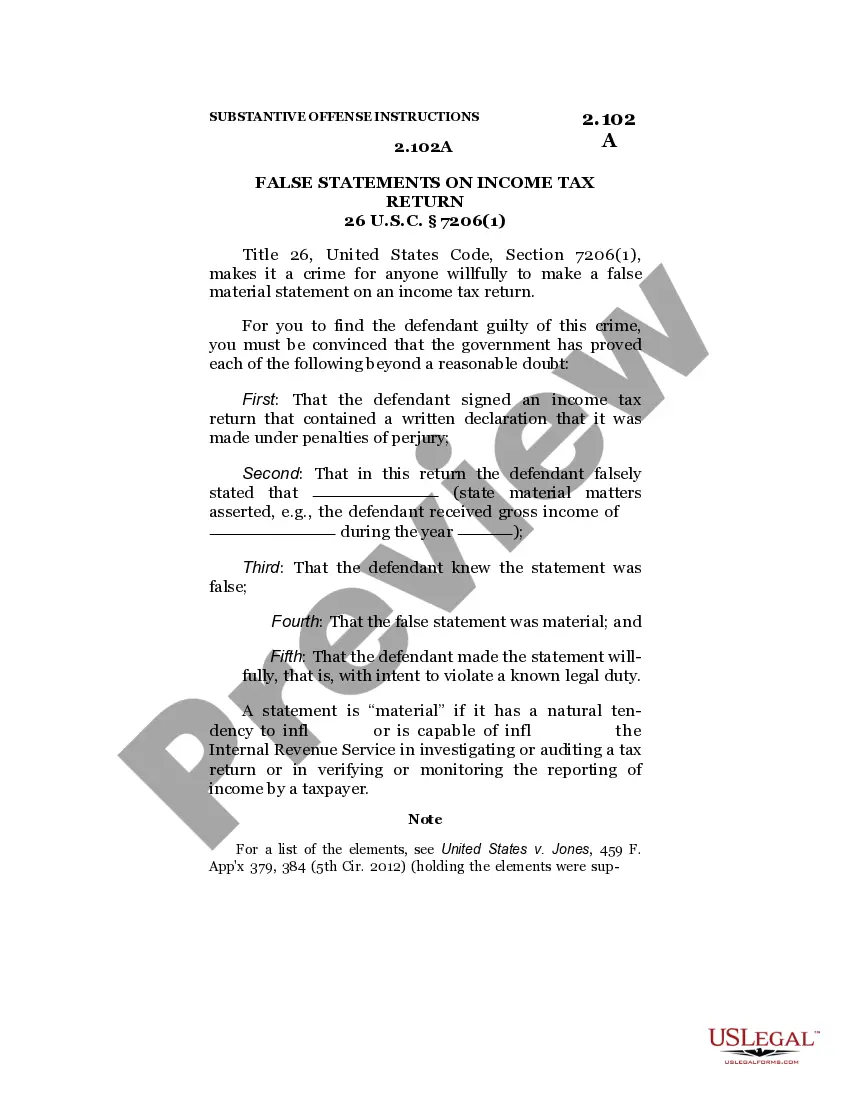
Yes, giving a false material statement not under oath to an IRS agent is likely to be a criminal violation.