False Statement to a Bank
Understanding this form
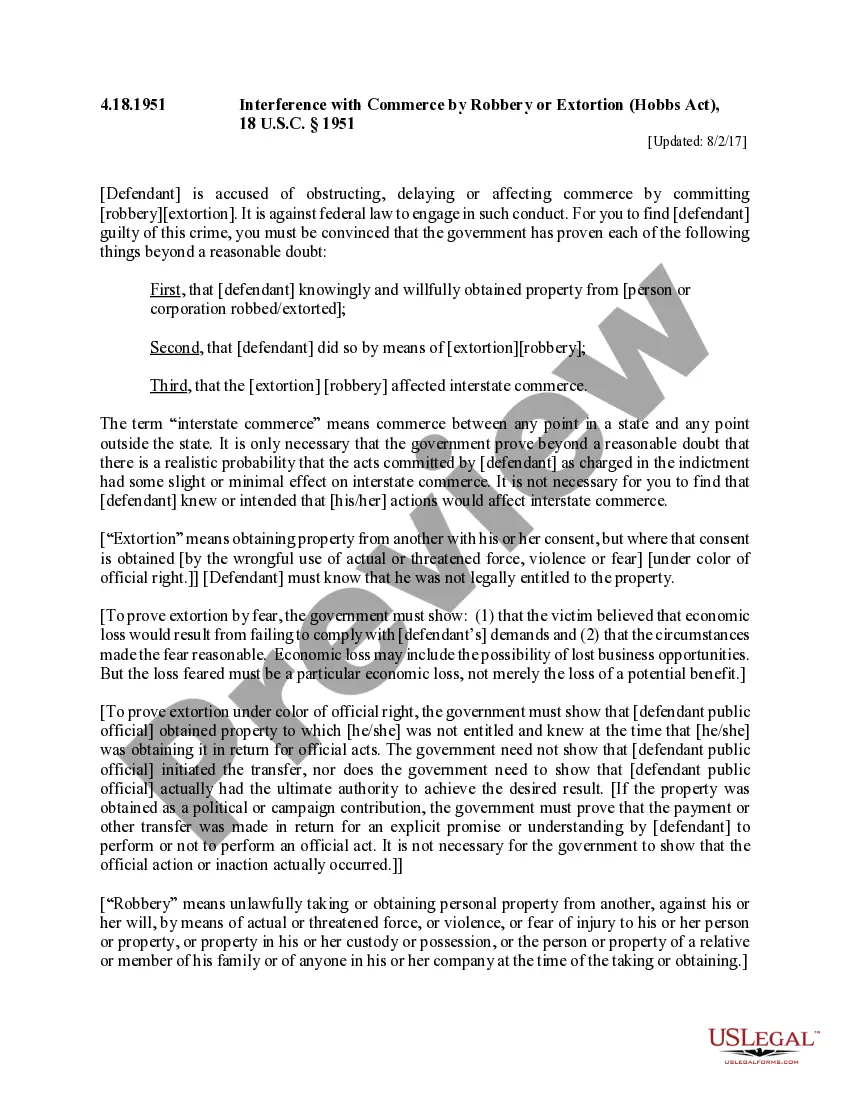
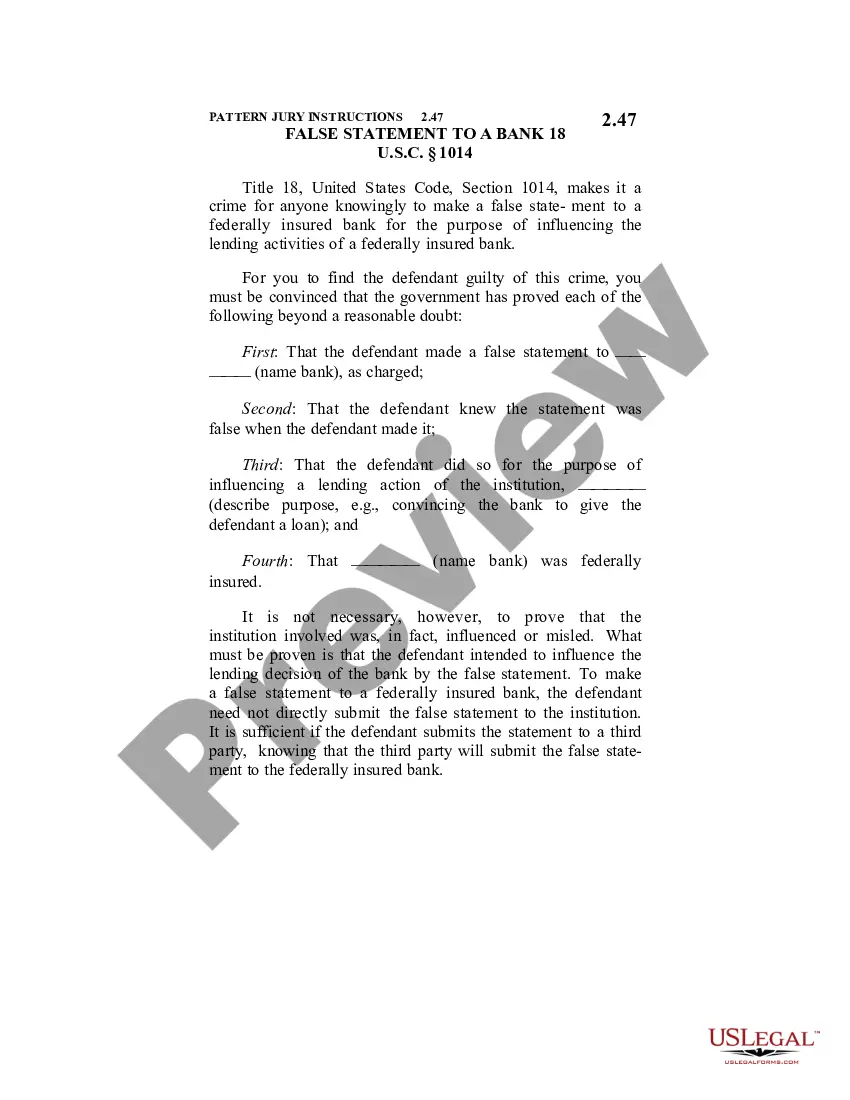
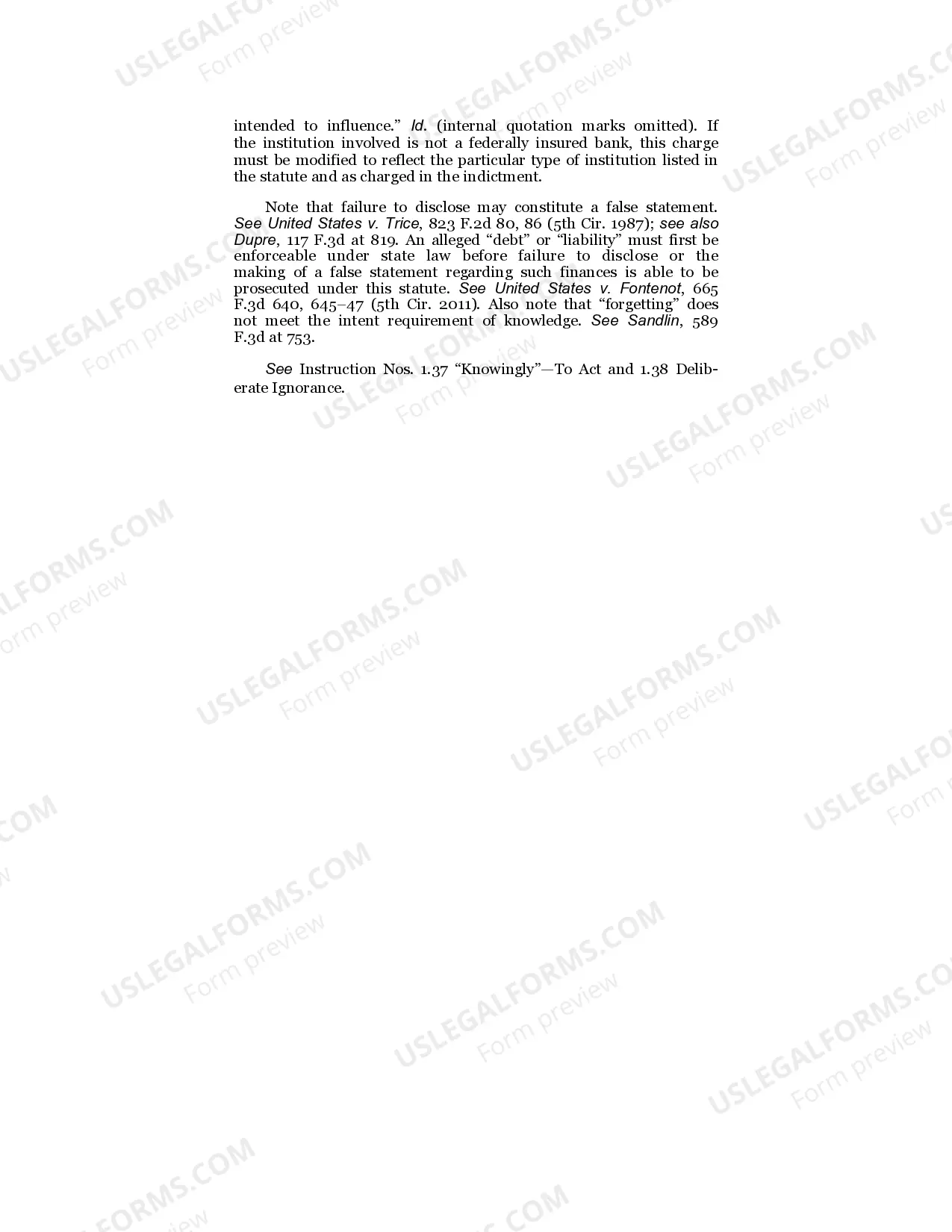
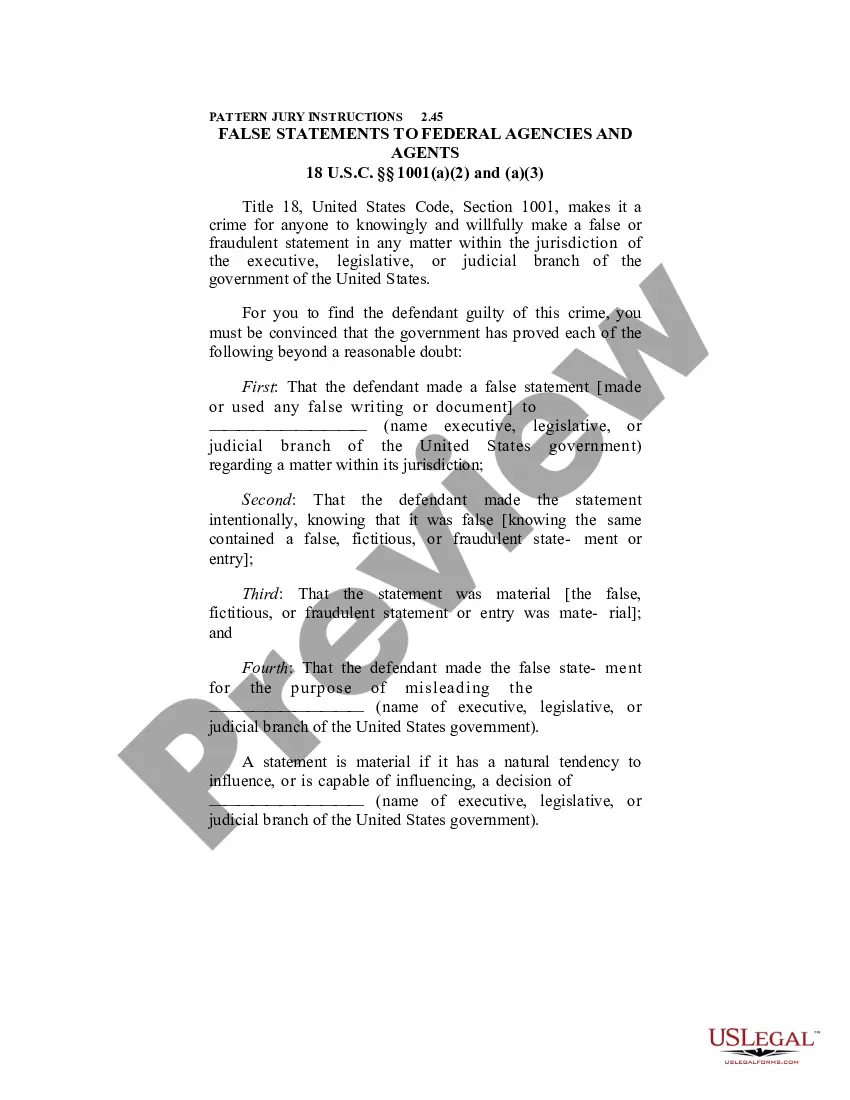
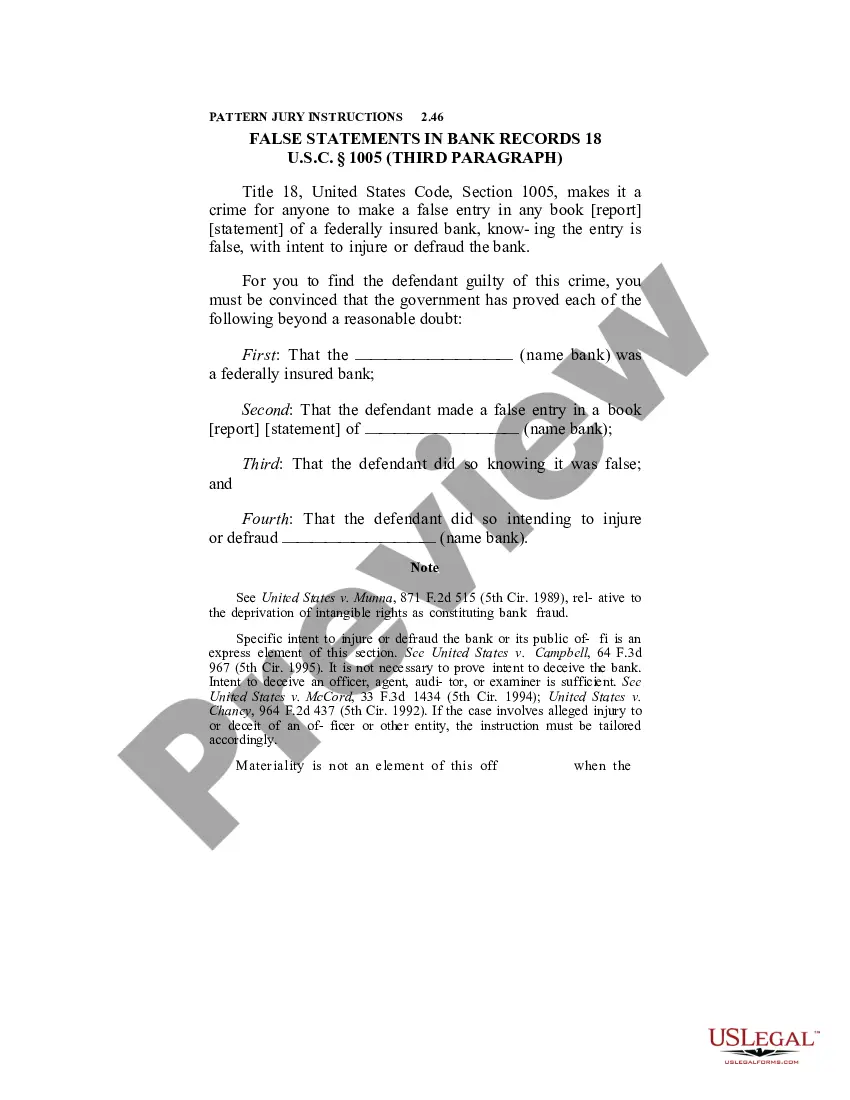
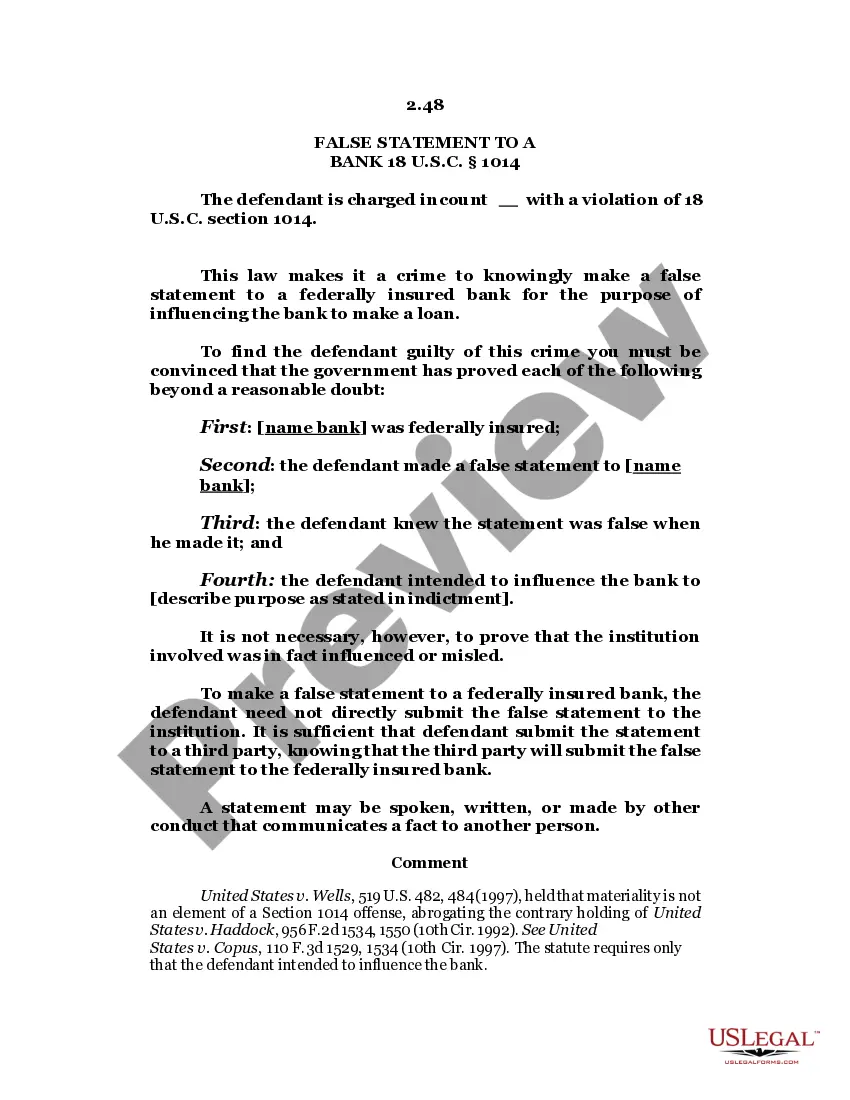
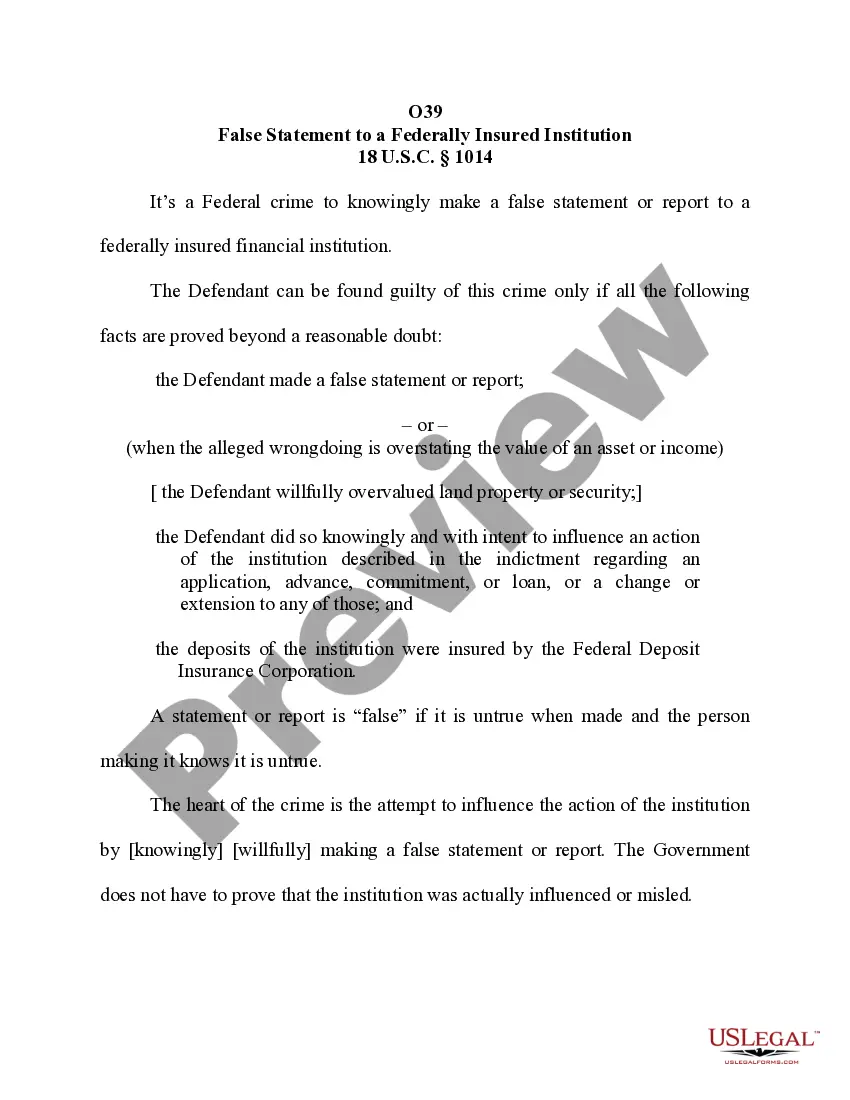
The False Statement to a Bank form is a legal document that outlines the criminal offense of making a false statement to a federally insured bank. This form helps to establish the specific elements required to prove guilt under Title 18, United States Code, Section 1014. It aims to prevent deceptive practices in banking and lending by clarifying what constitutes a false statement and the circumstances under which it becomes a crime.
Key components of this form
- Definition of a false statement and its relevance to federally insured banks.
- Explanation of the required elements for prosecution, such as intent and knowledge.
- The role of third parties in disseminating false statements.
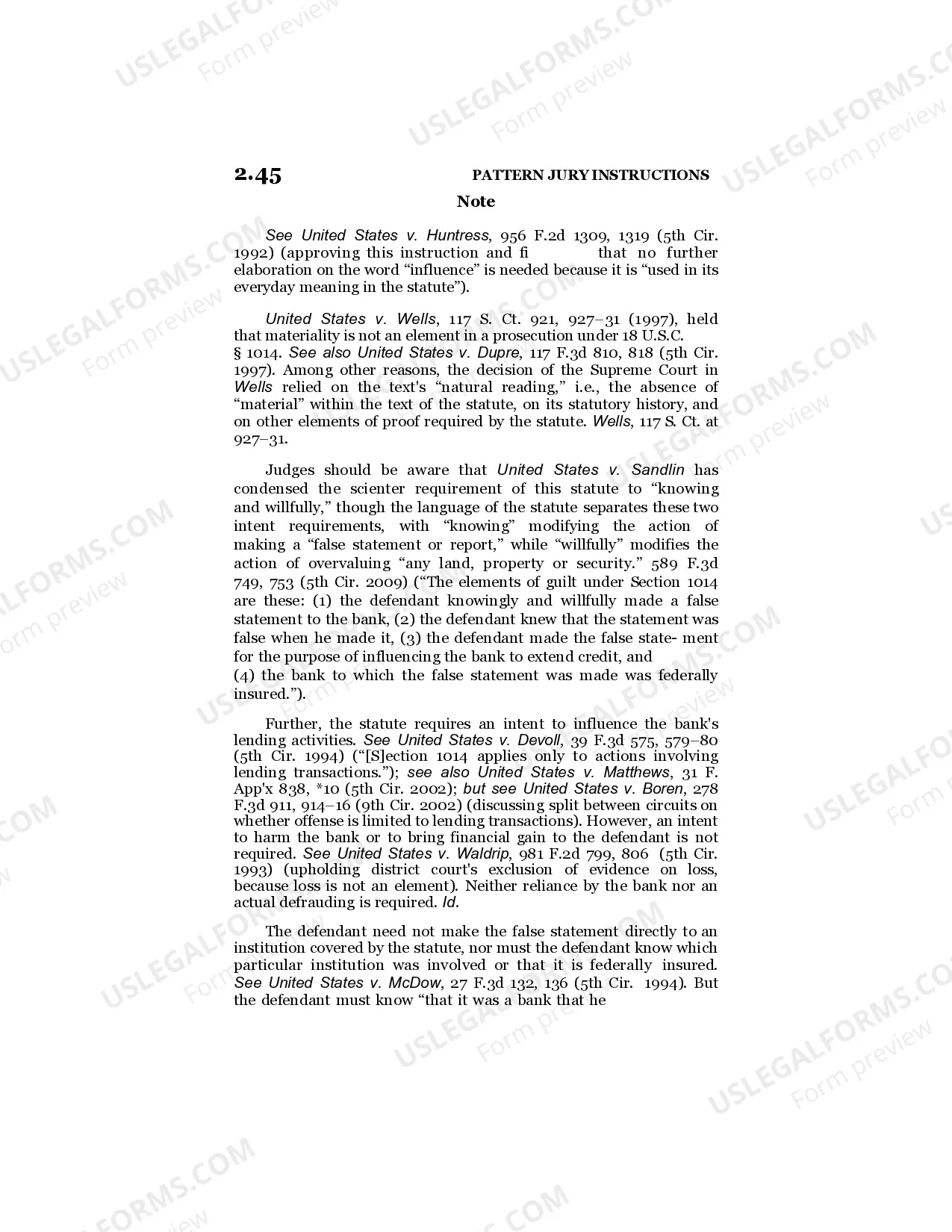
- Case law references to provide legal context and precedent.
- Clarifications regarding the necessity of actual influence on lending decisions.
Common use cases
This form should be used when there is a need to outline the legal implications of making a false statement to a bank. It is relevant in situations where individuals are accused of providing misleading information to obtain loans, lines of credit, or other banking services. This form can serve as a guideline during legal proceedings or to educate individuals on the consequences of fraudulent statements.
Who can use this document
- Individuals facing legal accusations related to false statements made to banks.
- Legal professionals representing clients in banking fraud cases.
- Anyone seeking a clearer understanding of the law regarding false statements to banks.
- Financial institutions aiming to educate their staff on compliance and regulatory issues.
Steps to complete this form
- Identify the parties involved, including the defendant and name of the bank.
- Clearly state the false statement made to the bank.
- Indicate the defendant's knowledge of the statement's falsity at the time of making it.
- Describe the purpose of the false statement, such as obtaining a loan or credit.
- Ensure that the bank in question is federally insured.
Is notarization required?
Notarization is generally not required for this form. However, certain states or situations might demand it. You can complete notarization online through US Legal Forms, powered by Notarize, using a verified video call available anytime.
Get your form ready online
Our built-in tools help you complete, sign, share, and store your documents in one place.
Make edits, fill in missing information, and update formatting in US Legal Forms—just like you would in MS Word.
Download a copy, print it, send it by email, or mail it via USPS—whatever works best for your next step.
Sign and collect signatures with our SignNow integration. Send to multiple recipients, set reminders, and more. Go Premium to unlock E-Sign.
If this form requires notarization, complete it online through a secure video call—no need to meet a notary in person or wait for an appointment.
We protect your documents and personal data by following strict security and privacy standards.

Make edits, fill in missing information, and update formatting in US Legal Forms—just like you would in MS Word.

Download a copy, print it, send it by email, or mail it via USPS—whatever works best for your next step.

Sign and collect signatures with our SignNow integration. Send to multiple recipients, set reminders, and more. Go Premium to unlock E-Sign.

If this form requires notarization, complete it online through a secure video call—no need to meet a notary in person or wait for an appointment.

We protect your documents and personal data by following strict security and privacy standards.
Mistakes to watch out for
- Failing to prove that the statement was knowingly false.
- Neglecting to clarify the intent to influence the bank's lending decision.
- Not establishing that the bank was federally insured.
- Submitting false statements made to third parties without proper documentation.
Why use this form online
- Quick and easy access to legal templates that can be downloaded and customized.
- Cost-effective solution compared to hiring a lawyer for simple legal needs.
- Templates drafted by licensed attorneys ensure legal compliance and accuracy.
- Convenient format allows users to fill out forms at their own pace.
Looking for another form?
Form popularity
FAQ
Ing to U.S. law, forgery (which includes faking a bank stub and passing it off as an original statement) is a federal crime. Depending on the type of document that was altered and the exact charges, punishments for individuals convicted of forgery are jail time and paying fines of up to $10,000, or both.
Section 1014 criminalizes the act of making false statements to a financial institution. If convicted of bank fraud you may be facing large fines of up to $1,000,000 and/or imprisonment of up to thirty years.
It is a federal crime for anyone to willfully make a false statement to a federally insured financial institution. Lending institutions rely upon a company's financial statements in extending credit or granting a loan.
If you present false financial information about yourself or your company, you'll likely face misdemeanor charges, resulting in up to 6 months in jail and fines up to $1000 if convicted. A conviction for false financial statements can lead to fines, restitution, probation, and jail time.