FALSE STATEMENT TO A BANK / 18 U.S.C. Sec. 1014
What is this form?
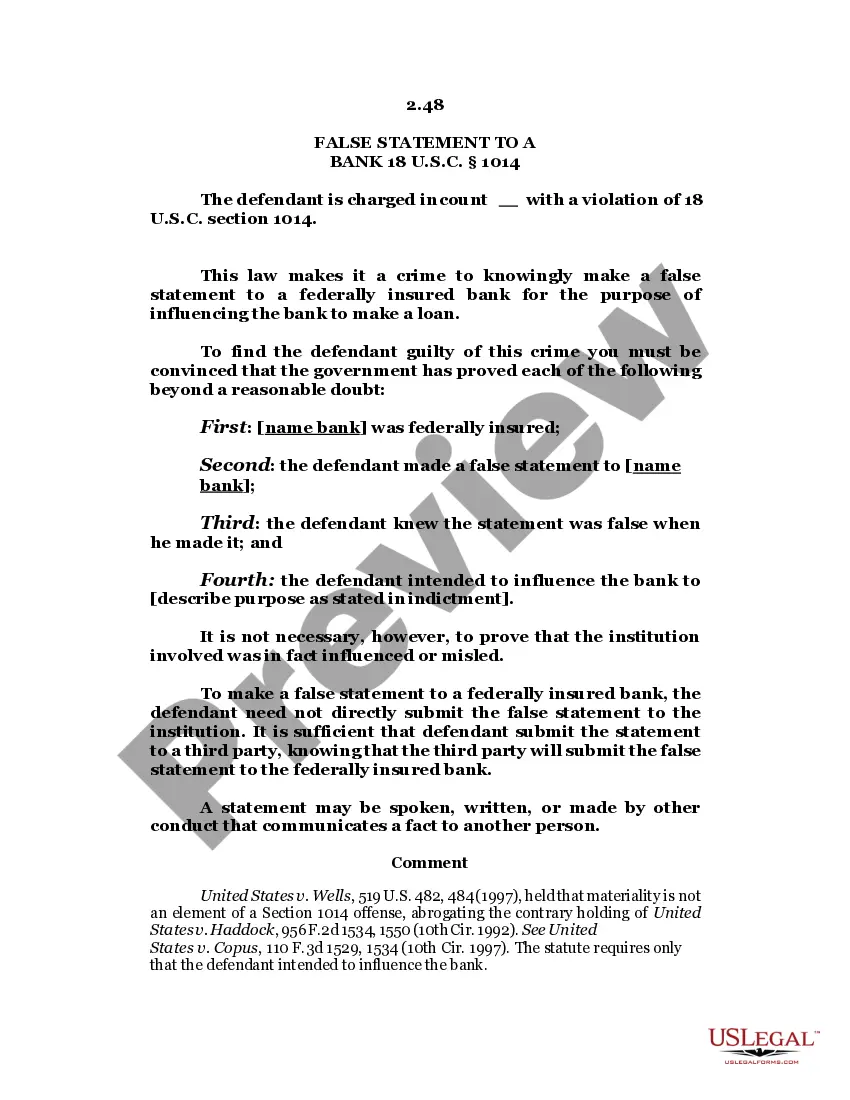
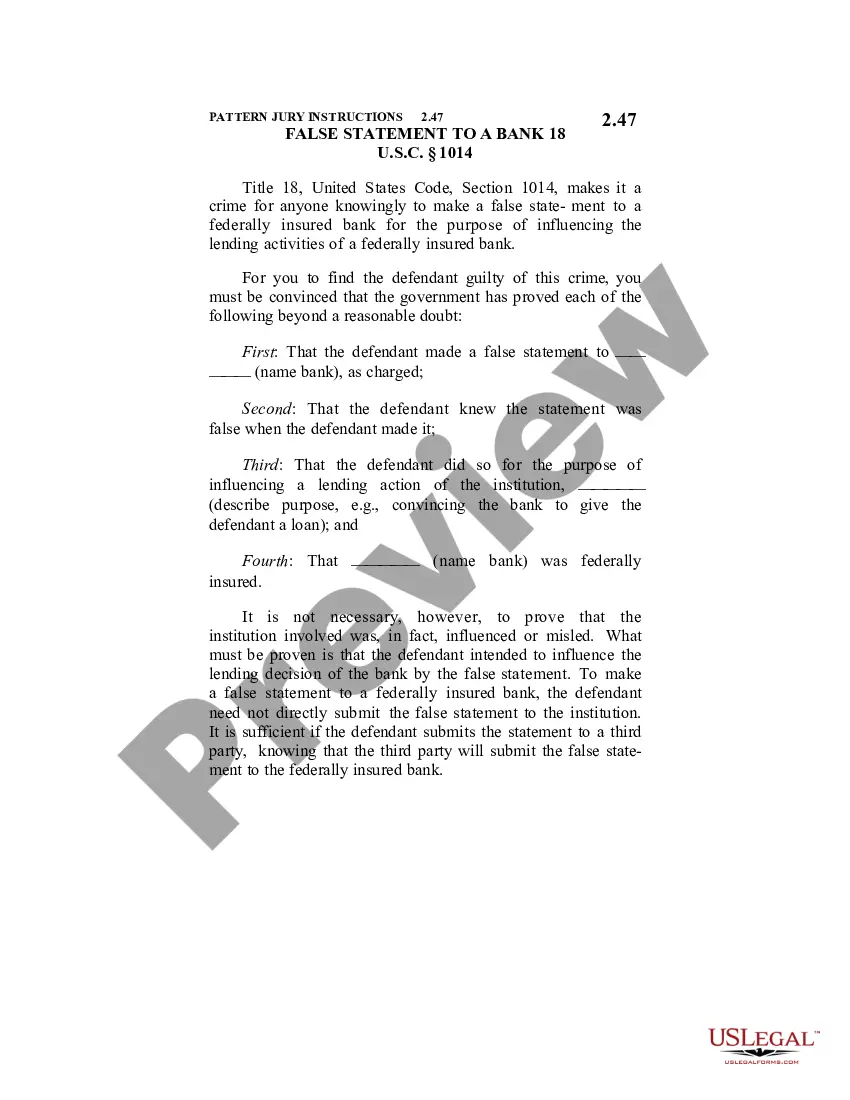
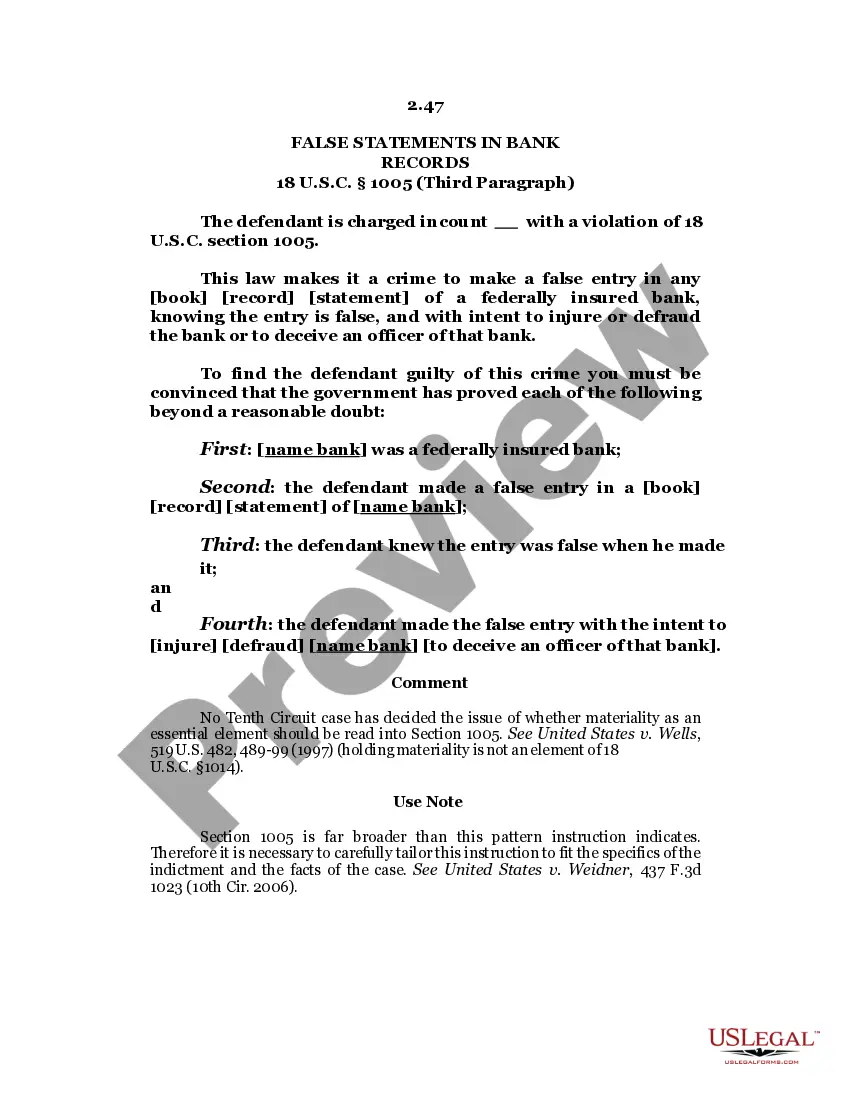
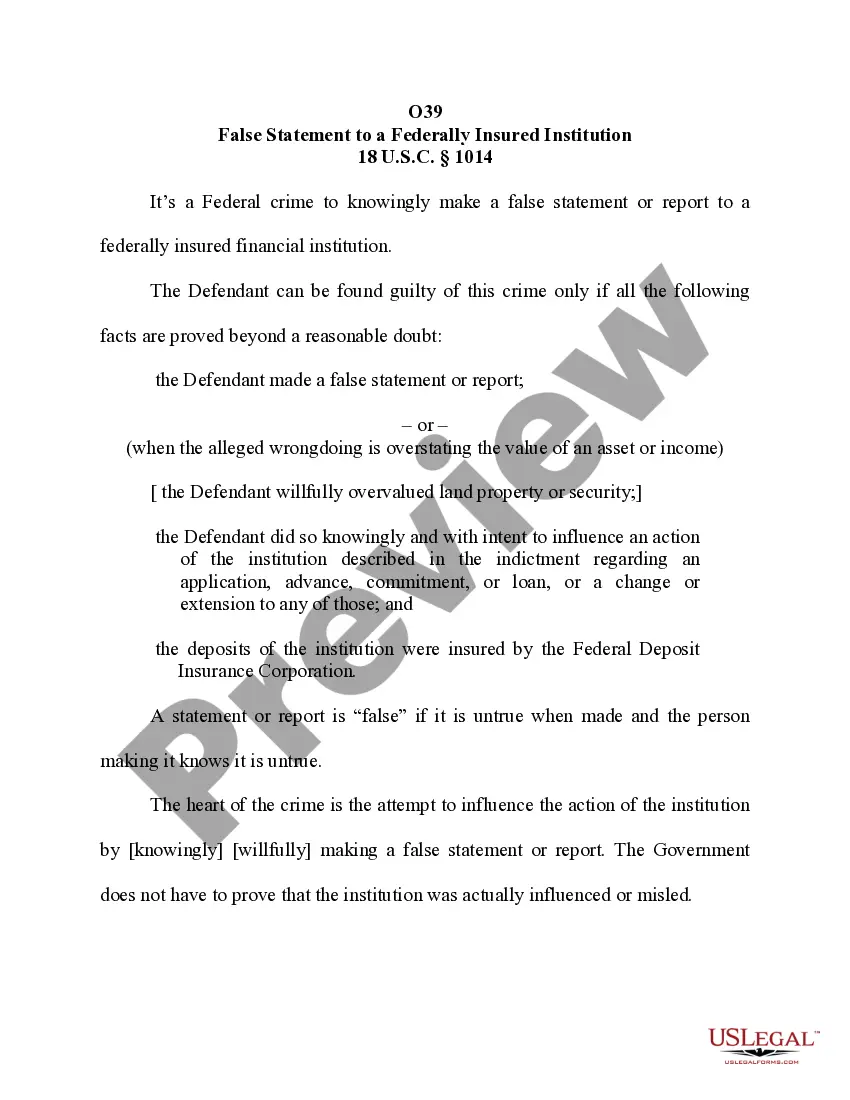
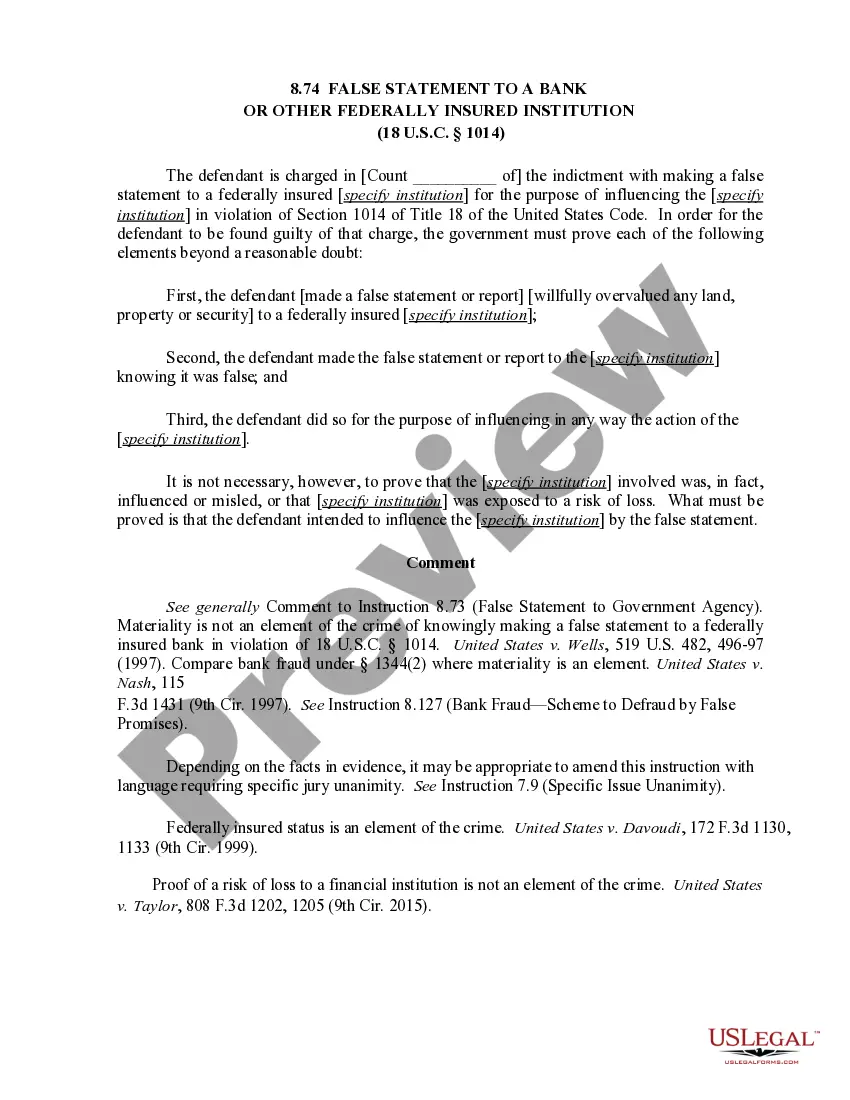
The False Statement to a Bank form, as outlined in 18 U.S.C. Sec. 1014, is a legal document used to address the criminal act of knowingly providing false information to a federally insured bank in order to influence loan decisions. This form is vital for understanding the implications of making deceptive statements in a banking context, distinguishing it from other financial forms that do not specifically pertain to fraudulent practices.
Form components explained
- Identification of the bank involved and its federally insured status.
- Details of the false statement made to the bank.
- Understanding the defendant's knowledge of the falsehood at the time of the statement.
- Intent to influence the bank with the false statement.
- Clarification that direct submission of the false statement to the bank is not mandatory.
When to use this document
This form should be used when an individual is implicated in making false statements to a bank under the premise of obtaining a loan. It is relevant in legal proceedings where allegations of fraud are made against a defendant, especially in cases where the individual's actions have influenced loan approvals or other banking decisions.
Who can use this document
- Individuals charged with making false statements to a federally insured bank.
- Legal representatives or attorneys handling cases related to banking fraud.
- Financial institutions needing to document allegations of false statements made by applicants.
How to complete this form
- Enter the name of the bank that is federally insured.
- Provide the specific false statement made to the bank.
- Indicate that the defendant knew the statement was false at the time of submission.
- State the intent of the defendant to influence the bank's decision.
- Ensure that the information is clear and consistent with the specifics of the indictment.
Is notarization required?
This form does not typically require notarization unless specified by local law. Users should verify if notarization is necessary for their specific jurisdiction or context.
Get your form ready online
Our built-in tools help you complete, sign, share, and store your documents in one place.
Make edits, fill in missing information, and update formatting in US Legal Forms—just like you would in MS Word.
Download a copy, print it, send it by email, or mail it via USPS—whatever works best for your next step.
Sign and collect signatures with our SignNow integration. Send to multiple recipients, set reminders, and more. Go Premium to unlock E-Sign.
If this form requires notarization, complete it online through a secure video call—no need to meet a notary in person or wait for an appointment.
We protect your documents and personal data by following strict security and privacy standards.

Make edits, fill in missing information, and update formatting in US Legal Forms—just like you would in MS Word.

Download a copy, print it, send it by email, or mail it via USPS—whatever works best for your next step.

Sign and collect signatures with our SignNow integration. Send to multiple recipients, set reminders, and more. Go Premium to unlock E-Sign.

If this form requires notarization, complete it online through a secure video call—no need to meet a notary in person or wait for an appointment.

We protect your documents and personal data by following strict security and privacy standards.
Common mistakes to avoid
- Failing to accurately identify the bank and its insured status.
- Not providing enough detail about the false statement.
- Overlooking the requirement to demonstrate the defendant's knowledge of the falsehood.
- Neglecting to clarify the intended influence on the bank.
Benefits of using this form online
- Convenience of downloading and accessing the form at any time.
- Editability allows for easy customization to fit specific case needs.
- Access to legally vetted templates drafted by licensed attorneys ensures reliability.
Legal use & context
- The form serves as a legal acknowledgment of fraudulent activity under federal law.
- Failure to comply with the law may lead to severe penalties, including fines and imprisonment.
- Understanding the legal implications of a false statement can protect individuals from erroneous charges.
Main things to remember
- The form addresses the legal ramifications of making false statements to federally insured banks.
- Clear understanding of the components and procedures can mitigate legal risks.
- Professionals and individuals involved in banking should be familiar with this form.
Looking for another form?
Form popularity
FAQ
It is a federal crime for anyone to willfully make a false statement to a federally insured financial institution. Lending institutions rely upon a company's financial statements in extending credit or granting a loan.
Examples of false statements John told his little brother that sea otters aren't mammals, but fish, even though John himself was a marine biologist and knew otherwise.
"To prove a false statement in violation of 18 U.S.C. § 1001, the government must show that the defendant: (1) knowingly and willfully, (2) made a statement, (3) in relation to a matter within the jurisdiction of a department or agency of the United States, (4) with knowledge of its falsity." United States v.
Section 1001's statutory terms are violated if someone: "falsifies, conceals or covers up by any trick, scheme or device a material fact," "makes any false, fictitious or fraudulent statements or representations,"