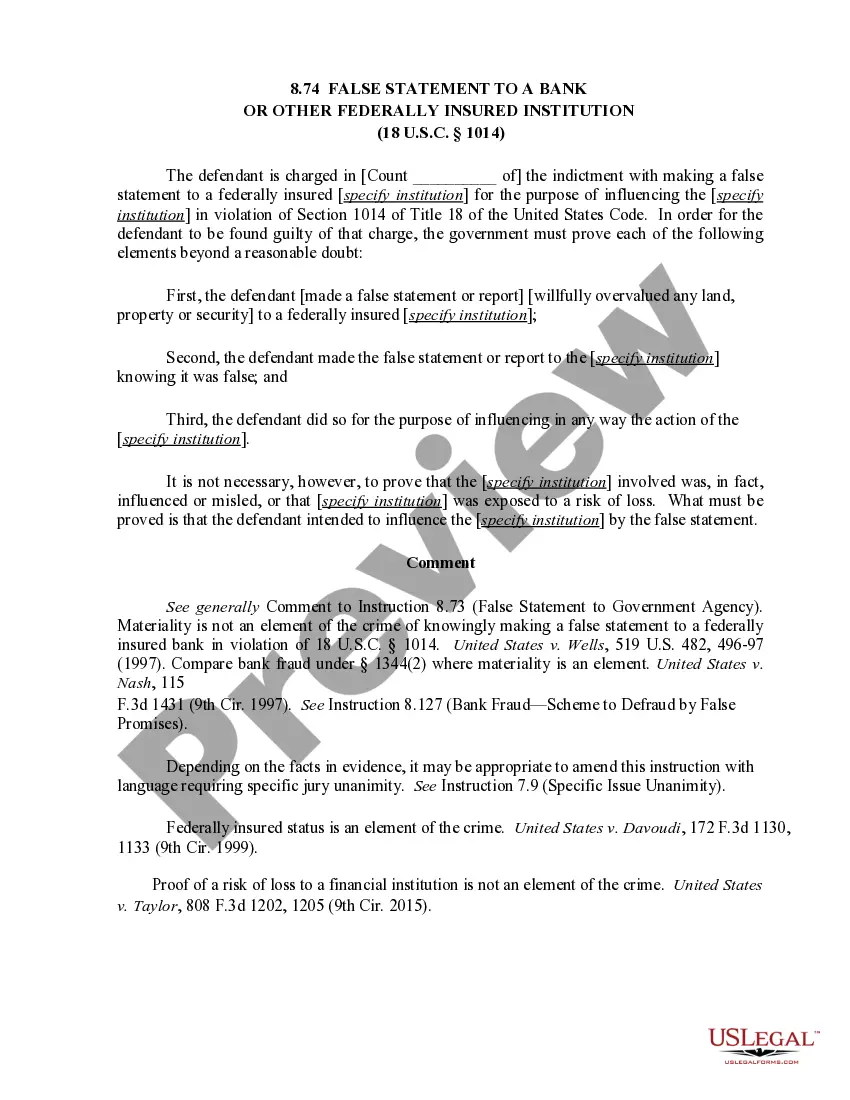
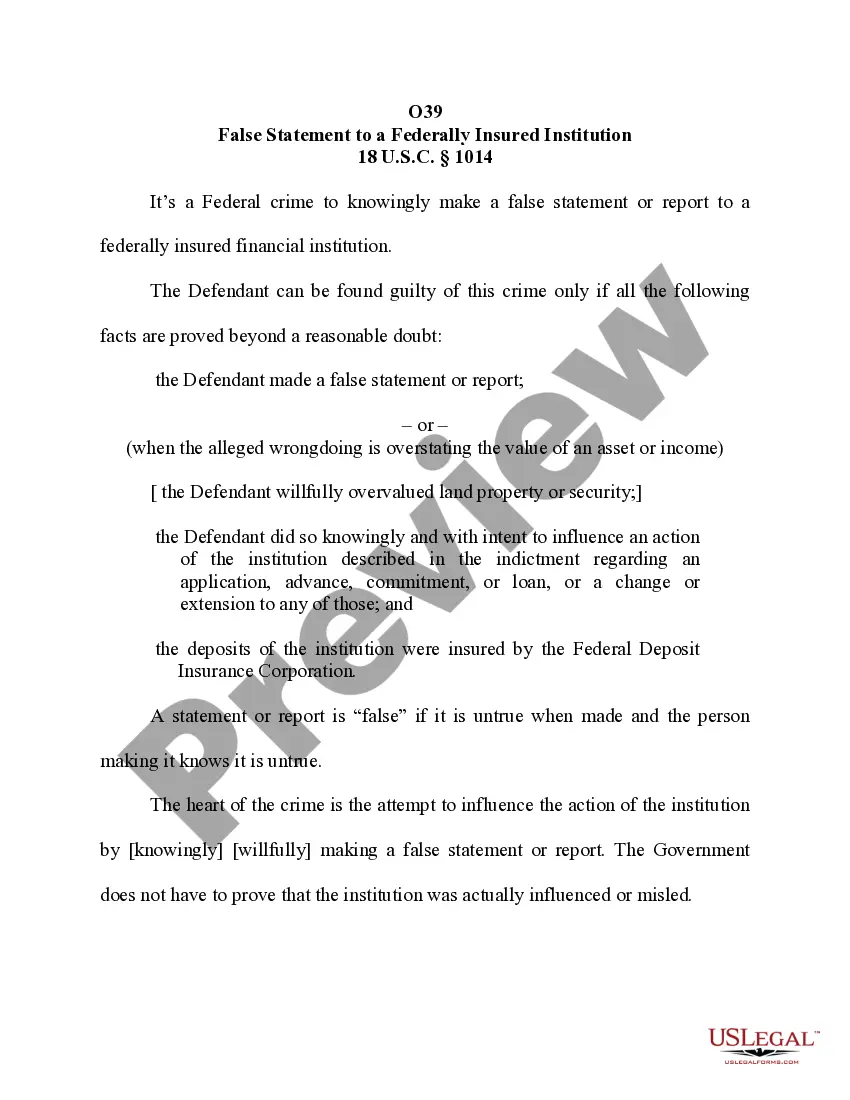
8.74 False Statement to a Bank or Other Federally Insured Institution (18 U.S.C. Sec. 1014)

Notarization requirements for this form
Notarization is not commonly needed for this form. However, certain documents or local rules may make it necessary. Our notarization service, powered by Notarize, allows you to finalize it securely online anytime, day or night.
Get your form ready online
Our built-in tools help you complete, sign, share, and store your documents in one place.
Make edits, fill in missing information, and update formatting in US Legal Forms—just like you would in MS Word.
Download a copy, print it, send it by email, or mail it via USPS—whatever works best for your next step.
Sign and collect signatures with our SignNow integration. Send to multiple recipients, set reminders, and more. Go Premium to unlock E-Sign.
If this form requires notarization, complete it online through a secure video call—no need to meet a notary in person or wait for an appointment.
We protect your documents and personal data by following strict security and privacy standards.
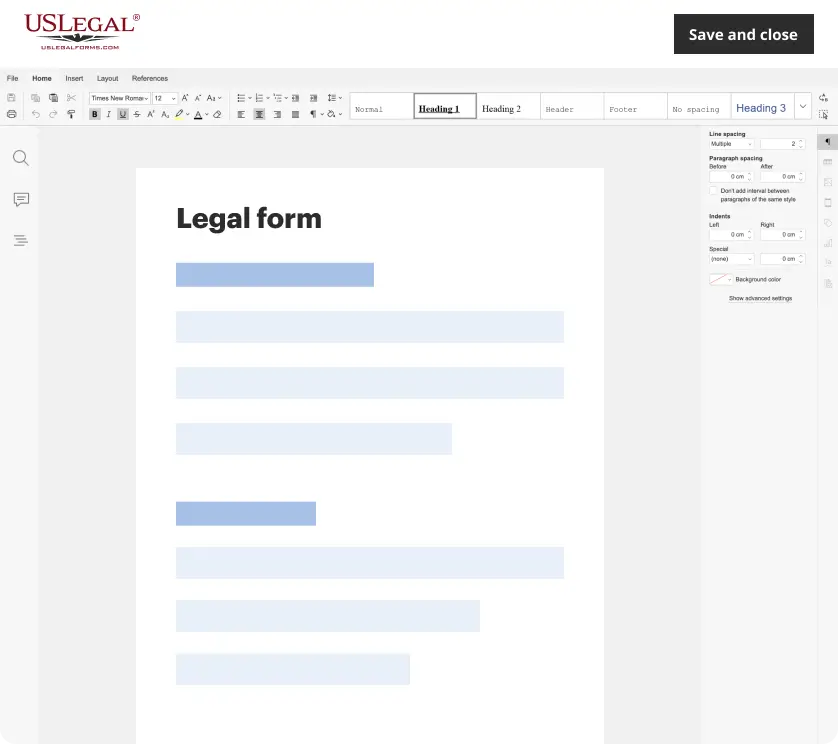
Make edits, fill in missing information, and update formatting in US Legal Forms—just like you would in MS Word.
Download a copy, print it, send it by email, or mail it via USPS—whatever works best for your next step.
Sign and collect signatures with our SignNow integration. Send to multiple recipients, set reminders, and more. Go Premium to unlock E-Sign.
If this form requires notarization, complete it online through a secure video call—no need to meet a notary in person or wait for an appointment.
We protect your documents and personal data by following strict security and privacy standards.
Looking for another form?
Form popularity
FAQ
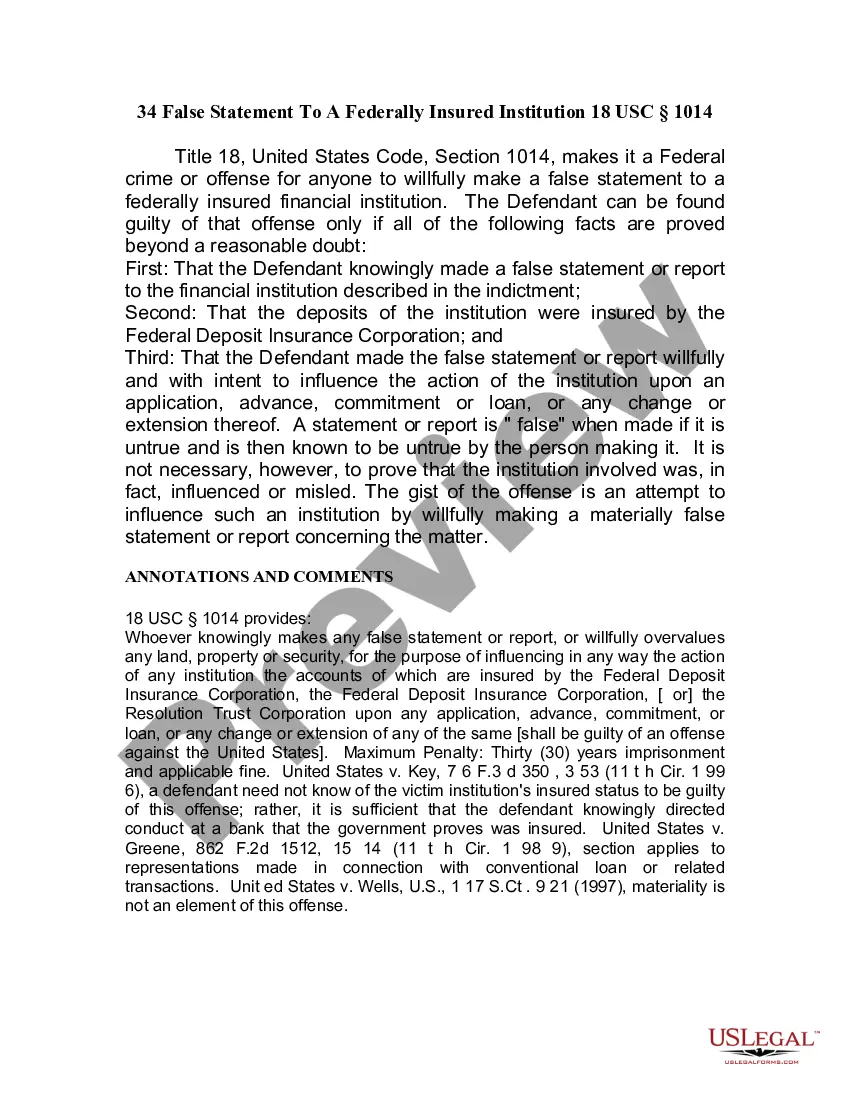
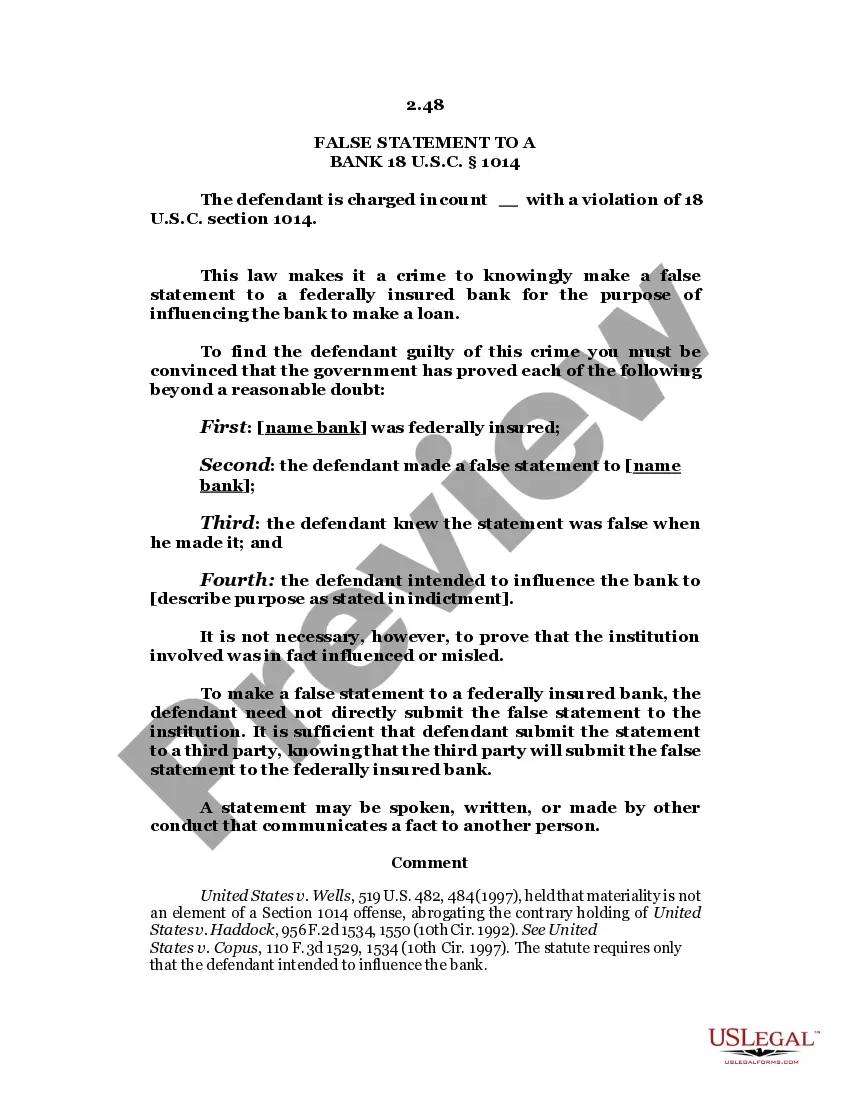
§ 1014) Section 1014 of Title 18, United States Code, covers the knowing making of false statements or willfully overvaluing any property or security for the purpose of influencing in any way the action of the enumerated agencies and organizations.
The elements of a violation under the first prong of the reverse?FCA provisions are that (1) a record or statement was false, (2) the defendant had knowledge of the falsity, (3) the defendant made or used (or caused to be made or used) the false record or statement, (4) the defendant's purpose was to conceal, avoid, or
The False Claims Act defines knowledge broadly to include the following: Actual knowledge. Deliberate ignorance of the truth or falsity of the information. Reckless disregard of the truth or falsity of the information.
False statements prohibit people from knowingly or willingly providing false information, concealing information, or even denying something that is known to be true. Even your Fifth Amendment rights do not pardon making untrue statements or concealing the truth. ing to the statute for false statements, 18 U.S.C.
The elements of the offense of making a false statement are: (1) making a false statement or willfully overvaluing property or security knowing the same to be false, (2) for the purpose of influencing in any way the action, (3) of the enumerated agencies and organizations.
False declaration means the act of declaring assets, income and liabilities with an intention to conceal their disproportionate assets by providing incomplete or incorrect information.
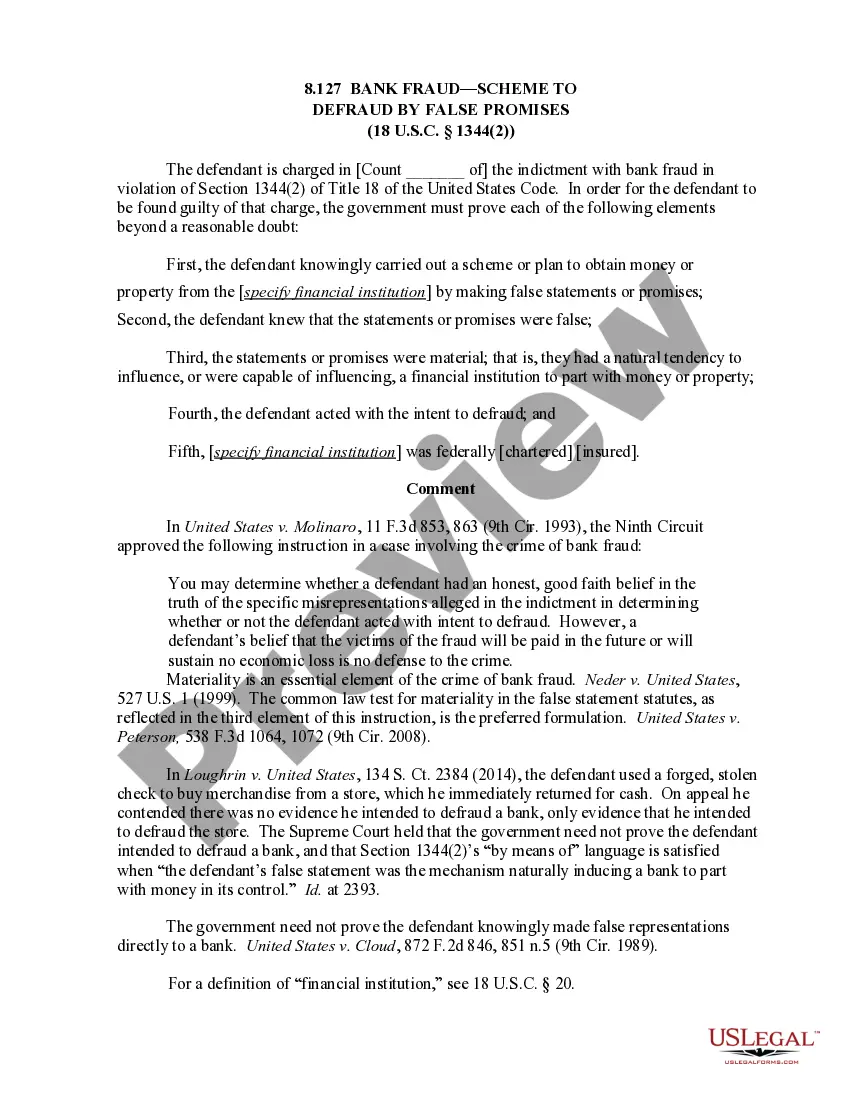
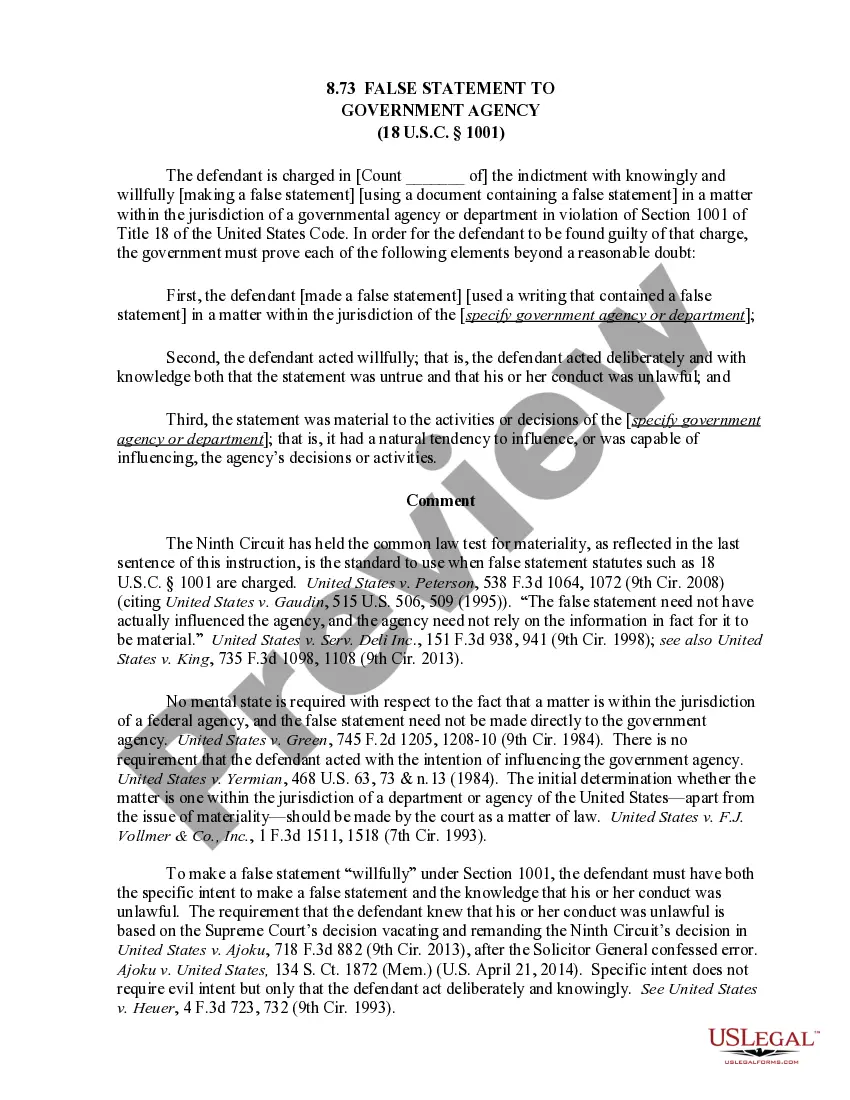
"To prove a false statement in violation of 18 U.S.C. § 1001, the government must show that the defendant: (1) knowingly and willfully, (2) made a statement, (3) in relation to a matter within the jurisdiction of a department or agency of the United States, (4) with knowledge of its falsity." United States v.