Toll Manufacturing Agreement
Overview of this form
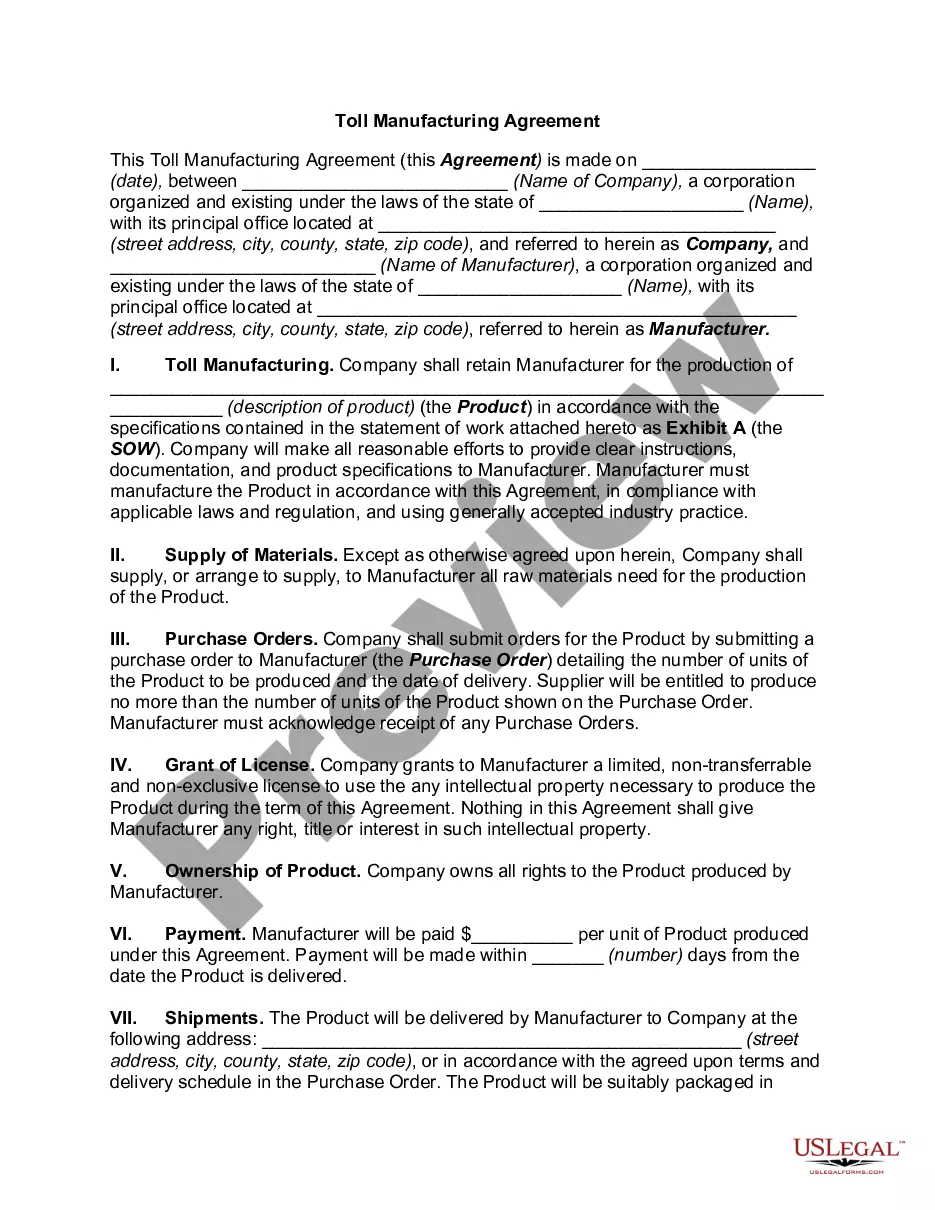
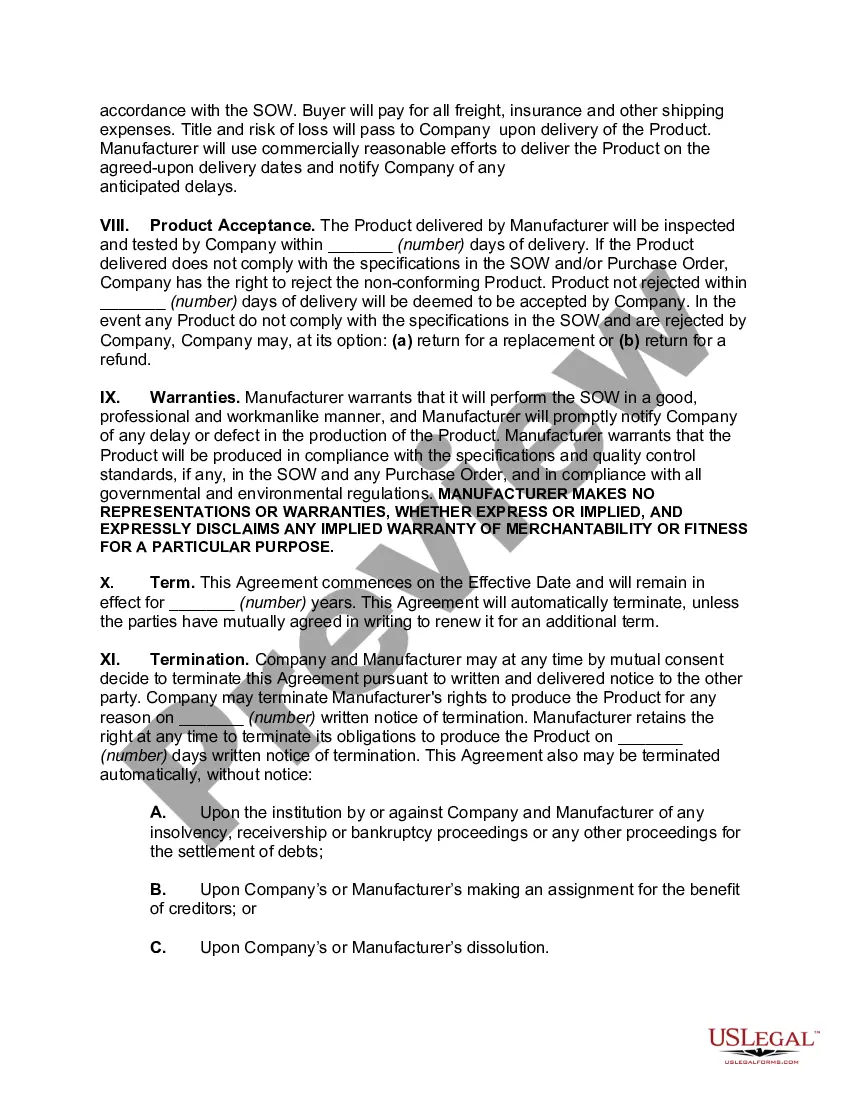
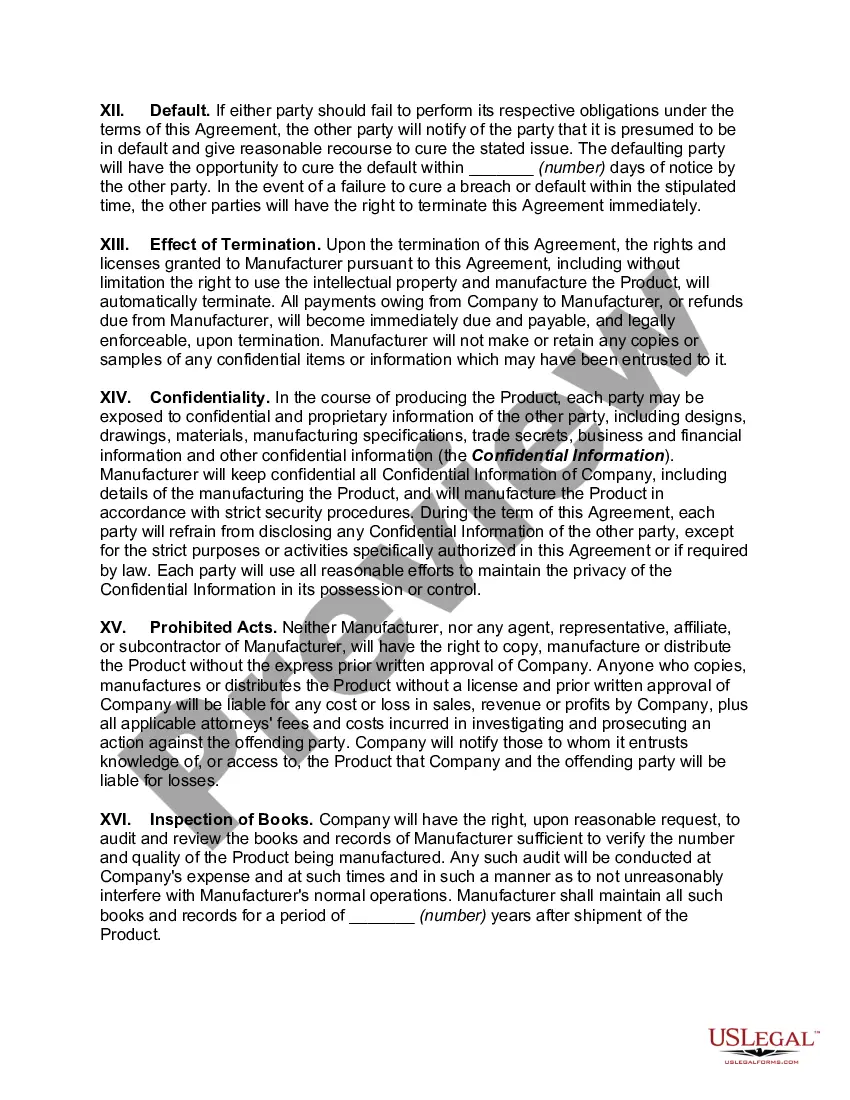
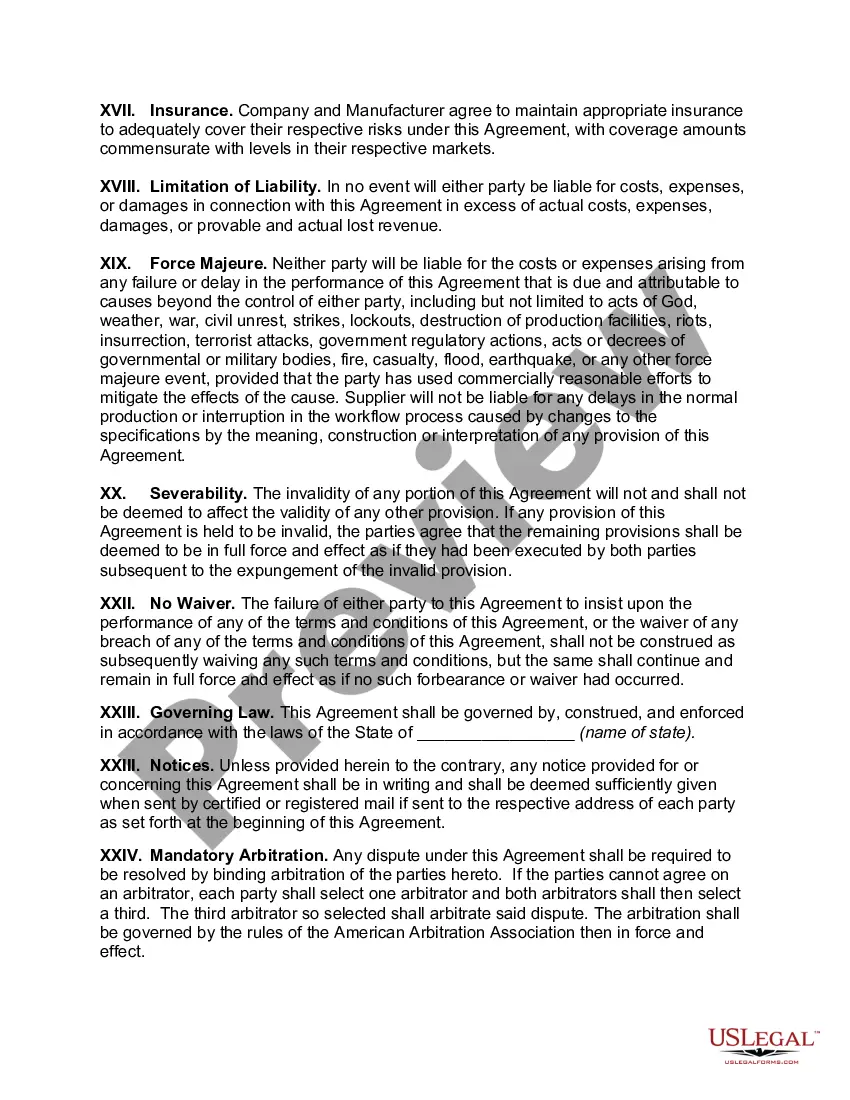
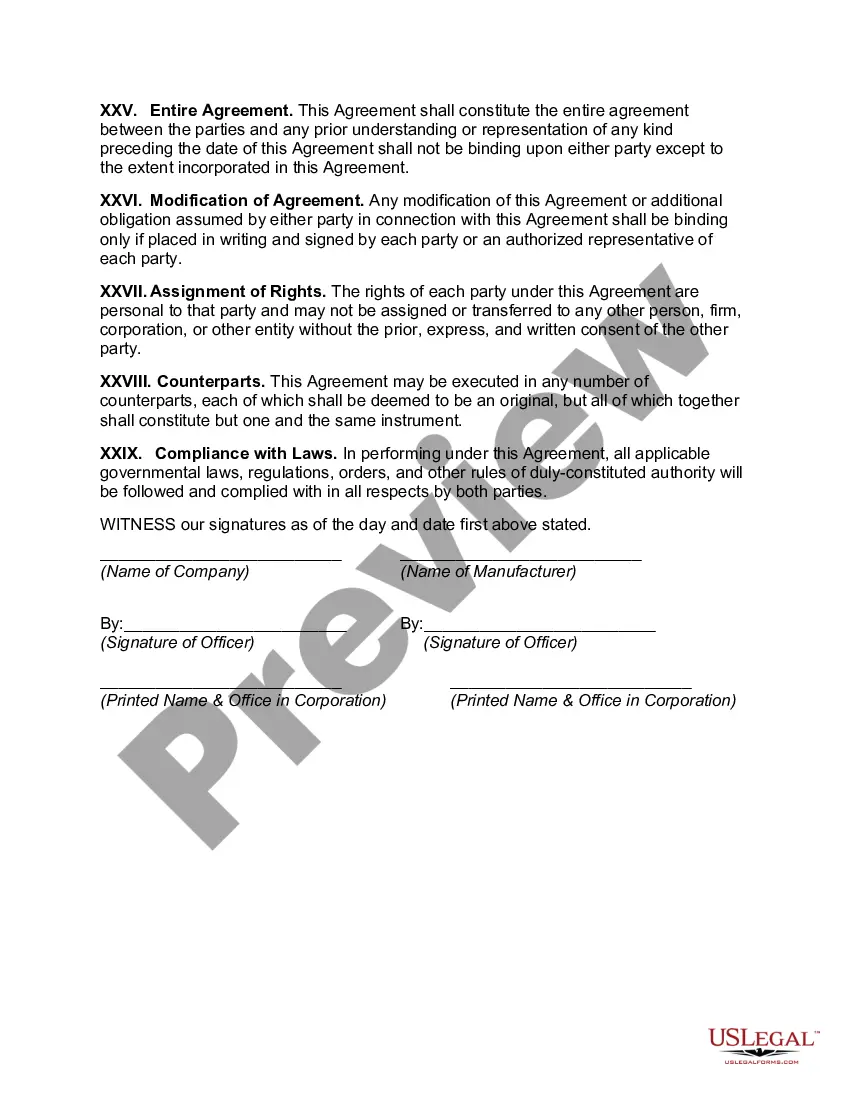
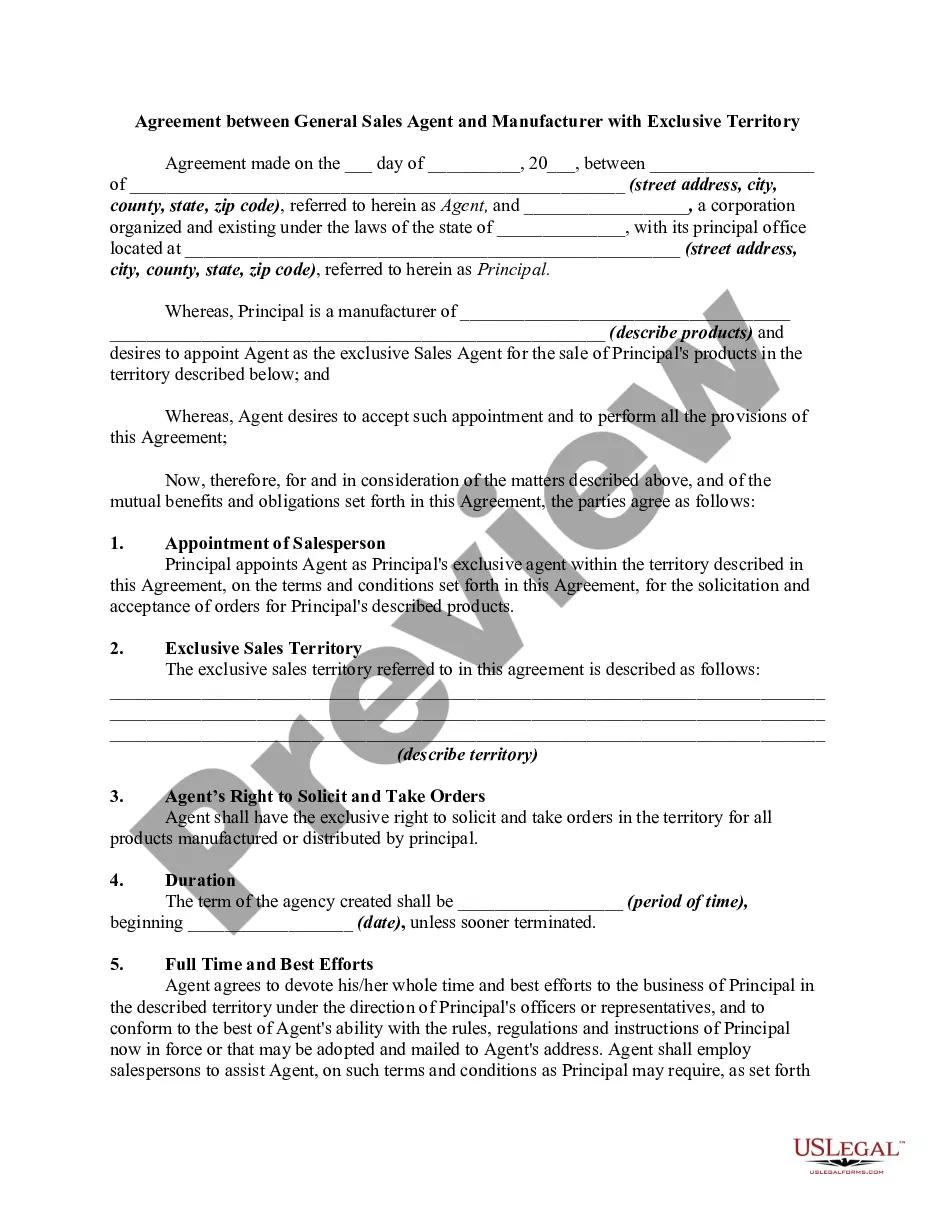
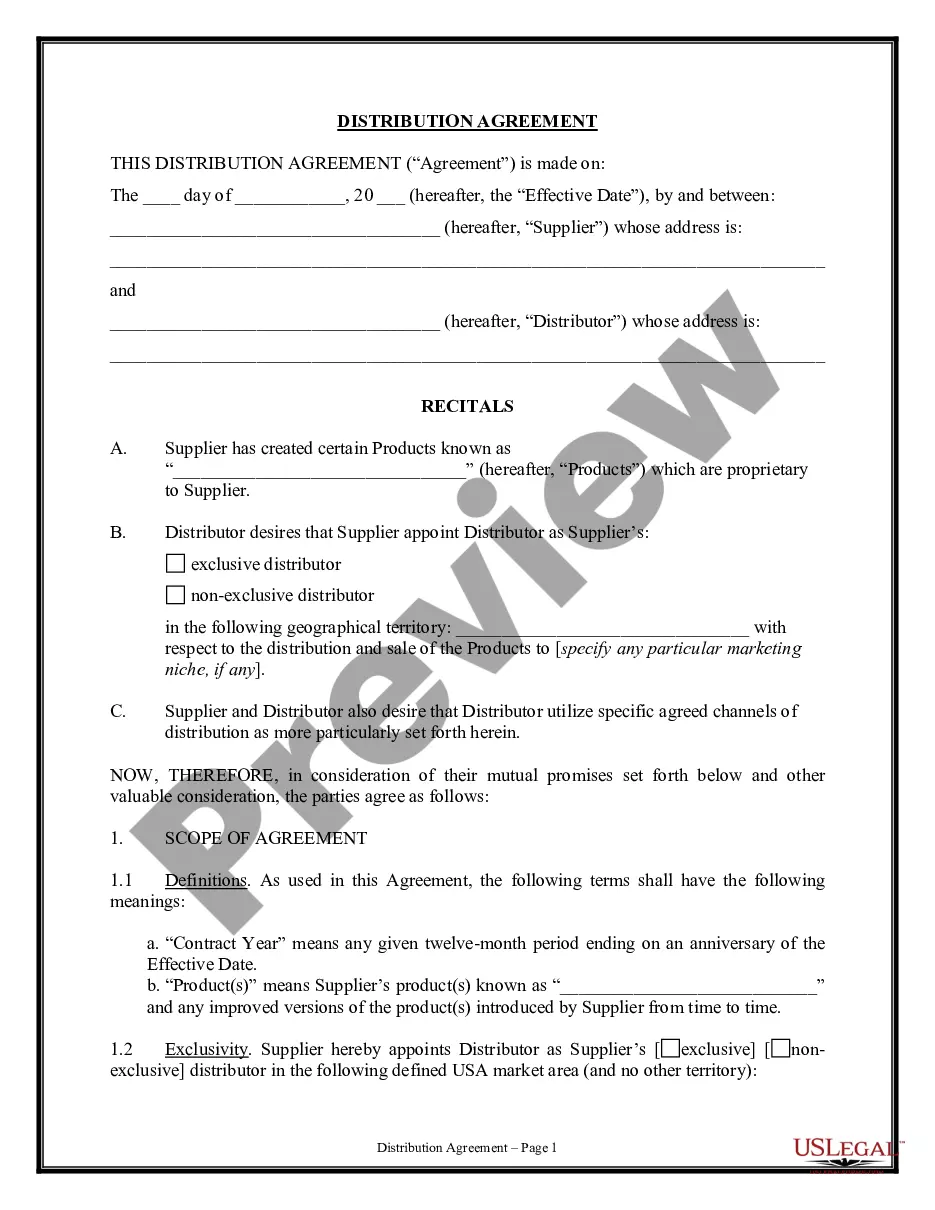
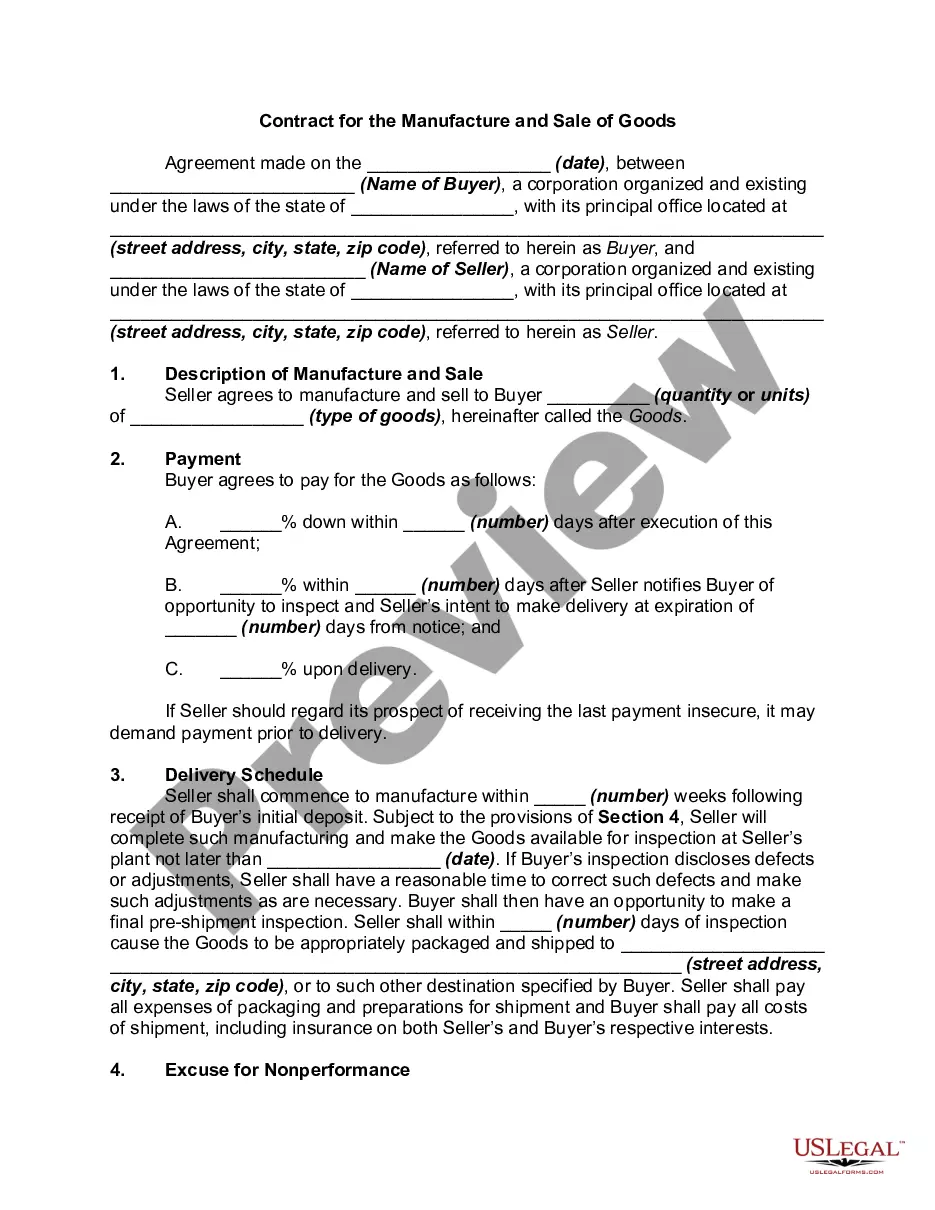
A Toll Manufacturing Agreement is a legal document that establishes an agreement between a company with a product design and a manufacturing company responsible for producing that product or its components. This form is different from other manufacturing agreements as it ensures that the manufacturer uses the raw materials provided by the company and strictly adheres to the specified product design. The primary purpose of this agreement is to protect the companyâs trade secrets and intellectual property by regulating the manufacturerâs use of those designs and materials.
What’s included in this form
- Parties involved: Identifies the Company and Manufacturer entering into the agreement.
- Toll manufacturing details: Specifies the products and manufacturing obligations.
- Supply of materials: Outlines the responsibility for supplying necessary raw materials.
- Intellectual property rights: Grants limited rights to the Manufacturer while retaining ownership with the Company.
- Payment terms: Details the cost per unit produced and payment timeline.
- Confidentiality provisions: Ensures that both parties protect any confidential information shared during the manufacturing process.
When this form is needed
This form should be used when a company needs to engage a manufacturer to produce its products while supplying its proprietary designs and raw materials. It is ideal for situations where the company wants to ensure its intellectual property is protected and where clear production expectations and quality standards are required. A Toll Manufacturing Agreement is commonly applied in industries such as pharmaceuticals, consumer goods, or any sector involving complex product designs.
Who this form is for
- Companies seeking to protect their product designs and proprietary information.
- Manufacturers engaged to produce products for other companies under specific performance agreements.
- Businesses operating in markets where confidential product specifications and intellectual property are critical to maintaining a competitive edge.
Steps to complete this form
- Identify the parties involved by filling in the names and addresses of both the Company and the Manufacturer.
- Describe the product or components that will be manufactured, referencing any attached specifications.
- Outline the payment terms and specify the cost per unit and payment schedule.
- Enter any delivery timelines and shipping responsibilities to ensure clarity on both sides.
- Include confidentiality and intellectual property clauses to safeguard proprietary information.
Does this form need to be notarized?
This form does not typically require notarization unless specified by local law. It is recommended to check any specific requirements within your jurisdiction to ensure compliance.
Get your form ready online
Our built-in tools help you complete, sign, share, and store your documents in one place.
Make edits, fill in missing information, and update formatting in US Legal Forms—just like you would in MS Word.
Download a copy, print it, send it by email, or mail it via USPS—whatever works best for your next step.
Sign and collect signatures with our SignNow integration. Send to multiple recipients, set reminders, and more. Go Premium to unlock E-Sign.
If this form requires notarization, complete it online through a secure video call—no need to meet a notary in person or wait for an appointment.
We protect your documents and personal data by following strict security and privacy standards.

Make edits, fill in missing information, and update formatting in US Legal Forms—just like you would in MS Word.

Download a copy, print it, send it by email, or mail it via USPS—whatever works best for your next step.

Sign and collect signatures with our SignNow integration. Send to multiple recipients, set reminders, and more. Go Premium to unlock E-Sign.

If this form requires notarization, complete it online through a secure video call—no need to meet a notary in person or wait for an appointment.

We protect your documents and personal data by following strict security and privacy standards.
Typical mistakes to avoid
- Failing to clearly define the product specifications, leading to misunderstandings.
- Not addressing intellectual property rights comprehensively, which can lead to potential misuse of designs.
- Neglecting to establish clear payment terms and timelines can cause disputes later on.
Benefits of completing this form online
- Convenient access to download and edit the form according to specific needs.
- Reliability and legal validity based on templates prepared by licensed attorneys.
- Time-saving method to create legally binding agreements without extensive legal consultation.
Looking for another form?
Form popularity
FAQ
Toll Manufacturing or Toll Processing is a process in which a company provides raw materials or semi-finished goods to a third-party servicing company. The third-party company is responsible for processing the inputs into finished goods. It may also be responsible for packaging and even shipping the final product.
What is Toll Manufacturing? In toll manufacturing, one company provides raw materials (or semi-finished goods) to a third-party, who will then provide the rest of the services (manufacturing).
The Contract Manufacturing Difference The big difference with regard to toll manufacturing is that contract manufacturers will also source and procure the materials needed for production. Thus, unlike toll manufacturing, chemical manufacturing is a complete outsourcing of the production, packaging, and delivery.
A toll processing agreement is a contract between two parties in which a toll milling service provider, contract processor or toller agrees to manufacture a customer's product for an agreed upon fee or toll.
In a toll manufacturing arrangement, a company provides its raw materials or semi-finished goods to a third-party service provider. The service provider, who often has specialized equipment or infrastructure, provides a subset of manufacturing processes on behalf of the company using those materials or goods for a fee.
Toll manufacturing is extensively used by pharma industries, where the availability and sourcing of key raw materials and APIs are scattered across different geographical location. It is a not a standard SAP functionality. It is a complex process.Finally, the contract manufacturer submits invoice to the product owner.
The Contract Manufacturing Difference The big difference with regard to toll manufacturing is that contract manufacturers will also source and procure the materials needed for production. Thus, unlike toll manufacturing, chemical manufacturing is a complete outsourcing of the production, packaging, and delivery.
It is a process that can be defined as performing a specific service on the product of a client. Naturally, the company would charge a fee (more commonly referred to as a toll) to perform these services. Generally, a company would provide a manufacturing or processing service in exchange for the toll from the customer.
In a toll manufacturing arrangement, a company provides its raw materials or semi-finished goods to a third-party service provider. The service provider, who often has specialized equipment or infrastructure, provides a subset of manufacturing processes on behalf of the company using those materials or goods for a fee.