Domain Name License Agreement
What is this form?
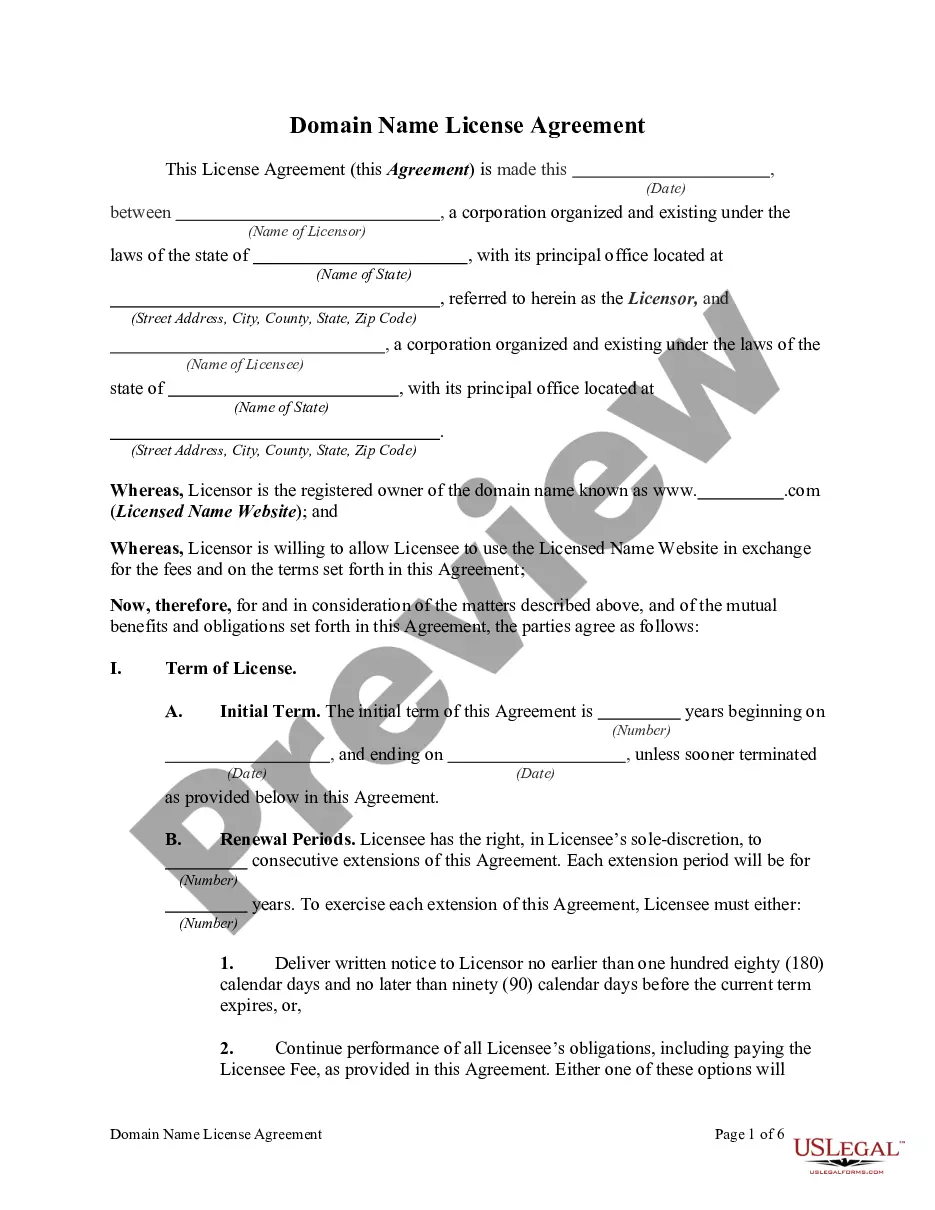
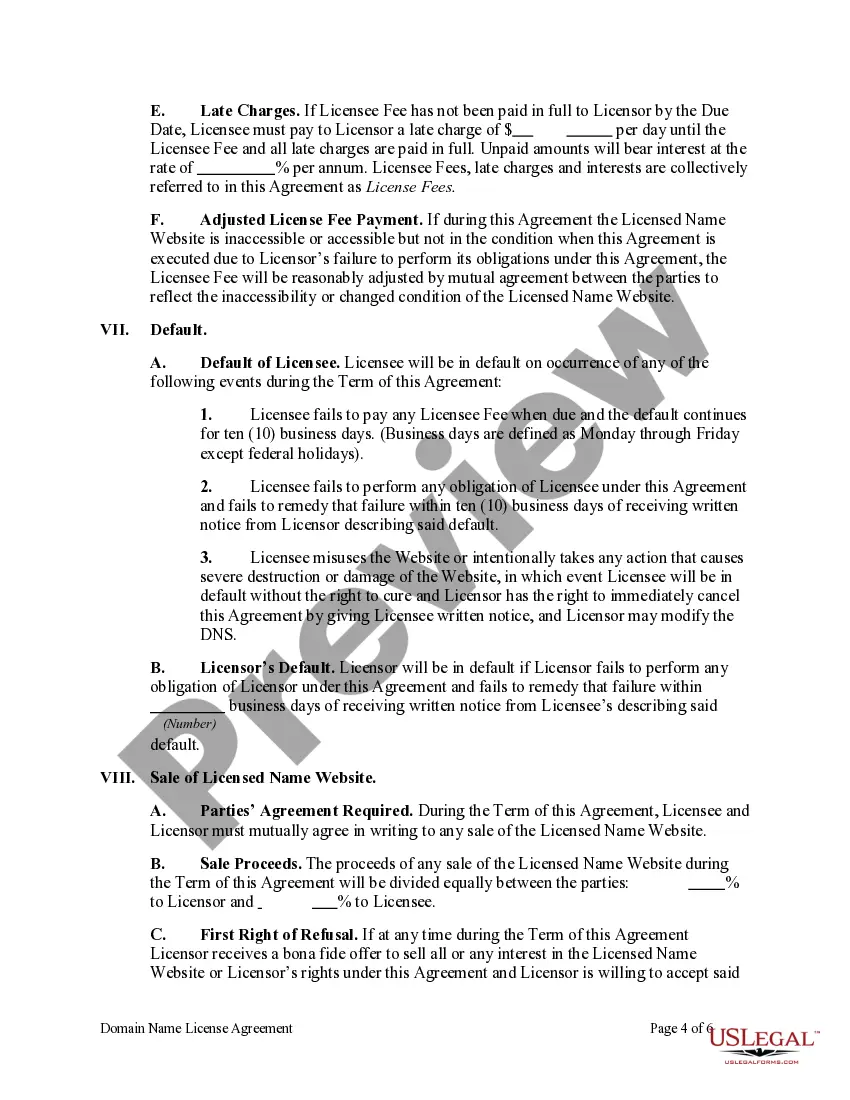
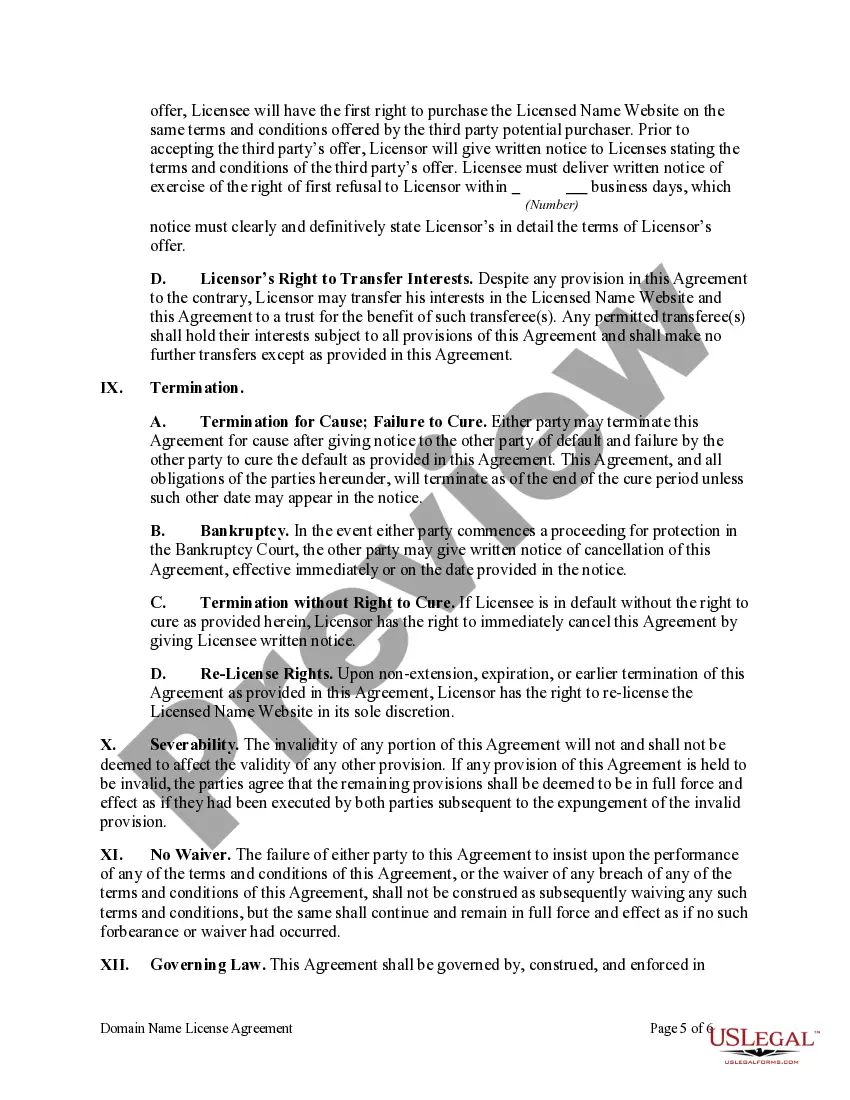
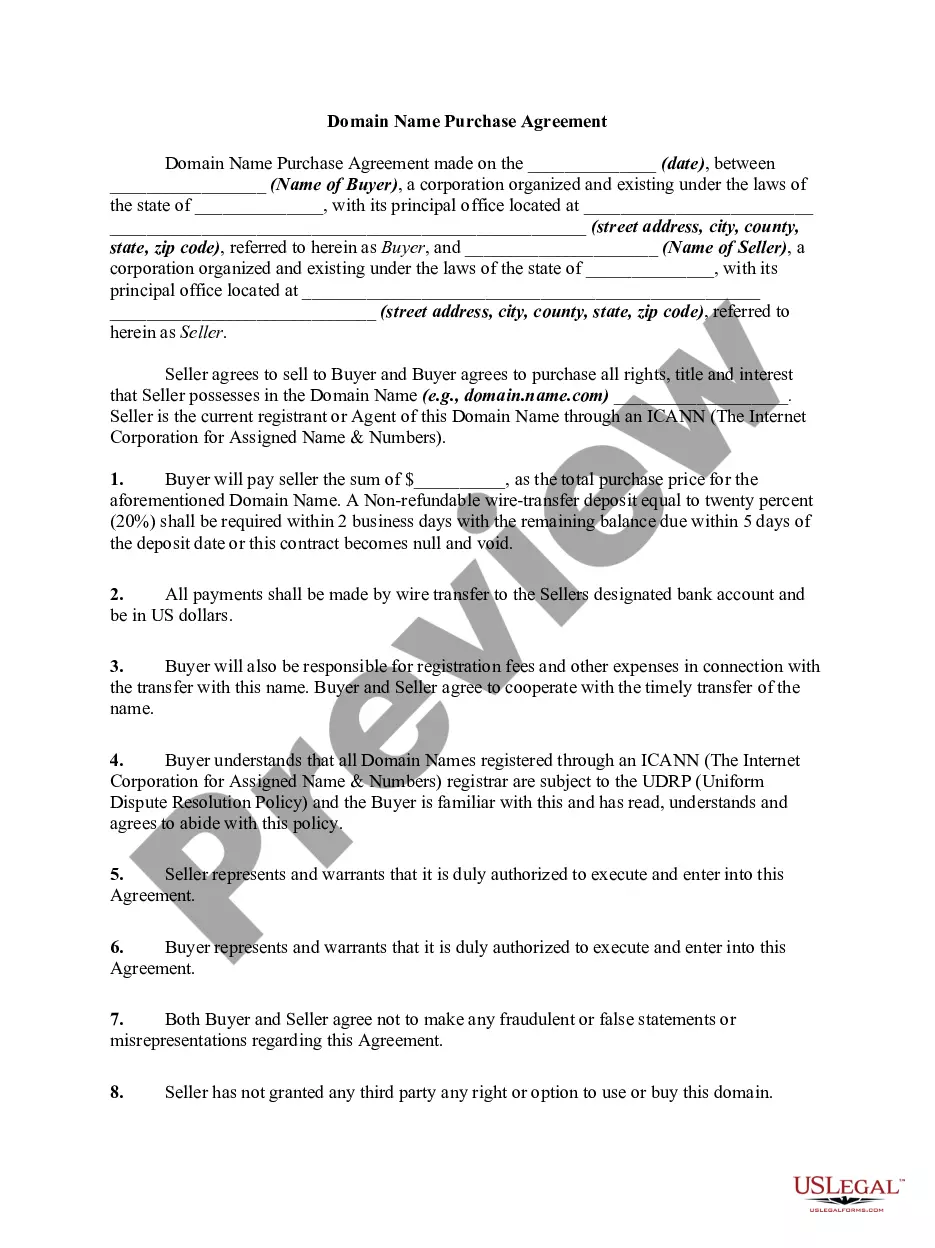
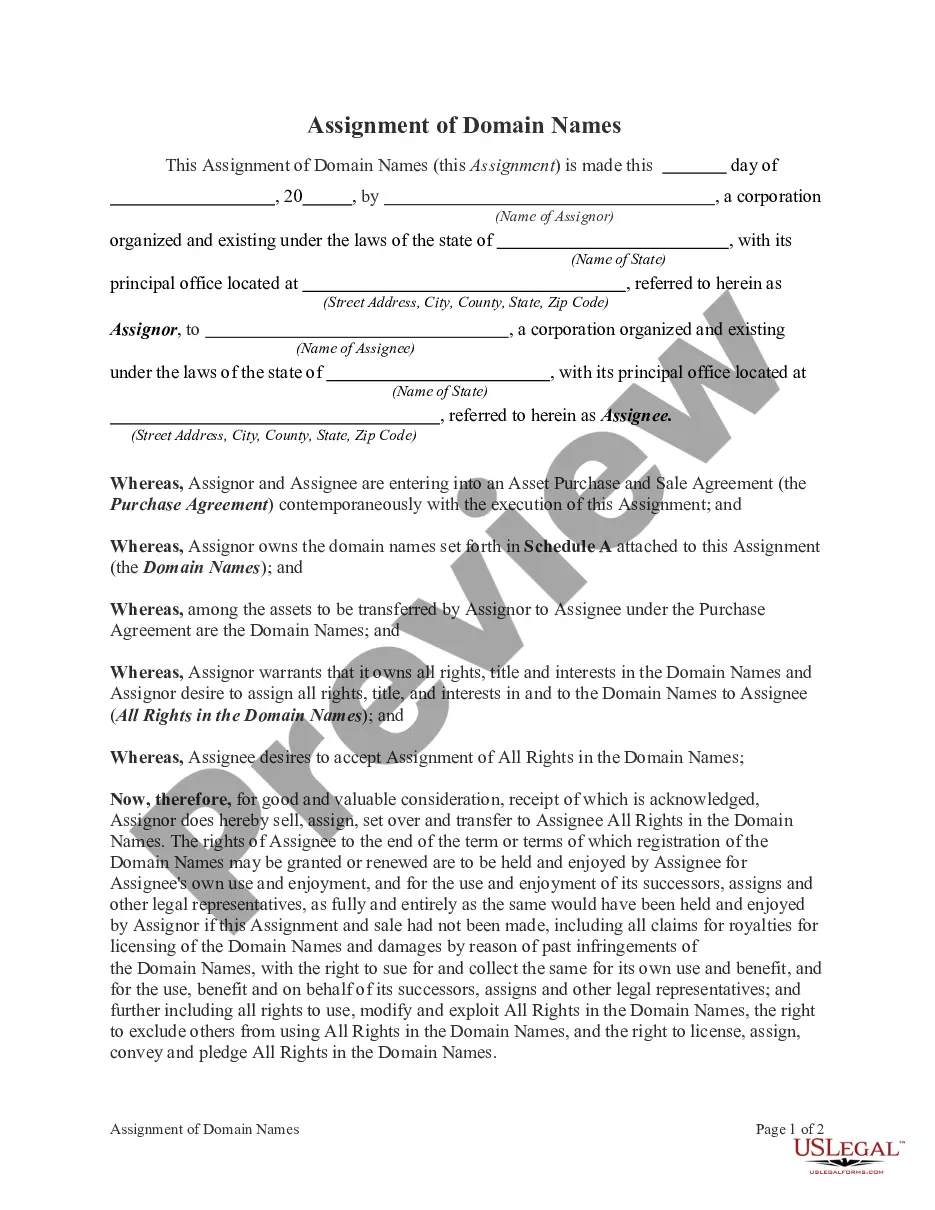
The Domain Name License Agreement is a legal document that outlines the terms under which one party (the Licensee) is permitted to use a specified domain name owned by another party (the Licensor). This agreement details the rights and responsibilities of both parties, including payment obligations, usage conditions, and ownership rights. It is essential for establishing clear boundaries in the licensing of domain names, which are unique identifiers on the internet.
Form components explained
- Definitions of terms such as "domain name" and "Licensor."
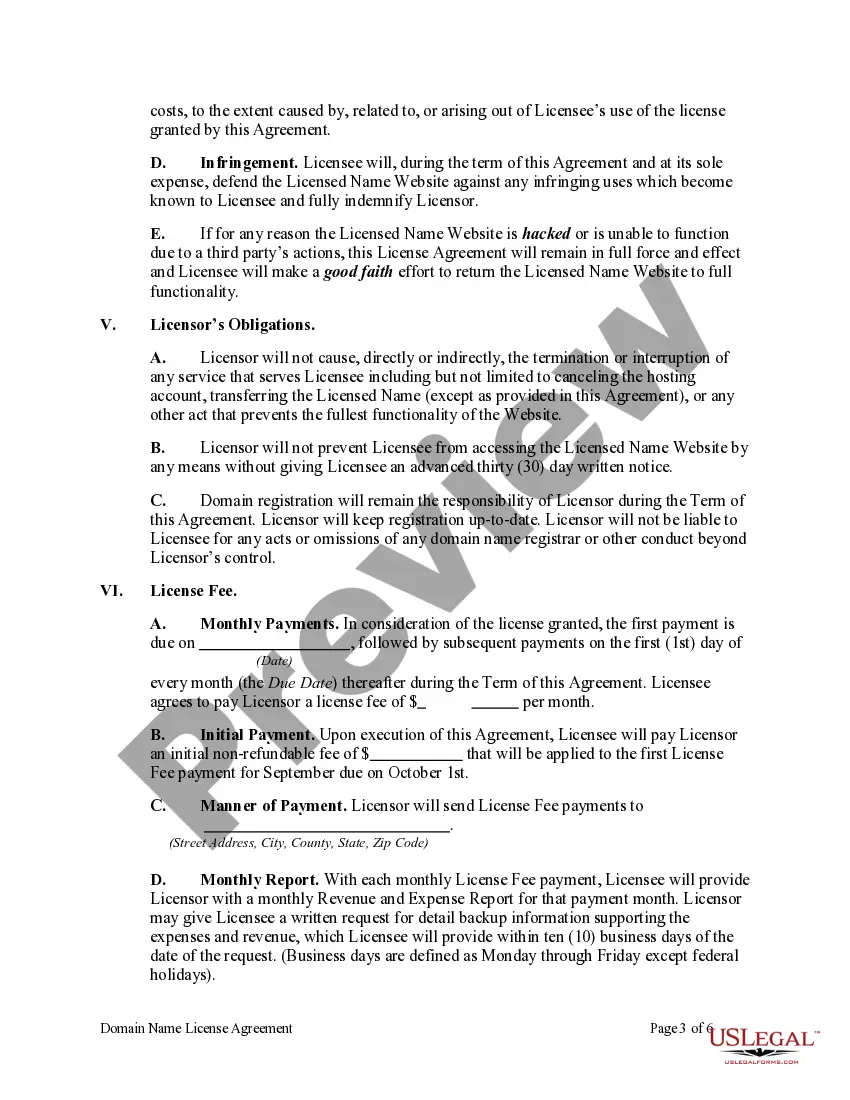
- Licensing agreement details, including payment obligations and transfer of ownership.
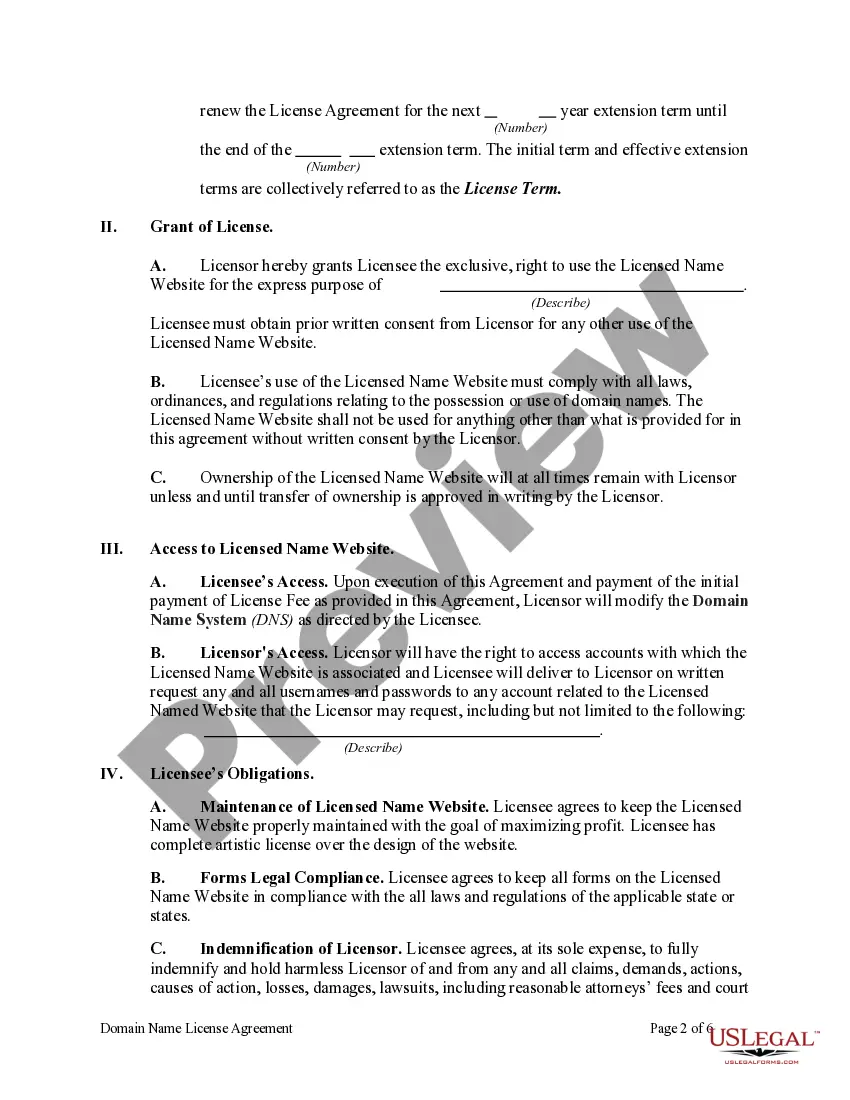
- Licensee's access rights and compliance requirements for the domain name website.
- Indemnification clauses protecting the Licensor from legal claims related to the Licensee's usage.
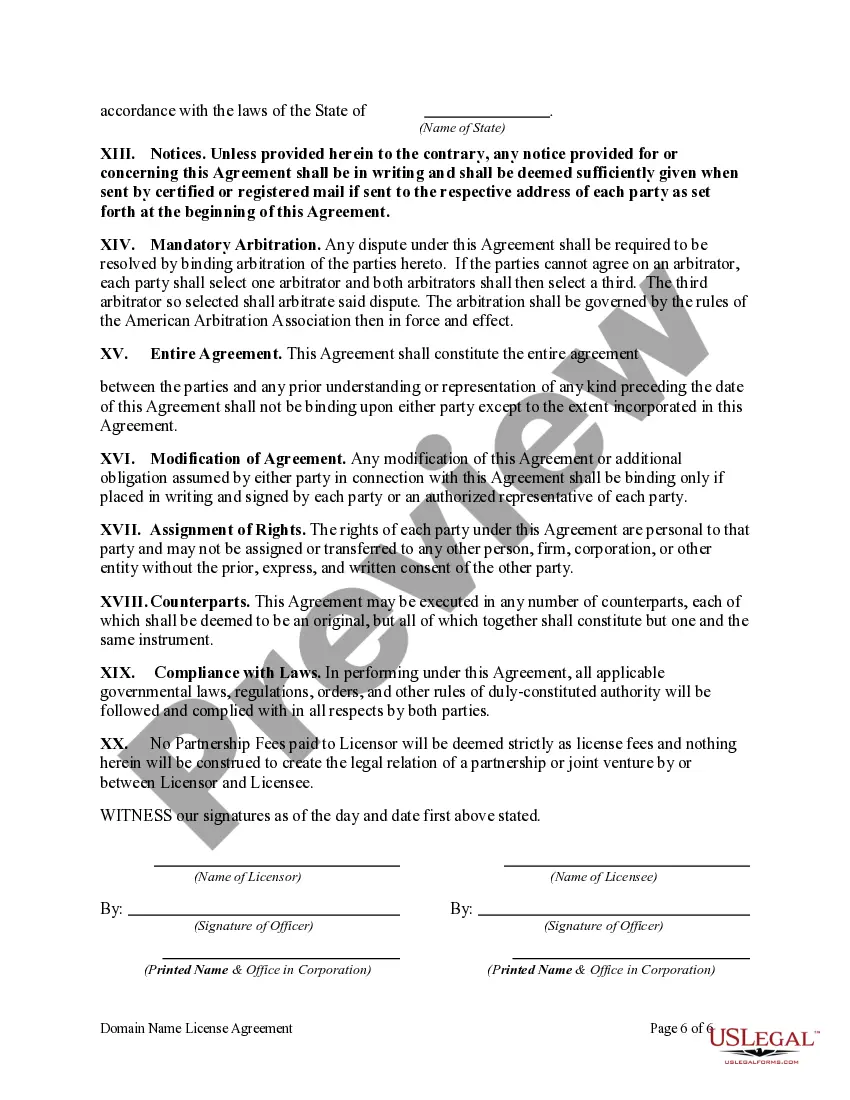
- Termination conditions and rights concerning default by either party.
- Legal compliance and governing law provisions specific to the agreement.

Situations where this form applies
This form should be used when a business or individual wishes to license a domain name from its owner. It is particularly useful in cases where a website or service relies on a specific domain name for branding or operational purposes. Additionally, it serves to formalize the relationship and terms of use between the domain name owner and the user, especially in situations involving a substantial investment in online presence.
Who should use this form
- Individuals or businesses seeking to use a domain name that they do not own.
- Domain name owners looking to monetize or legally allow others to use their domain names.
- Web developers or agencies managing multiple domains for clients.
- Anyone involved in business transactions that include domain name licensing.
How to prepare this document
- Identify the parties involved: the Licensor and Licensee.
- Enter the agreed domain name and specify the licensing terms, including the License Fee.
- Outline the obligations of both parties, including compliance and indemnification provisions.
- Include terms for termination and conditions of default for both Licensor and Licensee.
- Ensure signatures and dates are included to validate the agreement.
Is notarization required?
This form does not typically require notarization unless specified by local law. However, ensuring all signatures are properly executed enhances the legal validity of the agreement. Consider consulting a legal advisor for further clarification on notarization needs based on your specific circumstances.
Get your form ready online
Our built-in tools help you complete, sign, share, and store your documents in one place.
Make edits, fill in missing information, and update formatting in US Legal Forms—just like you would in MS Word.
Download a copy, print it, send it by email, or mail it via USPS—whatever works best for your next step.
Sign and collect signatures with our SignNow integration. Send to multiple recipients, set reminders, and more. Go Premium to unlock E-Sign.
If this form requires notarization, complete it online through a secure video call—no need to meet a notary in person or wait for an appointment.
We protect your documents and personal data by following strict security and privacy standards.

Make edits, fill in missing information, and update formatting in US Legal Forms—just like you would in MS Word.

Download a copy, print it, send it by email, or mail it via USPS—whatever works best for your next step.

Sign and collect signatures with our SignNow integration. Send to multiple recipients, set reminders, and more. Go Premium to unlock E-Sign.

If this form requires notarization, complete it online through a secure video call—no need to meet a notary in person or wait for an appointment.

We protect your documents and personal data by following strict security and privacy standards.
Common mistakes
- Failing to specify the exact domain name in the agreement.
- Neglecting to outline payment terms clearly, leading to misunderstandings.
- Not detailing the consequences of default, which can lead to disputes.
- Overlooking local regulations that may affect the enforceability of the agreement.
Benefits of using this form online
- Convenience of accessing and downloading a legally vetted document quickly.
- Editability, allowing users to customize terms and conditions to fit specific needs.
- Reliability, as the forms are drafted by licensed attorneys ensuring legal compliance.
- Immediate access to support resources if questions arise during completion.
Legal use & context
- This agreement legally binds both parties to the terms specified within it.
- It protects the Licensor's rights and clarifies the scope of the Licenseeâs usage rights.
- In the event of a breach, the Licensor may seek remedies as outlined in the agreement.
- The agreement is enforceable by law and may be subject to dispute resolution processes such as arbitration.
Main things to remember
- The Domain Name License Agreement governs the use of a domain name by another party.
- Both parties should understand their rights and obligations clearly outlined in the contract.
- Proper completion and execution of this form are essential for legal enforcement.
- Consulting with a legal professional is advisable to address any specific concerns.
Looking for another form?
Form popularity
FAQ
The 3 P's of collegiate licensing are protection, promotion, and profit.
A license agreement is a business contract between two parties. The licensor (the seller of the license) owns the asset being licensed and the licensee (the buyer) pays for the right to use the license. The licensee pays royalties to the owner in exchange for the right to sell the product or use the technology.
An example of a licensing agreement is a contract between the copyright holders of software and another company, allowing the latter to use the computer software for their daily business operations.
Licensing, in lieu of selling, an Internet domain name generally allows the domain name owner to reserve certain rights. This reservation of rights will facilitate the future use of a domain name by an Internet domain name owner, in the event that the e-business using the domain name encounters difficulties.
An example of a licensing agreement is a contract between the copyright holders of software and another company, allowing the latter to use the computer software for their daily business operations.
What is a Licensing Agreement? A licensing agreement is a contract between two parties (the licensor and licensee) in which the licensor grants the licensee the right to use the brand name, trademark, patented technology, or ability to produce and sell goods owned by the licensor.
Exclusive or non-exclusive. In an exclusive license, the intellectual property holder is licensing the work only to one person, for that particular use/territory. Territory. Use. Attribution. Derivative works. Confidentiality. Time frame. Termination.
Download a template for a licensing agreement. Choose your role as the licensor or licensee. Define the license(s) in the agreement. Decide whether the license is exclusive or not. Settle the matter of fees and payment schedule. Add a renewal date and rules.