Tenant Alterations Clause
What is this form?
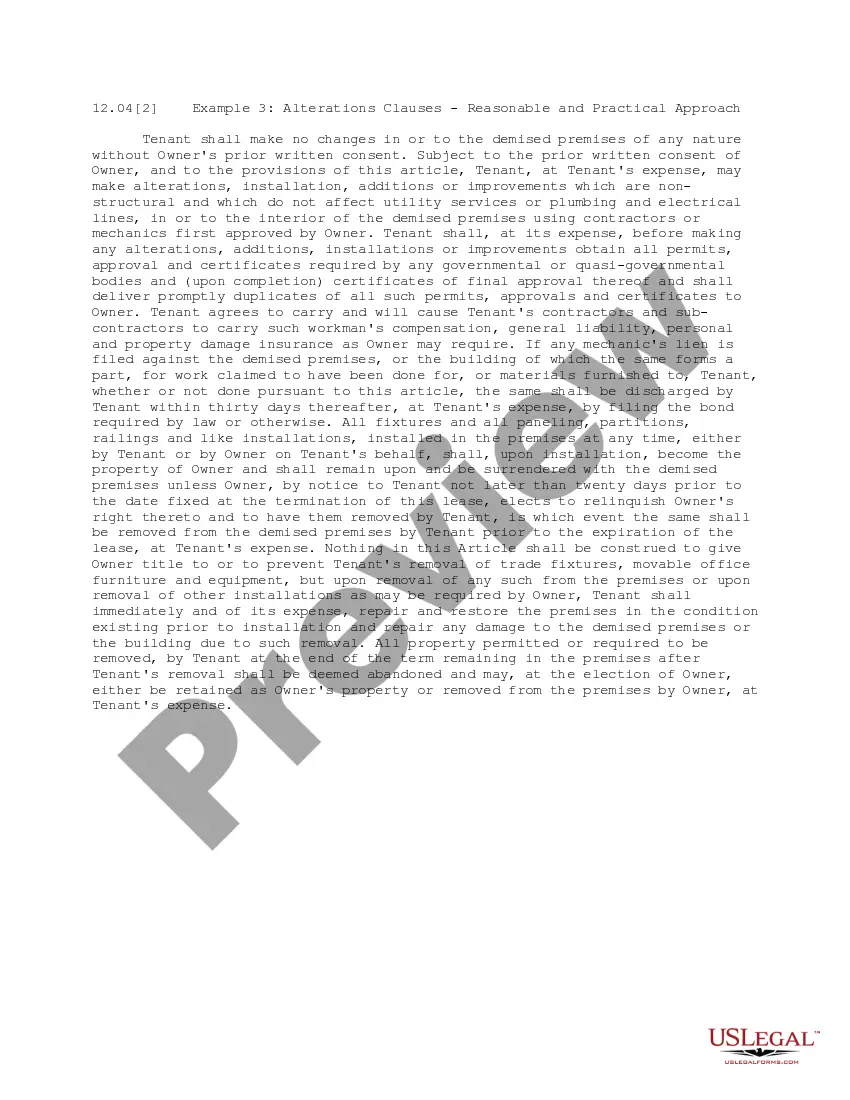
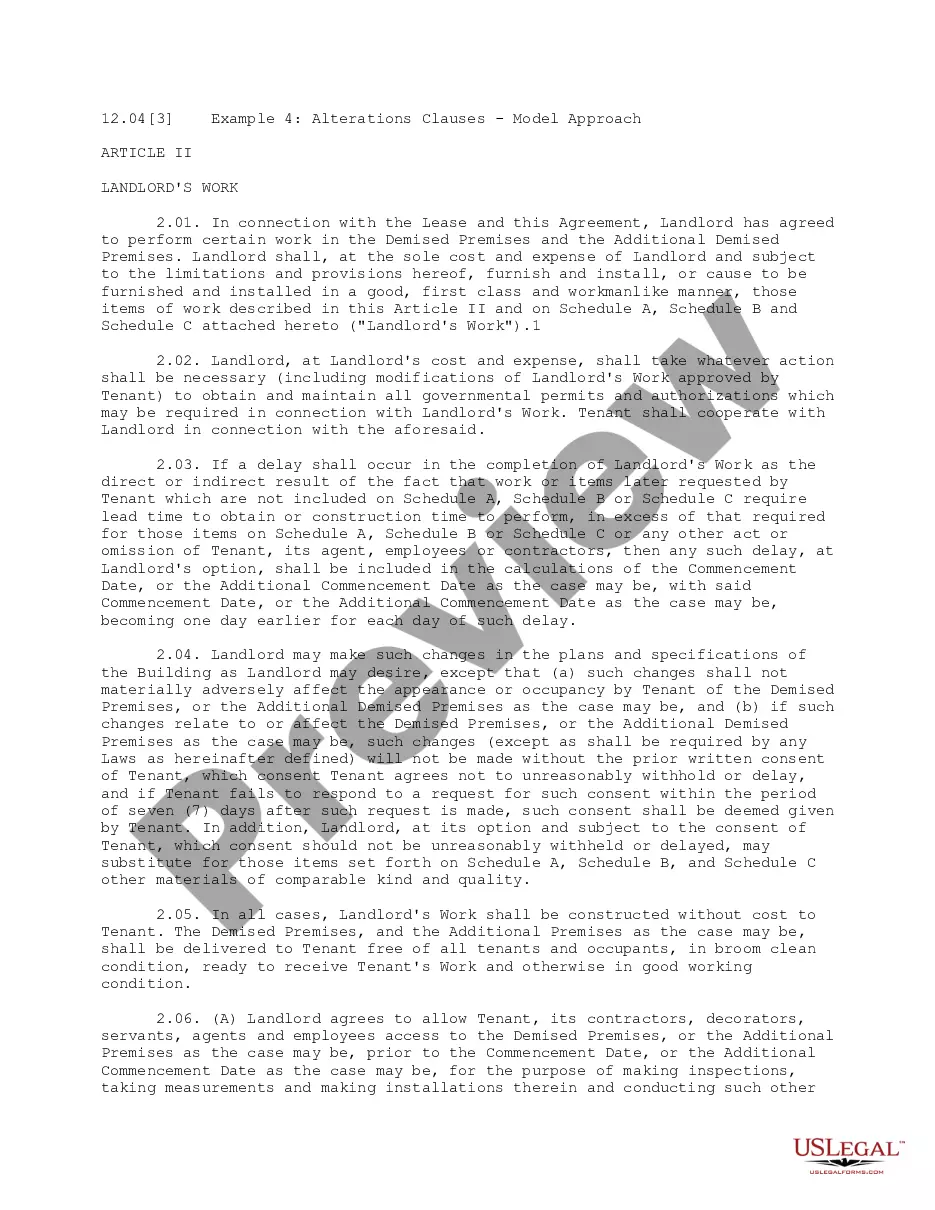
The Tenant Alterations Clause is a key component of an office lease that outlines the conditions under which a tenant may make alterations to the leased property. This form establishes specific guidelines to ensure that any modifications do not disrupt other tenants or ongoing work in the building. Unlike general lease agreements, this clause specifically addresses alteration rights and responsibilities, making it essential for landlords and tenants to understand their obligations in such scenarios.
Key parts of this document
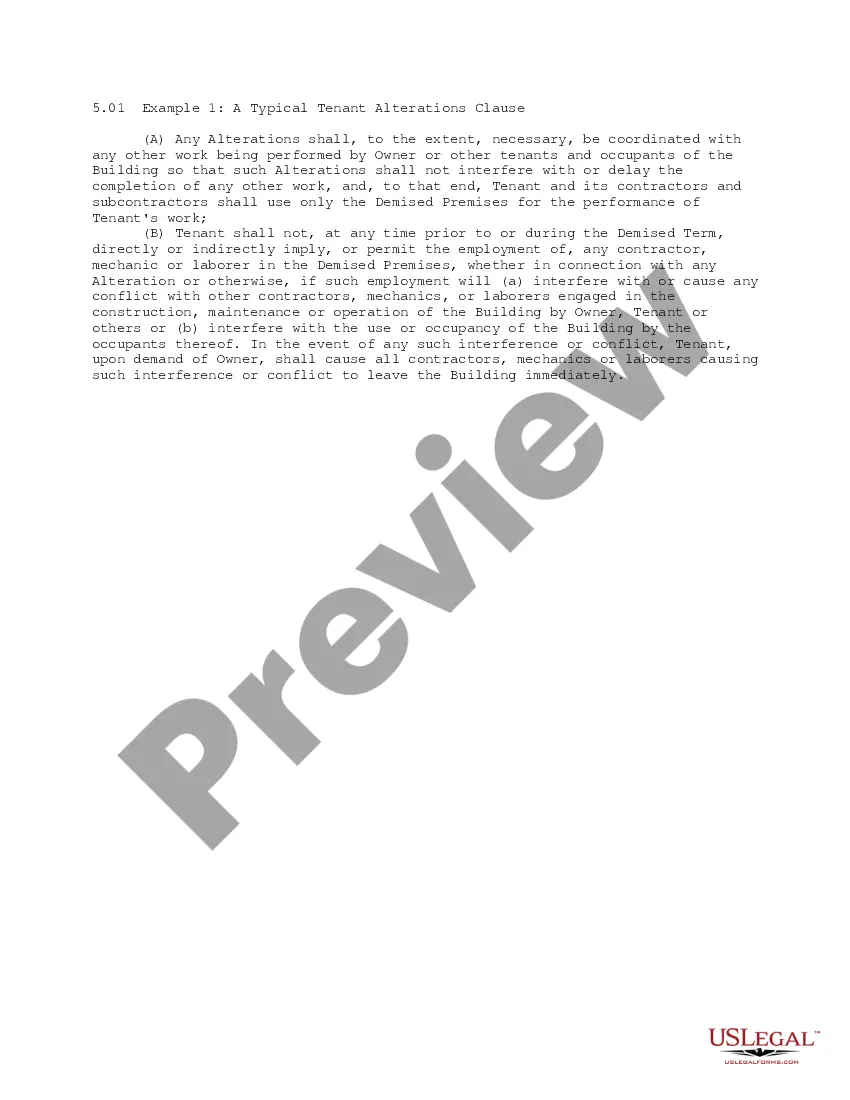
- Coordination of alterations with other work in the building.
- Prohibition on hiring contractors that may interfere with other construction activities.
- Requirements for tenantâs contractors to cause no disruption to the property.
- Immediate removal of contractors causing interference upon request from the owner.
When to use this document
This form should be used when a tenant intends to make alterations to a leased property, such as renovations, changes to the layout, or any physical modifications. It ensures that tenants are aware of their responsibilities and the need to coordinate with the property's owner and other tenants. This clause helps prevent conflicts and disruptions during the alteration process.
Who this form is for
This form is designed for:
- Commercial tenants wanting to make alterations to their leased office space.
- Landlords looking to establish clear guidelines regarding tenant modifications.
- Property managers enforcing lease terms related to alterations.
How to complete this form
- Identify the parties involved, including the tenant and property owner.
- Specify the premises being leased under the agreement.
- Detail the scope of proposed alterations, ensuring compliance with the outlined conditions.
- Provide any necessary contractor information if applicable.
- Review the completed clause with all parties before signing to ensure mutual understanding.
Does this form need to be notarized?
This form does not typically require notarization unless specified by local law. Tenants should check local regulations to confirm this requirement.
Get your form ready online
Our built-in tools help you complete, sign, share, and store your documents in one place.
Make edits, fill in missing information, and update formatting in US Legal Forms—just like you would in MS Word.
Download a copy, print it, send it by email, or mail it via USPS—whatever works best for your next step.
Sign and collect signatures with our SignNow integration. Send to multiple recipients, set reminders, and more. Go Premium to unlock E-Sign.
If this form requires notarization, complete it online through a secure video call—no need to meet a notary in person or wait for an appointment.
We protect your documents and personal data by following strict security and privacy standards.

Make edits, fill in missing information, and update formatting in US Legal Forms—just like you would in MS Word.

Download a copy, print it, send it by email, or mail it via USPS—whatever works best for your next step.

Sign and collect signatures with our SignNow integration. Send to multiple recipients, set reminders, and more. Go Premium to unlock E-Sign.

If this form requires notarization, complete it online through a secure video call—no need to meet a notary in person or wait for an appointment.

We protect your documents and personal data by following strict security and privacy standards.
Typical mistakes to avoid
- Failing to communicate proposed alterations with the property owner beforehand.
- Not ensuring that hired contractors are qualified and do not disrupt others.
- Ignoring local regulations that may affect alteration permissions.
Advantages of online completion
- Convenient access to download and fill out the form at any time.
- Editable templates allow for easy customization to fit specific needs.
- Ensured reliability with attorney-reviewed content for legal accuracy.
Legal use & context
The Tenant Alterations Clause serves to protect both the interests of the landlord and the integrity of the building. It is enforceable as part of the overall lease agreement, provided that all parties adhere to the specified conditions.
Summary of main points
- Understanding the Tenant Alterations Clause is crucial for both tenants and landlords.
- Clear communication about alterations can prevent conflicts and delays.
- Always consult local laws to confirm requirements related to alterations.
Looking for another form?
Form popularity
FAQ
Tenant can claim for: Necessary improvements to protect or preserve the property (costs expended),The claim arises only once the lease is terminated and lessee returned the property. The court has discretion to disallow a claim for useful improvements.
In cases like this, landlords are entitled to deduct the remaining tax basis in capitalized leasehold improvements made for a particular tenant upon termination of the lease if such improvements are irrevocably disposed of or abandoned and won't be used by a subsequent tenant.
Identify. The first step is to identify the situation. Categorize. Eliminate. Leave us a message for the RentPrep Podcast: Take Pictures and Video. Gather Bids for Repairs. Deduct from the Security Deposit. Call Your Local Police.
An addendum must include the basic elements of any landlord/tenant agreement. You should include the date, the address of the rental property and the names of each party just as you would in the original lease.
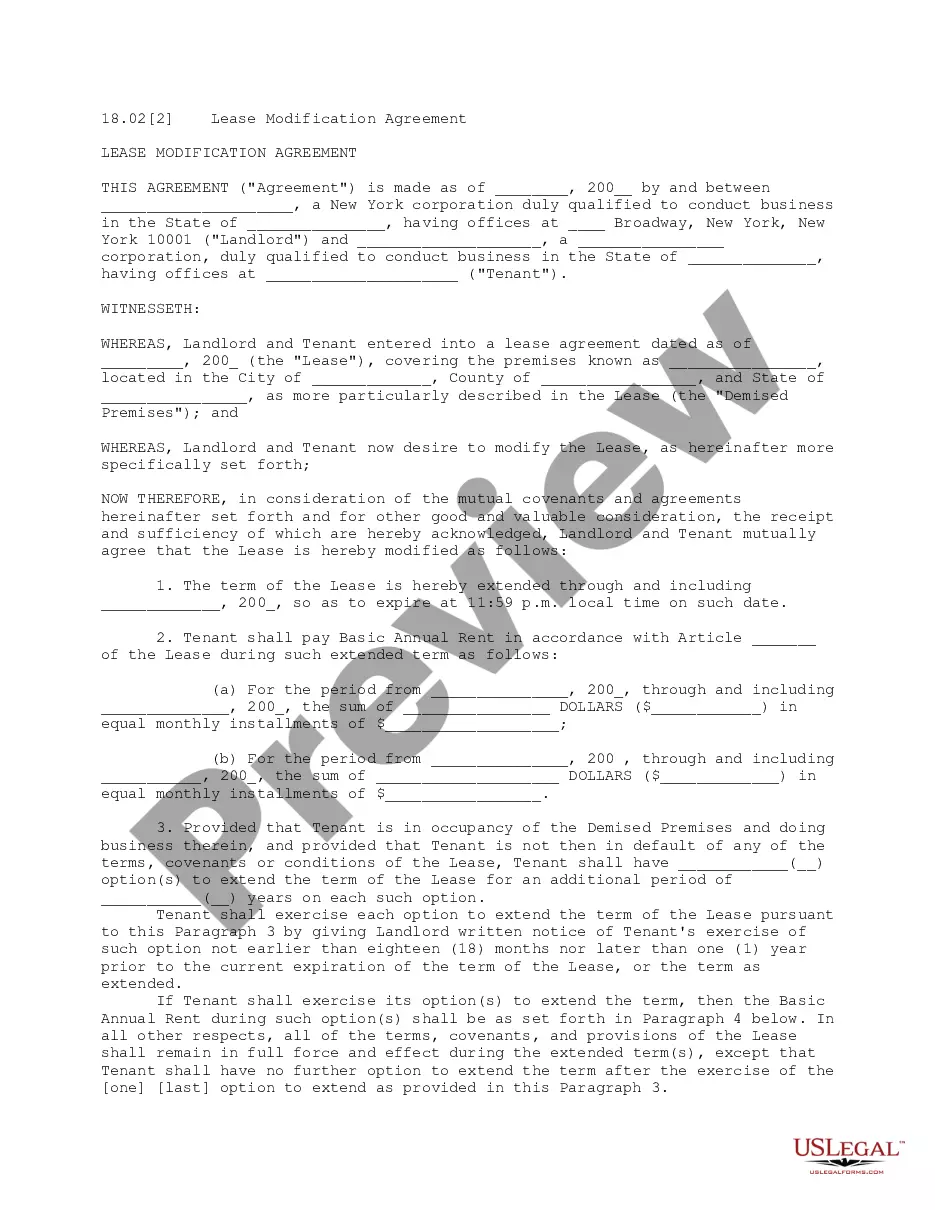
A lease addendum allows a landlord or tenant to make changes to a current residential or commercial lease agreement.Once both parties agree and sign, the addendum should be added to the original lease.
Your landlord can change a rental agreement at any time during the term of the agreement, with or without your consent. Changes must be made with adequate notice; notice periods are 30 days in most states. Changing a lease is harder because both parties must consent to almost any change.
Be calm, objective, and rational. Keep written records of everything. Teach tenants how they should treat you. Try to get your tenants on your side. Ask the terrible tenants to leave. Begin the eviction process. Hire a property manager.
Who Can Amend the Lease? When a landlord and tenant sign a lease agreement it forms a legally binding contract. The lease cannot be altered except through another written agreement signed by both parties unless the original lease specifically gives a party the power to change something on their own.
Changing the tenancy agreement A tenancy agreement can normally only be changed if both you and your landlord agree. If you both agree, the change should be recorded in writing, either by drawing up a new written document setting out the terms of the tenancy or by amending the existing written tenancy agreement.