Pennsylvania Supplemental Promissory Note for College Loan Program
What this document covers
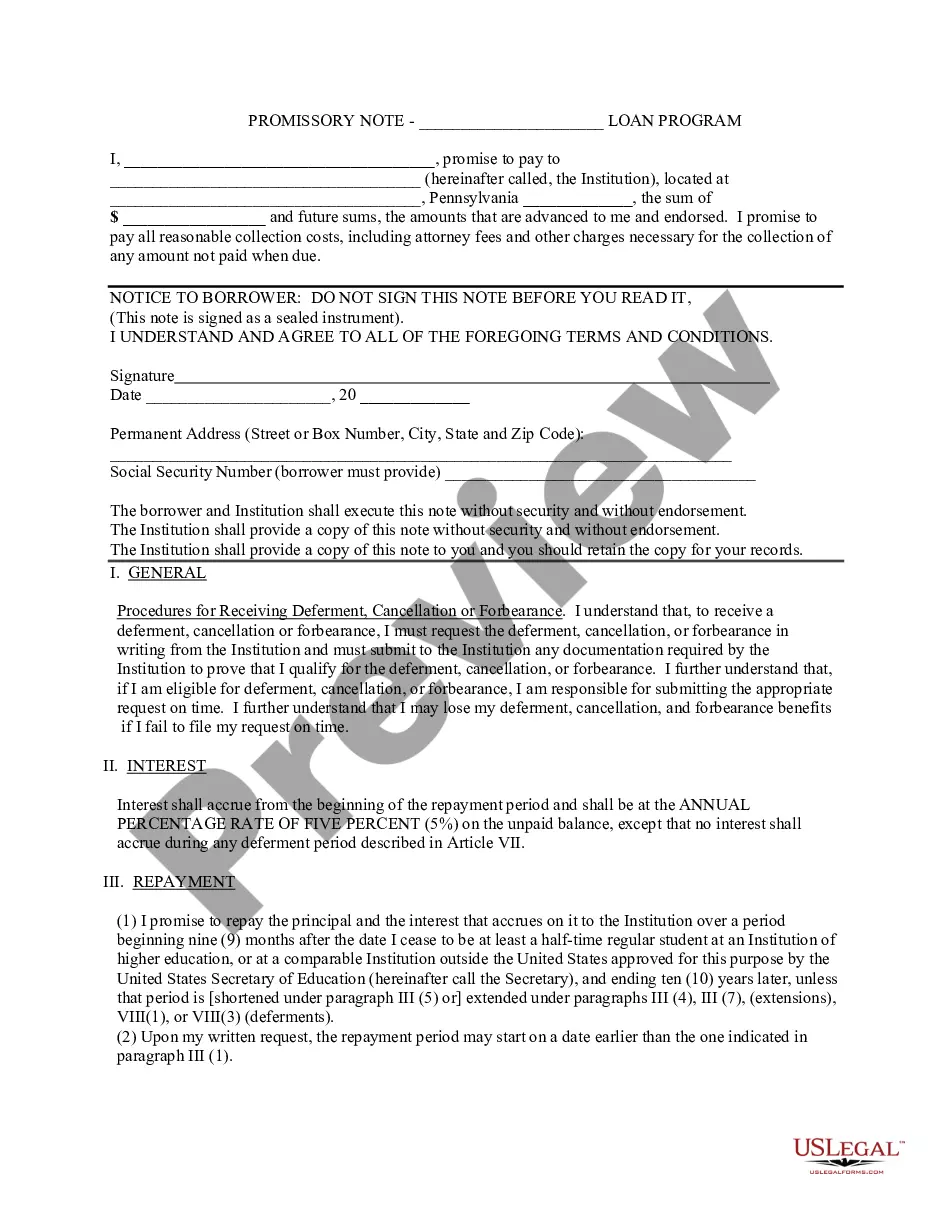
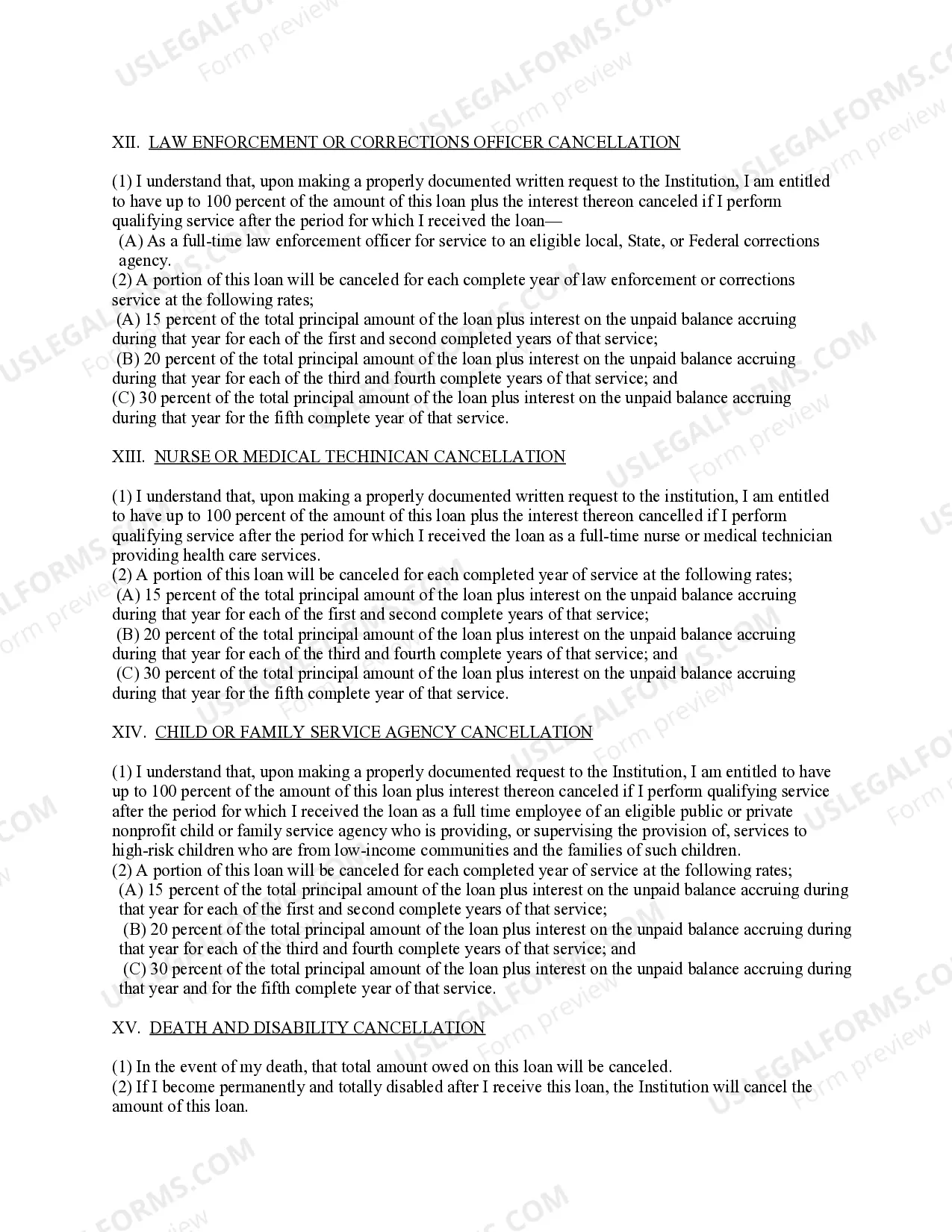
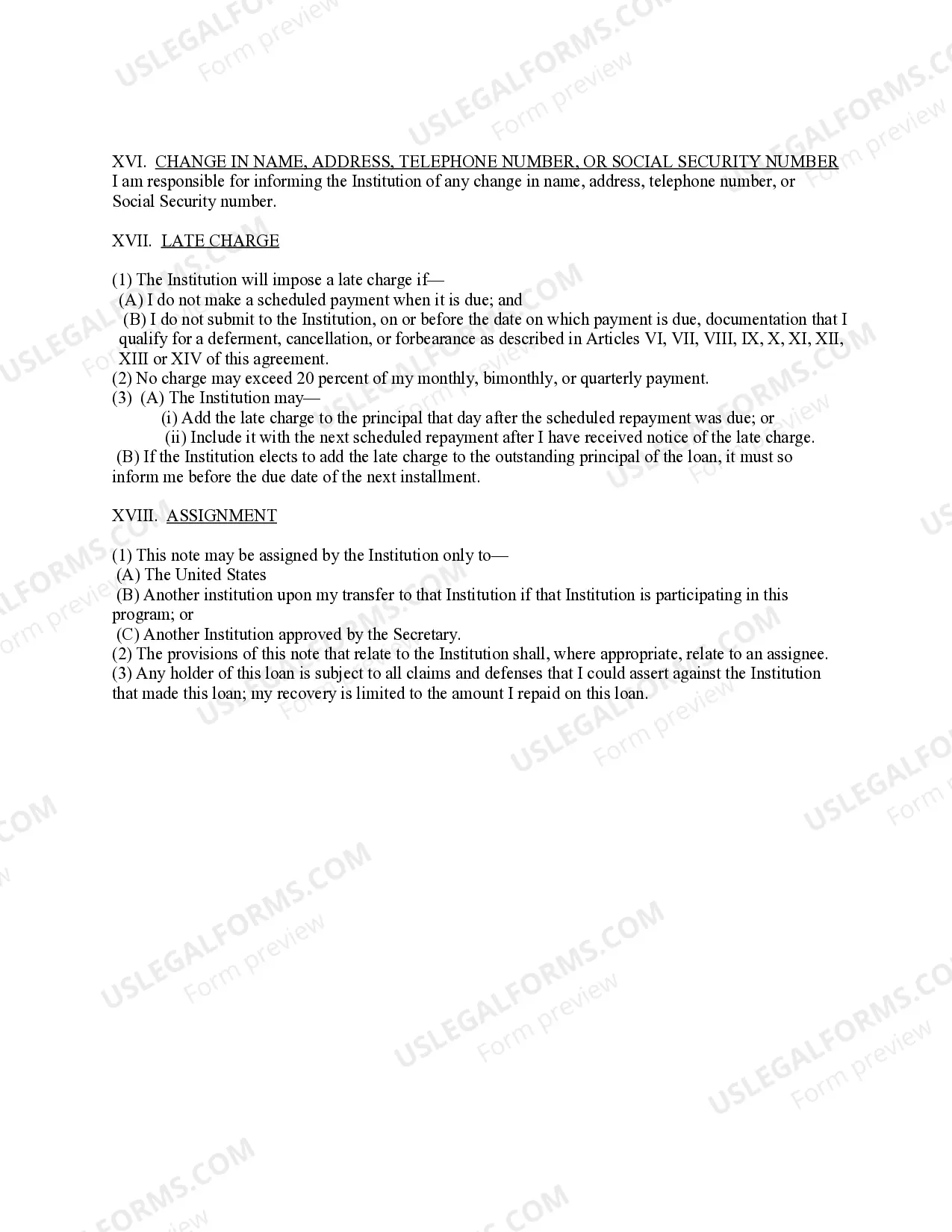
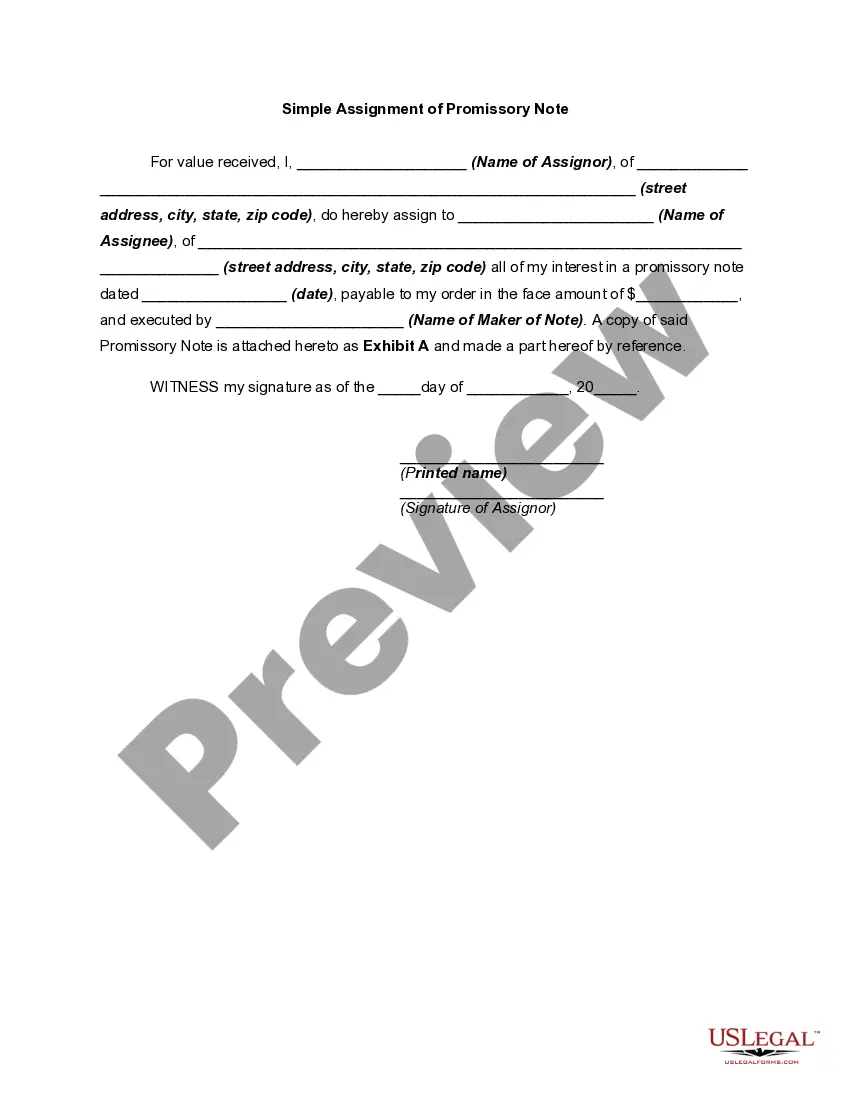
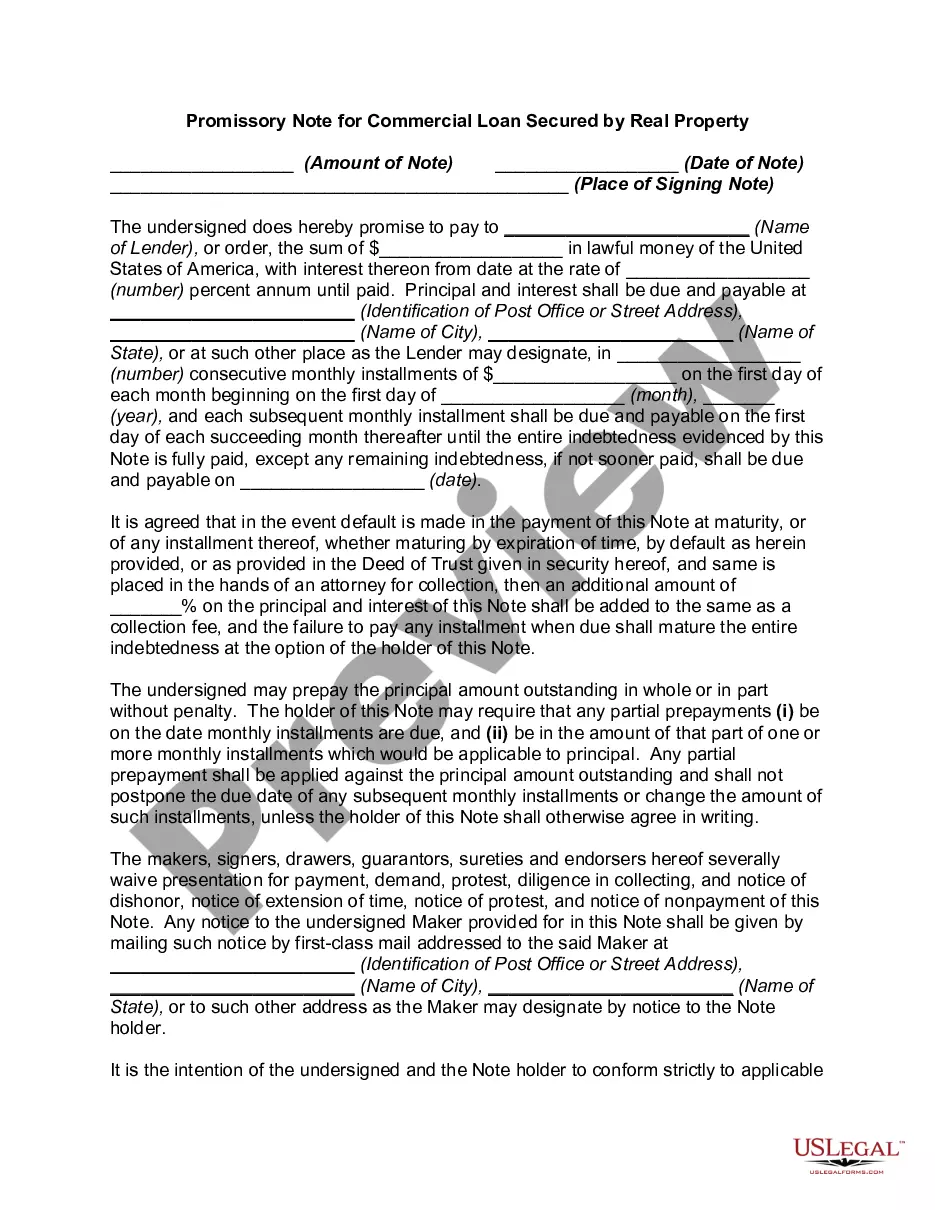
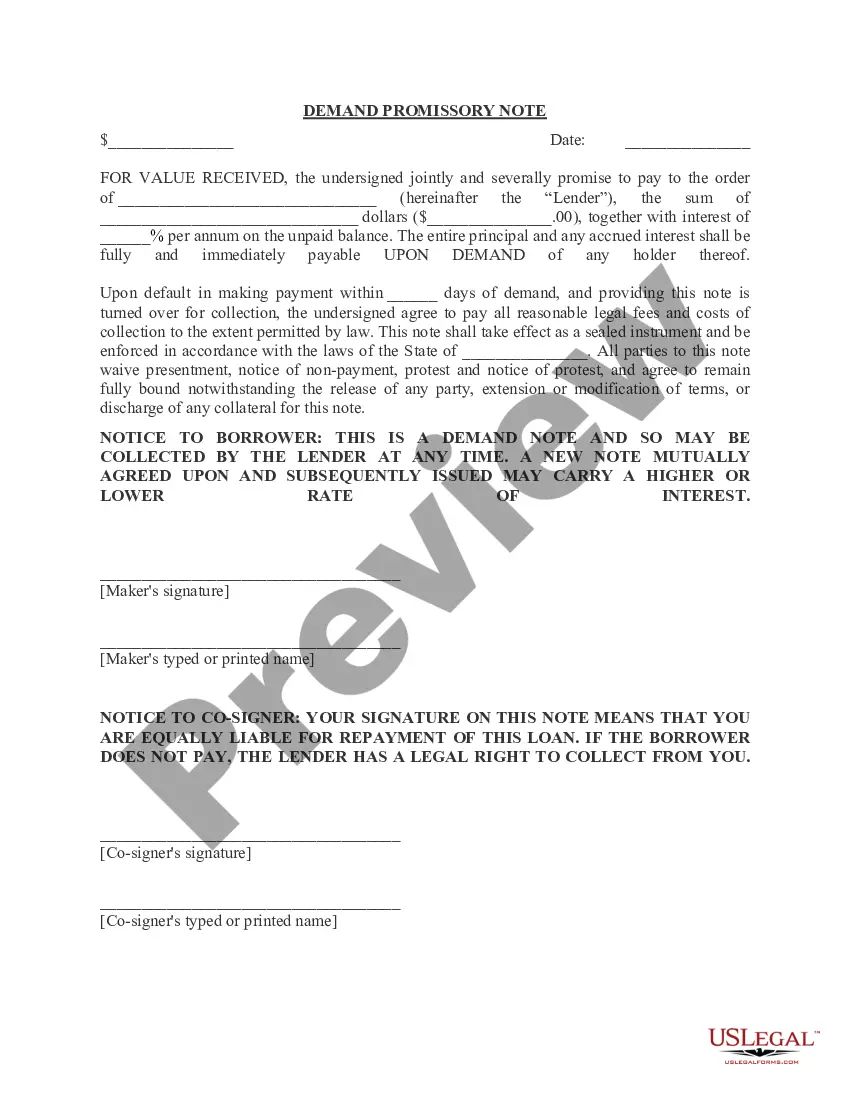
The Supplemental Promissory Note for College Loan Program is a legal document that outlines the terms of a loan provided to a student by a higher education institution. This form is specifically designed for educational loans, distinguishing it from general promissory notes. The loan funds are typically used for tuition, fees, and other educational expenses, with specific repayment conditions based on the studentâs enrollment status.
Form components explained
- Borrowerâs identity: Includes the borrower's name and permanent address.
- Loan amount: States the total sum borrowed and future advances.
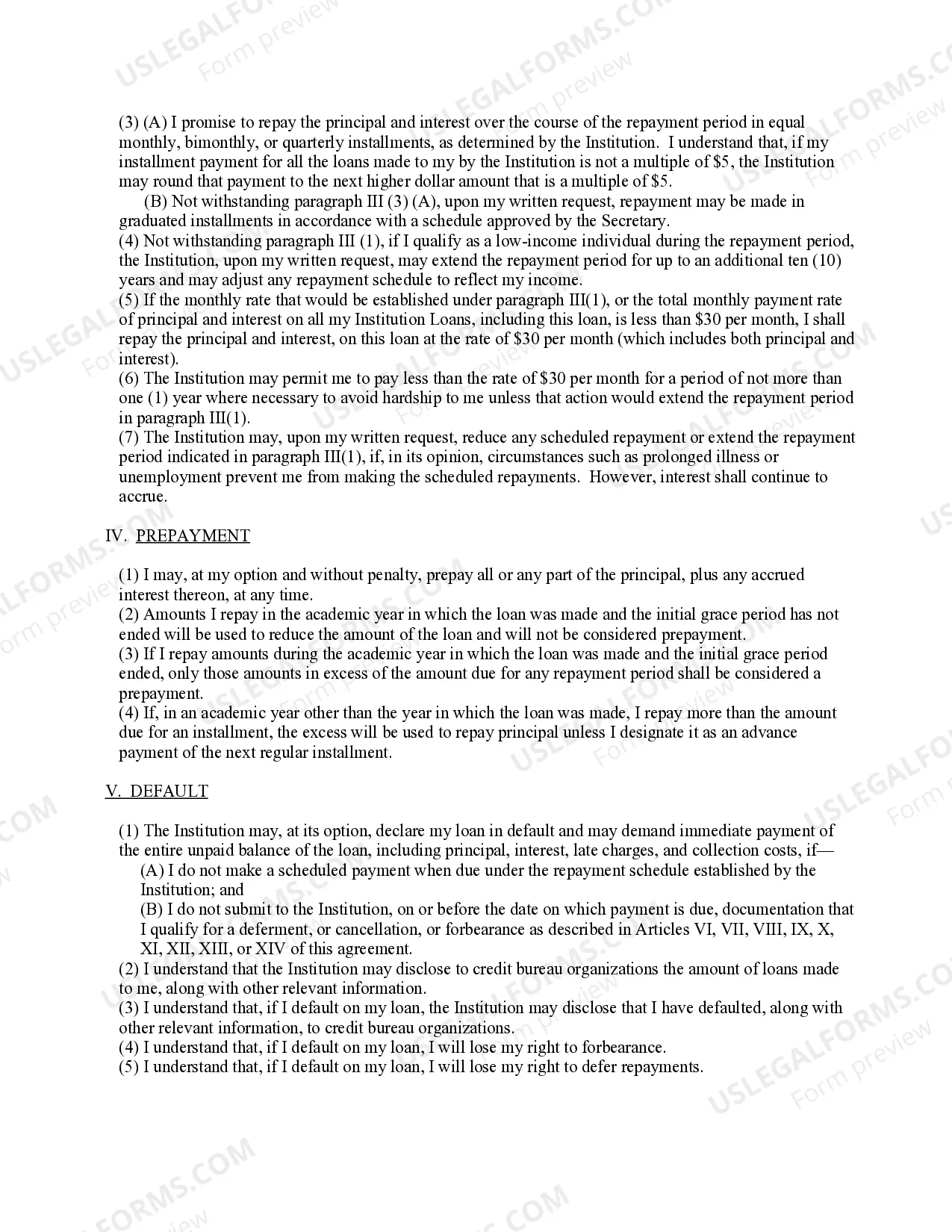
- Repayment terms: Outlines when repayments begin and the length of the repayment period.
- Interest rate: Specifies a five percent annual interest rate on the unpaid balance.
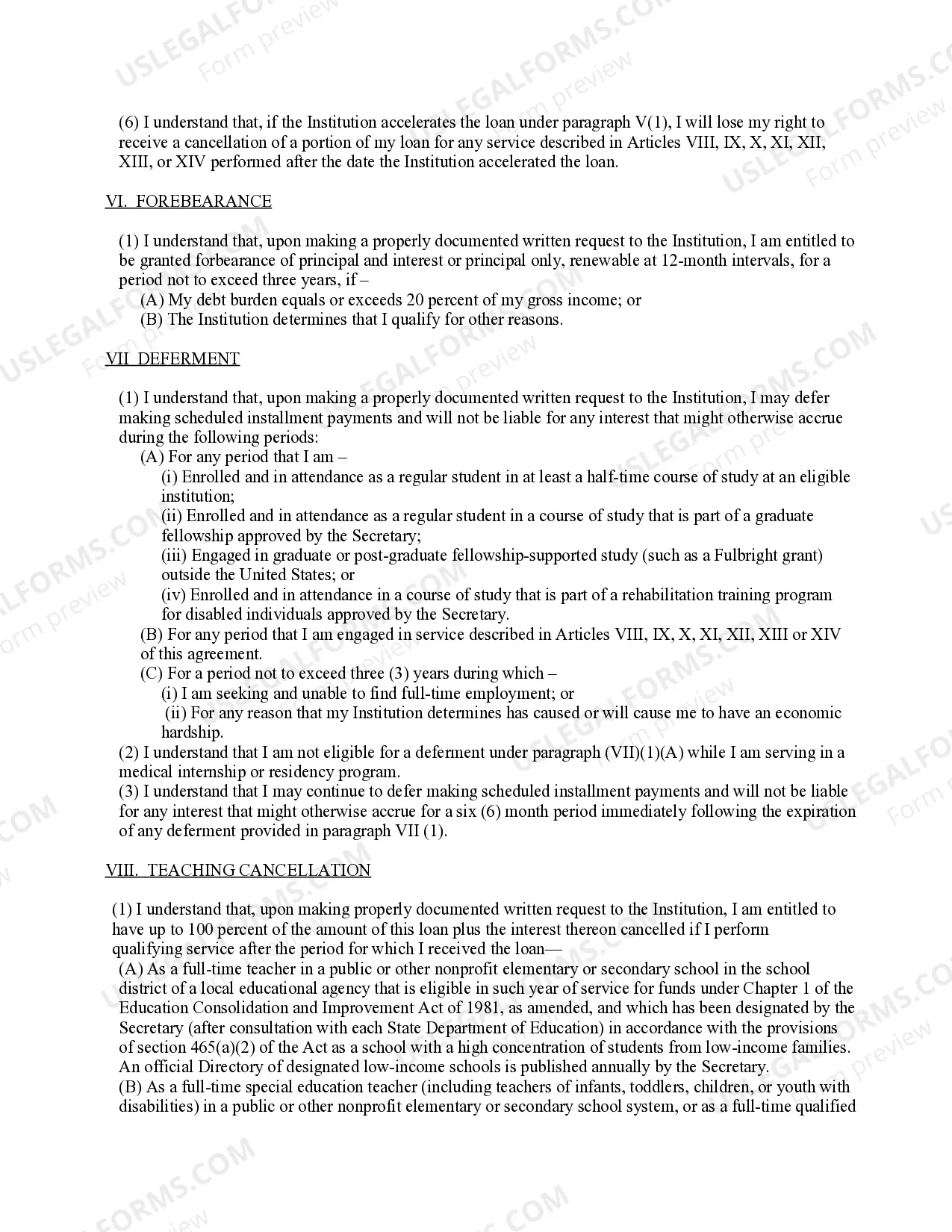
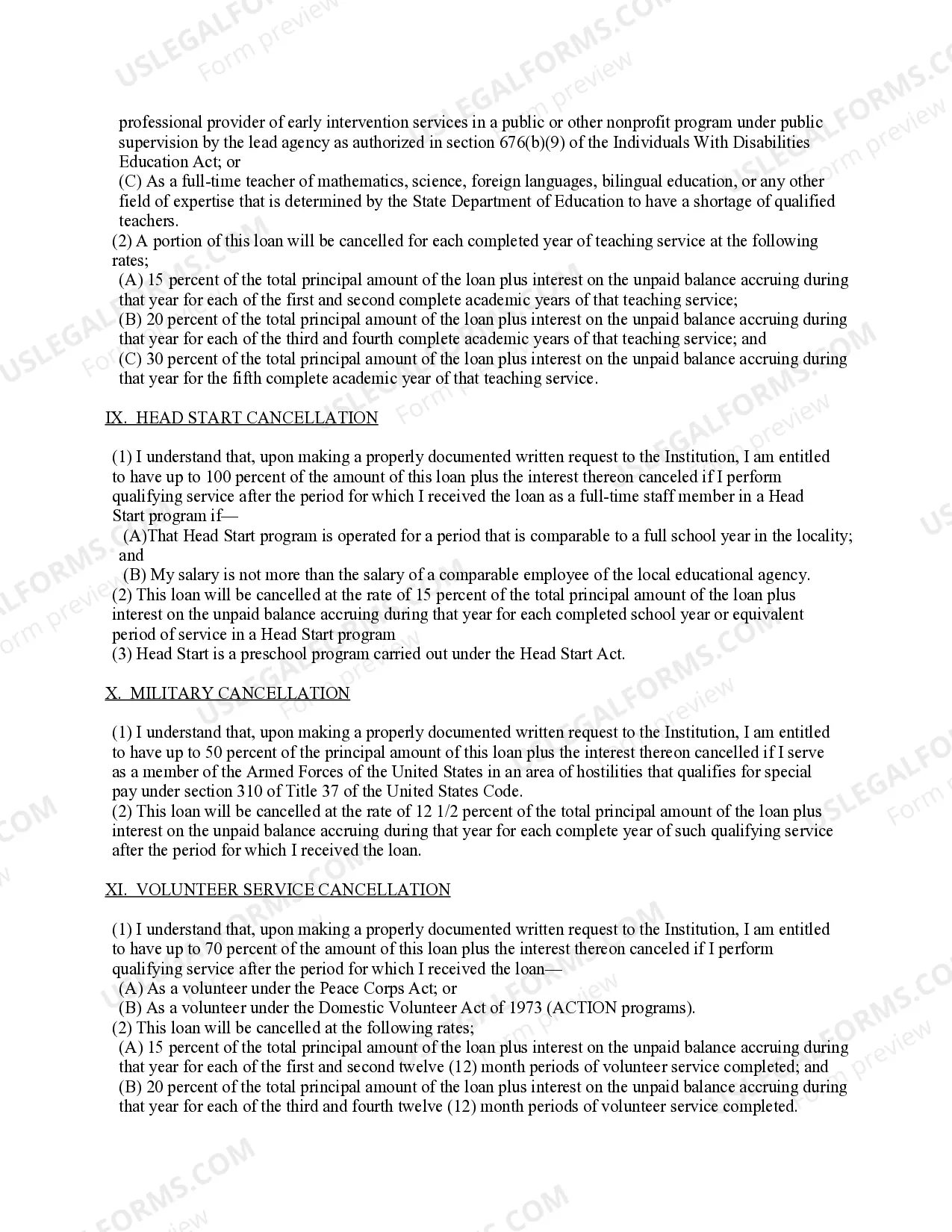
- Provisions for deferment, cancellation, and forbearance: Details the conditions under which payments may be paused or reduced.
- Consequences of default: Describes the implications if the borrower fails to make payments.
When to use this form
This form should be used when a student receives a loan from a college or university and needs to agree to the terms of repayment. It is applicable when the student is at least a half-time student and requires financial assistance for educational expenses. Additionally, it serves as a formal agreement to ensure the loan is repaid according to the established terms.
Who can use this document
- Students enrolled in a higher education institution who are receiving a college loan.
- Parents or guardians on behalf of dependent students needing educational funding.
- Educational institutions that are providing loans directly to students.
How to complete this form
- Identify the parties involved: Fill in the borrower's and institution's names and addresses.
- Enter the loan amount: Specify the total amount being borrowed.
- Complete the repayment details: Review and understand when repayments will start and their duration.
- Enter the borrower's signature and the date: Ensure the borrower signs and dates the document.
- Provide the permanent address and Social Security number: Include these details for identification purposes.
Notarization requirements for this form
This form does not typically require notarization unless specified by local law. However, it is essential to review state requirements to ensure compliance.
Get your form ready online
Our built-in tools help you complete, sign, share, and store your documents in one place.
Make edits, fill in missing information, and update formatting in US Legal Forms—just like you would in MS Word.
Download a copy, print it, send it by email, or mail it via USPS—whatever works best for your next step.
Sign and collect signatures with our SignNow integration. Send to multiple recipients, set reminders, and more. Go Premium to unlock E-Sign.
If this form requires notarization, complete it online through a secure video call—no need to meet a notary in person or wait for an appointment.
We protect your documents and personal data by following strict security and privacy standards.

Make edits, fill in missing information, and update formatting in US Legal Forms—just like you would in MS Word.

Download a copy, print it, send it by email, or mail it via USPS—whatever works best for your next step.

Sign and collect signatures with our SignNow integration. Send to multiple recipients, set reminders, and more. Go Premium to unlock E-Sign.

If this form requires notarization, complete it online through a secure video call—no need to meet a notary in person or wait for an appointment.

We protect your documents and personal data by following strict security and privacy standards.
Avoid these common issues
- Failing to read the terms before signing the note.
- Not providing accurate personal information, such as Social Security number.
- Overlooking the need to submit deferment or cancellation requests in a timely manner.
- Not keeping a copy of the signed note for personal records.
Benefits of using this form online
- Immediate access: Download the form directly upon completion to avoid delays.
- Editability: Customize the form as needed to fit specific loan terms and conditions.
- Reliability: Form templates drafted by licensed attorneys ensure legal compliance.
Legal use & context
- This form serves as a legally binding agreement between the borrower and the institution.
- Failure to comply with the repayment terms can lead to default, impacting credit scores.
- Borrowers retain rights to deferment and forbearance following specific conditions outlined in the document.
What to keep in mind
- The Supplemental Promissory Note is essential for securing educational loans.
- Understanding the repayment terms is crucial to avoid defaults and legal issues.
- Timely requests for deferment or cancellation can provide financial relief during repayment.
Looking for another form?
Form popularity
FAQ
All borrowers need to complete an MPN before they can receive a federal student loan. Some circumstances may require you to sign an MPN more than once: If you're receiving a type of loan for which you haven't signed an MPN previously.
The Master Promissory Note (MPN) is a legal document in which you promise to repay your loan(s) and any accrued interest and fees to the U.S. Department of Education. It also explains the terms and conditions of your loan(s).
What are supplemental student loans? A supplemental student loan is used to fill in the gaps when you've maxed out federal direct student loans. Supplemental loans can be used to cover all kinds of educational expenses like tuition, fees, room and board, transportation, and living expenses.
Subsidized Loans are loans for undergraduate students with financial need, as determined by your cost of attendance minus expected family contribution and other financial aid (such as grants or scholarships). Subsidized Loans do not accrue interest while you are in school at least half-time or during deferment periods.
The Pennsylvania Higher Education Assistance Agency (PHEAA) was created by the Pennsylvania General Assembly in 1963 to provide affordable access to higher education for PA students and families.
They're all provided by the government through the Federal Direct Loan Program. Direct Subsidized Loans are based on financial need. Direct Unsubsidized Loans are not based on financial need.Direct PLUS Loans are credit-based, unsubsidized federal loans for parents and graduate/professional students.
What is a Supplemental Loan? The simplest definition of supplemental financing is: Adding a smaller subordinate debt tranche to the original loan balance. A supplemental loan is not the same as refinancing the property. You're taking out a second loan in addition to the current mortgage.
Direct Subsidized Loans made to eligible undergraduate students who demonstrate financial need to help cover the costs of higher education at a college or career school. Direct Unsubsidized Loans made to eligible undergraduate, graduate, and professional students, but eligibility is not based upon financial need.