Sample Trade Secret Policy with Employee, Consultant, and License Forms
What this document covers
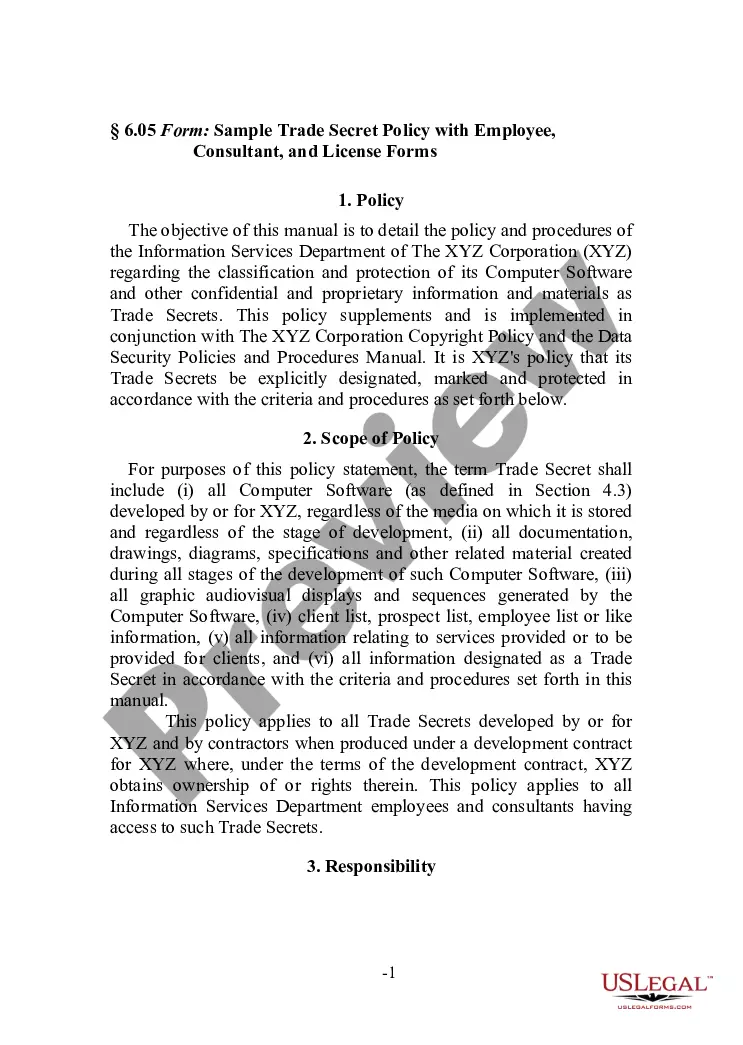
This Sample Trade Secret Policy with Employee, Consultant, and License Forms is a comprehensive document designed for businesses, particularly within the computer, internet, and software industries. This policy outlines the procedures for identifying, classifying, and protecting proprietary information classified as trade secrets. Unlike generic confidentiality agreements, this form includes specific provisions regarding the roles of employees, consultants, and licensees in safeguarding sensitive information relevant to the organizationâs operational integrity and competitive advantage.
Main sections of this form
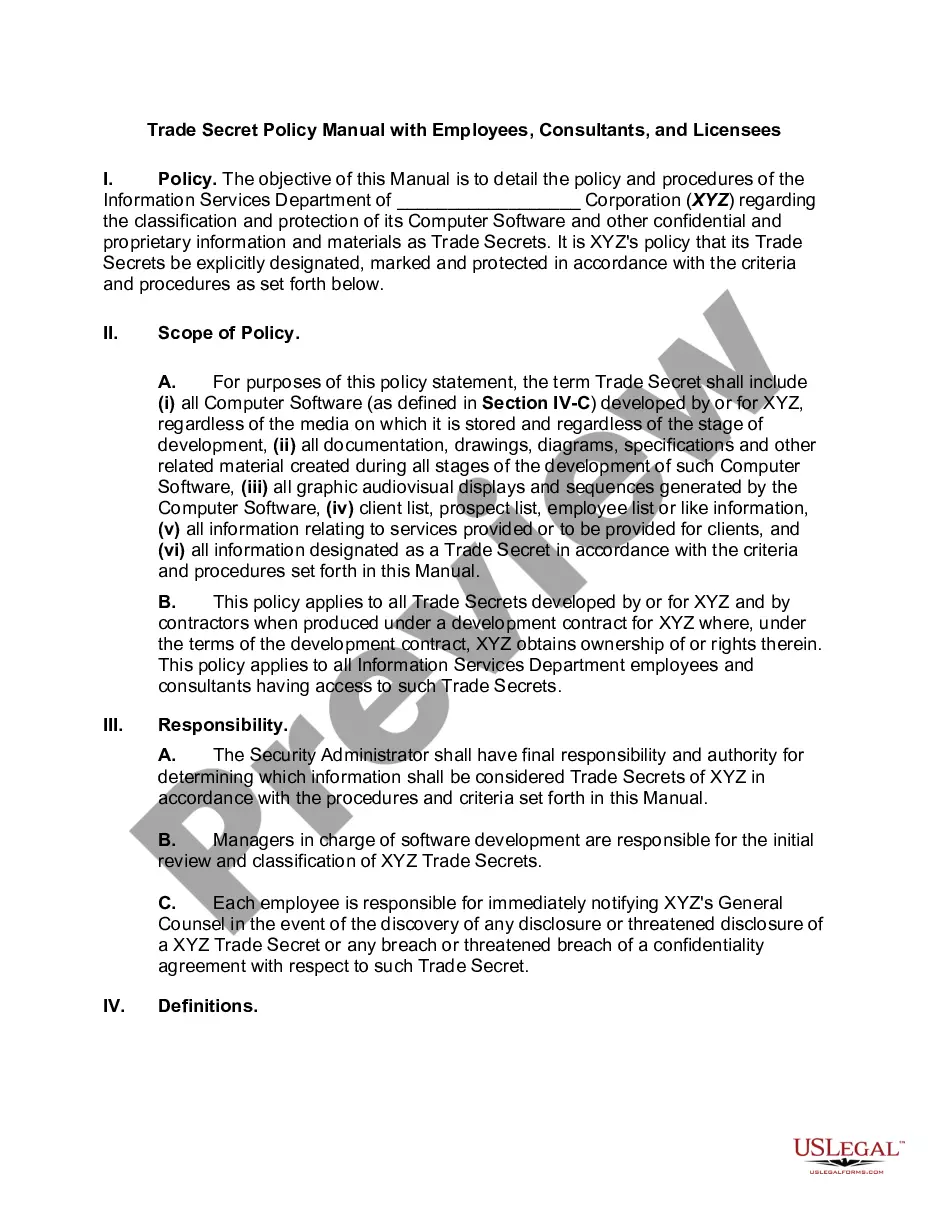
- Policy statement detailing the organizationâs commitment to protecting trade secrets.
- Scope of the policy, specifying what constitutes a trade secret.
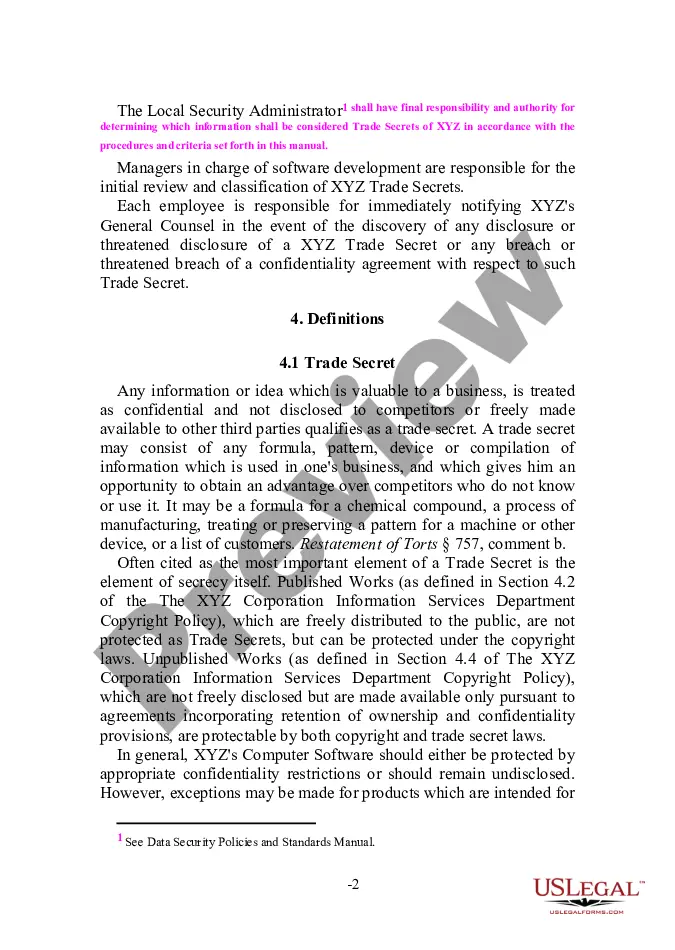
- Roles and responsibilities of employees and consultants regarding trade secret protection.
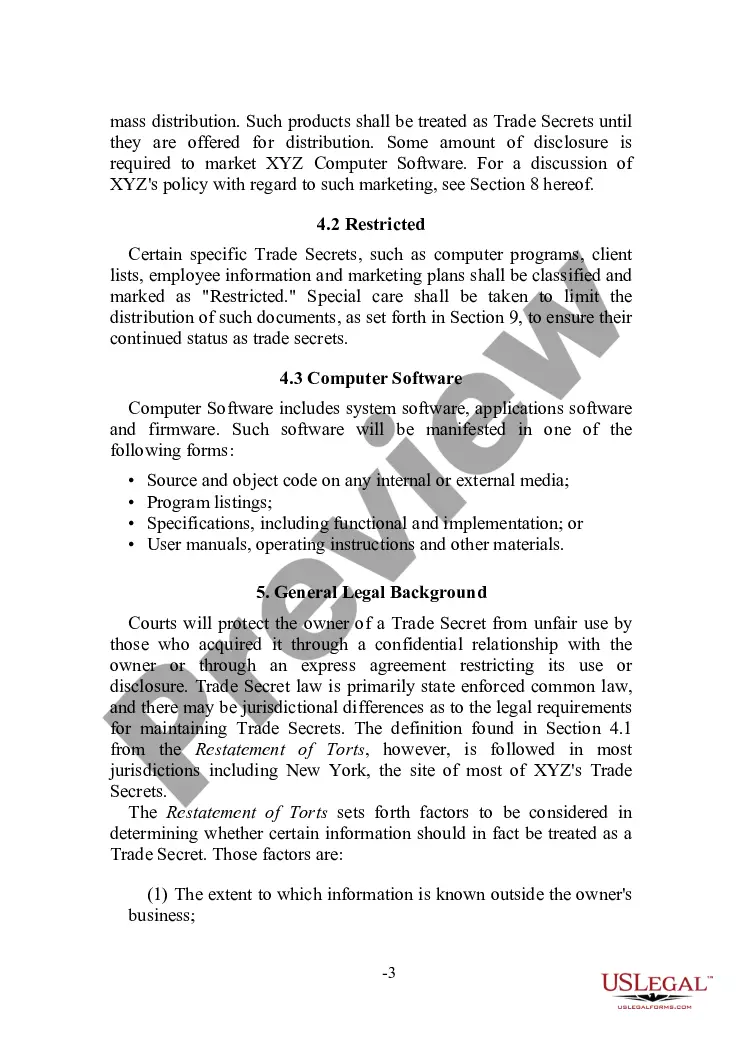
- Definitions of key terms related to trade secrets and confidentiality.
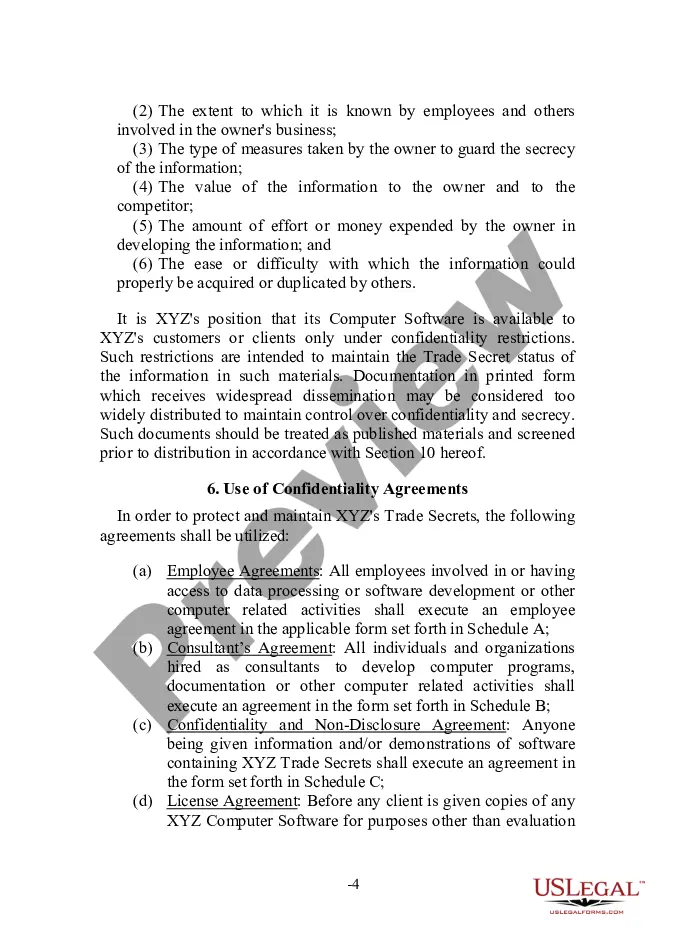
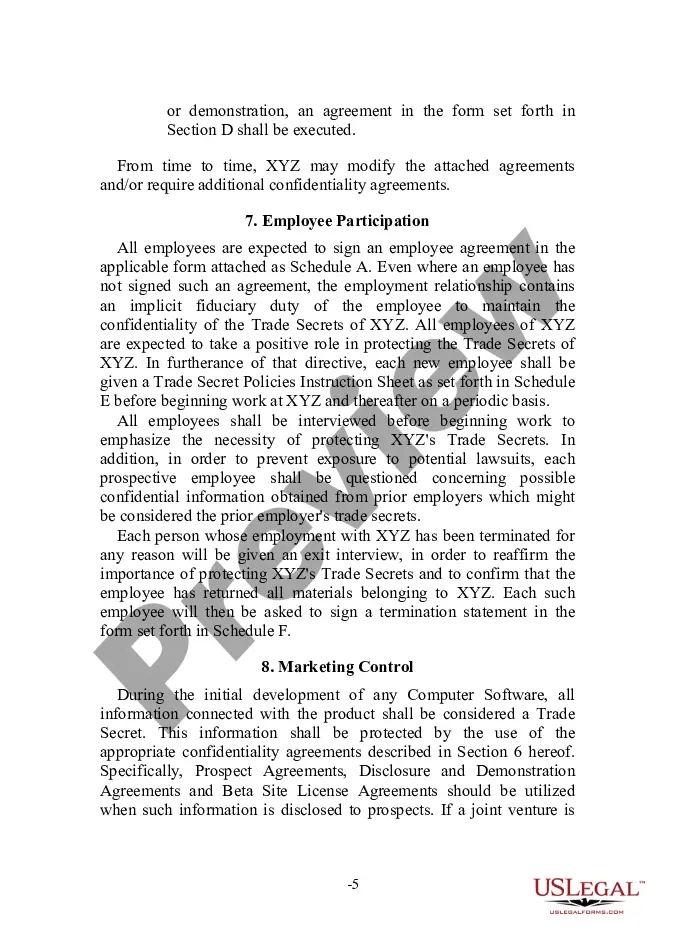
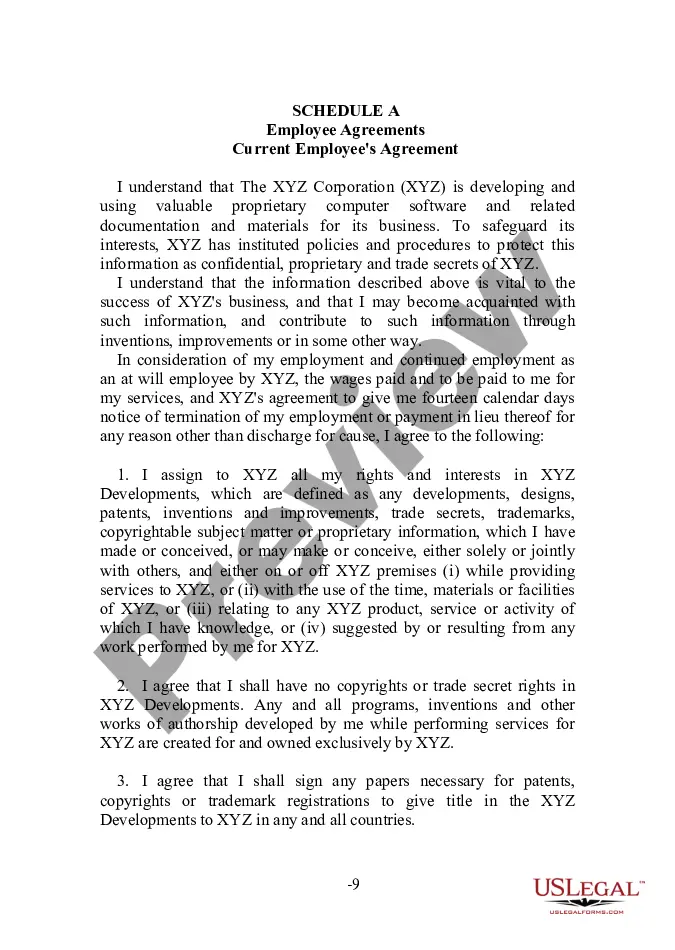
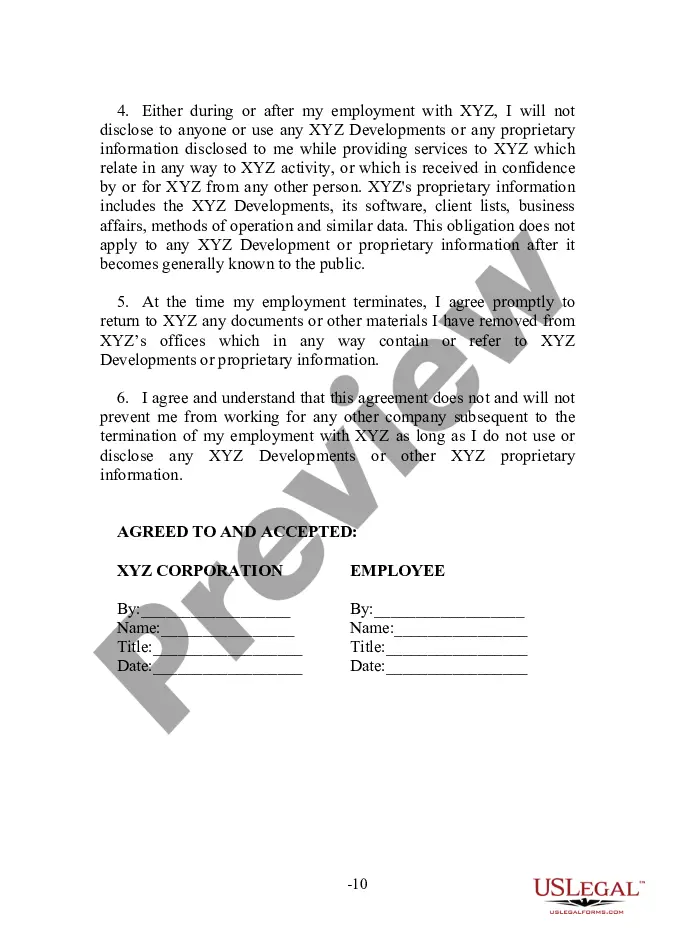
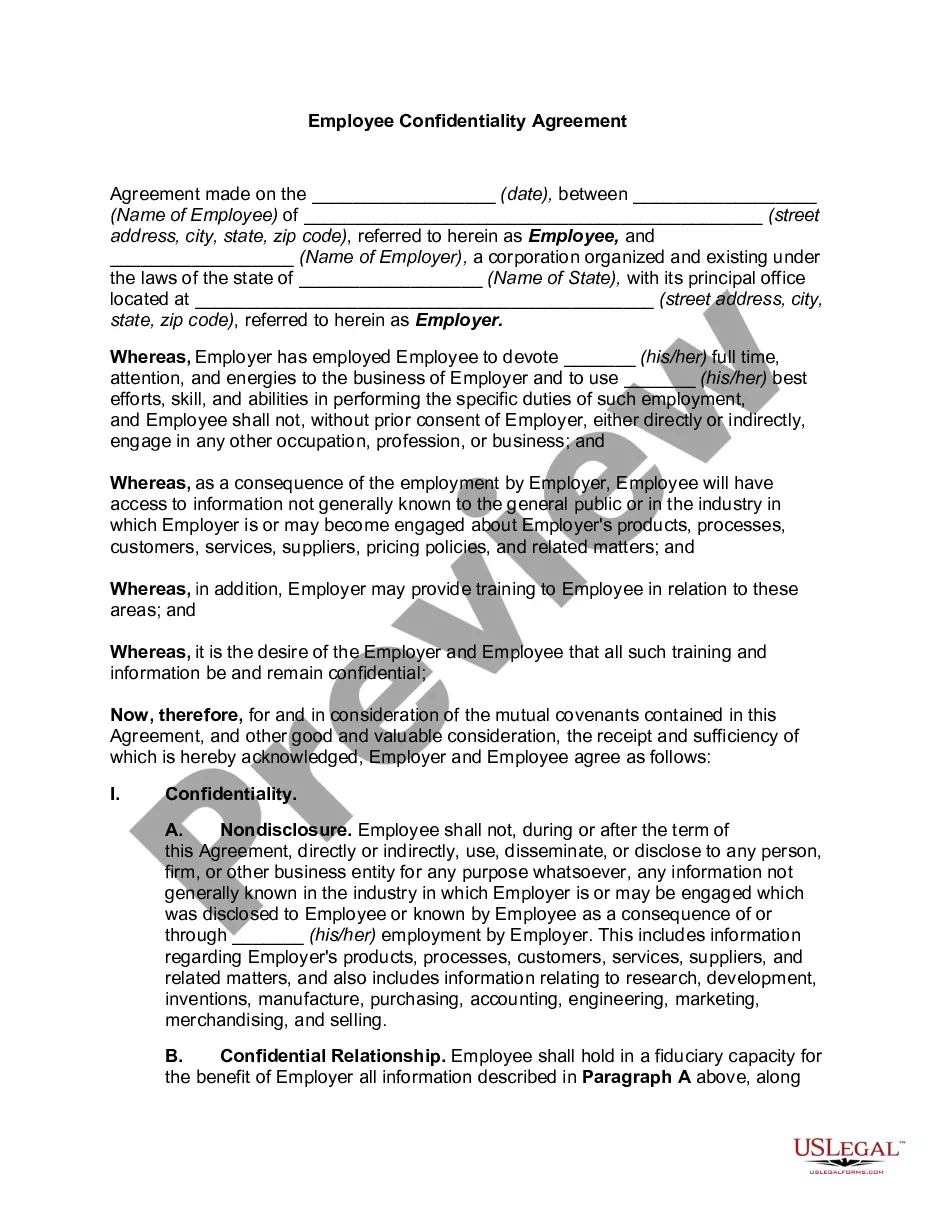
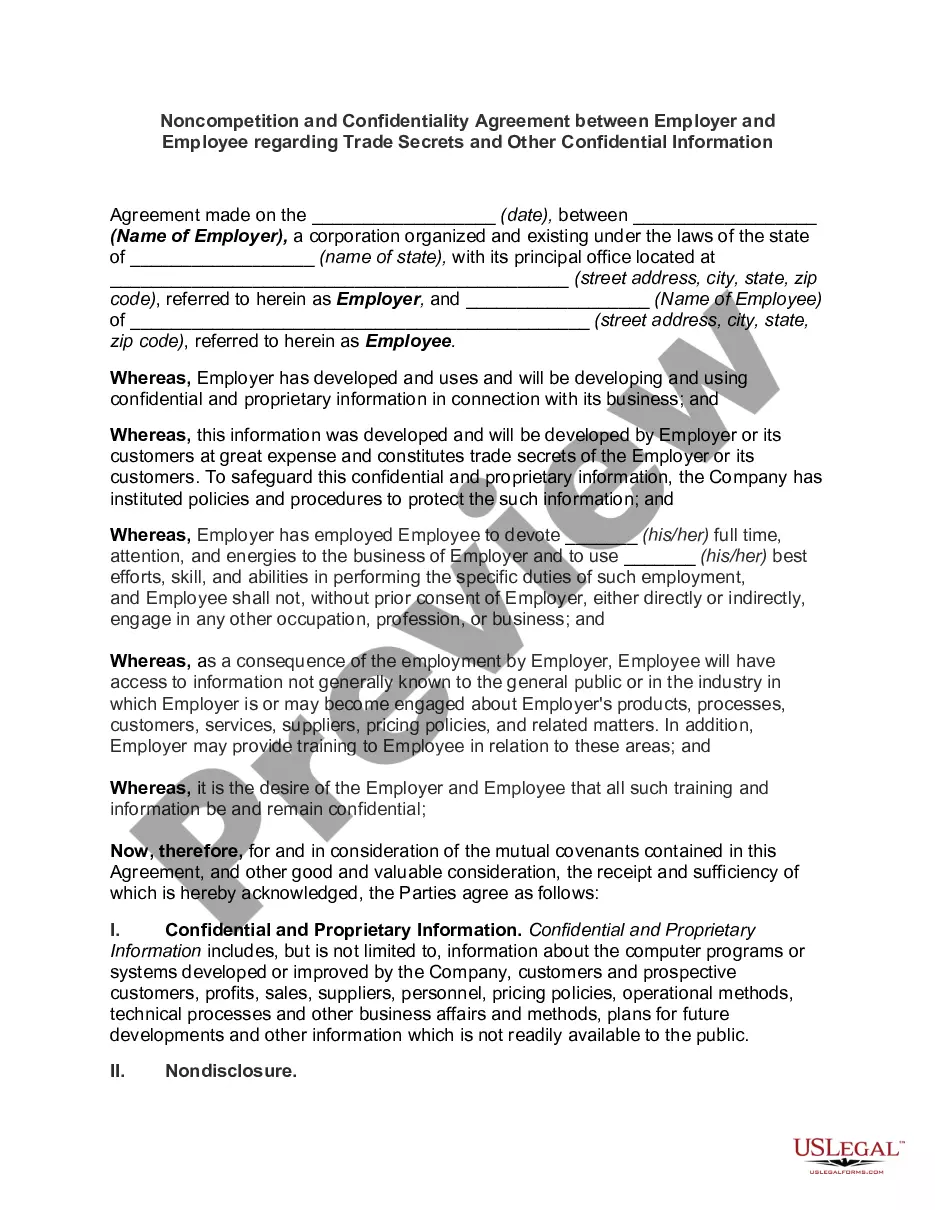
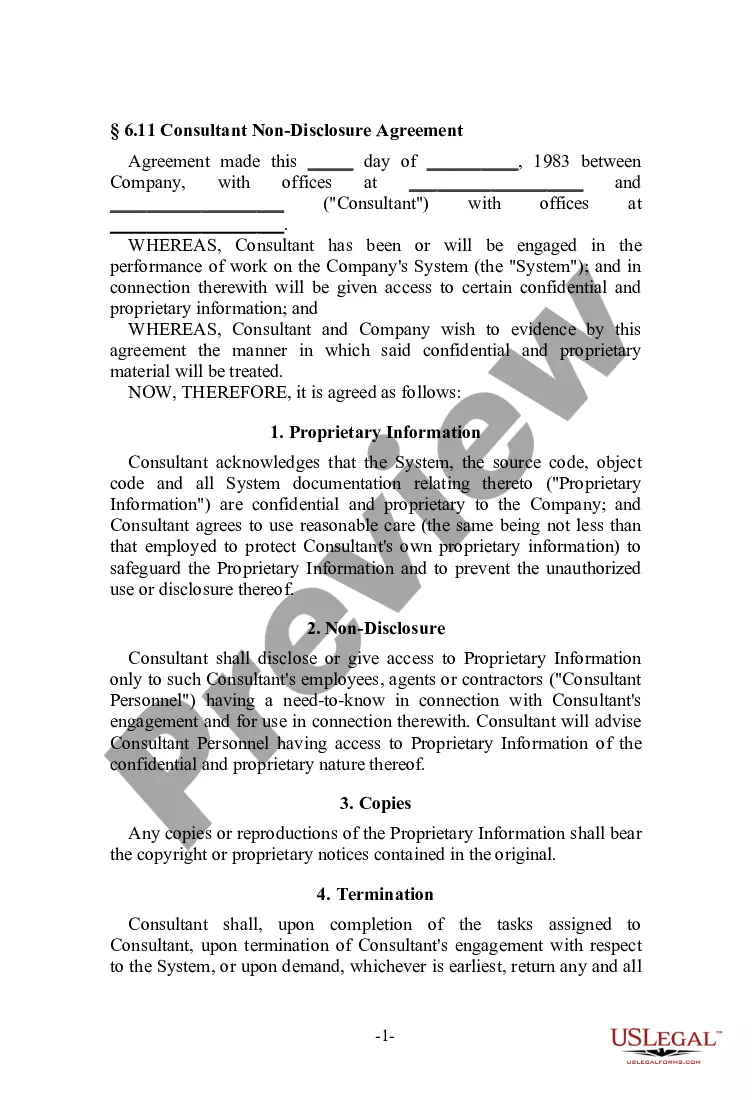
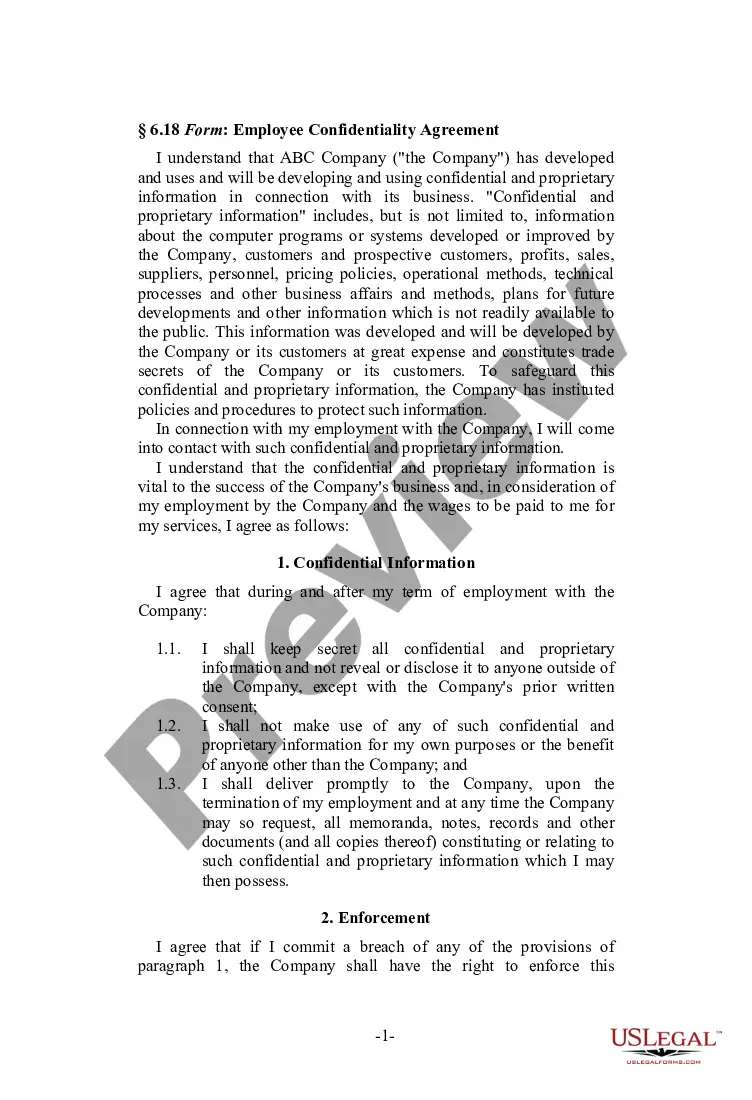
- Procedures for utilizing confidentiality agreements with employees, consultants, and clients.
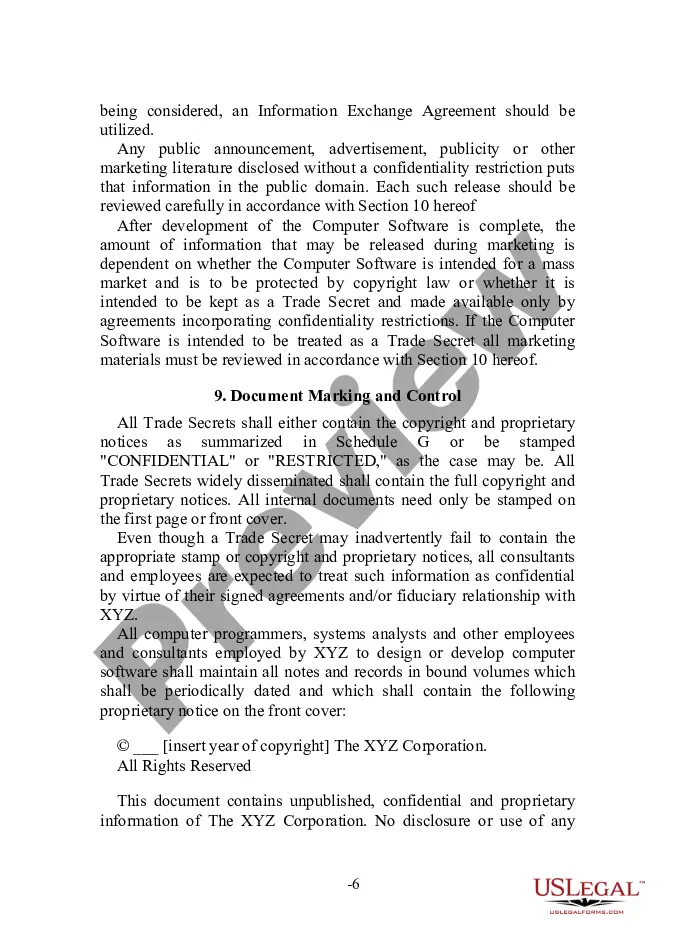
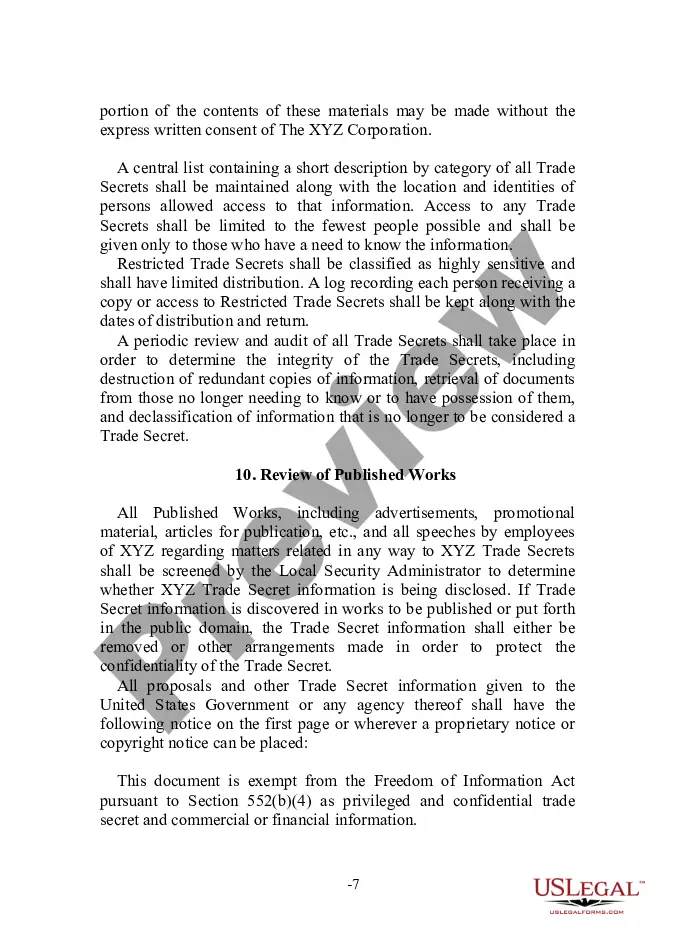
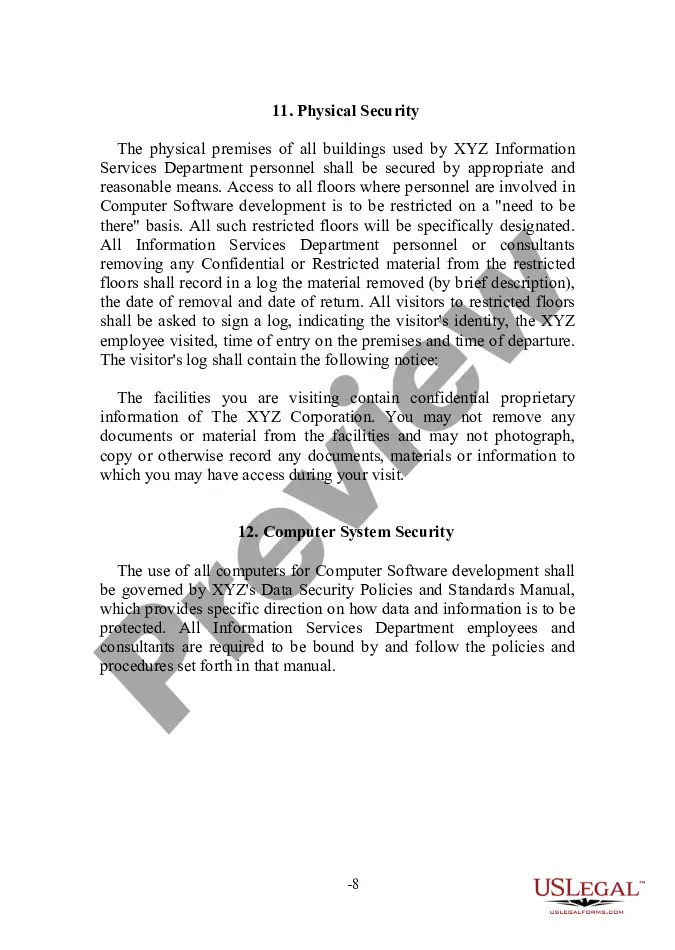
- Guidelines for document marking and maintaining physical security of confidential information.

When to use this document
This form is essential for businesses that develop proprietary software or confidential business information. Use this policy when implementing internal controls for protecting sensitive information, especially when onboarding new employees or engaging consultants who will have access to critical trade secrets. It also becomes necessary during the creation of software prototypes or in the commercialization of technology products.
Who needs this form
- Business owners and executives in tech-related industries.
- Human resource managers responsible for employee onboarding and training.
- IT and software development teams involved in creating proprietary products.
- Legal consultants advising on intellectual property and confidentiality matters.
Steps to complete this form
- Identify and define the trade secrets relevant to your organization.
- Assign responsibilities to employees and consultants for managing and protecting trade secrets.
- Incorporate specific confidentiality agreements for employees, consultants, and licensees as outlined in the policy.
- Establish practices for marking documents and maintaining physical security over proprietary information.
- Review and update the policy regularly to reflect any changes in business operations or legal requirements.
Is notarization required?
This form does not typically require notarization unless specified by local law. It is recommended to maintain copies of signed agreements for organizational record-keeping.
Get your form ready online
Our built-in tools help you complete, sign, share, and store your documents in one place.
Make edits, fill in missing information, and update formatting in US Legal Forms—just like you would in MS Word.
Download a copy, print it, send it by email, or mail it via USPS—whatever works best for your next step.
Sign and collect signatures with our SignNow integration. Send to multiple recipients, set reminders, and more. Go Premium to unlock E-Sign.
If this form requires notarization, complete it online through a secure video call—no need to meet a notary in person or wait for an appointment.
We protect your documents and personal data by following strict security and privacy standards.

Make edits, fill in missing information, and update formatting in US Legal Forms—just like you would in MS Word.

Download a copy, print it, send it by email, or mail it via USPS—whatever works best for your next step.

Sign and collect signatures with our SignNow integration. Send to multiple recipients, set reminders, and more. Go Premium to unlock E-Sign.

If this form requires notarization, complete it online through a secure video call—no need to meet a notary in person or wait for an appointment.

We protect your documents and personal data by following strict security and privacy standards.
Mistakes to watch out for
- Failing to clearly define what constitutes a trade secret within the organization.
- Not providing proper training for employees on the importance of confidentiality.
- Neglecting to regularly review and update the policy to maintain compliance with changing laws.
- Using generic agreements without tailoring them to specific roles within the organization.
Advantages of online completion
- Convenient access and download options for immediate use.
- Editability to tailor policy language to your organization's specific needs.
- Reliability ensured by templates drafted by licensed attorneys.
Looking for another form?

Form popularity
FAQ
Popular examples of trade secrets include the recipe for Coca-Cola and the formula for WD-40. Trade secrets may also include items that a person or company has not chosen to patent yet, such as a new plant hybrid or mechanical invention.
The Coca-Cola Company's formula for Coca-Cola syrup, which bottlers combine with carbonated water to create the company's flagship cola soft drink, is a closely guarded trade secret.
Your company's trade secrets in paper or electronic format should be accompanied by a confidentiality notice. Each page should be stamped Confidential. The notice should notify all parties that the document includes trade secrets and that access to the information is limited by your business.
A trade secret: is information that has either actual or potential independent economic value by virtue of not being generally known, has value to others who cannot legitimately obtain the information, and. is subject to reasonable efforts to maintain its secrecy.
The Google Search Algorithm. Google developed a search algorithm and continues to refine it. Kentucky Fried Chicken. Coca-Cola. Lena Blackburn's Baseball Rubbing Mud. New York Times Bestseller List. Listerine. WD-40. Twinkies.
Also, each line or paragraph containing proprietary information should be marked with a statement such as: The following contains proprietary/privileged information that (name of applicant) requests not be released to persons outside the Government, except for purposes of review and evaluation. Alternatively,
Popular examples of trade secrets include the recipe for Coca-Cola and the formula for WD-40. Trade secrets may also include items that a person or company has not chosen to patent yet, such as a new plant hybrid or mechanical invention.
There are no formal requirements or applications to file in order to obtain a trade secret it exists if there is confidential information that a company takes reasonable steps to protect from public acquisition.
Proprietary information is confidential information that a company owns and safeguards to protect itself. When any of an organization's intellectual property is recorded on paper, it becomes a proprietary document.