Consultant Nondisclosure Agreement
About this form
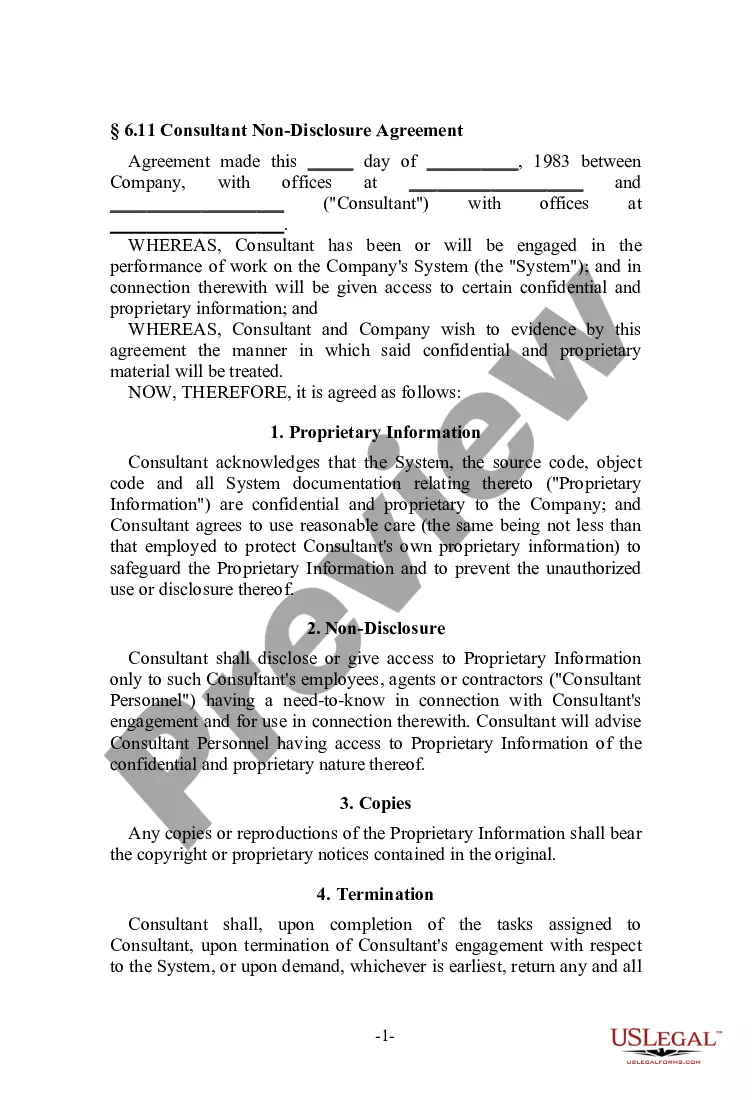
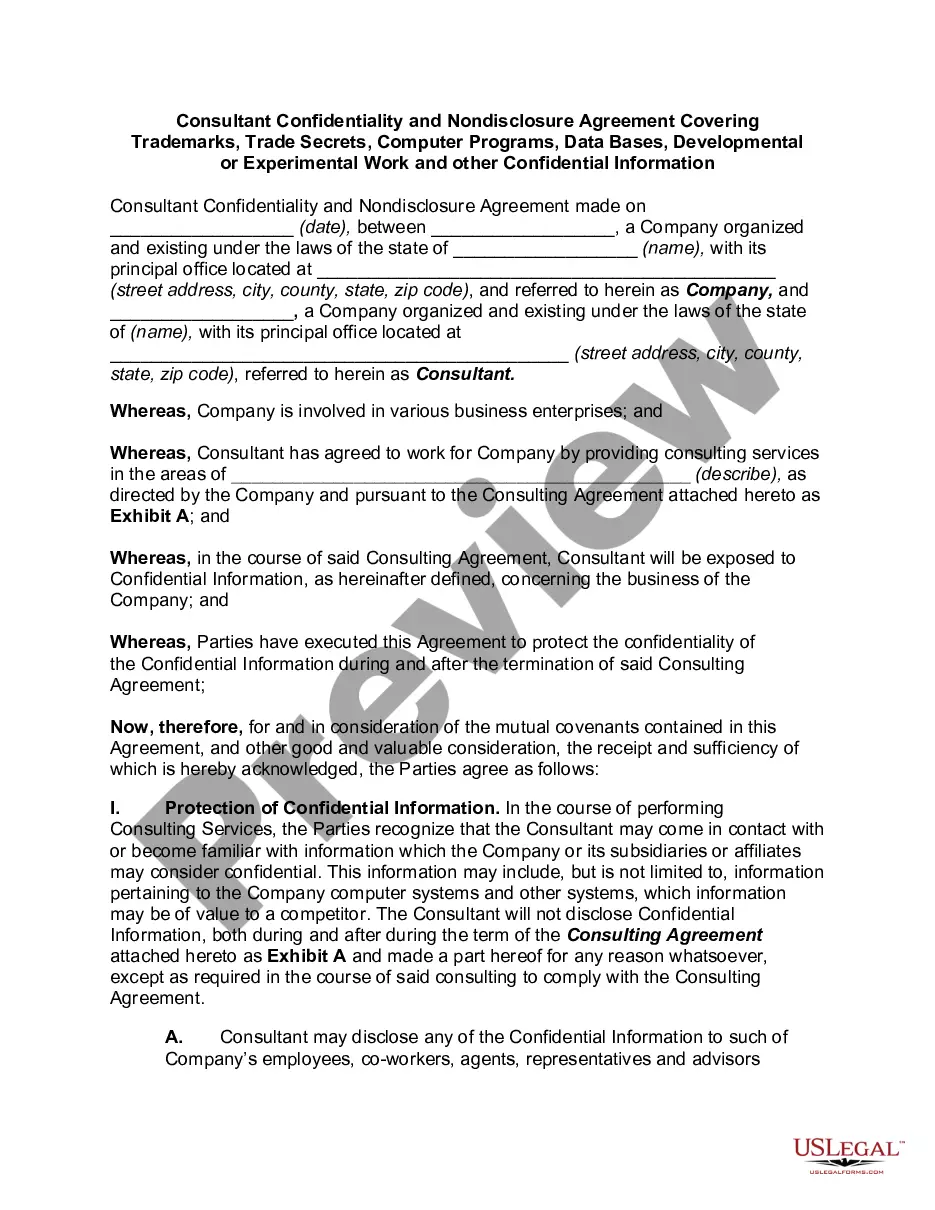
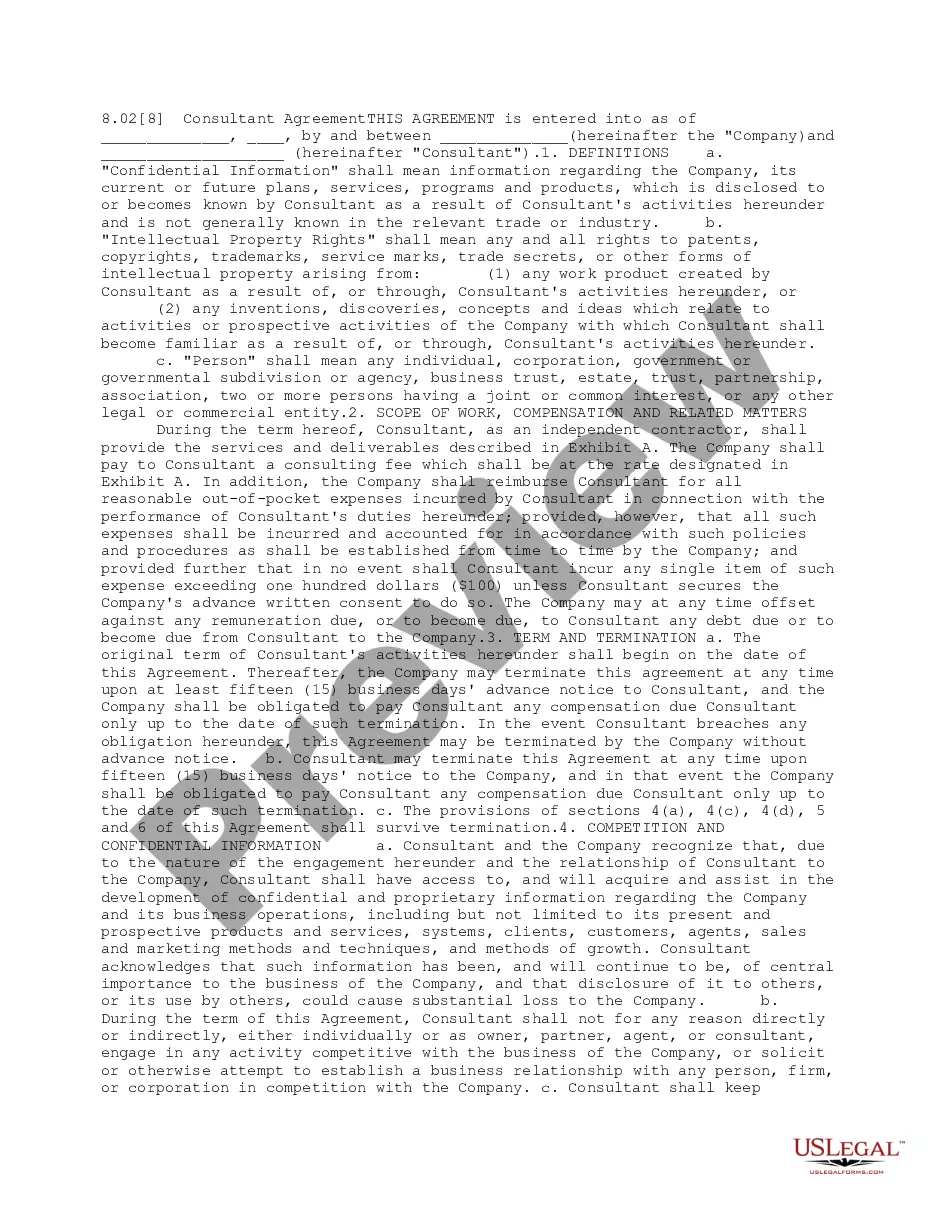
The Consultant Nondisclosure Agreement is a legal document that establishes a confidential relationship between a company and a consultant. This form ensures that any sensitive information shared during the consultant's engagement is not disclosed to unauthorized parties. It is specifically tailored for use in industries such as computer and software development, distinguishing it from other nondisclosure agreements that may have different applications.
Form components explained
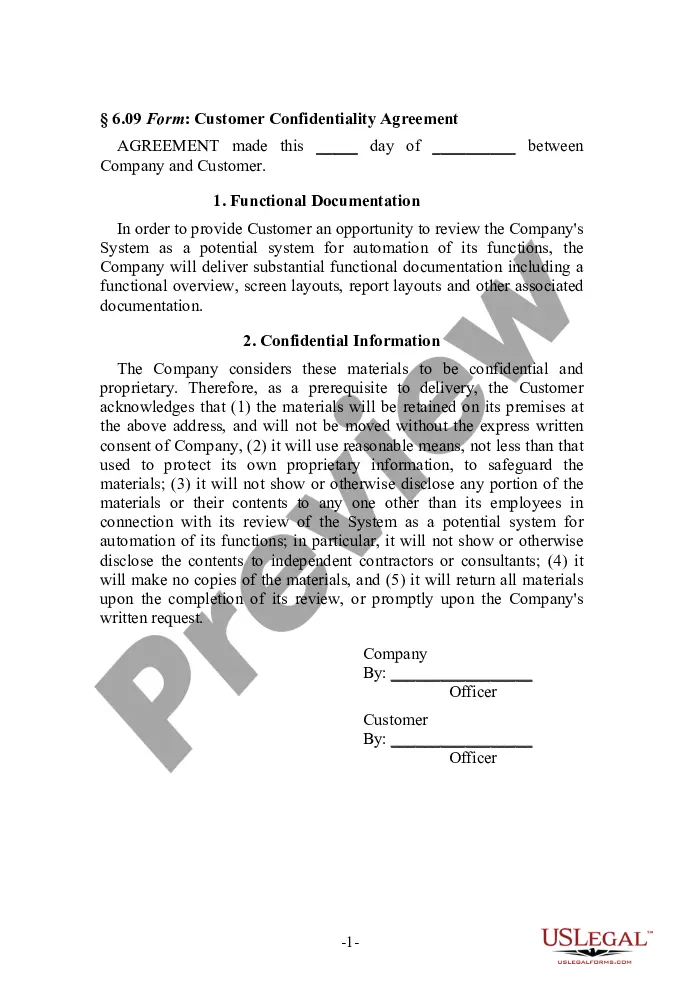
- Proprietary information clause outlining the confidentiality of the System and associated materials.
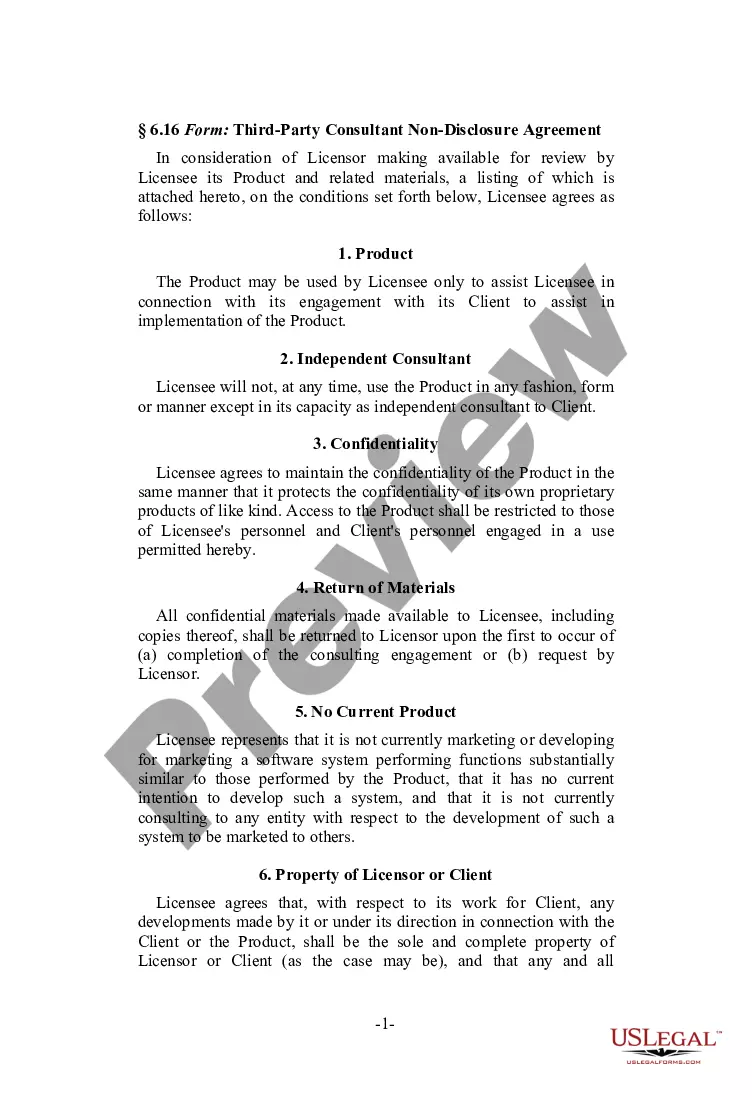
- Non-disclosure obligation specifying access limitations to Consultant Personnel.
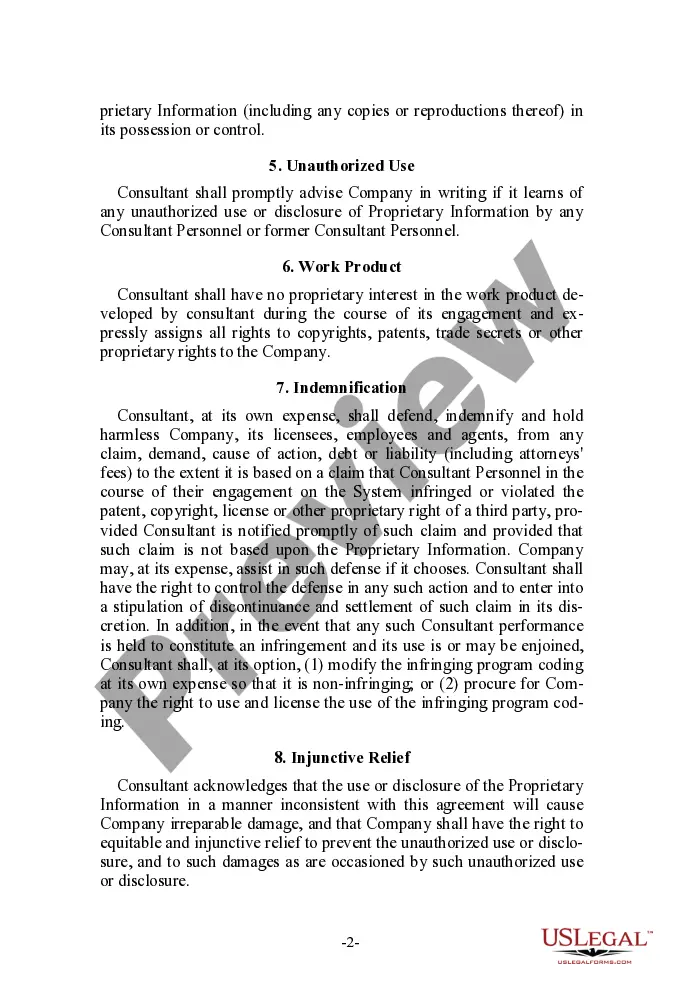
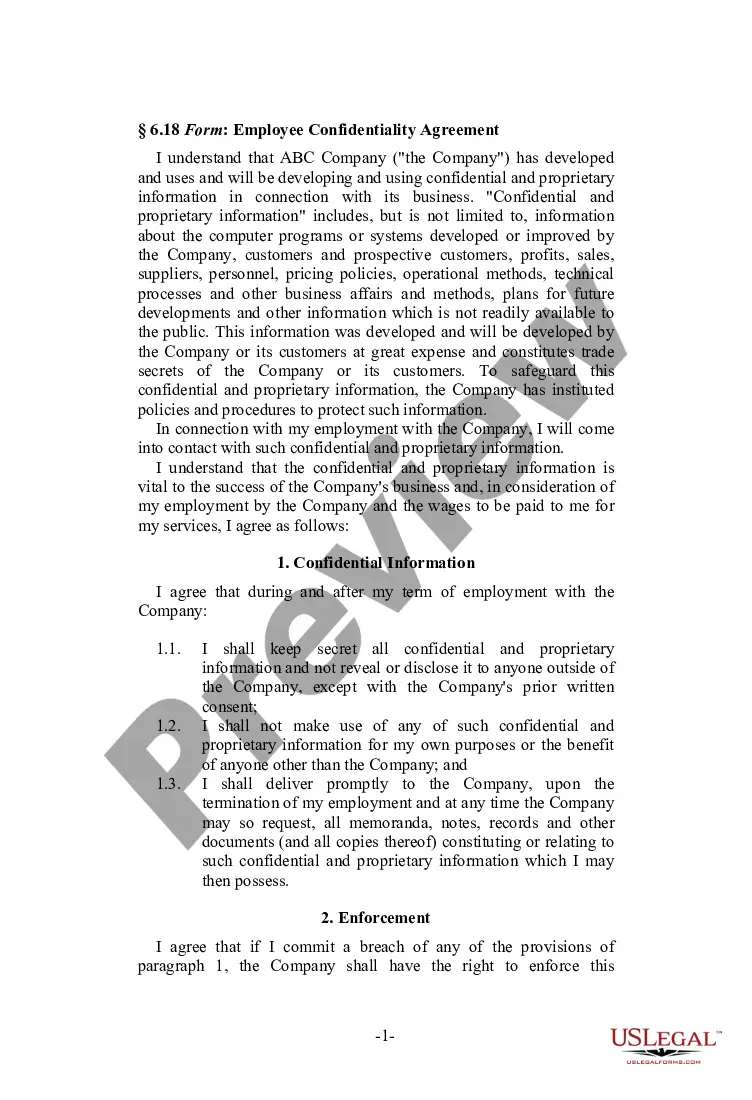
- Return of proprietary information upon termination or completion of the consultancy.
- Indemnification clause for claims related to infringement of third-party rights.
- Injunctive relief provision that allows the company to seek immediate legal remedy in case of unauthorized disclosure.
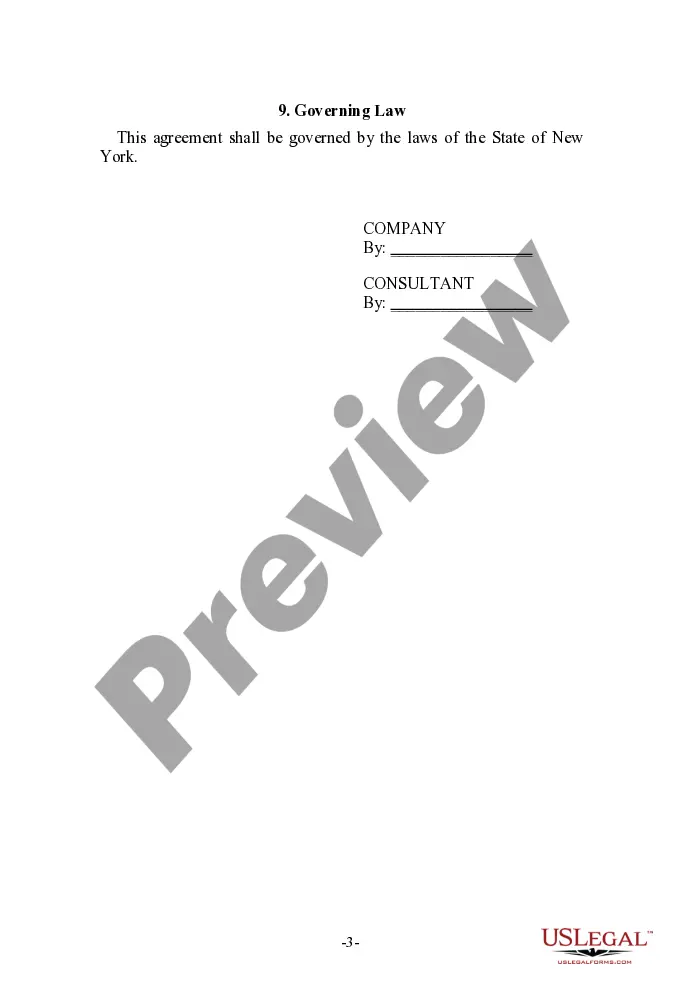
- Governing law section stating that the agreement is governed by New York state law.
When this form is needed
This form should be used when a company hires a consultant to perform tasks that involve access to proprietary or confidential information. It is essential in situations where the consultant will be developing software, providing sensitive business strategies, or working on projects that require confidentiality to protect intellectual property and trade secrets.
Who should use this form
- Businesses hiring consultants to develop software or manage technical projects.
- Consultants who need to formalize confidentiality agreements before working with a company.
- Organizations looking to protect their proprietary information during consulting engagements.
Completing this form step by step
- Identify the parties involved: enter the company's name and address as well as the consultant's name and address.
- Specify the date of the agreement at the beginning of the document.
- Review and fill out each clause, ensuring all proprietary information is listed accurately.
- Enter names and titles for signatures in the designated areas at the end of the agreement.
- Ensure all parties have copies of the signed agreement for their records.
Notarization requirements for this form
This form does not typically require notarization to be legally valid. However, some jurisdictions or document types may still require it. US Legal Forms provides secure online notarization powered by Notarize, available 24/7 for added convenience.
Get your form ready online
Our built-in tools help you complete, sign, share, and store your documents in one place.
Make edits, fill in missing information, and update formatting in US Legal Forms—just like you would in MS Word.
Download a copy, print it, send it by email, or mail it via USPS—whatever works best for your next step.
Sign and collect signatures with our SignNow integration. Send to multiple recipients, set reminders, and more. Go Premium to unlock E-Sign.
If this form requires notarization, complete it online through a secure video call—no need to meet a notary in person or wait for an appointment.
We protect your documents and personal data by following strict security and privacy standards.

Make edits, fill in missing information, and update formatting in US Legal Forms—just like you would in MS Word.

Download a copy, print it, send it by email, or mail it via USPS—whatever works best for your next step.

Sign and collect signatures with our SignNow integration. Send to multiple recipients, set reminders, and more. Go Premium to unlock E-Sign.

If this form requires notarization, complete it online through a secure video call—no need to meet a notary in person or wait for an appointment.

We protect your documents and personal data by following strict security and privacy standards.
Common mistakes
- Failing to clearly define what constitutes proprietary information.
- Not specifying the duration of the confidentiality obligation.
- Overlooking the need for signatures from both parties.
Why use this form online
- Immediate access to a professionally drafted Consultant Nondisclosure Agreement.
- Editable format allows for customization to fit specific project needs.
- Secure and straightforward download ensures you can act quickly in hiring consultants.
Legal use & context
- This agreement is enforceable in a court of law as long as both parties follow the terms outlined within it.
- Confidentiality clauses are generally recognized and upheld in most jurisdictions.
- The agreement must clearly outline proprietary information and any exceptions to ensure clarity and compliance.
Main things to remember
- The Consultant Nondisclosure Agreement protects sensitive information during consulting engagements.
- Both parties must understand and agree to the confidentiality obligations specified in the form.
- Consultants should return all proprietary information upon termination of their services.
Looking for another form?

Form popularity
FAQ
For an NDA to be enforceable in California, it must not be too generic or too open-ended (no time limit established), or the courts will likely throw it out.An enforceable NDA in California must include: A statement of the purpose of the NDA and the parties involved.
An NDA is a legally binding contract that requires parties to keep confidentiality for a defined period of time. It's up to the parties to decide what would be considered confidential and what is not.
The cold hard truth is that most NDAs do not hold up in court. Non-Disclosure Agreements are most effective in establishing a paper trail of confidential information as it relates to partnerships, and discouraging partners from misappropriating proprietary information.
NDAs are legally enforceable contracts, but they're now coming under increased scrutiny from lawmakers, attorneys and legal experts.Companies often use them as part of an employment contract or settlement agreement to protect sensitive information like trade secrets.
Read the Duration clauses. Good NDAs will have two different terms of duration. Read the termination clause. Like any other relationship, business partnerships can come to an early end unexpectedly. Read the Return of Information clause.
In summary, there's no reason why an NDA cannot be terminated if things are no longer working out between the parties. However, this doesn't mean that confidentiality obligations are automatically cancelled upon termination.
Don't Release Information Before the Agreement Is Signed. Work With a Professional. Use a Unilateral NDA, if Possible. Choose an End Date. Define the Confidential Information. Provide Extra Protection for Trade Secrets. Define How the Information Will Be Used. Require Return of the Information.
An employee can be required to sign an NDA or NDA-like agreement with an employer, protecting trade secrets. In fact, some employment agreements include a clause restricting employees' use and dissemination of company-owned confidential information.