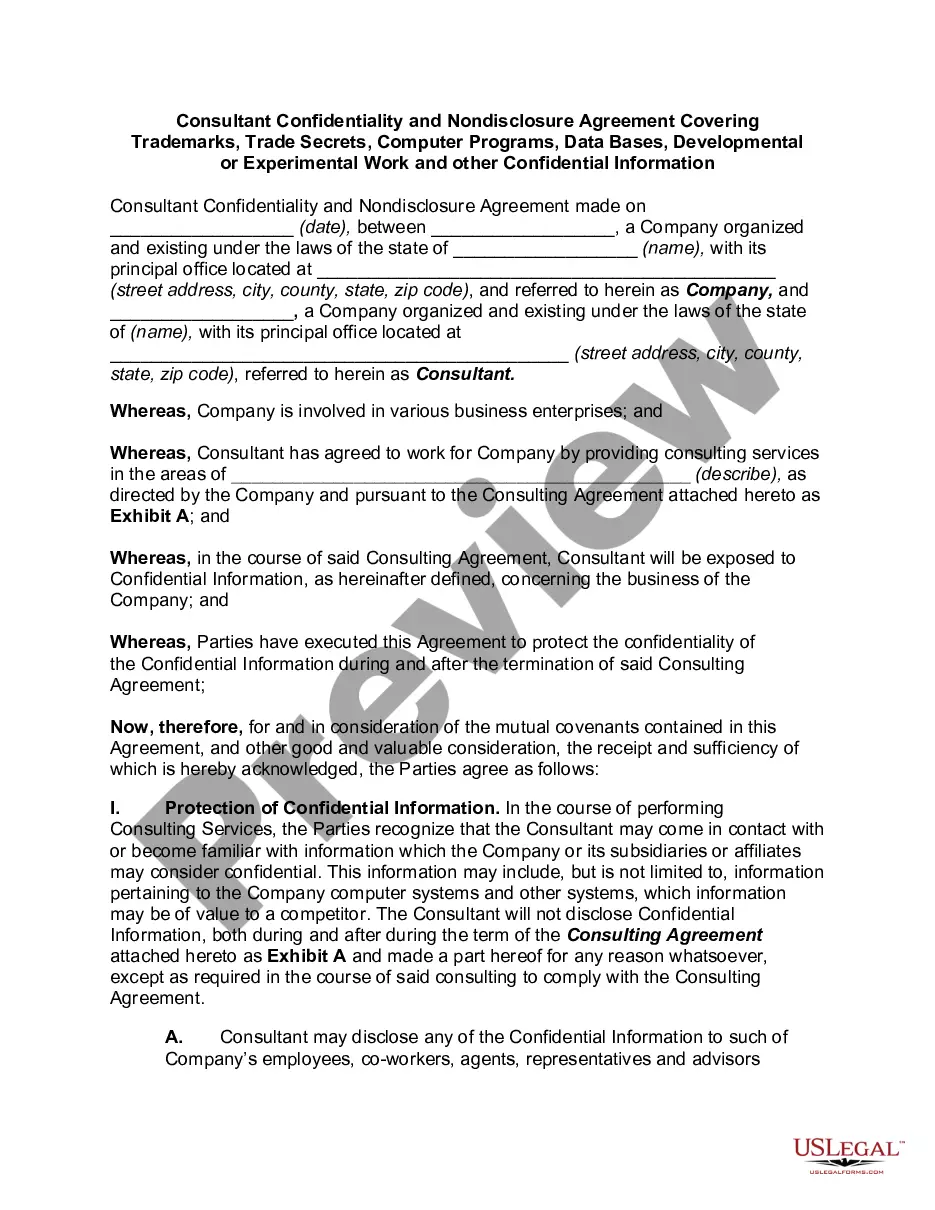
Consultant Confidentiality and Nondisclosure Agreement Covering Trademarks, Trade Secrets, Computer Programs, Data Bases, Developmental or Experimental Work and other Confidential Information
What is this form?
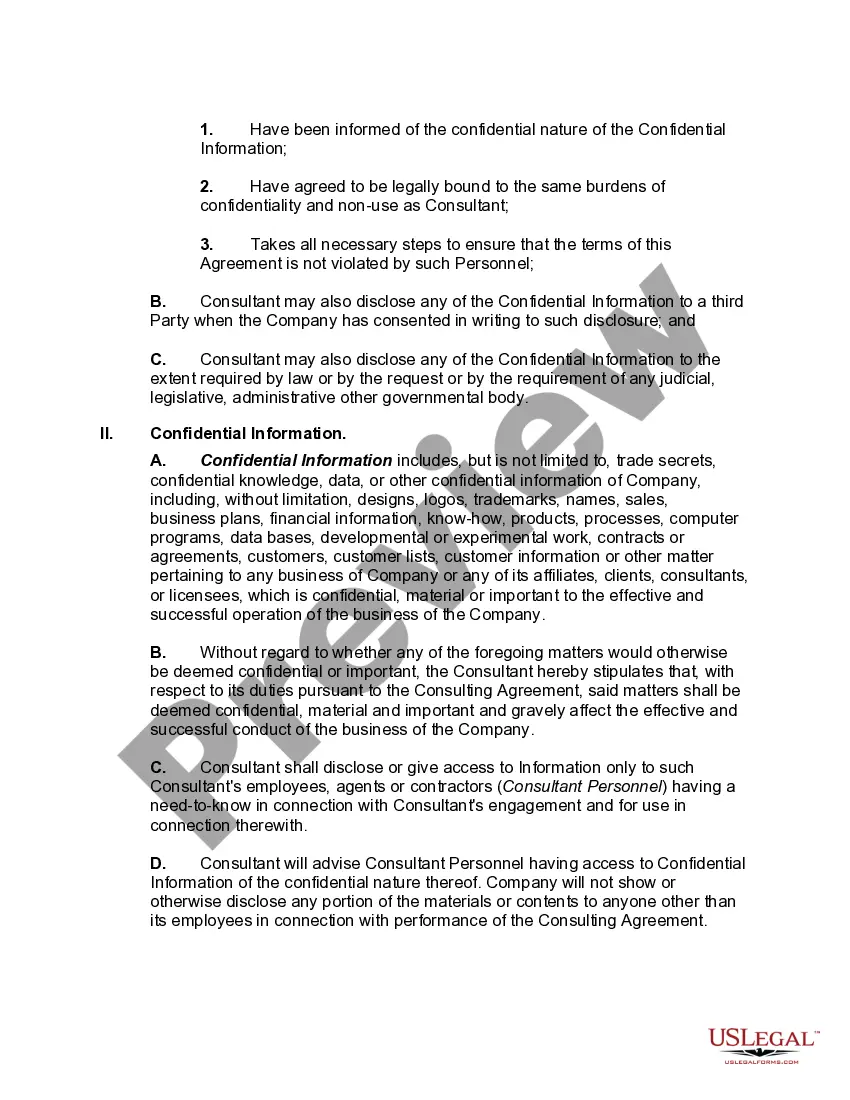
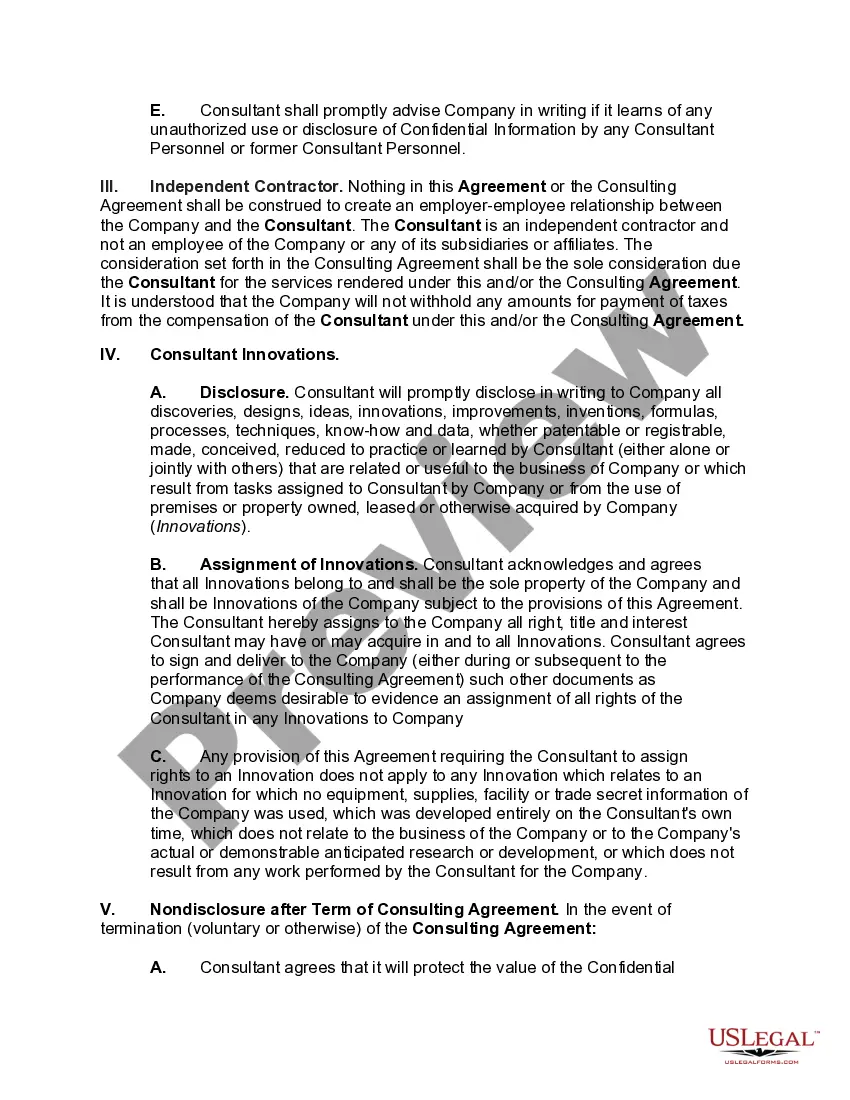
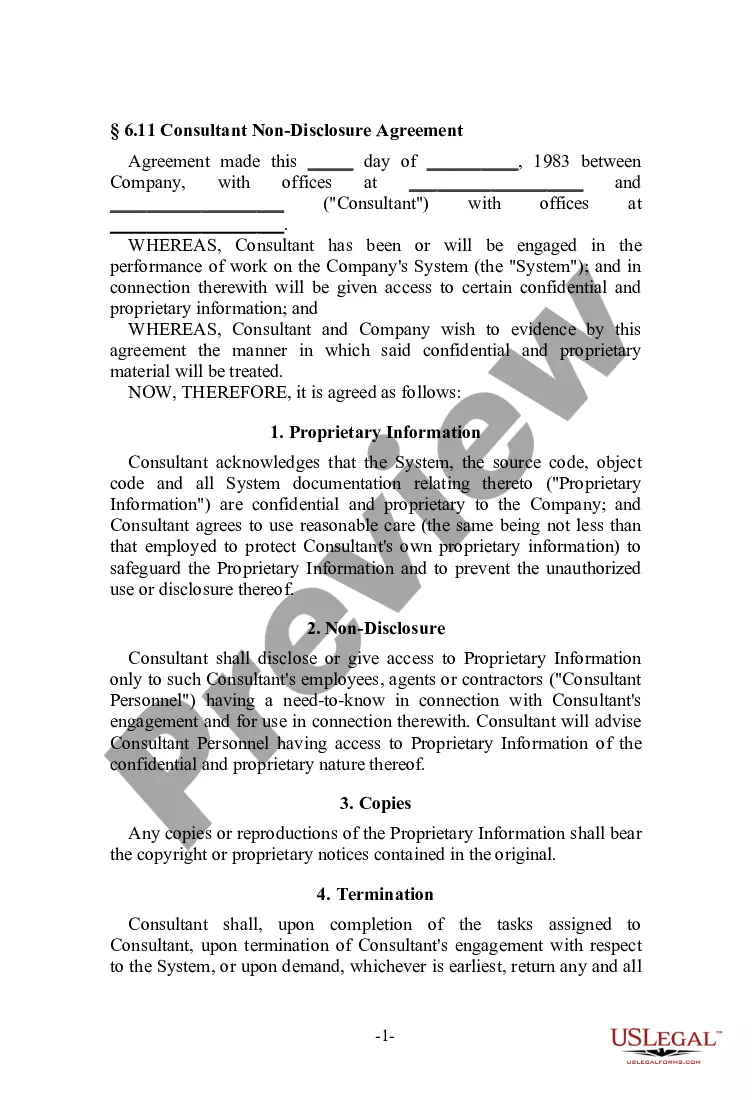
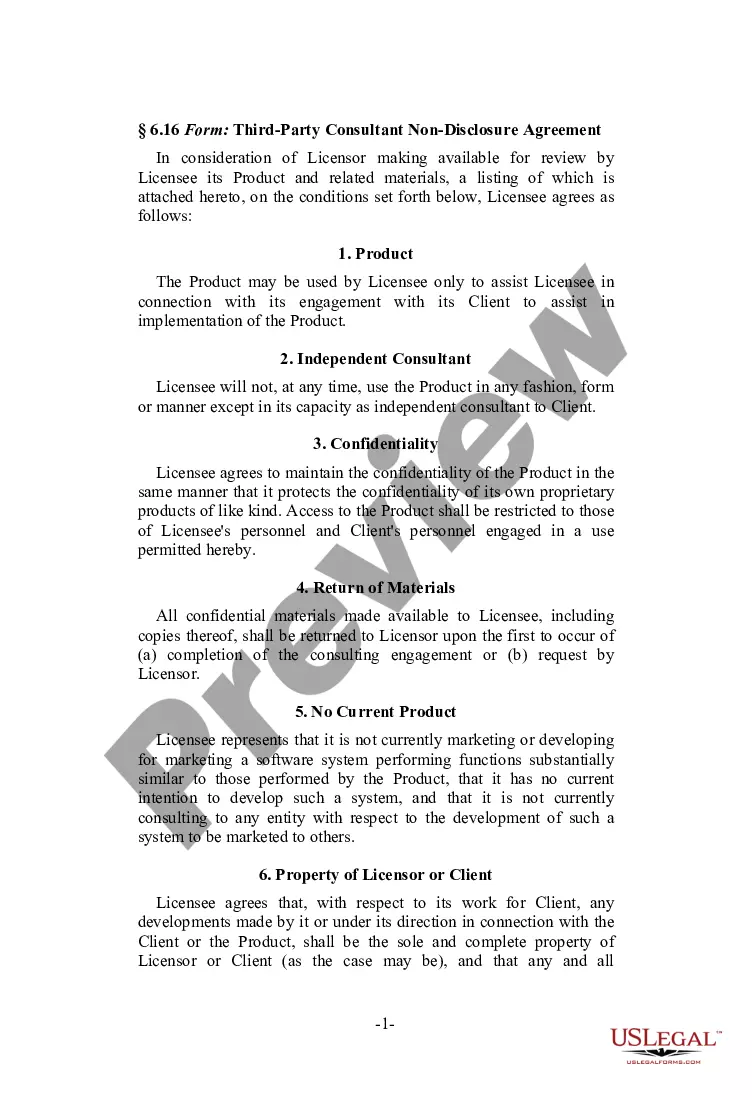
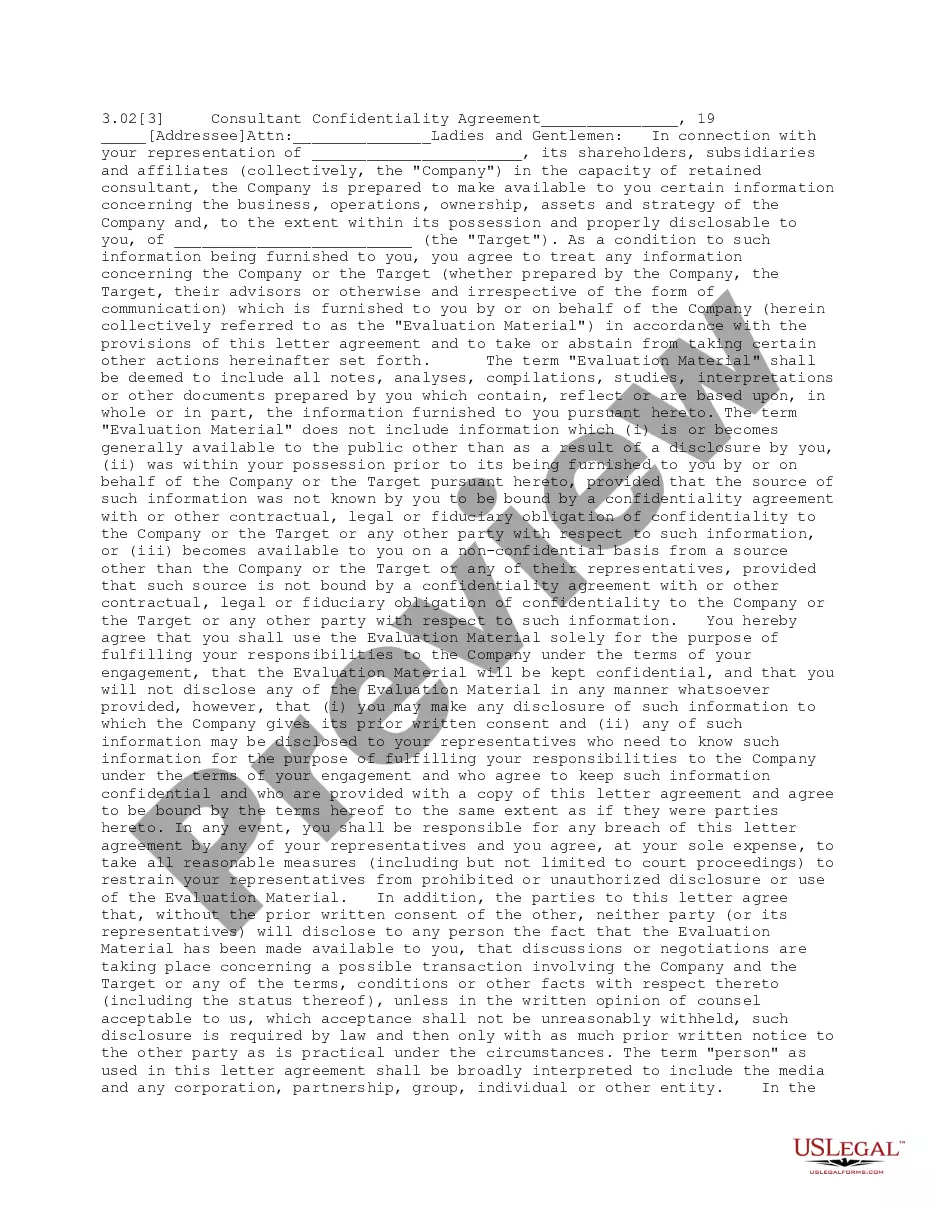
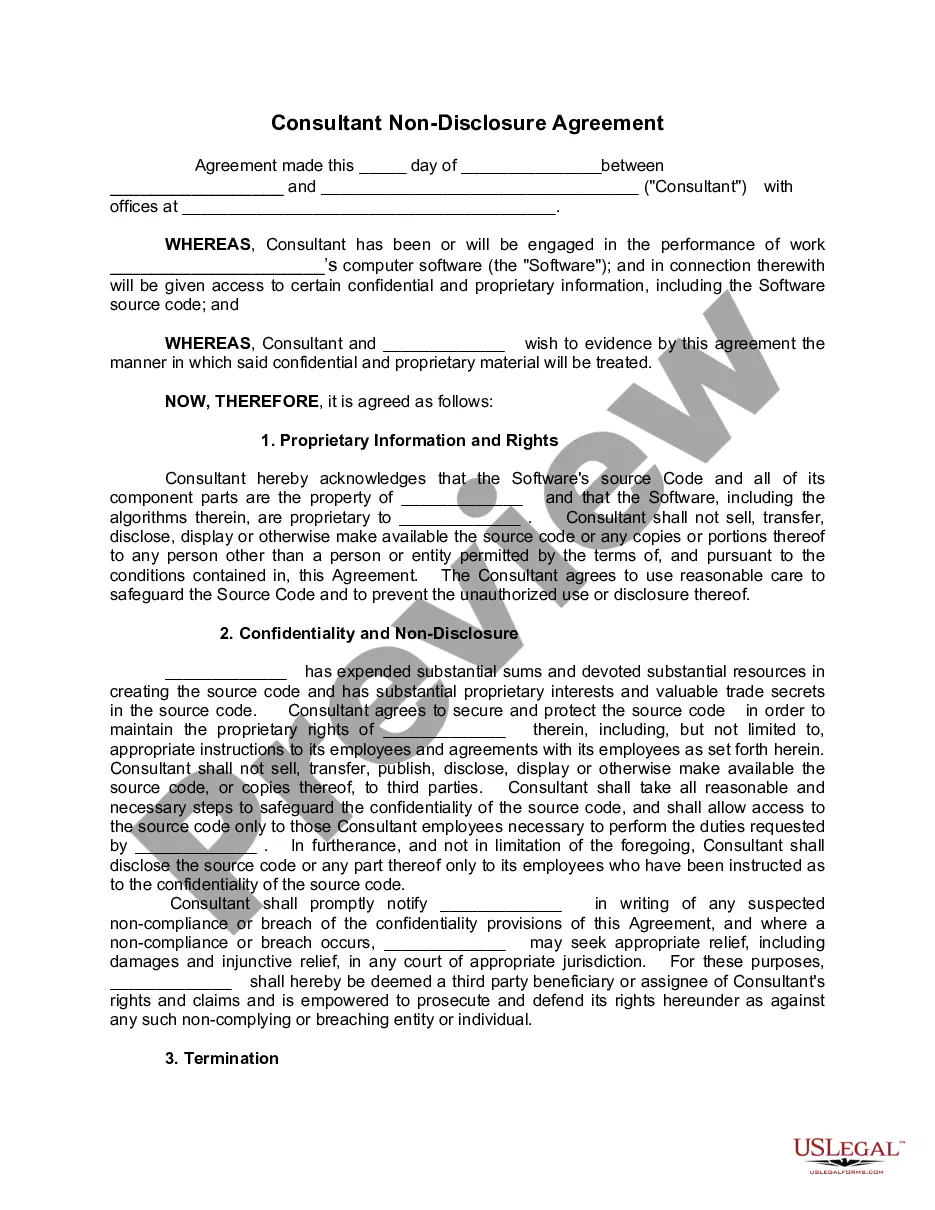
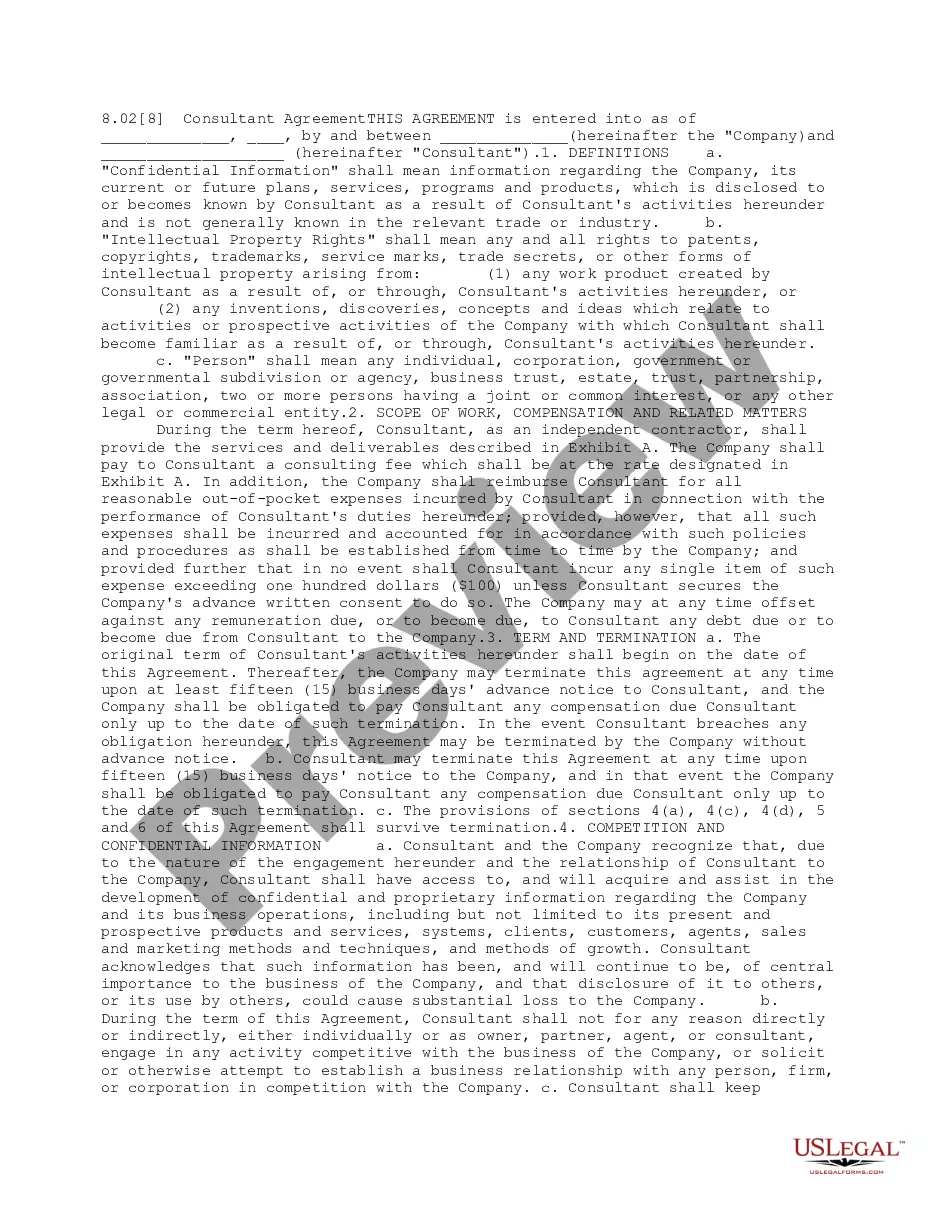
The Consultant Confidentiality and Nondisclosure Agreement is a legal document designed to protect sensitive information shared between a company and its consultant. This form serves to ensure that the consultant maintains confidentiality over various aspects of the companyâs business, including trademarks, trade secrets, and other proprietary information. Unlike general nondisclosure agreements, this form is specifically tailored to address the unique needs of consulting relationships, providing clarity on the definition of confidential information and the obligations of both parties.
Key parts of this document
- Identification of the parties involved (Company and Consultant).
- Definition and protection of Confidential Information.
- Obligations of the Consultant regarding nondisclosure during and after the engagement.
- Assignment of Innovations created during the consulting period.
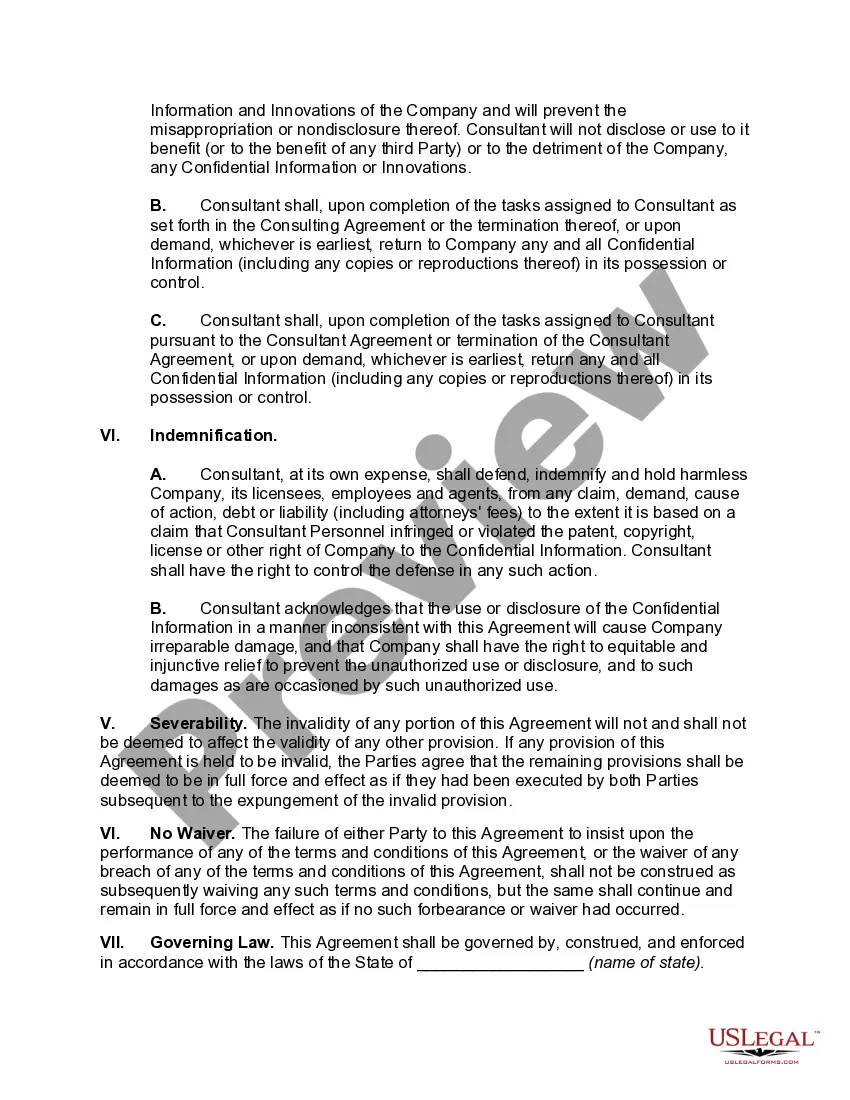
- Terms regarding the return of confidential materials upon the completion or termination of the agreement.
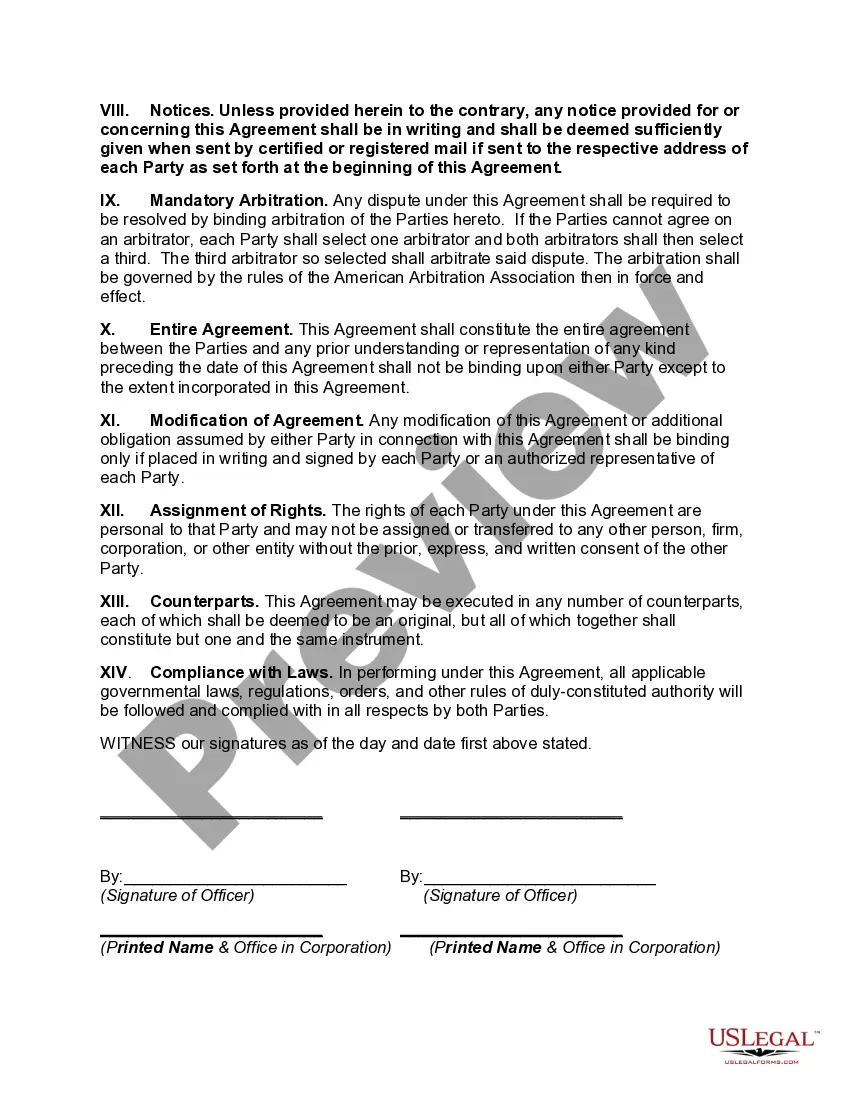
- Governing law and dispute resolution methods.
Situations where this form applies
This form should be used when a company hires a consultant and wants to protect sensitive information. It is particularly important when the consultant has access to proprietary data, trade secrets, or other confidential materials that could be valuable to competitors if disclosed. Typical scenarios include technology development, marketing strategies, and financial planning where the consultant may be exposed to confidential or proprietary information during their work.
Who should use this form
- Companies engaging consultants in any field, including technology, marketing, and product development.
- Consultants who will access proprietary information as part of their work for a company.
- Businesses looking to formalize confidentiality requirements to protect their intellectual property.
How to prepare this document
- Identify the date of the agreement.
- Fill in the names and addresses of both the Company and the Consultant.
- Specify the scope of consulting services provided.
- Define what constitutes Confidential Information clearly.
- Ensure both parties sign the agreement, including printed names and titles.
Does this document require notarization?
Notarization is generally not required for this form. However, certain states or situations might demand it. You can complete notarization online through US Legal Forms, powered by Notarize, using a verified video call available anytime.
Get your form ready online
Our built-in tools help you complete, sign, share, and store your documents in one place.
Make edits, fill in missing information, and update formatting in US Legal Forms—just like you would in MS Word.
Download a copy, print it, send it by email, or mail it via USPS—whatever works best for your next step.
Sign and collect signatures with our SignNow integration. Send to multiple recipients, set reminders, and more. Go Premium to unlock E-Sign.
If this form requires notarization, complete it online through a secure video call—no need to meet a notary in person or wait for an appointment.
We protect your documents and personal data by following strict security and privacy standards.

Make edits, fill in missing information, and update formatting in US Legal Forms—just like you would in MS Word.

Download a copy, print it, send it by email, or mail it via USPS—whatever works best for your next step.

Sign and collect signatures with our SignNow integration. Send to multiple recipients, set reminders, and more. Go Premium to unlock E-Sign.

If this form requires notarization, complete it online through a secure video call—no need to meet a notary in person or wait for an appointment.

We protect your documents and personal data by following strict security and privacy standards.
Common mistakes
- Failing to clearly define what is considered Confidential Information.
- Not identifying all parties involved in the agreement.
- Leaving out signature lines or failing to have both parties sign.
Advantages of online completion
- Quick access to a professionally drafted document, ensuring legal validity.
- Easy customization for specific business needs and jurisdictions.
- Convenient download for immediate use and record-keeping.
Legal use & context
- This agreement is legally binding once signed by both parties.
- It provides a framework for protecting sensitive information disclosed during the consulting relationship.
- Enforcement may vary by jurisdiction, so consulting legal expertise might be advisable.
Looking for another form?
Form popularity
FAQ
A definition of confidential information. Who is involved. Why the recipient knows the information. Exclusions or limits on confidential information. Receiving party's obligations. Time frame or term. Discloser to the recipient.
A confidentiality agreement (also called a nondisclosure agreement or NDA) is a legally binding contract in which a person or business promises to treat specific information as a trade secret and promises not to disclose the secret to others without proper authorization.
Depending on the complexity of what you need protected and the number of parties involved, the cost of having an NDA drafted can vary significantly. When you hire a lawyer in the Priori network, drafting an NDA typically costs anywhere from $175-$1,500.
Examples of confidential information include, but are not limited to: Information about the Company's operations, results, earnings projections, strategies, clients or client relationships, proprietary products or employee records.
Proper labelling. Insert non-disclosure provisions in employment agreements. Check out other agreements for confidentiality provisions. Limit access. Add a confidentiality policy to the employee handbook. Exit interview for departing employees.
Know who you are disclosing information to. Clearly label all confidential information as confidential. Use passwords and encrypted files for electronic documents. Provide initial and ongoing advice to individuals. Keep records of what information has been disclosed.
It is a contract through which the parties agree not to disclose information covered by the agreement. An NDA creates a confidential relationship between the parties, typically to protect any type of confidential and proprietary information or trade secrets. As such, an NDA protects non-public business information.
Name, date of birth, age, sex and address. current contact details of family, guardian etc. bank details. medical history or records. personal care issues. service records and file progress notes. individual personal plans. assessments or reports.
Set the date of the agreement. Describe the two parties, sometimes called the Disclosing Party and the Receiving Party.7feff Include names and identification, so there can be no misunderstanding about who signed the agreement.